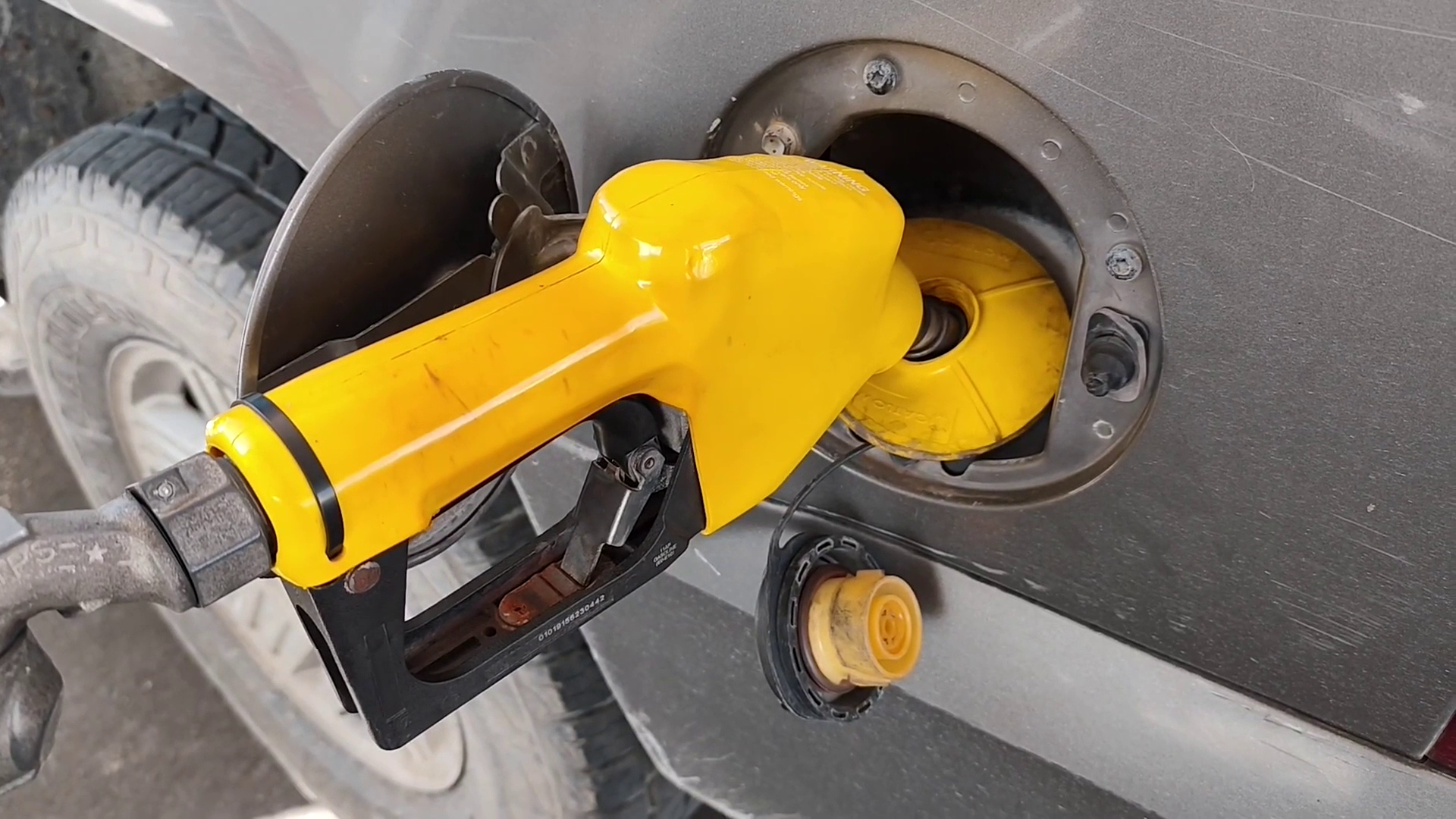
On October 5, 2026, Belize marked an unwelcome economic milestone: for the first time in the nation’s history, the retail price of regular gasoline crossed the $14 per gallon threshold, piling additional financial strain on households and enterprises already grappling with a persistent cost-of-living crisis. Friday’s latest price adjustment pushed both regular and premium gasoline above the $14 mark, forcing every motorist filling up at the pump to dig deeper into already stretched budgets. But the ripple effects of this surge extend far beyond individual drivers, as local businesses face spiraling transportation costs that are widely expected to trigger subsequent price hikes for everyday consumer goods and services. News Five journalist Britney Gordon has investigated the far-reaching impacts of this unprecedented fuel price increase across Belize’s economy.
As ordinary motorists desperately search for any form of financial relief, Opposition Leader Tracy Taeger-Panton has publicly called on the ruling Briceño administration to cut fuel taxes to ease the burden on consumers. However, Prime Minister John Briceño’s government has repeatedly pushed back against such demands, arguing that any reduction to fuel-related taxes would create a damaging gap in critical public revenue. Earlier in 2026, following calls from the Belize Chamber of Commerce and Industry for greater transparency around fuel price calculation, Briceño laid out the government’s position in an on-the-record address.
“If you collect $100 total in fuel taxes, that money goes to fund public services no matter whether it’s labeled as environmental tax, GST, excise tax or import tax,” Briceño explained in a June 3, 2026 file interview. “Moving money between different tax categories doesn’t change the fact that any cut reduces the total revenue we have to spend on public services. That is the core reality of this situation.”
While soaring fuel prices are a regional challenge impacting multiple Central American nations, neighboring Guatemala has adopted a dramatically different policy approach to address public pressure. The Guatemalan government moved to temporarily suspend a slate of taxes on both gasoline and diesel, while national lawmakers passed emergency legislation explicitly designed to stabilize retail fuel prices and deliver immediate relief to consumers.
Guatemalan President Bernardo Arévalo emphasized the urgency of the action in a public address. “This is a crisis that impacts every single one of us and weighs heavily on our national economy,” Arévalo stated. “There is no justification for maintaining the current tax framework that drives prices higher. As soon as Decree 21-26 reaches the executive from Congress, I will sign it into law immediately, so that Guatemalan families can start benefiting from stable, capped prices without delay.”
The Guatemalan tax suspension is set to run through the upcoming holiday season, and regulators have been ordered to conduct active monitoring of retail service stations to guarantee that the full tax savings are passed directly to consumers, rather than being absorbed by fuel retailers. Back in Belize, ordinary motorists say even a temporary tax cut like Guatemala’s would deliver meaningful improvement to their financial circumstances.
“Lower taxes are always a good thing, and I’m confident the government has the ability to do something to help,” one Belmopan resident told reporters.
“That would be absolutely amazing, it would make such a difference right now especially for local businesses with how slow the economy is right now,” added a Belize City sales worker. “I see the slowdown every day in my job. A temporary cut through the Christmas holiday like they’ve done in other countries would be a huge help. There’s no question about it.”
A second Belize City resident noted that relief would be life-changing for the groups hit hardest by the price surge: “I truly believe this would benefit so many people, especially low-income families that rely on their cars to get to work and home every day. It would take so much financial stress off their shoulders. For small business owners, it would also give them temporary breathing room to recover from losses they’ve already taken as costs have climbed.”
Already, bus operators in Belize negotiated a temporary fuel subsidy from the government to offset rising operating costs, but the vast majority of private motorists continue to bear the full weight of every price increase. Now that prices have crossed the $14 threshold, many drivers say they have been forced to completely reorganize their travel habits to cut unnecessary fuel use.
“You can’t just run to the store every time you forget a bag of flour anymore,” the Belmopan resident explained. “You have to plan every trip carefully. We’ve all had to make big adjustments.”
The Belize City sales worker echoed that shift: “Before, if you forgot something at the store you’d just run back. Now you have to make a list, you don’t go to the store once or twice a day anymore, you have to watch every gallon you use. It’s not like before when you’d just jump in the car to go to the park for fun. All random trips are cut, everything has to be scheduled now.”
For workers who rely on their vehicles to earn an income, the pressure is even more severe. One Belize City resident working in the tourism sector says fuel costs now eat up the vast majority of his business revenue, forcing major cutbacks to both his work operations and personal lifestyle.
“I’ve had to change almost everything,” he explained. “My whole routine for getting around, my daily habits. Now every time I need to go out I have to think twice, because prices just keep going up and it’s getting worse. I work in tourism, and I can barely make any profit anymore because almost all of my income goes straight to pay for fuel for all my work vehicles. It’s outrageous. I’ve had to cut back on almost everything in my personal life: I stopped going out at night, I stopped eating at restaurants. It’s been really hard. If I’m struggling this much, I can only imagine how bad it is for people on minimum wage who earn far less than I do.”
To date, the Briceño government has given no indication that broad-based relief for private motorists is under consideration. Some drivers have put forward a proposal for a temporary relief program modeled after the nation’s existing GST-free weekends, with temporary fuel price cuts applied during peak travel and spending periods like Christmas and Easter. Until the government makes a decision on whether tax cuts are fiscally feasible, Belizean motorists have little choice but to continue cutting non-essential travel, tightening their household budgets, and watching a growing share of their earnings disappear into their fuel tanks. Britney Gordon reporting for News Five.