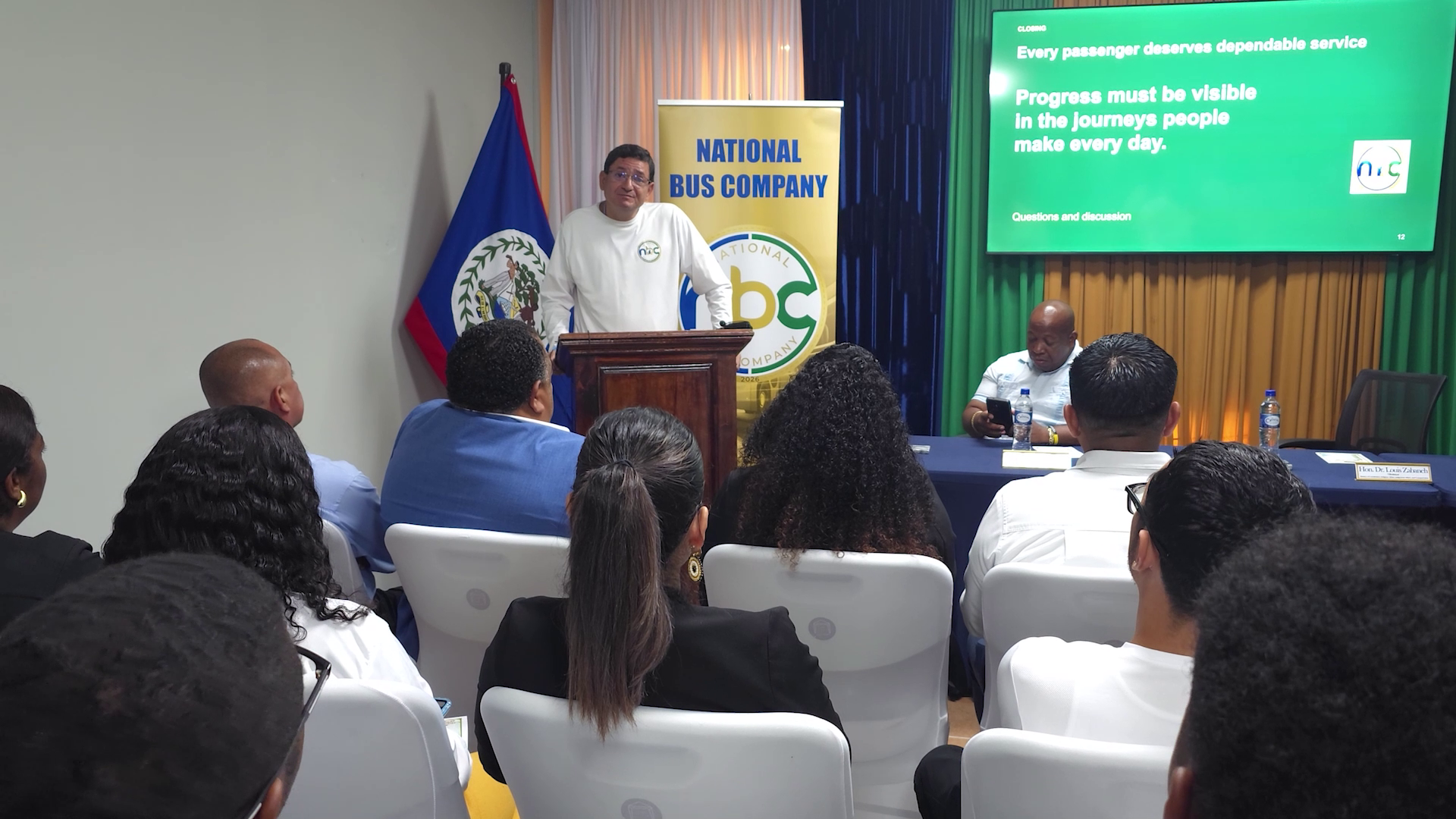
Seven months after launching its operations, Belize’s state-backed National Bus Company (NBC) has already turned an operational profit and is gearing up to scale its services, following key legislative approval from the House of Representatives that clears the way for formal asset transfers and concession agreements.
NBC officially began running routes across Belize on March 1, 2026, and its early financial performance has already outpaced initial expectations, with consecutive months of operational surplus. But the new public transit entity was not just created to add more buses to Belize’s roads—it was born out of a urgent need to overhaul a broken transit system long plagued by unregulated competition, aging infrastructure, and unreliable service.
Belize’s Transport Minister Dr. Louis Zabaneh explained that the old, fragmented system left dozens of small independent operators trapped in what he calls a “race to the bottom.” With 31 separate operators competing for passengers in a small national market, the unregulated structure created perverse incentives: instead of investing in newer, safer buses or improving service quality, operators focused solely on outcompeting one another for riders. This dynamic led to dangerous speeding on highways, growing animosity between drivers, and a fleet that aged rapidly with little investment in maintenance or upgrades. Commuters were left with inconsistent, unreliable service that failed to meet their daily travel needs, while the system also created unnecessary burdens for government regulators tasked with overseeing it. “The system was failing us, failed us miserably,” Zabaneh emphasized in a recent press briefing.
NBC chair Anna Loague noted that the company’s mission goes far beyond correcting the failures of the old system. “The National Bus Company is simply not about buses, terminals, or operations. It’s about people,” Loague said. “Every day, our people depend on our transportation system. That is why NBC is committed to placing the needs, safety and comfort, and experience of every traveling public at the center of everything we do. Our vision is clear: to build a modern, reliable, affordable and sustainable transportation system that Belizeans can trust.”
The recent approval of enabling legislation by the House of Representatives on October 3, 2026, removes the final legal and financial barriers to NBC’s expansion. With early financial stability already secured, company executives say they are ready to “shift into a higher gear” with planned upgrades that include rolling out a brand new fleet of buses, improving terminal facilities, and refining route scheduling to better serve commuters. Zabaneh cautioned that full realization of NBC’s goals will take time: when the initiative was first launched, he noted that a two-year timeline would be needed to deliver tangible improvements across all areas of operation. That timeline remains in place, but the early surplus has given the company the financial footing to move ahead with expansion plans sooner than many stakeholders anticipated.
Structurally, NBC is a mixed public-private entity. The Government of Belize holds a 45% stake in the company, the Social Security Board holds an additional 15%, and private investors own the remaining 40%. While the company has already recorded an operational surplus, early investors will not see immediate returns on their capital—projected timelines indicate dividend returns will not begin for at least another two years as the company reinvests profits into expanding and upgrading its services.