标签: Belize

伯利兹

  • Iguana Street Dispute Highlights Election Registration Concerns

    Iguana Street Dispute Highlights Election Registration Concerns

    As the 2027 Belizean municipal elections draw near, less than eight months from July 2026, a heated dispute over voter registration on Iguana Street in the Mesopotamia Division has thrown longstanding concerns about electoral manipulation and improper voter transfers into the spotlight.

    The annual July-August transfer window, which allows eligible voters to reassign their registration to a new constituency or municipality ahead of upcoming votes, is the designated period for these changes – but critics warn the process is frequently exploited for partisan political gain. The Iguana Street controversy began when local elector Brian “Yellowman” Audinette filed a formal challenge against two attempted registrations at an address he insists the applicants do not actually occupy.

    In comments recorded during a local television newscast, rendered in Kriol orthography, Audinette argued that neither Eric Lewis nor Shary Bent reside at the Iguana Street address linked to their registration applications. “None of them two people ya live ya. Soh how she wa come? He call she and she come and she the sign,” Audinette stated, asserting that the registrations constitute an illegal attempt to pad voter rolls ahead of the upcoming contest.

    Chief Elections Officer Josephine Tamai has outlined the official process for addressing such claims, noting that existing safeguards are in place to root out fraudulent registrations – but citizen engagement is critical to their success. Tamai explained that any registered elector in a constituency has the right to formally object to new inclusions once the preliminary voter list is published, as long as the objector provides tangible evidence to support their claim of irregularity.

    She added that a common gap in the process stems from low citizen engagement outside of election season: complaints of improper registration only surface in the lead-up to voting, when public attention turns to electoral processes, rather than being addressed earlier when inaccuracies could be corrected more smoothly. In response to the Iguana Street dispute, Tamai confirmed that registering officers are required to conduct in-person site visits to verify the residential claims of all applicants facing objections. Following this on-the-ground investigation, the registering officer makes a final determination on whether the applicant will remain on the voter roll or have their registration struck.

    Tamai also reminded the public that false, bad-faith objections to legitimate registration applications are a criminal offense, carrying penalties of up to a $500 fine or one year of imprisonment for anyone convicted of knowingly filing a misleading challenge. The incident comes as election officials prepare for the March 3, 2027 municipal vote, with attention turning to cleaning up voter rolls and addressing longstanding concerns about electoral integrity ahead of polling day.
  • Belize City Council Tackles Sargassum at Sand Lighter’s Promenade

    Belize City Council Tackles Sargassum at Sand Lighter’s Promenade

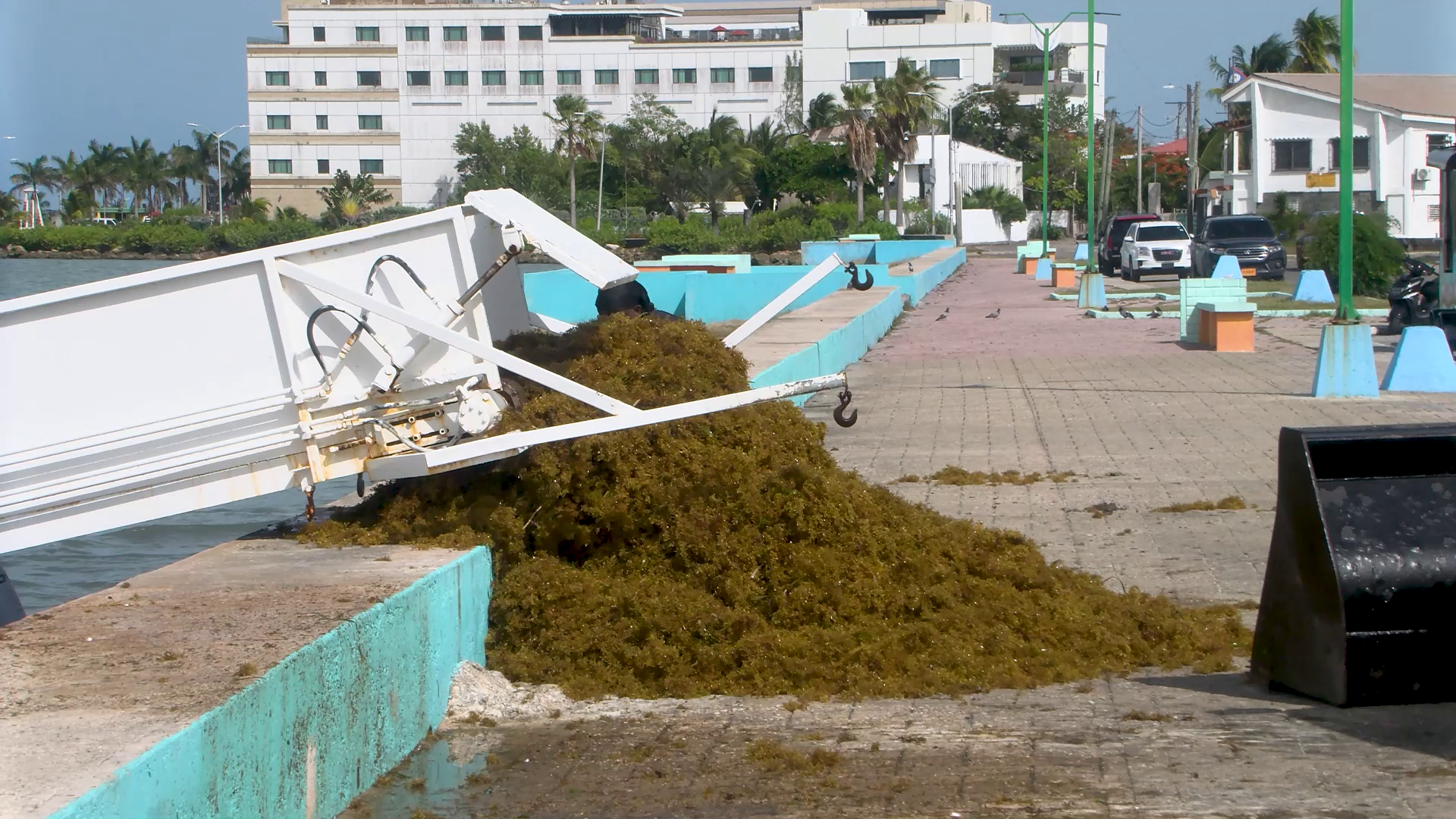
    In a response to growing public health and environmental concerns, the Belize City Council has mobilized specialized harvesting equipment to clear massive accumulations of invasive sargassum seaweed that has choked the shoreline at Sand Lighter’s Promenade, scheduled July 13, 2026. What once was considered an unpleasant odor nuisance has escalated into a major municipal cleanup challenge, as the trapped seaweed builds up in a natural cove that acts as a catchment basin, leaving ocean currents unable to flush the vegetation out to open water. According to Belize City Council Assistant Engineer Ramon Menjivar, the frequency of sargassum washing ashore has increased sharply in recent months, turning occasional incidents into a consistent hazard that demands urgent municipal intervention. “This is a very toxic, smelly material that it can even be detrimental to our health,” Menjivar explained in an on-site interview. “As the governing body for the city, we have to respond to all and any emergencies, and this is a major deposit that requires immediate action.” While the specialized sargassum harvester has proven efficient and fast at gathering the floating seaweed from coastal waters, the unique landscape of the promenade prevents crews from loading the vegetation directly onto trucks from the water. Instead, collected sargassum is first brought onto the shore, then transported to the city’s municipal landfill. At the disposal site, crews will spread the seaweed in a thin layer ranging from 6 to 8 inches thick, allow it to fully dry in the open air, then cover it with fill to eliminate odor and prevent runoff contamination. The current operation is framed as an immediate emergency response, as city officials continue researching and developing longer-term, sustainable solutions for recurring sargassum inundations that have impacted Belize’s coastal areas. This news report is adapted from a transcribed evening television broadcast, with all statements rendered accurately from original remarks.

  • Jaguar Cub Video Renews Calls to Respect Protected Wildlife

    Jaguar Cub Video Renews Calls to Respect Protected Wildlife

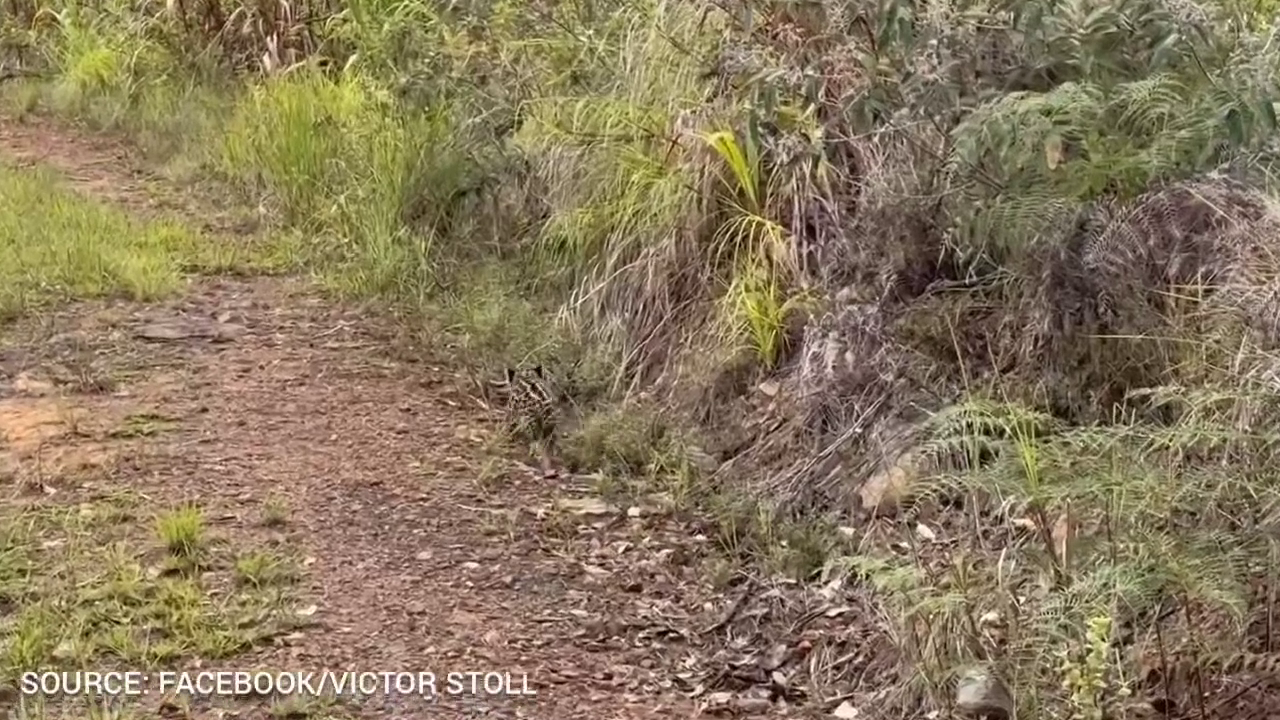
    In late 2026, a recently circulated viral video filmed in Belize’s protected Mountain Pine Ridge reserve has reignited urgent conversations about ethical wildlife interaction and enforcement of protected area rules, after footage showed a group of men cornering, approaching and making physical contact with a young jaguar cub. While many viewers who shared the clip framed the encounter as a once-in-a-lifetime, thrilling close-up experience with an elusive big cat, conservation leaders and wildlife experts have pushed back strongly, warning that the irresponsible actions seen in the footage put both the humans and the extremely vulnerable young animal at severe, potentially fatal risk. Jaguars, a species of high conservation concern across Central America, are granted full legal protection under Belizean national legislation, which requires all visitors to natural habitats to observe wild animals only from a safe, non-intrusive distance. To unpack the full scope of dangers posed by this interaction, local media spoke with Dr. Celso Poot, a respected wildlife ecologist and managing director of the Belize Zoo, who has decades of experience working with jaguars in captive and wild settings. Dr. Poot explained that wild jaguar mothers react to threats to their cubs the same way any parent would: any human approaching a newborn cub is immediately perceived as an aggressor, raising the immediate risk of a lethal defensive attack from the nearby mother, who would not distinguish between human intruders and other predatory threats. Beyond the immediate safety risk to the men involved, Dr. Poot emphasized that the encounter inflicted severe, potentially long-lasting physiological harm to the young cub, which his team estimates was only two weeks to one month old—one of the most vulnerable life stages for the species. “Wildlife professionals who handle young jaguars for research or conservation follow strict, carefully designed protocols to minimize stress, but these untrained members of the public had no regard for that,” Dr. Poot noted. He explained that extreme stress triggered by human handling can lead to a life-threatening condition called capture myopathy, where elevated stress hormones cause muscle rigidity and organ damage that can kill an affected animal even days after the encounter. “Just like humans, when an animal faces a life-threatening fright, it takes significant time to recover, if it recovers at all,” he added. While Dr. Poot was able to debunk the common myth that human scent on a cub will automatically lead the mother to abandon her young, he did note that replacing the mother’s natural scent with human odors removes a key layer of protection, leaving the cub more vulnerable to predators in the jungle. The incident has prompted conservation organizations across Belize to renew calls for better visitor education in protected areas, stricter enforcement of wildlife distance rules, and greater public awareness of how seemingly harmless “up close” wildlife encounters can have irreversible consequences for protected species. This public outcry comes as Belize works to maintain its position as one of the last strongholds for healthy jaguar populations in Central America, where habitat loss and human-wildlife conflict remain persistent threats to the species’ long-term survival.

  • Scratch & Win Delivers Big Prize in Orange Walk

    Scratch & Win Delivers Big Prize in Orange Walk

    On a routine Sunday trip to her local corner store in Orange Walk, an area resident walked away with a life-changing $15,000 prize from the Scratch & Win lottery, turning an ordinary day into a story of unexpected good fortune that has captured local attention.

    The winner, who has chosen to remain anonymous, did not even purchase the winning ticket outright. Instead, she traded in three old non-winning tickets for three new $3 entries, a common practice for regular lottery players looking to stretch their play budget. She scratched off the first ticket right at the store counter and walked away with no payout, then scratched a second ticket after returning home, only breaking even by recouping the $3 cost of the ticket. It was only the final ticket in her set that held the life-altering surprise.

    In an interview with local reporter Brianna Bennett, the winner described the moment of realization that still feels surreal days after the draw. “When I scratched this one I looked at it two times asking myself if it is true or not. So, I went and asked someone else to check it and confirm it, and they told me yes,” she shared.

    A self-described regular player, the winner says she has built a small routine of picking up one or two $3 tickets every time she passes her local neighborhood store. Even days after claiming her prize, she says the excitement has not faded, and she has not yet processed what she wants to do with the unexpected windfall. When asked what plans she has for the $15,000, she simply responded, “Up to now, I don’t have no idea.” The winner added that she is still processing the win, and the reality of her good fortune has not fully set in.

    Despite the uncertainty around her plans for the prize money, the first-time big winner says she would absolutely encourage other players to try their hand at Scratch & Win. “Well, yes I would because I’m now experiencing it in person now,” she said.

    This report is adapted from a televised evening newscast covering community news out of Orange Walk, originally published on July 13, 2026.

  • Belize Volleyball Victorious and Belize Baseball’s Field of Dreams

    Belize Volleyball Victorious and Belize Baseball’s Field of Dreams

    As of July 13, 2026, Belize’s sports landscape is buzzing with both competitive upsets and long-term developmental progress, spanning volleyball, basketball, softball, and the rapidly expanding baseball program. Multiple elite teams earned impressive international and domestic wins over the past weekend, while infrastructure upgrades at the country’s iconic Rogers Stadium are laying the groundwork for a major shift in youth athletic development.

    For the 2026 season, all top Belize City softball teams have temporarily relocated to rural community fields across the Belize District, a move prompted by the full closure of Rogers Stadium for large-scale renovations. Teams including the defending Belize City champion Belize Bank Bulldogs, four-time national titlist Beacon, and the up-and-coming Lady Wolfpack Softball Club have all competed at rural venues including Sandhill Community Field and facilities in Lord’s Bank Village over the past weekend, with all three squads currently without a permanent home base in the capital.

    The renovations are far more than just routine maintenance: Belize Baseball Softball Federation president Marconi Leal Jr. outlined that the project will deliver two purpose-built new facilities: a national softball stadium and a regulation Little League baseball park. Work is already underway on perimeter fencing to prepare for the final construction phase, and the federation has already secured official charter status from Little League International, the global governing body for youth baseball.

    The ultimate goal of the upgrade is to transition young male athletes from softball to baseball, a sport that opens far more international competitive and developmental opportunities for Belizean youth. “We started introducing Little League baseball in Belize City, and our focus is on building the sport from the bottom up with young kids,” Leal explained. “By joining the international Little League network, we gain access to critical developmental support to grow the sport across every region of Belize. We will soon meet with the National Sports Council to formalize the transition for boys from softball to baseball at both the primary and secondary school levels.”

    The federation’s push for baseball expansion has received a major boost from high-level support: Belize’s Minister of Sports Anthony Mahler, a former youth baseball player himself, is backing the initiative. “Baseball was my first love growing up,” Mahler shared. “I truly believe that with the right facilities and proper training structures, Belize can compete at the highest level with other nations in our region.” The Rogers Stadium investment is just one of several recent investments the country has made to nurture elite baseball talent for future international competition.

    Beyond infrastructure development, the past weekend delivered no shortage of dramatic on-field action across multiple sports. In the National Elite Basketball League (NEBL) Finals, the Belize City Defenders pulled off a tense game three win against the aggressive Orange Walk Rebels in front of a sold-out crowd at the Belize City Civic Center. Regular season most valuable player Nigel “Hoop Kid” Jones carried the offense, scoring 29 of the Defenders’ 72 total points to secure the win. While Francis Arana notched 20 points for the Rebels in the losing effort, the Defenders now hold a 2-1 series lead in the best-of-five championship matchup.

    On the international volleyball stage, Belize’s national teams posted two historic wins over the weekend. In the third Central American Men’s Final Four Championship hosted by Costa Rica, Belize’s men’s squad defeated the host nation in a hard-fought five-set opening match, and was set to face Nicaragua the following day. Meanwhile, in Columbus, Ohio, Belize’s U-21 women’s national team picked up a three-set victory over the U.S. Virgin Islands at the NORCECA Pan American Cup, the highest-level international tournament Belize has ever competed in. Rising star Nisaan Martinez earned tournament-wide recognition as the Best Opposite Hitter, marking a historic individual achievement for Belizean volleyball.

    In the ongoing Unified Belize District Fastpitch Softball Tournament, five matches were held at Sandhill Community Field over the weekend with two additional games hosted in Lord’s Bank. The Belize Bank Bulldogs and Beacon have continued to outpace other contenders, extending their decades-long rivalry as they push toward another championship matchup.

    This weekly sports roundup is produced by the National Sports Council of Belize. Signing off is host Shane Williams, who reminded audiences that friendly sports competition unites communities, and for Belizean athletes, the love of the game is a way of life: “Keep balling Belize!”

  • Third Time’s the Charm: Orange Walk Woman Lands a $15K Pay Day

    Third Time’s the Charm: Orange Walk Woman Lands a $15K Pay Day

    A regular player of the Scratch & Win lottery from Orange Walk has turned a routine ticket purchase into a life-changing $15,000 windfall, crediting her third try of the day for the unexpected big win, in a story that has captured the imagination of casual lottery players across the region.

    The lucky winner shared that her first scratch-off ticket of the outing yielded no prize at all, while the second attempt only returned a small $3 payout. Unfazed by the initial lack of success, she decided to purchase one more ticket—and that choice delivered the six-figure (in local currency) prize that has left her still processing the good news.

    In recounting the moment she revealed the winning combination, the winner explained that she had to double-check the ticket to believe what she was seeing. Uncertain that she had read the prize breakdown correctly, she brought the ticket to another official to verify the win, only receiving confirmation that she had indeed secured the top prize after a second check.

    For the Orange Walk local, buying Scratch & Win tickets is far from a one-off flutter—it is a regular part of her daily or weekly routine. She has since encouraged people who have hesitated to try their hand at the lottery to go ahead and give it a chance, noting that luck can strike when least expected.

    As of this week, the winner says she has not yet settled on a plan for how to use her $15,000 prize. Still reeling from the excitement of her weekend win, she is taking time to absorb the life-changing news before making any decisions about her new windfall.

  • Floodwaters Moving Rapidly Toward Belize River Valley

    Floodwaters Moving Rapidly Toward Belize River Valley

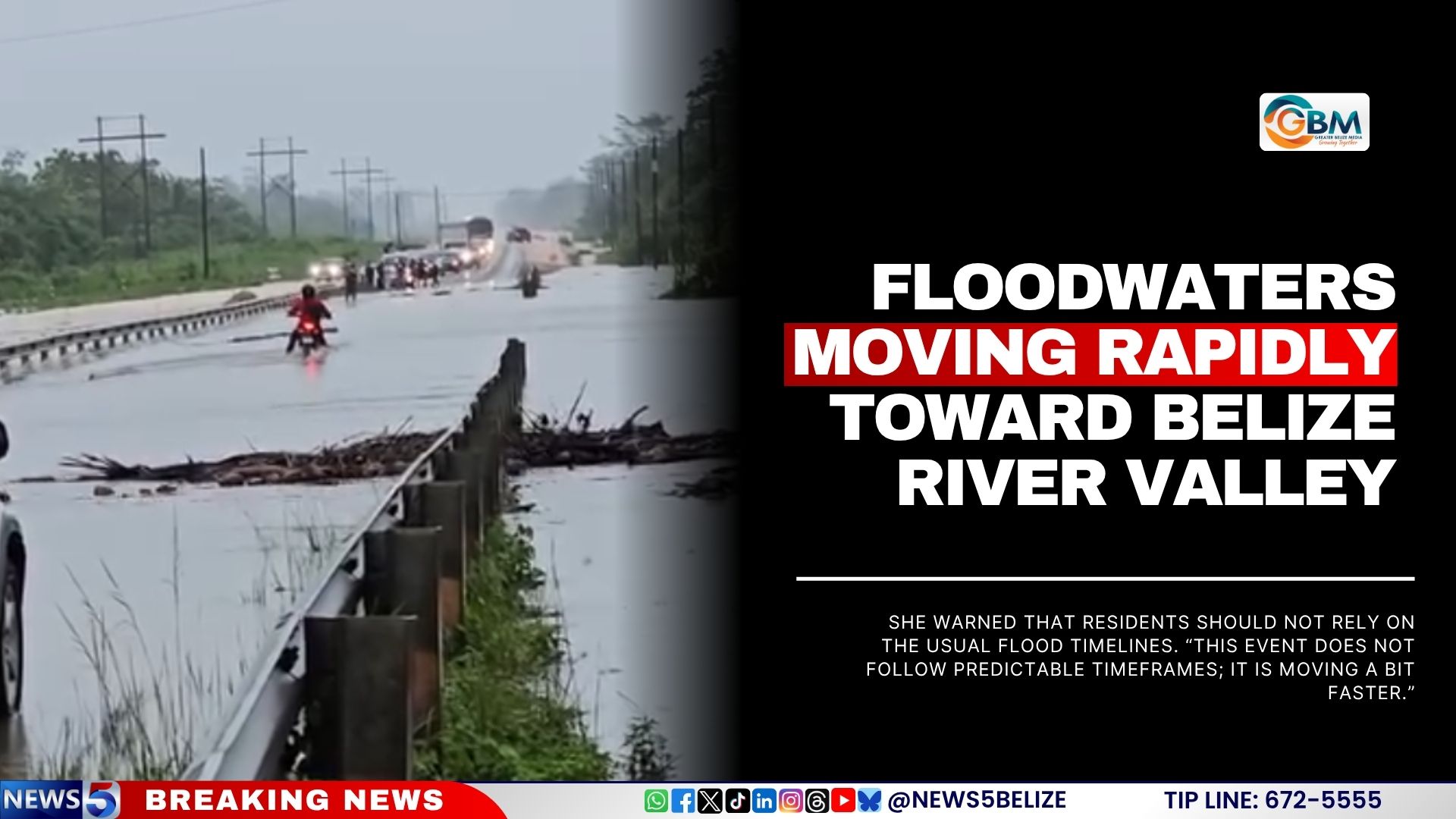
    In an unexpected development that has upended typical flood patterns in the region, floodwaters originating in western Belize are advancing toward the Belize River Valley at a pace far faster than initial projections, according to top water management officials.

    Chief Hydrologist Tennielle Hendy confirmed that local communities are already grappling with the early impacts of the advancing flood surge as of July 13, 2026. Current monitoring data shows that the river at Double Run, a community located downstream closer to Belize City, has already hit bank-full capacity, while the water line at nearby Bermudian Landing is rapidly approaching the full bank stage. “The entire Belize River Valley is already recording elevated river levels,” Hendy explained in an official briefing. “Our most recent update puts Bermudian Landing just shy of bank-full capacity, while Double Run further downstream has already hit that threshold. The flood surge is clearly moving downstream, and communities are already seeing the effects.”

    Hendy emphasized that the flood event is far from reaching its peak, noting that water levels at the upstream More Tomorrow monitoring site remain dangerously elevated, hovering around 10 meters. This sustained high volume means additional floodwater will continue to drain into the Belize River system in the coming days, prolonging the risk for downstream communities.

    One of the most striking deviations from typical flood events in the region is the unprecedented speed of the current surge, Hendy added. Under normal flood conditions, water originating from the More Tomorrow area takes roughly three full days to travel to the Belize River Valley. During this event, however, measurable rises in river levels were detected downstream in just 24 hours – a three-fold increase in speed that has caught forecasters off guard.

    This deviation from established patterns means residents cannot rely on historical flood timelines to prepare, Hendy warned. “This event does not follow predictable timeframes; it is moving a bit faster,” she said, urging households across the valley to adjust their emergency preparedness plans accordingly.

    Hendy also addressed growing public concern over Crooked Tree Village, another community at risk from the rising waters. She urged residents of the village to maintain a high state of alert as water levels continue to climb across the region. That said, current hydrological forecasts indicate the village’s main causeway – a critical connection for residents – will likely remain passable through the peak of the flood event.

  • Belize City Declares Sargassum Emergency as Seaweed Piles Up to 20 Inches Deep

    Belize City Declares Sargassum Emergency as Seaweed Piles Up to 20 Inches Deep

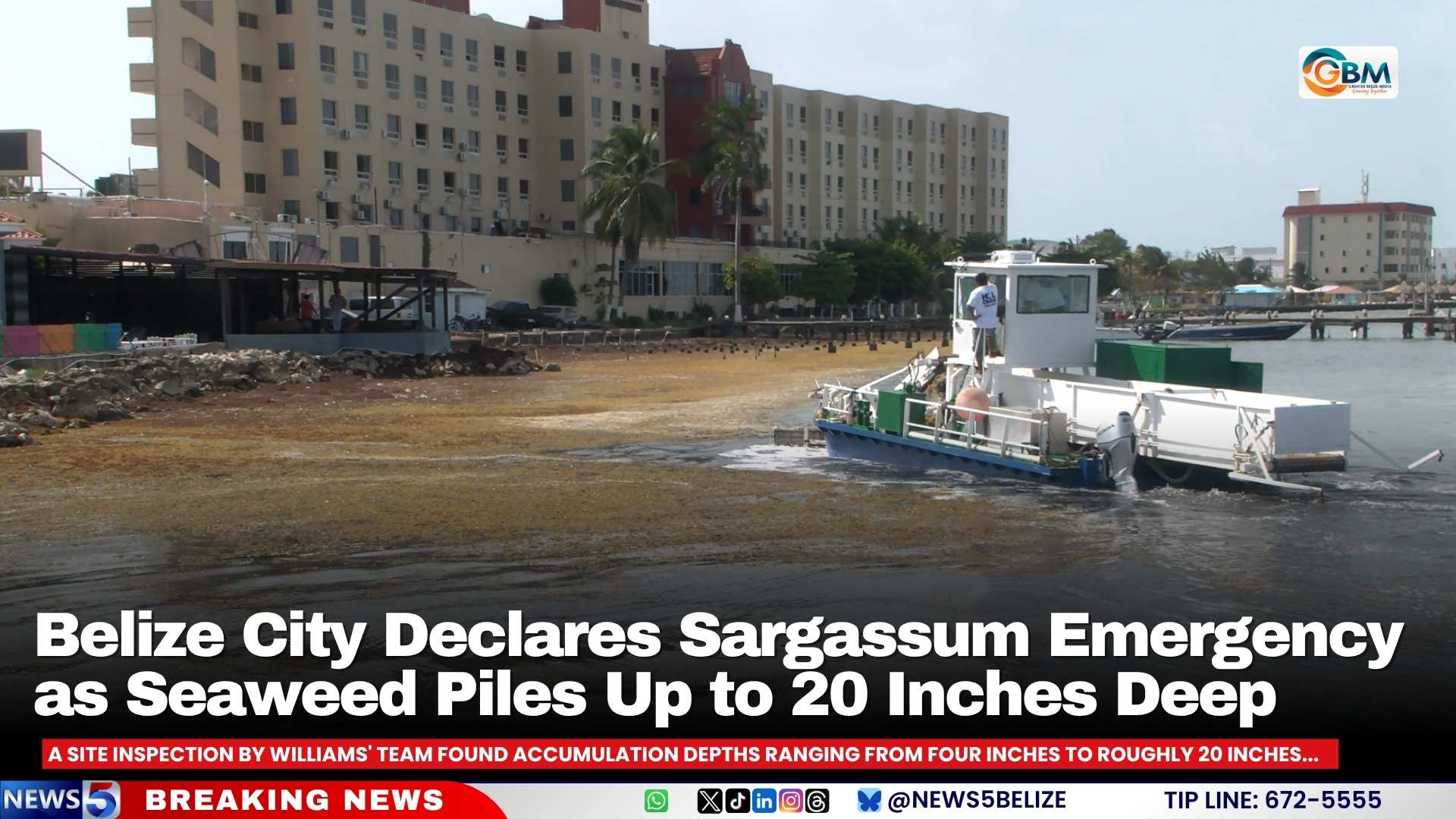
    In July 2026, Belize City is confronting an unprecedented environmental crisis as massive piles of invasive sargassum seaweed have choked the city’s popular waterfront, prompting municipal officials to move forward with a declaration of a high-priority environmental emergency. An official engineering assessment released by the city government confirms that the volume of accumulated seaweed far outpaces the capacity of natural tidal action to clear the shoreline on its own, triggering urgent calls for a coordinated, funded response to mitigate cascading public health, ecological and economic harms.

    City Engineer Floyd Williams laid out the full scope of the crisis in a formal situation report (SITREP) submitted to Mayor Bernard Wagner, which focuses on the heavily impacted Sandlighter’s Promenade and surrounding coastal areas. Williams’ inspection team documented sargassum accumulation depths ranging from 4 inches to a shocking 20 inches across the affected waterfront stretch. As the thick seaweed masses begin to decompose, they have already begun releasing toxic hydrogen sulfide that creates overwhelming offensive odors along the popular public shoreline. Inspectors also found significant volumes of human-made debris, including plastic waste and glass bottles, trapped within the sargassum mats, and confirmed that the dense buildup has severely restricted nearshore water circulation.

    A key finding from the assessment notes that between 70 and 80 percent of the total sargassum biomass is located beyond the city’s existing seawall, with the thickest deposits forming directly adjacent to the structure and thinning gradually as the mats extend out into open water. Without immediate, large-scale intervention, Williams warns the city will face compounding risks that stretch across multiple sectors. For public health, the rotting seaweed will drive sharp increases in fly and mosquito populations alongside persistent foul odors that make the waterfront uninhabitable for visitors. Ecologically, the decomposition process will deplete oxygen levels in nearshore waters and degrade water quality, threatening native marine species that inhabit the coastal ecosystem. Economically, the crisis poses a major threat to Belize’s core tourism sector: the sargassum creates an unappealing visual blight on one of the city’s most valuable public waterfront assets, and will eliminate recreational opportunities that draw both local residents and international visitors.

    Looking ahead, regional oceanographic forecasts predict additional waves of sargassum will make landfall along Belize’s coast over the coming months, leading Williams to frame the current event not as a one-time disaster, but as the start of an ongoing seasonal challenge that requires long-term planning. His report formalizes the recommendation that the Belize City Council officially classify the sargassum buildup as a High Priority Municipal Environmental Incident, and approve a two-phase Emergency Sargassum Management Programme to address the crisis.

    The proposed cleanup strategy is designed to minimize disruption to the Sandlighter’s Promenade and speed up removal operations. In the first phase, local commercial fishermen will deploy vessels and floating containment nets to corral the sargassum mats offshore and maneuver them toward the seawall. In the second phase, a long-reach excavator will load the concentrated seaweed directly into dump trucks for offsite disposal, cutting down on cleanup time and avoiding damage to the promenade’s infrastructure.

    The emergency removal operation carries an estimated price tag of BZ$170,000, and a year-round seasonal maintenance program to address recurring sargassum events brings the total projected budget for the program to between BZ$250,000 and BZ$250,000. Beyond the cleanup plan, the engineering report also recommends establishing a dedicated dedicated funding stream for future sargassum seasons, formalizing partnerships with local fishing communities, and coordinating response efforts with national government agencies to streamline the response.

    In a show of regional support, the Hol Chan Marine Reserve has already offered the use of its purpose-built sargassum harvester to assist Belize City’s cleanup efforts for a cost of BZ$10,000. Mayor Wagner has welcomed the offer, as the city grapples with a volume of sargassum that local leaders describe as unprecedented in modern records.

  • Police Reviewing Surveillance Footage in Latest Belize City Drive-By Shooting

    Police Reviewing Surveillance Footage in Latest Belize City Drive-By Shooting

    In the early hours of July 13, 2026, a brazen drive-by shooting shook Belize City, leaving one woman fighting for her life and launching a wide-ranging law enforcement investigation into the unprovoked attack. According to Assistant Commissioner of Police Hilberto Romero, head of the National Crimes Investigation Branch, the incident unfolded just after 1:10 a.m. along Youth for the Future Drive, when three unidentified assailants approached a pickup truck carrying three people from the riverside, opened fire, and fled the scene before crossing the nearby bridge.\n\nThe vehicle, a black Nissan Titan, was being driven by local businessman Austin Underwood. Riding alongside Underwood were his common-law wife, 51-year-old Doris Grant, and 31-year-old Andres Orosco, a Colombian national who was also in the truck at the time of the attack. Grant bore the brunt of the gunfire: she was struck multiple times, with wounds to her right upper arm, abdomen, and breast. As of the official police briefing held the same morning, Romero confirmed that Grant remains in critical condition receiving medical care. Neither Underwood nor Orosco have been reported injured in the attack.\n\nFollowing the shooting, forensic investigators processed the scene and recovered approximately 30 spent bullet casings, all fired from a 9-millimeter pistol. As of the latest update, law enforcement has not taken any suspects into custody, and investigators have not yet confirmed a clear motive for the public shooting.\n\nRomero told reporters that investigators are currently working through multiple avenues of inquiry, most notably reviewing surveillance camera footage from the surrounding area to identify and track the three attackers. In addition to the active manhunt, the department has mobilized additional resources to increase uniformed patrols across all neighborhoods of Belize City. The expanded presence is designed to prevent potential follow-up violence or retaliatory attacks linked to the shooting. “We have several operations ongoing at this time to prevent any form of retaliation,” Romero said in his statement to media.\n\nThe shooting marks the latest violent incident to impact Belize City, prompting a swift law enforcement response to reassure residents and curb potential further unrest. Investigators have not released additional details about possible connections to organized crime or prior disputes, saying the probe remains in its early active phase.

  • More Details on Orange Walk’s 68-Year-Old Chopped to Death

    More Details on Orange Walk’s 68-Year-Old Chopped to Death

    Authorities in Orange Walk District have opened a formal murder investigation following the gruesome discovery of 68-year-old Virginio Carrillo’s body early on July 13, 2026, in rural northern Belize. The elderly man’s remains were located along a rural road adjacent to a sugar cane field in San Lazaro Village, according to statements from the national law enforcement agency.

    In an official briefing, Assistant Commissioner of Police Hilberto Romero, who leads the country’s National Crimes Investigation Branch, confirmed that Carrillo’s body bore evidence of fatal violence: multiple severe chop wounds across the body. The horrific discovery was made by a local villager who was traveling to work in the same cane field area where the body was found. After spotting the remains, the villager immediately contacted local police to report the incident.

    Law enforcement response teams were deployed to the crime scene just after 9:30 a.m. the same day, once the emergency call about the body was processed. Investigators have so far established preliminary details around Carrillo’s final movements: he had left his regular place of work and was en route to his personal agricultural farm when he was killed. At this stage of the probe, Romero noted that no missing person report had been filed for Carrillo prior to the discovery of his body, as his disappearance was not reported to authorities before the villager stumbled on the scene.

    Forensic teams have begun processing the remote crime scene to gather physical evidence, while investigators are working to interview local residents and retrace Carrillo’s last known steps to identify a suspect and establish a motive for the killing. No suspects have been named publicly as of the latest update, and police are urging anyone with information related to the incident to come forward to assist with the investigation.