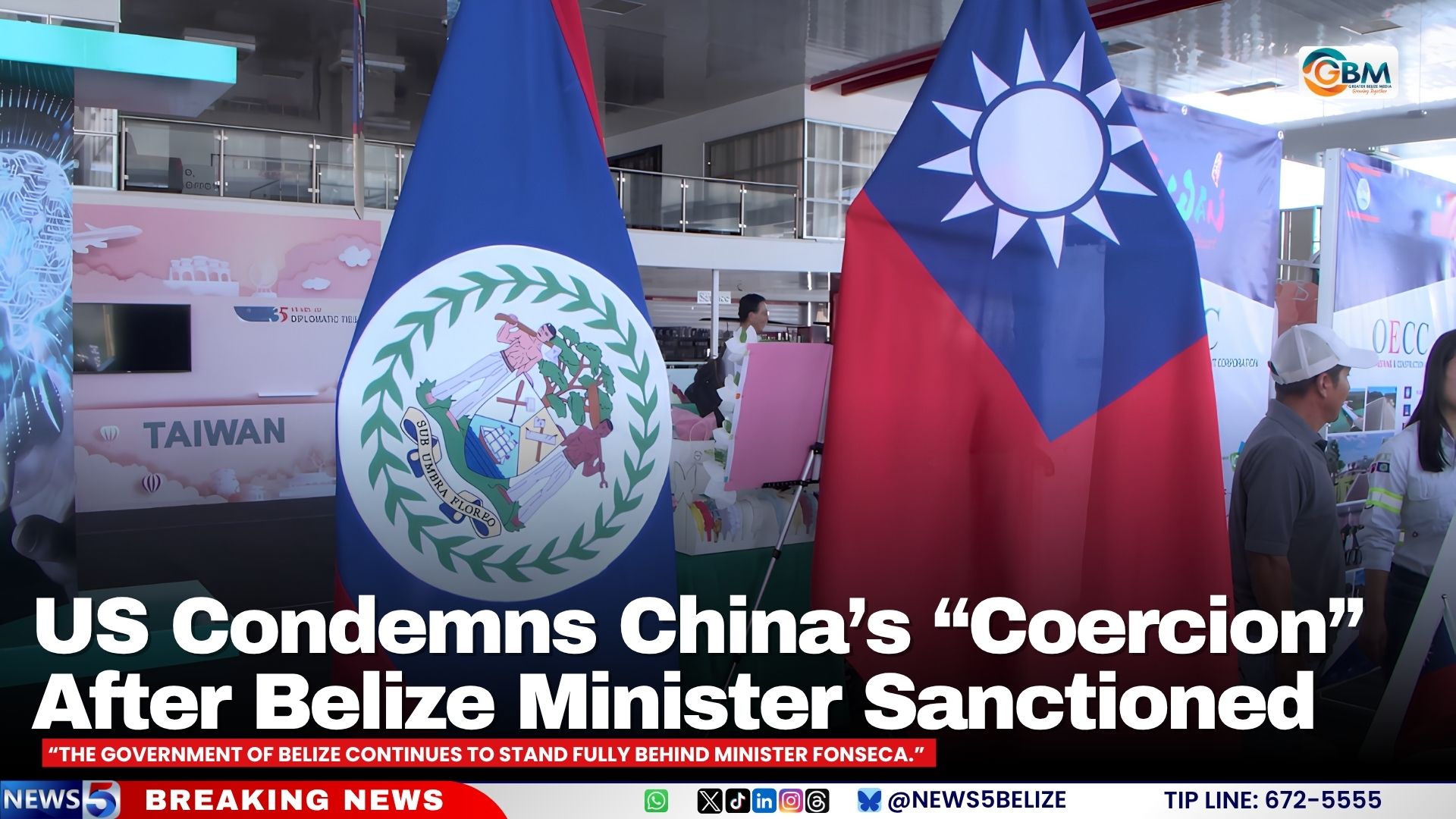
In a sharp escalation of cross-strait and diplomatic tensions, Beijing has imposed sanctions on Francis Fonseca, Belize’s foreign minister, and a senior Paraguayan minister, triggering immediate criticism from the United States over what Washington calls Chinese “coercion and aggression.” The targeted sanctions come in response to the two Latin American nations maintaining official diplomatic relations with Taiwan, a self-governing island that China claims as an integral part of its territory.
The Trump administration issued a formal rebuke of China’s actions through State Department spokesperson Tommy Pigott, who told reporters that Washington opposes Beijing’s efforts to intimidate nations in the Western Hemisphere that are exercising their legitimate sovereign rights. Pigott’s statement echoed earlier remarks from Secretary of State Marco Rubio, who affirmed that the U.S. will not permit major power rivals to establish operational footholds in the region to threaten American security or erode partnerships between Washington and regional allies. “We stand with our friends and partners, including Taiwan, to advance our shared prosperity, security, and values,” Pigott added in the official statement.
In response to the U.S. condemnation, a Chinese foreign ministry spokesperson urged Washington to halt its practice of sending misleading signals to pro-independence factions that advocate for Taiwan’s separation from China.
Belize’s foreign ministry moved quickly to reject the unilateral sanctions announced by Beijing on October 12, emphasizing that the punitive measures targeting Fonseca will not shift the Central American nation’s long-standing foreign policy. The ministry noted that Fonseca has only acted in accordance with his official duties, under the instruction of Belize’s government and in pursuit of the country’s national interests. “Measures directed at an individual for carrying out the lawful duties of his office are unwarranted, and we reject them,” the ministry said in an official release. It added that the sanctions will neither alter Belize’s diplomatic course nor prevent the government from fulfilling its core responsibilities, and that the administration remains fully unified behind Fonseca. Belize also called on all sovereign states globally to avoid adopting unilateral coercive measures against officials of other sovereign nations.
Fonseca, who reported he had not received any formal notification of the sanctions prior to the public announcement, struck a defiant tone: “Belize is proud to stand with Taiwan in support of the principles of self-determination and international law.”
Belize and Paraguay are two of the 13 remaining United Nations-recognized countries that maintain formal diplomatic relations with Taipei. China holds the position that Taiwan is merely a provincial-level administrative region with no legal right to conduct state-to-state diplomacy, a claim that Taiwan’s government categorically rejects. While the U.S. does not maintain formal diplomatic relations with Taipei, it remains the island’s most prominent and powerful international backer, providing extensive military and diplomatic support.
Reuters analysis notes that the sanctions are largely symbolic, as senior officials from Taiwan’s diplomatic allies rarely travel to mainland China for official engagements. In Taipei, Taiwanese Deputy Foreign Minister Chen Ming-chi framed the sanctions as an expansion of Beijing’s “transnational repression” targeting Taiwan and its diplomatic partners. Taiwanese Premier Cho Jung-tai condemned Beijing’s move, arguing that the Chinese government has no legal authority to interfere in the domestic affairs or diplomatic decision-making of any sovereign state, “including the Republic of China”, the formal constitutional name of Taiwan. “At the same time, we will resist any expansion of hegemony or authoritarianism,” Cho added.