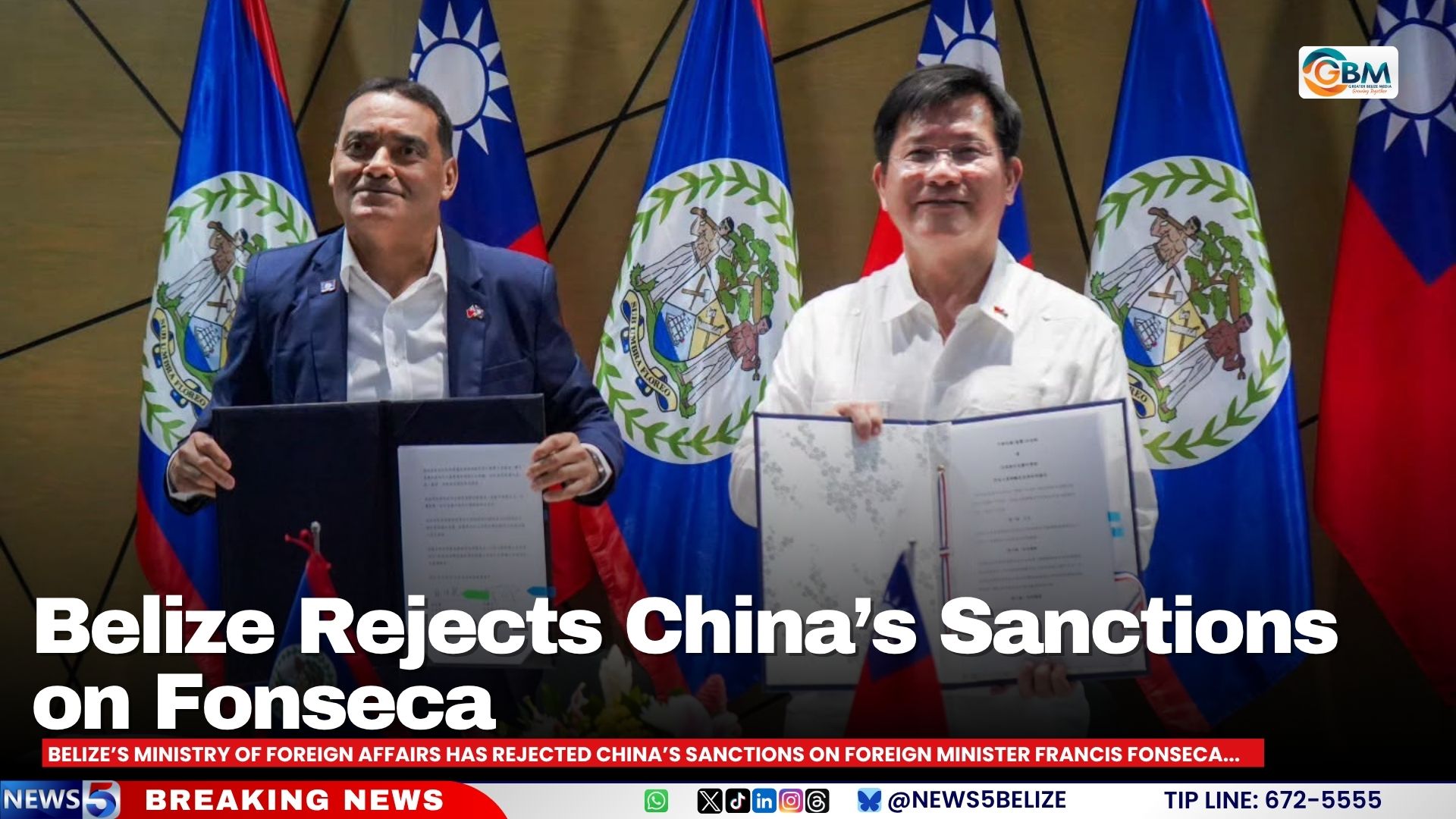
On October 12, 2026, the global diplomatic community received news of unilateral sanctions imposed by China against Belizean Foreign Minister Francis Fonseca, a move that triggered an immediate and resolute pushback from the government of Belize.
Belize’s Ministry of Foreign Affairs issued an official statement confirming that it had received notice of the punitive measures targeting Fonseca, making clear that the action would not sway the Central American nation’s long-held foreign policy direction or weaken its commitment to its core diplomatic positions. The statement stressed that the entire Belizean government remains unwavering in its full support for Fonseca, noting that the minister has always acted in strict accordance with government directives, within the scope of his lawful official duties, and exclusively to advance Belize’s national interests.
At its core, the dispute stems from Belize’s long-standing sovereign decision to maintain formal diplomatic relations and cooperative partnership with Taiwan. The Belizean government emphasized that as a fully sovereign and independent state, it is entitled under the United Nations Charter to shape its own foreign policy free from any form of external coercion or pressure. It further outlined that the bilateral relationship with Taiwan has delivered tangible, mutually beneficial outcomes across multiple key sectors, including sustainable development, public health, education, infrastructure development, environmental stewardship, and agricultural advancement. Describing the targeted sanctions against a sitting official for carrying out legitimate government work as completely unjustified, Belize formally rejected the measures outright.
Shortly after the sanctions announcement, Fonseca himself publicly commented on the issue, noting that he had not yet received formal official notification of the measures. Even so, he made clear Belize’s stance, stating that the country is proud to stand alongside Taiwan in upholding the principles of self-determination and international law.
According to reporting from Reuters, China imposed matching sanctions against Paraguay’s communications minister on the same basis, labeling both politicians as “pawns” that have “smeared Beijing”. China’s Ministry of Foreign Affairs justified the measures by citing concerns over national sovereignty and security. The sanctions package includes visa bans for entry to Hong Kong and Macau, as well as a prohibition on all Chinese entities and individual citizens conducting any form of business transaction, cooperation, or other engagement with the two targeted officials. Reuters analysts note that the sanctions are largely symbolic in practice, as senior officials from countries that maintain formal diplomatic ties with Taiwan rarely travel to mainland China, Hong Kong, or Macau.
For its part, Belize reaffirmed its commitment to building peaceful relations with all nations across the globe and pursing constructive dialogue as a means to resolve diplomatic differences. The government called on the international community to adhere to the norm of refraining from unilateral coercive measures against serving officials of other sovereign states. Moving forward, Belize announced it will maintain close consultation with its bilateral partners, regional blocs, and the broader international community, and committed to keeping its domestic public updated on any further developments related to the issue. The Belizean government also expressed gratitude for the gestures of solidarity it has already received from international and regional partners.
Taiwan’s Ministry of Foreign Affairs also issued a formal condemnation of the sanctions, asserting that China has no legal or legitimate basis to interfere in Taipei’s diplomatic relations with sovereign sovereign states.