标签: Belize

伯利兹

  • Guide Speaks Out on Viral Jaguar Cub Encounter, Calls Touching the Cub “Unnecessary” and “Reckless”

    Guide Speaks Out on Viral Jaguar Cub Encounter, Calls Touching the Cub “Unnecessary” and “Reckless”

    A viral video capturing two men cornering and touching a wild jaguar cub in Belize’s Mountain Pine Ridge Reserve has sparked fierce backlash from the global conservation community this week, and the expedition guide accompanying the pair has now broken his silence to condemn the incident as unnecessary and recklessly dangerous.

    Leslie Penner, the guide who led the two brothers on a birdwatching excursion that devolved into the controversial encounter, shared new details with local outlet News Five to contextualize the widely shared footage, revealing that the incident unfolded unexpectedly during a routine trail exploration.

    According to Penner’s account, the group first spotted an adult female jaguar along the trail ahead of their off-road vehicle, before her young cub emerged walking along the path toward its mother. That was when Ruben, one of the two brothers in the group, made the unplanned decision to exit the vehicle’s back seat and move toward the front to get a closer, unobstructed view of the big cat cub – a choice that immediately triggered alarm for Penner.

    Penner said he acted quickly to intervene, voicing his immediate concern about the safety risk and attempting to position the vehicle’s passenger door to block Ruben’s path toward the cub. But his efforts failed: the cub veered off the trail onto the passenger side of the vehicle, moving into the same area where the adult jaguar had been spotted just moments earlier. Penner added that he did not even realize Ruben had made physical contact with the cub until after the encounter had concluded.

    In his statement, Penner aligned with widespread criticism of the incident, calling the act of touching the wild jaguar cub an unnecessary, reckless choice that created avoidable risk of dangerous conflict between humans and wildlife. Penner noted that Ruben failed to recognize the gravity of the danger he created in the moment, saying the possibility that touching the cub could lead to harm for either humans or the jaguar family did not cross his mind, and he would not have acted had he understood the risk.

    Notably, Penner defended the brothers’ broader history with conservation work in Belize, explaining he has known the pair for many years and praised their ongoing efforts to advance conservation among Belize’s conservative Mennonite community. Penner added that the brothers visit the country regularly and have established a formal agreement with local poultry farmers: they guarantee that any hawks preying on farmed chickens will be safely relocated rather than killed, and they reimburse farmers for any chickens lost to predation under the agreement – a commitment they have consistently honored.

  • Viral Jaguar Cub Video: “Unnecessary, Reckless,” Says Friend

    Viral Jaguar Cub Video: “Unnecessary, Reckless,” Says Friend

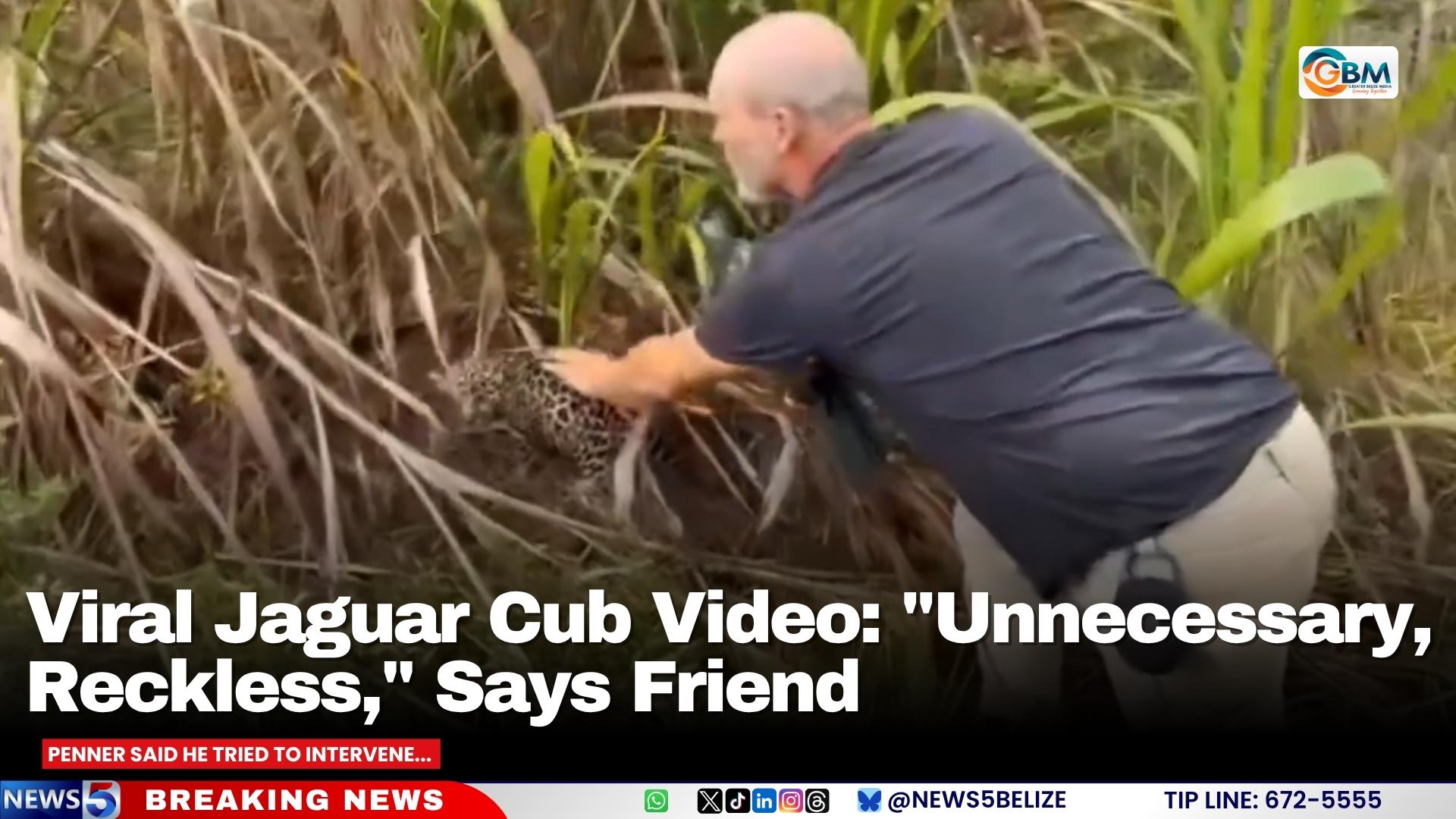
    A viral video capturing two men cornering and touching a young jaguar cub in Belize’s Mountain Pine Ridge reserve has ignited fierce condemnation from wildlife conservation experts across the globe this week, and a third person present during the incident has now stepped forward to share new details of the problematic encounter. Leslie Penner, who describes himself as a long-time friend of the two brothers at the center of the controversy, provided an exclusive account to local outlet News Five, outlining how what began as an ordinary birdwatching trip spiraled into an incident that puts both human and big cat safety at risk.

    According to Penner’s version of events, the group was navigating remote backcountry trails in the protected reserve when they spotted an adult female jaguar on the path ahead of their off-road vehicle. Moments later, they noticed her cub walking along the same trail, moving directly toward its mother. That is when, Penner says, one of the brothers—identified only as Ruben—made the sudden decision to exit the vehicle to get a closer look at the young animal.

    “I immediately felt a spike of concern, because I knew just how much danger that decision put Ruben in,” Penner recalled in his interview. Penner told reporters he attempted to stop Ruben from approaching the cub, holding the vehicle’s passenger door as close to Ruben as possible to block his path, but his intervention did not succeed. The cub eventually veered off the trail toward Ruben’s position, moving into the same underbrush where the adult jaguar had been spotted just moments earlier. Penner added that he did not even realize Ruben had made physical contact with the cub until after the encounter had concluded, as the interaction unfolded on the opposite side of the vehicle from where he was positioned.

    In his statement, Penner echoed the widespread criticism of the incident that has emerged from conservation circles, calling the brothers’ actions completely avoidable and dangerously irresponsible. He emphasized that the encounter created an unnecessary risk of violent conflict between humans and wild jaguars, a conflict that could have easily been avoided entirely if the group had stayed inside their vehicle and observed the animals from a safe distance. Penner also sought to contextualize Ruben’s actions, noting that Ruben failed to recognize the level of danger he created in the moment. “The idea that touching the cub could lead to serious harm for either the jaguar family or himself never even crossed Ruben’s mind,” Penner explained. “He never would have approached if he had stopped to think through the consequences.”

    Notably, Penner also pushed back against the idea that the brothers are entirely unconnected to conservation work, pointing to their long-standing efforts to promote wildlife protection among Belize’s conservative Mennonite community. Penner explained that the brothers visit Belize regularly, and have a standing agreement with local poultry farmers: if the farmers do not harm hawks that prey on their chickens, the brothers will reimburse the farmers for any birds lost to the birds of prey. Penner confirmed that the brothers have always honored this agreement, which has reduced retaliatory killing of raptors in the region.

    Jaguar populations across Central America face ongoing threats from habitat loss, human-wildlife conflict, and poaching, with Belize hosting one of the region’s last remaining stable wild jaguar populations. Conservationists have warned that unnecessary human interactions with big cat cubs can trigger defensive attacks from protective mother jaguars, and in some cases can lead to adult jaguars abandoning their young if the cub carries unfamiliar human scents. This incident has already sparked renewed calls for stricter enforcement of wildlife viewing rules in Belize’s protected areas, with advocates pushing for mandatory education on responsible wildlife interaction for all visitors to ecotourism sites.

  • MIDH Asks River Valley Villagers for “Some Patience” for 14 More Months

    MIDH Asks River Valley Villagers for “Some Patience” for 14 More Months

    Since early March, commuters and commercial drivers crossing two critical river crossings in Belize’s Belize River Valley — the Sebastian and Bermuda Landing bridges — have faced persistent single-lane traffic restrictions. Frustration has mounted among local villagers and regular users over the glacial pace of construction, with growing calls for the government to explain project delays and outline a clear completion timeline.

    In an official interview with local outlet News 5, Evondale Moody, chief engineer for Belize’s Ministry of Infrastructure Development (MIDH), addressed public concerns, confirming that while the rehabilitation project remains on its pre-approved schedule, completion remains more than a year away. The two aging structures, which were originally designed as paired parallel bridges to accommodate separate one-way traffic lanes, have not received major upkeep for decades, making full rehabilitation a complex, time-intensive process.

    To minimize full closures and maintain continuous access for local communities, MIDH mandated the contracted construction team to work on one parallel span at a time. That means one half of each bridge has been fully removed from service to allow for critical structural work, including full sandblasting to remove corrosion and aged material, followed by targeted structural repairs and resurfacing. Before any completed span can be reopened to traffic, Moody explained, every component of the renovated section must be fully stripped of damaged material and rebuilt to meet modern safety standards.

    The 18-month project launched in March 2026, leaving roughly 14 months of work remaining as of mid-July. Beyond structural rehabilitation of the two bridges, the project also adds critical riverbank erosion protection measures — an upgrade prompted by severe flooding in 2025 that eroded the earthen approach to the Sebastian Bridge, forcing an emergency full closure that disrupted travel for weeks.

    MIDH has deployed on-site community liaisons to keep nearby village residents updated on project milestones and scope, and the local area representative for the region has also been briefed on all work plans. Moody reiterated that the ministry is committed to delivering long-lasting, safe bridge infrastructure, and is working as efficiently as possible given the budget and resources allocated to the project. He urged local residents to continue bearing with the ongoing traffic disruptions as crews work to complete the critical upgrades.

  • High Court Acquits Andre Arthurs in 2025 Murder Case

    High Court Acquits Andre Arthurs in 2025 Murder Case

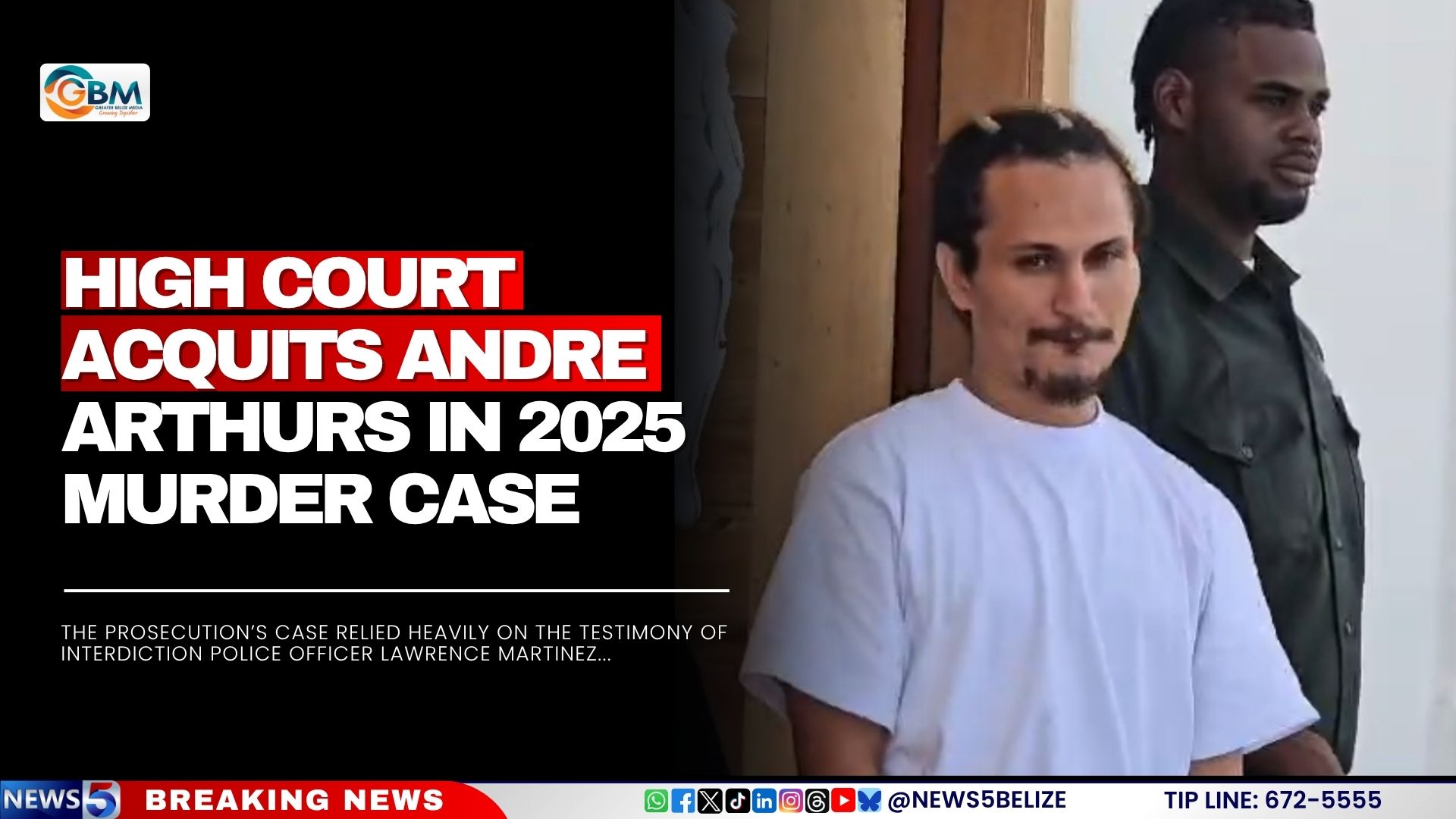
    On a Tuesday session in July 2026, a dramatic conclusion unfolded at the Belize High Court: 28-year-old construction worker Andre Arthurs walked free after being acquitted of the 2025 murder of 33-year-old Mark Usher Jr. in Belize City.

    Usher was killed in a public shooting at the intersection of Jabiru Street and Fabers Road in March 2025, a case that has dragged on for more than a year. Arthurs, a resident of the Fabers Road area, had been held in pre-trial detention after being formally charged with the fatal shooting. But the prosecution’s case quickly unraveled in court over a series of critical evidential gaps that the Crown could not resolve.

    Presiding over the case, Justice Nigel Pilgrim delivered the not-guilty verdict after ruling that the prosecution failed to meet the required legal standard of proving guilt beyond a reasonable doubt. The entire prosecution’s argument rested almost entirely on the identification testimony of Interdiction Police Officer Lawrence Martinez. Martinez told the court that moments after the shooting, he observed a man in a blue shirt riding a bicycle away from the crime scene. He later picked Arthurs out during a group identification procedure.

    While Justice Pilgrim acknowledged that Martinez appeared to be a sincere and credible witness on the stand, major procedural flaws in the identification process created unavoidable doubt. The court learned that the prosecution never provided evidence confirming that other participants in the identification lineup matched Arthurs’ core physical characteristics, including height, skin tone, age, and general build. Without that critical alignment, the court could not confirm that the identification was not a result of improper suggestion or chance.

    The evidential deficiencies extended far beyond the flawed identification process. Investigators never tested Arthurs’ hands for gunshot residue, a standard step in most shooting investigations that could have tied him to the weapon. The prosecution also failed to produce any DNA evidence linking Arthurs to the crime, never recovered the alleged firearm used in the shooting, and never obtained a search warrant to connect the reported blue shirt to Arthurs. Even the suspect’s abandoned bicycle, a key piece of physical evidence described by the officer, was never properly accounted for in the investigation, leaving a host of unanswered questions about its connection to the case.

    Justice Pilgrim emphasized in his ruling that the Crown bears the legal burden of proving every element of a criminal charge beyond a reasonable doubt. In this case, that meant confirming beyond question that the identification evidence was reliable enough to conclude Arthurs was the shooter. Without that certainty, any guilty conviction would be legally unsound.

    Throughout the entire trial, Arthurs repeatedly maintained his innocence. He told the court that at the time of the shooting, he was at his home hosting a barbecue with friends, placing him far from the crime scene. After the verdict was read, Arthurs left the courthouse surrounded by supporting relatives, a free man after more than a year of legal uncertainty. Mark Usher Jr.’s mother, who attended the ruling to hear the outcome, left the courthouse shortly after the verdict was announced. Andre Arthurs was represented throughout the proceedings by defense attorney Simeon Sampson.

  • “The Drums Are Silent”: Music Producer Kendoyll Simpson Dies After Cancer Battle

    “The Drums Are Silent”: Music Producer Kendoyll Simpson Dies After Cancer Battle

    The Belizean music industry is engulfed in grief this week following the passing of legendary producer and audio engineer Kendoyll Simpson, known professionally as KSBEATS, who lost his two-year private battle with cancer on Sunday. In an official public statement, Simpson’s partner Anika Perez shared new details about the producer’s final years, revealing that Simpson made the deliberate choice to keep his cancer diagnosis and treatment journey hidden from the public.

    As a deeply private individual, Simpson chose not to disclose his illness to avoid causing worry and sorrow for his loved ones, fans, and colleagues within the music community. Perez added that Simpson also rejected public attention out of concern that pity from others would erode his mental strength and disrupt his ability to keep creating the music he dedicated his life to. Throughout his illness, Simpson remained committed to his craft, continuing to write and produce music up until his body could no longer sustain his work.

    “While this news may come as a shock to many, we simply honored and respected his wishes throughout his battle,” Perez noted in her statement. Tributes to Simpson have begun to spread across Belize’s music scene, where the 20-plus year veteran built a legacy as one of the country’s most skilled and respected production talents. His discography crossed multiple musical genres and extended beyond Belize’s borders, as he collaborated with artists across the Central American region and played a foundational role in shaping the modern sound of Belizean music.

    Beyond his professional contributions, Simpson leaves behind his 10-year-old daughter, whom Perez described as the object of his deepest love. In a poignant closing to her statement, Perez paid tribute to Simpson’s enduring impact: “The drums are silent, but your rhythm lives on in every life you’ve touched.” The Belizean music community has already begun celebrating Simpson’s life and career, highlighting both his extraordinary talent as a producer and his quiet resilience in the face of his illness.

  • Belize: A Small Country With Its Hands on the Region’s Financial Steering Wheel

    Belize: A Small Country With Its Hands on the Region’s Financial Steering Wheel

    In a historic milestone for the small Central American nation, Belize has assumed the presidency of the Council of Ministers of Finance or Treasury of Central America, Panama and the Dominican Republic (COSEFIN) — marking the first time the country has held the top leadership role in the regional body since its founding. The handover ceremony took place during the council’s 58th ordinary session held in Guatemala City, where the Dominican Republic’s Ministry of Finance and Economy officially transferred the presidential mandate to Belize’s Ministry of Economic Transformation.

    COSEFIN serves as a critical coordinating platform that brings together finance ministers and senior economic officials from across the member states. Its core mandates span aligning regional policies on public finance governance, cross-border tax administration, disaster risk financing, and collective economic resilience. One of the council’s most impactful contributions to regional stability has been its support for establishing the Caribbean Catastrophe Risk Insurance Facility, a groundbreaking financial mechanism that delivers rapid emergency payouts to member governments in the aftermath of major hurricanes and other natural disasters. These funds often reach affected countries long before traditional international aid or development loans are disbursed, filling a critical gap in early emergency response.

    The importance of COSEFIN’s work has grown sharply in recent years, as climate change drives an increase in the frequency and severity of extreme weather events, pushing disaster-related economic losses to record highs. Regional data underscores the scale of the challenge: since 1980, nine nations across the COSEFIN membership have suffered single-disaster losses that exceeded half of their total annual gross domestic product. Meanwhile, annual average infrastructure damage across Central America alone is estimated at $4 billion, a constant drain on public budgets that slows long-term development.

    Speaking after the handover, Belize’s Minister of Economic Transformation Dr. Osmond Martinez framed the appointment as a defining moment for the country. Rejecting the idea that regional leadership is reserved for larger economies, Martinez emphasized that “Belize understands that leadership is not measured by the size of an economy but by the ability to listen, build consensus, and unite efforts around a shared purpose.”

    Over the coming six months of its presidency, Belize will steer high-priority regional discussions across four core areas: strengthening fiscal resilience in the wake of economic and climate shocks, improving standards of public financial management, modernizing cross-border tax administration systems, and expanding coordinated disaster preparedness across member states. The appointment puts one of the region’s smallest national economies at the very center of critical decision-making that will shape climate and economic resilience for more than 75 million people across Central America and the Caribbean.

  • “You Touch One, You Touch All”: Why Belize’s Garinagu Took to the Streets

    “You Touch One, You Touch All”: Why Belize’s Garinagu Took to the Streets

    On a recent morning in Belize City, hundreds of Garifuna activists and community members, organized under the umbrella of the National Garifuna Council, launched a coordinated peaceful demonstration to denounce forced land dispossession of Garifuna communities in neighboring Honduras. The procession began at Marion Jones Stadium, with participants moving rhythmically to the beat of traditional Garifuna drums, lifting their voices in collective song and carrying hand-painted placards that declared unwavering solidarity with Garifuna residents of San Juan de Lempira. Their destination was the Honduran Embassy, where they aimed to deliver a clear, unified message to the Honduran government that human rights violations against indigenous Garifuna peoples will not go unchallenged.

    Recent eyewitness reports of armed state security forces entering San Juan de Lempira to forcibly remove Garifuna families from their traditional ancestral lands sparked the demonstration. Placards carried by marchers featured slogans ranging from “Justice for San Juan” and “Garifuna Rights Are Human Rights” to “Our Land is Not For Sale,” with many signs also commemorating the 1937 San Juan massacre that displaced hundreds of Garinagu nearly a century ago.

    Ifasina Efunyemi, an executive member of the National Garifuna Council, addressed the crowd outside the embassy as Honduran diplomatic officials emerged to observe the protest. “We see uniformed military and police, fully armed, turning against our people to remove us yet again from the lands that have sustained us for generations. This we cannot allow to happen,” Efunyemi stated. Echoing the core collective ethos of the transnational Garifuna community, Efunyemi added: “We are one people. So you touch one, you touch all. We are a peaceful people, but if you stir us up, we are a warrior people.”

    The demonstration carries deep historical and familial ties for Belize’s Garifuna population, whose roots can be traced directly to survivors of the 1937 San Juan massacre. Following the violent repression and mass killing of Garinagu in the Honduran community that year, hundreds of survivors fled north to Belize, where today thousands of Garifuna residents across towns including Dangriga, Hopkins, Seine Bight, Punta Gorda, Georgetown and Barranco can trace their ancestry directly to those displaced refugees.

    The current crisis marks a reversal of a decade-old legal victory for indigenous land rights: in 2015, the Inter-American Court of Human Rights issued a landmark ruling in favor of Honduran Garifuna communities, formalizing their legal claim to the San Juan lands. The National Garifuna Council warns that the 2026 deployment of military forces to the region represents a deliberate, renewed attempt to displace Garifuna communities and seize land that they have already fought a lengthy legal battle to protect.

    Efunyemi emphasized that the demonstration outside the Honduran Embassy reflects far broader support than the visible crowd in Belize City suggests, noting that millions of Garifuna people and indigenous rights allies across the region and globe stand in solidarity with the San Juan community. “Even though the numbers that you see here may seem small to you, you are not seeing the millions that stand with us right at this moment,” Efunyemi said. The protest also sends a broader message to all regional governments whose nations were built in part by Garifuna labor and contribution: that the collective fight for indigenous land rights will not be silenced.

  • US-Iran Tensions Escalate as Naval Blockade Threatens Strait of Hormuz

    US-Iran Tensions Escalate as Naval Blockade Threatens Strait of Hormuz

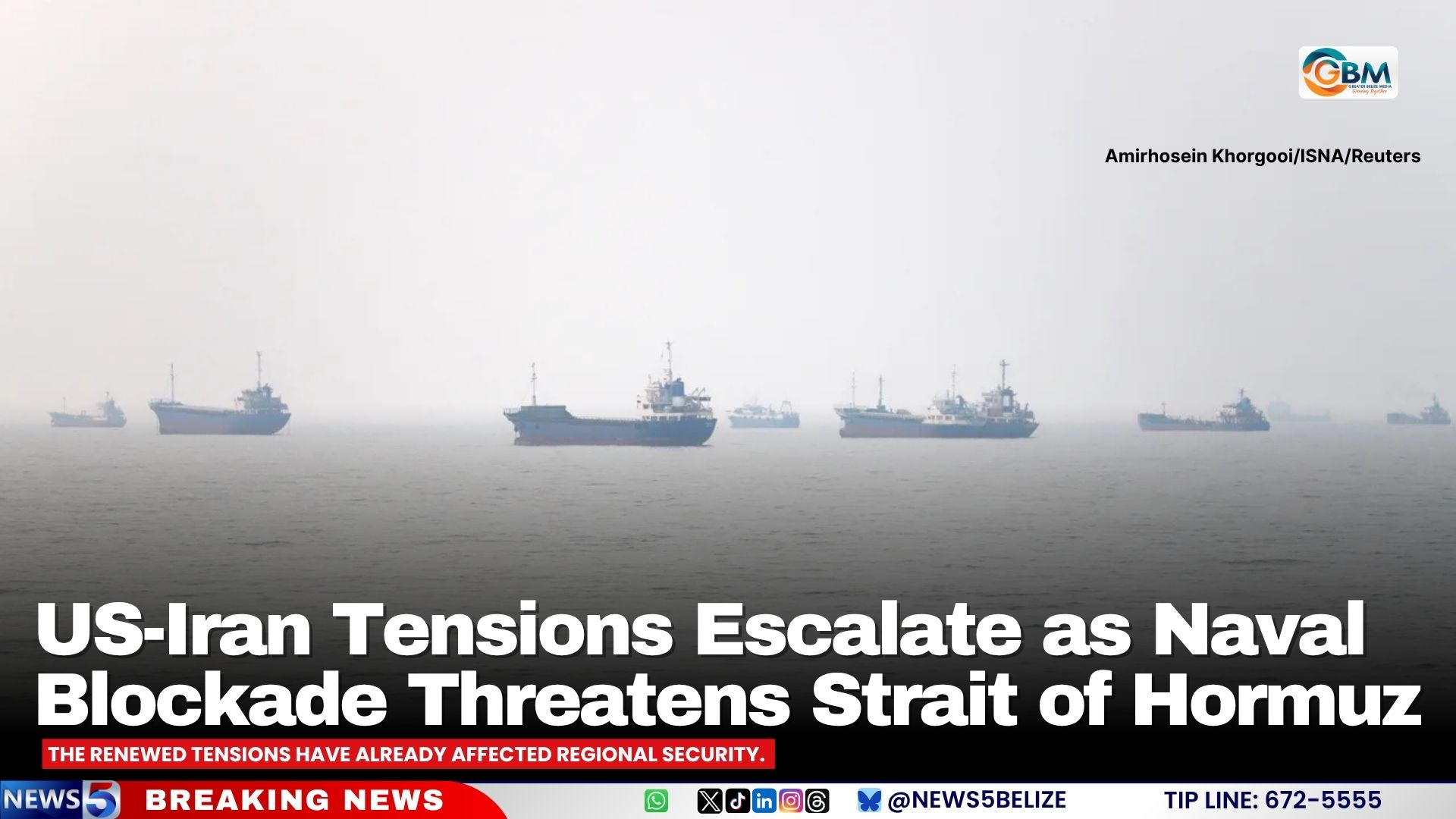
    On July 14, 2026, a fresh wave of geopolitical volatility is sweeping the Middle East, as rising tensions between the United States and Iran push the two powers closer to a broader military confrontation. The trigger for this latest escalation comes after a fragile ceasefire between Washington and Tehran collapsed, clearing the way for the US to reinstate a naval blockade in waters adjacent to the Strait of Hormuz — one of the world’s most strategically critical maritime transit chokepoints.

    According to a statement from US Central Command, the blockade is scheduled to resume at 4:00 p.m. Eastern Time on the same day the announcement was made. In response to the move, Iranian officials have issued a stark warning: any American strike targeting the suspected underground nuclear facility called Pickaxe Mountain will be met with a devastating, overwhelming counter-response.

    Stretching between the Iranian coast and the Sultanate of Oman, the Strait of Hormuz handles nearly a fifth of the world’s daily oil consumption and a third of global liquefied natural gas shipments, making any disruption to navigation here a shock to the global energy system. Its unique geography, with a narrow shipping lane just miles wide, means it has long been a flashpoint for global geopolitical rivalry.

    Already, the spike in tensions has triggered security disruptions across the Gulf region. Kuwait’s military confirmed it was actively responding to unprovoked hostile aerial attacks within its territory, and security agencies across all Gulf Cooperation Council states have maintained a high-level alert status. The European Union Aviation Safety Agency (EASA) has issued an urgent advisory urging all commercial airlines to avoid flying through the airspace of Bahrain, Qatar, Kuwait, the United Arab Emirates, and large sections of the Gulf of Oman, citing sharply elevated risks of military conflict targeting civilian infrastructure.

    In a sudden policy shift, former US President Donald Trump reversed a planned proposal to impose a 20% reimbursement fee on all commercial cargo passing through the Strait of Hormuz. The fee, initially framed as a way for the US to recoup costs for its regional security operations, drew widespread international condemnation from legal experts and trading nations who argued it would violate long-standing international law governing free passage through global waterways. Trump announced that instead of the fee, Washington will negotiate new bilateral trade and investment agreements with Gulf nations to cover security expenses.

    Global energy markets have already priced in the growing uncertainty, with benchmark Brent crude jumping to its highest level in more than a month as investors brace for potential disruptions to oil shipments. Analysts warn that any prolonged closure or blockade of the strait could send global oil prices soaring, triggering inflationary pressures across major economies and derailing fragile post-pandemic growth trajectories.

  • Sexual Assault Case Against Fomer Police Officer Dismissed

    Sexual Assault Case Against Fomer Police Officer Dismissed

    In a recent ruling delivered on July 14, 2026, a San Ignacio magistrate has dismissed the sexual assault charge brought against former Belize Police Department officer Durmen Dawson, determining that Dawson has no case to answer on that count.

    Both Dawson and the complainant, Luanna Gillett — herself a former police officer — appeared before the San Ignacio Magistrate’s Court for the latest proceedings. While the sexual assault allegation will not move forward, Dawson remains required to respond to a separate charge of harm stemming from the same 2024 incident. Notably, Dawson appeared in court without legal representation during the ruling.

    The case traces back to an incident that unfolded on February 14, 2024, inside the San Ignacio Police Station. Gillett alleged that Dawson sexually assaulted her while both were serving as members of the Belize Police force. Security camera footage of the encounter was leaked and spread widely across public channels shortly after the incident made headlines.

    Following the initial allegation, the Belize Police Department launched an internal disciplinary tribunal to investigate the claims. The tribunal found Dawson guilty of misconduct, and recommended his termination from the force due to the severity of the sexual assault allegation. Then-Commissioner of Police Chester Williams confirmed to media outlets that he upheld the tribunal’s recommendation, and Dawson was formally dismissed from the department after the internal process concluded. Alongside disciplinary action, criminal charges for both sexual assault and harm were brought against Dawson ahead of the court proceedings.

  • Sexual Assault Case Against Former Police Officer Dismissed

    Sexual Assault Case Against Former Police Officer Dismissed

    In a high-profile court decision handed down on July 14, 2026, a San Ignacio magistrate has dismissed the sexual assault charge brought against former Belize Police Department officer Durmen Dawson, ruling the defendant has no case to answer on that count.

    The proceeding, held at the San Ignacio Magistrate’s Court, saw both Dawson and his accuser, Luanna Gillett, present in the courtroom. While the sexual assault allegation will not move forward to a full trial, Dawson remains required to defend against a lesser charge of harm in subsequent court proceedings. Notably, Dawson appeared without legal representation during this critical hearing.

    The case traces its origins back to a February 14, 2024 incident that unfolded inside the San Ignacio Police Station. At the time of the alleged incident, Gillett was also an active-duty officer with the Belize Police Department. She claimed that Dawson had sexually assaulted her while on department premises. Footage of the encounter, captured by the station’s built-in surveillance system, spread widely across public channels shortly after the incident became public, drawing significant public attention to the case.

    Following the initial allegations, the Belize Police Department launched an internal disciplinary tribunal to investigate the conduct of Dawson. Then-Commissioner of Police Chester Williams confirmed the outcome of that internal process in public statements at the time. The tribunal’s adjudicator found Dawson guilty of the allegation and formally recommended his termination from the force, citing the severity of the sexual assault charge. Williams affirmed that recommendation, and Dawson was officially dismissed from the department after the internal process concluded. Beyond the internal disciplinary action, law enforcement authorities also brought formal criminal charges of both sexual assault and harm against Dawson, leading to the two-year-long court process that culminated in this week’s ruling.