标签: Belize

伯利兹

  • Mayor Wagner’s Succession Choice Divides His Party’s Ranks

    Mayor Wagner’s Succession Choice Divides His Party’s Ranks

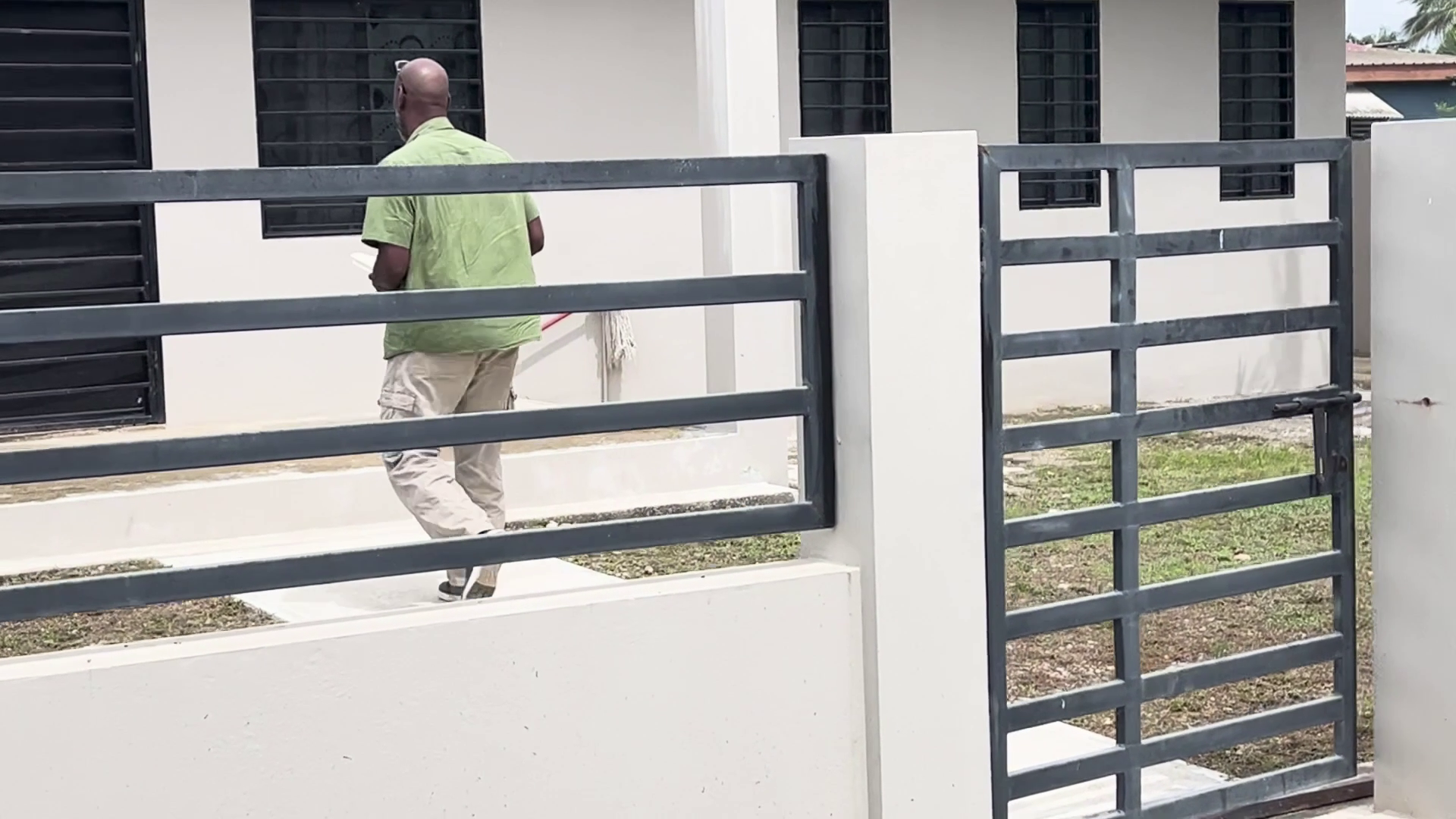
    Ahead of the upcoming 2026 Belize City municipal election, a high-profile endorsement from sitting Mayor Bernard Wagner has opened deep divisions within the ruling People’s United Party (PUP), igniting internal debate over political succession, nepotism concerns, and democratic process within the party ranks.

    Wagner has publicly thrown his full support behind current Deputy Mayor Eluide Miller, who is also his son-in-law, to carry the PUP’s banner in the election. In a recent on-camera interview with local media, the mayor defended his endorsement, arguing that Miller has demonstrated the core attributes needed to lead Belize City: strong work ethic, unwavering moral character, consistent dedication to public service, and a career built on grassroots effort rather than inherited privilege.

    “Me endorsing someone does not guarantee, because the will of the people will prevail,” Wagner told reporters. “I as the current mayor who has been around the young man for some time see the qualities, work ethics, moral values, dedication and it has been not a golden spoon. It has been about working and preparing. When you prepare you are able to meet the opportunity and Eluide in my view, as a young person has all the qualities to be a great mayor for the city.”

    The mayor also pushed back against suggestions that his endorsement undermines other contenders, acknowledging that former Deputy Mayor Allan Pollard – Wagner’s political ally since 2018, currently serving as a city councilor overseeing the high-profile public works portfolio – is also a strong, viable candidate for the nomination. Wagner maintained that he retains the right to express personal preference for a candidate, just as party members and voters will retain their right to select their preferred nominee in the end.

    Despite Wagner’s attempt to frame the contest as a fair, open process, his endorsement has triggered significant pushback from within PUP ranks. A growing bloc of party members has rallied around Pollard, setting the stage for a tense, closely watched internal nomination battle that has already brought unaddressed questions of political legacy, familial influence and partisan loyalty to the forefront of public discourse.

    When pressed on whether he would support an open party convention to select the nominee or push for a predetermined endorsement, Wagner declined to take a formal position, deferring that decision to the broader PUP party leadership. Both Miller and Pollard have proven electoral track records in past city elections, meaning the upcoming nomination contest is expected to be competitive right up to the final vote. This report is a transcript of a televised evening news broadcast from local Belizean media, originally published online on May 11, 2026.

  • Maya Leaders Say Indian Creek Conflict Is Just the Beginning

    Maya Leaders Say Indian Creek Conflict Is Just the Beginning

    Escalating tensions over unaddressed land rights violations in Belize’s Indian Creek have sparked coordinated action from Indigenous Maya leaders across the Toledo District, who warn the current crisis is just the first of many flashpoints if the national government fails to intervene to protect communal land claims.

    On Friday, dozens of leaders from affected communities traveled to Laguna Village to stand in collective solidarity, framing the Indian Creek unrest not as an isolated local dispute, but as a direct consequence of decades of government inaction, discriminatory policy, and systemic injustice targeting Maya territorial sovereignty. The unified group is preparing to bring their demands directly to Prime Minister John Briceño, pushing for urgent action on long-stalled land protections.

    Edwin Caal, chairman of Golden Stream Village, one of the communities bracing for potential conflict, outlined three core grievances driving the growing unrest. First, the government has repeatedly delayed formal demarcation of traditional Maya communal lands, leaving boundaries ambiguous and open to encroachment. Second, officials have failed to pass legislation that would legally enshrine protected rights to these territories, instead advancing proposals that would restrict Indigenous land access – including a controversial plan that would cap individual Maya land holdings at just five acres per person, a limit the community has outright rejected.

    Caal also leveled accusations of biased enforcement against government authorities, claiming officials consistently side with private third-party developers and outside interests over Indigenous residents when disputes arise. “When the third party do something like bulldozing and we report it, they don’t come ready to help us. But the minute we begin to protect our land from encroachment, they are ready to stop us, sometimes use police to stop us,” Caal said.

    Similar claims of forced displacement and government complicity come from San Marcos Village, where chairman Alberto Muku explained that community members have lived and farmed on their traditional lands since the early 1990s, only to face systematic encroachment in recent years. An outside individual identified as Papi Pena has cleared large swathes of occupied community land with bulldozers, pressuring some residents to abandon their properties. While some residents were offered small financial payouts to leave, others received no compensation at all for their displacement, Muku said.

    Muku also went public with accusations of political manipulation, revealing that he was personally handpicked by a ruling party political influencer to take over as village chairman, with the expectation that he would fragment community organizing around land rights. Rejecting that pressure, he joined the collective action in Laguna to uphold the demands of his constituents.

    “Our population is growing, and our children depend on these lands for their future,” Muku said, adding that the current government’s actions will have lasting electoral and historical consequences for the People’s United Party administration.

    In a direct address to Prime Minister Briceño, Muku emphasized that Maya communities are voting members of Belizean society, many of whom have supported the current ruling party. “History will remember your actions toward us today, and we will ensure that future generations remember them as well when we go to the polls [in the next general election],” he warned.

    As tensions continue to simmer across southern Belize, Maya leaders are clear: without immediate, meaningful policy reform, formal land demarcation, and enforceable protections for communal Indigenous territories, the Indian Creek conflict will not be the last crisis. Community leaders say they will continue to push for systemic change to prevent further unrest across the district.

  • Too Hot to Learn? Rising Temperatures Disrupt Belize Classrooms

    Too Hot to Learn? Rising Temperatures Disrupt Belize Classrooms

    As an early summer heatwave settles over Central America, the small Caribbean nation of Belize is facing a growing disruption that extends far beyond routine outdoor discomfort: it is upending daily learning in the country’s classrooms.

    This May, unseasonably high temperatures and oppressive humidity have pushed thermal comfort to its limit for students and staff across the country, with one of the hardest-hit institutions being Belize Elementary/High School in the heart of Belize City. On a recent visit mid-morning, official thermometers registered a relatively moderate 90 degrees Fahrenheit, but thick 66 percent humidity pushed the real-feel temperature well past the 100-degree mark. Inside unairconditioned classroom walls, the stifling heat does not dissipate as the day goes on; by early afternoon, temperatures climb even higher, leaving both learners and educators drained and struggling to concentrate.

    School administrators moved quickly to implement low-cost, practical adaptations to protect student health and preserve learning continuity for the final weeks of the academic year. The most visible change comes to the school’s dress code: the standard formal button-up uniforms made of heavy traditional fabrics have been temporarily set aside, and students are now permitted to wear lightweight casual clothing that supports better air circulation and heat dissipation.

    Beyond policy changes to uniforms, the school has prioritized constant hydration, widely recognized as the first line of defense against heat-related illness. Water coolers are positioned across the entire campus, and administrators have relaxed rules banning personal drinks in classrooms. Students are now allowed to keep full water bottles at their desks and refill their containers as often as they need throughout the school day.

    Principal Majiba Sharp told reporters that the flexible, quick adjustments have already delivered clear, positive results in the school’s daily operations. Before the changes, many younger students complained constantly about the oppressive heat, and school staff were concerned about cases of heat exhaustion or fainting among learners. Since implementing the new rules, Sharp reports that there have been no heat-related fainting incidents, far fewer complaints from students, and a noticeable reduction in the grogginess and lethargy that made afternoons unproductive just weeks ago.

    Teachers echo Sharp’s assessment, noting that while the classroom environment remains far from cool, the small adjustments have made a major difference in students’ ability to stay focused and engaged through the end of the school day. With climate projections showing that early summer heatwaves will only grow more intense and more frequent in the Caribbean region in coming years, the low-cost adaptations tested at Belize Elementary could serve as a model for other schools across the country grappling with rising temperatures. For now, administrators say they will keep the temporary measures in place for the remainder of the term, prioritizing student safety and health as temperatures continue to climb.

  • Hantavirus Outbreak at Sea Prompts Monitoring Across Caribbean Ports

    Hantavirus Outbreak at Sea Prompts Monitoring Across Caribbean Ports

    In response to a deadly hantavirus outbreak linked to a transatlantic cruise voyage, public health authorities across the Caribbean have activated enhanced monitoring protocols at all regional ports of entry, even as officials stress the overall public risk remains low and urge the public to avoid unnecessary panic.

    The incident unfolded aboard the MV Hondius, a vessel carrying 147 passengers and crew members representing more than 20 nations. As of the latest update on May 11, 2026, the vessel has recorded eight total cases: three laboratory-confirmed hantavirus infections and five suspected cases, with three fatalities reported so far.

    Epidemiological investigators are still working to trace the origin of the exposure, with two leading hypotheses under active examination: whether infected individuals contracted the virus before boarding the ship in Argentina, or whether transmission occurred during the open ocean voyage.

    The Caribbean Public Health Agency (CARPHA), the regional public health governing body, has confirmed that as of now, there is no evidence of local hantavirus transmission within any Caribbean member state. Despite this reassuring finding, officials are prioritizing precautionary measures, ramping up screening and surveillance at all ports to catch any potential imported cases early.

    Dr. Lisa Indar, Executive Director of CARPHA, explained the scientific context that underpins the agency’s risk assessment. “Based on the evidence available, the rodent species that maintains this virus in nature is not present in the Caribbean. Therefore there is no established local route of transmission in our region,” Indar stated. She added that rare human-to-human hantavirus transmission only occurs through prolonged, close contact with an infected individual, and the virus has an incubation period ranging from one to six weeks after exposure. Currently, there are no approved antiviral treatments or licensed vaccines for hantavirus; clinical care focuses on supportive interventions such as oxygen therapy and close intensive monitoring of patient symptoms.

    “CARPHA advises our member states to remain vigilant but not alarmed,” Indar said. The agency’s regionally adapted early warning surveillance and laboratory network is already actively tracking the situation, with the capacity to rapidly detect and respond to any new cases that emerge. CARPHA also noted it is committed to maintaining proactive, transparent communication with member state health authorities and the general public, prioritizing accurate information sharing to curb the spread of dangerous misinformation about the outbreak.

  • Market Manager Defends Enforcement at Michael Finnegan Market

    Market Manager Defends Enforcement at Michael Finnegan Market

    A simmering conflict over selling scheduling and access at Belize City’s iconic Michael Finnegan Market has boiled over into public view, leaving small retail vendors feeling sidelined amid renewed enforcement of long-dormant trading rules. Last week, retail vendors at the popular public market told local reporters that strict new enforcement from city council officials has pushed them to the brink, restricting their operations exclusively to Saturdays and barring them from setting up stalls on the traditional wholesale trading days of Tuesdays and Fridays.

    But in a public defense of the policy released Wednesday, Delroy Herrera, market manager for the Belize City Council, pushed back against claims that the restrictions are new. He explained that the split-day trading model has been enshrined in local market regulations for years, and the recent crackdown only comes after months of escalating complaints from wholesale vendors who said their business was being disrupted.

    Herrera detailed the root of the friction: For an extended period, many retail vendors had been flouting the existing rules to set up on wholesale trading days. Once on site, Herrera said, these retailers would pressure wholesale sellers to raise their prices, accusing wholesalers of undercutting their profit margins by selling directly to customers at bulk rates. This, the manager argued, put retailers in the wrong, as they had no authority to dictate pricing or trading terms on days reserved for wholesale operations.

    Under the long-standing framework, Herrera explained, the system is designed to benefit both groups: Wholesalers get dedicated days to move large quantities of product at bulk prices, while retailers source their stock from wholesalers and then sell it at a marked-up rate to end consumers exclusively on Saturdays. To resolve the ongoing conflict between the two groups, the council made the decision to reinstate full enforcement of the original rulebook rather than crafting new policy.

    “Based on the amount of complaints that we had with the wholesalers, who are saying that they’re having friction and so forth with the retailers, because they want to designate their prices and stuff, we have decided okay let’s look into it and go back to what we had in law, the Tuesdays and Fridays for the wholesale day, and then the retailers come up on Saturdays,” Herrera explained in a statement to local media.

    Herrera added that enforcement officials are now monitoring the market to ensure compliance from both sides, noting that the council has documented evidence — including video footage — of both groups violating the day-designation rules: wholesalers selling on retail Saturdays and retailers setting up on wholesale weekdays. Moving forward, he said, the policy will protect both groups: wholesalers will retain their dedicated trading days, while retailers will get exclusive access to the Saturday customer base that relies on their smaller-batch, retail-priced goods. “I believe that the wholesalers will be protected tomorrow. And moving forward, the retailers as well will be protected on Saturdays,” he said.

    The dispute has sparked broader local discussion about whether the enforcement of the decades-old rules is being carried out fairly, and whether the policy disproportionately harms small retail vendors who rely on multiple trading days to make a living. Local news outlets have confirmed they will continue tracking developments as the situation unfolds to update the public on any changes to the policy or further conflict between vendor groups.

    This report is adapted from a transcript of a televised local newscast, originally published online.

  • Nine Detained So Far Under New State of Emergency

    Nine Detained So Far Under New State of Emergency

    In a sweeping law enforcement action launched just days after a targeted State of Emergency (SOE) was declared for high-risk zones across Belize City and multiple rural sections of the Belize District, authorities have taken nine adults into custody as of initial reports, with armed security patrols now deployed across the affected communities. All detainees are being held at facilities managed by the Kolbe Foundation, Belize’s independent body that oversees the country’s correctional services.

    Belize’s top law enforcement leadership has emphasized that the extraordinary emergency measure was not implemented hastily, but followed rigorous security evaluations and actionable intelligence that confirmed an immediate, widespread threat to public safety and private property. “The decision was not made lightly… We believe it was absolutely necessary,” Commissioner of Police Dr. Richard Rosado stated in an official briefing, confirming that all nine people currently in custody are adults.

    Deputy Commissioner Bart Jones underscored that the ongoing crackdown is intentionally targeted rather than a broad, unfocused sweep of local communities. Rejecting concerns that the emergency powers would grant police unchecked authority for mass detentions, Jones explained that all arrests are rooted in verified intelligence, ongoing investigative work and targeted interviews. “It will not be operated as a carte blanche wholesale detention of persons but based on intelligence, interviews, based on current investigations,” he said.

    Many of the detainees are linked not only to organized gang-related criminal activity, Jones added, but are also persons of interest in a string of recent and unsolved shooting incidents and homicide cases that have shaken the region in recent months. This operation, he noted, is far more focused and precisely targeted than previous law enforcement actions taken under similar emergency declarations.

    Under the emergency powers granted to law enforcement by the SOE declaration, several new restrictions are in effect across the designated zones. Gatherings of three or more people in public spaces are classified as a criminal offense, minors are required to be off the streets and inside private residences by 8 p.m. local time, and police officers are authorized to conduct stops and searches of individuals and properties without requiring a prior warrant.

    Despite the broad emergency powers, Commissioner Rosado moved to reassure law-abiding residents that the measure will not disrupt their daily lives. “The SOE is targeted and specific to certain individuals and does not affect the law-abiding citizen in any way,” he said.

  • Progresso FC: People’s Stadium “Deplorable”

    Progresso FC: People’s Stadium “Deplorable”

    One of Belize’s top-tier professional football clubs has launched a public appeal for support to address years of systemic neglect at its home venue, People’s Stadium in Orange Walk Town.

    In an official online statement released on May 11, 2026, Progresso FC, a competing member of the Premier League of Belize, outlined the grim conditions that players have been forced to tolerate at the stadium for the past four years. The club’s statement highlights that the venue’s changing rooms and associated bathroom facilities are in a deeply unfit state, lacking even basic functional and hygienic standards required for competitive sports.

    Photographic documentation of the stadium confirms these concerning reports: floors are covered in layers of accumulated grime, waste is strewn across interior spaces, multiple window panes are shattered, damaged entryways are makeshift propped closed with scrap plywood, and sections of the changing room roof are sagging and at risk of collapse. These unsafe, unsanitary conditions have created a poor environment for both Progresso FC’s own players and all other groups that use the public stadium.

    The club is specifically reaching out to the local business community, loyal football supporters, and all Orange Walk Town residents to contribute to a rehabilitation project focused on upgrading the stadium’s changing rooms. According to Progresso FC, the overhaul of these facilities will do more than just fix immediate safety hazards: it will create a cleaner, safer, and more dignified space for the country’s young emerging athletes, which the organization says will in turn encourage greater youth participation in organized sports and keep young people engaged in positive, constructive community activities.

    Beyond serving Progresso FC’s competitive needs, the club emphasizes that upgraded facilities will deliver widespread benefits to the entire local community. Improved changing rooms will serve visiting competing clubs, local amateur football leagues, regional youth tournaments, local school sports programs, and the wide range of public community events hosted at People’s Stadium each year.

    Community members and organizations interested in supporting the project can contribute in multiple ways: cash donations, construction materials for the renovation, or volunteer labor. Those wishing to get involved can reach out to the club via phone at 610-3717 or 611-0604 to coordinate their contribution.

  • Health Authorities Stress Importance of HPV Vaccine for Children

    Health Authorities Stress Importance of HPV Vaccine for Children

    As of May 11, 2026, top health and child development officials in Belize are renewing a urgent national call to action, urging parents across the country to prioritize the HPV vaccine for their school-age children to prevent life-threatening cancers that have devastated local communities for generations.

    Special Envoy Rossana Briceño, who leads the Office of the Special Envoy for the Development of Families and Children, emphasized that the Human Papillomavirus vaccine is a proven, safe and highly effective public health intervention that protects not just individual children, but the long-term well-being of entire Belizean families. HPV is globally recognized as the primary cause of cervical cancer, a preventable disease that continues to disproportionately harm women and their loved ones across Belize and the entire Central American region. Briceño noted that early childhood vaccination creates a protective barrier decades before most people would otherwise be exposed to the virus, cutting off the potential for cancer development at its root.

    “By vaccinating children early, we are helping to protect future generations from a disease that has caused immeasurable pain to families across Belize,” Briceño shared in an official public statement. Acknowledging that a small number of individuals and religious organizations have raised personal concerns about the vaccine, Briceño reaffirmed that protecting children from a entirely preventable illness must stand as a non-negotiable national health priority. She extended a broad invitation to all sectors of Belizean society—including school administrators, faith leaders, community organizers, parents and guardians—to align behind national vaccination goals that aim to eliminate HPV-related cancers over time.

    Belize’s Ministry of Health and Wellness has already operated school-based HPV vaccination initiatives for multiple years, with consistent outreach to bring services directly to students. Under the existing program, registered nurses travel to primary schools across every region of the country to offer the vaccine primarily to Standard Four students, with additional access provided to older students in Standards Five and Six who missed their initial dose opportunity.

    Public health experts explain that school-based delivery models carry unique advantages for early vaccination campaigns. By bringing services directly to students, programs eliminate common barriers like transportation costs and scheduling conflicts that prevent many families from accessing preventive care on their own. This approach also ensures that large cohorts of children can gain full protection years before they face potential exposure to HPV through sexual activity later in adolescence and adulthood, maximizing the vaccine’s effectiveness at reducing population-level cancer rates.

  • Belize District Residents: Here’s What the New SOE Means for You

    Belize District Residents: Here’s What the New SOE Means for You

    Residents across Belize District began their weekend facing a dramatically altered daily landscape after the government enacted a new State of Emergency (SOE) granting sweeping new powers to law enforcement. The drastic public safety measure came in direct response to a rapid series of deadly shooting incidents that left multiple people dead and terrified local communities on both the northern and southern outskirts of Belize City. Over just a handful of days, the small Caribbean district was rocked by four separate fatal attacks, including the targeted ambush of two men, Hubert Baptist and Eric Frazer, along the busy Philip Goldson Highway. In another incident, 29-year-old Jamal Samuels was gunned down in what investigating officers have classified as a retaliatory gang-related killing. Most shocking of all was the fatal shooting of a mother of three, which authorities allege was carried out by a 16-year-old gunman. Formalized under Statutory Instrument 50 of 2026, the new SOE rules have reshaped routine life for thousands of local residents. Key restrictions imposed under the emergency order include a total ban on public gatherings of three or more people, a prohibition on public alcohol consumption, and an 8 p.m. curfew for all minors. Beyond these daily life restrictions, the order grants expanded search and detention authority to joint patrols of police officers and Belize Defence Force (BDF) personnel. Under the new rules, security personnel can stop and search individuals, motor vehicles, private residences and commercial properties without requiring a prior warrant from a court. Law enforcement also now holds the power to detain individuals suspected of threatening public safety for up to 30 days without charge, and can order the permanent closure of any location deemed to be a hub for violent or criminal activity. Armed mobile patrols now operate across high-risk areas of the district, with permanent checkpoints set up to monitor vehicle and foot traffic. As the new restrictions went into effect, many residents are questioning the scope of the new powers, the impact on personal privacy and daily routines, and whether the dramatic emergency measure will succeed in curbing the ongoing wave of violent crime that prompted its declaration. Local broadcaster News 5 will air a full special report exploring these questions and sharing resident reactions during its 6 p.m. live News 5 broadcast, featuring on-the-ground reporting from across the impacted district.

  • Born to Be a Nurse. Turns Out, She’s So Much More.

    Born to Be a Nurse. Turns Out, She’s So Much More.

    Kylie Rhamdas’ calling to nursing was not a late-in-life discovery—it took root when she was just five years old, clutching a plastic toy stethoscope and already imagining a future caring for others. By age 22, that childhood dream has become a reality: she just wrapped up her first full year as a Licensed Practical Nurse in the emergency department of Belize’s Karl Heusner Memorial Hospital, a milestone that arrived just as 2026 Nurses Week, a national observance honoring frontline healthcare workers, drew to a close. Looking back on the winding path that brought her to this point, Rhamdas says she would tell her five-year-old self, “We did it.”

    Growing up as a frequent hospital patient managing sickle cell disease only strengthened Rhamdas’ desire to work in healthcare. Those long stays gave her a front-row seat to the compassion and steady care nurses brought to patients in crisis, a memory that stayed with her for decades. “All my life when I was younger, I was always in the hospital,” she recalled. “I used to watch the nurses and think, I want to be a doctor or a nurse.”

    The road to nursing was anything but straightforward. After finishing secondary school, Rhamdas did not enroll immediately in college. Instead, she honed her skills as a photographer while never letting go of her childhood dream. When she eventually enrolled in nursing school, she worked three part-time jobs to cover her costs, relying on income from photography to pay for transportation, meals, and school fees. It was a nursing scholarship that finally made her enrollment possible, after years of planning and saving.

    Even with the scholarship, daily life as a student presented steep challenges. Nursing school was based in Belmopan, while Rhamdas made her home in Belize City—meaning she had to wake up at 4:30 every morning to catch a 6 a.m. bus, just to arrive on time for 8 a.m. classes. “Some days used to be really hard. I don’t know if I want to go to school today, but you have to push yourself,” she said. “If that’s something you like and that you really want, you have to push yourself and motivate yourself to continue.”

    Now one year into her emergency department role, Rhamdas already has her next professional goals in sight: she plans to earn a Bachelor of Science in Nursing before pursuing specialized training in psychiatric care. What many patients do not see when they interact with her in the busy ER, however, is the full, layered life she carries beneath her scrubs. Beyond her reputation for arriving 30 minutes early to every shift, few know she manages her own chronic sickle cell pain through long, demanding shifts, that she worked her way through school as a professional photographer, or that as a new graduate nurse she prayed silently for a critically ill patient to pull through.

    That patient survived after a 16-hour shift where Rhamdas never left her side. Later, the patient thanked her for her care—a small moment Rhamdas returns to again and again on days when she doubts her own work. “When I feel like I’m a bad nurse or I’m not doing as much as I want to do, I would think back to that moment,” she said.

    This unspoken side of nursing is rarely discussed in public: the emotional weight that nurses carry home with them after hard shifts, the self-doubt that comes with working in a high-stakes environment, and the overwhelm that hits new nurses when classroom training cannot fully prepare them for the breakneck pace of an emergency department. Rhamdas openly shares that she cried through her first week in the ER, overwhelmed by self-doubt. “I was like, I don’t think I’m a good nurse. I don’t think I’m getting this. I feel like I’m too slow for this unit,” she recalled. “I used to cry about it, but I got over it. I continued to push myself.”

    A common public misconception, Rhamdas notes, is that nurses are expected to be infallible—when in reality, they are human, just like the patients they care for. “People always expect us to not make mistakes. We’re prone to mistakes. We might not be able to answer all the questions that you have. But we try our best,” she said.

    What carried Rhamdas through her early challenges was a determined mindset, the core childhood memories that reminded her why she chose the field, and a supportive team of colleagues who invested in her growth. That combination earned her the 2026 Adrenaline Ace Award at Karl Heusner Memorial Hospital, an honor that recognizes exceptional performance in the emergency department. “I don’t think that I would have got that award if it weren’t for most of my co-workers there who strengthened me,” she said. “Whether it was teaching me a new skill, correcting me when I was wrong, or just teaching me something new every day.”

    Outside of the hospital walls, Rhamdas still works as a photographer, scheduling photoshoots around her nursing shifts and prioritizing activities that help her manage workplace stress on her days off: traveling, listening to music, and relaxing by the ocean. “Anything to deal with the stress… Just find something that suits you and calms you,” she advised.

    For anyone considering a career in nursing who feels unsure about taking the first step, Rhamdas has clear advice: “Go for it.” “The journey might not always be as easy as you think it is. But push through. And always think about the ending goal,” she said. “When you become a nurse, you might not feel appreciated at first. But you’re going to meet patients who remind you of why you’re a nurse.” She also emphasizes that it is never too late to pursue education: “Schooling has no age. I believe you can go back to school whenever you feel like.”

    At its core, 2026 Nurses Week is about more than just honoring the work of nursing—it is a reminder that the person caring for you at your bedside is navigating a full, complicated, deeply human life of their own. For Rhamdas, that humanity is what makes the work worth it. “We’re always there to help,” she said. “We might not always be perfect. But we’re always there.”