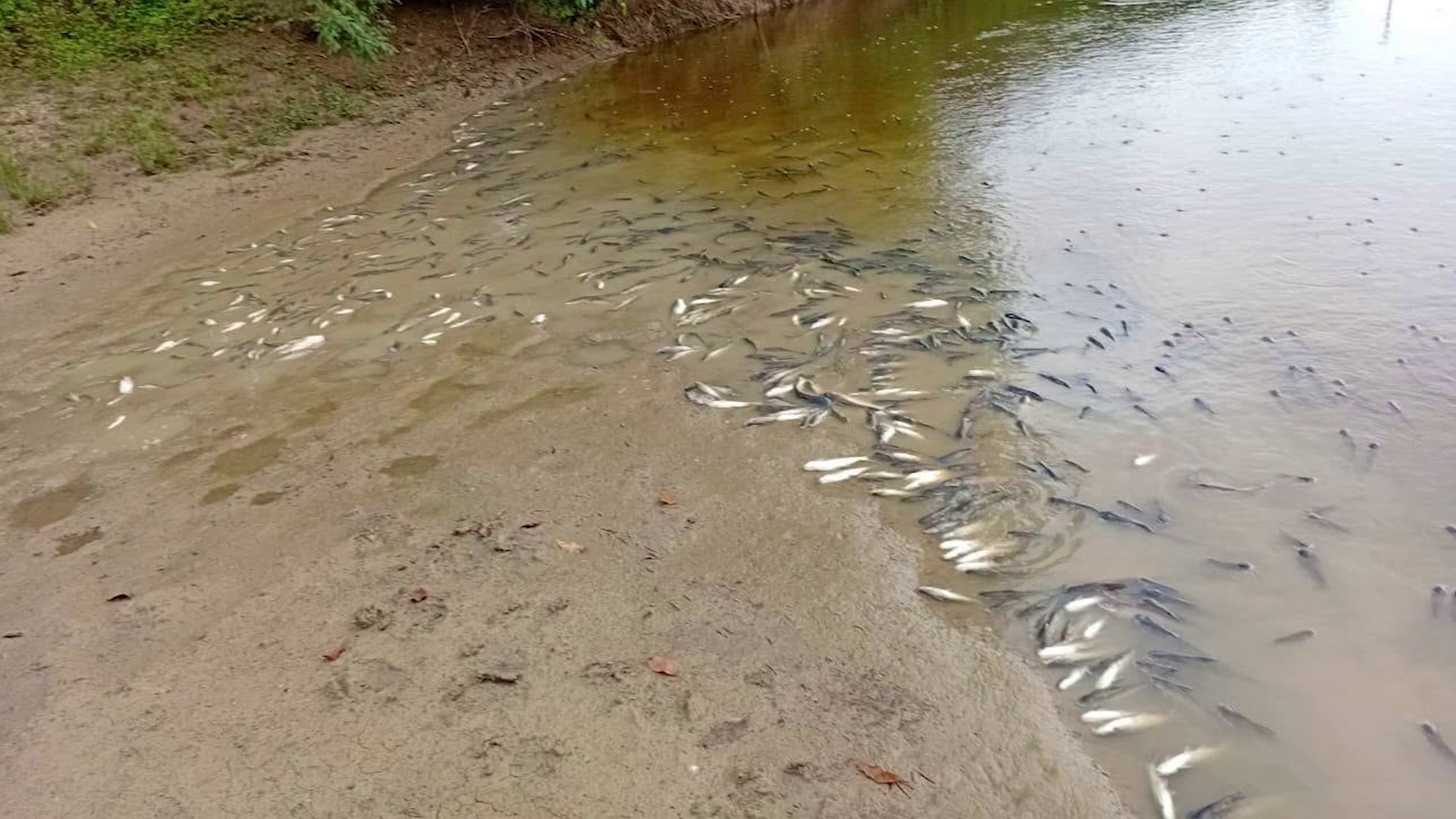
In the quiet Belize River Valley that has long sustained local communities, a sudden and unexplained mass fish death event has upended daily life, leaving residents demanding answers and prompting urgent government investigation. The event, which unfolded earlier this week, left dozens of dead fish bobbing along riverbanks, forcing authorities to issue an immediate warning barring public contact with aquatic life from the impacted stretch of water. As of August 6, 2026, the core cause of the die-off remains unconfirmed, though early preliminary data points to critically low dissolved oxygen levels in the affected water. For generations, communities along the Belize River have relied on the waterway for fishing, domestic use, and livelihood, turning this environmental disturbance into a pressing public concern that goes far beyond the dead fish washing ashore. Local resident Sharon Robinson, who lives in the community of Flowers Bank, drew a parallel to a similar die-off that hit the region roughly a decade ago, when a mass mortality event wiped out local lobster populations that have only recently started to recover. She suspects the source of the current contamination is located upstream on the Cayo side of the river, with pollutants carried downstream to the valley’s waters. A multi-agency investigation team, assembled in response to the incident, has already begun collecting water samples and mapping potential sources of pollution across the watershed, but investigators have yet to reach a definitive conclusion on what triggered the die-off. Ecologist Dr. Colin Young laid out one of the leading potential explanations for the oxygen depletion that has been tied to the fish kill. He noted that the region has recently seen heavy rainfall, which increases agricultural runoff carrying large volumes of sediment as well as nitrogen-based fertilizers from nearby farms into the river. When these nutrients and sediment enter the waterway, they fuel rapid, unchecked growth of algae and bacteria, which in turn consume most of the available dissolved oxygen in the water — creating hypoxic conditions that fish cannot survive in. Dr. Young added that the problem is not limited to this single event; for years, unregulated canal digging in the watershed has routinely deposited excess sediment, fertilizers, and other pollutants into the Belize River, creating a cumulative risk of harmful ecological events. He emphasized that slower, deeper, wider stretches of the river are particularly prone to trapping these pollutants, allowing oxygen levels to drop to lethal levels for aquatic life, even if the source of contamination is located much farther upstream. Currently, the Belize Department of the Environment (DOE) has maintained its strict safety advisory for residents: no consumption of fish or other aquatic life from impacted areas, no use of untreated river water for drinking, cooking, or watering livestock. The DOE has confirmed that the majority of local households receive safe treated water from Belize Water Services Limited (BWSL), but a significant number of residents still rely directly on the river for daily needs, making the warning a critical priority for public safety. Isabella Bank resident Francisca Madril shared the widespread community anxiety over the incident, saying she remains deeply concerned about the impact of the dead fish and contaminated water. Despite the uncertainty surrounding the cause and long-term impacts, many residents have reported early signs of improvement in recent days: water clarity has increased from the dark, murky conditions seen earlier in the week, and far fewer dead fish are seen floating downstream. That small improvement has not quelled resident concerns, however. Robinson explained that even with current low water levels, rising tides could carry contaminated water into residential yards, threatening backyard gardens and livestock that many families depend on. Dr. Young argued that while Belize already has strong environmental protection laws on the books to prevent unregulated sediment runoff and pollution, consistent enforcement has been lacking, allowing risky development and agricultural practices to continue unchecked. Development should not come at the cost of the river ecosystem that supports local communities, he emphasized. Now, residents across the Belize River Valley are calling for a full, transparent public investigation into the fish kill, and are demanding accountability for any parties found responsible for illegal pollution that contributed to the event. As investigators continue their work, the community remains on edge, waiting for confirmation of when their lifeline river will be safe to use again.
标签: Belize
伯利兹
-

Young Artists Showcase Stained-Glass Skills
On August 6, 2026, a cohort of emerging young artists from Belize City celebrated a key milestone in their creative journeys, receiving official completion certificates for the Belize Department of Youth Services’ intensive stained-glass workshop. The program is just one of more than 40 free summer skill-building initiatives rolled out by the department this year, designed to connect young people from all socioeconomic backgrounds with hands-on learning opportunities that extend far beyond traditional classroom walls.
Over three days, more than 15 local participants worked alongside experienced instructors to master the full process of stained-glass creation, from initial conceptual design to glass cutting, assembly, and finishing. Blending traditional craftsmanship with modern technical approaches, many students chose to center their final projects on Belize’s iconic national symbols, infusing centuries-old cathedral stained-glass techniques with local cultural identity. As observers watched, young creators worked with steady focus and dedication, turning raw shards of colored glass into vivid, expressive works of art.
Leading the workshop was Jokeeta Savariau, a former architectural and aviation engineer with 11 years of experience designing hands-on STEM and creative learning programs for Belizean youth. This is not Savariau’s first stained-glass initiative: two years prior, she led a successful camp in Punta Gorda that wove historical education into craft training, where participants created patterns inspired by the Underground Railroad. That program integrated lessons on transatlantic slavery and the movement toward freedom with practical learning in geometry, mathematics, and the scientific principles of glass soldering. Each year, Savariau adapts her programming to explore new fields, ranging from robotics in Punta Gorda to other creative and technical disciplines, giving young people the space to explore new interests through tangible, hands-on practice.
Kyle Miller, a youth officer with the Department of Youth Services, explained that the department chose to host this iteration of the camp in Belize City to expand access to the uncommon training to young people in the urban center. Unlike more common youth program offerings, stained-glass craftsmanship is an underdeveloped skill in Belize, meaning participants have the unique opportunity to carve out their own niche markets and entrepreneurial paths. This workshop reflects a broader strategic shift in the department’s youth programming toward supporting the development of rare, specialized competencies. By offering accessible training in these skills domestically, officials aim to nurture young people’s creativity and entrepreneurial spirit, while strengthening the overall capacity and diversity of Belize’s future workforce.
Trent Clarke, one of the workshop attendees, praised the program’s engaging, accessible structure. With one-on-one guidance from Savariau, Clarke noted that many participants leave the program confident enough to pursue stained-glass creation independently after the camp ends.
Miller emphasized that all Department of Youth Services summer camps, including the stained-glass workshop, are completely free of charge for participants, with all materials and instruction covered by the department. The programs are structured not only to build technical skills but also to foster leadership development, and department officials hope to expand the initiative in coming years to reach more young people across the country.Beyond being a seasonal recreational activity, the workshop provides a safe, supportive space for young people to learn, create, and identify their unique strengths. As global and local job markets continue to evolve, specialized hands-on skills like stained-glass craftsmanship give Belizean youth a tangible competitive edge. Investment in accessible, skills-focused youth programming today, organizers say, is an investment in a more dynamic, innovative, and prosperous Belize for future generations.
-

Punta Gorda Woman Wins 50K with Scratch & Win
August 6, 2026 — For a regular casual lottery player from Punta Gorda, an ordinary trip to the neighborhood convenience store turned into a life-changing $50,000 windfall this week, all thanks to a double-take at a Scratch & Win ticket.
The winner, who has bought small-priced Scratch & Win tickets on and off for years, picked up four tickets from her local retailer on Wednesday, the day before she revealed her big win. As she scratched off each ticket one by one, she initially wrote the first one off as a modest $50 win and set it aside to finish the remaining three. After the other three yielded only $20 in small prizes combined, she circled back to the first ticket for a closer look — and spotted extra zeros she had missed at first glance.
In an interview after her win, the Punta Gorda resident described the shock and joy of the moment. “I bought the ticket yesterday, and I started scratching it. I bought four tickets. So I scratched one, and then I saw fifty dollars. I thought it was fifty dollars, so I put it aside and I scratched the other three. I won twenty dollars on the other ticket. So I came back to the same ticket, and I scratched and I saw some zeros. I’m like, ‘Wow, I won fifty thousand dollars,’” she shared.
When asked how she felt in that moment of realization, the winner simply said, “I felt happy and excited, and I said, I can’t believe it.”
Unlike many big lottery winners who have pre-planned goals for their prize money, the Punta Gorda woman says she has not settled on any specific plans for her $50,000 windfall yet. “Well, not at the moment. I have to focus and think what I’m gonna do with it,” she explained. To date, only her son and sister have been told about the win, so she is looking forward to sitting down with her family to weigh options for using the money to support their long-term well-being.
The winner added that this huge jackpot has not dulled her enthusiasm for playing the casual lottery: she has only ever won small prizes ranging from $2 to $20 in the past, but when asked if she would keep buying Scratch & Win tickets, she answered without hesitation, “Of course, I will.”
This report is a transcript of a televised evening newscast covering the local win.
-

“Create Your Own Market”: DYS Teaches Youth Stained Glass, Free
In a transformative initiative aimed at equipping young people with marketable, unconventional skills, Belize’s Department of Youth Services (DYS) has concluded its three-day free stained glass workshop for youth in Belize City, awarding completion certificates to more than 15 local participants. By the end of the program, attendees had mastered the full process of creating stained glass art, from initial design and glass cutting to final assembly, with all projects drawing inspiration from Belize’s iconic national symbols.
This workshop is just one of over 40 free youth skill-development programs DYS has organized across the country this summer. Leading the instruction was Jokeeta Savariau, a former architectural and aviation engineer who previously worked in the United States and has dedicated 11 years to running themed youth camps across Belize. Each year, Savariau shifts the camp focus to explore new fields; past programs have covered topics ranging from robotics to traditional crafts, and she often weaves cross-disciplinary learning into hands-on activities.
Recalling a previous stained glass camp held in Punta Gorda, Savariau explained how the craft was tied to historical education: participants created patterns based on the Underground Railroad, allowing them to learn about the history of slavery and the movement toward emancipation while also applying practical geometry, mathematics, and core scientific principles to solder glass pieces safely and correctly.
DYS Youth Officer Kyle Miller noted that the choice to bring this specific workshop to Belize City was a deliberate, strategic decision. Unlike common trades taught in standard youth programs, stained glass art is rarely practiced or seen across Belize, meaning there is no saturated existing market for the craft. Miller emphasized that this gap is exactly what makes the opportunity valuable: instead of competing in crowded local industries, young artisans can carve out their own niche and “create your own market” for their work.
Trent Clarke, one of the workshop attendees, shared his positive experience of the program, saying that with Savariau’s thorough guidance, he feels confident now pursuing stained glass art independently as a potential small business. Looking ahead, Miller has issued an open call for more young Belizeans to sign up for DYS’s upcoming free skill camps, encouraging youth to take advantage of these accessible opportunities to build new talents and explore alternative career paths.
-

Dominicans to Keep More of Their Pay Under New 2027 Tax Plan
In a landmark policy announcement delivered Tuesday during the 2026-2027 national budget presentation, Dominica’s Finance Minister Dr. Irving McIntyre has unveiled the largest income tax reduction in the nation’s history, a sweeping reform that will replace the country’s long-standing progressive tiered tax system with a uniform 10% flat income tax rate starting January 1, 2027.
The reform eliminates the current three-bracket progressive structure, which imposes rates of 15%, 25%, and 35% on different income tiers, marking the conclusion of 20 years of incremental tax relief efforts by the Dominican government. Crucially, the existing annual personal tax-free threshold of 30,000 Eastern Caribbean dollars (roughly equal to 22,319 Belize dollars) will remain unchanged, ensuring that low-income earners making this amount or less will still be fully exempt from personal income tax obligations.
Alongside the rate and structural overhaul, the government introduced a second major change to the country’s tax rules: beginning in 2027, both resident and non-resident individuals will only be taxed on income generated within Dominica’s borders. All income earned from sources outside the country will no longer be subject to Dominican income tax, a shift expected to boost the island nation’s attractiveness for international workers and foreign investment.
Dr. McIntyre emphasized that the reform is designed to deliver dual benefits for Dominica: streamlining a cumbersome, complex tax system while putting more discretionary income directly into the pockets of working residents. “It is the most significant income tax relief ever granted to the people of Dominica,” he stated during the budget address. “It will deliver meaningful savings to workers and make our tax system simpler and fairer.”
Policy analysts note that the shift to a flat tax structure aligns Dominica with a small but growing group of economies that have adopted simplified flat-rate tax systems in recent decades, with the goal of reducing tax avoidance, encouraging labor force participation, and stimulating economic growth by leaving more capital in the hands of workers and consumers.
-

$50 Ticket? No. A $50,000 Winning Ticket Ahead of GST-Free Weekend
An unexpected life-changing windfall has fallen into the lap of a Punta Gorda resident, who is now celebrating a $50,000 top prize from a Scratch & Win lottery ticket – a win that carries an extra layer of timing, coming just weeks ahead of the region’s upcoming GST-free shopping weekends on August 15 and 29.
The winner, who has chosen to keep her identity private, shared that her moment of triumph came with a funny case of misreading at first. When she initially scratched off the ticket’s coating, she caught a glimpse of the number “fifty” and immediately assumed she had won a modest $50 payout. She set the ticket aside without a second thought and moved on to scratch three other tickets she had purchased.
After walking away with a small $20 win from one of the other tickets, the casual lottery player circled back to the ticket she had discarded earlier. That was when she noticed the detail she had missed the first time: three extra zeros trailing the number 50, turning a $50 win into a 1,000-times larger jackpot of $50,000.
Recounting the shock of the moment, the winner said, “I was like, ‘Wow, I won fifty thousand dollars. I felt happy and excited, and I said, ‘I can’t believe it.’”
The lucky ticket was bought at a local retail outlet in Punta Gorda, a detail that has already drawn quiet interest from other regular lottery players in the area. Unlike many big jackpot winners who rush to plan major purchases, the Punta Gorda resident says she is in no hurry to decide how to use her new winnings. She plans to take several weeks to weigh her options before committing to any large financial decisions.
For the winner, this big prize marks a major shift from her usual lottery experience. She told lottery officials she only buys Scratch & Win tickets occasionally, and in the past, her wins have almost always been small payouts – usually just $2 or $20. Even with the huge windfall under her belt, she says she has no plans to step away from the game, and is already looking forward to trying her luck again on future tickets.
-

Silence on BTL Deal is “Disrespectful to all Belizeans”
On August 6, 2026, four of Belize’s most influential civil society and industry organizations – the Belize Chamber of Commerce and Industry, Belize Network of NGOs, National Evangelical Association of Belize, and National Trade Union Congress of Belize – have ramped up their public opposition to the proposed BTL-Speednet acquisition, putting forward five concrete, non-negotiable demands and calling out the government and relevant entities for what they describe as unacceptable disrespect to the entire Belizean public.
The coalition of groups, collectively referred to as the country’s Social Partners, argues that after multiple rounds of public calls for openness and formal regulatory review, critical questions about the multi-million dollar telecommunications deal remain completely unanswered. These open questions span core areas including the acquisition’s compliance with existing national law, its potential impact on open market competition, internal corporate governance arrangements, the official valuation of Speednet as the target company, undisclosed conflicts of interest among decision-makers, and most critically, how the deal will protect the broader public interest.
In their joint public statement, the coalition emphasized that this sustained silence from responsible authorities and corporate stakeholders is nothing short of a deliberate slight to every citizen of Belize, who have a right to know how major national industry transactions will shape the country’s digital future and everyday consumer costs.
At the core of the coalition’s demands is an immediate suspension of all further steps to advance the acquisition until all four required actions are completed to the public’s satisfaction. First, the group calls on Belize’s Attorney General to publish a formal, public legal opinion clarifying how the acquisition aligns (or fails to align) with the provisions of the country’s existing Telecommunications Act. Second, Belize Telemedia Limited (BTL) must release full public details of the commercial rationale behind the purchase, including Speednet’s fully audited annual financial statements and a transparent breakdown of how the deal will affect consumer pricing and telecommunications industry workers. Third, the Office of the Prime Minister and the national Cabinet must publicly articulate the government’s official stance on the acquisition, and lay out clear protocols for managing any existing conflicts of interest among public officials involved in the approval process. Fourth and finally, the Public Utilities Commission is required to publish its full independent assessment of the acquisition’s impact on market competition before casting any final vote, and open the assessment up to formal public comment from Belizean citizens and stakeholders.
The coalition made clear that it is prepared to exhaust every legal and peaceful avenue to force compliance with these demands. This includes pursuing regulatory appeals, parliamentary intervention, administrative challenges, and formal legal action up to and including seeking court-ordered injunctive relief to block the deal, as permitted under the Telecommunications Act and other national legislation. The group also confirmed that peaceful public demonstrations are on the table as a tactic to raise public awareness and pressure decision-makers, with the sole goal of ensuring that public interest, rather than private gain, guides the final decision on the acquisition.
-
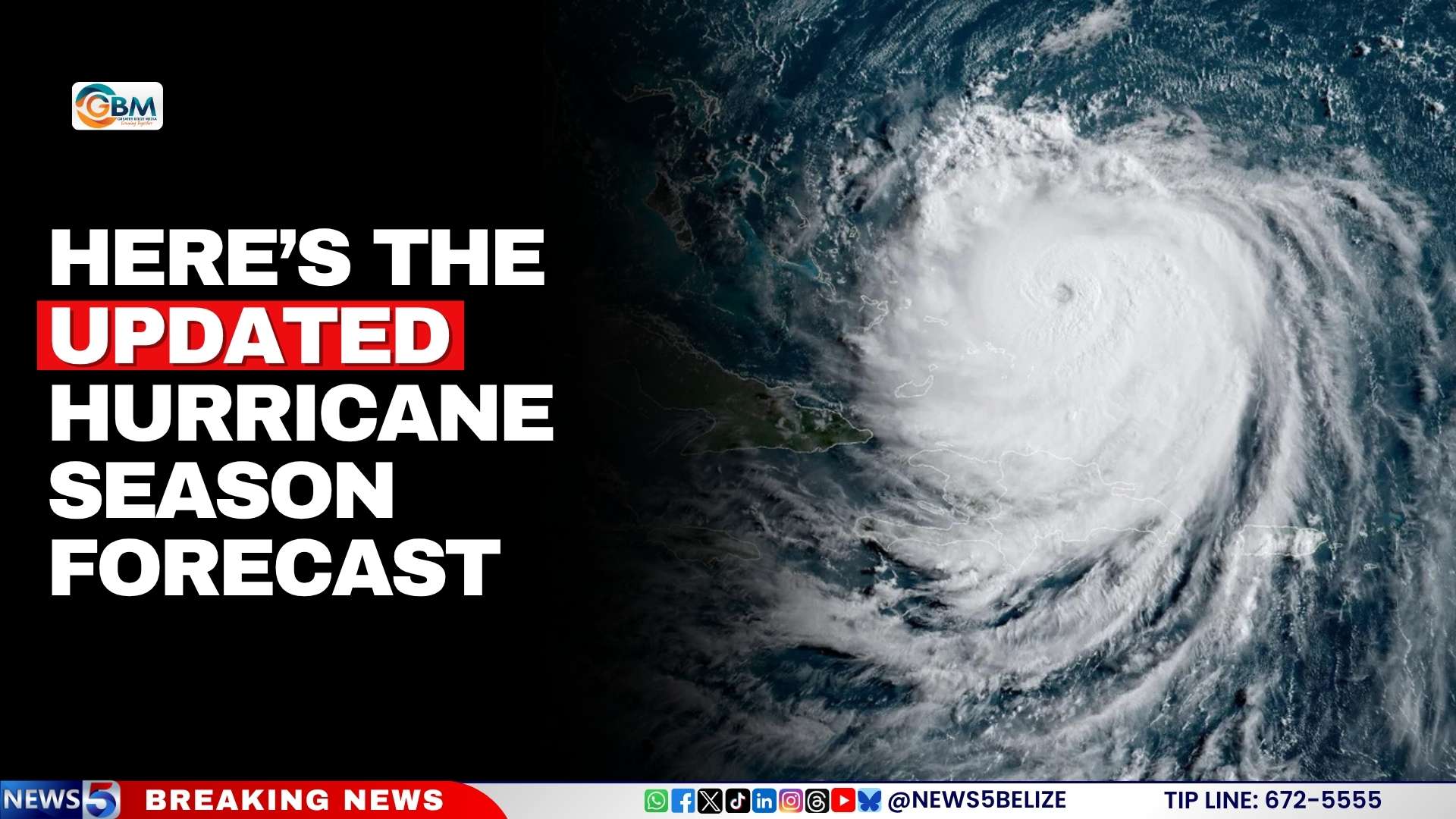
Here’s the Updated Hurricane Season Forecast
As the 2026 Atlantic hurricane season progresses, leading climate and weather agencies have released an updated outlook that brings a mixed picture of reduced cyclone activity but persistent hazards for Belize and the broader Caribbean region.
Contrary to initial projections, forecasters from both regional and international bodies now anticipate a below-average hurricane season for the Atlantic basin. The U.S. National Oceanic and Atmospheric Administration (NOAA) has adjusted its earlier forecast downward, now calling for between 7 and 13 named storms, 2 to 6 hurricanes, and just 0 to 2 major hurricanes categorized as Category 3 or higher on the Saffir-Simpson scale.
This reduction in tropical cyclone formation is largely tied to two key climate drivers shaping the region’s weather through the rest of the 2026 wet season, according to the Caribbean Climate Outlook Forum (CariCOF). Strengthening El Niño conditions, combined with ongoing warming of Caribbean surface waters, are reconfiguring atmospheric patterns across the basin. Additionally, CariCOF notes that frequent incursions of Saharan dust moving across the Atlantic will further act to suppress the development of new tropical cyclones.
However, experts emphasize that a drop in hurricane numbers does not eliminate weather-related threats for Belize. Even with fewer cyclones projected, the country remains at high risk of extreme flooding and sudden flash floods driven by excessive intense rainfall events that can occur independent of major storm systems. The public and local authorities have been urged not to lower their guard ahead of the peak risk period.
Beyond flood risks, CariCOF’s outlook warns of additional compounding hazards through September. Much of the Caribbean will see slower-than-usual rainfall accumulation paired with increasingly severe humid heat, while the same Saharan dust that suppresses cyclones will degrade regional air quality and exacerbate already high temperatures, creating additional risks for vulnerable populations.
-

What’s Killing the Belize River’s Fish? DOE Issues Warning
In early August 2026, widespread reports of dead fish floating along sections of the Belize River Valley triggered an urgent multi-agency investigation and a formal public health advisory from Belize’s Department of the Environment (DOE). Following the emergence of these troubling reports earlier this week, the DOE has moved quickly to coordinate a full assessment of the event and warn local communities of immediate health risks.
To ensure a thorough and cross-sectoral investigation, the DOE assembled a joint working group including representatives from Belize Water Services Limited (BWSL), the Ministry of Health and Wellness, the National Emergency Management Organization (NEMO), the national Fisheries Department, the Coastal Zone Management Authority and Institute, and the Ministry of Infrastructure Development and Housing. This collaborative team has launched a comprehensive review of potential contributing factors to the fish kill, covering multiple lines of inquiry.
Investigators have carried out systematic water quality monitoring and sample collection across the affected stretches of the river, alongside on-site assessments of recent land-clearing operations, mapping of potential points of unauthorized wastewater discharge, and reviews of other human activities that could disrupt the river’s aquatic ecosystem. As of the latest DOE update, the full root cause of the mass fish mortality event has not yet been confirmed, prompting officials to roll out broad precautionary measures to protect public safety.
In an official press release, the DOE advised residents and visitors to strictly avoid consuming any fish or other wild aquatic resources harvested from the affected areas of the Belize River Valley. The advisory extends beyond human consumption: officials also warn against using untreated river water for drinking, cooking, or any food preparation, and urge livestock owners and pet owners to keep animals away from unprocessed river water until further investigations are completed and the all-clear is given.
Importantly, the DOE has clarified that these precautions do not apply to treated municipal drinking water distributed by BWSL. The water utility has formally confirmed that all water currently supplied from its regional treatment plant continues to meet national potable water quality standards, remains safe for human consumption, and that there has been no interruption to regular water delivery services across the affected area.
In addition to issuing public health guidance, the DOE has reminded the general public of existing environmental regulations: under the 2009 Environmental Protection Regulations, the discharge of untreated wastewater or non-compliant effluent into any natural waterbody is classified as a criminal offense, and the agency will pursue enforcement action against any violations identified during the ongoing investigation. Officials note that full analysis of water and environmental samples is still underway, and they will release updated findings and adjust public advisories as more information becomes available.
-
PUC Signals Review as Opposition to BTL-Smart Acquisition Broadens
A high-stakes proposed consolidation in Belize’s telecommunications sector has entered a formal regulatory review phase, with the nation’s Public Utilities Commission (PUC) moving to assess Belize Telemedia Limited’s (BTL) planned 100% acquisition of rival provider Speednet Communications Limited, branded as SMART. The review comes as major business groups, independent legislators, and opposition lawmakers have ramped up demands for rigorous, law-aligned scrutiny of the transaction, raising red flags over competition, legal compliance, and public interest.
In an official statement released Wednesday, the PUC pushed back against any assumptions of pre-judgment, emphasizing that its entire evaluation process will adhere strictly to existing legal frameworks, regulatory rules, and established procedural standards. The regulator acknowledged that the proposed takeover has sparked intense public attention, and that it recognizes the range of concerns and divergent perspectives held by industry stakeholders and the general public alike. Without taking an early stance on whether the acquisition is beneficial or harmful, the PUC underlined that it is legally bound to maintain full impartiality until its assessment is finalized.
During its review, the commission will examine a broad set of critical factors, including consumer protection guarantees, uninterrupted service delivery for current Speednet and BTL customers, binding commitments for ongoing service quality, smooth transition plans for the merger, and overall market transparency and fairness. The PUC noted that its final determination will stand as its official position on the proposed transaction, though it has not yet announced a public timeline for completing the process.
The PUC’s confirmation of its review came one day after BTL announced that its board of directors, backed by the company’s senior leadership team, had given preliminary approval to the plan to acquire all outstanding issued share capital of Speednet. BTL clarified that the deal remains conditional on the completion of full due diligence and further negotiations before any binding share purchase agreement is signed.
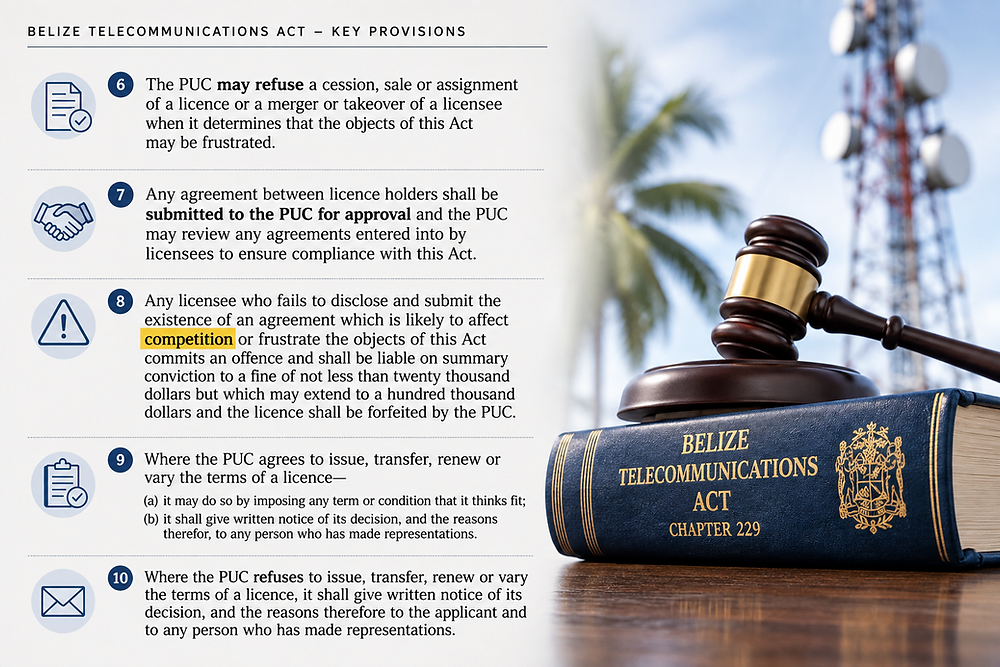
With the review officially underway, focus has now shifted fully to the PUC’s statutory responsibilities outlined in the Belize Telecommunications Act. Section 19 of the legislation mandates that any telecommunications license holder must obtain prior written approval from the commission before transferring its license, ceding operational control, merging with another licensed entity, or completing a takeover. The law also grants the PUC authority to reject a proposed transaction if it finds the deal would undermine the core objectives of the telecommunications legislation. These statutory objectives include expanding access to reliable, affordable telecommunications services, supporting healthy market competition, encouraging industry investment and innovation, ensuring fair pricing, and protecting the interests of end users, service providers, and consumers.
Beyond regulatory circles, key national social partner organizations have mobilized to coordinate a collective response to the proposed acquisition. On August 5, four of Belize’s leading civil society and business groups— the Belize Chamber of Commerce and Industry (BCCI), the Belize Network of Non-Governmental Organizations (BNN), the National Evangelical Association of Belize (NEAB), and the National Trade Union Congress of Belize (NTUCB)—issued a joint statement announcing they had convened to outline coordinated next steps. The groups plan to launch a cross-membership information sharing initiative designed to boost transparency around the deal, help stakeholders understand the potential impacts of the acquisition, and enable informed collective decision-making on how to proceed. The organizations reaffirmed their commitment to upholding good governance, protecting national economic stability, and advancing the public interest, noting they will consult their full membership bases before committing to any further action.
Independent senators have also added their voices to the growing calls for rigorous oversight, reaffirming legal concerns about the proposed deal. Four independent senators released a joint statement on August 4, following a contentious sitting of the Senate Tuesday that saw opposition senators walk out of the chamber. All but one independent senator—Louis Wade, who represents national churches—joined the walkout before releasing their joint statement. In the document, the independent senators aligned themselves with the concerns previously raised by the BCCI, NTUCB, and opposition parties, which center on the acquisition’s legal compliance, potential harm to market competition, and the independence of the process used to value Speednet for the deal.
The senators argued that creating a single monopoly provider in Belize’s telecommunications market would directly violate Section 42(4) of the Telecommunications Act. They also noted that existing law requires a mandatory regulatory review for any merger or acquisition that would substantially reduce competition in the market, and called on the PUC to resolve all outstanding concerns about the proposed shareholding change before any transaction is allowed to move forward.
For its part, BTL has defended the proposed acquisition, framing it as a strategic investment that will deliver widespread benefits for Belize. The company claims the merger will eliminate redundant telecommunications infrastructure across the country, improve overall network reliability for consumers, expand connectivity access to rural underserved communities, and deliver stronger returns for shareholders. BTL also emphasized that the transaction will not require additional borrowing or new capital investment from the Belize Social Security Board.
Now that the PUC has officially confirmed the launch of its statutory review, the national debate has shifted away from discussions of the commercial benefits of the deal and toward the legal and regulatory process that must conclude before any final agreement can be implemented. For the moment, the PUC has made clear it will not issue any judgment on the acquisition until its full review is complete.