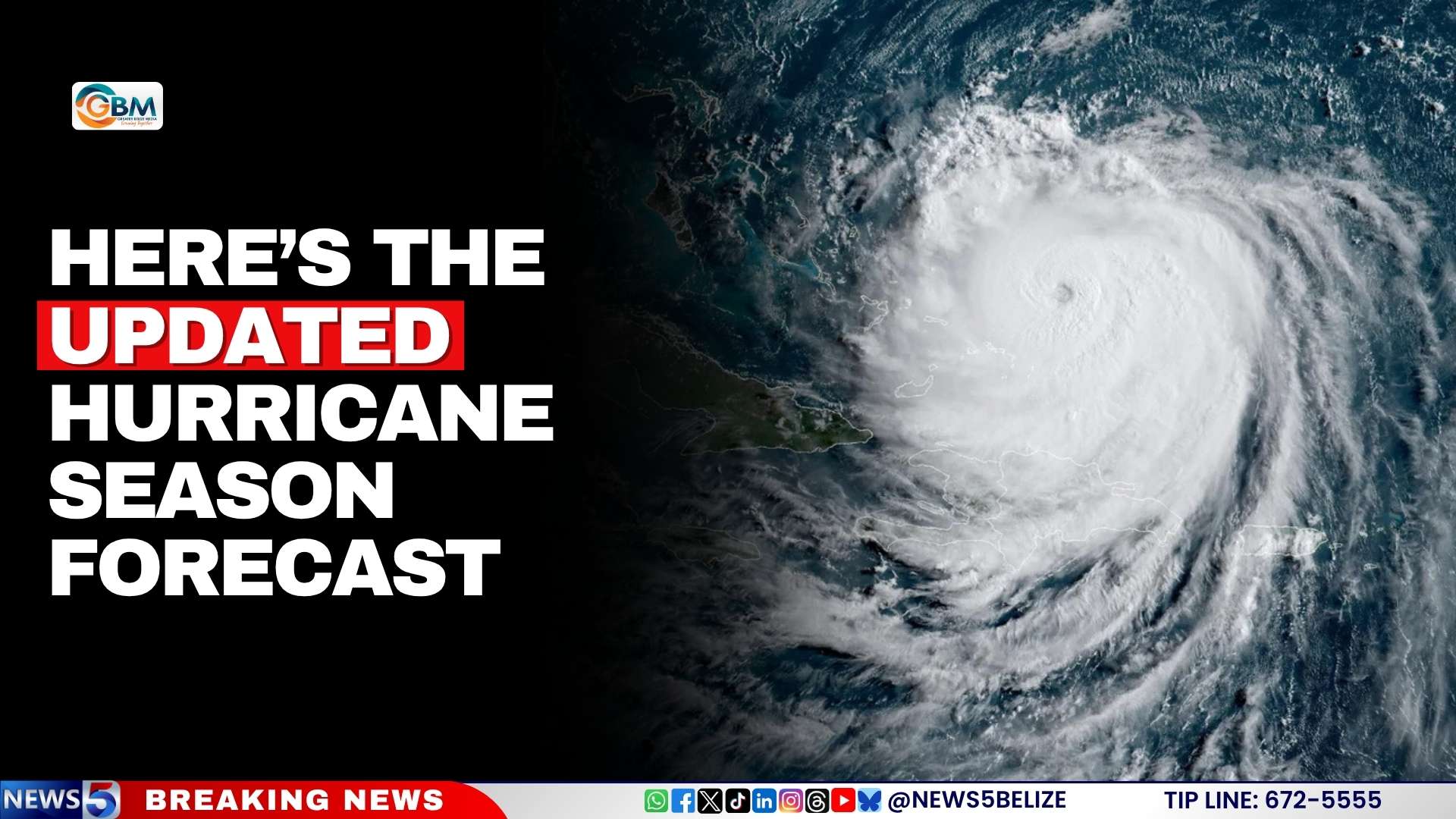
As the 2026 Atlantic hurricane season progresses, leading climate and weather agencies have released an updated outlook that brings a mixed picture of reduced cyclone activity but persistent hazards for Belize and the broader Caribbean region.
Contrary to initial projections, forecasters from both regional and international bodies now anticipate a below-average hurricane season for the Atlantic basin. The U.S. National Oceanic and Atmospheric Administration (NOAA) has adjusted its earlier forecast downward, now calling for between 7 and 13 named storms, 2 to 6 hurricanes, and just 0 to 2 major hurricanes categorized as Category 3 or higher on the Saffir-Simpson scale.
This reduction in tropical cyclone formation is largely tied to two key climate drivers shaping the region’s weather through the rest of the 2026 wet season, according to the Caribbean Climate Outlook Forum (CariCOF). Strengthening El Niño conditions, combined with ongoing warming of Caribbean surface waters, are reconfiguring atmospheric patterns across the basin. Additionally, CariCOF notes that frequent incursions of Saharan dust moving across the Atlantic will further act to suppress the development of new tropical cyclones.
However, experts emphasize that a drop in hurricane numbers does not eliminate weather-related threats for Belize. Even with fewer cyclones projected, the country remains at high risk of extreme flooding and sudden flash floods driven by excessive intense rainfall events that can occur independent of major storm systems. The public and local authorities have been urged not to lower their guard ahead of the peak risk period.
Beyond flood risks, CariCOF’s outlook warns of additional compounding hazards through September. Much of the Caribbean will see slower-than-usual rainfall accumulation paired with increasingly severe humid heat, while the same Saharan dust that suppresses cyclones will degrade regional air quality and exacerbate already high temperatures, creating additional risks for vulnerable populations.