标签: Belize

伯利兹

  • Belize Passport Ranks 50th Globally in Latest Henley Index

    Belize Passport Ranks 50th Globally in Latest Henley Index

    On July 16, global immigration consulting firm Henley & Partners unveiled its highly anticipated 2026 Henley Passport Index, the annual ranking that measures global travel freedom across 199 national passports. In this latest edition, Belize has secured the 50th spot, marking a slight but notable improvement from its performance in recent years. The index’s methodology is built on a straightforward, data-driven framework: every passport is evaluated against 227 global travel destinations, earning one point for each destination that allows entry without a pre-departure visa. This includes destinations offering visa-free access, visas on arrival, visitor permits, and electronic travel authorizations, while destinations that require advance visas contribute no points to a passport’s total. The cumulative point total, called the global access score, determines a passport’s ranking, and passports with identical scores share the same position.

    For Belize, the 2026 results bring a global access score of 100, meaning Belizean passport holders can now travel to 100 destinations across the world without arranging a visa before leaving the country. This places the Central American nation firmly in the middle tier of this year’s ranking, alongside other passports with matching access scores. Topping the 2026 index is Singapore, which boasts an impressive 192 visa-free destinations, retaining its position as the world’s most travel-friendly passport.

    A deeper look into the index’s two decades of historical data reveals a long-term trend of gradual decline for Belize’s passport ranking, punctuated by small recent gains that have pulled it back up from historic lows. Between 2006 and 2009, Belize held a steady 42nd place globally, a strong position that it lost in 2010 when it fell to 50th. The country dropped further to 53rd in both 2011 and 2012, before a short-lived recovery pushed it up to 46th in 2013 and 44th in 2014. That upward momentum ended abruptly in 2015, when Belize plummeted to 56th place. For most of the next 10 years, Belize remained stuck in the mid-50s, hitting its all-time lowest ranking of 59th in 2021 amid broader global shifts in travel visa policies.

    Since hitting that low point in 2021, however, Belize has charted a slow but consistent upward trajectory. The country moved up two spots to 52nd in 2022, before slipping back to 54th for both 2023 and 2024. It climbed again to 49th in the 2025 edition of the index, before settling at 50th in the 2026 release. While the latest one-spot drop from 2025 is a minor shift, the overall trend over the past four years shows a clear recovery from the 2021 low, giving Belize a stronger position in global travel freedom than it has had in a decade.

  • Flood Alert Issued for Southern Toledo

    Flood Alert Issued for Southern Toledo

    As of August 6, 2026, authorities in Belize have issued an urgent flood alert for the southern Toledo district, warning residents that dangerous flooding could strike within the next 24 to 48 hours amid ongoing overnight and early morning rainfall across the region. The official forecast, released at midday by the Belize Ministry of Sustainable Development, Climate Change and Solid Waste Management, outlines a mixed picture of river levels across the country, with most major waterways sitting at or below long-term normal averages. However, key hydrological systems in the southern half of the nation have already risen above safe baseline levels, bringing immediate flood risk to local communities. The Moho River, one of the largest watercourses in southern Belize, has crossed the official flood threshold at the Blue Creek South monitoring site, where water levels have now risen above the height of the local bridge, creating impassable and unsafe conditions for travel. Other at-risk water bodies include the Temash River, the Sittee River, and Gales Point Lagoon, all of which are currently running well above their normal seasonal levels. By contrast, a number of other major rivers across Belize remain in safe ranges: the Rio Grande and Sarstoon River sit below normal levels, while the northern and central Belize water systems including the Rio Hondo, New River, Belize River, Sibun River, Mopan River and Macal River are all at or below normal levels, with no immediate flood threats reported for these areas. Local officials are urging all residents in southern Toledo and surrounding high-risk zones to stay vigilant, monitor official government updates continuously, and prepare emergency supplies and evacuation plans in case weather conditions deteriorate and flood risks escalate in the coming days.

  • Missing Since 1998: NFSS Wants to Finally Give Them a Name

    Missing Since 1998: NFSS Wants to Finally Give Them a Name

    For more than two decades, roughly 20 sets of human remains have remained nameless and unclaimed in Belize, some dating back as far as 1998. Now, the country’s National Forensic Science Service (NFSS) is launching a targeted, public-facing effort to close decades-old missing person cases by matching these unidentified remains to their families.

    The skeletal remains in question were recovered between 1998 and 2020, unearthed across multiple districts spanning Belize. For years, a lack of contextual information about potential next of kin has kept these cases cold, leaving both the unidentified dead and their grieving families without closure. To break this impasse, the NFSS rolled out a new public initiative this month, centered on an online submission form designed to crowdsource critical information from the community.

    The appeal is open to anyone who has had a friend or family member go missing within the 1998 to 2020 timeframe that matches the recovery period of the remains. Through the digital form, relatives can share basic identifying details about their missing loved one that will be cross-referenced with the case files of the unidentified remains held by the NFSS.

    When a submitted profile shows a strong potential match to an unidentified set of remains, NFSS investigators will reach out directly to the submitting party to arrange for a voluntary DNA sample. This sample will then be compared against genetic material extracted from the remains. A confirmed match would allow the NFSS to facilitate the return of remains to the person’s next of kin, giving families the chance to hold a proper burial and lay their loved one to rest after decades of uncertainty.

    In an effort to remove barriers to participation and protect vulnerable families, the NFSS has emphasized that the entire process – from information submission to DNA testing and matching – is 100% free of charge. The agency also issued a public warning, noting that it will never solicit banking details or any form of payment from families at any stage of the identification process.

    Community members seeking more information about how submitted data will be stored and used can contact the NFSS directly via phone at +501-205-2164 or email at info@forensics.gov.bz. The online submission form can be accessed either by scanning the QR code printed on official NFSS public notices or through the dedicated form link at https://forms.gle/u1KhhBKgfpdo5WECA.

  • Pressure Mounts on FIFA President Gianni Infantino Despite Apology

    Pressure Mounts on FIFA President Gianni Infantino Despite Apology

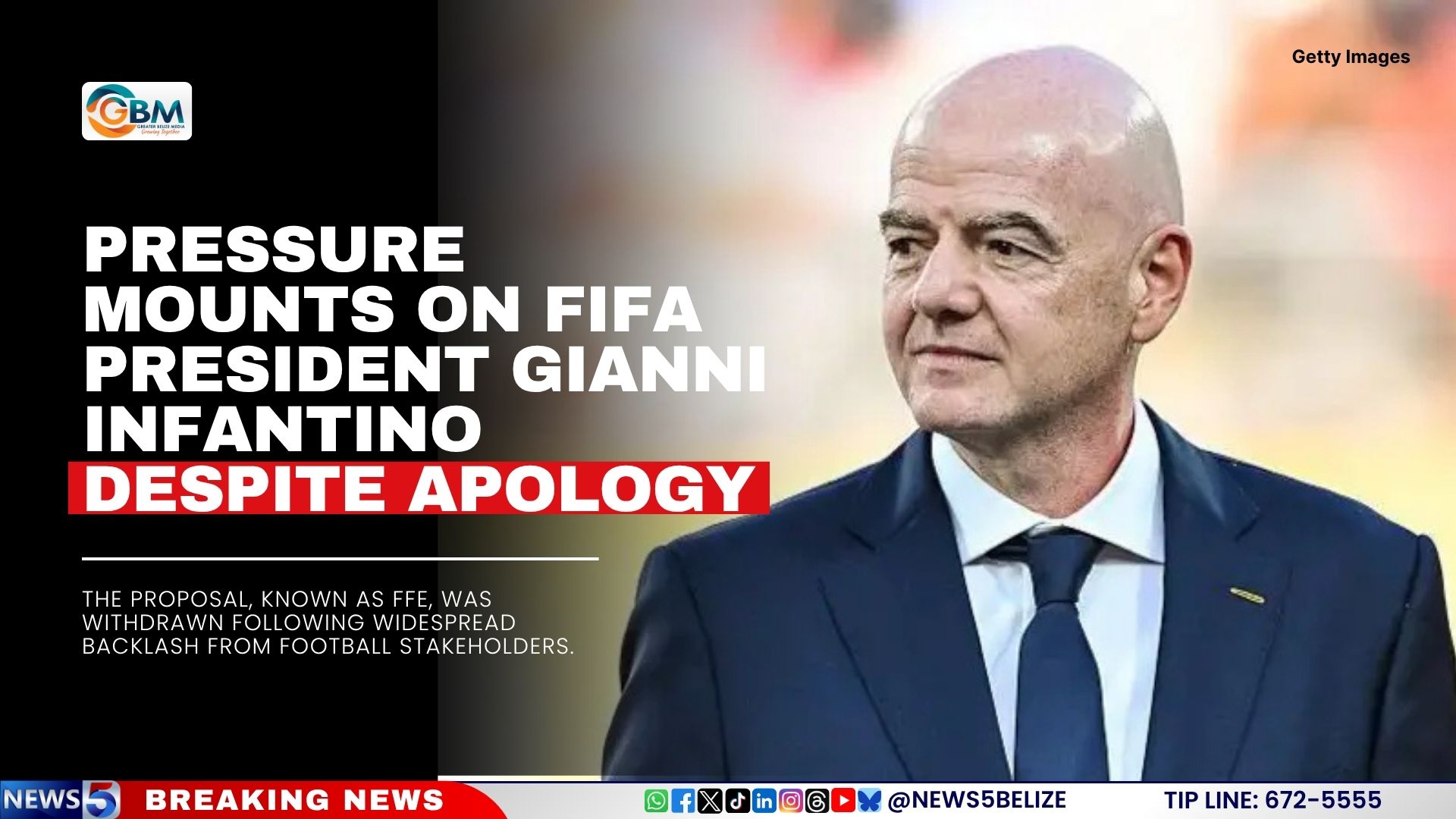
    As of August 6, 2026, FIFA President Gianni Infantino is facing unprecedented pressure to step down from his post, even after the global football governing body issued a formal apology and pulled back a deeply divisive plan to sell off commercial and operational rights to the FIFA World Cup. The controversial scheme, branded as FFE, sparked immediate and widespread backlash from stakeholders across the international football ecosystem, forcing FIFA’s leadership to convene an emergency crisis meeting in Rabat, Morocco.

    During that closed-door gathering, FIFA officials publicly admitted that significant missteps were made in how the FFE proposal was developed and presented to the global football community. But this gesture of accountability has failed to quell the rising anger and criticism aimed at Infantino and his senior leadership team.

    UEFA, the governing body that oversees European football, has remained firm in its existing boycott of all FIFA competitions. The European organization argues that FIFA has refused to offer concrete guarantees that such problematic proposals will never be brought forward again, and it has repeatedly confirmed that it no longer has confidence in Infantino’s ability to lead global football. This ongoing boycott carries tangible risks for FIFA’s upcoming events: Poland is set to host the FIFA Under-20 Women’s World Cup starting September 5, and it is still uncertain whether UEFA’s hardline stance will disrupt the tournament or force FIFA to scramble to arrange alternative hosting plans.

    FIFPRO, the global union that represents professional footballers around the world, has also rejected FIFA’s apology as inadequate. The union labeled the FFE proposal a “profound abuse of presidential power,” noting that hollow public apologies are no substitute for meaningful, structural governance reforms that can rebuild public and institutional trust in FIFA’s leadership.

    Reactions from other regional governing bodies have been more mixed. CONMEBOL, the South American football confederation, praised FIFA’s choice to scrap the controversial proposal, but declined to back calls for an extraordinary general congress to vote on Infantino’s immediate future. Instead, the organization supports sticking to the existing normal presidential election timeline, with candidate nominations for the role of FIFA President set to close on November 18.

    Infantino, who has held the position of FIFA President since 2016, now faces intensifying headwinds as he prepares for next year’s scheduled presidential election. With criticism mounting from some of the most powerful institutions in global football, his hold on the organization’s top job grows increasingly precarious.

  • Cabinet Approves Changes to Cybercrime Bill to Protect Free Speech

    Cabinet Approves Changes to Cybercrime Bill to Protect Free Speech

    In a move shaped by widespread public debate over the intersection of digital regulation and fundamental rights, the national cabinet has formally approved a set of targeted amendments to the country’s Cybercrime Bill, designed to narrow the legislation’s scope and bring it into full alignment with constitutional protections for freedom of expression.

    The core goal of the reforms is to strike a deliberate balance between two pressing policy priorities: retaining the government’s ability to prosecute severe, technology-facilitated harm, while preventing legitimate speech from being inadvertently criminalized. Under the revised framework, serious cyber-enabled offenses including malicious deepfake dissemination, identity impersonation, online extortion, targeted threats and repeated harassment will still remain fully criminalized. At the same time, the amendments explicitly carve out protections for legitimate free expression, political debate, independent journalism, satirical commentary and public accountability efforts, ensuring these activities do not get swept up in the same legal net as harmful criminal conduct.

    A critical new procedural safeguard has also been added to the legislation. Going forward, any criminal prosecution initiated under the Cybercrime Bill will require the explicit written consent of the Director of Public Prosecutions before it can move forward, creating an additional layer of oversight to prevent arbitrary or politically motivated misuse of the law.

    The push for these reforms traces directly to the high-profile collapse of the cybercrime case brought against activist Alberto August, a development that first sparked intense public scrutiny over the original legislation’s overly broad scope. That case was initiated after former Police Minister Oscar Mira filed a complaint over a Facebook post August published, igniting a national conversation about the line between legitimate online criticism of public figures and criminal cyber activity, as well as the appropriate boundaries of cybercrime legislation.

    In the wake of the case’s collapse, Attorney General Anthony Sylvestre announced a full review of specific provisions of the original bill, with a mandate to ensure the law could not be weaponized to criminalize defamation, while emphasizing that cyberbullying remains a serious, harmful problem that requires targeted regulatory action.

    “We are not reviewing the entire piece of legislation, only specific problematic provisions, because effective cybercrime regulation remains a critical necessity,” Sylvestre explained in comments following the review. “It is important and necessary to set clear rules for conduct on social media and all other digital spaces where harmful bullying occurs. Cyberbullying is a real problem that demands action. The valid public concern raised after the August case centered on whether certain provisions could inadvertently lead to the criminalization of defamation, which we have worked to address.”

    “We do not want provisions on our statute books that open the door to criminalizing legitimate defamation that should be handled through civil, not criminal, channels,” he added. “Those specific provisions are the focus of our review, and we are optimistic that the full amendments will be approved during the next parliamentary sitting.”

    Sylvestre also clarified that the Attorney General’s Ministry played no role in advising authorities on the original cybercrime charges against August, as criminal prosecution strategy falls outside the ministry’s official remit. With cabinet’s formal approval, the amendments now deliver on the commitment Sylvestre first laid out in July, marking a major step toward balancing digital safety and free expression in the country’s regulatory framework.

  • Belize’s Shrimp Industry Stages a Comeback, Cabinet Says

    Belize’s Shrimp Industry Stages a Comeback, Cabinet Says

    After years of widespread production collapse caused by a devastating aquatic disease, Belize’s iconic shrimp industry is mounting a remarkable comeback, according to an official announcement from the country’s Cabinet released this week.

    A decade ago, Early Mortality Syndrome (EMS), a highly contagious bacterial disease that targets young shrimp in farmed populations, swept through Belize’s coastal aquaculture operations, wiping out most of the nation’s harvest and pushing the once-thriving sector to the brink of collapse. For years, producers struggled to contain the outbreak and rebuild their operations, with far lower output and stagnant export revenues.

    Today, that narrative has shifted dramatically. Cabinet officials confirmed that ongoing recovery efforts have yielded dramatic results: total national shrimp production has tripled compared to 2020 levels, and the total annual economic contribution of the industry to Belize’s GDP has climbed to nearly $25 million. The Cabinet publicly praised stakeholders across the sector for their coordinated work to reverse the industry’s decline.

    Government leaders attribute the unexpected rapid rebound to a confluence of strategic changes and new investment. Three key factors have driven the turnaround: first, the widespread adoption of disease-resistant, faster-growing shrimp genetics that cut production cycles and reduce mortality rates; second, a wave of new private and public investment that has allowed operations to upgrade infrastructure and adopt modern farming practices; and third, a strategic expansion of total farmed pond acreage, managed with cutting-edge intensive production systems that boost output while reducing environmental risk.

    Looking ahead, the Belizean Cabinet projects that these gains will set the foundation for sustained long-term growth in the shrimp sector. A key part of that growth will be the full revival of export routes, with shipments already resuming to key markets including Mexico, the broader Caribbean region, and Taiwan. Industry analysts and government officials alike expect continued expansion in both production and export volumes over the coming years, cementing the shrimp industry’s return as a key driver of coastal economic activity in Belize.

  • New Departure Fee Coming to Belize’s Municipal Airports

    New Departure Fee Coming to Belize’s Municipal Airports

    Starting in the near future, both local residents and international travelers flying out of Belize’s municipal airports will face an additional new cost for their trips, after the national Cabinet gave formal approval to a $10 aviation security fee that will apply to every departing passenger. This policy change, outlined in an official Cabinet briefing released this week, is framed as a necessary step to bring Belize’s municipal airport security protocols in line with global modern standards.

    As the national body tasked with overseeing the safety, security and operational efficiency of all civil aviation activities across Belize, the Belize Airports Authority will oversee the security upgrades the new fee will fund. Cabinet’s briefing notes that global aviation security requirements have shifted dramatically in recent years, driven by rising transnational security threats, rapid advancements in passenger and baggage screening technology, and more stringent international compliance mandates that all nations must meet to maintain safe air travel networks.

    All revenue generated from the new $10 fee will be allocated specifically to closing the gap between Belize’s current security infrastructure and modern requirements. Government officials confirmed that the funding will go toward expanding and upgrading screening procedures, as well as supporting a slate of broader modernization projects aimed at reinforcing security infrastructure at municipal airports across the country.

    Notably, the new fee only applies to passengers departing from municipal airports, and is separate from the existing international departure tax already collected from travelers leaving the country via Philip Goldson International Airport.

    The push to strengthen Belize’s aviation security framework comes one year after one of the most high-stakes aviation incidents in the country’s recent history: the Holy Thursday hijacking of a Tropic Air commercial flight traveling from Corozal to San Pedro. During that incident, an armed passenger attacked the flight crew mid-flight and demanded the aircraft be diverted to the United States. Pilot Howell Grange, who sustained multiple stab wounds during the confrontation, successfully maintained control of the plane and navigated it to a safe landing. The widely reported incident fundamentally shifted the Belizean aviation sector’s approach to pre-flight security and passenger screening, prompting the urgent push for infrastructure upgrades that the new fee will fund.

  • Has BTL breached the Telecommunications Act yet?

    Has BTL breached the Telecommunications Act yet?

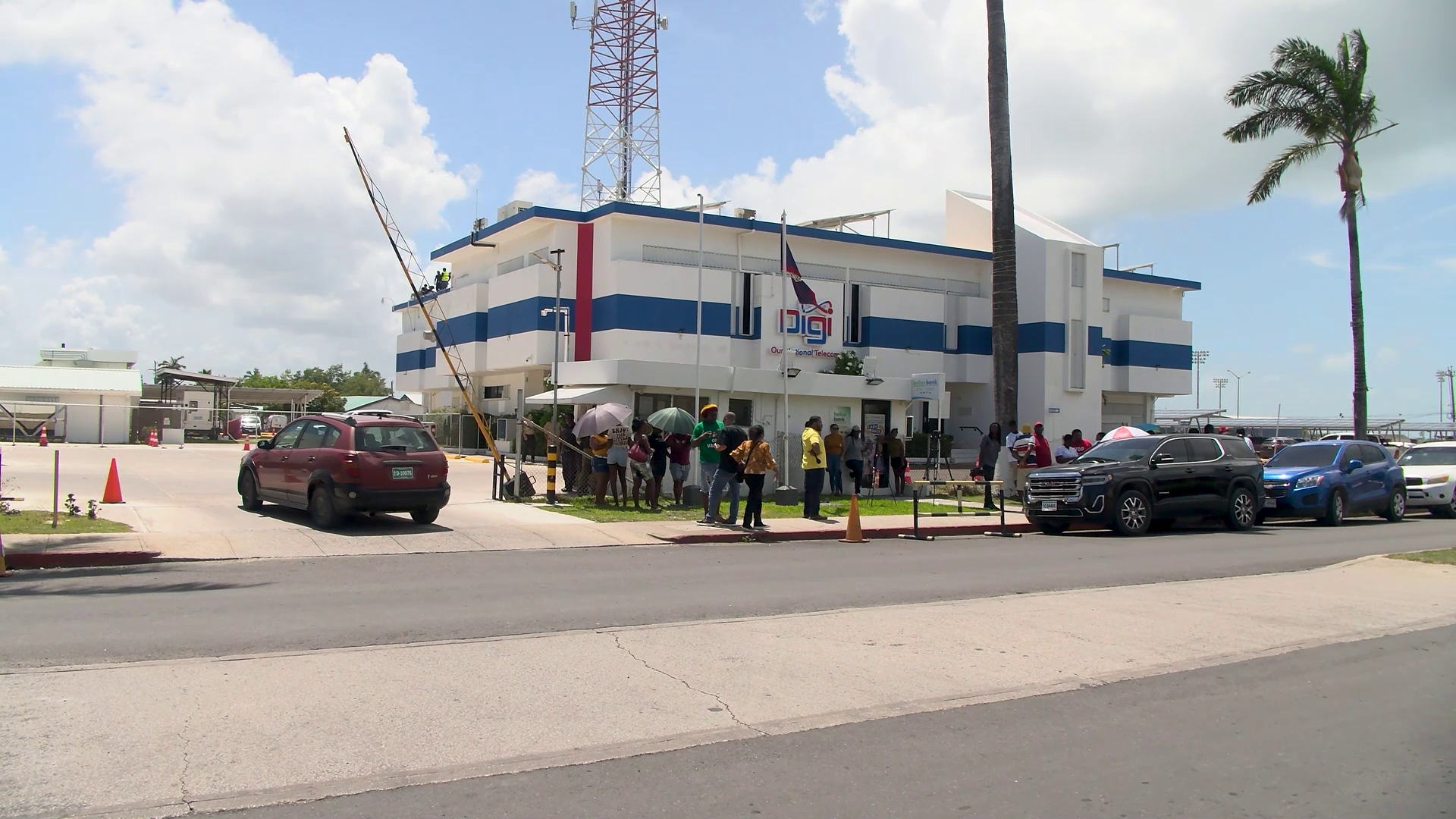
    A controversial proposed acquisition in Belize’s telecommunications sector has triggered fresh debate over the boundaries of national regulatory and competition law, after Belize Telemedia Limited (BTL) announced its board of directors had signed off on a plan to purchase 100 percent of the issued share capital of Speednet Communications Ltd., which operates under the brand name SMART. While much public discussion has centered on whether the full transaction would violate existing competition rules laid out in the Belize Telecommunications Act, a close review of publicly available information reveals that the more pressing immediate legal question centers on whether BTL has yet crossed the line prohibited by Section 42(4) of the statute.

    In its official public statement released on August 4, BTL laid out the clear step-by-step process that the proposed acquisition is currently following. The board’s initial approval only endorses the broad principle of the purchase, the company confirmed, and the move remains contingent on two key preconditions: the successful completion of ongoing due diligence, and the finalization of formal negotiations over binding contractual terms including representations, warranties, and other legal protections for both parties. BTL further clarified that once negotiations advance to the point of a draft definitive share purchase agreement, the document will return to the board for an entirely separate review and final approval before it can be formally executed. This structured sequence, laid out by BTL itself, confirms that no binding acquisition agreement had been finalized at the time of the announcement.

    To understand the ongoing legal debate, it is first necessary to unpack what Section 42(4) of the Telecommunications Act actually prohibits. The statute explicitly bars any licensed telecommunications provider from entering into or implementing any agreement, informal arrangement, or understanding whose purpose or likely effect is to substantially reduce competition in any market for telecommunications services, or related products used in conjunction with those services. Crucially, the legislation does not explicitly ban a company’s board from approving preliminary negotiations or giving in-principle consent to pursue a potential acquisition. Based solely on the details BTL has released to the public, the board’s initial approval resolution does not automatically qualify as the prohibited binding agreement referenced in Section 42(4). Whether the legal threshold for a violation has been crossed depends on non-public details, including whether BTL and Speednet have reached any binding arrangements beyond the ongoing negotiations BTL has acknowledged.

    Even if the two parties ultimately finalize a definitive acquisition agreement, Belize’s Telecommunications Act already lays out a separate mandatory regulatory approval process that must be completed before the transaction can move forward. Section 19 of the statute requires that any licensed provider must obtain prior written approval from Belize’s Public Utilities Commission (PUC) before transferring its license, ceding operational control of its business, merging with another licensed provider, or participating in a takeover. The law also grants the PUC explicit authority to reject approval requests if the commission determines the proposed transaction would undermine the core goals outlined in the Act. Those statutory goals include expanding access to reliable, affordable telecommunications services, encouraging healthy reliance on competitive market forces, driving private investment and sector innovation, ensuring fair pricing for consumers, maintaining stability across the telecommunications industry, and protecting the interests of end users, service providers, and consumers alike. This means the PUC’s role goes far beyond routine administrative processing: the commission is required to conduct a full review to confirm the transaction aligns with the legislative framework established by Belize’s parliament.

    The competition provisions contained in the Act go further than Section 42(4) as well. Part VI of the statute is dedicated to regulating market dominance and protecting consumer interests. In addition to the ban on anti-competitive agreements, Section 42 also prohibits dominant market players from abusing their market power to eliminate or significantly harm competing licensees, block new entrants from accessing the market, or discourage other licensees from engaging in lawful competitive conduct. The Act also outlines clear criteria for the PUC to use when determining if a provider holds dominant market position, including factors like current market share, pricing power, access to proprietary technology, broader market trends, and any other relevant industry dynamics.

    For its part, BTL has framed the proposed acquisition as a net positive for Belize’s telecommunications sector and the national economy. In its August 4 statement, the company outlined a range of projected benefits: the transaction would eliminate unnecessary duplication of existing telecommunications infrastructure, boost overall network reliability for end users, accelerate efforts to expand digital inclusion across the country, extend connectivity to currently underserved rural and low-income communities, and improve returns for BTL shareholders. The company also emphasized that the purchase would not require BTL to take on new debt, nor would it demand additional investment from Belize’s Social Security Board. The total estimated purchase price of BZ$80 million, BTL confirmed, would be repaid entirely through Speednet’s existing operating cash flows over an estimated 4.2-year period. BTL concluded its statement by reaffirming its commitment to collaborating with the Government of Belize, the PUC, and all other relevant stakeholders to ensure the proposed transaction is carried out in a transparent and responsible manner.

    Based on all information currently available to the public, the core legal question surrounding the proposed acquisition is not whether BTL has already completed a transaction that violates Section 42(4). BTL’s own public announcement makes clear that negotiations are still ongoing, and any definitive share purchase agreement will require a separate round of board approval before it can be signed. The next critical phases of the process will be the finalization of a binding agreement between BTL and Speednet, followed by the mandatory statutory approval process before the PUC as required by Section 19 of the Telecommunications Act. It is only after these steps are completed that the full legality of the transaction, including any potential violation of competition rules, can be fully assessed.


  • BTL-Speednet Buyout Advances, But BCCI Says Belize Is Not Ready

    BTL-Speednet Buyout Advances, But BCCI Says Belize Is Not Ready

    A proposed $80 million acquisition of rival telecommunications provider Speednet by Belize’s BTL has cleared a key internal hurdle after BTL’s board of directors officially signed off on the deal, but the approval has sparked growing pushback from the country’s top business advocacy group and independent media voices, who warn the transaction is moving forward without critical consumer protections.

    The Belize Chamber of Commerce and Industry (BCCI) has emerged as a leading critic of the accelerated timeline, arguing that necessary legislative and regulatory guardrails have not been put in place to protect Belizean consumers before the merger of the country’s two largest telecom providers. BCCI President Giacomo Sanchez told reporters that the rushed process has left far more questions unanswered than it has resolved, calling the logic behind the $80 million price tag fundamentally flawed.

    Sanchez emphasized that the BCCI does not oppose private sector mergers as a general rule, but this transaction carries unique public stakes due to the Belize government’s significant financial interest in BTL, including a major equity stake held through the country’s Social Security program. Following multi-stakeholder consultations held in recent months, the BCCI remains unconvinced that the acquisition delivers public value, or that a functional regulatory framework exists to prevent consumer exploitation after the merger is complete.

    “What we have done is essentially put the cart before the horse,” Sanchez explained. “We should have put in the proper legislative safeguards and guardrails and then we can see the proceeding of a fluid transaction. However, there was a rush and I honestly don’t know why there was a rush in concluding. To me it was more of a seller driven transaction, rather than a buyer driven transaction which is not good for the people of Belize.”

    Sanchez added that the $80 million investment would deliver far greater long-term value for BTL and the public if it were directed toward upgrading BTL’s existing digital infrastructure, particularly in emerging cloud-based services that position the company for future growth, rather than purchasing declining assets from Speednet.

    While BTL’s board has approved the deal, final authorization still rests with Belize’s Public Utilities Commission (PUC), the independent regulatory body legally tasked with determining whether the acquisition serves the best interest of consumers. Critics are now raising urgent questions about whether the PUC’s upcoming review will be thorough, independent, and centered on public needs, or if the outcome has already been predetermined.

    Sanchez said the BCCI cannot draw conclusions about the PUC’s position until the agency releases a formal, tangible decision. But he warned that the BTL board’s early approval signals the deal is already a foregone conclusion, with PUC approval widely seen as just a procedural formality. When pressed on whether he distrusts the PUC to prioritize public interest, Sanchez declined to comment until the agency issues its ruling, but noted that legal maneuvering could be used to bypass the PUC’s mandatory regulatory approval required under Belize’s Telecommunications Act.

    “From a BTL standpoint yes, it is a done deal. I don’t think this will go back or reversed. It is just the nature of things,” Sanchez said. Following the board’s approval, the BCCI executive held meetings this week with its social partners to map out the organization’s next steps to address the acquisition and broader related governance concerns.

    Independent opposition to the deal has also come from Senator Louis Wade, owner of Belize’s independent media outlet Plus TV, who argues the merger poses an existential threat to independent journalism in the country. Wade says he has more to lose than any other public figure if the acquisition moves forward, as a consolidated telecom monopoly would directly threaten his media business and its operations. While he did not join other senators in walking out of this week’s vote on the matter, Wade reaffirmed his longstanding opposition to the deal, emphasizing that his opposition is rooted in public interest rather than personal financial gain.

    “I stand to lose more than any of them. I own a media house, Plus TV and any monopoly is a threat as it has been in the past to what we do. So, I have my entire investment that comes at risk. But I was not there to represent Plus TV. I was not there to represent my own interest. I was there to represent my constituency, which is the church,” Wade explained, noting that he helped coordinate a unified opposition position among independent senators that was formalized before this week’s board vote.

    Wade added that he stands by his opposition and would take the same position again if given the opportunity, as the merger remains clearly against the interests of all Belizeans.

  • BTL-Speednet Protest Divides Senate, Wade Stands Alone

    BTL-Speednet Protest Divides Senate, Wade Stands Alone

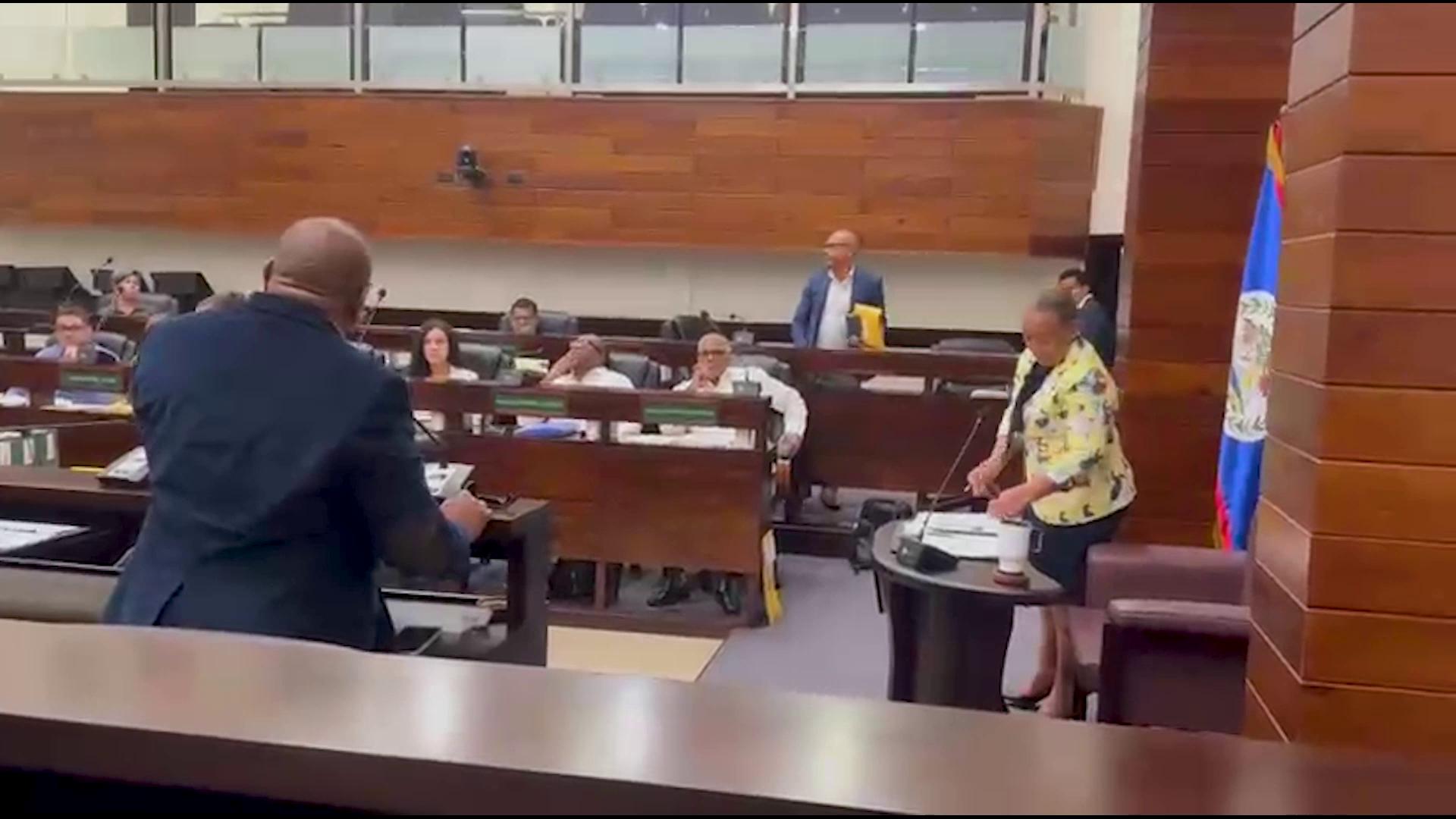
    A controversial debate has erupted across Belize’s political landscape following a high-stakes split in the Senate this week, after independent Church Senator Louis Wade broke ranks with fellow opposition and independent lawmakers to remain in the National Assembly chamber during a mass walkout protesting the proposed BTL-Speednet acquisition. The walkout, organized to demonstrate opposition to the buyout that critics warn would recreate a telecommunications monopoly in the country, left Wade isolated and facing sharp backlash, with some detractors even labeling him a political sellout. But the veteran senator has stood firmly by his unprecedented decision, arguing that his choice to stay allowed him to advance a long-stalled piece of pro-worker legislation that has waited nearly two decades for a Senate vote.

    In a public explanation of his decision, Wade emphasized that his primary obligation is to the Belizean people and the constituents he represents, not unified political protest tactics. The long-pending Occupational Safety and Health (OSH) Bill, which had already advanced through 22 amendments with 46 still pending, provided a critical reason to remain, he argued. “I do not believe personally that walking out of a meeting where we represent not ourselves, but the people, would have been the best strategy yesterday,” Wade stated. “I believe that independent senators and the opposition has the right to use whatever strategy they believe is necessary to capture the attention of the Belizean people and government. However, I also believe I have the right to use whatever strategy I believe best that represents the church properly and can still get the same message across.”

    Wade made clear that he shares the widespread opposition to the BTL-Speednet deal, noting that the acquisition of Smart by BTL to form a new monopoly runs directly counter to the will of the Belizean people and undermines democratic market competition. “We have walked away from that [monopoly] and should never go back there,” he added. “So I felt it necessary to speak, rather than to walk out.”

    Despite Wade’s clarifications, key business stakeholders have backed the decision of the business-aligned senator who joined the walkout, doubling down on the view that the threat of a new telecommunications monopoly demands immediate political pushback that outweighs the urgency of the OSH Bill. Giacomo Sanchez, president of the Belize Chamber of Commerce and Industry (BCCI), argued that the gravity of the BTL acquisition gives it higher priority than the decades-old safety legislation, which could withstand a short additional delay. “I think because of the gravity of the BTL acquisition, it ranks a bit higher in priority in terms of importance, at least at this point,” Sanchez explained. “The OSH Bill has been around for so long, we have been on pause for a while. So, we can pick up the pieces on that and ensure we get a good piece of legislation coming out of it.”

    Sanchez added that the spontaneous walkout was a necessary, immediate response to the controversial deal, saying “a walkout just suggest, or at least strikes to the heart of the opposition we have to this overall transaction.”

    In the end, the OSH Bill passed through the Senate on Tuesday without the votes of the six senators who participated in the walkout — three independents and three opposition lawmakers. The incident has ignited widespread public discussion over legislative priorities, protest tactics, and the risks of the proposed BTL-Speednet monopoly, with divisions remaining deep across political and business circles in the country.