标签: Belize

伯利兹

  • Trump Lands in Beijing While Iran War Still on the Table

    Trump Lands in Beijing While Iran War Still on the Table

    On May 13, 2026, U.S. President Donald Trump touched down in Beijing, kicking off a long-awaited bilateral summit with Chinese President Xi Jinping – his first visit to the country since 2017. The high-profile diplomatic trip was originally postponed earlier this year, after Trump pushed back the travel schedule betting that the ongoing armed conflict between the U.S. and Iran would reach a resolution within a matter of weeks. To date, however, no permanent peace agreement has been finalized between the two sides, leaving the threat of sustained conflict hanging over the summit.

    The welcoming ceremony for Trump’s delegation followed longstanding diplomatic protocol, featuring full ceremonial pomp and public crowds gathered to wave both the flags of the United States and China. Joining Trump on the trip are multiple senior White House and cabinet officials, alongside more than a dozen top American business leaders – including Apple CEO Tim Cook and Tesla CEO Elon Musk, highlighting the strong economic and commercial components of the summit’s agenda.

    While trade cooperation and technological collaboration are core topics on the meeting schedule, the unresolved U.S.-Iran standoff is poised to take center stage during bilateral discussions. The U.S. has maintained a strict naval blockade around the Strait of Hormuz, a critical global maritime chokepoint that handles roughly a fifth of the world’s daily oil trade. For China, the world’s largest importer of Iranian crude, the ongoing closure and heightened military activity in the strait has created significant energy security and economic risks.

    According to reporting from CNN, the Trump administration is expected to push China to leverage its longstanding economic and diplomatic influence with Tehran to help de-escalate tensions. Trump has publicly framed the current fragile lull in hostilities as being on “massive life support”, making clear he aims to secure Chinese backing to reopen the strait to commercial shipping and reach a permanent ceasefire between the U.S. and Iran. Official working meetings between Trump and President Xi are scheduled to unfold over the coming two days, with global markets and diplomatic observers closely watching for outcomes that could reshape regional security and international trade flows.

  • Public Hearings Over Southern Village Boundary Disputes Start This Week

    Public Hearings Over Southern Village Boundary Disputes Start This Week

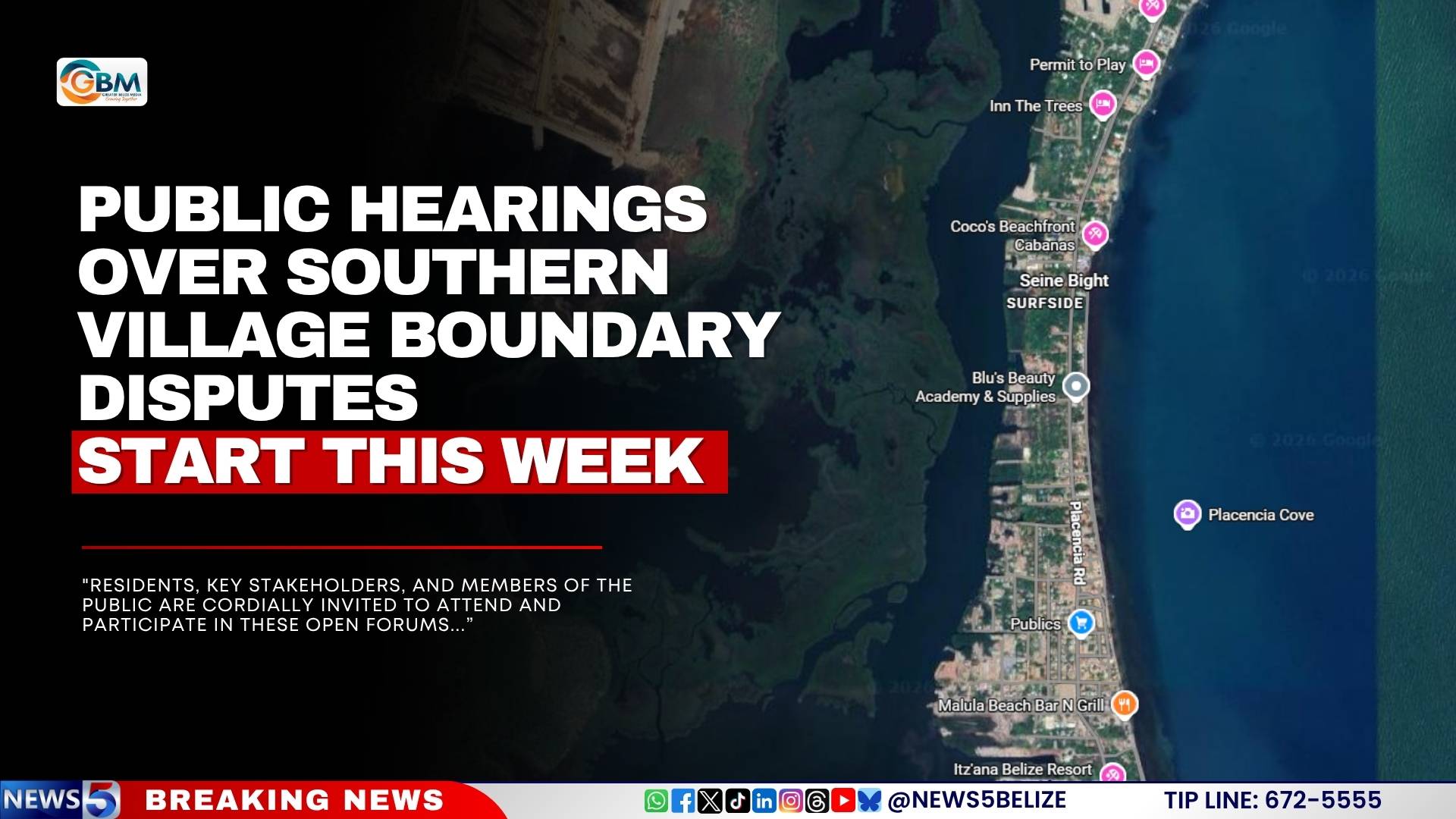
    Long-simmering boundary tensions between four neighboring communities in southern Belize will move toward resolution this week, as an independent oversight commission launches a series of public hearings to gather community input on contested border lines between the villages.

    Residents of Placencia, Seine Bight, Hopkins, and Sittee River have navigated unclear, disputed boundaries between their jurisdictions for years, sparking ongoing tensions over land use, public service access and administrative jurisdiction. To address these long-unresolved conflicts, the cabinet minister overseeing village affairs has convened a formal independent mediation commission under the framework of the Village Council Act to guide a transparent, community-centered resolution process.

    The six-member bipartisan commission brings together cross-sector expertise to ensure a fair and balanced outcome. It is chaired by the country’s Chief Magistrate, with additional voting seats allocated to representatives from the Ministry of Natural Resources, the Attorney General’s Ministry, the Elections and Boundaries Department, the National Association of Village Councils, and the country’s private sector. This diverse composition is designed to avoid institutional bias and incorporate perspectives from all relevant stakeholder groups.

    Four separate public hearings have been scheduled across the four affected communities, giving every local resident the chance to share their perspective on the historical boundaries and current use of contested lands. The first session will be held for Placencia Village on the evening of Friday, May 15, kicking off at 6:00 p.m. at the community basketball court. The following day, Seine Bight Village will host its hearing at 4:00 p.m. at the village’s Welcome Centre.

    Two additional hearings will take place two weeks later for the remaining two communities. Hopkins Village will convene its public session at 6:00 p.m. on Friday, May 29 at Harada Inn, and Sittee River Village will close out the public hearing series at 4:00 p.m. on Saturday, May 30 at the local Methodist School campus.

    In an official public statement, the sponsoring government ministry extended an open invitation to all local residents, community stakeholders, and interested members of the public to attend the hearings and contribute their input. For community members who cannot attend the in-person public sessions, written comments may be submitted through local village council offices for the commission’s review. Individuals with questions about the hearing process, submission rules or meeting logistics may contact commission liaison Clifford King via email at clifford.king@mrt.gov.bz or by phone at 670-2643.

  • Belize Earns a Seat in Regional Tax Body CIAT

    Belize Earns a Seat in Regional Tax Body CIAT

    In a milestone for Belize’s regional engagement and domestic tax modernization, the Central American nation has been elected to the Executive Council of the Inter-American Center of Tax Administrations (CIAT) for the 2026-2027 term. The announcement follows the vote held during CIAT’s 60th General Assembly, which concluded May 11 in Punta Cana, Dominican Republic.

    Michelle Longsworth, Director General of the Belize Tax Service Department, will serve as Belize’s representative on the council. She will join fellow decision-makers from eight other member jurisdictions: Brazil, Canada, Chile, Colombia, Curaçao, the Netherlands and Panama, positioning Belize to help shape regional tax policy alongside major hemispheric economies.

    The win comes at a particularly pivotal moment for Belize, as the country advances one of the most sweeping overhauls of its tax system in recent decades. At the core of this reform agenda is the full rollout of mandatory electronic invoicing for all goods and services tax (GST)-registered businesses. The framework was enabled by amending the national GST Act, which entered into force on January 1, 2025, with the Ministry of Finance confirming full implementation plans back in March 2026. Non-compliant businesses will face formal penalties under the updated legislation.

    Policy makers designed the new e-invoicing system to advance two key goals: closing gaps that enable tax evasion by creating fully transparent, traceable digital records of all commercial transactions, and cutting red tape for compliant businesses by streamlining GST reporting processes.

    Beyond digital invoicing, Belize’s CIAT Executive Council seat aligns with its broader national tax reform strategy. The government is also working to strengthen its cross-border international tax cooperation frameworks and advance a transition to a Semi-Autonomous Revenue Authority (SARA), a shift designed to improve administrative efficiency and compliance outcomes.

    Regional tax bodies like CIAT play a critical role in coordinating tax policy across the Americas, supporting member states in combating cross-border tax evasion, modernizing revenue administration, and aligning domestic rules with global tax standards. Belize’s new seat on the governing council gives the country a direct voice in setting the body’s priorities for the coming two-year term as it advances its own domestic reform goals.

  • Has the Search for Deborah “Bree” Arthurs Gone Cold?

    Has the Search for Deborah “Bree” Arthurs Gone Cold?

    It has now been 48 days since 28-year-old Deborah “Bree” Arthurs, a Belize City resident and single mother, was last seen by members of the public, leaving her loved ones and the local community grappling with growing uncertainty over her fate.

    Arthurs was last documented in public on Friday, March 27, near La Popular Bakery, where witnesses observed her getting into a silver Chevrolet Equinox. No contact from her has been reported to authorities or family members since that date.

    As the weeks tick by with no breakthrough, the Belizean Police Department has not shared any new public briefings on the progress of its investigation, and no credible, confirmed leads pointing to Arthurs’ current whereabouts have come to light. Early on, investigators launched a probe into a potential link between Arthurs’ unexplained disappearance and the fatal shooting of Jevon Clare that occurred nearby, but that line of inquiry remains open and unresolved, with no new findings disclosed to the public.

    Initial ground searches covered broad swathes of territory across both the Belize and Cayo districts, and in an April 7 update, Assistant Superintendent of Police Stacy Smith confirmed that investigators had identified a vehicle of interest tied to the case. However, no subsequent updates regarding that vehicle or any developments stemming from that identification have been released.

    With law enforcement remaining tight-lipped on the case, Arthurs’ family has stepped in to encourage new tips, boosting the total reward for information that leads to actionable answers to $10,000 Belize dollars. More than six weeks after she went missing, the family continues to wait in limbo for any news that can help resolve the mystery of her disappearance.

  • Former Honduran Mayor Arrested in Killing of Environmental Activist

    Former Honduran Mayor Arrested in Killing of Environmental Activist

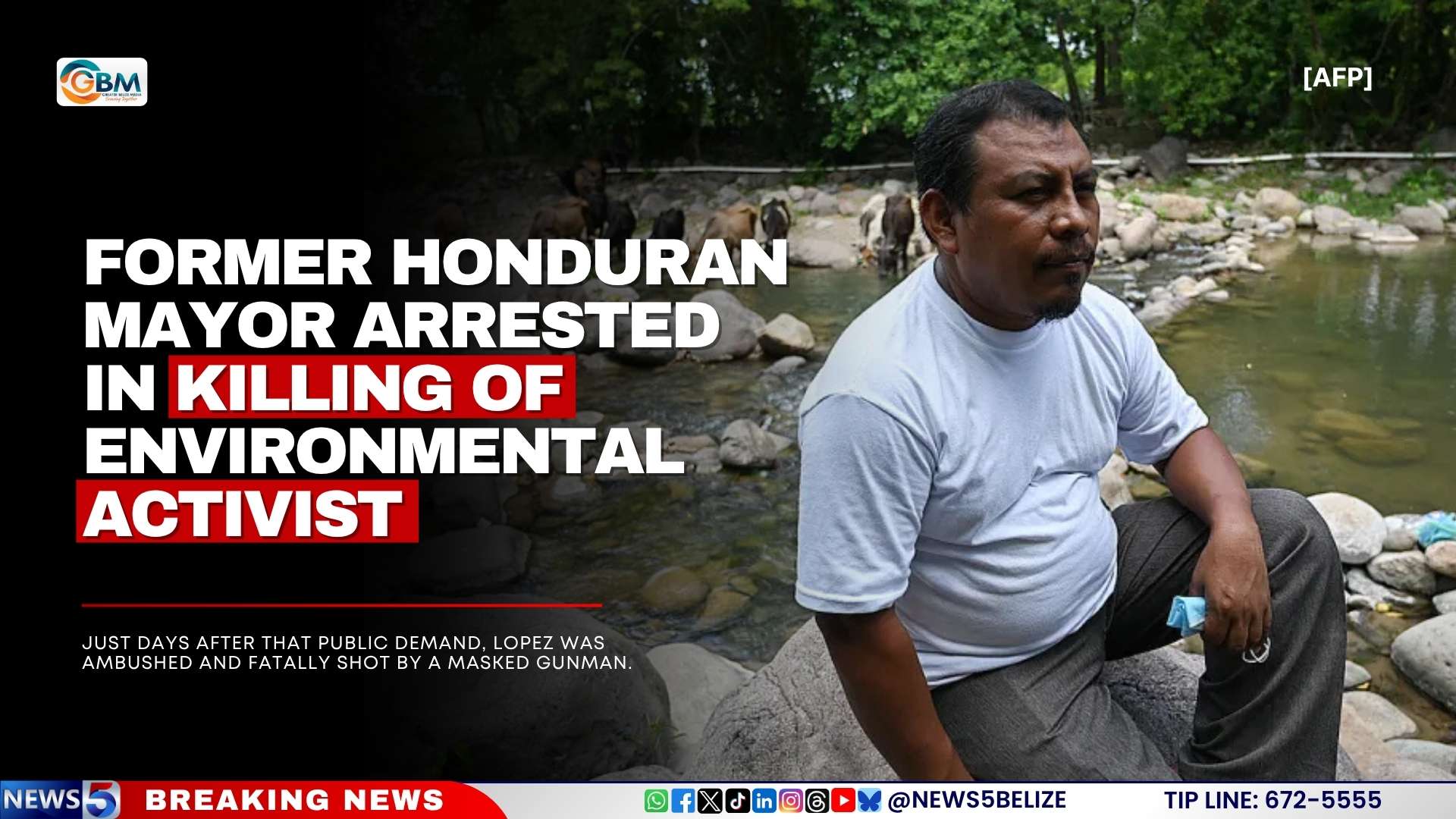
    Four years after high-profile environmental advocate Juan Lopez was gunned down in northern Honduras, law enforcement officials have secured arrests in his killing, with a former local mayor at the center of the conspiracy charges. In an announcement this week, Honduran prosecutors confirmed three men — including Adan Funez, the former mayor of the city of Tocoa — have been taken into custody in connection with Lopez’s September 2024 assassination, marking a long-awaited breakthrough in a case that drew global outrage over risks to environmental defenders across Latin America.

    Funez was arrested at his private residence on Tuesday, with prosecutors alleging he acted as the primary mastermind of the attack that killed Lopez. Two additional co-conspirators have also been detained: local businessman Hector Eduardo Méndez and Juan Angel Ramos Gallegos. Both face charges of criminal association tied to Lopez’s murder. A spokesperson for the Honduran Public Prosecutor’s Office confirmed Wednesday that investigators have concluded all three men are the intellectual authors of the killing, with a trial scheduled to commence as early as June 2026.

    Lopez, a widely respected activist who focused on both environmental protection and anti-corruption accountability, had emerged as the most prominent public opponent of a proposed iron oxide mining project in the Colón department of northern Honduras. The planned development, which Funez publicly supported throughout his tenure as mayor, faced fierce pushback from local activists who warned the mining operation would cause irreversible damage to the region’s old-growth forests, critical river ecosystems, and nationally protected conservation reserves.

    In the weeks before his death, Lopez escalated his public criticism of Funez, issuing a formal, public demand for the then-mayor to resign over a growing corruption scandal tied to the mining project. Just four days after Lopez made that demand public, he was ambushed by a masked gunman on a public street and shot multiple times in the chest and head, killing him instantly.

    The assassination immediately triggered widespread international condemnation, and renewed longstanding global concerns about the deadly violence targeting climate and land defenders in Honduras and across Central America. The killing drew immediate comparisons to the 2016 assassination of Berta Caceres, another iconic Honduran environmental activist whose murder first put the global spotlight on the crisis of violence against land defenders in the region.

    According to data from global environmental watchdog Global Witness, Honduras consistently ranks among the most dangerous countries on Earth for environmental and land rights activists. The organization’s 2024 report found that Latin America as a whole accounted for more than 80% of all global killings of land and environmental defenders that year, with activists working to oppose large-scale mining, logging, and infrastructure development in resource-rich regions disproportionately targeted for violence. Activists note that systemic impunity for these killings has long allowed attackers to act without consequence, though the arrests in the Lopez case mark a rare step toward accountability for attacks on environmental organizers.

  • Belize Makes 52 Years in CARICOM; ‘It’s About People and Opportunity’

    Belize Makes 52 Years in CARICOM; ‘It’s About People and Opportunity’

    As Belize enters its 53rd year as a member state of the Caribbean Community (CARICOM) in 2026, the country is turning its attention to bridging the knowledge gap around regional integration for younger generations, marking five decades of membership with a youth-centered public event.

    On Tuesday, a targeted panel discussion brought together high school and university students, early-career young professionals, and education leaders in Belmopan, the nation’s capital. The gathering was organized to unpack what CARICOM membership actually delivers for ordinary Belizeans, moving beyond the dense policy documents and administrative formalities that often overshadow the tangible benefits of regional cooperation.

    The event was hosted by Belize’s Ministry of Foreign Affairs and Foreign Trade, and formed a core part of the national 2026 CARICOM Week celebrations. This year’s regional campaign carries the unifying theme “Your Future, Your Region”, which was designed to center young people’s stake in Caribbean integration.

    In his opening welcome address, Minister of State for Foreign Trade Marconi Leal Jr. highlighted Belize’s longstanding commitment to the CARICOM bloc, which the country first joined in 1974. A formal statement released by the government following the event emphasized that Leal stressed Belize’s engagement with CARICOM extends far beyond trade agreements and intergovernmental policy negotiations. For Belize, he said, regional cooperation is fundamentally “about people and the opportunities created through collective regional development.”

    Over the course of the discussion, participating panelists drew on their own personal career trajectories to illustrate the practical advantages of CARICOM integration. Conversations focused on opening accessible pathways for cross-regional collaboration in key areas that matter most to young Belizeans: cross-border higher education opportunities, support for regional youth entrepreneurship, targeted cross-Caribbean skills development programs, and expanded professional mobility that allows young workers to pursue opportunities across CARICOM member states.

    The event comes as CARICOM as a whole works to increase public awareness of its work among younger demographics across all 15 member states, aiming to build long-term public support for ongoing regional integration efforts. For Belize, the 52nd anniversary celebration serves as both a milestone to reflect on past progress and a call to action to ensure the next generation understands the benefits of regional cooperation for their own futures.

  • Canada Warns Travellers Following Belize’s SOE

    Canada Warns Travellers Following Belize’s SOE

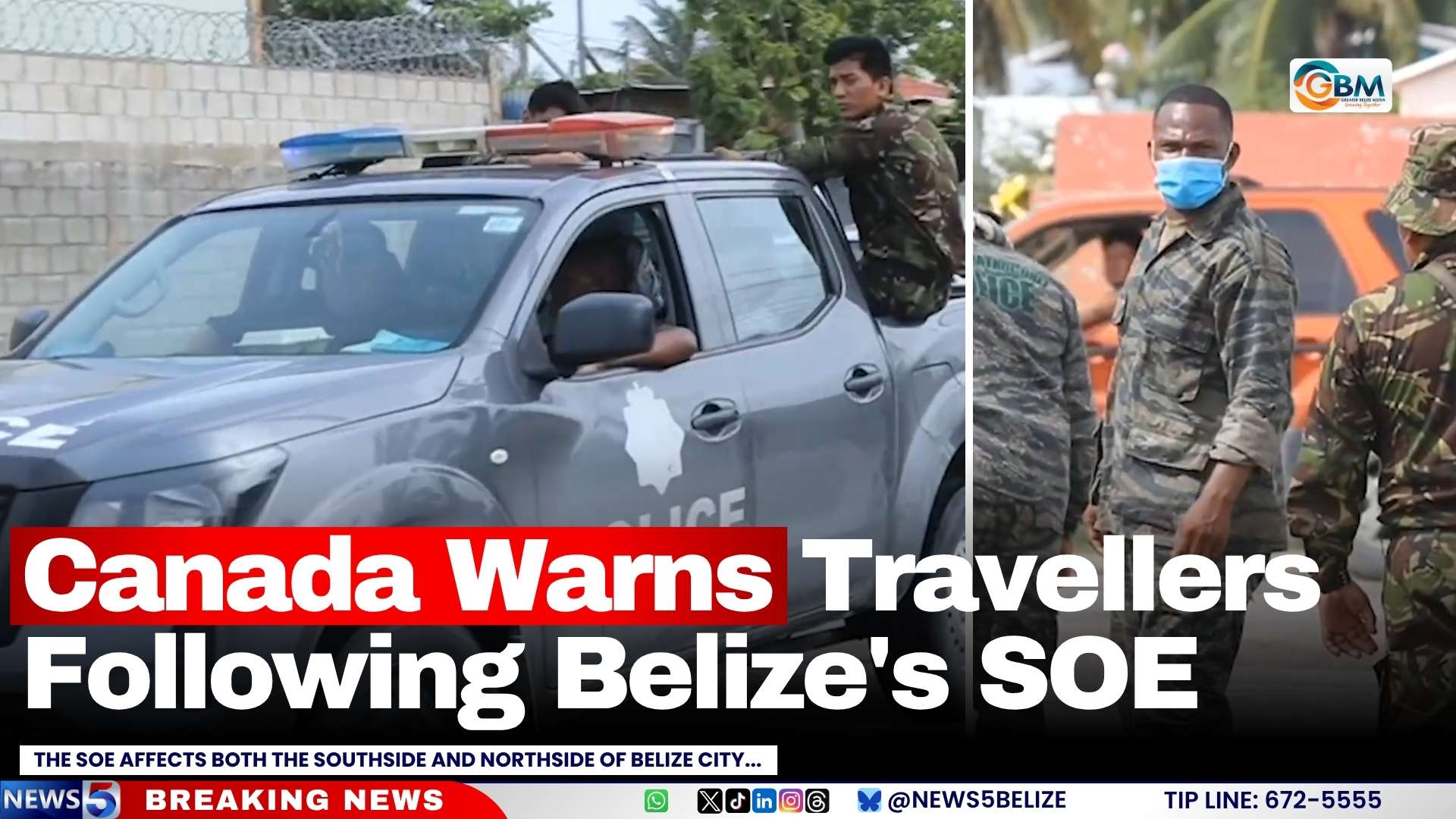
    In response to a sharp escalation in gang-related violent crime and the implementation of a nationwide partial state of emergency (SOE) in Belize, the Government of Canada has issued an updated travel warning, urging Canadian citizens visiting the Central American nation to exercise extreme caution during their trips.

    The one-month state of emergency was officially declared on May 8, 2026, after a sudden spike in shootings and inter-gang conflicts that rattled communities across the region. The extraordinary measures cover the entire northern and southern districts of Belize City, as well as multiple outlying communities in the broader Belize District: Ladyville, Burrell Boom, Fresh Pond, Buttercup Estates, Bermudian Landing, Lemonal, Isabella Bank, Rancho Dolores, and Double Head Cabbage.

    Over the opening weekend of the state of emergency, residents across Belize City woke to a drastically altered security landscape, with intensified joint patrols by local police and the Belize Defence Force (BDF), permanent road checkpoints, mandatory curfews, and expanded security operations designed to halt the spread of tit-for-tat violence. Local authorities confirmed the emergency regulations were rolled out after weeks of retaliatory attacks and lethal shootings tied to long-running rival gang disputes.

    A string of high-profile violent incidents in early May pushed local officials to enact the sweeping measures. On May 5, two prominent local figures, Hubert Baptist and Eric Frazer, were targeted in an ambush shooting along the Philip Goldson Highway; both survived the attack. Just days later, 29-year-old Jamal Samuels was gunned down in what investigating officers have labeled a retaliatory killing tied to ongoing gang tensions. In an incident that sparked widespread public outrage, police also reported that a 16-year-old suspect allegedly entered a local bar and fatally shot a 34-year-old mother of three. These killings are among more than a dozen violent incidents that have left local communities on edge in recent weeks.

    Under Statutory Instrument 50 of 2026, the legislation that formalizes the state of emergency, Belizean security forces have been granted sweeping expanded powers to restore public order and crack down on organized criminal activity. The emergency rules ban loitering, public alcohol consumption, and any gathering of three or more people within the designated restricted zones. Minors in these areas are also required to stay indoors between 8 p.m. and 6 a.m. daily.

    Notably, police and BDF personnel are now authorized to conduct warrantless searches of private homes, vehicles, watercraft, and individual persons if they suspect criminal activity or a potential threat to public safety. Officers also have the power to detain individuals for questioning, seize items deemed to be dangerous, and make warrantless arrests if they suspect a person has committed, plans to commit, or may facilitate criminal activity.

    Canada’s updated travel advisory explicitly outlines the expanded powers granted to security forces under the SOE, noting that authorities can restrict movement, conduct searches and seizures, and detain persons of interest at their discretion. The advisory directs Canadian citizens currently in affected zones to carry valid government-issued identification at all times, maintain constant situational awareness, avoid unpatrolled or unsecured areas, and stay up to date on developments through local news outlets.

    The advisory retains a stronger warning for Southside Belize City, urging Canadian travelers to avoid all non-essential travel to the area due to persistent gang and drug-related violence, including regular murders and shootings. It also adds that violent crime remains a widespread concern across the entire country, including the capital city of Belmopan.

  • 53 Y/O Man Charged for Mark Longsworth Murder

    53 Y/O Man Charged for Mark Longsworth Murder

    A deadly early-morning attack on a Belize City street has ended with a local man facing formal murder charges, court documents confirm.

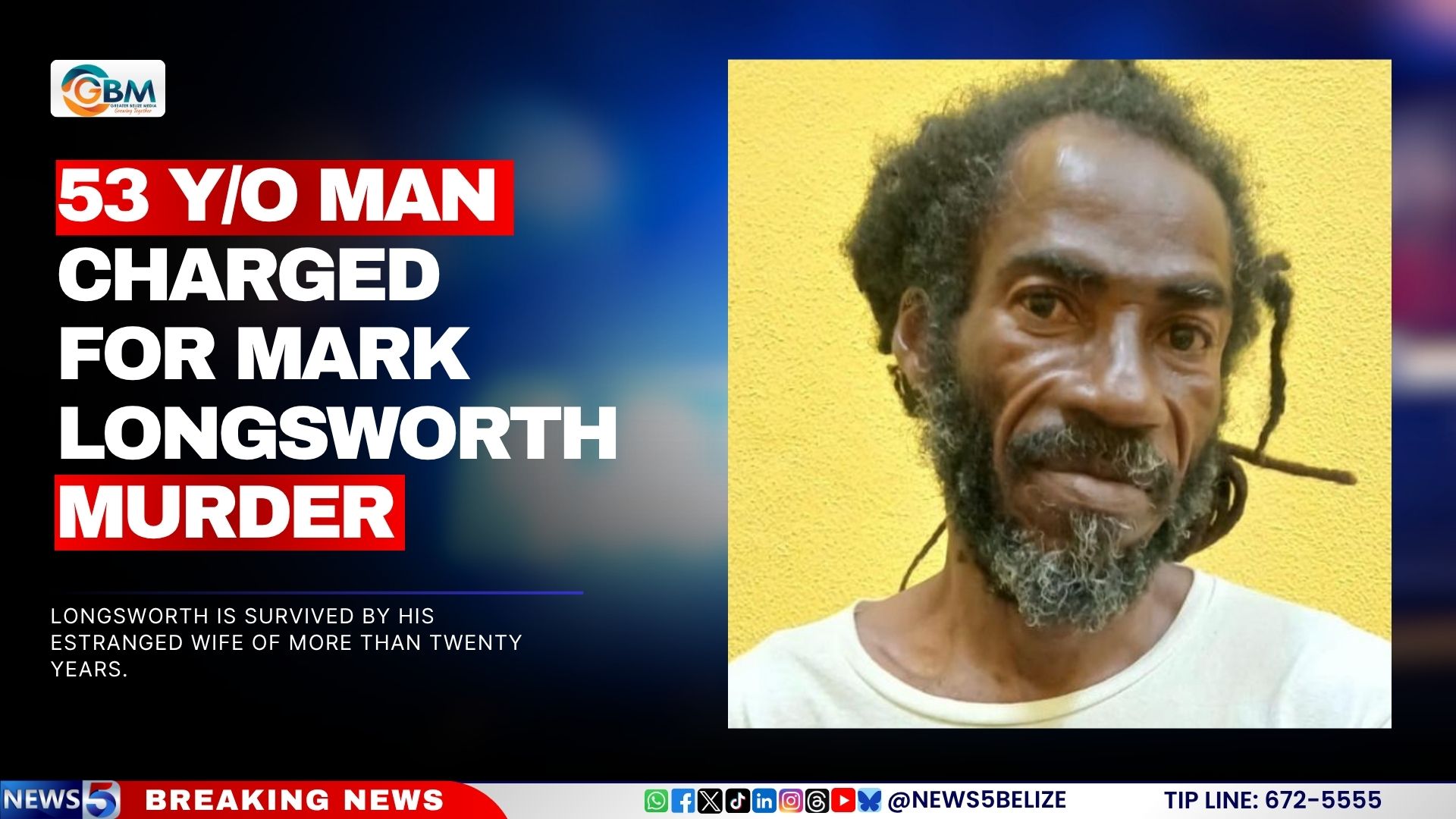
    On May 11, 2026, at approximately 12:30 a.m., patrolling police officers responding to routine checks stumbled upon an injured 56-year-old Mark Longsworth, a working caretaker, at the intersection of Mopan and Ebony Streets. First responders immediately rushed Longsworth to the nearest local medical facility for emergency care, but he ultimately succumbed to his stab wounds a short time after arrival.

    One day after the fatal incident, law enforcement officials took 53-year-old Ralph Sherlock Martinez Sr, an unemployed resident of Belize City, into custody. On Tuesday, May 12, Martinez was arraigned on a single charge of murder for his alleged role in Longsworth’s death.

    Longsworth, who leaves behind an estranged wife of more than two decades, is being mourned by his family and community as local legal proceedings move forward against the accused. Police have not released additional details about a possible motive for the stabbing as of press time.

  • First in 30 Years: Bahamas Re-Elects Its Prime Minister

    First in 30 Years: Bahamas Re-Elects Its Prime Minister

    In a historic outcome that reshapes Bahamian politics, incumbent Prime Minister Philip Davis of the Progressive Liberal Party (PLP) has secured a decisive re-election victory, marking the first time a sitting leader has won back-to-back terms in nearly three decades. The snap vote, held on a Tuesday in May 2026 months ahead of the originally scheduled October poll, delivered a landslide for Davis and his party, which claimed more than 30 out of the 41 total seats in the national parliament. The early election was strategically called by Davis to avoid potential disruption from the annual Atlantic hurricane season, a decision that ultimately paid off for the ruling party. In his first public address following the confirmation of his victory, Davis struck a humble tone, acknowledging the will of the Bahamian people. “The Bahamian people have spoken, and I receive their verdict with humility and gratitude,” Davis said. “This victory is a mandate to keep moving The Bahamas forward, to expand opportunity, strengthen security, ease the pressure on families, and deliver progress across our islands.” The main opposition bloc, the Free National Movement (FNM), faced a devastating rout in the election. The party was projected to walk away with just 8 parliamentary seats, and both its sitting chair and deputy leader lost their bids for re-election. The losses extended to former Prime Minister Hubert Minnis, who was denied the FNM’s nomination for his long-held seat and launched an independent campaign to retain the post he had held for nearly 20 years. Minnis ultimately failed to secure enough support to hold the seat, closing a major chapter in the FNM’s recent history. Cost of living pressures dominated voter concerns throughout the campaign, with skyrocketing housing costs and stagnant wage growth emerging as the top issues driving Bahamian voters to the polls. Davis’ ability to address these public anxieties, paired with his strategic decision to call an early vote, cleared a path to his historic re-election, breaking a three-decade pattern of leadership turnover in the island nation.

  • HPV Vaccine Rollout Sparks Renewed Church-State Clash in Schools

    HPV Vaccine Rollout Sparks Renewed Church-State Clash in Schools

    A decade after Belize first introduced the human papillomavirus (HPV) vaccine into its national public health portfolio, a long-simmering dispute between government health authorities and the country’s Catholic Diocese has reignited, putting life-saving immunization access for thousands of primary school girls at the center of a battle over institutional authority, religious values, and public health priorities.

    HPV, a widespread sexually transmitted infection, is conclusively linked to 70% of all cervical cancer cases as well as multiple other aggressive cancers. In 2016, Belize launched its national school-based HPV vaccination program targeting girls aged 9 to 13, a window recommended by the World Health Organization (WHO) to ensure protection before potential exposure to the virus. The initiative was a direct response to a grim public health reality: Belize has long recorded one of the highest cervical cancer mortality rates in Central America, a statistic public health officials have worked for a decade to reverse.

    Dr. Marvin Manzanero, Belize’s Director of Health Services, explained the program’s design in a 2016 briefing that remains relevant to the current rollout. “The WHO suggest that we should be vaccinating girls nine to thirteen years that is before they start to have sexual life. But we had to establish a cohort as we are introducing this and based on the attendance rate that we have from schools, which is where most of the girls of this age group are, the standard four classrooms are the ones being selected.” The current vaccine used in the program protects against strains 16 and 18 of HPV, the two high-risk variants responsible for the majority of cervical cancer diagnoses, Manzanero confirmed. Health officials note that meaningful reductions in cervical cancer mortality will take decades to emerge, as the disease develops slowly over 10 to 15 years after infection.

    This year’s scheduled nationwide immunization round has brought the long-running conflict back to the forefront. Citing longstanding policy established under former Bishop Dorick Wright, the Catholic Diocese has drawn a hard line against hosting the vaccine program in its schools. The Diocese oversees 110 of Belize’s 314 primary schools, meaning nearly 35% of the country’s primary school-aged girls could be blocked from accessing the free, school-based immunization offered through the national program.

    Not all Catholic-affiliated schools are aligning with the Diocesan directive, however. St. Martin De Porres RC School, a Jesuit institution operating outside Diocesan governance, is moving forward with its scheduled May 27 vaccination clinic for Standard Four students, aligning with the national public health schedule. The split reveals growing internal division within Belize’s Catholic community over how to balance institutional religious values with the health needs of students.

    Public health advocates have repeatedly emphasized the vaccine’s life-saving value. The Office of the Special Envoy for the Development of Families and Children issued a formal statement labeling HPV vaccination a critical intervention to protect children from HPV-related life-threatening diseases, including cervical cancer. Despite the public debate, however, none of the key stakeholders—including the Catholic Mission, Ministry of Health and Wellness, Ministry of Education, and Office of the Special Envoy for Women and Children—agreed to on-the-record interviews or clarification about the long-term impacts of the Diocese’s objection for affected students.

    As the scheduled rollout approaches, the stakes of the standoff have grown increasingly clear. Ten years into the program, public health officials anticipated steady progress toward expanding protection and reducing future cancer rates. Instead, access for thousands of eligible girls remains uncertain, with years of planned public health progress hanging in the balance. What was framed as a disagreement over institutional authority has ultimately placed the health of a generation of young Belizean women at the center of an unresolved church-state divide.