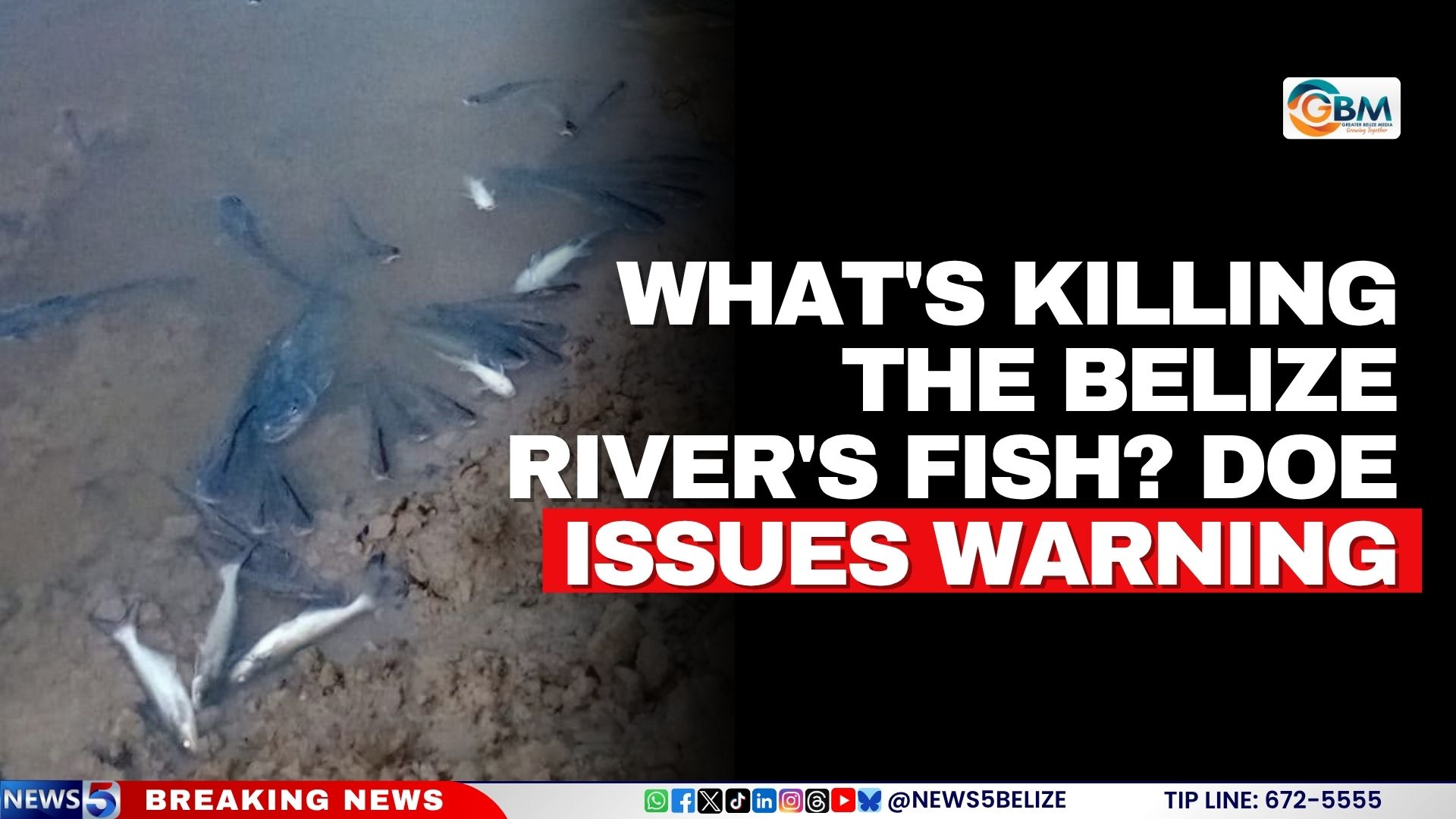
In early August 2026, widespread reports of dead fish floating along sections of the Belize River Valley triggered an urgent multi-agency investigation and a formal public health advisory from Belize’s Department of the Environment (DOE). Following the emergence of these troubling reports earlier this week, the DOE has moved quickly to coordinate a full assessment of the event and warn local communities of immediate health risks.
To ensure a thorough and cross-sectoral investigation, the DOE assembled a joint working group including representatives from Belize Water Services Limited (BWSL), the Ministry of Health and Wellness, the National Emergency Management Organization (NEMO), the national Fisheries Department, the Coastal Zone Management Authority and Institute, and the Ministry of Infrastructure Development and Housing. This collaborative team has launched a comprehensive review of potential contributing factors to the fish kill, covering multiple lines of inquiry.
Investigators have carried out systematic water quality monitoring and sample collection across the affected stretches of the river, alongside on-site assessments of recent land-clearing operations, mapping of potential points of unauthorized wastewater discharge, and reviews of other human activities that could disrupt the river’s aquatic ecosystem. As of the latest DOE update, the full root cause of the mass fish mortality event has not yet been confirmed, prompting officials to roll out broad precautionary measures to protect public safety.
In an official press release, the DOE advised residents and visitors to strictly avoid consuming any fish or other wild aquatic resources harvested from the affected areas of the Belize River Valley. The advisory extends beyond human consumption: officials also warn against using untreated river water for drinking, cooking, or any food preparation, and urge livestock owners and pet owners to keep animals away from unprocessed river water until further investigations are completed and the all-clear is given.
Importantly, the DOE has clarified that these precautions do not apply to treated municipal drinking water distributed by BWSL. The water utility has formally confirmed that all water currently supplied from its regional treatment plant continues to meet national potable water quality standards, remains safe for human consumption, and that there has been no interruption to regular water delivery services across the affected area.
In addition to issuing public health guidance, the DOE has reminded the general public of existing environmental regulations: under the 2009 Environmental Protection Regulations, the discharge of untreated wastewater or non-compliant effluent into any natural waterbody is classified as a criminal offense, and the agency will pursue enforcement action against any violations identified during the ongoing investigation. Officials note that full analysis of water and environmental samples is still underway, and they will release updated findings and adjust public advisories as more information becomes available.