标签: Antigua and Barbuda

安提瓜和巴布达

  • Who Should You Believe?

    Who Should You Believe?

    Questions of credibility and power have long lingered at the intersection of storytelling and society: When a young person brings a claim against someone in a position of authority or public influence, whose voice gets prioritized? How do our biases shift when the accuser is a young boy targeting a woman, or a well-regarded young woman calling out a member of the clergy? These provocative, unaddressed questions form the thematic backbone of a new short story anthology, *Believe Me When I Say*, which has officially opened its call for original submissions from writers across all experience and age groups.

    Conceived by Antigua and Barbuda-based author Kimolisa Mings, the anthology carries a core mission: to lift up and showcase literary creativity from writers who call the twin-island nation home, while also creating a collection that resonates with global audiences. Unlike many anthologies that lean into simple, black-and-white narratives of guilt and innocence, *Believe Me When I Say* centers the complex, nuanced gray areas that shape how society responds to accusations. All selected stories must revolve around a central accusation, fitting into one of four specific narrative frameworks that challenge conventional assumptions: the accused committed the act and concrete evidence exists; the accused committed the act but no evidence is available; the accused did not commit the act and no evidence exists; or the accused did not commit the act despite the presence of incriminating evidence.

    Writers are asked to anchor their work to a core prompt: A young person accuses a person of influence of sexual or power-based exploitation. Submissions must fall between 1,500 and 5,500 words to fit the anthology’s formatting requirements. The submission process carries no entry fee, making the opportunity accessible to emerging and established writers alike. Simultaneous submissions to other publications are permitted, though contributors may not submit the same story to multiple of the anthology’s narrative categories. One key rule restricts the use of generative artificial intelligence in the creation of submitted stories, prioritizing original, human-led storytelling.

    For writers whose work is selected for publication, the terms are creator-friendly: authors retain full copyright of their work, and each accepted contributor will receive two complimentary paperback copies of the finished anthology. The collection will be distributed both locally in Antigua and Barbuda and to international audiences, offering participating writers a chance to share their work with a global readership. Organizers frame the project as both an opportunity for publication and a creative challenge: to craft layered, complicated stories that transcend cultural borders and push back against simplistic cultural narratives around power, accusation, and truth.

    The submission window will close at 11:59 pm on August 15, 2026. Full submission guidelines, entry forms, and additional details about the anthology are available on the official project website at www.believeme268.carrd.co.

  • PM Browne and FM Greene to Officially Launch CHOGM 2026 Accreditation Process

    PM Browne and FM Greene to Officially Launch CHOGM 2026 Accreditation Process

    Antigua and Barbuda is set to take a major step forward in its preparations for the 28th Commonwealth Heads of Government Meeting (CHOGM) 2026 this week, with the official launch of the event’s accreditation process scheduled for the Cabinet meeting on July 15, 2026. The launch will be led by Prime Minister Gaston Browne, alongside the Honorable E.P. Chet Greene, Minister of Foreign Affairs, Trade and Immigration and Chair of the CHOGM 2026 National Task Force.

    This launch represents one of the most significant milestones to date in Antigua and Barbuda’s planning for the high-profile summit, which will bring together heads of state, government ministers, official delegates, media representatives and other authorized participants from the 56-member Commonwealth bloc to St. John’s from November 1 to 4, 2026. As a core part of the launch event, the Antigua and Barbuda government will unveil the dedicated official CHOGM 2026 Accreditation Portal, a centralized digital platform built to handle all accreditation applications for the summit and its affiliated side events and meetings.

    Designed with user experience and security in mind, the portal is engineered to deliver a streamlined, efficient and highly secure registration process for all eligible participants seeking access to the summit. Prime Minister Browne framed the opening of the accreditation window as a critical turning point in the work to deliver a world-class summit for the Commonwealth community. He emphasized that the Antigua and Barbuda government remains fully committed to upholding the highest international standards of organization across every dimension of the four-day meeting.

    Minister Greene, who leads the national task force overseeing all summit preparations, praised the hard work of the dedicated Accreditation Committee for delivering a robust system aligned with global benchmarks. He also highlighted the extensive collaborative efforts between the task force, the Commonwealth Secretariat, and a wide range of domestic stakeholders that went into building the accreditation framework. Notably, Greene extended special recognition to the Independent State of Samoa, the host of 2024 CHOGM, for sharing practical operational guidance and technical expertise that supported the Antigua and Barbuda team in developing a framework tailored to 2026 summit’s unique needs, while integrating widely accepted international best practices.

    This cross-nation support, Greene noted, is a powerful demonstration of the longstanding spirit of cooperation that defines the Commonwealth, as well as the tradition of smooth, collaborative transition between successive host countries. All eligible participants will receive detailed guidance on navigating the accreditation process through their home governments, affiliated organizations, and the Commonwealth Secretariat. Summit organizers have urged all applicants to complete their accreditation submissions within the established official timelines, to ensure the smooth and timely processing and issuance of official conference credentials.

    Across all areas of summit planning, the Antigua and Barbuda government continues to make steady progress on preparations. The country is preparing to welcome the entire Commonwealth family to St. John’s this November, for what organizers expect to be a productive and influential summit held under the official 2026 theme: “Accelerating Partnerships and Investment for a Prosperous Commonwealth.”

  • Walker Says Parliament Had Too Little Time to Review US MOU

    Walker Says Parliament Had Too Little Time to Review US MOU

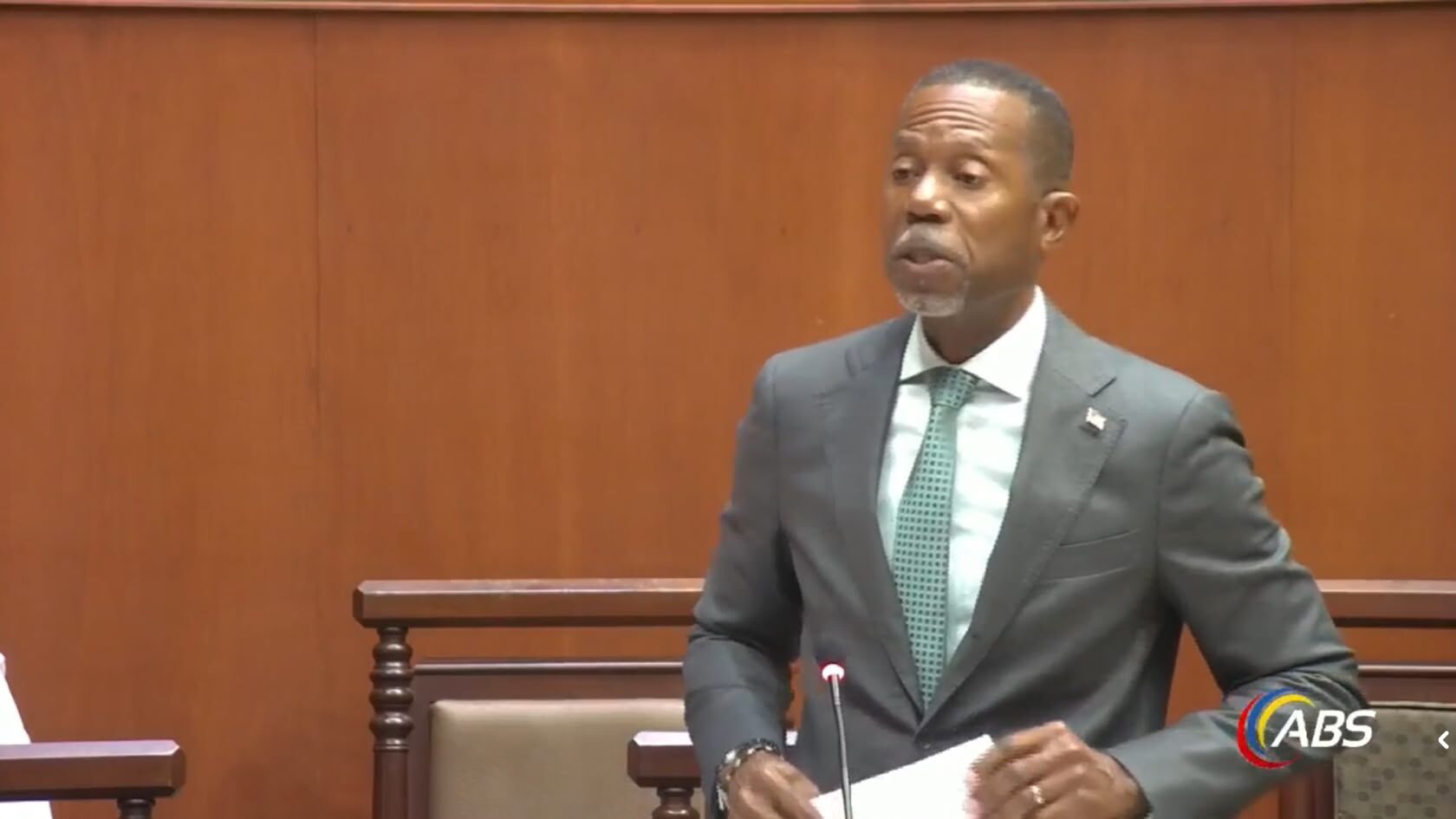
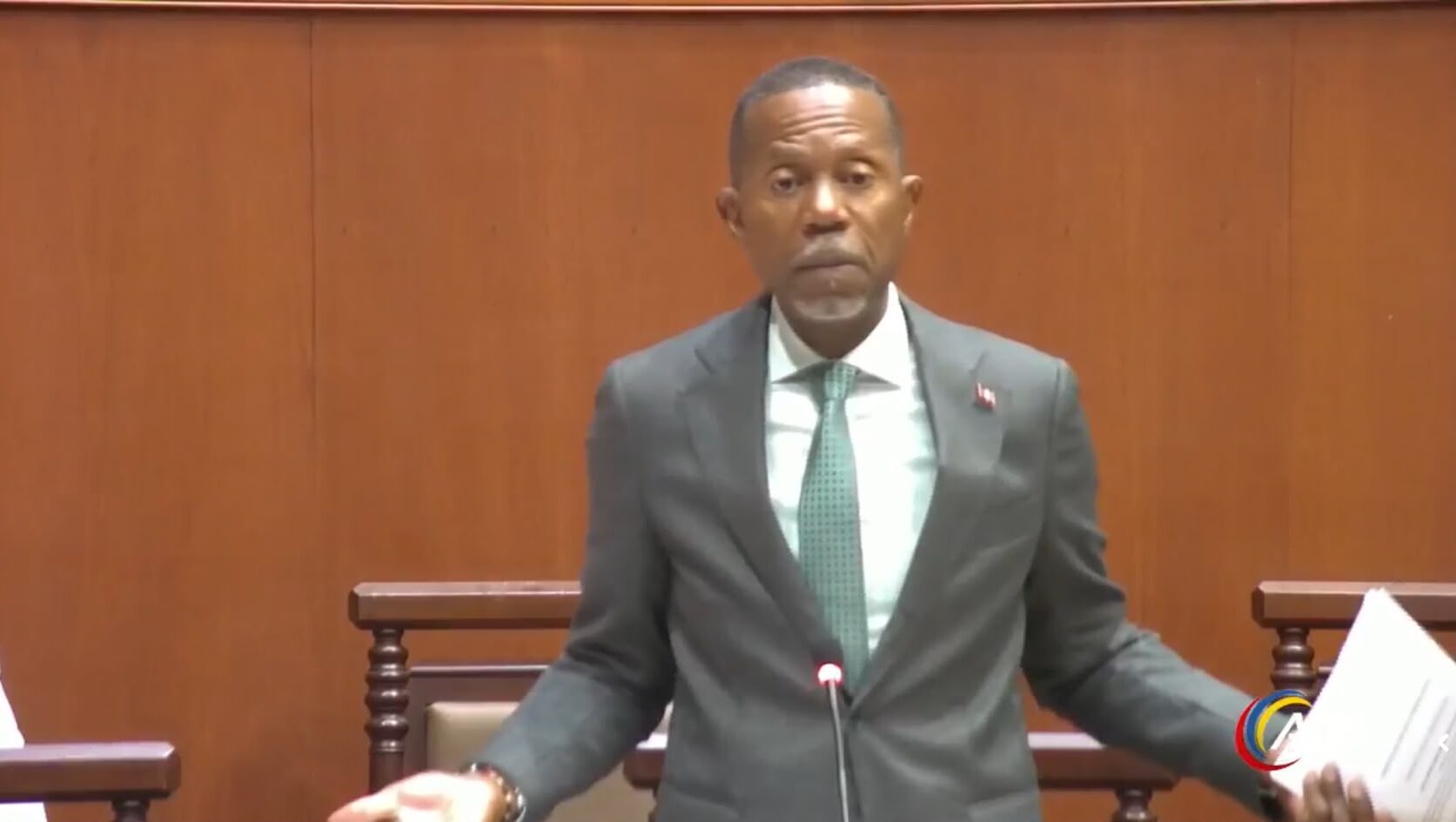
    In a heated parliamentary debate held this Tuesday in St. John’s, Antigua, Trevor Walker, the Member of Parliament representing Barbuda, delivered sharp criticism of the Gaston Browne-led government’s procedural handling of a draft memorandum of understanding (MOU) with the United States focused on potential third-country national transfers. The debate centered on a government resolution laying out core principles for ongoing negotiations with Washington, but Walker’s objections centered on the extremely limited timeline lawmakers were given to review the full MOU text before the vote on the authorizing resolution.

    Walker argued that no opposition lawmakers had received the document prior to the day of the sitting, and even suggested that many ruling party parliamentarians likely lacked sufficient time to conduct a detailed line-by-line review of the agreement. The text of the MOU was only circulated to members moments before the parliamentary session convened, leaving legislators with no opportunity to cross-reference its terms with the government’s previously published White Paper and the draft resolution laid out for debate.

    “ I don’t know if anybody in this Honourable House had seen this MOU before today,” Walker told the chamber. “Maybe some members on the government side saw it, but I certainly didn’t.”

    Beyond the compressed timeline, Walker raised red flags about the version of the document distributed to legislators, noting that the circulated text remained unsigned. He called for clarity on whether this draft reflected the final negotiated position agreed to by both Antigua and Barbuda and U.S. officials, pointing out that such fundamental uncertainties prevent parliament from carrying out its core oversight responsibility of scrutinizing major international agreements before endorsement.

    “ We have to know exactly what it is we’re debating,” Walker said, emphasizing that increased transparency around the negotiating process is critical to maintaining public trust in the country’s diplomatic decision-making. He stressed that his criticism was not an attempt to damage the longstanding bilateral relationship between Antigua and Barbuda and the United States, but rather a push to protect parliamentary sovereignty and ensure that legislators can properly fulfill their duty to examine matters that touch on the country’s sovereign status and binding international obligations.

    In response to Walker’s objections during the later stages of the debate, Prime Minister Gaston Browne pushed back against the criticism. Browne noted that the government’s White Paper outlining the core framework of the agreement and the draft resolution for parliamentary approval had been circulated to members well in advance of the sitting. He clarified that the MOU itself is not a finalized, legally binding agreement, and that it is standard diplomatic practice to not publicly distribute draft correspondence between sovereign governments prior to finalization. Following the exchange, a signed copy of the draft MOU was subsequently provided to all parliamentary members.

  • Police Announce Zero-Tolerance Security Measures for Carnival 2026

    Police Announce Zero-Tolerance Security Measures for Carnival 2026

    St. John’s, Antigua and Barbuda – July 15, 2026: As the Caribbean nation gears up for its highly anticipated annual Carnival celebration, running from July 25 to August 4, 2026, the Royal Police Force of Antigua and Barbuda has announced a full suite of robust security protocols and public safety guidance designed to protect attendees and ensure a smooth, fun-filled festival for all participants.

    In an official media release from the force’s Office of Strategic Communications, law enforcement leadership confirmed that stepped-up policing resources will be deployed across the island in the lead-up to the event and throughout its 11-day run. The enhanced security posture will include expanded mobile and foot patrols, high-visibility officer presence at crowded venues and major events, and random stop-and-search operations to intercept prohibited items before they enter public celebration spaces.

    A core pillar of the new security plan is a strict zero-tolerance policy for the possession and use of any dangerous weapons during the carnival season. Law enforcement officials confirmed that any individual found carrying an illegal firearm, unauthorized ammunition, or a range of offensive weapons – including knives, machetes, cleavers, sharpened scissors, pieces of iron or wood, and any other object designed to inflict bodily harm – will face immediate arrest.

    Additional restrictions have also been put in place to improve public safety: ski masks are fully banned for all carnival 2026 attendees, and anyone violating this regulation will face formal police action under local law. Event organizers, street vendors, and bar owners have also been directed to adhere to all existing carnival activity regulations. Specifically, vendors seeking to sell alcoholic beverages must secure official approval before the event starts, and the sale or distribution of any drinks in glass bottles or metal cans at public carnival events is strictly prohibited to prevent injuries from broken containers.

    Alongside new security measures, the Royal Police Force has released a comprehensive set of crime prevention and personal safety tips for residents, returning nationals and visitors to follow throughout the celebration. Key guidance includes: maintaining constant awareness of your surroundings and avoiding unnecessary risky situations; refraining from displaying large sums of cash or high-value jewelry in public; carrying only the cash needed for the day and using contactless electronic payment methods whenever possible; exercising extra caution when using ATMs, including avoiding unmonitored machines late at night, shielding your PIN from view, and rejecting unsolicited help from strangers.

    Further safety recommendations advise against walking alone in isolated, dimly lit areas after event hours, and encourage attendees to travel in pairs or groups whenever possible. Festival-goers are also warned against walking while distracted by mobile phones or wearing noise-canceling headphones at high volume, which can prevent awareness of surrounding hazards. For attendees bringing children or elderly family members, the police recommend keeping all vulnerable people within direct line of sight at all times and agreeing on a pre-determined meeting point in case groups become separated in crowds.

    Property safety guidance includes: locking all doors and windows before leaving home and leaving interior or exterior lights activated to deter burglaries; keeping vehicle doors locked at all times and never leaving keys in the ignition; storing valuables including handbags, mobile phones, jewelry and wallets out of plain sight in parked vehicles; only parking in well-lit, designated parking areas and checking on parked vehicles periodically throughout events. For business owners and street vendors, police advise installing adequate exterior lighting, hiring dedicated security personnel where feasible, and using secure storage methods for cash and high-value goods. All attendees are also reminded to watch for counterfeit currency and report any suspicious banknotes immediately to law enforcement.

    Finally, police urge all attendees to contact their nearest police station or dial the national emergency line 911 right away if they observe suspicious behavior or have any information related to potential criminal activity. The Royal Police Force closed its statement by thanking the public for its ongoing partnership and cooperation as officers work to uphold public order during the 2026 festival. Leadership extended well wishes to all attendees, calling for responsible celebration and mutual care among participants to ensure the 2026 Carnival leaves only positive, lasting memories for everyone involved.

  • Assistant Commissioner Desmond Dinard Awarded King’s Police Medal

    Assistant Commissioner Desmond Dinard Awarded King’s Police Medal

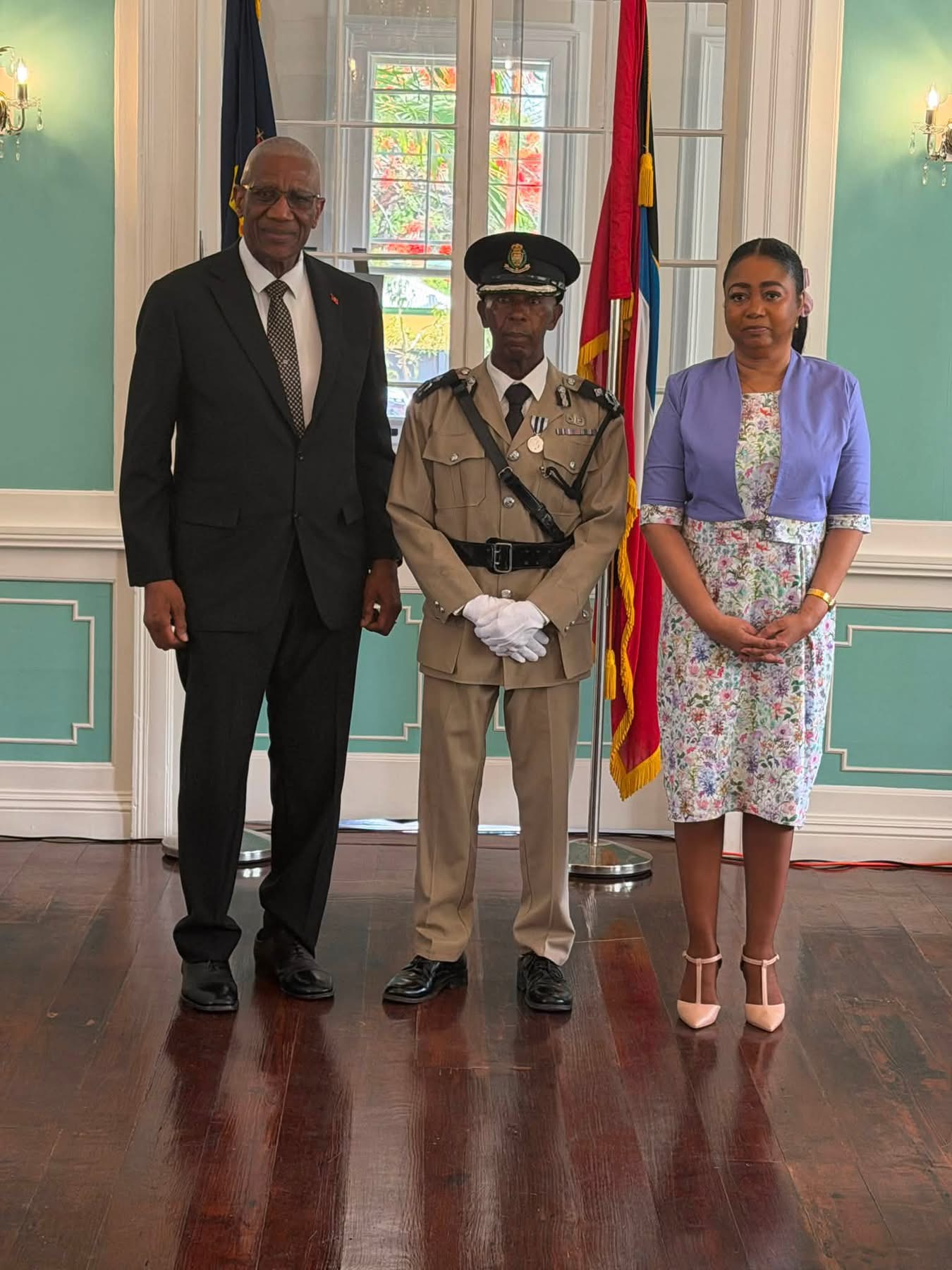
    One of the Commonwealth’s most distinguished law enforcement honors has been awarded to a top-ranking officer from Antigua and Barbuda. Assistant Commissioner of Police Desmond Dinard has earned the King’s Police Medal (KPM), an accolade reserved for police personnel who deliver extraordinary, career-spanning service to their communities and regions. The Royal Police Force of Antigua and Barbuda made the official announcement of the award this past Wednesday, opening the announcement with warm public congratulations to Dinard on his landmark achievement. Per details shared by the force, the honor recognizes three core pillars of Dinard’s decades-long career: his consistently distinguished service across key postings, his steady and exemplary leadership that has shaped the next generation of local officers, and his wide-ranging, impactful contributions to policing improvement on both national and regional stages. In an official statement released after the announcement, the entire Royal Police Force of Antigua and Barbuda extended formal commendation to Dinard for the milestone award. The statement also emphasized gratitude for his unwavering commitment to upholding public safety and national security for all residents of Antigua and Barbuda, a dedication that has defined his tenure in law enforcement. Established to celebrate exceptional contributions, the King’s Police Medal is granted annually to standout members of police forces throughout the 56-nation Commonwealth, distinguishing officers who go above and beyond the core requirements of their role to serve the public good.

  • Commissioner Jeffers Awarded King’s Police Medal

    Commissioner Jeffers Awarded King’s Police Medal

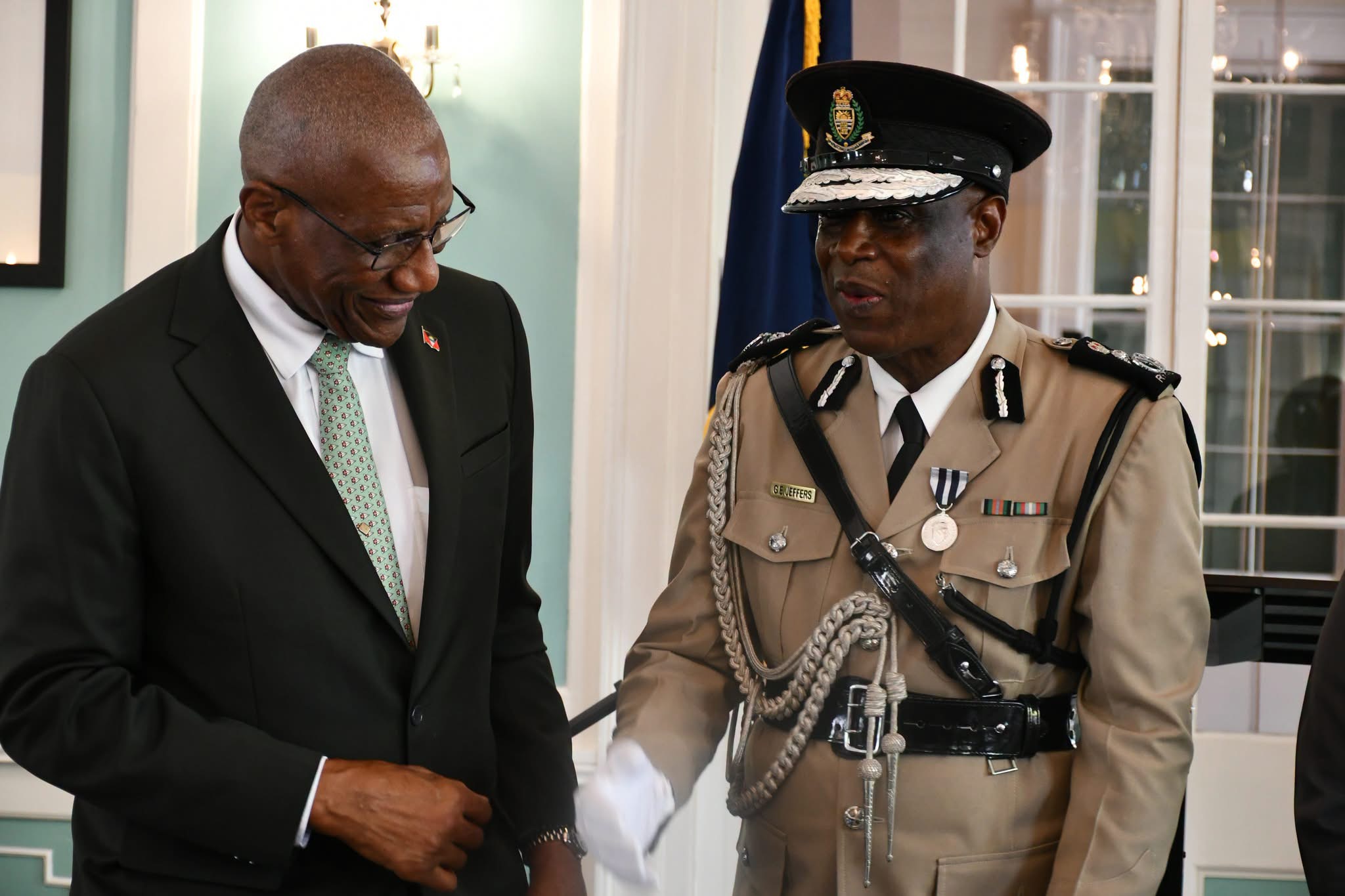
    One of the Commonwealth’s most esteemed recognitions for distinguished police service, the King’s Police Medal (KPM), has been granted to Everton Jeffers, Commissioner of Police for Antigua and Barbuda. The Royal Police Force of Antigua and Barbuda made the official announcement of the accolade in a public statement released Wednesday, framing the award as a well-earned acknowledgment of Jeffers’ decades of exceptional contributions to national policing and security.

    “The Royal Police Force of Antigua and Barbuda proudly congratulates Commissioner of Police Mr. Everton Jeffers, KPM, on being awarded the King’s Police Medal (KPM),” the statement read. The force emphasized that the honor highlights Jeffers’ exemplary leadership at the helm of the national police service, his unwavering commitment to upholding law and order, and his consistent dedication to protecting and serving all residents of the twin-island nation.

    Beyond celebrating Jeffers’ achievement, the organization extended its gratitude to the commissioner for his years of public service and reaffirmed its pride in his accomplishment. Established to recognize extraordinary gallantry or distinguished service, the King’s Police Medal is conferred annually on deserving law enforcement officers across the United Kingdom and Commonwealth member states, standing as a mark of global respect for outstanding contributions to policing. The award cements Jeffers’ legacy as a leading figure in Antigua and Barbuda’s public safety sector, bringing national recognition to his work advancing community security and institutional excellence.

  • Matthew Rejects ‘No Cards’ Argument, Says Antigua Must Stay at Negotiating Table

    Matthew Rejects ‘No Cards’ Argument, Says Antigua Must Stay at Negotiating Table

    During a heated parliamentary debate on Tuesday, Antigua and Barbuda’s Education Minister Daryll Matthew pushed back against fierce opposition criticism of the government’s approach to ongoing negotiations with the United States focused on potential transfers of third-country nationals. Opponents of the governing administration have repeatedly claimed that the small Caribbean nation holds no meaningful leverage in talks with Washington, citing its geographic size and pre-existing U.S. visa restrictions as factors that leave Antigua and Barbuda negotiating from a position of extreme weakness. Matthew rejected this narrative outright, arguing that the country’s greatest strategic strength comes from staying at the negotiating table and advancing terms that prioritize the well-being of all Antiguan and Barbudan citizens.

    Addressing the full legislative body during debate over a parliamentary resolution that establishes a formal framework for continued negotiations, Matthew reframed the opposition’s “no cards” argument. “We may have a small hand. We may have a small voice. However, we still have the responsibility to negotiate in the best interests of our people,” he told assembled lawmakers. “The only time you have no cards is when you get them from the table and walk away.” With both the Antiguan-Barbudan negotiating team and U.S. representatives remaining committed to ongoing discussions, he emphasized that the government will continue working toward a final outcome that delivers benefits to the country’s population.

    Matthew stressed that responsible governance demands sustained engagement even when negotiating with a far larger global power, pushing back against opposition calls for a complete overhaul of the government’s negotiation approach. He also pushed for cross-party unity on this sensitive issue, noting that questions of national interest should never devolve into partisan political fighting, and calling for a broad national consensus around the government’s negotiating priorities. “There must be some things that, as a nation, we can collectively agree on,” he said. “This is one of them.”

    The minister commended Prime Minister Gaston Browne, Ambassador Sir Ronald Sanders, and the full government negotiating team for publicly releasing a White Paper on the talks and bringing the framework resolution before parliament, a move he said demonstrates the administration’s commitment to transparency and keeps the general public fully informed about ongoing discussions. “I want to commend the Prime Minister… and the entire team that has been working diligently on this over the past six, eight months for putting everything here on the table,” Matthew stated.

    He also categorically denied opposition claims that the government had already struck a secret deal to accept third-country nationals, clarifying that the current resolution before parliament does not ask lawmakers to approve a finalized agreement or bind Antigua and Barbuda to accepting any transfers at all. “This resolution is not committing the government to accept anyone,” he explained. “We are not approving the operating procedures. We’re not committing to receive. What we’re doing is simply saying that we want certain issues satisfied.”

    Matthew laid out clear non-negotiable conditions that any final agreement must meet to gain approval, starting with a hard cap of just 10 total transfers in 2026. After the initial pilot period, he said, the country can reassess whether the arrangement delivers tangible benefits to national development. Additional key requirements include a total ban on accepting any individuals with criminal convictions, no additional financial burden placed on Antiguan and Barbudan taxpayers, and permanent retention of the government’s right to reject any individual proposed for transfer.

    Warned that allowing convicted criminals to be transferred to the small island nation would carry catastrophic risks for public safety, Matthew highlighted the severe harm that even one high-risk offender could cause. “Can you imagine if one convicted pedophile was deported to Antigua and Barbuda and just ran havoc in this country? Can you imagine if a serial killer was transferred from the United States to Antigua and Barbuda? … Can you imagine if a sophisticated gang leader came to Antigua and Barbuda?” he asked. These risks, he argued, fully justify the government’s insistence on maintaining the final say over which individuals may be transferred. “There must be an opportunity for us as a nation to say, ‘This person, no,’” he said. “We have to have a framework in place that protects our national interests.”

    Matthew also noted that Antigua and Barbuda’s limited public infrastructure cannot support unregulated transfers, adding that the country cannot afford additional strain on already constrained housing, healthcare, and other core public services. “I cannot, with a good conscience, tell my constituents that we had no cards, we had to take all of them, we had to put it on the taxpayers’ purse, we had to give them a job, we had to give them a house,” he said.

    Despite the strict conditions the government has laid out, Matthew struck an optimistic tone about the progress of talks, saying that the two sides are closer to a mutually acceptable agreement than critics have claimed. After reviewing the negotiated White Paper and all draft documents exchanged between the two parties, he concluded that “We’re not so far apart.”

    Closing his remarks, Matthew once again praised the governing team for bringing the issue to parliament for open debate, reinforcing the government’s commitment to transparency and public accountability. “I want to commend the Prime Minister and his team for bringing this resolution to Parliament so that we can speak with clarity, so that the public understands exactly what it is we’re doing,” he said.

  • Walker Urges Return to Detailed Citizenship by Investment Reports as Parliament Passes Amendment Bill

    Walker Urges Return to Detailed Citizenship by Investment Reports as Parliament Passes Amendment Bill

    In a significant legislative development for Antigua and Barbuda’s lucrative Citizenship by Investment (CIP) programme, the nation’s House of Representatives has approved the 2026 Citizenship by Investment (Amendment) Bill, with cross-party support from senior lawmakers emphasizing the urgent need for strengthened oversight amid rising international pressure.

    Trevor Walker, the Member of Parliament for Barbuda, emerged as a key backer of the reforms, framing the updated regulations as a critical safeguard for the country’s largest source of non-tax revenue. Walker told parliamentary deliberations on Tuesday that the CIP programme, which he estimates injects more than $100 million into the national budget annually, is the backbone of Antigua and Barbuda’s public finances, but its long-term survival depends on addressing growing global scrutiny through enhanced transparency and accountability.

    Warning that the programme faces mounting geopolitical challenges that threaten its future, Walker argued that preserving its credibility must be a top policy priority for the government. He specifically welcomed the reinstatement of mandatory annual audits, a provision that was controversially repealed back in 2016. The new legislation not only brings back routine audit requirements, it also adds new rules mandating formal responses to audit findings, authorizes special targeted audits, and expands mandatory reporting obligations for CIP administrators.

    Walker went a step further, urging the government to fully reinstate the detailed semi-annual reporting requirements outlined in the original 2013 CIP enabling legislation. He noted that while reports are still submitted to parliament currently, they lack the granular detail about contributions, investment flows and programme activity that the original law required, a gap that creates unnecessary room for suspicion among both domestic citizens and international partners.

    The call for tighter rules comes as Antigua and Barbuda has faced increasing scrutiny of its investment migration scheme from both the European Union and the United States. Walker acknowledged that decades of cutthroat competition between Caribbean CIP jurisdictions had previously pushed many countries to relax regulatory standards to attract more applicants, but he highlighted that the Eastern Caribbean region is now unified in moving toward harmonized, stricter rules. He stressed that the fate of all regional programmes is interconnected: “When this boat sinks, we all go down with it,” he said, pointing out that any national programme’s failure to meet global standards could lead to restricted visa-free access for all Caribbean passport holders, eroding the value of citizenship across the bloc.

    Walker also extended rare cross-party praise to Prime Minister Gaston Browne for his longstanding advocacy for a centralized regional regulatory body to oversee CIP programmes across the Organisation of Eastern Caribbean States (OECS), saying he hoped the new framework would deliver on the promise of stronger governance.

    In his remarks opening the debate, Prime Minister Browne clarified that the core purpose of the amendment is to align Antigua and Barbuda’s domestic law with the agreement establishing the Eastern Caribbean Citizenship by Investment Regulatory Authority, which is set to come into force later this year. The new regional body will enforce uniform regulatory standards across all participating member states, limiting the ability of individual nations to deviate from collectively agreed rules that protect the integrity of all programmes.

    Key provisions of the new bill include a requirement for annual independent financial audits and biannual operational audits of every national CIP unit, with the regional regulator tasked with ensuring compliance and protecting sensitive applicant data. The legislation also raises the minimum residency requirement for successful CIP applicants and their dependent family members from five days to 30 days, bringing Antigua and Barbuda into compliance with the regional standard already approved by all OECS members. Browne added that the amendments resolve any remaining inconsistencies between domestic law and the regional agreement, formalizing policy changes that have already been implemented through administrative action.

    Other new rules require the national CIP Unit to submit detailed six-month progress reports to both the regional regulator and the national parliament, while granting the regional body expanded oversight authority. The authority will now manage pre-qualification of CIP agents, require formal no-objection notices before local operating licenses are issued, mandate adherence to regional standards and guidelines, and require the revocation of licenses when regulatory approval is denied or withdrawn. Browne emphasized that these changes are designed to block unethical and unqualified promoters from participating in the programme and ensure consistent regulatory standards across the Eastern Caribbean. Following full debate, the House of Representatives passed the bill into law.

  • Two Men Detained After Suspected Drug Bust on Pares Main Road

    Two Men Detained After Suspected Drug Bust on Pares Main Road

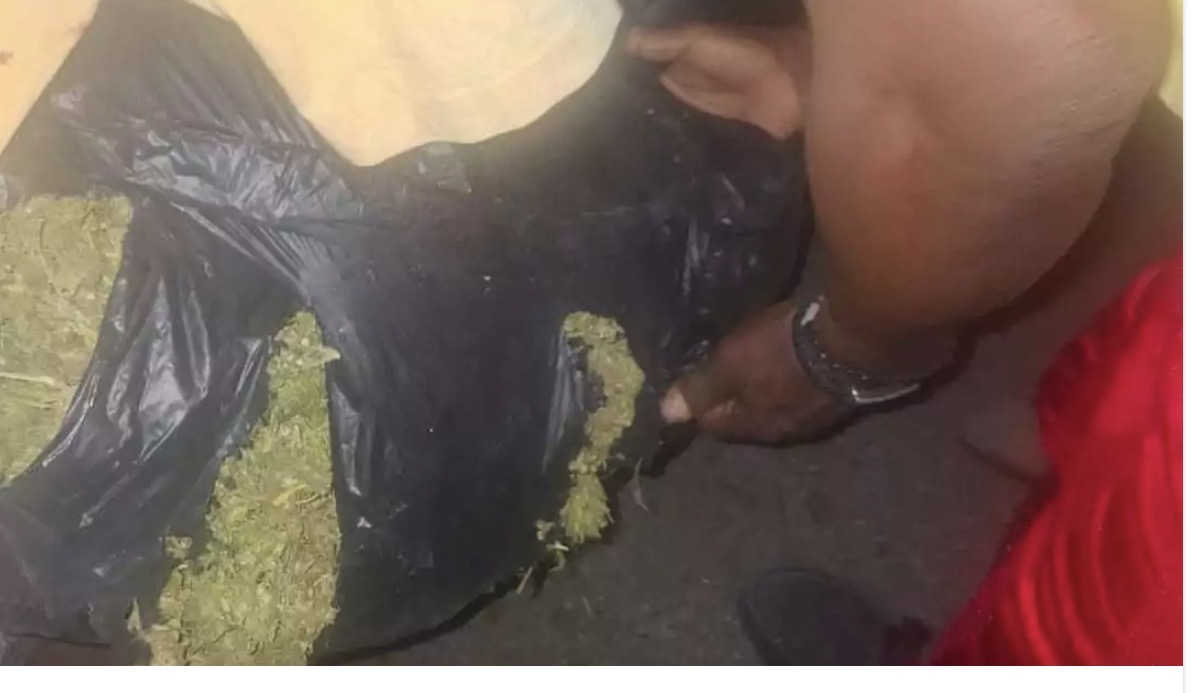
    A late-night roadside crash has uncovered an alleged illicit drug trafficking operation on Paros Main Road, leading law enforcement to take at least two men into custody, according to official initial reports. The incident unfolded shortly after 10 p.m. on Tuesday, when local police were dispatched to the scene following reports of a crashed vehicle parked along the road edge.

    When responding officers arrived, they made an unexpected discovery: multiple pounds of suspected cannabis were in the process of being moved between the crashed vehicle and a second connected vehicle when the accident occurred. The crash inadvertently revealed the illegal transfer, putting an immediate stop to the alleged operation.

    In the hours after the incident unfolded, a large crowd of curious bystanders gathered near the restricted zone to observe the ongoing law enforcement activity. Police quickly established a cordon around the entire area to secure evidence and allow investigative teams to process the scene without interruption.

    As of the latest update, law enforcement officials have not released formal details confirming the exact quantity of suspected controlled substances seized from the scene. They also have not indicated whether additional suspects connected to the alleged operation are still being sought, or if further arrests will be made in the coming days as the investigation continues.

  • Antigua and Barbuda Parliament Passes Law to Put Unclaimed Bank Money to Public Use

    Antigua and Barbuda Parliament Passes Law to Put Unclaimed Bank Money to Public Use

    On Tuesday, the lower legislative chamber of Antigua and Barbuda approved the 2026 Banking Amendment Bill, a landmark piece of legislation that overhauls the national rules governing abandoned bank deposits and unclaimed assets, while opening a new pathway to redirect stagnant financial resources toward targeted regional economic growth.

    Introducing the bill to parliament, Prime Minister Gaston Browne laid out that the reform updates decades-old outdated protocols for handling unclaimed property within the domestic banking sector, covering everything from long-dormant customer accounts to forgotten valuables held in bank safety deposit boxes, all while cementing stronger legal protections for depositors and their rightful heirs.

    Under the current regulatory framework that has been in place for years, abandoned funds are transferred to the Eastern Caribbean Central Bank (ECCB) after a decade of inactivity, and if no valid claim is filed within an additional 10 years, the assets are permanently forfeited. The new amended law upends this structure: it allows unclaimed funds to be transferred to the governments of member states of the Eastern Caribbean Currency Union, while enshrining an indefinite right for original depositors or their beneficiaries to reclaim full value of the assets at any point, as long as they can verify their legal ownership.

    Browne emphasized to lawmakers that this structure offers far more robust protection for asset owners than the outgoing legislation, which placed a hard expiration on all claims. He added that across the entire Eastern Caribbean Currency Union, unclaimed deposits add up to an estimated $48 million US dollars – a massive underutilized asset pool that can be put to productive public use without ever compromising the rights of owners and their heirs.

    Beyond the reform of unclaimed asset rules, the prime minister outlined an ambitious broader vision for regional economic transformation centered on the ECCB’s substantial foreign reserve holdings. Currently, the ECCB holds roughly $6 billion US dollars in foreign reserves, the vast majority of which are invested overseas. Browne is proposing that between 5 and 7 percent of these reserves be allocated to finance strategic regional development projects, with a priority focus on two critical areas: renewable energy development and regional food security.

    For decades, the Eastern Caribbean dollar has been celebrated for its strong reserve backing, which currently sits close to 98 percent – far higher than the mandatory regulatory threshold. Browne argued that deploying a small fraction of these reserves to regional projects will generate inclusive economic growth without putting monetary stability at any meaningful risk. He noted that investments in local renewable energy infrastructure would cut the region’s heavy reliance on costly imported fossil fuels, bring down consumer electricity prices, further strengthen foreign reserve positions over time, and help member states meet their international climate change mitigation commitments.

    Browne disclosed that the ECCB’s Monetary Council has already reached a preliminary consensus to move forward with the proposal, and noted that additional amendments to regional banking legislation will likely be required to formally grant the ECCB authority to make these strategic regional investments. He stressed that the plan does not involve permanently distributing central bank reserves; instead, the funds will be disbursed as repayable loans, which will replenish the reserve pool over time while financing projects that deliver long-term shared economic benefits for the region.

    A core principle of the proposal, Browne added, is that all investments made through this initiative must remain under regional and local ownership, rather than falling under the control of foreign private entities. The Antigua and Barbuda government prioritizes strategic projects like utility-scale renewable energy plants that include significant public and local private investment, so that profits generated by these projects stay within the region to support further growth. “We believe very strongly that ownership is empowerment,” Browne stated.

    To illustrate the immediate local impact of the unclaimed funds reform, Browne noted that Antigua and Barbuda alone holds roughly $38 million US dollars in unclaimed deposits. After setting aside a sufficient reserve portion to cover any potential future claims, the remaining balance can be redirected to national development projects, rather than sitting idle in overseas accounts.

    The new legislation also establishes a clear regulatory framework for unclaimed contents of safety deposit boxes. Under the new rules, valuables that remain unclaimed for 10 years may be sold through public auction, with the proceeds held in a newly created Safe Deposit Box Liquidation Fund for an additional 10 years, giving owners or heirs extra time to come forward to claim the funds.

    Addressing any potential concerns about government overreach, Browne clarified to lawmakers: “We’re not just trying to go and confiscate people’s money. We’re not trying to steal people’s money. We’re trying to use that money for the development of our respective countries.”

    During parliamentary debate, Trevor Walker, the member of parliament for Barbuda, raised questions about the provision that reduces the waiting period before assets are classified as abandoned to 10 years, but expressed support for the overall direction of the legislation. Walker backed the government’s focus on renewable energy development, saying that the country must continue its transition toward affordable clean power while ensuring that major strategic investments stay under local control.

    “We must control it. It must not be outsourced,” Walker said, adding that the proposal represents the kind of forward-thinking policy that can improve long-term economic and environmental sustainability while lowering living costs for ordinary citizens. Walker ultimately announced his support for the bill, calling it a bold initiative that will strengthen Antigua and Barbuda’s global reputation as a progressive investment destination and move the country beyond outdated, conventional approaches to economic development.