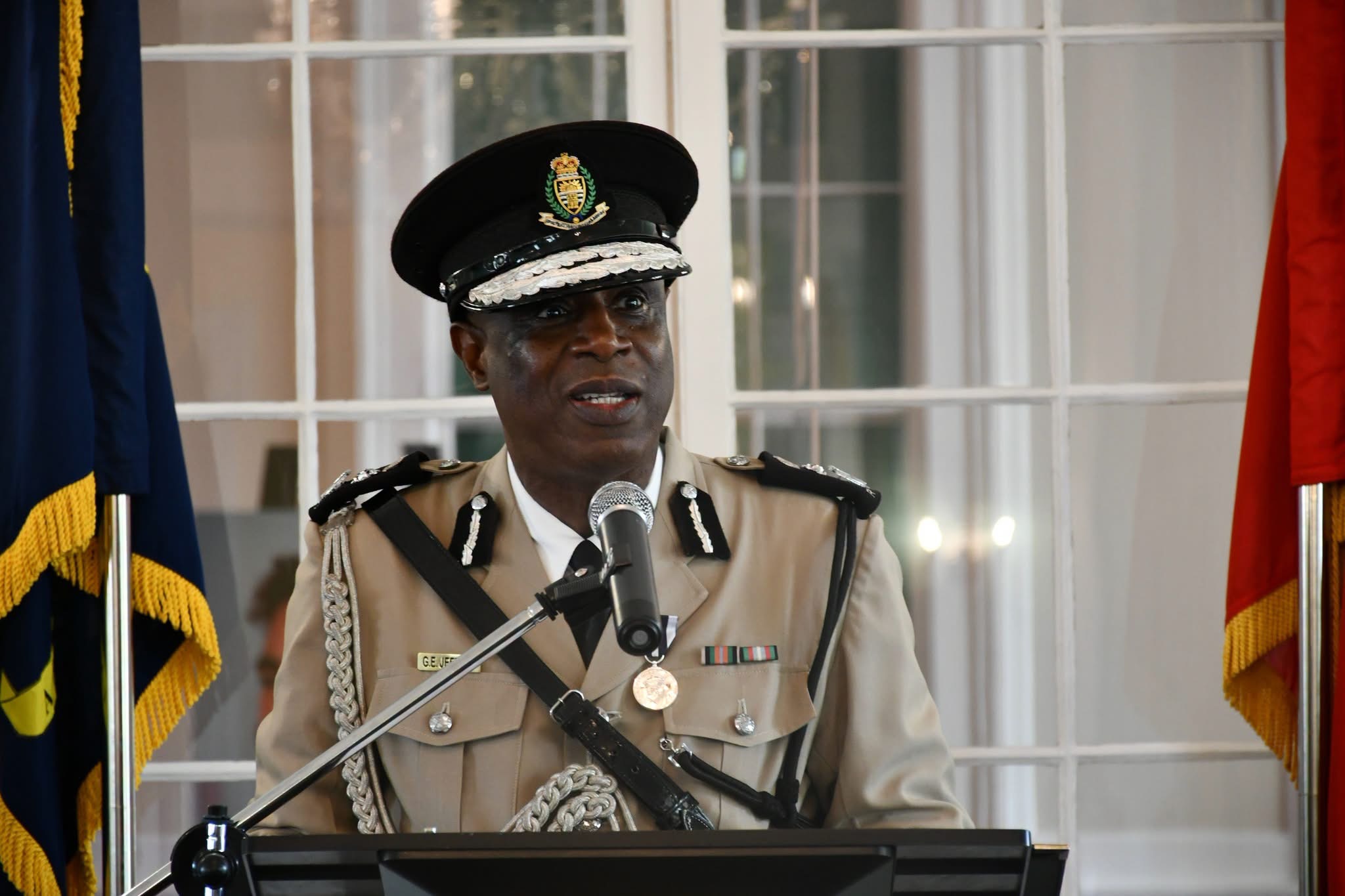
At a landmark graduation ceremony for the 50th cohort of recruit trainees at the Sir Wright F. George Police Academy, Everton Jeffers, Commissioner of the Royal Police Force of Antigua and Barbuda, delivered a rare and candid public apology to community members who have received substandard service from the force. In his remarks to 43 newly graduated officers who completed a rigorous six-month training program with an overall 95.6% pass rate, Jeffers acknowledged that the institution has repeatedly failed to meet the public’s expected standards of policing, while outlining concrete commitments to lift professionalism and institutional accountability across the force.
Jeffers opened his address by framing public service as the non-negotiable core of policing, telling the graduating class that their new role is far more than a paid job—it is a “sacred trust” placed in them by the communities they will serve. He urged every new officer to exercise their legal authority with intentional fairness, humility, compassion and unwavering integrity, emphasizing that high-quality policing depends on consistent professionalism in every single interaction with members of the public. “There are no shortcuts to providing top quality service to the public,” Jeffers told the assembled graduates and guests. “Each complaint must be properly investigated with the highest level of professionalism, courtesy and respect for the rights and dignity of everyone.”
Turning to the state of the broader force, Jeffers offered a frank assessment of past shortcomings that have eroded public trust. “As Commissioner of Police, I acknowledge that we may not always get everything right, and there have been times when our actions or service may have fallen short of the standards that are expected,” he said. Speaking on behalf of the entire Royal Police Force, he extended a formal apology to all those affected by inadequate or inappropriate conduct from force members: “Therefore, I use this platform to offer my sincerest apologies to anyone who may have been wronged, disappointed or offended by the action or conduct of any member of this organisation.”
Pushback against the idea that this public acknowledgment of flaws signals weakness, Jeffers reframed transparency as a critical step toward institutional growth. “While we are proud of the significant progress we have made over the years, we also recognise that there’s still room for improvement. We do not view this as weakness, but rather as an opportunity to grow, to learn and to serve better,” he explained.
Jeffers made clear that zero tolerance will be enforced for behavior that undermines public confidence, warning new recruits that unprofessionalism, consistent lateness, and low productivity will not be overlooked under his leadership. “As a young officer, your honesty and integrity will be tested. However, I urge you to do the right thing at all times, even when no one is watching,” he cautioned.
Closing his remarks, Jeffers reaffirmed his unwavering personal commitment to addressing systemic deficiencies within the organization. He pledged that force leadership would continue targeting weaknesses, upholding strict standards of professionalism and accountability, and working daily to deliver the high-quality service the public deserves. His overarching goal, he restated, is to build a police force that earns and retains the trust of the Antigua and Barbuda communities it serves through consistent action, transparency, and continuous improvement.