标签: Antigua and Barbuda

安提瓜和巴布达

  • “We Need a Seat”: Antigua and Barbuda Calls for Greater Voice for Climate-Vulnerable Nations

    “We Need a Seat”: Antigua and Barbuda Calls for Greater Voice for Climate-Vulnerable Nations

    Against a backdrop of escalating climate impacts that disproportionately marginalize the world’s most vulnerable nations, Antigua and Barbuda has brought its urgent call for equitable climate action to the 2026 Berlin Climate Mobility Forum, a landmark gathering that unites heads of state, policy architects, frontline community representatives and cross-sector partners to address one of the climate crisis’s most destabilizing outcomes: climate-induced human mobility. The forum provides a critical global platform for centering the voices of nations that, despite contributing almost nothing to global greenhouse gas emissions, face the most severe climate consequences.

    Speaking on behalf of the twin-island nation, Minister of Health, Wellness, the Environment and Civil Service Affairs Michael Joseph sat down for an interview to shed light on the distinct vulnerabilities that define Caribbean Small Island Developing States (SIDS). He framed the conversation around a core demand: immediate climate justice, fair access to climate finance, and far greater representation for climate-vulnerable nations in global climate governance processes.

    In his remarks, Joseph emphasized that climate mobility policy cannot be abstracted from the people it affects. Any successful initiative to support community relocation or build adaptive capacity, he argued, must be led by the communities themselves. These efforts must prioritize the protection of unique cultural identities and ancestral heritage, and guarantee that populations on the front lines of climate change have a meaningful say in the decisions that shape their collective futures.

    Drawing directly from Antigua and Barbuda’s firsthand experience with catastrophic climate disaster, Joseph pointed to the aftermath of Hurricane Irma, which left widespread destruction across Barbuda in 2017. That event, he noted, reinforced three non-negotiable priorities: intentional pre-disaster planning, continuous deep engagement with affected communities, and unwavering protection of the human rights and inherent dignity of displaced and at-risk populations.

    The minister also pushed back against the common narrative that large-scale relocation is the only path forward for low-lying island states. For SIDS like Antigua and Barbuda, the top priority is not moving entire populations, but building sufficient resilience to allow communities to remain on their ancestral lands. This priority aligns with the recently adopted Global Principles for Addressing Climate Mobility, which explicitly enshrine protection for the “right to stay” while also creating space for safe, dignified mobility options when relocation becomes unavoidable.

    At the core of Antigua and Barbuda’s message to the forum is a non-negotiable demand: climate-vulnerable nations must have a meaningful seat at global decision-making tables. Joseph stressed that despite Antigua and Barbuda’s negligible contribution to global carbon emissions, the nation remains among the most at risk from accelerating sea level rise, more frequent and intense tropical storms, and worsening climate-related disruptions. As he put it plainly: “We’re not asking because we’d like to have a seat. We’re asking because we need a seat.”


  • Police Hunt Two Suspects After Robbery Ends in Shooting

    Police Hunt Two Suspects After Robbery Ends in Shooting

    A violent armed robbery at a All Saints Road construction site has left an innocent worker injured, with two perpetrators still evading law enforcement more than 24 hours after the incident unfolded.

    Local police confirmed the altercation took place shortly after 3 p.m. on June 12, when the two unidentified suspects targeted a man at the location. According to initial police accounts, the pair successfully stole an undisclosed amount of cash and jewelry from their intended victim before attempting to make a quick getaway.

    The situation turned dangerous during the suspects’ escape, when shots were fired into the area. A stray bullet struck a nearby construction worker in the lower abdomen, leaving the innocent bystander wounded in the crossfire.

    Emergency responders transported the injured worker to a local medical facility for immediate treatment. Law enforcement officials have confirmed that the worker suffered only a minor injury, and no further life-threatening complications have been reported as of the latest update.

    Authorities have launched a full criminal investigation into the armed robbery and shooting, and are currently working to identify and locate the two at-large suspects. No additional details about potential descriptions of the pair or a timeline for arrests have been released to the public as the investigation remains active and ongoing.

  • LETTER: COVID-19 Salary and Wage Payments for Public Sector Employees

    LETTER: COVID-19 Salary and Wage Payments for Public Sector Employees

    Six months after the government’s stated deadline for disbursing pandemic-related wage compensation to eligible public sector employees, hundreds of affected workers in Antigua and Barbuda are still waiting for the funds they were promised, pushing one affected staffer to publicly call for clarity from government authorities.

    Back when the compensation program was first announced, the Antigua and Barbuda administration laid out a clear roadmap for delivering backpay to public workers whose salaries were interrupted or cut off amid the COVID-19 public health crisis. Permanent Secretaries across government departments were directed to lead the initial phase of the process: identifying eligible workers, compiling their submitted claims, and cross-verifying the information to confirm eligibility. Claimants were given a firm deadline of December 31, 2025, to submit all required documentation, after which verified claims would be passed to the national Treasury Department for final processing. According to the original timeline, disbursements were scheduled to begin in January 2026.

    It is now June 2026, half a year after payments were supposed to start. A large number of compliant claimants who followed all procedural rules and had their verified files sent to the Treasury have yet to receive any form of compensation. To date, hundreds of affected employees across multiple public departments have reported receiving no funds at all, with no official explanation for the hold-up.

    In an open letter addressed to the editor of the local publication, one concerned public sector employee has called on relevant government bodies to break their silence and deliver a formal update on the program’s status. The letter outlines four key questions that eligible workers are demanding answers to: First, has the Treasury Department completed its internal verification and processing of all submitted claims that were transferred over by department heads? Second, what is the revised, realistic timeline for disbursing the owed compensation to approved claimants? Third, what specific outstanding issues, if any, are responsible for the six-month delay beyond the original launch date for payments? Finally, when can eligible workers reasonably expect to receive the money the government pledged to them?

    The letter notes that most affected workers have remained patient throughout the process, abiding by all the requirements laid out by the government. An official public update, the author argues, would provide much-needed clarity and ease the financial uncertainty that many workers have been grappling with for months. The author closed by thanking the publication for drawing attention to the unaddressed issue.

  • Antigua Records Third-Driest May Since 1928 as Drought Intensifies

    Antigua Records Third-Driest May Since 1928 as Drought Intensifies

    A newly released climate assessment from the Antigua and Barbuda Meteorological Service has confirmed that 2026 will go down in the archipelago’s weather history books, after Antigua logged its third driest May since systematic rainfall tracking began nearly a century ago in 1928. The official Monthly Climate Summary, published in June to review May’s conditions, paints a stark picture of sustained dry conditions that have rapidly intensified drought across both islands of the Caribbean nation.

    Across the entire island of Antigua, the average rainfall recorded for May amounted to just 17.5 millimeters, or 0.69 inches. At the V.C. Bird International Airport monitoring site, one of the archipelago’s longest-running weather stations, only 14.2 millimeters (0.56 inches) of rain fell throughout the entire month, placing this May as the fifth driest on record for that location since 1928.

    Meteorologists analyzing the data note that drought conditions have grown steadily more severe across the country over recent months. The Standardized Precipitation Index, a widely used global metric for measuring dryness relative to long-term averages, classified northern Antigua as facing severe drought, while the rest of the island fell into the moderate drought category for May. This dry pattern did not emerge suddenly: the three-month period from March through May 2026 was also categorized as severely dry across the entirety of Antigua, and the dry spell stretches back even further. For the six-month window from December 2025 through May 2026, northern Antigua remains in severe drought, with the rest of the island still classified as moderately dry.

    Notably, temperatures across the archipelago remained close to the long-term seasonal average for May, despite the near-complete lack of rainfall. At V.C. Bird International Airport, the average daily mean temperature clocked in at 26.9 degrees Celsius (80.4 degrees Fahrenheit), with an average daily high of 29.9 degrees Celsius (85.8 degrees Fahrenheit). The hottest temperature recorded at the airport for the month hit 30.4 degrees Celsius (86.7 degrees Fahrenheit) on May 31. Island-wide, the average temperature for Antigua settled at 27.4 degrees Celsius (81.3 degrees Fahrenheit), and the highest temperature recorded anywhere on the island reached 34.7 degrees Celsius (94.5 degrees Fahrenheit) at the Five Islands coastal location, also measured on May 31.

    Rainfall, when it did occur, was extremely unevenly distributed across Antigua, with the southern and southwestern regions recording the bulk of the limited precipitation. The Donkey Sanctuary monitoring site in St. Paul recorded the highest total monthly rainfall across the island at 83.8 millimeters (3.30 inches), while Cobbs Cross saw the single wettest 24-hour period, when 30.7 millimeters (1.21 inches) fell on May 25.

    For the neighboring island of Barbuda, official monitoring recorded just 15.8 millimeters (0.62 inches) of total rainfall throughout May. The island saw only five days with measurable precipitation, and endured a continuous 14-day dry stretch during the month. At the Sir McChesney George Secondary School monitoring station, the average daily mean temperature for May was 27.5 degrees Celsius (81.5 degrees Fahrenheit). While limited on-the-ground monitoring data prevents meteorologists from issuing a definitive drought classification for Barbuda, satellite-based precipitation estimates indicate the island is facing dry conditions nearly identical to those impacting Antigua, the report confirmed.

  • Government Warns Vandalized Bus Stops Could Lead to Prosecution

    Government Warns Vandalized Bus Stops Could Lead to Prosecution

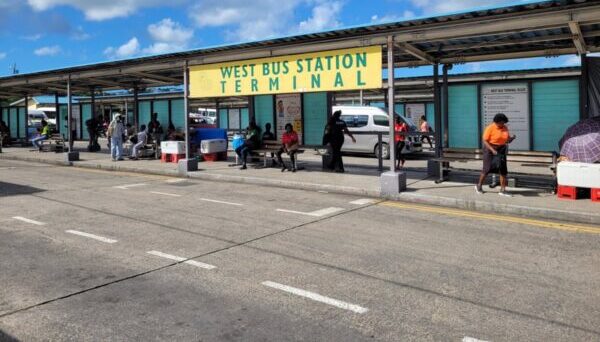
    Authorities in Antigua and Barbuda are advancing a broad national initiative to upgrade and preserve community public assets, with new plans to ramp up surveillance and pursue legal consequences against people who intentionally vandalize shared infrastructure such as bus stops. The policy outline was revealed during a post-Cabinet media briefing held Thursday, where government officials also unveiled a nationwide package of infrastructure improvements including renovated bus stops, updated road signage, and refreshed road markings.

    The conversation around harsher anti-vandalism measures followed repeated incidents of deliberate damage to public bus shelters, which have left many existing facilities in a state of severe disrepair that requires costly major repairs. Maurice Merchant, the country’s Director General of Communications, explained that the administration is currently evaluating a range of strategies to deter further destruction of facilities built and maintained using public taxpayer funds.

    “Surveillance represents one key strategy to make sure these facilities stay intact and accessible for public use,” Merchant noted in his remarks to reporters. He confirmed that constructive discussions are already ongoing between government officials and national law enforcement agencies to establish processes for identifying and prosecuting anyone found guilty of intentional public property damage. “Conversations are already underway with the law enforcement community to target these individuals who recklessly destroy public assets for no discernible reason,” Merchant added.

    Under the proposed new accountability framework, people found responsible for damaging public infrastructure will be held financially liable for the cost of repairs. Merchant clarified that this requirement already applies to damage caused by reckless driving, and will be extended to cases of intentional vandalism: “If public property is destroyed, those responsible will be required to repay the full cost of repairs.”

    The broader infrastructure rehabilitation project, which includes the installation of new directional, road and traffic signs, is being funded through the national Tourism Fund, and will bring upgrades to bus stops across both islands of the nation. In addition to formal enforcement measures, Merchant issued a public call for greater collective responsibility to protect shared community assets, urging residents to embrace a greater sense of national pride. He questioned why any member of the public would seek to destroy facilities designed for the benefit of the entire community.

    As of the briefing, the government has not yet released a specific timeline for the rollout of new surveillance measures, but officials confirmed that stricter enforcement and clearer personal accountability for damage will be core components of the ongoing national effort to upgrade and maintain public infrastructure across Antigua and Barbuda.

  • OECS Marks 45 Years of Regional Integration and Cooperation

    OECS Marks 45 Years of Regional Integration and Cooperation

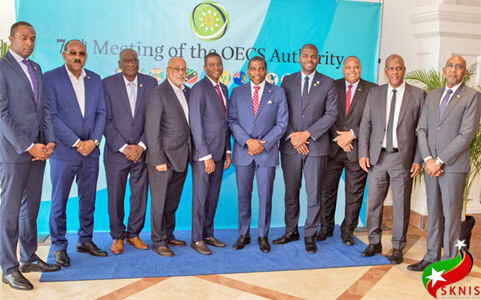
    On June 18, the Organisation of Eastern Caribbean States (OECS) celebrated a major milestone: four and a half decades of advancing cross-border cooperation and unity across the Eastern Caribbean. The 45th anniversary festivities and official reflections centered on the chosen theme, “One Vision, One Voice: Navigating Challenges, Shaping Our Future,” a slogan that underscores the bloc’s core commitment to collective problem-solving.

    The anniversary itself commemorates the 1981 signing of the Treaty of Basseterre, the foundational agreement that formally established the OECS as the institutional successor to the earlier West Indies Associated States Council of Ministers. From that starting point 45 years ago, the organization has grown dramatically, expanding both its membership and the scope of its collaborative work across the region. Today, OECS coordinates joint action among member states across a wide range of critical policy areas, from inclusive economic development and public health system strengthening to educational advancement, transnational security, environmental sustainability, and aligned foreign policy.

    In an official statement released to mark the occasion, the OECS framed the anniversary as both a moment to celebrate past gains secured through regional unity and an opportunity to reaffirm the bloc’s commitment to tackling emerging shared challenges together. “For 45 years, the OECS has championed regional integration, strengthening the bonds that unite our Member States and advancing a shared vision for a resilient and prosperous future,” the statement read.

    The anniversary theme was intentionally crafted to highlight the urgency of solidarity at a time when Eastern Caribbean nations face overlapping systemic pressures, including global economic volatility, accelerating climate change impacts, and repeated destructive natural disasters, all of which demand coordinated cross-border solutions.

    Looking back at the OECS’s 45-year evolution, the organization highlights several key transformative milestones beyond its 1981 founding. Most notably, member states signed the Revised Treaty of Basseterre in June 2010, which entered into force the following January. This updated agreement established the OECS Economic Union, deepening economic integration and reinforcing institutional cooperation across all participating nations.

    The OECS has also steadily expanded its membership to reflect growing interest in regional collaboration across the Eastern Caribbean. After its original founding group, Martinique joined as a member in February 2015, followed by Guadeloupe in March 2019, and most recently Saint Martin in March 2025. Regional officials frame these new accessions as clear proof of the expanding appeal and proven benefits of coordinated collective action across the subregion.

    To mark the 45th anniversary, the OECS has organized a series of public engagement activities open to residents across all member states. The organization encourages local communities to participate in events and share public photos showcasing the OECS’s official colors: yellow, white, green, and navy blue. A public commemorative fun walk is also scheduled to take place in Antigua and Barbuda as a centerpiece of the celebrations.

    In closing, the OECS emphasized that the anniversary is far more than a retrospective celebration of past progress. It is also a collective call to action, urging member states to continue building a stronger, more resilient, and more prosperous Eastern Caribbean through sustained cooperation, shared strategic purpose, and coordinated collective action.

  • Number Portability Set for July Rollout in Antigua and Barbuda

    Number Portability Set for July Rollout in Antigua and Barbuda

    Consumers across Antigua and Barbuda are on the cusp of a long-awaited shakeup to the country’s telecommunications market, as the government confirms a July rollout for mobile number portability — a policy that will let mobile users switch between local service providers without surrendering their existing phone numbers.

    When fully implemented, the reform will extend number portability rights to customers of the nation’s three major mobile and internet providers: Flow, Digicel, and APUA Inet. Officials argue that eliminating the requirement to change phone numbers when switching networks will deliver tangible benefits to consumers, unlocking greater choice for users and injecting healthier competition into a relatively concentrated local telecommunications sector.

    Maurice Merchant, Director General of Communications, outlined the government’s timeline during a post-Cabinet media briefing held Thursday, confirming that the long-delayed system is on track to go live next month. “Government believes that this should become effective in July of this year,” Merchant stated, clarifying the core function of the policy for consumers: “If you wish to switch from APUA Inet to Flow, you can take your number with you. That’s what number portability is.”

    The upcoming launch comes years after the national legislature passed legislation to enable number portability, with implementation held up for an extended period by persistent coordination challenges between the competing telecom operators. When pressed about the years-long delay, Merchant explained that cross-firm collaboration between market rivals has been the biggest barrier to progress. “We must recognize that they are competitors in this field and so collaboration sometimes is not the easiest thing and hence it has taken a while,” he said.

    Merchant also highlighted that the policy has the potential to reshape the dynamics of Antigua and Barbuda’s telecom market by lowering the barrier to exit for customers unhappy with their current provider’s service or pricing. “It may mean good for certain providers and it may not, because there may be an exodus of individuals from any particular service provider to another,” he noted.

    The number portability plan formed part of a broader Cabinet review of Antigua and Barbuda’s national communications infrastructure, which also covered progress updates on the country’s ongoing subsea cable project and ongoing government efforts to attract new internet service providers to the twin-island nation. All these linked initiatives are designed to boost network reliability for local users, expand competition across the sector, and strengthen the country’s digital communications backbone to support long-term economic development.

    Additional details on the rollout schedule, customer registration process, and any associated fees are expected to be announced by Utilities Minister Melford Nicholas in the coming weeks.

  • Female Labour Force Participation Across CARICOM Ranges From 45% to 71%

    Female Labour Force Participation Across CARICOM Ranges From 45% to 71%

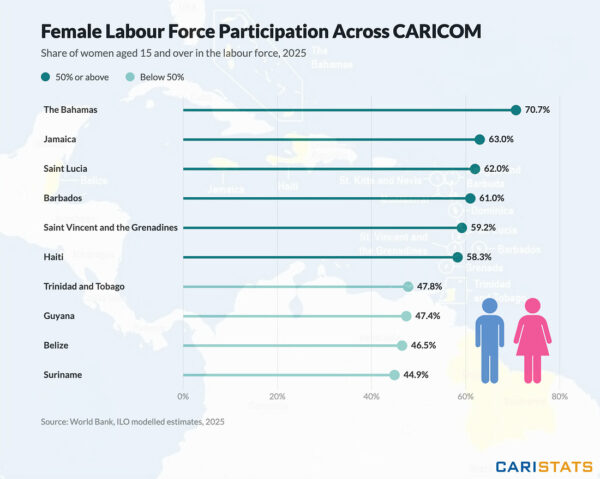
    Female labor market engagement stands as one of the most fundamental catalysts for expanding national economic output and boosting household earnings across the globe. Within the Caribbean Community (CARICOM), however, this critical metric shows greater divergence between member states than almost any other key economic indicator, according to the latest 2025 data. When measuring the share of women aged 15 and above who are either actively employed or searching for work, figures span from a low of 44.9% in Suriname to a regional high of 70.7% in The Bahamas. To put this gap in perspective, less than one out of every two adult women participates in the formal labor market in Suriname, while nearly seven out of 10 do so in The Bahamas.

    Across the 10 CARICOM member states tracked, six nations record female labor force participation rates above 58%, with The Bahamas claiming the top spot followed closely by Jamaica and Saint Lucia. The remaining four member states fall into a tight cluster between 45% and 49%, with Guyana emerging as a notable success story of gradual growth. Once sitting in the upper 30% range back in 1990, Guyana has lifted its female participation rate to 47% today, marking meaningful progress over three and a half decades.

    Disparities are also stark when comparing labor force engagement between women and men within individual CARICOM countries. In two nations, The Bahamas and Barbados, women’s probability of participating in the labor market comes almost level with that of men. The World Bank has highlighted that the gender gap in both countries is actually smaller than the average gap recorded across the world’s group of highest-income economies. At the opposite end of the spectrum, Belize shows one of the widest gender gaps globally, with men far more likely to participate in the labor force than their female counterparts.

    Uniquely among all CARICOM member states, The Bahamas achieves two standout milestones: it boasts not only one of the highest female labor force participation rates in the entire region, but also one of the smallest gender participation gaps among all its member nations.

  • Bees Relocated and Tree Removed in Safety Operation at St. Joseph’s Academy

    Bees Relocated and Tree Removed in Safety Operation at St. Joseph’s Academy

    A collaborative safety and environmental initiative at St. Joseph’s Academy has successfully resolved a growing public safety threat while protecting a vulnerable local insect population, through the coordinated work of government bodies and independent environmental stakeholders. The risk originated from a huge beehive that had taken root inside the trunk of a mature flamboyant tree on the school’s campus, which sits frequented by hundreds of students, staff, and local community members daily. For weeks, local officials had flagged the overgrown hive as a major safety hazard, noting that unexpected disturbances to the colony could lead to dangerous stinging incidents that put passersby at severe risk.

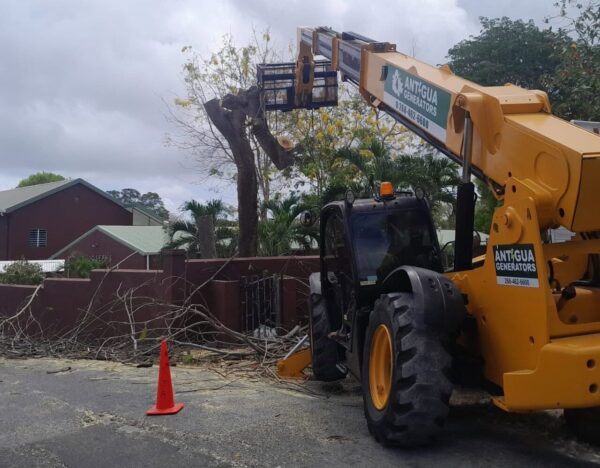
    To address the issue without unnecessary harm to the bee population, authorities assembled a multi-partner team that brought together complementary skill sets: enforcement and logistical support from the National Solid Waste Management Authority, tree removal resources from the Ministry of Public Works, and specialized apiculture expertise from Davina Joyce, a veteran local beekeeper and active member of the Antigua and Barbuda Bee Keepers Cooperative. Before the diseased and structurally unstable tree was taken down, Joyce and her team conducted a meticulous extraction of the entire hive, carefully moving hundreds of live bees to a new, remote location where the colony can thrive without posing a risk to nearby people.

    Following the completion of the operation, the Ministry of Public Works released a statement emphasizing that the successful outcome was a direct product of intentional cross-sector collaboration. Rather than opting for a fast but destructive approach that would have eliminated the bee colony entirely, the team prioritized both public safety and environmental stewardship, balancing the needs of the school community with the ecological value of local pollinator populations. Officials framed the operation as a replicable model for communities across the region, proving that proactive public safety management does not require trading off the protection of local wildlife. By aligning the goals of government agencies and environmental stakeholders, the project delivered a positive result that serves both people and the local ecosystem.

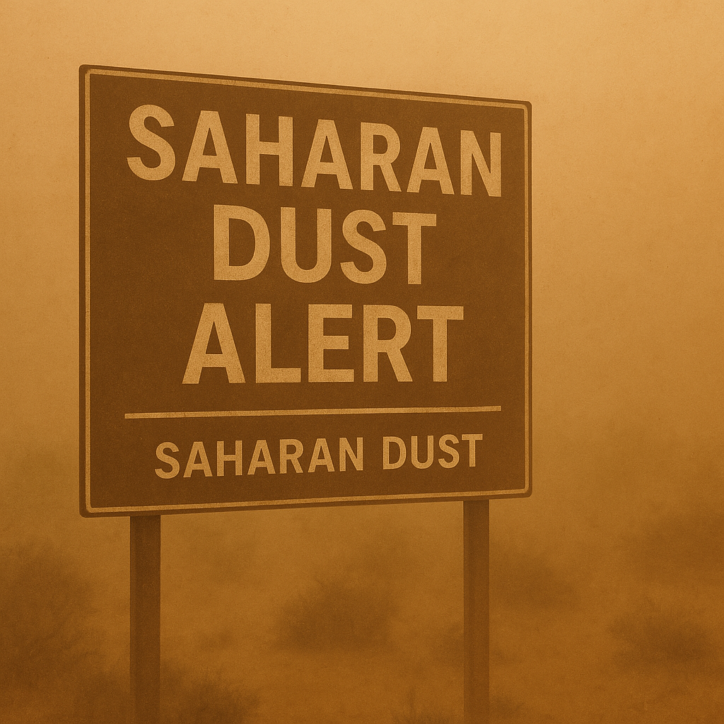
  • Saharan Dust Pushes Air Quality to Moderate Levels Through Weekend

    Saharan Dust Pushes Air Quality to Moderate Levels Through Weekend

    Residents of Antigua and Barbuda are bracing for three days of reduced air quality after national weather officials issued an official alert for an incoming surge of Saharan dust, set to impact the islands from Thursday morning through Saturday. The warning, published by the Antigua and Barbuda Meteorological Service at 9:45 p.m. local time on Wednesday, marks the 13th significant Saharan dust event to reach the twin-island nation so far this year. The incoming dust cloud is projected to drive up concentrations of fine particulate matter, pushing the country’s Air Quality Index into the moderate range, between 51 and 70 on the standard measurement scale. This reading activates the national Alert Level II for air quality.

    While the overall public health risk remains low for the general population, vulnerable groups face increased potential for mild to moderate health impacts, meteorologists have emphasized. At-risk populations include individuals living with chronic respiratory conditions such as asthma, those with pre-existing heart disease, older adults, and young children. Health and weather officials are urging people who fall into these sensitive categories to keep a close watch on updated air quality forecasts, and to take proactive steps to limit exposure during the event.

    Even though moderate air quality is still classified as broadly acceptable for most residents, a small subset of people with heightened sensitivity to air pollution may still experience adverse health effects, the bulletin clarified. Official guidance advises active children and adults, along with anyone diagnosed with a respiratory illness, to cut back on extended outdoor physical activity for the duration of the dust event.

    Saharan dust surges are a predictable annual occurrence for Caribbean nations, including Antigua and Barbuda, during the Northern Hemisphere summer months. Large plumes of fine desert dust are carried westward across the Atlantic Ocean by steady trade winds, and when they reach the Caribbean basin, they often bring widespread hazy skies and temporary dips in regional air quality. Seasonal monitoring systems track these events as they travel across the ocean, allowing local officials to issue advance warnings to at-risk communities.