标签: Antigua and Barbuda

安提瓜和巴布达

  • Cabinet Backs Utility Upgrades and Consumer Relief Measures

    Cabinet Backs Utility Upgrades and Consumer Relief Measures

    Facing ongoing global economic uncertainty, the Government of Antigua and Barbuda has given formal approval to a sweeping package of infrastructure and consumer protection measures focused on upgrading the nation’s water supply and telecommunications systems while shielding households and businesses from volatile international market shifts.

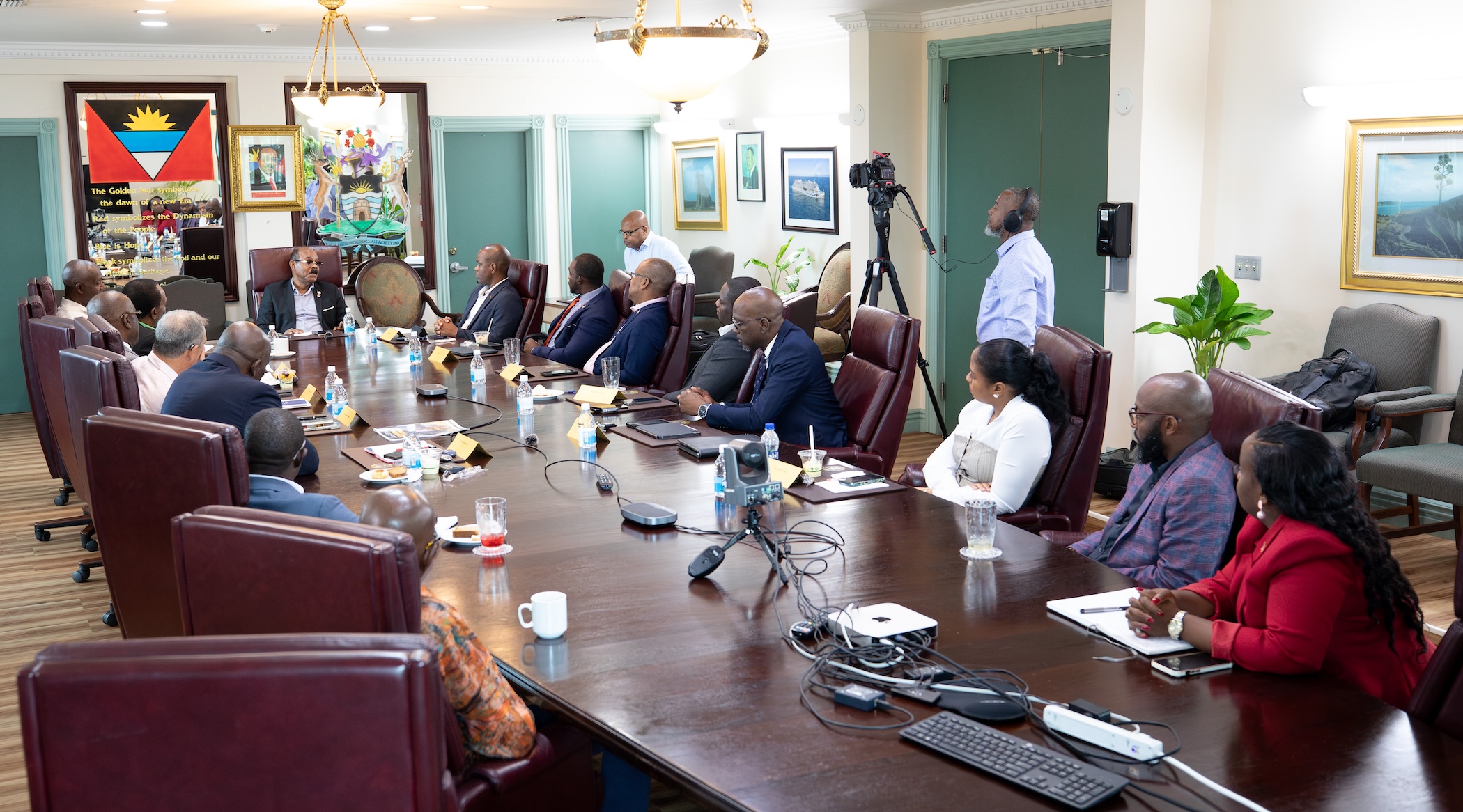
    During a recent cabinet meeting, senior officials received detailed progress updates on joint infrastructure projects led by the national government and the Antigua Public Utilities Authority (APUA), with water infrastructure expansion topping the priority list. Currently, the country produces roughly 11 million imperial gallons of water daily, and this output is projected to rise steadily as newly built infrastructure is brought online in the coming months.

    To address longstanding storage gaps, a broad rehabilitation program is already underway for multiple existing water storage tanks, with most set to resume operations within this year. The plan also includes major upgrades to six tanks located at the country’s Air Force Base: four will undergo full rehabilitation, while two will receive comprehensive modernization, a change that will significantly boost the nation’s total water storage capacity.

    In a move to protect consumer purchasing power, cabinet has reaffirmed its longstanding commitment to maintaining a federal subsidy for gasoline prices. Officials confirmed that this policy remains a critical buffer that insulates domestic consumers from sharp swings in global crude oil prices, which have remained highly unpredictable amid ongoing international economic turbulence.

    Turning to telecommunications upgrades, the cabinet received updates on multiple ongoing initiatives designed to improve service quality across the country. A key project in the pipeline is the construction of an additional network sub-station, which is expected to substantially boost both mobile network reliability and fixed-line internet speeds for residential and commercial users.

    APUA is also moving forward with plans for a bond issuance, a financing mechanism that would provide the capital needed to fund large-scale infrastructure upgrades across both water and telecommunications sectors, with discussions on the structure and launch of the initiative still ongoing.

    Significant progress has already been recorded on the national subsea communications cable project, an infrastructure investment that is slated to dramatically strengthen Antigua and Barbuda’s entire communications network by boosting both overall capacity and resilience to outages.

    In a long-term planning update, APUA told cabinet that the implementation of mobile number portability is on track to launch by July 2026. Once the policy goes into effect, telecommunications customers across the country will gain the ability to switch providers while retaining their existing phone numbers, giving consumers greater flexibility and fostering increased competition in the domestic market.

    Moving forward, government officials emphasized that they will maintain close, ongoing monitoring of global oil market trends, and stand ready to implement additional targeted measures if needed to limit the impact of rising energy costs on local households and business operations.
  • SLBMC Staff Hold Memorial Walk to Honour Late Surgeon Dr. Subbiah Radhakrishnan

    SLBMC Staff Hold Memorial Walk to Honour Late Surgeon Dr. Subbiah Radhakrishnan

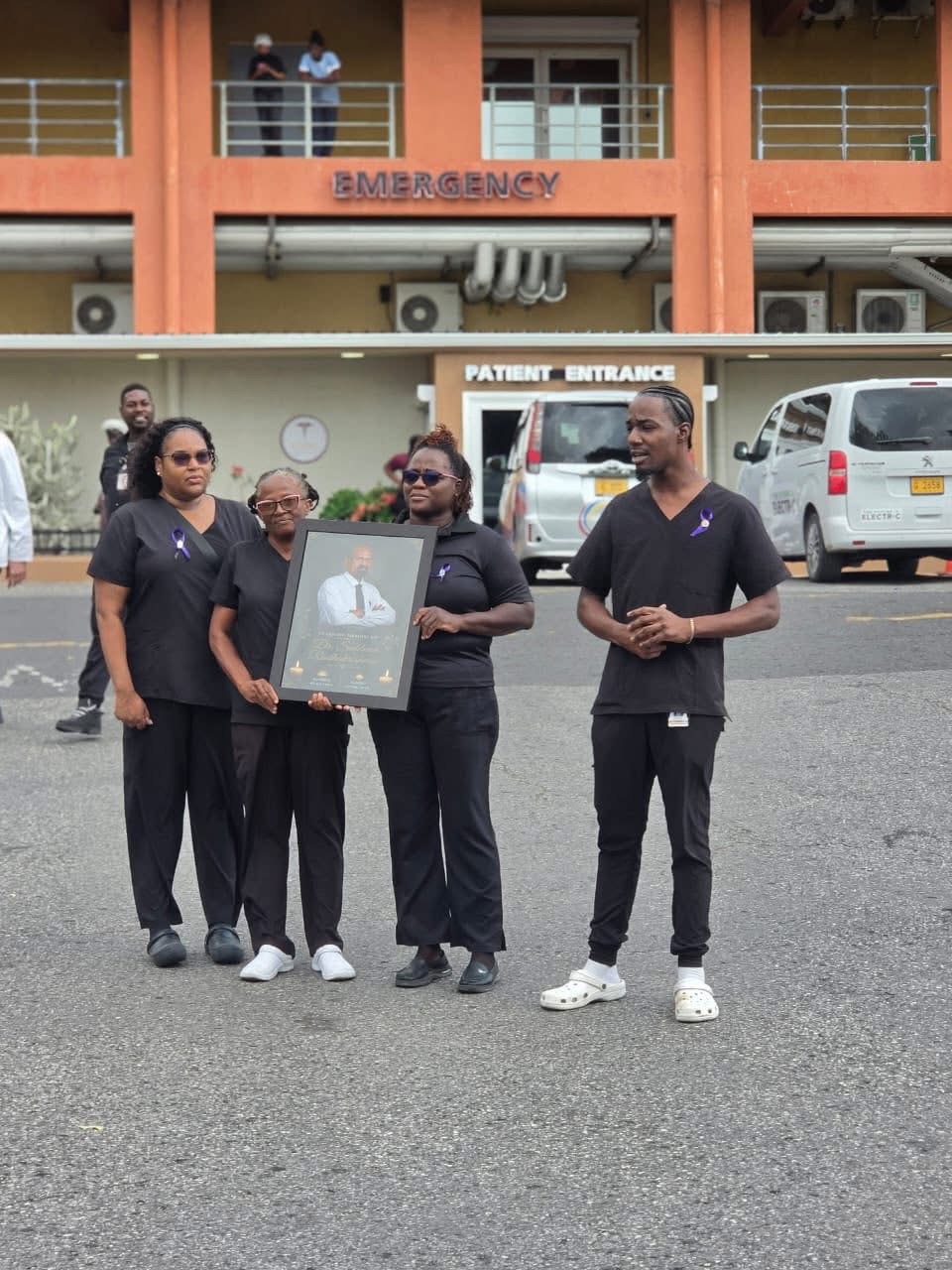
    On a quiet, reflective gathering at the Sir Lester Bird Medical Centre, hundreds of clinical and administrative staff came together to participate in a memorial walk celebrating the life and enduring legacy of Dr. Subbiah Radhakrishnan, a beloved consultant surgeon who left an indelible mark on Antigua and Barbuda’s healthcare system.

    The walk drew cross-departmental participation, from attending physicians and bedside nurses to hospital executives and behind-the-scenes support staff, all united by shared memories of the doctor known affectionately to the community as Dr. Krishnan. As participants walked the pre-planned route through the hospital grounds, attendees shared personal anecdotes that highlighted the decades of selfless, dedicated service Dr. Krishnan gave to patients and colleagues across the twin-island nation.

    Colleagues universally remembered him for three key traits that defined his decades-long career: exceptional surgical skill that raised the standard of care at the medical centre, unwavering professionalism that set an example for every team member, and a deep, abiding commitment to delivering compassionate, high-quality treatment to every patient he treated. Beyond his clinical work, many younger medical professionals in attendance highlighted his consistent willingness to serve as a mentor, passing down his knowledge, work ethic, and patient-centric approach to the next generation of Antigua and Barbuda’s healthcare workers.

    By the end of the event, participants shared that the walk was far more than a ceremonial gathering: it was a fitting tribute to a physician who earned the respect of everyone he worked with, and whose positive influence on the country’s medical community will continue to be felt for generations to come.

  • Government Sets Goal of Completing 75% of National Road Network Within Four Years

    Government Sets Goal of Completing 75% of National Road Network Within Four Years

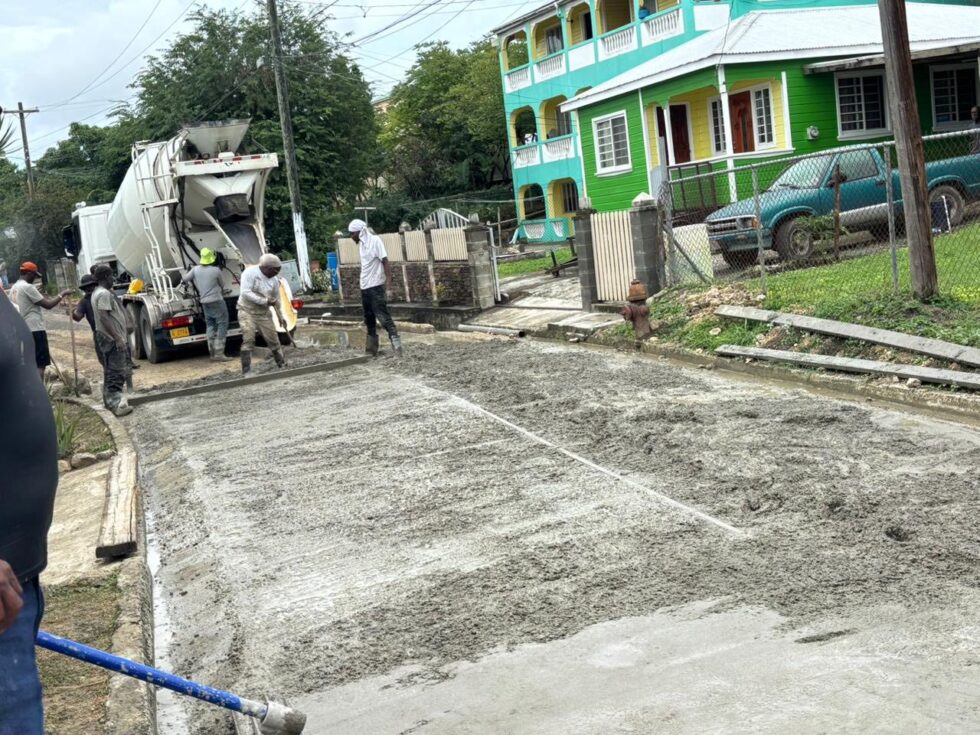
    Antigua and Barbuda’s Prime Minister Gaston Browne has laid out an ambitious infrastructure target for his administration: delivering upgrades to at least 75 percent of the country’s entire national road network within the next four years. The bold commitment was announced during a weekly Cabinet meeting held on Wednesday, where Browne pressed his ministerial team to speed up infrastructure delivery across both islands, reminding them of the promises the government made to voters ahead of taking office. The prime minister stressed that the remaining term of the current administration must be focused on delivering tangible, visible results that directly benefit local communities.

    Speaking at a post-Cabinet media briefing on Thursday, Director General of Communications Maurice Merchant outlined that Browne has centered the government’s remaining policy agenda on people-centric infrastructure projects that directly lift quality of life for residents. The massive national roadworks program sits at the core of a broader infrastructure push that extends far beyond pavement repairs. The wider agenda also includes expanding street lighting coverage, nationwide environmental beautification projects, upgrading public recreational and community spaces, and finalizing preparations for Antigua and Barbuda’s high-profile hosting of the Commonwealth Heads of Government Meeting (CHOGM) scheduled for later this year.

    Alongside the road network target, Cabinet has given formal approval to a suite of additional community enhancement initiatives, all funded through the national Tourism Fund. These projects include the installation of new directional markers, road signage and traffic signs across every part of the country. Officials also confirmed that existing faded road markings will be repainted, and public bus stops will receive comprehensive upgrades as part of the push to improve both the functionality and visual appeal of local public infrastructure.

    Browne has demanded immediate action on all components of the infrastructure program, rejecting any delays on what he frames as basic quality-of-life improvements. Merchant noted that the prime minister has framed this accelerated rollout as non-negotiable, pointing out that the government cannot claim to be driving national renewal while core public amenities remain in a state of disrepair. “Because we cannot speak about renaissance and have simple amenities like these in disrepair,” Merchant quoted Browne as saying.

    Virtually all community improvement projects, including the signage and bus stop upgrades, will draw funding primarily from the Tourism Fund, with additional logistical and operational support provided by multiple government ministries and agencies – most notably the national Transport Board and the Ministry of Tourism. Cabinet also used Wednesday’s meeting to reaffirm its ongoing commitment to removing derelict and abandoned vehicles from residential and public areas, a key measure to clean up community spaces and improve overall neighborhood aesthetics.

    In closing remarks to his ministerial team, Browne reiterated that the entire administration must remain focused on delivering measurable, trackable improvements across every region of Antigua and Barbuda. He emphasized that the electorate holds the government accountable for delivering on the development commitments it campaigned on, and that tangible results are the top priority for the remainder of the term.

  • Police Probe Theft of Construction and Agricultural Equipment in Bolans Area

    Police Probe Theft of Construction and Agricultural Equipment in Bolans Area

    Authorities in Antigua have launched a formal investigation into two separate theft incidents that targeted construction and agricultural work sites across the Bolans region over the recent weekend. The two cases, which occurred days apart but within the same weekend window, have left local work operations short of critical gear and prompted detectives to comb through evidence for leads.

    The first of the two thefts took place at the Chapa Housing Project construction site, where a high-powered Bosch jackhammer, valued at approximately $2,000, was stolen from an on-site storage container. Investigators have narrowed the window of the theft to between Friday afternoon and early Monday morning, when the missing tool was first discovered. A key detail that has drawn investigators’ attention is the total lack of forced entry evidence at the storage container, suggesting the perpetrator may have had access to keys or knew the site’s security layout.

    As part of ongoing inquiries, law enforcement officers have already conducted interviews with multiple witnesses and persons of interest connected to the housing project, and have collected statements and physical evidence to advance the case. As of the latest update, however, the stolen jackhammer has not been recovered, and the search continues.

    In a second, unrelated incident just days later, thieves targeted the Green Castle Agriculture Station, making off with multiple pieces of landscaping and agricultural equipment. In this case, the perpetrators used force to gain entry: investigators confirmed that the suspects forced open two separate padlocks to access the equipment storage area, and caused additional damage to a window before fleeing the property with their stolen goods. The items taken include four weed wackers and one commercial mist blower, a tool commonly used for pesticide and fertilizer application on agricultural sites. Authorities have not yet released a total estimated value for the stolen agricultural gear, as they continue to document the loss for the facility.

    The break-in at the agriculture station is believed to have occurred between Saturday evening and Monday morning, when staff arrived to start the work week and discovered the break-in. Antigua Police confirmed that active investigations into both of these theft cases are still ongoing, and have asked any members of the public who saw suspicious activity in the Bolans or Green Castle areas over the weekend to come forward with information that could help solve the cases.

  • Government Weighs Wider Windfall Tax to Help Fund Education

    Government Weighs Wider Windfall Tax to Help Fund Education

    Top government officials in Antigua and Barbuda are actively evaluating a plan to expand the nation’s existing windfall profit tax to every profitable business sector, as policymakers work to secure new, reliable revenue streams for the country’s growing education and workforce development initiatives. The potential policy change was the focus of detailed discussions during this week’s regularly scheduled Cabinet meeting, where ministry leaders reviewed a range of funding options designed to support the long-term expansion of the national education system, which has outpaced current budget allocations in recent years. Currently, the country imposes a 10 percent windfall tax exclusively on large profit-making firms operating in four key sectors: telecommunications, banking, insurance, and energy. To qualify for the tax, businesses in these industries must already meet a threshold of at least 1 million Eastern Caribbean dollars (EC$) in annual profits. The proposed amendment would remove the sector restriction, bringing all profitable businesses that cross the EC$1 million annual profit mark under the tax policy. This policy conversation comes as the national government has ramped up public investments in post-secondary education across the country, including sustained institutional and financial support for the University of the West Indies Five Islands Campus and the multiple campuses that make up the Antigua and Barbuda College of Advanced Studies (ABCAS). Cabinet officials have emphasized that the tax expansion proposal is just one of multiple revenue-raising options on the table, all targeted at generating new funding for ongoing educational development projects. In the coming weeks, policymakers will continue deliberations, with planned deep dives into the potential legal, economic, and social ramifications of any adjustments to the current tax structure. Any formal modification to the nation’s existing tax framework will require a full review and approval by the country’s parliament before it can go into effect. Government representatives have reaffirmed their core commitment to ensuring broad-based benefits from national economic growth, and have consistently ranked investment in public education as one of the administration’s top national priorities.

  • Minister Michael Joseph Calls for Greater Support for Communities on the Frontlines of Climate Change at Berlin Climate Mobility Forum 2026

    Minister Michael Joseph Calls for Greater Support for Communities on the Frontlines of Climate Change at Berlin Climate Mobility Forum 2026

    Against the backdrop of escalating climate impacts that disproportionately threaten low-lying and small island nations, Michael Joseph, Antigua and Barbuda’s Minister of Health, Wellness, Environment, and Civil Service Affairs, delivered a urgent, community-centered call to action at the 2026 Berlin Climate Mobility Forum in Germany on Wednesday. Speaking to a cross-sector audience of government delegates, leaders of international organizations, development finance specialists, and leading climate researchers, Joseph centered his remarks on the need to redirect more climate investment directly to frontline communities already grappling with climate change’s worst effects.

    The forum’s ongoing discussions focus on advancing the Global Principles for Addressing Climate Mobility, a framework Joseph publicly endorsed, while stressing that successful climate adaptation cannot be designed from distant capital cities. “Local communities hold unique on-the-ground knowledge that no external stakeholder can replicate,” Joseph explained. “They know exactly which neighborhoods flood during storm surges, which coastal roads erode faster each year, which shorelines are retreating, which households need urgent support, and which natural ecosystems once buffered their communities from extreme weather. But local knowledge means nothing without the resources to turn that knowledge into action.”

    For Small Island Developing States (SIDS) like Antigua and Barbuda, Joseph noted, climate change has already stretched critical public systems to breaking point, putting housing, public healthcare, national food security, core infrastructure, and overall community well-being at growing risk. He argued that climate finance mechanisms must not only strengthen national governing institutions but also be structured to deliver tangible support directly to the vulnerable populations that need it most.

    To illustrate what effective local climate action looks like, Joseph highlighted his country’s ongoing Home Assistance Programme for the Indigenous (HAPI), a targeted initiative that supports low-income and at-risk groups including elderly residents, unemployed workers, people displaced by climate disasters, and storm survivors. The program provides funding for new housing construction and home rehabilitation, allowing vulnerable citizens to stay safe and rooted in their home communities rather than being forced to relocate prematurely.

    Beyond physical infrastructure and economic impacts, Joseph drew attention to a long-overlooked dimension of climate harm: the persistent mental health toll of repeated climate shocks. Repeated exposure to hurricanes, forced displacement, sudden loss of livelihoods, and ongoing uncertainty about the future, he explained, leaves lasting psychological damage on affected communities that is rarely accounted for in global climate planning.

    Joseph also emphasized the irreplaceable role of natural coastal ecosystems in building climate resilience, highlighting that beaches, wetlands, coral reefs, mangroves, and healthy fisheries deliver a suite of critical services that protect communities from extreme weather, sustain food supplies, support local livelihoods, and preserve centuries of cultural heritage for island nations.

    Reiterating Antigua and Barbuda’s unwavering commitment to global climate goals, Joseph warned that uncurbed global warming poses an existential threat to SIDS, reaffirming his country’s support for global efforts to cap long-term warming at 1.5 degrees Celsius above pre-industrial levels. “For Antigua and Barbuda, 1.5 degrees is not an arbitrary policy target – it is the line between manageable climate risk and permanent, irreversible damage to our homeland,” he stressed.

    The minister also drew global attention to the growing crisis of climate loss and damage, noting that even the most robust adaptation measures have limits when communities face repeated climate shocks, gradual land loss, destroyed public infrastructure, failing water systems, and permanent collapse of local livelihoods. Drawing on decades of collective experience across Caribbean nations, he noted that recent hurricane seasons have inflicted trillions in combined economic and social harm across the region, and called for a fundamental overhaul of the international financial architecture to make it more responsive and equitable to the needs of vulnerable climate frontline nations.

    Joseph reaffirmed Antigua and Barbuda’s support for two key policy frameworks designed to address this gap: the Multidimensional Vulnerability Index and the Antigua and Barbuda Agenda for Small Island Developing States. Both frameworks, he explained, are critical to expanding access to affordable climate finance and ensuring that the unique vulnerability of SIDS is properly recognized in global development and climate financing systems.

    Joseph’s participation in the 2026 Berlin Climate Mobility Forum is supported by Rulita Kamasho Thomas, Antigua and Barbuda’s Climate Ambassador. The annual forum brings together high-level stakeholders from across governments, multilateral bodies, development institutions, and civil society to advance practical, actionable solutions to the growing challenges of climate mobility, while accelerating global progress on climate resilience and adaptation.

  • No Tsunami Threat to Antigua and Barbuda After 6.7 Magnitude Atlantic Earthquake

    No Tsunami Threat to Antigua and Barbuda After 6.7 Magnitude Atlantic Earthquake

    A 6.7-magnitude earthquake struck the central Mid-Atlantic Ridge on Wednesday afternoon, triggering rapid official assessments of potential tsunami risks for nearby Caribbean island nations. According to preliminary data released by the Antigua and Barbuda Meteorological Service, the seismic event hit at 2:57 p.m. local Atlantic Standard Time, roughly 10 kilometers beneath the ocean surface. Its epicenter was pinned near geographic coordinates 0.4 degrees south latitude and 20 degrees west longitude.

    Within an hour of the quake, the national meteorological agency issued an official Tsunami Information Statement at 3:15 p.m. AST to calm public concern, confirming that the seismic activity does not generate any meaningful tsunami hazard for Antigua and Barbuda. While officials acknowledged a tiny chance that minor tsunami waves could impact Atlantic coastlines located closest to the epicenter, they emphasized that Antigua and Barbuda faces no imminent danger and no emergency response measures are needed for the country at this time.

    To boost community preparedness, the meteorological service has urged residents across the country, particularly those living in low-lying coastal districts, to stay tuned to future official updates. It also encouraged local communities to use this event as a timely opportunity to revisit their established tsunami evacuation protocols, re-familiarize themselves with pre-marked safe evacuation zones, and ensure all household members understand emergency protocols. The agency added that no additional public statements will be released going forward unless new seismic data emerges or the risk situation changes materially.

  • Antigua and Barbuda Invited to Shape Revised CARICOM Regional Quality Policy

    Antigua and Barbuda Invited to Shape Revised CARICOM Regional Quality Policy

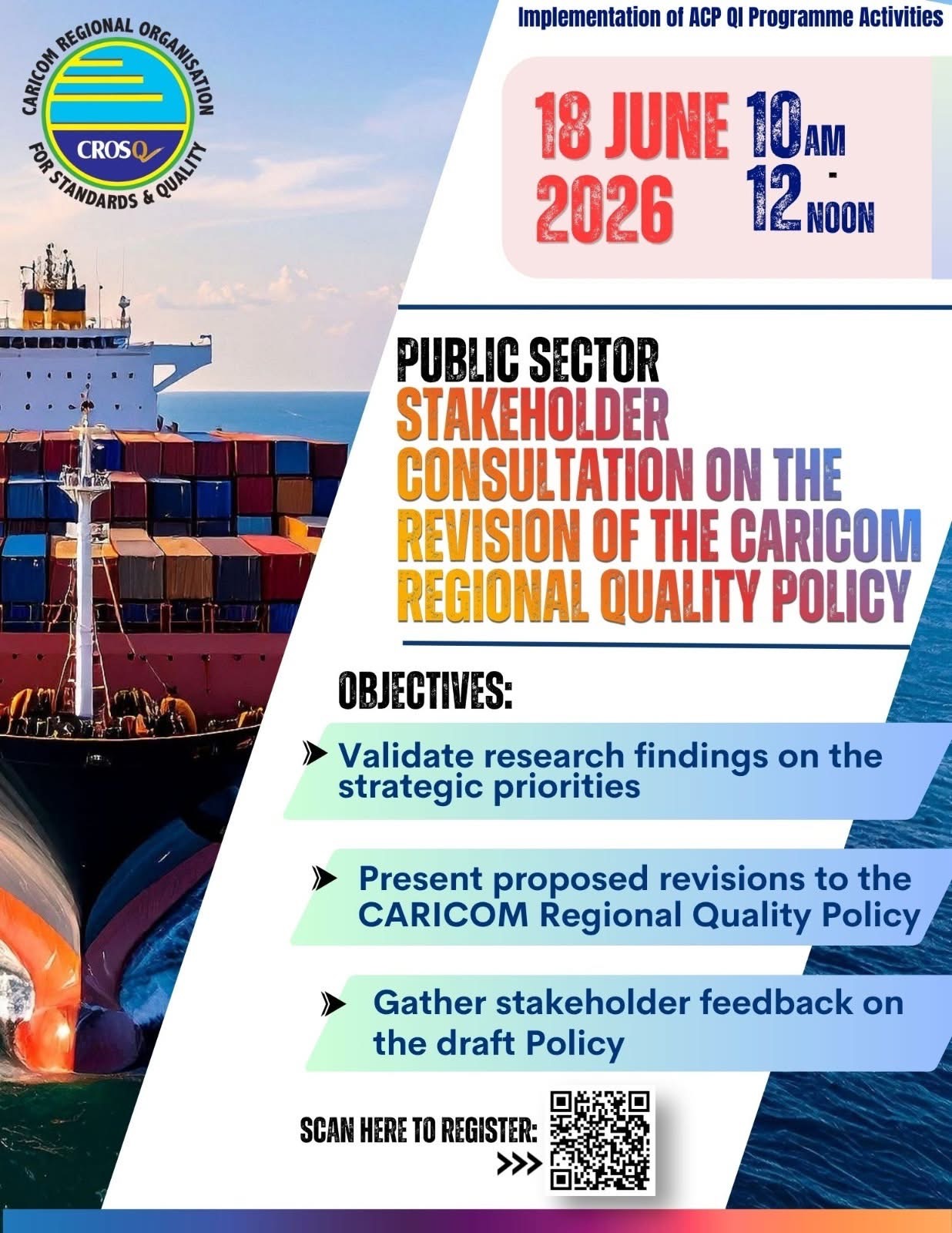
    As part of a regional effort to upgrade cross-border trade and industrial competitiveness, public sector representatives across Antigua and Barbuda have been formally invited to contribute to a key consultation focused on proposed updates to the CARICOM Regional Quality Policy (RQP).

    The process, organized by the Caribbean Regional Organisation for Standards and Quality (CROSQ), is being carried out under the framework of an ACP-region project led by the United Nations Industrial Development Organization (UNIDO), according to Antigua and Barbuda’s Ministry of Trade and Investment.

    Three core objectives drive this consultation initiative. First, organizers will outline all proposed adjustments to the existing regional policy, giving stakeholders a clear breakdown of where and how the framework would change. Second, the gathering will collect targeted input and feedback from local actors on the draft revised policy, ensuring on-the-ground perspectives are incorporated into the final document. Finally, the session will serve to validate the strategic priorities that have been identified through prior research into regional quality infrastructure needs.

    To accommodate different stakeholder groups, the consultation has been split into two dedicated sessions. Public sector participants will meet on June 18, running from 10 a.m. to 12 p.m. local time, while a separate discussion for private sector stakeholders will be held the following day, June 19.

    Once finalized, the updated policy is projected to deliver widespread benefits across the Caribbean bloc. Organizers note that the revisions will reinforce the overall regional quality infrastructure system, which will in turn drive improvements in three critical areas: formal product and service standards, reliable conformity assessment processes, and the long-term competitiveness of all CARICOM member states in regional and global markets.

  • Department of Environment Reopens Thursday After Closure for Electrical Works

    Department of Environment Reopens Thursday After Closure for Electrical Works

    The Newfoundland and Labrador Department of Environment has announced a one-day full closure to the public at its Victoria Park headquarters in St. John’s, scheduled for June 17. The temporary shutdown was prompted by critical scheduled electrical work that will cut off power access to the entire building for a prolonged working window. Without full power access, the department cannot safely or effectively deliver in-person public services, leading leadership to make the decision to close all public-facing office operations for the entire day. In an official public notice released ahead of the closure, department officials confirmed that standard service delivery and office operations will return to their regular schedule starting June 18. The statement also included a note of appreciation to local residents and service users for their patience and understanding during the short-term disruption, which is necessary to complete critical infrastructure improvements at the facility.

  • Average US gas price drops below $4 – barely

    Average US gas price drops below $4 – barely

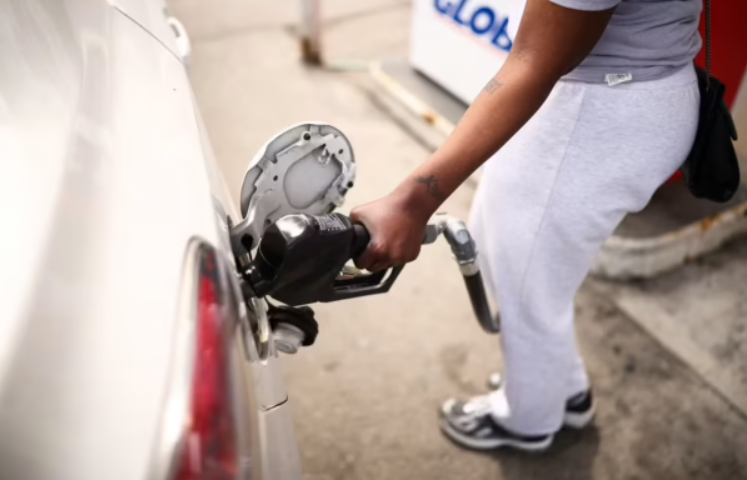
    For the first time in nearly four months, the average price of regular unleaded gasoline at American fueling stations has fallen below the key $4 per gallon threshold, a welcome shift for consumers across the United States after months of soaring energy costs.

    New data from automotive services group AAA confirms that the national average slid to $3.999 per gallon on Thursday, marking a nearly 3 cent drop from the previous day’s reading. As of this announcement, 28 US states already enjoy average pump prices below $4, with Indiana posting the nation’s lowest average at $3.40 per gallon. Separate tracking from fuel price analytics firm GasBuddy echoes the decline, placing the early Thursday national average at roughly $3.98, after the metric first crossed below $4 the prior Sunday.

    This long-awaited milestone aligns with the impending reopening of the Strait of Hormuz, a key global oil chokepoint, outlined in an official memorandum of understanding between Iran and the United States that brings an end to recent hostilities. The strait’s closure in late February cut off roughly 20% of the world’s total crude oil supply, triggering a dramatic spike in global oil and retail gasoline prices that pushed the US national average to a record peak of $4.56 per gallon on May 21.

    Since that peak, pump prices have declined on a daily basis, lifted by growing market optimism that diplomatic negotiations would successfully lead to the strait’s reopening. However, industry analysts warn consumers not to expect a return to the pre-conflict average of $3 per gallon any time in the near future, even if the downward price trend continues.

    One primary barrier to a rapid full recovery is the slow timeline to restore normal global oil flow. Matt Smith, lead oil analyst at commodity analytics firm Kpler, explained to CNN that it will likely take three to four months for full commercial tanker traffic to resume through the strait. Replenishing the global oil inventories depleted during the months of closure will take even longer, he added.

    Tankers stranded in the Persian Gulf are far from the only challenge. When the strait was closed, much of the region’s oil production and refining infrastructure effectively halted operations. According to experts, some facilities also sustained damage during the conflict, meaning additional time will be required to complete repairs and bring production back online.

    Crude oil operates as a fully global market, and even though the United States is the world’s largest oil producer and relies on relatively little Middle Eastern crude, shifts in regional supply still directly set the prices that American consumers and businesses pay at the pump. Most notably, long-term global crude prices — the single biggest driver of retail gasoline costs — show no indication of falling back to the pre-war benchmark of $70 per barrel before the next decade.

    Another factor slowing retail price declines is the behavior of independent gas station owners. Unlike the rapid pace at which owners raised prices when wholesale costs climbed, they are now cutting retail prices at a much slower rate. This is because many station operators absorbed reduced profit margins to stay competitive during the earlier price surge, and are now seeking to recoup those lost earnings.

    This uneven adjustment explains why the national average retail price has only fallen by an average of 2 cents per day since hitting its peak, a stark contrast to the more than $1 per gallon price increase recorded in the first month of the conflict — the largest one-month jump in retail gas prices so far this century.

    While coordinated releases of emergency oil reserves and drawdowns of excess global inventories prevented prices from climbing even higher during the closure, global stockpiles now sit at their lowest levels in decades. This has led some analysts to warn that pump prices could climb back above $4 per gallon later this summer, as peak driving season increases consumer fuel demand across the country. Even if another price surge does not materialize, experts broadly agree that a return to sub-$3 per gallon gasoline is extremely unlikely.

    “We’ll figure out what the new normal is,” said Dan Pickering, founder and chief investment officer of energy investment firm Pickering Energy Partners. “But it isn’t going to be $2.85 gasoline.”

    CNN business correspondent David Goldman contributed reporting to this article.