博客

  • Did BTL Board of Directors Have the Full Picture?

    Did BTL Board of Directors Have the Full Picture?

    Months of simmering political tension over the proposed BTL acquisition of Speednet boiled over this week, as a sitting union senator and top business leaders have raised sharp questions about the integrity of the board’s approval vote and the future of consumer protections in Belize’s reshaping telecommunications market.

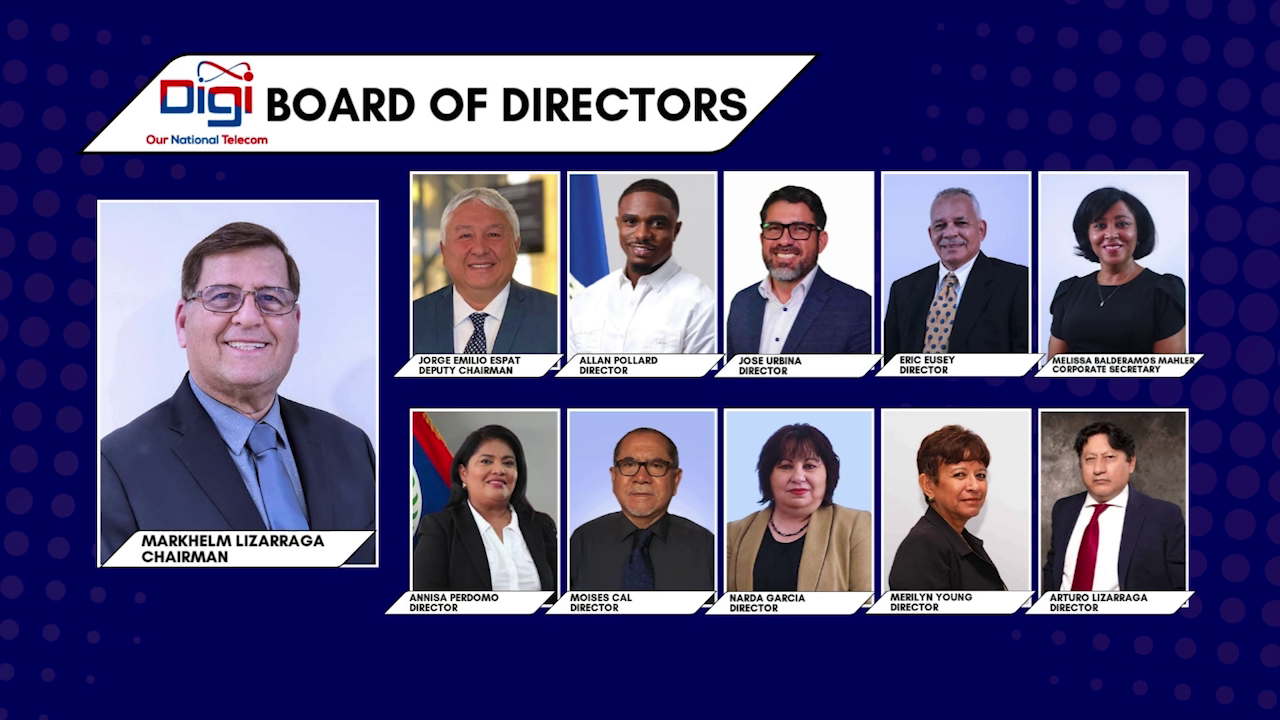
    Speaking publicly on the ongoing debate August 10, 2026, Union Senator Glenfield Dennison waded into the controversy, throwing his support behind BTL director Anissa Perdomo, who voted against the acquisition last Tuesday, and Allan Pollard, the People’s United Party (PUP) mayoral candidate who has publicly opposed the deal. According to Dennison, both figures have aligned with the public and union movement’s stance on the transaction, representing what he calls the will of ordinary Belizeans.

    Dennison’s most critical line of attack targets the majority of BTL board members who backed the acquisition, questioning whether the voting bloc actually had access to complete, accurate information about Speednet’s financial position to make an informed, responsible decision. He argued that the board’s political makeup was structured to guarantee a preordained outcome, noting that most appointeed members hold political alignments that favor the acquisition, making the final vote a foregone conclusion.

    “I don’t think they had enough information to make the decision that they made,” Dennison told reporters, adding that he is willing to reverse his position if full disclosure of the deal’s details proves the Speednet purchase is a strong investment for BTL and Belize. “If that information does prove that buying Speednet was such an excellent investment I will eat my words and take it back.”

    The senator also defended the Senate walkout staged last week by opponents of the acquisition, pushing back against claims the action was unplanned or disorganized. He explained that social partners caucused during a legislative recess and collectively agreed to walk out in protest, with the movement unfolding organically amid rapidly shifting developments on the senate floor. Two separate walkouts were staged simultaneously, he confirmed, and coordination between opposition lawmakers and union representatives aligned to oppose the rushed vote.

    Joining Dennison in calling for greater transparency is William Usher, Vice President of Industry at the Belize Chamber of Commerce and Industry (BCCI), who is sounding the alarm over Speednet’s unclear financial standing and the risk of a new telecom monopoly that could leave Belizean consumers with no protections. Usher emphasized that the public has not been given access to sufficient financial records to build confidence in the transaction, pointing out that any standard commercial lender would require three to five years of audited financial data to approve an $80 million investment – yet only one year of Speednet’s financial records have been made available to stakeholders.

    Usher drew on Belize’s past experience with consolidated telecom markets to warn of the risks ahead, noting that when BTL previously operated as a monopoly, consumers faced higher costs and limited options. He added that current Belizean regulation lacks the necessary legal safeguards to prevent price gouging and unfair practices if the market is consolidated under a single dominant provider, specifically referencing gaps in Section 424 of existing telecom law that leave consumer interests unprotected.

    “If these things are not in place, who are you whether government or the people out here to say listen you are taking advantage of me,” Usher said, echoing widespread public concern over the lack of oversight.

    In response to the growing controversy, the National Trade Union Congress of Belize and the Belize Chamber of Commerce and Industry have announced they will coordinate their efforts on the issue, presenting a united front to push for greater transparency and stronger consumer protections ahead of any finalization of the acquisition. This article is adapted from a transcribed August 10, 2026 evening television newscast.


  • Could BTL Deal Threaten Press Freedom?

    Could BTL Deal Threaten Press Freedom?

    In a coordinated gathering with independent senators and civil society stakeholders on August 10, 2026, Belizean media owners have issued a stark warning that the proposed acquisition of Speednet by BTL poses an existential threat to the country’s foundational press freedom and democratic governance. What is being framed by proponents as a routine telecom industry consolidation, the leaders of independent media outlets argue, would ultimately create a state-aligned telecommunications monopoly that concentrates unprecedented control over national communication infrastructure in the hands of a single entity.

    Senator Louis Wade, who owns local broadcaster Plus TV, explained that modern digital infrastructure has created new, undetectable avenues for interfering with independent media operations that did not exist in previous eras. “Decades ago, authorities seeking to silence critical reporting had to take overt actions like shutting down transmitters or revoking operating licenses,” Wade noted. “Today, through manipulation of IP addresses and digital network management, they can undermine media distribution without the public even noticing what is happening.”
    Wade emphasized that the erosion of press freedom directly undermines the constitutional protections of expression Belize is built on. “Our constitution guarantees freedom of conscience, but that guarantee is meaningless if we cannot share our ideas openly,” he said. “A functioning democracy and a prosperous open market economy both depend on an open marketplace of ideas, where diverse independent perspectives can be heard. That is why we have come together to reject this acquisition.”

    Jules Vasquez, owner of Tropical Vision, echoed Wade’s concerns, noting that independent media in Belize has a long history of resisting efforts to narrow public discourse. “Our organizational identity is rooted in pushing back against systems that block pluralistic opinion,” Vasquez said. “Any state-controlled monopoly over telecommunications poses an inherent threat to independent journalism, and any restriction on free journalism directly threatens how democracy functions. If that line is crossed, we could see far-reaching consequences for the entire country.”

    Mose Hyde, owner of XTV, confirmed that independent media’s opposition to the deal remains unchanged, more than a year after concerns were first raised. The meeting, called by independent senators to confirm the coalition’s stance, reaffirmed the unified opposition that formed in mid-2025. Hyde stressed that the risk is amplified by the fact that the monopoly would fall under partial state control, a structure that gives the government implicit power to penalize critical outlets. “We have already experienced punitive measures for the positions our outlets have taken,” Hyde said. “Today, almost all news distribution to audiences relies on digital telecom infrastructure. That makes us more vulnerable to interference than ever before. This concentration of power is simply unacceptable.”

    Hyde declined to share specific details of the coalition’s next steps, saying only that the gathering was productive and the opposition coalition remains solid. The group has formally called on Belize’s Public Utilities Commission to intervene and block the merger, arguing it would create a dangerous concentration of power in the country’s telecom sector that threatens the public’s right to diverse, independent information.

  • Elections : 5 out of 15 political groups approved by the CEP are led by women

    Elections : 5 out of 15 political groups approved by the CEP are led by women

    As Haiti prepares for its upcoming general elections, a landmark milestone for gender representation in national politics has emerged, after the country’s Provisional Electoral Council (CEP) released its official list of qualified political groups for the vote. Of the 15 coalitions and political organizations granted approval to contest the elections, five are headed by women – accounting for 33% of all registered participating groups.

    On Monday, August 10, 2026, Pédrica Saint Jean, Haiti’s Minister for the Status of Women and Women’s Rights (MCFDF), publicly praised the CEP’s publication of the list, framing the gender breakdown as a tangible win for years of advocacy aimed at breaking down barriers to women’s political leadership.

    Saint Jean linked this progress directly to commitments forged at the National Conference on Women’s Political Participation and Electoral Violence, held in December 2025. The MCFDF emphasized that the growing share of women leading officially registered political structures proves that targeted advocacy work is driving meaningful change toward more gender-equitable participation in Haiti’s democratic governance.

    The five women-led approved groups bring together a total of 53 separate political parties across the Haitian political landscape. The full breakdown of these coalitions is as follows:
    – *DEBLOKE*, headed by general coordinator Marie Yanick Mézile Lhérisson, comprises 11 member political parties
    – *EN AVANT POUR HAITI*, represented by Vilcé Nancy, is made up of 12 parties
    – *LAPEH AK ALYE’L YO*, led by Marie Nelly Verpile Boyer, includes 10 participating parties
    – *ANFÒS POU SOVE LONÈ*, represented by former senator Gilles Cemephise, counts 10 parties among its members
    – *DELIVRANS*, represented by Djina Guillet Délatour, is a coalition of 10 parties

    The full list of all 15 approved political groups is available for public download via HaitiLibre at the link: https://haitilibre.com/docs/groupements-politiques-agrees-08-08-2026.pdf

    In conjunction with welcoming the announcement, Minister Saint Jean issued an urgent nationwide appeal to Haitian women: she called on large numbers of women to complete their voter registration, stand as candidates for a wide range of elected public offices, and engage actively at every stage of the upcoming electoral process.

    Saint Jean also reaffirmed her ministry’s ongoing commitment to supporting women entering the democratic process, offering full backing for women candidates and participants as they navigate the election cycle. She closed by expressing confidence that broad, determined citizen mobilization will pave the way for a far more inclusive and equitable political landscape in Haiti following the elections.

  • Vellos Wins Big, But PUP Corozal Faces Bigger Battle Within

    Vellos Wins Big, But PUP Corozal Faces Bigger Battle Within

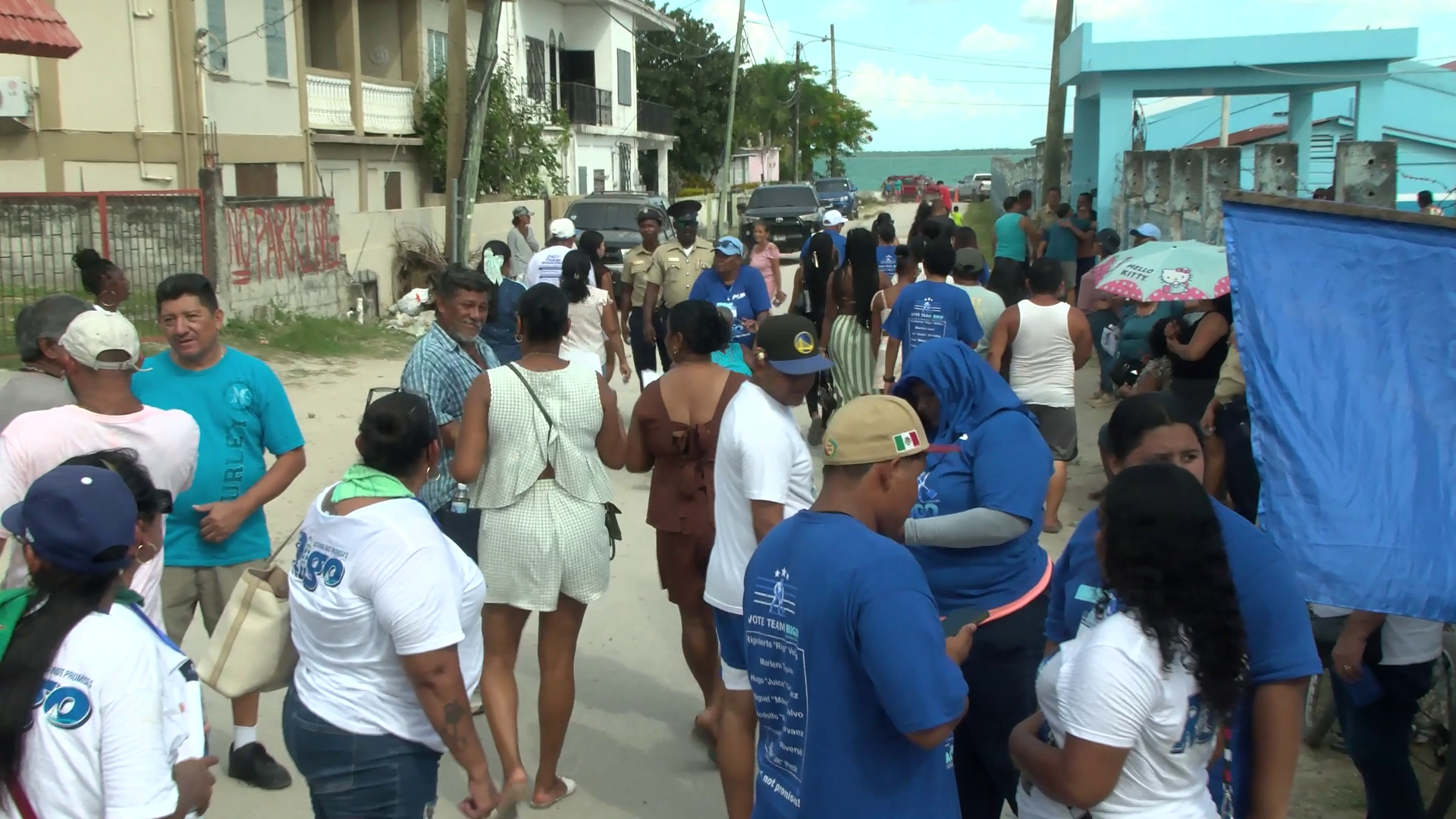
    On Sunday, August 10, 2026, the People’s United Party (PUP) held its highly anticipated Corozal Municipal Convention to select a mayoral candidate for upcoming local elections, delivering a decisive victory for three-time incumbent Rigoberto Vellos while laying bare deep, long-simmering divisions within the district’s party ranks.

    Vellos, the party’s established favorite, defeated first-time candidate Shajarie Rogers by a staggering 624-vote margin, racking up 1,799 votes to Rogers’ 1,175, among the 3,425 registered PUP voters who turned out to cast ballots. The win not only cemented Vellos’ place as the party’s official mayoral nominee but also dealt a significant blow to Rogers’ campaign, which had received high-profile backing from Corozal Bay Area Representative Thea Garcia-Ramirez.

    What was intended as a routine candidate selection process quickly devolved into a public display of internal friction, with heated exchanges, raised tempers, and open confrontation between supporters of the two rival camps. For Vellos, the contested convention was an unnecessary disruption from the start. The three-term incumbent argued that his proven track record of delivering for Corozal should have spared the party from a public intra-party battle, and he framed the lopsided voter turnout as a validation of his years of work.

    “A hard one. A hard battle. Sometimes you get tested to the extreme and this was one time we were taken to the extreme,” Vellos told reporters following his win. “They know I have worked extremely hard for them, hence the reason why they did not agree to a convention. We went into a convention that was not necessary and I hope that after this they can join me, my team and I to work together. It is time for us to rebuild our own party and as young leaders people expect that from us. I am happy, a bit emotional. But it all comes with victory.”

    Rogers, who entered voting day confident in her organized campaign and the political support of Garcia-Ramirez, struck a conciliatory tone after the results were finalized. She noted that Garcia-Ramirez had publicly committed to working with whichever candidate emerged victorious, a position Garcia-Ramirez reaffirmed to reporters as she left the voting venue, despite loud taunting chants from Vellos supporters surrounding her.

    “Honorable Thea has a right. She is a voter in Corozal Bay and at the end of the day, she had also given you guys an interview where she rightly stated that she will work with any team. So, I believe that at the end of the day she will work with any team that wins,” Rogers said prior to the result.

    When asked about the hostile crowd energy surrounding her after the result, Garcia-Ramirez deflected tension, emphasizing her unwavering loyalty to the PUP. “All I hear is PUP Paul,” she told reporter Paul Lopez of News Five.

    PUP national chairman Henry Charles Usher framed the open contest as a healthy exercise in intra-party democracy, arguing that the convention would strengthen the party ahead of the general municipal elections. He acknowledged that the divide would need intentional repair, but emphasized that unification would be the party’s immediate priority.

    “Well I think it is always good for the people to decide who they want to represent them. I think conventions are good, they are healthy. You know you will have this what you would call coming together after the convention. You have to come together and that is what we will do,” Usher stated.

    In a secondary development that underscored the depth of the split, sitting Councilor Leslie Rodriguez abandoned Vellos’ slate to run alongside Rogers, a gamble that failed to pay off. Vellos’ replacement candidate Hugo Gonzalez went on to win the council seat by a clear margin.

    While Team Rogers has formally conceded and pledged to collaborate with Vellos’ team ahead of the upcoming elections, political observers note that repairing fractured relationships and rebuilding trust between the rival PUP factions will be a months-long process. With municipal elections fast approaching, the PUP’s ability to unify its Corozal base could ultimately determine whether the party holds the mayoral seat in the upcoming general vote. This report was compiled from a broadcast transcript by News Five’s Paul Lopez.

  • Vote-Buying Claims Surface at PUP Corozal Convention

    Vote-Buying Claims Surface at PUP Corozal Convention

    On August 10, 2026, allegations of illicit vote-buying overshadowed the People’s United Party (PUP) convention held in Corozal over the preceding Sunday, opening a debate over democratic integrity in internal party processes that operate outside the strict regulatory frameworks of general or municipal elections. Local outlet News Five received multiple anonymous claims that backers of Shajarie Rogers’ Team Rogers had been compensating voters at a private property near the convention site. When reporters visited the location to verify the accusations, they observed moderate foot traffic but observed no suspicious activity and did not witness any direct exchange of cash for votes. The accusations were quickly met with counter-claims from Team Rogers, who levied identical vote-buying allegations against the opposing slate led by Rigoberto Vellos, the incumbent Mayor of Corozal Town. While internal party contests are not bound by the same electoral oversight rules that govern official government elections, political observers note that any verified vote-buying in these contests still erodes the foundation of intra-party democracy and undermines public trust in party processes. In direct interviews with both faction leaders, reporters pressed each side to respond to the allegations against their teams. Incumbent Corozal Town Mayor Rigoberto Vellos, who ultimately claimed the convention win, confirmed that he had heard widespread rumors of opposing leaders distributing cash to sway voters, but denied any wrongdoing on his own part. “I do believe that certain leaders are giving out money. I have heard it. Some of us have seen it,” Vellos told reporters. When pressed directly on whether he had personally funded vote-buying operations, Vellos pushed back firmly: “I don’t have money sir. I don’t have money. My money will be spent on me and who I can help and of course I will dedicate myself to my community. I don’t need to pay people to win a convention or an election.” Shajarie Rogers, Vellos’ opponent and PUP mayoral aspirant for Corozal Town, similarly denied all claims of vote-buying linked to his campaign. When asked about the allegations, Rogers stated that his campaign had only worked with voters who chose to support them of their own free will, adding “We are working with who comes to vote for us honestly. So I wouldn’t know.” When reporters clarified to confirm that Team Rogers had not compensated any voters, Rogers replied definitively: “Absolutely not. As far as Team Rogers is concerned, we are not paying anyone.” Reporters also reached out to Thea Garcia-Ramirez, the Corozal Bay Area Representative, to ask about her activity on convention day and her perspective on the allegations. Garcia-Ramirez shared that she had spent the day resting at home to prepare for the coming week’s work at her government ministry, noting that she was already focused on two ongoing public advocacy campaigns unrelated to the intra-party contest. “There is a lot of work that we do at the ministry. I am sure you know we have two campaigns moving forward. We have the Blue Teddy Bear Campaign and recently a campaign to end sexual violence against children and teenagers and young people,” she explained. Early the following morning, Belize Prime Minister John Briceño publicly congratulated Vellos and his campaign slate on their convention victory via the social platform X. This report is a transcribed excerpt from News Five’s evening television broadcast, with Kriol language content translated and transcribed using a standardized spelling system for public accessibility.

  • UDP Unveils Municipal Candidates in Dangriga & Benque

    UDP Unveils Municipal Candidates in Dangriga & Benque

    As Belize prepares for its 2027 municipal elections, the United Democratic Party (UDP) has locked in its mayoral candidates for two key municipalities: Dangriga and Benque Viejo del Carmen, following internal party nomination contests held over the weekend.

    In Dangriga’s mayoral nomination race, Dwayne Sampson secured a decisive victory over challenger Christalyn Castillo, with final vote counts putting Sampson at 687 votes against Castillo’s 195. Over in Benque Viejo del Carmen, Yusuf Guerra claimed the UDP mayoral nomination by defeating contender Danette Mendez; Mendez will remain on the party’s ticket as one of six candidates vying for municipal council seats in the upcoming 2027 vote.

    Shortly after his nomination win, Sampson sat down for an interview with local outlet News Five to outline his policy platform and background as he prepares for the general municipal election. A community organizer with nearly 20 years of on-the-ground service in Dangriga, Sampson noted that his longstanding ties to the area have translated to strong grassroots support for his campaign.

    The candidate, who previously sought office as an independent before joining the UDP, praised the party’s commitment to open democratic processes during the nomination contest. “One thing I can say about the United Democratic Party is that they deliver on democracy. They use the democratic process, and that is what is good — they give everybody a fair chance,” Sampson said, adding that the transition from independent politics to running under the UDP banner has been overwhelmingly positive, with full support from party leadership and members.

    When outlining his policy priorities for Dangriga, Sampson highlighted two core goals that his full campaign slate, dubbed Team Sampson, will push forward if elected. First, the team plans to expand and revitalize the municipality’s tourism sector by centering its unique Garifuna cultural heritage. Sampson pointed to Marsha Mejia, one of his council candidates, who already has years of experience working to preserve and promote Garifuna culture in the region, as a key leader for this initiative. Second, the team aims to improve accessibility and accountability for local constituents: Sampson noted that many Dangriga residents report confusion over which councilor represents their district, and struggle to connect with elected officials to raise concerns. To fix this gap, Team Sampson plans to introduce regular scheduled “clinic days” where each councilor will be available to meet one-on-one with residents to address their needs.

    Looking ahead to the 2027 general municipal election, Sampson expressed full confidence in his chances of victory, saying that Dangriga voters know him well, and understand the leadership style and values he brings to local government.

  • Judges Challenge CCJ President’s Leadership

    Judges Challenge CCJ President’s Leadership

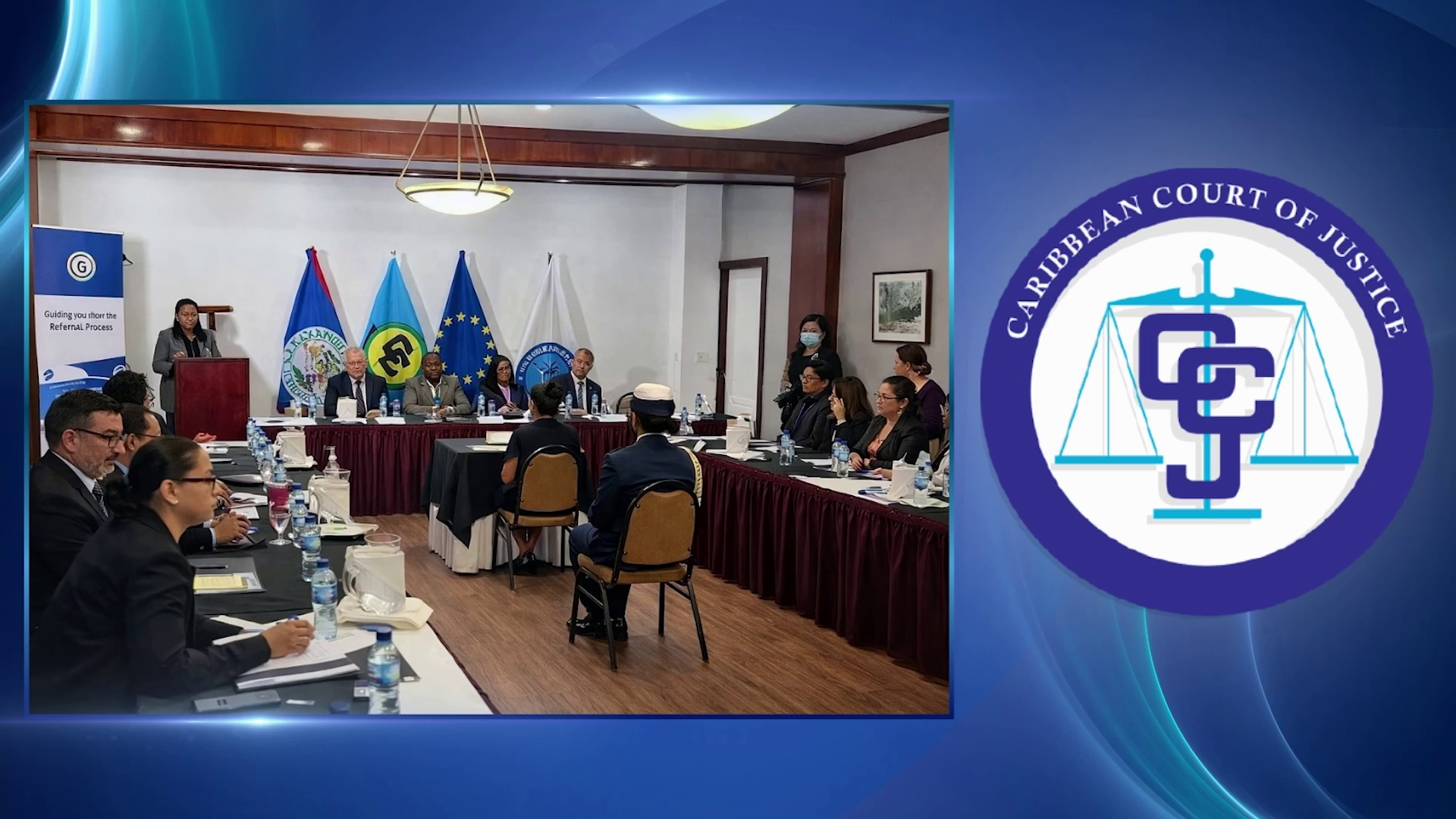
    An explosive investigative report released by Trinidad’s *Sunday Express* has thrown the Caribbean Court of Justice (CCJ) into unprecedented turmoil, after unearthing serious internal accusations from five of the court’s six sitting judges against its president, Justice Winston Anderson.

    The leak of internal judicial correspondence has pulled back the curtain on growing friction within the regional judicial body, which first began as a disagreement over a proposed new judicial dress code. What started as a narrow policy dispute quickly ballooned into a sweeping rebuke of Anderson’s leadership, with the sitting judges leveling three major claims against the CCJ president: that he employs an authoritarian management style, manipulates judicial panel assignments, and has attempted to interfere with the outcome of pending judicial decisions.

    According to details from the published investigation, the judges’ complaints extend even to high-profile cases currently moving through the court. Multiple high-stakes matters originating from Belize were specifically cited in the internal communications between judges as examples of problematic oversight. Beyond the specific cases, judges warned of deepening institutional dysfunction: one judge described the court’s working atmosphere as increasingly “toxic”, while another labeled the top leadership’s decision-making processes as fundamentally anti-democratic.

    In an official statement responding to the public revelations, the CCJ moved quickly to defend its institutional integrity and long-standing commitment to judicial independence. The court argued that the leaked allegations, released stripped of their full contextual background, are open to misinterpretation, and reaffirmed that the body continues to adhere to all core principles of ethical judicial conduct.

    As news of the internal rift spreads across the Caribbean region, legal observers and regional governance analysts are now grappling with one pressing question: Is the CCJ, one of the Caribbean’s most important regional judicial institutions, facing its most severe internal crisis in its institutional history? The unfolding dispute has also raised broader questions about judicial governance and independence across the Caribbean’s regional legal framework, with stakeholders waiting for further transparency from the court to address the growing list of concerns.

  • Elvis Williams Arrested for Faber’s Road Shooting

    Elvis Williams Arrested for Faber’s Road Shooting

    Three separate shooting incidents unfolded across Belize over the first weekend of August 2026, leaving four young men wounded and prompting law enforcement to make one arrest while continuing the search for an additional suspect. The string of violence began on the evening of Saturday, August 8, in the Faber’s Road neighborhood of Belize City, where a local man filed a police report stating that two men on a motorcycle pulled up outside his home, and one of the pair fired a single round in his direction.

    Following an initial investigation, authorities have taken 26-year-old Belize City resident Elvis Williams into custody, formally charging him with abetment to commit aggravated assault. As of the latest update from police, a second suspect linked to the Faber’s Road shooting remains at large, and the investigation into whether the victim was intentionally targeted is still active. Assistant Superintendent Stacy Smith, a staff officer with the Belize Police Department, confirmed that investigators have not yet confirmed if the victim was specifically targeted, noting the victim only reported the shooting and the threat he perceived after the gunfire.

    Separately, two other shooting incidents over the same weekend left four young men with gunshot injuries in the coastal towns of San Pedro and Dangriga. In San Pedro, the violence erupted from a verbal altercation between two groups of men riding golf carts on Lion Street in the early hours of Sunday morning. Francisco Daniel Nah, a 29-year-old licensed store owner who carries a 9-millimeter pistol, told police that the argument escalated to bottles being thrown, and when one of the men from the opposing group reached toward his waist, Nah feared he was drawing a weapon. To protect himself, Nah fired three warning shots into the ground before the opposing group left the area.

    It was only later that afternoon that 20-year-old Rennel Aguilar and 19-year-old Edwin Barco came forward to file reports of gunshot wounds they sustained during the incident. Both men were transported to local medical facilities for treatment, and police are continuing to untangle the details of what exactly occurred.

    In the third incident, two more 19-year-old men were shot in Dangriga on Saturday night. Kevon Higinio and Jim Mendez had just left a local business when two unidentified men approached and fired multiple shots in their direction. Both young men suffered clear gunshot wounds and were transferred to the Southern Regional Hospital for care. As of the latest update, they remain hospitalized in stable condition under medical observation. Police have not announced any confirmed motives for the Dangriga shooting, nor have any suspects been taken into custody.

    Across all three incidents, which left four young men injured in a span of less than five hours, Belizean law enforcement agencies are working to map out the chain of events for each shooting, identify all perpetrators involved, and bring those responsible to justice.

  • Two Men Charged in Separate Drug Busts

    Two Men Charged in Separate Drug Busts

    Law enforcement authorities have filed drug-related criminal charges against two men from distinct regions of the country, stemming from two independently executed police anti-narcotics operations carried out over the weekend.

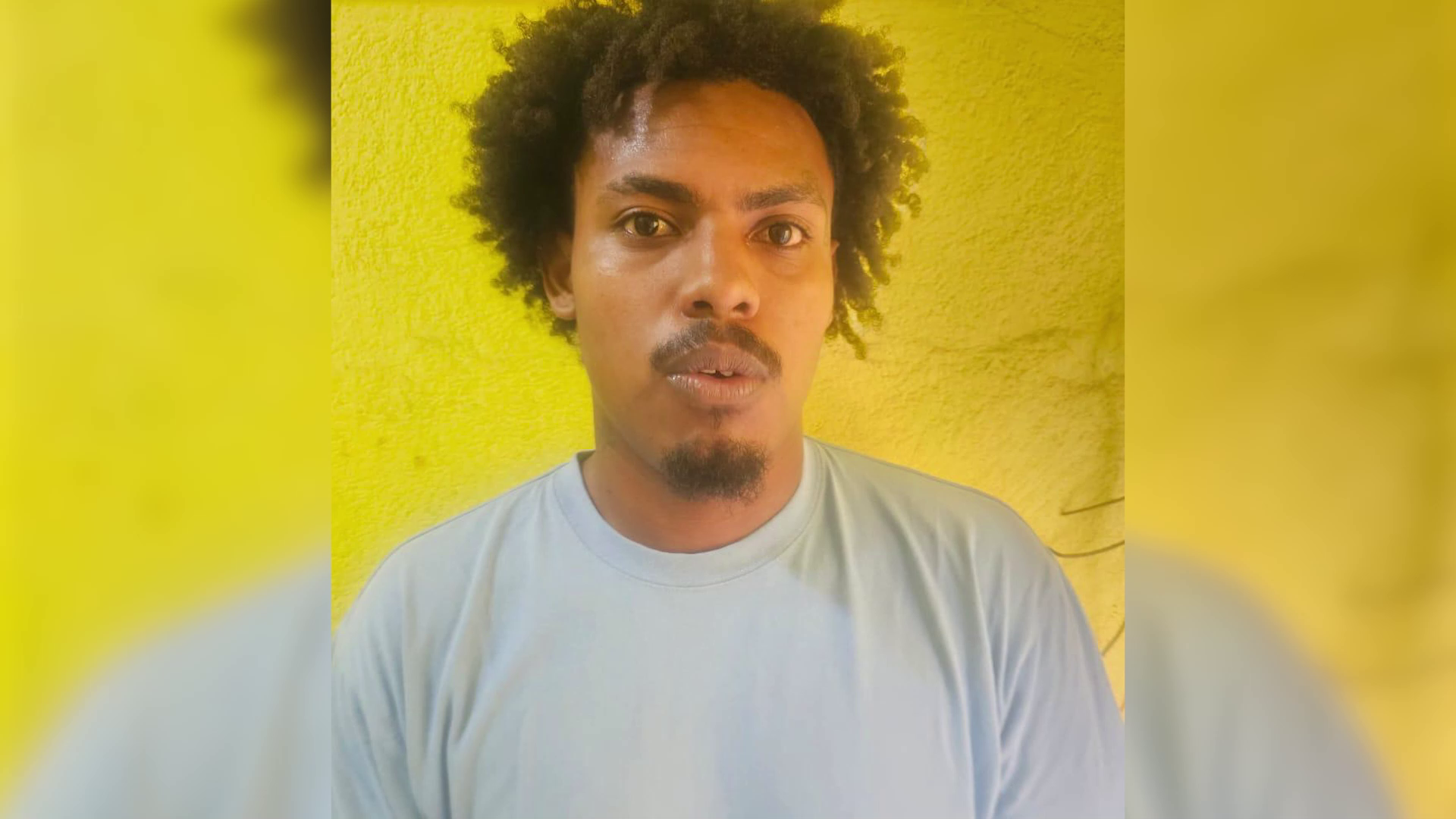
    One of the cases unfolded in Santa Elena, where early Saturday morning patrols led officers to 24-year-old Christopher Bolon. According to official law enforcement statements, a search conducted during the operation uncovered approximately 5.9 grams of material suspected to be cocaine in Bolon’s possession.

    Confirming the details of the arrest in an official statement, ASP Stacy Smith, Staff Officer for the Santa Elena Police Division, outlined the timeline and circumstances of the operation. “Police have formally arrested and charged twenty-four-year-old Christopher Bolon of Santa Elena for the offense of possession of controlled drugs with intent to supply. The arrest follows an operation by the Santa Elena police at just before one o’clock a.m. on Saturday, eighth August, which led to the discovery of five point nine grams of suspected cocaine on the person of Mr. Bolon,” Smith said.

    The second defendant, from a separate area of the country, was also charged in connection to his own alleged narcotics offense, though additional details about the second operation and defendant have not been released in the initial public reporting. This article is adapted from a transcribed broadcast of a regional evening news program, which standardizes spelling for Kriol-language statements when they appear in original coverage.

  • Mark Lopez Busted with Crack in Punta Gorda

    Mark Lopez Busted with Crack in Punta Gorda

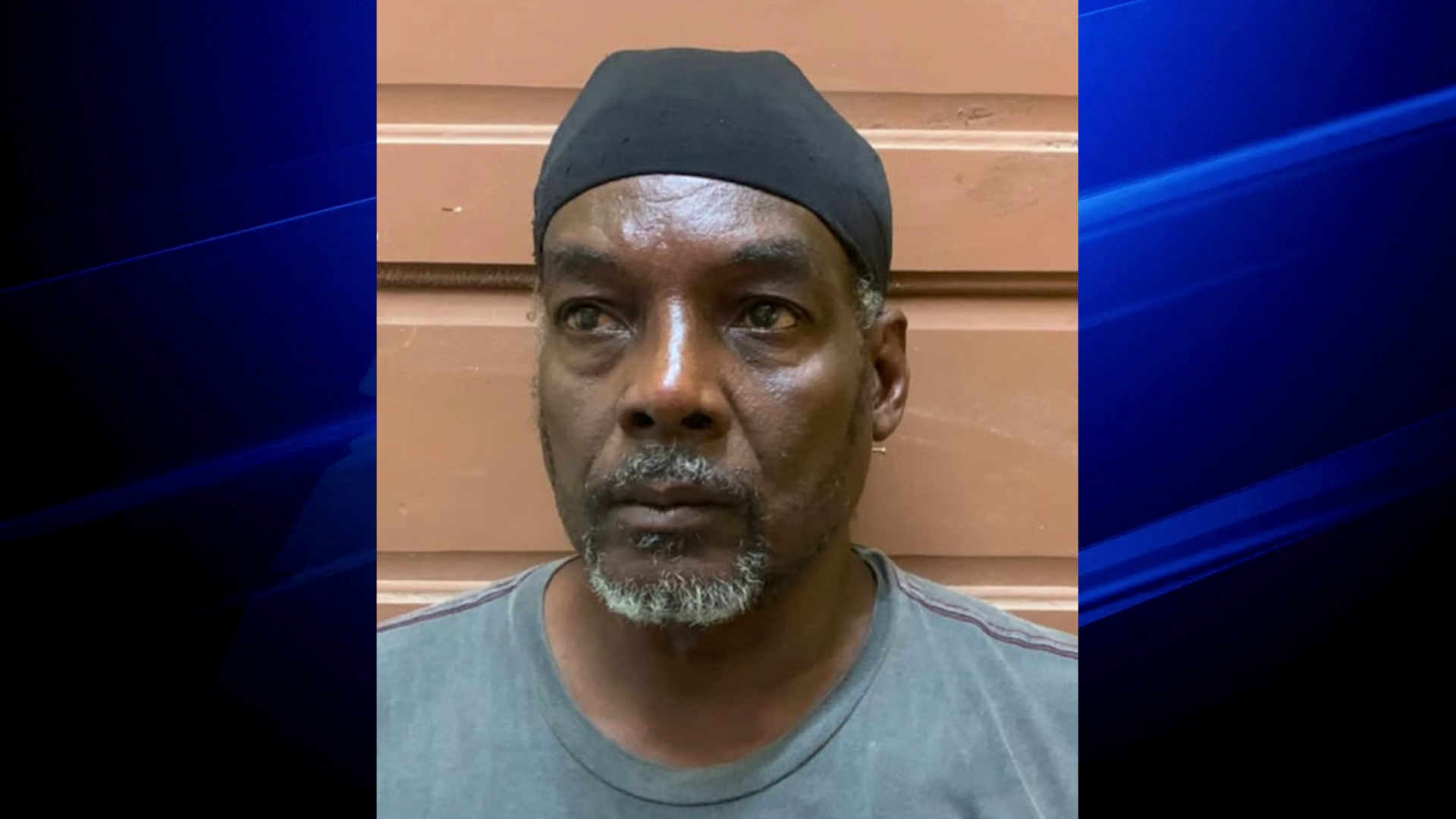
    A 59-year-old Punta Gorda Town resident is now behind bars facing serious drug trafficking charges, following a targeted police search of his home earlier this month that uncovered nearly 18 grams of suspected crack cocaine.

    Mark Lopez faces two separate counts of possession of a controlled substance with intent to supply, after authorities executed a search warrant at his residence on Friday, August 7, according to Assistant Superintendent of Police Stacy Smith, a staff officer with the department.

    Smith confirmed in an official statement that the search turned out two distinct batches of suspected crack cocaine, weighing 10.97 grams and 6.66 grams respectively. Following the seizure, Lopez was formally taken into custody and charged with the two offenses.

    The arrest comes as part of a broader expansion of anti-drug enforcement operations across the entire country. Law enforcement leaders have ramped up these efforts in recent months amid growing evidence that a large share of violent incidents in the nation can be traced back to disputes tied to the illegal drug trade.

    Both of Lopez’s cases are now progressing through the court system, and no additional details about bail or upcoming hearings have been released as of the August 10 reporting date. This report is adapted from a transcript of a televised evening newscast, with all official statements transcribed accurately for publication.