博客

  • Carib Cement mum but stakeholders welcome ease on importation

    Carib Cement mum but stakeholders welcome ease on importation

    Jamaica’s government has moved to address a critical national cement shortage triggered by extreme weather and rising demand by approving temporary import permits for five private companies, a decision that has drawn a mixed response from major stakeholders in the country’s construction sector. Caribbean Cement Company, Jamaica’s dominant domestic cement producer, has so far declined to publicly comment on the policy shift, but two leading construction industry figures have shared divergent perspectives on the short-term relief and long-term implications of the move.

    Norman Horne, executive chairman of ARC Manufacturing Limited, emerged as a prominent supporter of the government’s decision, framing the temporary import expansion as an urgent and necessary step to stabilize Jamaica’s tight cement market. In an interview with the Jamaica Observer on Friday, Horne emphasized that cement is an indispensable commodity across nearly every sector of Jamaican life – even playing a critical role in end-of-life burial arrangements. He explained that the current shortage stems from two overlapping pressures: severe production disruptions at Caribbean Cement caused by Hurricane Melissa in late October 2025 and other weather-related incidents, alongside a sustained surge in national demand that has pushed cement consumption up by between 9 and 15 percent compared to previous levels.

    “Cement forms the backbone of Jamaica’s construction industry and national infrastructure,” Horne noted, as he commended the administration for acting quickly to address the gap. Even as he backed the temporary import plan, however, Horne stressed that the measure should only be a short-term fix. He pointed out that Caribbean Cement has made significant long-term investments in Jamaica’s domestic production ecosystem, leveraging local raw materials to support Jamaican workers, sustain local households, and contribute directly to national gross domestic product. Once market conditions stabilize, Horne said he expects Caribbean Cement to resume its role as the nation’s primary cement supplier, noting that Jamaica’s long-term economic interest lies in expanding domestic production rather than relying on imported goods.

    The temporary import plan was first announced by Senator Aubyn Hill, Minister of Industry, Investment and Commerce, during a post-Cabinet media briefing earlier this week. Hill confirmed that the five approved firms will hold import rights for a six-month period, with allocated tonnages split across the group: Jamaica Logistics International Limited and Hard Rock Cement will each be permitted to bring in 100,000 tonnes of cement, Tank-Weld Metals and Island Concrete Limited each receive a 60,000-tonne quota, and Gore Developments Limited will be allowed to import 20,000 tonnes. In addition to the new permits granted to the five companies, Hill also announced an expansion of the existing import quota for Buying House Company Limited – Jamaica’s long-standing authorized cement importer, which has held import rights since 2006 – by an additional 150,000 tonnes.

    Richard Mullings, president of the Incorporated Masterbuilders Association of Jamaica, told the Jamaica Observer that the organization welcomes the addition of new supply and limited market competition that will ease immediate pressures on contractors. Like Horne, Mullings acknowledged that the temporary measure will address urgent near-term demand gaps, but he raised pointed questions about the government’s lack of a clear long-term strategy to guarantee a consistent, sustainable, and resilient domestic cement supply.

    Mullings noted that while the government has framed the new imports as a strictly short-term intervention, he has yet to see any formal plans or monitoring mechanisms to ensure that quota holders meet their supply commitments, or to prevent a repeat of the damaging shortages the country is currently experiencing. His organization has already submitted formal correspondence to Minister Hill seeking clarification on these monitoring mechanisms, as well as details on how the government will uphold existing policies designed to protect local contractors. Mullings argued that the administration has a responsibility to enforce the statutory margin of preference already written into regulation that is intended to protect domestic contractors’ market share in Jamaica’s local economy. Going forward, industry leaders will be watching closely for the government to release its long-term strategy for shoring up domestic cement production and reducing the country’s vulnerability to future supply shocks.

  • Jamaicans in US raise concerns over TCN deal

    Jamaicans in US raise concerns over TCN deal

    Amid growing scrutiny from the Jamaican diaspora community in New York City, a coalition of influential community leaders, legal experts, and former public officials have publicly come out against the Jamaican government’s proposed third-country nationals (TCNs) migration agreement with the United States, demanding full transparency and public consultation before the deal moves forward. The proposed arrangement would require Jamaica to accept groups of up to 25 non-Jamaican migrants that the U.S. seeks to deport from its territory over two-week periods, with an automatic pause on new arrivals once the total number of TCNs on the island exceeds 10. Third-country deportation frameworks, an increasingly controversial U.S. immigration policy, allow American authorities to transfer migrants the U.S. wants to remove to nations that are not the individual’s country of origin, even in cases where the person has never visited the host country, has no personal or familial ties there, and cannot speak the local language. Unlike prior public TCN agreements struck by the U.S. with other African and Caribbean nations, the Jamaican government has not yet confirmed whether the deal will include financial compensation to Kingston for accepting the deportees. Similar deals in recent years have included explicit multi-million-dollar payments: the Eswatini government agreed to accept up to 160 TCNs in exchange for $5.1 million earmarked for border and migration management infrastructure, while Rwanda secured a $7.5 million payment to accept up to 250 TCNs, and Equatorial Guinea also reportedly received a $7.5 million compensation package for its own agreement. In an effort to address gaps in transparency, Jamaican National Security Minister Dr. Horace Chang has attempted to ease public concern by noting that Jamaica will enforce two key conditions for all incoming TCNs: all deportees must be English-proficient, and none will be accepted if they have a prior criminal conviction. Despite these reassurances, opposition in the large Jamaican diaspora community in the U.S. remains fierce, with critics warning of unaddressed legal, security, and social risks that the government has failed to publicly acknowledge. Leading the charge is Winston Tucker, a prominent New York-based immigration attorney, who told reporters that preliminary indications suggest the deal will operate under the controversial U.S. “Shadow Docket” system, an expedited legal framework created to bypass lower court injunctions and send deportation cases directly to the U.S. Supreme Court for final review. As of the latest update on June 16, 2026, Tucker noted that the Supreme Court has not yet issued a ruling on the legality of third-country transfers, a policy that was not permitted under prior U.S. immigration precedent. He warned that Jamaica could face a severe legal and logistical bind if the Supreme Court ultimately strikes down the entire third-country deportation framework. “Hopefully the court will address the matter before its current session ends, but if the court rules the system unlawful, where does that leave Jamaica?” Tucker asked. He argued that Jamaican leadership should uphold longstanding migration principles, noting that U.S. communities have already rejected similar arrangements, and questioned why the migrants are not being directly deported to their countries of origin instead of being rerouted through a third nation. Wayne Golding, another well-known U.S.-based immigration law expert, echoed Tucker’s opposition, warning that the untransparent deal could quickly become an untenable burden on Jamaica’s already strained national security system. “It is unclear if the full implications of this agreement have been properly considered, but Jamaica could be stepping straight into a tangled, intractable social and legal mess if this plan moves forward,” Golding said. He joined the call for full public release of the bilateral memorandum of understanding (MOU) between Washington and Kingston, arguing that broad public consultation is required before any final decision is made. Dwight P Bailey, a New York-based former member of the Jamaica Constabulary Force, added that the MOU should never have been considered in the first place, raising urgent questions about basic logistics: where TCNs will be housed in Jamaica, what security protocols will be put in place to manage the new arrivals, and what will happen if the migrants’ home countries ultimately refuse to accept them for permanent resettlement. Additional opposition has come from faith and community leaders: Dr. Reverend Marilyn Grant, founder of Connecticut-based Women for Christ Outreach Ministries, called the Jamaican government’s decision to pursue the deal “absurd.” Dr. Rupert Francis, who leads the Diaspora Task Force on Crime Intervention and Prevention, also criticized the arrangement, saying it is clear that insufficient planning has gone into the proposal. Francis raised three critical unaddressed questions: whether Jamaica has the capacity to fully vet all incoming TCNs for security risks, where the arrivals will be housed during their stay on the island, and how Jamaican authorities will handle cases where TCNs file for asylum during their time in the country.

  • Wide Smiles for 25 infant school students

    Wide Smiles for 25 infant school students

    In Port Maria, a coastal town in Jamaica’s St Mary parish, a collaborative public health effort is laying early groundwork for better oral hygiene among young learners, bringing together local education leaders and a private dental practice to fill a longstanding gap in children’s health education.

    Twenty-five students at Port Maria Infant School are now building foundational knowledge of daily oral care through the new program, developed by the school’s guidance department in partnership with local clinic Wide Smiles Dental. During an interactive on-site session held Thursday, a team of dental professionals walked the young students through core principles of keeping teeth and gums healthy. The hands-on workshop covered proper brushing methods, explained the critical role of flossing in preventing decay, and broke down how frequent consumption of sugary snacks contributes to common dental problems. Using oversized dental models to make the lesson easy for young children to follow, participants got the chance to practice their new skills in an age-appropriate, engaging environment.

    Dorian Murphy, the school’s guidance counsellor, shared that the program grew out of her direct observation of unmet need in the school community. Speaking to the Jamaica Observer, Murphy explained that many local families lack awareness of basic oral health guidance, and often do not prioritize daily dental care in early childhood. She emphasized that healthy teeth support far more than just dental health: they impact children’s self-confidence, speech development, and overall long-term physical well-being. By introducing these lessons to infants, Murphy noted, educators can help establish positive habits from the very start of a child’s educational journey. Looking ahead, Murphy plans to expand the program to reach more students when the new school term begins, and add sessions that bring parents into the learning process to reinforce healthy habits at home.

    Dr. Ajani Blake, a representative from Wide Smiles Dental, echoed Murphy’s observation that oral health education remains widely under-delivered across Jamaica. He expressed enthusiasm for the partnership, noting that widespread public misconception means most people only seek dental care when they already experience pain or damage, rather than pursuing preventive care. Introducing these lessons in early childhood, he argued, is one of the most effective ways to shift that culture long-term.

    Dr. Blake also shared key guidance for parents: adults should take full responsibility for brushing and caring for their children’s teeth until the child turns eight years old. After that age, children can begin brushing independently, but should still receive regular supervision and guidance from parents to ensure they are practicing good technique.

    This program is not the first community outreach effort from Wide Smiles Dental. The clinic has already organized multiple similar initiatives across St Mary and other Jamaican parishes, and Dr. Blake noted that the clinic is eager to continue expanding this work. It regularly partners with outside organizations, including Jamaica’s Ministry of Health, to run community oral education programs, and Blake emphasized that consistent outreach is critical: demand for accessible oral health education remains high across every region of the country.

  • Defining deportees

    Defining deportees

    A heated public debate has erupted around a new bilateral memorandum of understanding (MOU) between Jamaica and the United States focused on the transfer of third-country nationals (TCNs), with top Jamaican officials doubling down on efforts to clarify that the incoming individuals are not deportees. Prime Minister Dr. Andrew Holness used a public social media statement to reinforce the administration’s core position, emphasizing that Jamaica has not agreed to accept foreign deportees removed from the United States under this new framework.

    The controversy ignited just days after Jamaica’s Minister of National Security Dr. Horace Chang publicly confirmed that the agreement had been finalized, triggering widespread scrutiny over the terms and scope of the transfer arrangement. Chang has repeatedly pushed back against labeling the transferred individuals as deportees, a distinction that Holness has now publicly reaffirmed.

    In his statement, Holness made clear that the only deportees Jamaica currently accepts are Jamaican citizens returning to their home country under longstanding existing bilateral agreements between the two nations. This clarification followed detailed comments Chang provided during a post-Cabinet media briefing, where he outlined the strict operational limits built into the new MOU. Under the terms of the deal, Jamaica will accept no more than 25 TCNs every two weeks, and all transfers will be paused immediately if more than 10 transferred individuals remain on the island at any given time.

    Chang explained that the arrangement applies exclusively to TCNs who have already exhausted all legal pathways to remain in the United States, but whose home countries are either unwilling or unable to take them back. He stressed that the term “deportee” does not apply here because a deportation formally involves sending an individual back to their country of citizenship, so framing these transit migrants as deportees creates a misleading public perception. To address public concerns, Chang confirmed that every potential transferee will undergo rigorous vetting before Jamaica approves their entry, with full access to identity, medical, and criminal history records provided in advance.

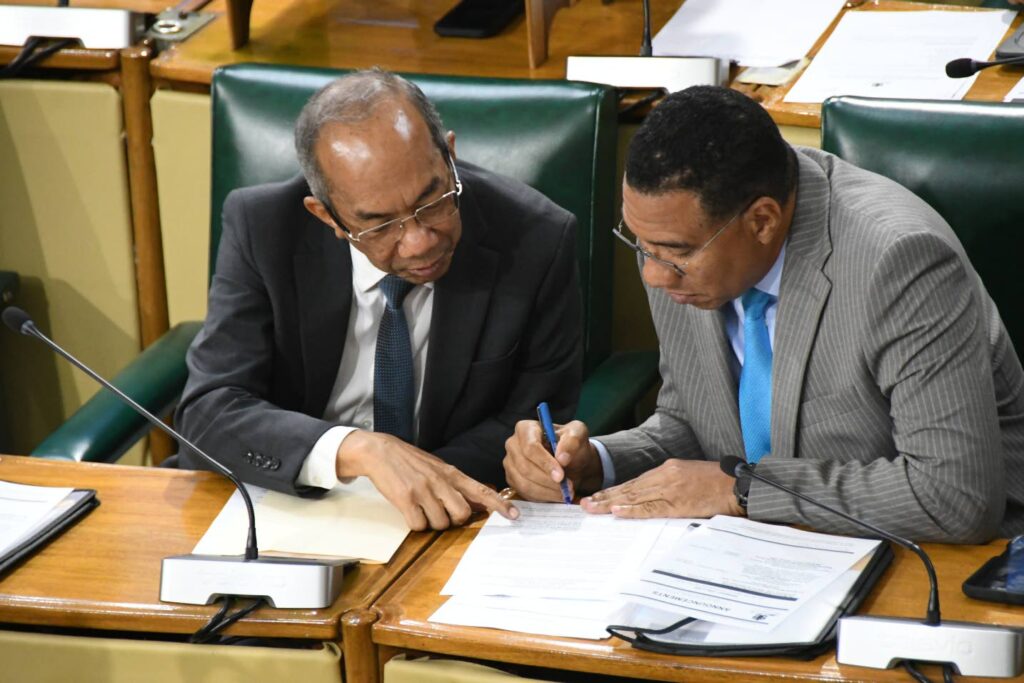
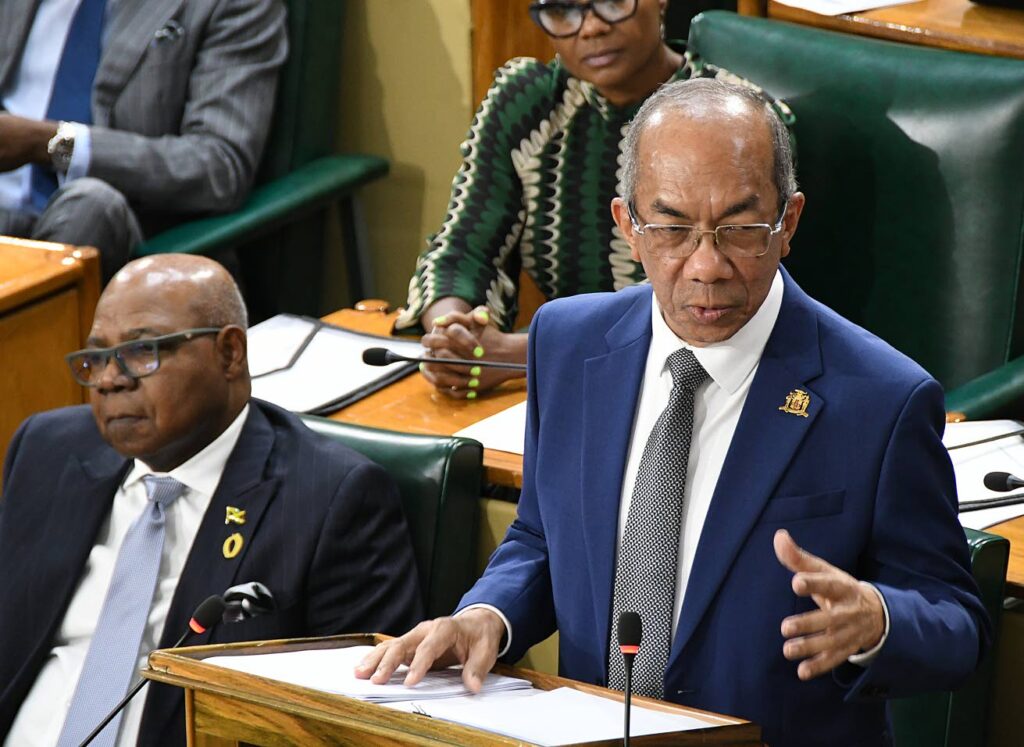
    Speaking during a sitting of Jamaica’s House of Representatives, Chang further clarified that the MOU is not a permanent resettlement program. He noted that transferred individuals will only stay in Jamaica temporarily as the government coordinates their onward travel, whether that means eventual repatriation to their country of origin or transfer to another appropriate third country. Jamaica also retains full unilateral discretion to approve or reject any individual transferee on a case-by-case basis, he added.

    However, the Jamaican government’s strict distinction between TCNs and deportees has been called into question by global human rights group Amnesty International. The London-based organization, which works globally to protect migrant and refugee rights, defines third-country removals as a policy that sends people the U.S. wants to expel from its territory to countries that are not their own, regardless of their ultimate destination. Amnesty has also flagged broader longstanding concerns about third-country removal policies, including risks to due process for migrants and potential gaps in humane treatment after they arrive in the transit country.

  • Caribbean Voices Must Be Heard in Global Climate Talks, Says Minister Joseph

    Caribbean Voices Must Be Heard in Global Climate Talks, Says Minister Joseph

    Against the backdrop of the 2026 Berlin Climate Mobility Forum, a top Caribbean official is amplifying a long-silenced call: Small Island Developing States (SIDS) like Antigua and Barbuda must be granted far greater influence in global climate governance, rather than being sidelined from decisions that shape their very survival.

    In a post-forum interview, Michael Joseph, who serves as Antigua and Barbuda’s Minister of Health, Wellness, Environment and Civil Service Affairs, drew a stark contrast that underscores the injustice at the heart of the global climate crisis. While Caribbean nations collectively contribute less than a fraction of one percent of the world’s total greenhouse gas emissions, they bear a wildly disproportionate share of climate harm, from crippling extreme weather to slow-onset disasters like rising sea levels that threaten to erase entire territories.

    Joseph emphasized that this gap in responsibility is matched by a gap in representation: even as climate-induced displacement and mobility emerge as defining global challenges of the 21st century, Caribbean voices remain drastically underrepresented in international negotiations focused on adaptation and climate-driven migration. “Caribbean voices are diminished even more,” Joseph noted, arguing that the region cannot afford to be an afterthought in policy processes that will directly determine the future of its people and nations.

    The region’s unique vulnerability is on clear display every year, Joseph pointed out: for six months annually, Caribbean communities brace for the destructive force of Atlantic hurricanes, which can wipe out years of development gains in a matter of hours. He cited recent examples across the region, including Antigua and Barbuda and Dominica, where single storm events have caused catastrophic damage to infrastructure, crippled local economies, and reversed hard-won progress in poverty reduction and public service expansion.

    For SIDS across the Caribbean, climate risk is not a distant hypothetical. “For many of us, it is not a matter of if, but who is going to be impacted,” Joseph said, framing the urgency of the region’s demand for a permanent seat at the table when global leaders negotiate climate financing and resilience-building measures. Without a direct voice in these discussions, he argued, policies are often designed that fail to address the unique needs of small island nations, leaving communities more exposed to preventable harm.

    To address the systemic barriers that block SIDS from accessing critical climate support, Joseph renewed calls for the broader adoption of the Multidimensional Vulnerability Index (MVI) by international financial institutions. The minister explained that traditional metrics used to determine eligibility for grants, concessional loans, and other climate-related funding often fail to capture the full scope of small island states’ inherent vulnerability. These outdated frameworks force many SIDS into unfair disadvantage, locking them out of the affordable support they need to prepare for and recover from climate disasters.

    Joseph closed by reiterating the region’s core demands: increased climate finance tailored to the needs of SIDS, formal and meaningful representation in global climate decision-making bodies, and targeted international support to protect the livelihoods, distinct cultures, and traditional ways of life that are now at risk due to rising global temperatures.

    Held in Berlin, the annual Climate Mobility Forum gathers policymakers, academic researchers, and leaders of international organizations to address the rapidly growing challenge of displacement and migration triggered by climate change, a crisis that is projected to displace hundreds of millions of people globally by mid-century if decisive action is not taken.

  • Derde helft WK 2026: Dag 9 – VS en Brazilië in actie, Mexico verzekerd van knock-out

    Derde helft WK 2026: Dag 9 – VS en Brazilië in actie, Mexico verzekerd van knock-out

    The 2026 FIFA World Cup group stage continues Friday with four high-stakes matches spread across host cities across the United States, as tournament favorites and underdogs alike fight for precious spots in the knockout round. Mexico has already made history as the first team to punch its ticket to the next round, while off-pitch developments have cast both celebration and concern over co-host Canada’s breakout tournament run.

    Four matches on Friday’s schedule will shape the fate of multiple groups. The home United States side faces Australia in Seattle, with both teams entering the clash off opening-match wins, looking to move one step closer to knockout qualification. In Foxborough, Massachusetts, Scotland will square off against Morocco, a repeat of their 1998 World Cup group stage encounter where Morocco claimed a dominant 3-0 victory. Morocco has built a strong record against European opposition at recent World Cups, with nine of their 12 matches since 2018 coming against European sides, and will look to continue that form against Scotland. In Philadelphia, five-time World Cup champions Brazil will chase their first win of the tournament against Haiti, a side still reeling from an opening-match defeat to Scotland. Brazil holds an unblemished 3-0 record against Haiti in all prior meetings, having scored 17 goals while conceding just one, and enters the match as the clear favorite. The day’s action closes with a late-night kickoff between Turkey and Paraguay in Santa Clara, California – the first ever World Cup meeting between the two sides, who previously played out a 0-0 friendly draw back in 1995.

    Co-host Canada’s biggest ever men’s World Cup win is overshadowed by a devastating injury
    Canada’s men’s national team earned the most lopsided and historic victory in its program’s history on Thursday, defeating Qatar 6-0 at Vancouver’s BC Place to move to the brink of knockout qualification. But the jubilant celebrations were cut short by a severe injury to star central midfielder Ismael Kone.

    The 24-year-old was stretchered off the pitch in the second half following a dangerous tackle by Qatar’s Assim Madibo, who received a red card for the challenge. Canadian captain Stephen Eustaquio said the severity of the injury was immediately apparent, and head coach Jesse Marsch confirmed after the match that Kone was rushed to hospital for surgery after scans confirmed fractures to both his fibula and tibia. The midfielder faces multiple months of rehabilitation to recover.

    “Everyone was devastated when it happened,” Marsch told reporters. “But we found a way to stay focused. We knew Ismael would want us to finish the job.”
    Marsch added that Madibo visited the Canadian locker room after the match to apologize to Kone, and said he did not believe the tackle was intentional. “I don’t think he meant to make such a hard challenge, I don’t blame him,” Marsch said. “But I don’t understand the reaction from their bench.” The red card for Madibo left Qatar with nine men for the remainder of the match, after defender Homam El Amin was also sent off in the first half for a professional foul.
    Despite the emotional blow, Canada pushed on to secure the 6-0 win, the first five-goal victory by a CONCACAF side in World Cup history, and now sits firmly in position to advance to the knockout round in its first home tournament.

    Mexico becomes first team to lock in knockout round spot
    Mexico claimed a 1-0 victory over South Korea on Thursday, securing back-to-back wins to open group play and become the first nation to officially qualify for the 2026 World Cup knockout stage.

    Other off-pitch tournament developments
    The 2026 World Cup has already produced no shortage of memorable off-pitch stories, from a viral fan anthem to updates on global soccer icons. Bosnian side Bosnia and Herzegovina’s tournament run has been accompanied by an unexpected cultural phenomenon: a reworked World Cup anthem that began life as a satirical track about emigration. Sarajevo-based band Dubioza Kolektiv reworked their 2011 hit *USA* into *I Am From Bosnia, Take Me to America*, transforming a song that originally poked fun at the desire to leave the Balkans for the United States into an ode to Bosnia and Herzegovina’s long-awaited return to the World Cup. The reworked track has quickly gone viral among fans, racking up nearly 2 million views on YouTube in just a few weeks, and has become the unofficial soundtrack of the country’s tournament run, with band members saying they are stunned by how fans have embraced the track as a rallying cry of national pride.

    Family of Argentine icon Lionel Messi has shared a positive health update for Jorge Messi, the star’s father, who recently faced an undisclosed medical issue. The Messi family announced Thursday that Jorge is recovering well, his condition is progressing favorably under medical supervision, and asked for privacy as he continues his recovery. The update comes after widespread speculation over Jorge’s health following Lionel Messi’s emotional goal celebration in Argentina’s opening match against Algeria, where the captain later confirmed he was navigating a difficult personal matter unrelated to football.

    The United States, meanwhile, is waiting on a fitness update for captain Christian Pulisic, who picked up a left calf injury in the opening half of the team’s opening match against Paraguay. Pulisic has done individual rehabilitation work since being substituted at half-time, and coach Mauricio Pochettino said his participation in Friday’s match against Australia remains uncertain. A final decision will be made following consultation with the team’s medical and performance staff, Pochettino added. “We’ll see,” he said. “If he’s not available tomorrow, he’ll be ready for the next match.” Pulisic remains a critical piece of the U.S.’s tournament run, and his fitness is being closely monitored as the co-host chases a spot in the knockout round.

    Off the pitch in Colombia, Liverpool star Luis Diaz has become a source of inspiration and opportunity for his hometown of Barrancas, where his impact extends far beyond the football pitch. Through his charitable foundation, Diaz has funded new artificial grass pitches and community sports facilities for the region, which has long lacked resources for young aspiring players. Diaz’s father, Luis Manuel Diaz, recalled recognizing his son’s natural talent from an early age: “He was so agile, so fast. He loved getting past defenders and always wanted the ball at his feet,” he said. “I knew he could make it as a professional, but I never imagined he’d reach the level he has today.” Even after facing significant personal challenges, including Luis Manuel’s 2023 kidnapping, the Diaz family has remained deeply committed to supporting their home community. For young local players, Diaz has become a symbol of what is possible: “What happened to me is in the past,” Luis Manuel said. “What matters now is that there are kids here who dream of becoming the next Luis Diaz. We have to help more stories like his happen here.”

    With all 48 participating teams having now played their opening group stage matches, the race for knockout spots is taking shape. While Mexico has already booked its place, the fight for remaining spots remains wide open in nearly every group. Co-hosts Canada and the United States sit in strong positions after strong opening results, while defending champions Argentina and other pre-tournament favorites have also impressed in their early outings.

  • Over 100 hospitality professionals complete Caribbean Supercharged Training in Grenada

    Over 100 hospitality professionals complete Caribbean Supercharged Training in Grenada

    Grenada’s tourism sector has marked a major milestone in workforce development, with more than 100 local hospitality professionals successfully completing the second level of the Caribbean Supercharged Training Series, a collaborative upskilling initiative led by the Caribbean Hotel and Tourism Association Education Foundation (CHTAEF) and the Tourism Enhancement Fund of the Grenada Hotel and Tourism Association (GHTA).

    The industry-focused training program was designed to address core skill gaps across the regional hospitality sector, with coursework structured around three high-priority competency areas: supervisory and management leadership, Hazard Analysis and Critical Control Points (HACCP) food safety protocols, and customer service excellence through the specialized “The Big Score: Service with a Difference” curriculum. All sessions were led by experienced industry facilitators Louise John and Suzanne Brooks, with on-the-ground support from two prominent local Grenadian hotels, Point Salines Hotel and True Blue Bay Hotel, which served as local program partners.

    A formal closing ceremony to honor the graduating cohort was chaired by Arlene Friday, Chief Executive Officer of GHTA, who opened the event by welcoming participating learners, program partners, lead trainers, cross-sector tourism stakeholders, and media representatives. In her opening address, Friday praised the graduates for their consistent dedication to ongoing professional development and self-improvement, emphasizing that the collective upskilling effort directly elevates three critical pillars of the destination’s tourism industry: leadership capacity, standardized food safety, and customer service excellence. “To the participants: you came eager to learn, you engaged fully, and you committed to change,” Friday stated in her remarks. “That commitment matters — not just to your individual properties, but to the reputation and long-term future of our entire Grenadian destination.”

    Elvis Lewis, President of GHTA, used his remarks to spotlight the critical role of the GHTA Tourism Enhancement Fund in enabling accessible, industry-aligned training for local hospitality workers, and urged graduates to translate their new knowledge and skills into tangible improvements in their daily work, rather than treating the certification as a final career milestone. “The certificate you receive today is not the destination; it is a passport to the next phase of your professional and personal growth,” Lewis told the graduating cohort.

    A message of encouragement from CHTAEF Chair Karolyn Troubetzkoy was delivered on her behalf by Maxine Pierre, while official remarks from Senator the Honourable Adrian Thomas, Grenada’s Minister for Tourism, the Creative Economy and Culture, were presented by Chief Planning Officer Petra Fraser. The minister’s statement called on graduates to embrace the training as a starting point for transformative change across the sector. “Let this training be the beginning of a new attitude, a new confidence, a new standard, and a new commitment to excellence,” the statement read. “The tourism industry of tomorrow will not be built by buildings alone, beaches alone, or marketing slogans alone. It will be built by trained people, confident people, creative people, disciplined people, and patriotic people who understand that every visitor interaction is an opportunity to lift the image of Grenada.”

    This second iteration of the Caribbean Supercharged Training Series underscores the shared, long-term commitment of CHTAEF, the GHTA Tourism Enhancement Fund, and local industry partners to investing in Grenada’s tourism workforce and raising the bar for the overall visitor experience on the island.

  • ECAB Advises Customers Visa and Mastercard Cards No Longer Accepted in Cuba

    ECAB Advises Customers Visa and Mastercard Cards No Longer Accepted in Cuba

    Travelers and businesses planning financial activity in Cuba are facing a major shift in payment options, as all Visa and Mastercard branded cards are no longer accepted for transactions across the country. The change stems from a recent United States Executive Order signed into effect on May 1, 2026, which has triggered operational restrictions for the international financial partner that previously handled all credit card processing for Cuban financial institutions.

    After the new executive order entered force, Cuba’s Central Bank issued a formal notification confirming that the third-party processing partner has significantly scaled back its operations in the jurisdiction, leaving no infrastructure to support Visa and Mastercard transactions. This suspension applies to all card types issued by the Eastern Caribbean Amalgamated Bank (ECAB) and other issuing institutions, including standard credit cards, debit cards linked to personal checking accounts, and prepaid cards loaded for travel.

    ECAB and other card-issuing institutions have issued urgent advisories to their customer bases urging anyone with upcoming travel or business plans in Cuba to arrange alternative payment methods well in advance of their departure. Financial leaders note that failing to prepare alternate payment options could lead to significant disruptions to travel plans, business operations, and daily purchases during a stay in Cuba.

    In their advisory, bank management apologized for the unplanned disruption this policy change creates for cardholders, emphasizing that the suspension is a result of external regulatory changes outside of the issuing bank’s control. They expressed gratitude for customers’ patience and understanding as the global financial system adjusts to the new policy framework. Customers with questions about the change or concerns about upcoming travel are encouraged to reach out to their bank’s customer support team for further guidance.

  • Tropical Storm Arthur Causes an Estimated $4-6 Billion in Total Damage and Economic Loss

    Tropical Storm Arthur Causes an Estimated $4-6 Billion in Total Damage and Economic Loss

    In late summer, a relatively weak tropical system has left a staggering mark on the U.S. Gulf Coast, with preliminary assessments from AccuWeather forecasting total damage and economic losses ranging between $4 billion and $6 billion. Tropical Storm Arthur, which spent less than 24 hours officially classified at tropical storm strength after forming off the Texas coast, unleashed catastrophic, life-threatening weather across a multi-state stretch from Texas to the Florida Panhandle, with Louisiana and Mississippi bearing the brunt of the destruction.

    Record-shattering rainfall amounts overwhelmed local infrastructure across the region. In Cottonport, Louisiana, the storm dumped a total of 31.56 inches of rain over just a few days, while nearby Plaucheville and Simmesport recorded 24.47 inches and 20.66 inches respectively. Even in Carriere, Mississippi, totals reached 15.75 inches, far exceeding the capacity of local drainage systems. The extreme precipitation sparked widespread flash flooding that closed dozens of roads, inundated hundreds of homes and businesses, and forced emergency teams to carry out dozens of high-water rescues. As of 7 a.m. Friday, at least two fatalities have been confirmed, two tornadoes have been recorded in Louisiana, and additional twisters are expected to be documented as assessment teams reach isolated areas.

    AccuWeather’s preliminary estimate accounts for every dimension of the storm’s economic footprint, from direct physical damage to homes, businesses and public infrastructure to indirect costs including extended business interruptions, hundreds of flight delays, prolonged power outages, supply chain disruptions, crop losses, emergency evacuation and response expenses, and ongoing recovery costs. AccuWeather experts note the final total could climb even higher, as many hard-hit areas have not yet submitted full damage reports, and lingering impacts continue to disrupt local communities weeks after floodwaters first rose.

    “Flooding, travel disruptions, power outages and business interruptions can quickly add up to billions of dollars in impacts for families, businesses and communities,” said Dan DePodwin, AccuWeather Vice President of Forecasting Operations. “Arthur is another reminder that tropical systems do not need to reach hurricane strength to cause significant, expensive and even deadly damage and economic losses.”

    Flooding was by far the costliest impact of the storm, a pattern DePodwin says is common for weaker tropical systems that move inland. To better communicate the full scope of a storm’s threat beyond just wind speed, AccuWeather used its proprietary RealImpact™ Scale for Hurricanes to rate Arthur a 2, due to its life-threatening flooding. This differs from the traditional Saffir-Simpson scale, which only ranks storms by wind speed and would have classified Arthur as a low-level event before dissipation.

    “Arthur is a clear example of why the AccuWeather RealImpact Scale for Hurricanes is so important. Instead of classifying a storm’s threat by just its wind speed, the scale accounts for the other many threats that are caused by tropical systems. Storm surge, and in the case of Arthur flooding, are typically responsible for more widespread impacts than wind damage alone and more people are killed by water than wind in tropical systems. Some of the most destructive flood events in our nation’s history were caused by tropical storms or unnamed tropical rainstorms,” DePodwin added.

    AccuWeather’s damage estimate uses independent, proprietary methodology that incorporates both insured and uninsured losses, drawing on a wide range of public and proprietary data sources to capture both short-term and long-term economic impacts. The company has been a leading provider of preliminary disaster damage estimates since 2017, when its widely cited early assessment of Hurricane Harvey helped the public and policymakers grasp the full scale of that catastrophic event. Unlike many partial assessments that only count insured property damage, AccuWeather’s methodology includes lost wages and business income, cleanup and emergency management costs, long-term disruptions to tourism and transportation, and even unreported medical and mortality costs that are often omitted from official early estimates.

  • OPINION: Is Extending and Expanding the Windfall Tax the Correct Answer?

    OPINION: Is Extending and Expanding the Windfall Tax the Correct Answer?

    A fresh debate over the future of Antigua and Barbuda’s temporary windfall tax has erupted following a June 2026 opinion piece calling for the policy’s extension and expansion to advance national education goals. Responding to Professor C. Justin Robinson’s argument that the proposal deserves full national deliberation, a veteran policy analyst with over 35 years of decision-making experience has pushed back against the rushed framing of the conversation, while calling for greater transparency and dispassionate cost-benefit analysis before any final policy vote.

    The analyst emphasizes that effective problem-solving does not prioritize being seen as correct, but rather making the right, contextually informed decision. A robust decision-making process requires first defining clear, measurable outcomes, diagnosing why current systems are falling short, evaluating emerging trends and alternative solutions, and only then deliberating on a path forward. In the analyst’s view, the current conversation around the windfall tax has inverted this process: the solution—extending and expanding the levy—has been presented to the public before any clear consensus on the underlying problem has been established.

    While the analyst acknowledges alignment with some of the equity-focused education outcomes Professor Robinson aims to achieve, they reject the windfall tax as the appropriate funding mechanism. They also note a structural conflict of interest: Professor Robinson is affiliated with the University of the West Indies (UWI), the primary beneficiary of the tax revenue, so full objectivity on the policy cannot reasonably be expected.

    For context, the windfall tax was first introduced in 2019 as a three-year temporary measure to fund the construction of UWI’s Five Islands Campus. Levied at a 10% rate on net profits, it applies exclusively to private businesses operating in banking, telecommunications, insurance, and petroleum distribution—on top of the existing 25% corporate tax already paid by these firms. Despite its original temporary mandate, the government has repeatedly extended the tax without public justification, a move the analyst describes as convenient and dishonest.

    Critically, the analyst argues that the sacred cow of public education should not shield the proposal from rigorous scrutiny. Before committing scarce public resources to expanded education funding, policymakers must first answer a fundamental question: what measurable return on public investment do Antiguans and Barbudans expect from expanded education spending? Is the goal to produce more tourism-sector workers, legal professionals, or tech and AI specialists? Without clear outcome metrics, strategic budget allocation is impossible.

    Limiting their critique to the funding components of the proposal, the analyst has laid out nine core questions that demand public answers from the government before any vote to extend and expand the tax. These include: what is the annual revenue yield of the current tax, and how is that money currently spent; how much additional revenue does the new education plan require; what happened to revenue from the existing Education Levy; with a total national budget exceeding EC$2 billion, can funds be reallocated from existing priorities instead of raising new taxes; how is the government addressing widespread public sector waste to free up additional revenue for education; how long can the increased tax burden be sustained before it pushes struggling private firms out of business, particularly when they face unfair competition from tax-exempt state-owned enterprises and ongoing global economic shocks; what is the plan to make new education initiatives self-sustaining after the windfall tax is eventually withdrawn; when will state-owned enterprises operating in the taxed sectors start contributing their fair share to the fund, and is it fair to require private firms to compete against state competitors that do not pay the levy; and finally, how will expanded funding guarantee improved education quality, rather than just more spending with no accountability for outcomes.

    The analyst rejects Professor Robinson’s framing that policymakers should only focus on what new programs the tax can fund, ignoring the concept of opportunity cost and the growing financial strain already faced by private sector businesses. No discussion has yet addressed how expanding the tax net will push up business costs, which will inevitably be passed on to consumers, already strained by a per-capita annual public spending burden of $20,000. The analyst also questions whether the country can afford to expand public spending programs without risking sovereign fiscal instability.

    For the proposal to qualify as a genuine national consideration, the government must first release all relevant data to the public to allow for informed public feedback. Echoing the core principle of democratic governance, the analyst concludes: “No taxation without representation!”