博客

  • Back in business

    Back in business

    A shuttered steel manufacturing facility at Trinidad and Tobago’s Point Lisas is set to roar back to life, bringing back hundreds of lost jobs and unlocking billions in investment that signals a new era of economic cooperation between the United States and the Caribbean nation, U.S. Deputy Secretary of State Christopher Landau announced at a recent official ribbon-cutting ceremony.

    First shuttered in 2016, the facility threw 644 skilled industrial workers out of employment when it ceased operations. Now, U.S.-based metals and industrial investment firm Pinnacle Steel and Vanadium Corporation is reviving the site through its local Trinidadian subsidiary, Ibis Steel Company of T&T Ltd. Over the first two years of the project, US$250 million in initial capital will be poured into refurbishments and upgrades, with total planned investment – including future expansion and facility modernization – set to hit US$750 million by the completion of all planned phases. Barring unforeseen delays in refurbishment work, regulatory approvals and local permitting, the plant is on track to deliver its first commercial output by the end of 2027.

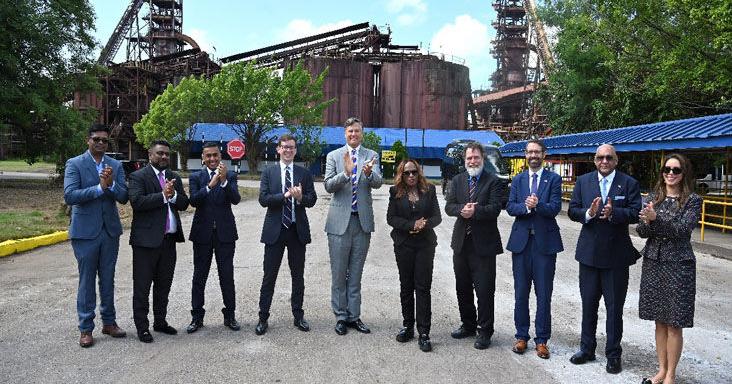
    At the ceremony held at the Pt Lisas Industrial Estate in Couva, Landau framed the project as a landmark mutual victory for both nations, far beyond the reopening of a single industrial site. “This is not just the metal that we’re seeing here; it’s the lives that are impacted,” Landau told attendees, referencing the 644 direct jobs that will be restored alongside dozens of indirect positions supporting the facility’s operations. “Those jobs are coming back… and that’s a win not only for Trinidad but also for the United States.”

    Landau emphasized that the revival serves as a powerful example of how foreign private sector investment can reverse long-standing industrial decline and deliver tangible, widespread economic benefits to host communities. Comparing the restart to a biblical resurrection, he noted, “I think there is nothing more beautiful, frankly, than being able to see a plant like this that’s been shuttered come back to life. It’s like Lazarus arising from the dead again.”

    For the United States, the investment addresses a pressing strategic and economic priority: securing stable, reliable access to critical industrial minerals that have become increasingly vital to national and economic security. For decades, the U.S. allowed its domestic mining and processing sectors to shrink, leaving the country dependent on foreign suppliers that may not align with American strategic interests. The Pt Lisas plant will process local ore and industrial residue into two high-demand materials: steel, used in everything from civilian skyscrapers to U.S. military battleships, and vanadium, a critical alloy that strengthens steel for industrial and defense applications. The project also repurposes century-old industrial waste tailings left from previous operations, turning a legacy environmental liability into an economic asset.

    “We need these critical minerals. You need jobs. You have tailings and industrial residue that’s been left over from 100 years of industrialisation. This is a perfect example of what we’re talking about. That is great for Trinidad. It’s great for the United States,” Landau explained.

    The investment also comes at a time when both the U.S. and Trinidad and Tobago governments are actively working to deepen bilateral economic ties. Landau noted that American businesses have grown increasingly hesitant to pursue cross-border investment opportunities in recent years, leading to frequent questions from global partners asking “where are the Americans?” The Pinnacle investment, he said, sends a clear signal that U.S. companies are returning to the Caribbean, and that the bilateral relationship is moving beyond rhetorical partnership to deliver tangible on-the-ground results.

    Landau framed the Pt Lisas project as a symbol of a new, refocused chapter of U.S. engagement with the Caribbean region, crediting current Trinidadian Prime Minister Kamla Persad-Bissessar for opening new doors to cooperation that have not been available in six decades of prior relations. He stressed that the private sector remains the core driving force behind the project, noting that the restart would not have been possible without private investment leadership. Beyond economic and strategic gains, Landau said the revived plant will restore a sense of dignity and community pride to the Pt Lisas region, where workers lost their livelihoods nearly a decade ago.

    “I really get choked up when I sit here, and I look out at these rusting steel mills to think, you know, this will again be a place where people can show their kids, ‘that’s where I work’. And I think that can be a source of great pride for the people of Point Lisas and all of Trinidad and Tobago, as well as for the people of the United States,” he said. Landau added that he hopes the project marks a new beginning for collaboration between the two nations, with many more mutually beneficial partnerships to come.

  • On an ‘anti-democratic path’

    On an ‘anti-democratic path’

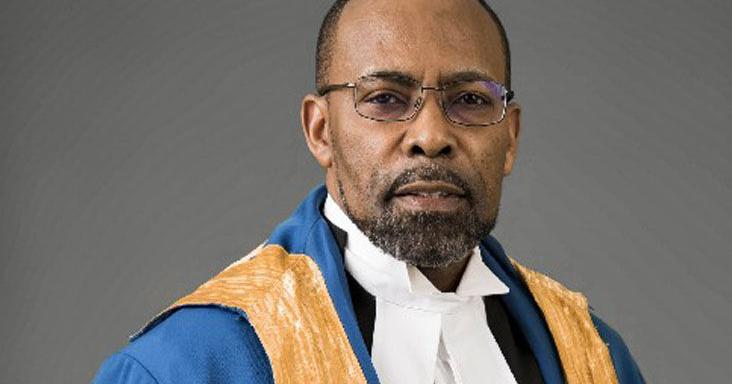
    A senior sitting judge of the Caribbean Court of Justice (CCJ) has raised urgent alarms about authoritarian leadership practices at the regional judicial body, warning that unaddressed misconduct could validate long-held public and political skepticism and put the court’s very future at risk.

    Justice Arif Bulkan, a Guyana-born judge on the CCJ bench, made the remarks in a series of leaked internal emails exchanged among court judges in June 2026, as tensions over the leadership of court president Justice Winston Anderson boiled over into open conflict. A majority of the court’s judges have already leveled multiple serious allegations against Anderson, ranging from imposing unilateral judicial dress codes to “panel fixing” and improper attempts to sway the final outcomes of pending cases. Most critically, the majority accuses Anderson of running the regional institution in an overtly authoritarian and dictatorial style that undermines core judicial norms.

    In his email, Bulkan specifically addressed longstanding distrust from regional political leaders, including Trinidad and Tobago Prime Minister Kamla Persad-Bissessar, who has publicly questioned the CCJ’s integrity. Bulkan explained that the core concern driving this skepticism is the risk that a single judge could override the majority position of a full judicial panel, imposing their own preferred legal outcome against the consensus of fellow justices.

    He emphasized that the entire design of the appellate judicial process is built to prevent exactly this kind of overreach: appellate panels require multiple judges to independently review cases specifically to ensure rigorous deliberation, draw on a wider range of professional experience and expertise, and guard against individual bias or improper influence. “If a president could overrule a majority there is no need for a panel,” Bulkan wrote. “If one could simply say, I am doing X, even though four or five feel otherwise, the safeguard of the appellate process vanishes.”

    Bulkan went on to note that this exact fear has been the primary barrier holding most Caribbean nations back from formally adopting the CCJ as their final appellate jurisdiction. Multiple countries have rejected accession in public referendums, with both voters and leaders including Persad-Bissessar openly questioning whether a regional judicial body can uphold consistent integrity and impartiality.

    According to Bulkan, a recent incident related to the handling of the high-profile Mohamed case has become the “back-breaking straw” that forced him to speak out. The unilateral process Anderson attempted to impose in that case, he argued, directly validates the worst fears of the CCJ’s critics. “If we were to continue along this anti-democratic path, the very survival of this institution will be threatened,” he warned.

    Beyond questions of judicial outcome integrity, Bulkan also called out toxic working conditions within the court, criticizing Anderson’s failure to maintain a collegial, respectful environment for all judges. He argued that healthy institutional culture requires recognizing fellow justices as equals, taking their concerns seriously, and creating space for open dialogue and input, rather than dismissing dissenting views out of hand.

    Local media outlet Trinidad Express has reached out to Prime Minister Persad-Bissessar via WhatsApp to request her response to the leaked allegations, asking whether the claims from sitting CCJ judges have altered her position on the court and its leadership. As of publication, no response has been issued.

  • Shot dead in van

    Shot dead in van

    In a shocking early morning incident that has shaken a close-knit Port of Spain community, a 38-year-old local woman was gunned down in her vehicle on Tuesday, as two armed robbers attempted to hijack the truck she called home. The violent encounter unfolded around 7 a.m. near Achong Street, directly across from the John John Towers residential complex, according to official police statements.

    Investigators outlined that Jameelia Lewis, who had been living out of her black Isuzu D-Max pickup after facing personal hardship, was seated in the parked vehicle when the two assailants approached. The pair gained entry through the unlocked passenger door and moved immediately to pull Lewis out of the truck, in what law enforcement suspects was a targeted vehicle theft. When Lewis resisted their attempt to force her from the only shelter she had, one of the attackers opened fire, striking her four times at close range. She was pronounced dead at the scene, and the two gunmen fled the area empty-handed—they did not manage to steal the vehicle or any other belongings.

    The crime was not discovered until commuters driving into central Port of Spain spotted the truck pockmarked with bullet holes and alerted local authorities. Responding units from the Besson Street Police Station, the Region One Homicide Bureau, and the national Crime Scene Unit arrived promptly to secure and process the location. After forensic teams completed their work, Lewis’ remains were transported to a local mortuary in East Port of Spain for autopsy.

    Lewis had deep roots in the John John neighborhood; she was originally from Foster Street, just a short walk from the site of her killing, and remained connected to the community even after she lost housing. Neighbors who knew her for decades described her as a warm, resilient woman who chose to stay close to her childhood home despite her circumstances.

    Isaiah James, a childhood friend of Lewis, recalled that he heard the gunshots that killed her Tuesday morning. “She used to sleep in the van but she was still close to home in a kind of way,” James shared. He explained that Lewis had experienced devastating personal loss three years prior, when her three children—an 18-year-old son, and two daughters aged 16 and 13—were placed into state custody. The separation from her children left a profound emotional impact on her, he said. Like other community members, James believes Lewis fought back against the attackers to protect her vehicle, the only major possession she had left, and that her resistance prompted the fatal shooting. “She was a tough person,” he noted.

    Another neighbor clarified that the children were removed from Lewis’ care after she fell behind on enrolling them in school, and that she fell into deep depression following the separation. They rejected any characterization of Lewis as unstable, explaining “She wasn’t mad, yuh know. She was simply the kind of person who wanted to live off the land and in the bush.” Lewis parked her truck near the neighborhood specifically because she felt safe there, the neighbor added. A third community member added that Lewis had recently started gathering discarded wooden pallets to build a small makeshift shelter close to her regular parking spot, as she worked to establish more stable housing for herself near the community she loved.

    As of this incident, the national murder toll for the current year stands at 228. This marks a small six-person decrease from the same point last year, when the toll hit 234.

  • PM: More gas on the way

    PM: More gas on the way

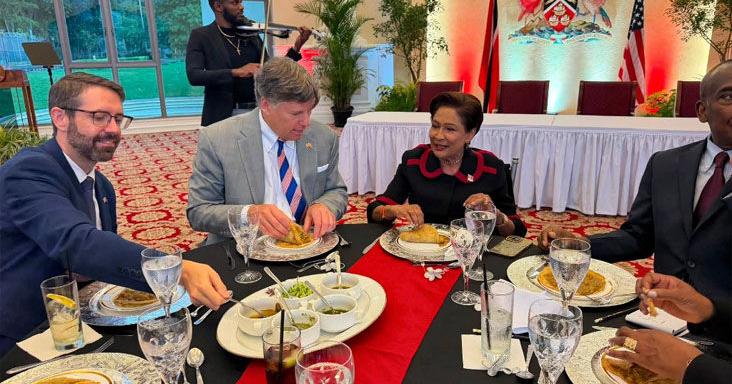
    In a major announcement delivered during the official visit of U.S. Deputy Secretary of State Christopher Landau at St Ann’s Diplomatic Centre, Trinidad and Tobago Prime Minister Kamla Persad-Bissessar unveiled two landmark energy deals that mark a turning point for the nation’s industrial and energy future.

    The first and most significant of these agreements sees global energy giant BP agree to transfer a 20% stake in the Trinidadian portion of the cross-border Cocuina-Manakin natural gas field to Trinidad and Tobago’s state-owned National Gas Company (NGC). Spanning the maritime border between Trinidad and Tobago and Venezuela, the field is split between Manakin, located in Trinidad’s Block 5, and Cocuina, which sits in Venezuela’s Plataforma Deltana Block 4. Negotiations over the coordinated development of the field stretch back more than a decade, rooted in a 2015 bilateral agreement between the two governments that unitized the field, allocating 66% of reserves to the Manakin side and 34% to Cocuina. This makes the project the first fully agreed unitized cross-border gas development in the Western Hemisphere.

    Under the existing production sharing contract for Block 5, BP’s local affiliate Amoco Trinidad Gas BV has served as the primary operator. Persad-Bissessar outlined that years of stalled negotiations gained new momentum in 2024: the U.S. Office of Foreign Assets Control (OFAC) granted a negotiation license to BP and NGC in May of that year, followed by Venezuela’s issuance of a 20-year license in July 2024 that formalized a 20% stake for NGC and 80% stake for BP across the entire cross-border project. Negotiations were left unfinished when a change of government occurred in April 2025, but were finalized within 16 months of Persad-Bissessar’s administration returning to office.

    Persad-Bissessar emphasized that the new ownership structure, which aligns NGC’s stake across both the Trinidadian and Venezuelan portions of the field, removes the last major barrier to progress. “These agreements align NGC across the field, remove a major obstacle and allow BP to accelerate its final investment decision, completing in a little over one year what remained undone for more than ten years,” the Prime Minister stated. She added that the project is set to become the first successful cross-border development to monetize natural gas through Trinidad and Tobago’s existing energy infrastructure.

    Alongside the Cocuina-Manakin deal, the Prime Minister announced that BP has completed the acquisition of all of Woodside Energy’s shareholding in the deep-water Calypso gas field. First awarded to BHP Billiton during the 2012–2014 bid rounds under Persad-Bissessar’s first administration, Calypso is one of the country’s most promising untapped domestic gas sources, spanning Blocks TTDAA 14 and 23(a). After returning to office in April 2025, Persad-Bissessar’s government brought all parties to the table to resolve the impasse that left the project undeveloped, with the acquisition finalized on August 6, 2026. The full ownership consolidation will speed up project sanctioning, cut operational costs, maximize use of existing NGC infrastructure, and unlock necessary fiscal support from the Ministry of Energy, bringing much new gas supply to the country, the Prime Minister said.

    These developments come on the heels of other growing international interest in Trinidad and Tobago’s offshore energy sector. Persad-Bissessar highlighted that ExxonMobil, which exited local exploration in 2003 after a period of unsuccessful activity more than two decades ago, has recently returned and signed a new exploration agreement. The company’s endorsement of the upcoming deep-water exploration bid round, paired with BP’s two new deals, signals a resurgence of global investor confidence in the nation’s offshore energy potential, the Prime Minister noted.

    Independent reporting from Reuters confirms that the Cocuina-Manakin field holds an estimated one trillion cubic feet of proven natural gas reserves. NGC already holds a 20% stake in the Venezuelan Cocuina portion of the field, aligning with its new stake on the Trinidadian side. Under current marketing plans, 70% of the field’s output will be supplied to Atlantic LNG, home to Latin America’s largest liquefied natural gas export terminal. The facility has faced significant operational strain in recent years as declining domestic gas production from Trinidadian fields cut into its output, forcing the idling of one of its four processing trains. BP holds a 45% stake in Atlantic LNG, with NGC owning 10% and Shell holding the remaining 45%. The remaining 30% of Cocuina-Manakin output will be allocated to domestic petrochemical production. Industry sources quoted by Reuters expect a final investment decision on the project to be reached by the end of this year. Venezuela’s oil ministry had not responded to requests for comment as of yesterday’s reporting.

    During the announcement, Persad-Bissessar also publicly thanked U.S. President Donald Trump for his administration’s support, noting that the deepening bilateral partnership between the two countries has translated into tangible development opportunities for both nations and the wider Caribbean region. Landau’s visit, she added, advanced three key bilateral development initiatives: the proposed Curlew Midstream fuel storage and bunkering terminal, Pinnacle Steel and Vanadium Corporation’s restoration of the shuttered former ISCOTT steel plant, and the BP-NGC Cocuina-Manakin agreements. New MOUs signed yesterday with Pinnacle Steel and Hummingbird AI Holdings also reinforce Trinidad and Tobago’s goal of becoming a regional hub for technology-driven investment, she said. “We are restoring Point Lisas as an engine of growth. Pinnacle’s acquisition and proposed upgrade of the former ISCOTT plant for steel and vanadium production can and will restore capacity, create jobs and benefit local contractors and manufacturers, while signalling confidence in our steel sector,” Persad-Bissessar said.

    The Prime Minister closed by reaffirming her government’s commitment to working alongside BP, NGC, and all industry stakeholders to speed up final investment decisions and bring both new projects into production as quickly as possible to support long-term industrial growth in Trinidad and Tobago.

  • Europa maakt zich op voor nieuwe hittegolf na recordtemperaturen

    Europa maakt zich op voor nieuwe hittegolf na recordtemperaturen

    After two months of record-shattering high temperatures that have already triggered devastating wildfires, dried up major river systems, and claimed thousands of lives across the continent, Europe is now bracing for a new wave of extreme heat. This new heat event comes as multiple nations already struggle with the cumulative impacts of repeated heat and drought through the 2026 summer season.

    Early Monday, official extreme heat warnings were already issued for multiple regions across the United Kingdom and France, with forecasters projecting temperatures will climb well above 30 degrees Celsius in the coming days. The United Kingdom, in particular, is facing its fifth consecutive heatwave of the year, with more than 27 million residents currently living under mandatory water use restrictions. To conserve dwindling freshwater supplies, the British government has implemented strict irrigation limits for agricultural producers and banned garden hose use for non-essential purposes across multiple affected regions.

    Tony Grayling, Director of Sustainable Business and Development at the UK’s Environment Agency, warned that the prolonged stretch of hot, dry conditions is taking a severe toll on British agriculture and will leave long-lasting damage to local ecosystems. “The cumulative stress on our land and water resources cannot be understated,” Grayling noted, emphasizing that the impacts will extend far beyond the summer heat season.

    Across the Channel in France, 70 percent of the country is already under water use restrictions, as consecutive heatwaves have pushed drought conditions to critical levels. Non-essential water consumption, including private garden watering, swimming pool filling, car washing and large-scale agricultural crop irrigation, has been limited or banned entirely in most affected areas.

    In Spain, the national meteorological agency AEMET confirmed Monday that July 2026 was the warmest July on record since national temperature tracking began in 1961. It was also the driest July ever recorded for mainland Spain, with total rainfall measuring just 4.3 millimeters – only a quarter of the historical average for the month. The record heat and dryness have also fueled the largest wildfire the country has seen in modern history.

    Dry, heat-amplified conditions have also sparked widespread wildfires in both Greece and southern Spain’s Andalusia region, where emergency crews have been locked in a days-long battle to contain blazes burning near the medieval town of Niebla. Antonio Sanz, head of emergency response for Andalusia, described the firefighting effort as a “long-distance obstacle race” that could continue for days. Nearly 500 local residents have already been evacuated from high-risk areas to ensure public safety.

    The impacts of the prolonged drought are also disrupting critical European supply chains. Germany’s inland waterway association BDB has warned that falling water levels on the Rhine, one of Europe’s most important freight shipping routes, will soon block commercial navigation on key stretches of the river. According to BDB managing director Jens Schwanen, low water has effectively split the Rhine into two unconnected segments, eliminating continuous navigation for large cargo vessels and threatening major disruptions to regional goods transport.

    Climate scientists have repeatedly noted that Europe is warming faster than any other continent on Earth due to human-caused climate change. Beyond the major western European nations, elevated temperatures are also forecast for Switzerland, Austria and Hungary in the coming days, extending the reach of the extreme heat event across much of the continent.

  • A day of shared ideas

    A day of shared ideas

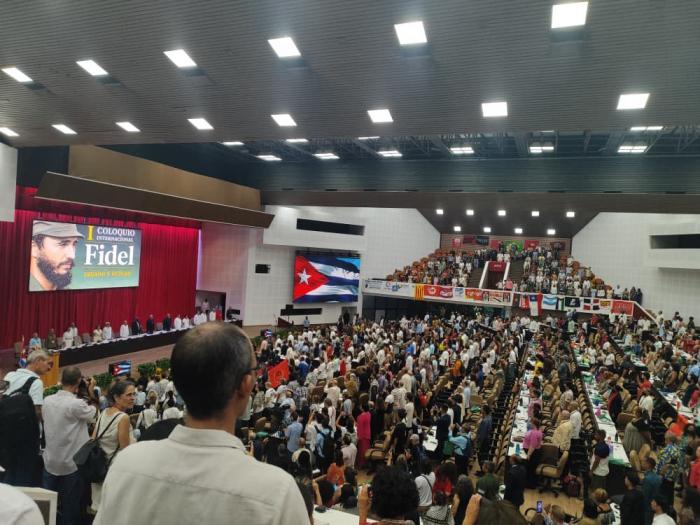
    On Monday, ahead of the official opening of the first ever International Colloquium titled \”Fidel: Legacy and Future\” at Havana’s Convention Palace, Cuba’s top leader Miguel Díaz-Canel Bermúdez — who serves simultaneously as First Secretary of the Central Committee of the Communist Party of Cuba and President of the Republic of Cuba — convened a full day of productive meetings with high-profile delegates from across the globe who gathered in the Cuban capital to honor the legacy of iconic Cuban revolutionary Fidel Castro.

  • The Book Fair remains a great stronghold of ideas

    The Book Fair remains a great stronghold of ideas

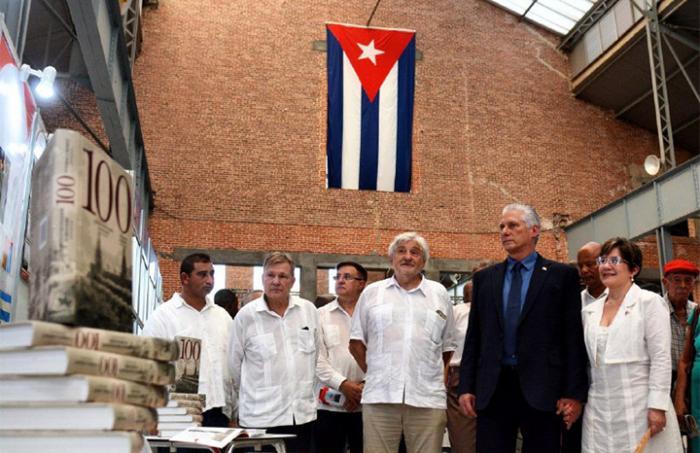
    The 34th iteration of the Havana International Book Fair officially opened its doors on Wednesday, with Cuban President and First Secretary of the Central Committee of the Communist Party Miguel Díaz-Canel Bermúdez leading the opening ceremony at Havana’s iconic Cultural Station located at the intersection of Línea and 18th Streets.

    In his opening remarks, Juan Rodríguez Cabrera, president of the Cuban Book Institute, underscored the significance of moving forward with the beloved cultural event despite challenging external conditions. This year’s fair carries a special thematic dedication to Fidel Castro, the revolutionary leader who shaped modern Cuba’s literary and publishing landscape. “However adverse the circumstances, we could not fail to hold this Book Fair, dedicated to Fidel, because that great reader, the Commander, became, from the very first days of the Revolution’s triumph, our greatest promoter of books and literature,” Cabrera told the assembled crowd of dignitaries, authors, and book lovers.

    Cabrera detailed Castro’s far-reaching legacy in building Cuba’s domestic publishing ecosystem, noting that the late leader was the founding force behind not just the National Printing Office of Cuba and the National Publishing House, but also the Cuban Book Institute and the nationwide Territorial Publishing System. Beyond institutional building, Cabrera emphasized that Castro’s personal advocacy made it possible for Cuba to secure publishing rights and release domestic editions of many of the most influential works of contemporary global literature. For decades, Cabrera added, the Havana Book Fair has served as a critical crossroads for knowledge sharing, the diffusion of cutting-edge literary movements, and open debate on global issues – a role it retains as a vital hub for intellectual exchange even today.

    Alongside its broader dedication to Fidel Castro, this year’s fair also pays tribute to two of Cuba’s most prominent contemporary intellectuals: poet, novelist, and journalist Marilyn Bobes, and leading historian and researcher José Bell Lara. Two custom audiovisual productions highlighted the decades-long careers of both figures, featuring their own acceptance remarks alongside tributes from fellow writers and scholars who celebrated their contributions to Cuban cultural life.

    A highlight of this year’s event is the participation of the Russian Federation as the fair’s guest of honor, a role that highlights the longstanding ties of friendship, solidarity, and cultural cooperation between Moscow and Havana. Speaking at the opening ceremony, Mikhail Shvydkoy, Special Representative of the President of the Russian Federation for International Cultural Cooperation, noted that the opening came just ahead of the centennial celebration of Fidel Castro’s birth, closing his impassioned address with a rousing cry of “Long live Cuba!” Shvydkoy also reflected on Cuba’s enduring global reputation as a destination that draws creators from across the globe, noting that the island has long been a magnet for writers.

    Attendees gave a standing ovation to a special performance by the Russian State Academic Folkloric Ensemble, which treated the crowd to two pieces: a tribute titled “Comandante Fidel” and a lively set of variations on the well-known Russian folk piece “Kalinka.” The official opening ceremony wrapped up with a performance from celebrated Cuban musician Pancho Amat and his group Cabildo del Son.

    The opening ceremony was attended by a host of top Cuban government and party officials, including Esteban Lazo Hernández, President of the National Assembly of People’s Power; Manuel Marrero Cruz, Prime Minister; Bruno Rodríguez Parrilla, Minister of Foreign Affairs; Yuniasky Crespo Baquero, member of the Central Committee of the Communist Party and head of its Ideological Department; and Alpidio Alonso Grau, Minister of Culture. Russian Ambassador to Cuba Víctor Koronelli also joined the ceremony alongside the Russian delegation.

  • Fidel’s legacy challenges us today with more force than ever

    Fidel’s legacy challenges us today with more force than ever

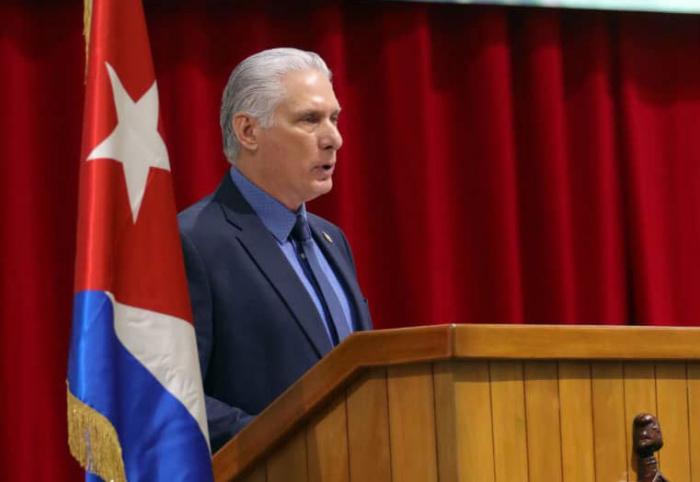
    On August 10, 2026, at the opening of the first international colloquium *”Fidel: Legacy and Future”* held at Havana’s Convention Center, Miguel Mario Díaz-Canel Bermúdez, First Secretary of the Central Committee of the Communist Party of Cuba and President of the Republic of Cuba, delivered a landmark keynote address marking the centennial of the birth of iconic Cuban revolutionary leader Fidel Castro Ruz.

    Díaz-Canel opened by extending a warm welcome to hundreds of delegates, scholars, activists, and artists who traveled from across the globe to attend the event, defying geographic distance, coordinated Western disinformation campaigns, and official pressure from their home governments. He emphasized that their presence in Cuba, at a time of heightened U.S. economic aggression and diplomatic hostility, constitutes an act of courageous militant solidarity that embodies the core of Fidel’s enduring legacy. *”There is no better or more enduring monument than the one you have erected with your courageous presence here, in Fidel’s Cuba, on its Centennial,”* he told attendees.

    The Cuban leader framed the centennial celebration not as a ceremonial tribute to a historical figure, but as a critical moment to draw on Fidel’s ideas to confront the most severe challenge the Cuban Revolution has faced in its 67-year history: breaking the decades-long U.S. siege that seeks to annihilate Cuba’s socialist project as collective punishment for the nation’s commitment to sovereignty and dignity. He traced Fidel’s revolutionary trajectory from his early days as a rebellious student activist protesting Cuba’s neocolonial inequality, through the 1953 attack on the Moncada Barracks, the founding of the 26th of July Movement, the guerrilla campaign in the Sierra Maestra, and the 1959 triumph of the revolution that ended a pro-imperial dictatorship.

    Díaz-Canel reminded the audience that before the revolution, Cuba was defined by extreme systemic inequality: 600,000 Cubans were unemployed, 37.5% of the population was illiterate, 1.5% of landowners controlled 46% of the nation’s arable land, and nearly all key strategic industries were owned by U.S. corporate monopolies. Even amid the crippling constraints of 66 years of economic, commercial, and financial blockade and a recent seven-month energy embargo, Díaz-Canel noted, Cuba’s revolutionary gains — rooted in Fidel’s vision — have left the country with social indicators that outperform most middle-income nations. Cuba boasts the highest number of doctors per capita in the world (more than 9 per 1,000 inhabitants), ranks among the top 10 countries in the Americas for life expectancy at 77.7 years, and remains a global leader in international medical and educational solidarity, per data from the World Health Organization and UNESCO.

    Díaz-Canel outlined the core pillars of Fidel’s ideological and practical legacy for current and future generations. Fidel bequeathed not rigid dogma, but a living method of revolutionary practice rooted in rigorous analysis of concrete conditions, popular mobilization, and decisive action. Key tenets of this legacy include: unwavering commitment to anti-imperialism and sovereignty; the certainty that dreams of justice are achievable through militant struggle; internationalism as a core defining value of revolution; the conviction that socialism is the only path to save humanity from capitalist exploitation and climate collapse; and the principle that economics and politics are inseparable, with all economic decisions serving collective social good. He also highlighted Fidel’s legacies of ethical leadership, intellectual audacity, revolutionary optimism, and innovative strategy under constraint, noting that Fidel transformed scarcity into a catalyst for national creativity rather than a barrier to progress.

    Against the backdrop of a deeply unstable global order marked by escalating imperial aggression, widening inequality, catastrophic climate change, and rising great power competition, Díaz-Canel emphasized that Cuba remains a primary target of U.S. hostility, with the Biden administration ramping up sanctions and extraterritorial blockade measures in this centennial year. He detailed the devastating human cost of the intensified blockade, which has created unprecedented hardship for the Cuban people: more than 1,400 megawatts of idle electricity generation capacity due to fuel shortages, leaving much of the country coping with 20+ hour daily blackouts; 98,500 patients waiting for urgently needed surgeries, including 12,000 children, due to lack of medical supplies and energy to power operating rooms; 67,000 infants under the age of one missing up-to-date routine vaccinations; 118,200 cancer patients unable to access adequate primary treatment; and only 30% of essential medicines available in the national health system, all as a direct result of U.S. sanctions. The infant mortality rate, once comparable to developed nations at 4-5 per 1,000 live births, has more than doubled to over 9.8 due to blockade-related shortages, he confirmed.

    Díaz-Canel called the intensified blockade an undeclared act of genocidal aggression, noting that United Nations human rights experts have repeatedly confirmed that U.S. unilateral coercive measures against Cuba violate the UN Charter and constitute a crime against humanity. He rejected U.S. claims that Cuba is a “state sponsor of terrorism” or a hub for subversion, pointing out that Cuba has been the victim of decades of U.S.-sponsored state terrorism and covert regime change operations, with recent confirmed increases in CIA subversion activity on the island.

    Despite the unprecedented hardship, Díaz-Canel stressed that Cuba has followed Fidel’s teaching of creative, not passive, resistance. In recent years, Cuba has developed sovereign COVID-19 vaccines, expanded urban and agroecological agriculture to offset fertilizer and fuel shortages, maintained its longstanding commitment to international solidarity, and continues to train thousands of medical professionals from low-income countries at no cost. Just weeks before the colloquium, 30,185 young professionals graduated from Cuban universities, including 735 from 62 foreign nations — among them 20 new Palestinian doctors and five U.S. doctors trained in Cuban institutions.

    Díaz-Canel outlined that Cuba’s ongoing economic and social transformation process is rooted in Fidel’s principles, aimed at building prosperous, sustainable socialism without abandoning core commitments: the fundamental means of production remain under collective ownership, no widespread privatization will be implemented, and national sovereignty and independence will remain non-negotiable. The Communist Party of Cuba retains its role as the leading force guiding the process and safeguarding the social gains won by the revolution over decades.

    Fidel’s legacy, Díaz-Canel argued, belongs not only to Cuba but to all people fighting for justice and sovereignty across the globe. He called on international delegates to take up three core tasks: countering the massive disinformation campaign about Cuba by spreading factual accounts of the nation’s reality — a reality of hardship, but also of resilience, solidarity, and unwavering hope; building concrete solidarity networks to campaign for an end to the blockade, advance scientific and cultural cooperation, and hold imperial powers accountable at international bodies; and deepening critical thinking about 21st-century socialism to answer open questions left by Fidel, from building popular power in the digital age to confronting climate change from a socialist perspective.

    Díaz-Canel closed by reaffirming Cuba’s unwavering commitment to carrying forward Fidel’s vision, emphasizing that the centennial is a starting point, not a conclusion. *”It is not enough to remember him; we must study him! It is not enough to admire him; we must emulate him!”* he declared. Echoing Fidel’s iconic words, he concluded: *”If others compromise, if others allow themselves to be bribed, if others betray, Cuba will know how to remain an example of a revolution that does not surrender… Fidel is a country, Fidel is Cuba! For Cuba, with Fidel, until victory, always! Long live Fidel forever! Socialism or Death! Homeland or Death! We shall overcome!”*

  • Column: Er is geen tweede Borger

    Column: Er is geen tweede Borger

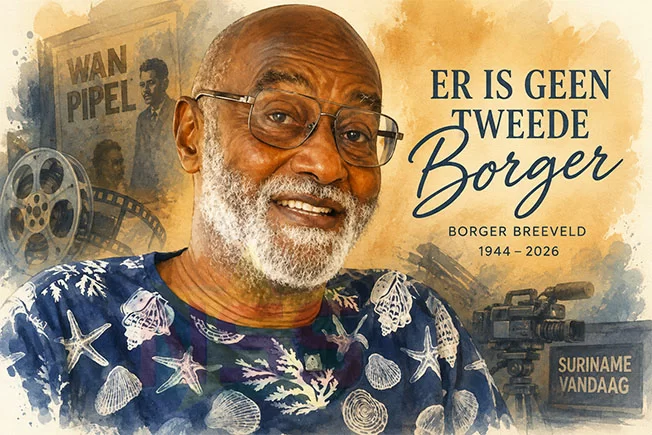
    It was a shock that rippled through Suriname’s media and cultural communities when news broke of Borger Breeveld’s passing on Monday morning. While we all know that life is finite, there are some people who feel as though they should always be with us — and Borger was one of those people for me. A distinct, unforgettable personality, a trailblazer of Suriname’s media sector, and a gifted actor who carved out a unique, permanent place in the nation’s history.

    For most people, mentioning Borger Breeveld immediately brings *Wan Pipel* to mind. His portrayal of Roy in Pim de la Parra’s iconic classic remains etched deep into Suriname’s collective cultural memory, nearly 50 years after the film first premiered, conversations about his performance still continue. Countless Surinamese film and television productions have launched in the decades since, introducing a new wave of local acting talent, but for me, the unmatched impact of *Wan Pipel* has never been equaled — and Borger’s extraordinary acting skill was undeniably a core reason for that lasting legacy.

    My personal memories of Borger extend far beyond his famous role in that film. I first got to know him during a very different chapter of Suriname’s history, when he served as a spokesperson during the country’s military rule. That was no easy era for journalists working in the nation. Power dynamics were fraught, the space for independent journalistic work was tightly constrained, and access to reliable public information was never a given.

    Even in that tense context, Borger remained approachable to reporters. He had empathy for the work journalists needed to do, while also understanding the complexities of the system he operated within. This allowed him to serve as a critical bridge between the press and military leadership. This did not mean all barriers suddenly fell, or every question received an answer — but it meant there was always someone willing to talk, someone who acknowledged that journalists had a job to do. That mattered a great deal in that difficult time.

    Later in his career, I got to see a whole other side of Borger up close: Borger the television producer. When the current affairs program *Suriname Vandaag* launched, he agreed to take on the role of director. I co-led the program and served as one of its co-presenters, so I got to witness his behind-the-scenes talent firsthand.

    *Suriname Vandaag* was broadcast live, a format that anyone working in television knows carries unique pressure. There are no second takes. What happens on air stays on air: a presenter might fumble their lines, a satellite connection could cut out, a segment runs longer than planned, or breaking news can throw the entire run of show completely off schedule. In those moments, you need someone behind the scenes who understands the medium, can make quick, calm decisions, and keep the entire team grounded. That was Borger.

    No one understood the craft of television production better than he did. It was not just knowing where to place a camera or when to cut between angles — he had an intuitive grasp of rhythm, visual storytelling, timing, and on-screen presence. He knew what would resonate with audiences and what would fall flat, and he had a masterful ability to communicate that insight to his team. That last skill is one that should not be underestimated.

    Borger taught the craft to generations of media professionals. An entire cohort of Suriname’s media workers has benefited directly or indirectly from his knowledge and decades of experience. Unlike many people who guard their professional expertise closely, Borger never fit that mold. He was eager to pull others into the field, to help them grow and become better at their work. That is why reducing his legacy to just his role as Roy in *Wan Pipel* does him a deep disservice. He was an actor, yes, but also a director, a producer, a communications strategist, and a teacher. He was part of the pioneering generation that built Suriname’s modern television industry from the ground up, working in an era with far fewer technical resources than we have today.

    Now, almost anyone can shoot footage and stream it live to an audience from a smartphone. But technology alone does not make someone a television professional. Television is a learned craft, and Borger knew that craft inside and out. That is what sticks with me today, alongside the grief of his passing: how much irreplaceable institutional and craft knowledge is lost when a pioneer like Borger leaves us.

    As a country, Suriname has not always done a good job of documenting and passing down the knowledge of the people who built our core industries and cultural sectors. Only when these icons are gone do we realize how much they knew, how many untold stories they carried, how much of our national history is tied to their lives and work. Borger Breeveld was exactly that: a walking, living archive of Suriname’s media and film history.

    For me, I will remember him as I knew him: approachable, deeply knowledgeable, completely at home in every corner of the television industry. He was a man who knew his craft, and dedicated himself to lifting others up along with him.

    *Wan Pipel* will remain, the footage will remain, the memories will remain. And for the many people who learned the craft from him, a part of Borger will live on through their work. But Borger himself is gone. There will never be another like him.

    I send my deepest strength to Borger’s family and all his loved ones as they navigate this enormous loss. Thank you for everything you left to us, and to all of Suriname’s media community. Rest easy, Borger.

  • NIKOS perceptieonderzoek: Wantrouwen beheer olierijkdom; corruptie grootste bedreiging

    NIKOS perceptieonderzoek: Wantrouwen beheer olierijkdom; corruptie grootste bedreiging

    On August 11, new findings from the third national perception survey in Suriname revealed a stark gap between the country’s impending oil and gas-driven economic opportunity and widespread public distrust in how the government will manage and distribute this new wealth. Commissioned by Suriname’s Ministry of Oil, Gas and Environment, the study delivered sobering insights into public attitudes toward governance and natural resource management ahead of the country’s expected energy boom.

    Conducted between June 25 and July 21 by local research firm NIKOS, the survey gathered responses from 1,786 adults aged 18 and older across 49 regional jurisdictions spanning nine of Suriname’s 10 districts. The remote interior district of Sipaliwini was excluded from the sample due to accessibility challenges. Researchers note that the random sampling method used produces a representative snapshot of public opinion across the country.

    The core finding of the report is that 61% of respondents hold little to no confidence that future oil and gas revenues will be managed responsibly. Broken down, 36% reported having little trust, while an additional 25% said they have no trust at all. Just 12% of respondents expressed any meaningful level of confidence: 11% said they had moderate trust, and only 1% reported having high trust. The remaining 27% of respondents took a neutral stance, which researchers frame as further evidence of broad systemic doubt in the government’s ability to steward new energy revenues for the public good.

    This distrust is not limited to any specific demographic or region of the country. A majority of respondents across all education levels hold little or no confidence in government management, with the share rising to two-thirds among respondents with tertiary or university education. District-level data also reflects consistent doubt: 81% of respondents in Brokopondo, 67% in Saramacca, and 66% in Marowijne reported low or no trust, all above the national average of 61%. Even in districts with the highest levels of trust – Nickerie at 47% and Coronie at 50% – nearly half of all respondents still expressed distrust. Researchers conclude that low public confidence is a nationwide phenomenon, not an isolated concern.

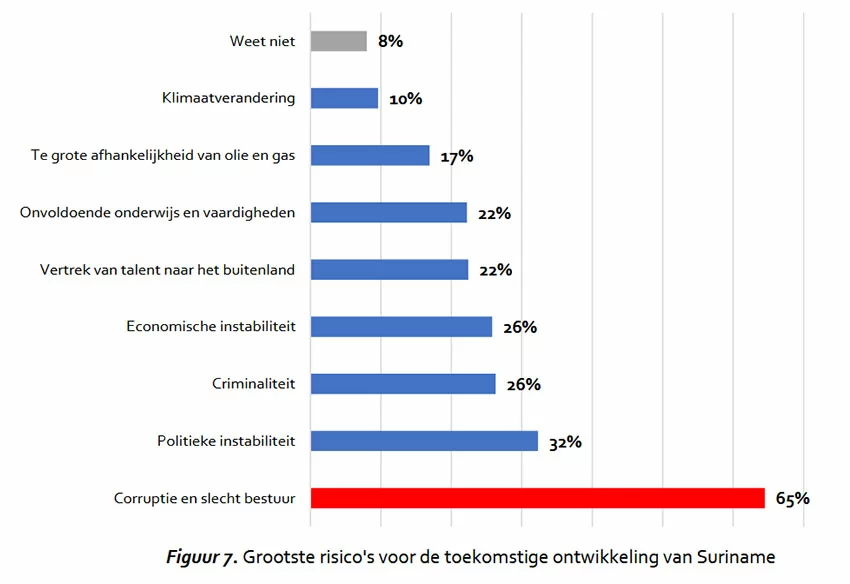
    When asked to identify the greatest threats to Suriname’s future development, 65% of respondents named corruption and poor governance – far outpacing the second-most cited risk, political instability, which was selected by just 32%. Crime and economic instability tied at 26%, while brain drain, inadequate education, and a lack of skilled workforce each drew 22% of responses. Overdependence on oil and gas was cited by only 17% of respondents, and climate change by just 10%. The report emphasizes that this makes clear: the public does not see a lack of economic opportunity as Suriname’s biggest challenge; instead, it sees mismanagement and corruption as the primary barrier to progress. This concern grows with education level, with higher-skilled respondents more likely to name poor governance as a top risk.

    Public doubt extends beyond questions of competent management to fairness of distribution. Seven out of 10 respondents expect that the benefits of oil and gas development will accrue almost entirely to a small, elite group. This deep-seated expectation of unequal distribution reinforces the public’s demand for accountable governance and anti-corruption action, researchers say. That demand is underscored by another striking finding: 91% of respondents agree that good governance and reduced corruption are more important than generating new oil and gas revenues themselves. This is one of the most widely shared positions captured in the entire survey.

    Notably, the survey found that Surinamese do not reject the economic opportunity of new oil and gas development. In fact, 37% of respondents identified natural resources as one of Suriname’s greatest strengths for the future, outranking the country’s tropical rainforest and biodiversity (28%) and its multicultural society (23%).

    The overarching takeaway from the survey is clear: as Suriname prepares to enter a new era of energy-led economic growth, the government faces a far greater challenge than developing its resource reserves. The public does not need to be convinced that oil and gas can deliver growth; instead, the government must prove it can manage revenues transparently, distribute benefits fairly, and govern in the broad public interest. Right now, the survey confirms, most Surinamese remain unconvinced.