博客

  • CARICOM Eminent Persons Group preparing for Haiti visit as political consultations continue

    CARICOM Eminent Persons Group preparing for Haiti visit as political consultations continue

    As Haiti’s volatile political landscape continues to shift, the Caribbean Community (CARICOM) Eminent Persons Group (EPG) has confirmed it is maintaining active, continuous oversight of unfolding developments in the crisis-stricken nation, according to an official public statement.

    Over recent weeks, group members have held frequent, structured virtual consultations with a wide range of Haitian stakeholders, drawing input from across the country’s political and social divides. These conversations have included direct dialogue with sitting government representatives, leaders of opposition and other political organizations, and a diverse array of civil society advocates. The outreach is part of the EPG’s ongoing mandate to build a comprehensive, nuanced understanding of the layered challenges that have plunged Haiti into instability.

    Through these remote engagements, the EPG has succeeded in staying up to date on breaking developments and collecting firsthand perspectives from the key actors shaping Haiti’s political and social future, the group noted in its statement. But despite the value of remote consultations, the EPG emphasized that in-person, on-the-ground engagement remains a critical uncompleted step in its monitoring mission.

    Citing the irreplaceable value of direct, on-site observation and face-to-face dialogue, EPG members confirmed their intention to deploy a delegation to Haiti as soon as logistical and security conditions allow. The upcoming visit will create space for the delegation to hold in-person meetings with government officials, national political leaders, and civil society representatives, creating opportunities for deeper, more candid discussions than can be held virtually.

    These in-person talks are expected to help the group refine its grasp of the interconnected economic, political, and security issues confronting Haiti, and allow for more accurate, context-rich assessments of the current situation that can inform future regional mediation and support efforts. Parallel to its visit preparations, the EPG is continuing its diplomatic push to encourage all Haitian stakeholders to pursue collaborative, dialogue-centered solutions to the country’s ongoing crises, stressing that collective cooperation is the only path to lasting stability.

    Preparations for the visit are already moving forward, the group confirmed, and the trip will be launched as soon as all logistical and security arrangements are finalized, clearing the way for the EPG to resume direct engagement with Haiti’s key national stakeholders.

  • Belize Loses Miss Universe Franchise

    Belize Loses Miss Universe Franchise

    In a development that has disappointed pageant communities across Belize, the Miss Universe Belize Foundation has confirmed it will no longer hold the national franchise for the iconic Miss Universe competition, with the licensing rights transferred to an El Salvador-based organization. This transition brings a sudden end to the Foundation’s tenure overseeing the Belizean national pageant, at least for the immediate future.

    According to an official statement from the Foundation, the organization had already notified the global Miss Universe leadership of its plan to step back temporarily after the 2025 pageant cycle. The Foundation intended to use the pause to restructure its internal operations and community outreach programs, with a clear goal of reclaiming the franchise and returning to host the national competition in 2027.

    Despite this arranged temporary exit, Miss Universe’s central governing body made the final call to reassign the Belize franchise to the Salvadoran organization, derailing the Foundation’s planned comeback timeline.

    The Belizean foundation expressed deep disappointment over the outcome, but took time to highlight the meaningful work it has advanced during its years of stewardship. Over its tenure, the organization prioritized empowering the young women who competed as delegates and titleholders, fostering personal growth that has transformed many of its past queens into prominent community leaders, respected role models, and public ambassadors for Belize on global stages.

    Beyond empowering contestants, the Foundation also embedded support for local economic growth into its pageant operations. It intentionally built pathways for Belizean creatives, independent entrepreneurs, and small local businesses to showcase their products and skills to national audiences, allowing these local stakeholders to contribute directly to the pageant’s success while gaining valuable exposure.

    In closing, the Foundation confirmed that the current titleholder, Miss Universe Belize 2025 Isabella Zabaneh, will continue to fulfill her scheduled duties. She remains available for public appearances, speaking engagements, brand partnerships, local community events, and marketing opportunities throughout her remaining tenure.

  • Digicel introduces new Digi-Duo mobile and fibre bundle

    Digicel introduces new Digi-Duo mobile and fibre bundle

    Digicel St. Lucia has launched an innovative new convergence package called Digi-Duo, merging mobile connectivity and home fibre internet into a single, cost-effective offering built for the needs of contemporary families.

    Crafted to address the growing demand for reliable connectivity both at home and while out and about, the new bundle promises faster speeds, greater overall value, and a more seamless user experience than managing separate mobile and fixed-line services from different providers.

    Pricing for the entry-level Digi-Duo plan starts at just $191 per month. For this monthly rate, new customers receive 20GB of mobile data and a 350 Mbps home fibre connection, all consolidated onto one bill for added convenience. The company has also structured attractive perks for existing subscribers: current Digicel+ customers can add mobile service to their existing home internet plan for only $55 extra per month, unlocking enhanced savings. Additionally, users can extend the full benefits of the bundle to a second household member for just $50 more monthly, making it simple for the whole family to access high-quality connectivity without breaking the bank.

    This new bundle builds on Digicel’s ongoing pledge to expand access to faster, more affordable internet. The 350 Mbps entry-level home fibre speed, first rolled out across the provider’s network in 2025, is now a standard feature of all base-tier Digi-Duo plans. Backed by Digicel’s upgraded national network, the combined service supports a wide range of modern connected activities, from high-definition streaming across multiple devices to uninterrupted video calls with family and friends.

    Joel Wallace, CEO of Digicel St. Lucia, shared his perspective on the launch in an official statement. “Our focus is simple: to give customers more speed, more value, and more reasons to choose Digicel,” Wallace said. “From our new Digi-Duo bundle, which brings together the best of mobile and home fibre connectivity, to our enhanced entry-level fibre speeds, we are committed to delivering smarter, better connectivity experiences that power everyday life. Our ongoing investments in the network and offerings ensure that customers truly feel the difference in performance and value.”

    Wallace, who was appointed Regional CEO for Digicel’s operations across Saint Lucia, Saint Vincent, Grenada and Dominica earlier in 2025, brings decades of industry experience to the role. He has continued to lead customer-focused product innovation and network quality improvements across the company’s mobile, residential fibre, and business service lines.

    Digicel maintains its long-term commitment to expanding and upgrading digital infrastructure across the Caribbean, with a focus on rolling out customer-centric solutions that foster meaningful real-world connections. Interested customers can sign up for the new Digi-Duo bundle either in-person at any Digicel retail location or online via the company’s official St. Lucia website at https://www.digicelgroup.com/lc.

  • This Day in History: 19 June 1980

    This Day in History: 19 June 1980

    On June 19, 1980, the Caribbean island nation of Grenada was shaken by a senseless act of violence that cut short three young lives and left dozens injured, just as the country gathered to celebrate its revolutionary legacy. On that fateful Wednesday, thousands of passionate supporters had flocked to Queen’s Park, the island’s iconic public gathering space, for a commemorative rally meant to formally recognize two of the movement’s most iconic figures: Tubal Uriah “Buzz” Butler and Alister Strachan, who had been designated Heroes of the Grenadian Revolution.

    As attendees prepared to hear remarks from the nation’s leadership, a hidden explosive device detonated beneath the venue’s main grandstand. The blast immediately transformed a day of national celebration into a scene of chaos and grief: three young women lost their lives in the attack, and dozens more people suffered injuries of varying severity. In the hours after the tragedy, Prime Minister Maurice Bishop addressed the nation in a special evening broadcast on Radio Free Grenada, titled *New Martyrs, New Heroes, New Patriots*, to respond to the attack and honor the lives lost. The original account of this tragic event draws from two key historical sources: Beverley A. Steele’s authoritative work *Grenada: A History of its People*, and archival materials published on the independent historical platform Grenada Revolution Online. This article, published via NOW Grenada, adheres to the platform’s contributor content guidelines, which hold contributors responsible for the claims and context included in shared historical materials, with an open channel for reporting potential content violations.

  • Forum urges shift from aid to private investment

    Forum urges shift from aid to private investment

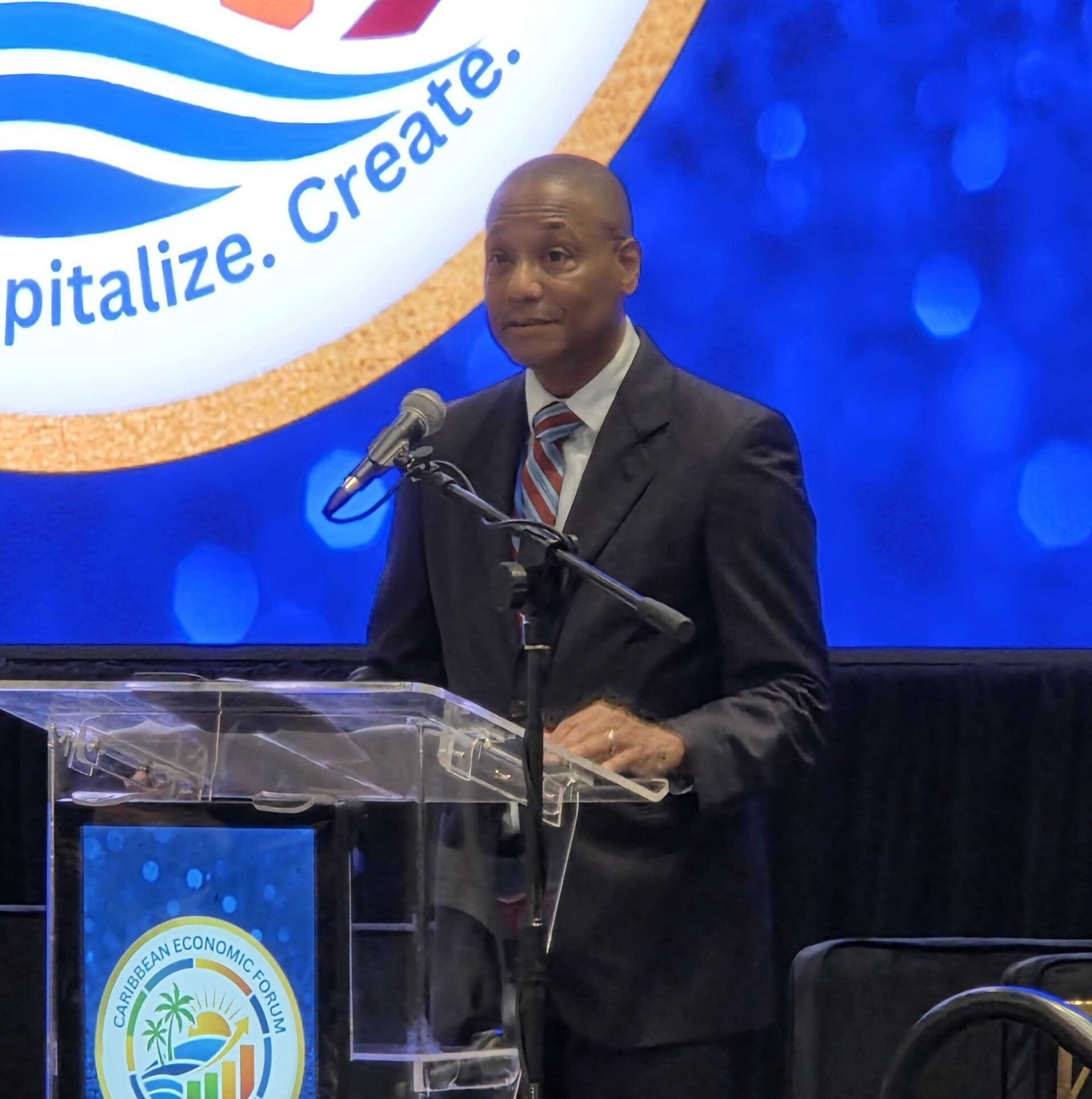
    On Thursday, a cross-sector coalition of Caribbean regional leaders and major global investors issued a clear call to action: Caribbean governments must break long-standing patterns of aid dependence and aggressively pivot toward mobilizing private sector capital to drive inclusive, sustained growth. Opening the high-stakes inaugural Caribbean Economic Forum (CEF) — a gathering that unites global investment firms, national government officials, and leading multilateral financial bodies — organizers laid out an ambitious core goal: to reframe the Caribbean from a patchwork of fragmented small markets into a cohesive, globally competitive, and investable asset class.

    Clinton White, founder of Counselor Global Solutions and co-convenor of the CEF, delivered the opening welcome remarks, drawing on his decades of experience working and living in the region during his tenure covering Caribbean economies for the now-disbanded U.S. Agency for International Development. White pointed to Barbados’ decades-long track record of economic resilience as a powerful case study for what small Caribbean states can accomplish when they embrace strategic economic transformation. “After gaining independence in 1966, this 166-square-mile island completely rewrote its economic story: it moved from a system almost entirely reliant on sugar exports to a diversified economy powered by tourism, international financial services, education, and a fast-growing innovation and sustainability sector,” White explained. “That transformation proves small states can deliver extraordinary outcomes when they set clear, ambitious goals.”

    White traced the origins of the forum back to a 2020 partnership he forged with CEF Executive Director Kiran Maharaj, USAID, and the Trinidad and Tobago Chamber of Industry and Commerce. The founding principle of that collaboration, he noted, is that no government can deliver large-scale economic transformation on its own. “We all acknowledge that development assistance still plays a critical role in the region, but we also recognize that aid alone will never be enough to tackle the full scale of the Caribbean’s opportunities and challenges,” White said in his address. “Aid can kickstart change, but only private investment can sustain it. Grants can build institutional capacity, but private capital builds entire industries, generates long-term jobs, and rewrites economic trajectories for entire communities.”

    White’s opening arguments drew heavily on data from the newly published *Caribbean Development Dynamics 2026* report from the Organisation for Economic Co-operation and Development (OECD), which frames the Caribbean as standing at a defining crossroads for development. The report confirms that nearly 80% of all current investment flowing into the Caribbean already comes from the private sector. With that in mind, White argued, the region’s top challenge is no longer convincing global investors of the Caribbean’s inherent value — it is removing structural barriers to channel existing investor interest into high-impact, transformative sectors that deliver broad-based growth. Key priority sectors he identified include renewable energy, climate-resilient sustainable tourism, the blue economy, digital transformation, and artificial intelligence innovation.

    “At the end of the day, this forum is not about us — it’s about the next generation of Caribbean people,” White emphasized. “Our goal is to build economies where young people don’t feel forced to leave their home islands to find opportunity. The choices we make in this room will determine whether the next generation inherits a region defined by vulnerability, or one defined by resilience, innovation, and shared prosperity for all.”

    Following White’s remarks, CEF co-founder Gregory Hill, who also serves as Managing Partner at ACERO Capital, took the stage to challenge attendees to set aside generic conference rhetoric and focus exclusively on tangible financial execution. Hill pushed back against the long-held international narrative that frames the Caribbean as a collection of isolated, economically vulnerable small states, instead positioning the region as one of the world’s most strategically important untapped investment frontiers.

    “Let me be completely blunt and clear from the start: this is not just another regional development conference,” Hill told assembled delegates. “We are not here to talk — we are here to work, we are here to collaborate, and we are here to deliver actual results. We did not gather just to discuss what development could look like; we are here to finance it. So bring your checkbooks.”

    Hill argued that the Caribbean economy can no longer afford endless cycles of diagnostic reports and policy discussions that never translate to on-the-ground action. He noted that the combined balance sheets of the global institutional investors and financial bodies represented at the forum total roughly $25 trillion — creating an unprecedented opportunity to close the long-standing gap between abundant global capital and the pipeline of viable, high-impact local projects across the Caribbean.

    Over the course of the forum, discussions will center on four core strategic pillars: accelerating the region’s energy transition, building climate-resilient infrastructure, advancing food security through agricultural modernization, and growing the Caribbean’s creative economy. To deliver scaled investment across these sectors, Hill argued, the region needs a modernized financial framework that leverages blended finance structures to reduce risk for private sector entities entering the market.

    Hill also called for a fundamental shift in how the success of multilateral development banks and development finance institutions operating in the Caribbean is measured. He proposed that these entities should be evaluated primarily by their ability to mobilize and deploy private capital into productive regional assets, rather than by the total volume of independent loans or grants they disburse.

    “Success will not be measured by how eloquent our speeches are today,” Hill said. “Success will only be measured by the formal mandates we sign, the partnerships we lock in, the projects that get actual funding, the businesses that expand, and the jobs that are created for Caribbean people. If we get this right, future generations will look back and see that this was the moment the Caribbean stopped viewing itself as a collection of independent, isolated, fractured economies — and started acting as a unified, investable asset class that delivers shared prosperity for all.”


  • PM hails Sir Emile Straker as a ‘national loss’

    PM hails Sir Emile Straker as a ‘national loss’

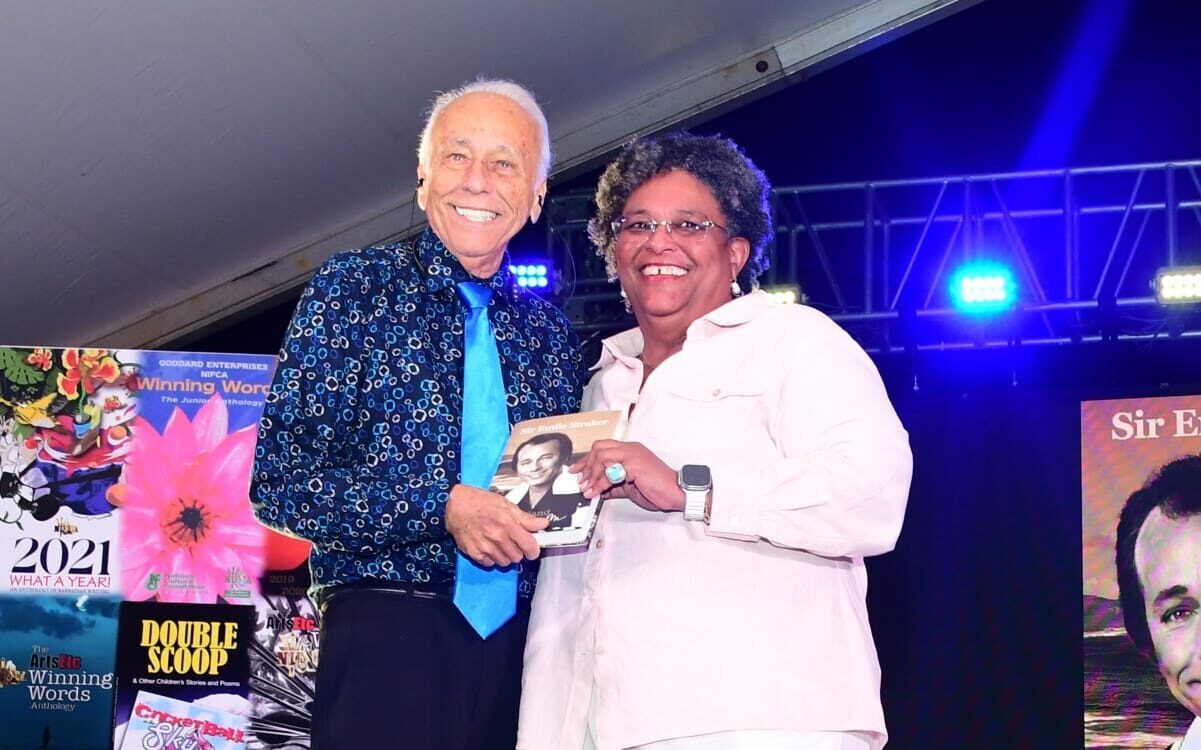
    Barbados is this week mourning the passing of one of its most influential cultural figures, Sir Charles Emile Straker, the pioneering musician whose six-decade career helped cement the island nation’s global cultural identity. In an official statement released Friday, Prime Minister Mia Amor Mottley labeled Straker’s death an irreplaceable “national loss”, offering a heartfelt tribute to the artist who shaped generations of Barbadian cultural expression. As co-founder, lead vocalist, and creative driving force of the internationally celebrated band The Merrymen, Straker leaves behind a legacy that stretches far beyond the Caribbean, tying the island’s story to audiences across the globe.

    Straker’s career spanned more than 60 years, during which he built a catalog of beloved tracks that remain inseparable from Barbadian daily life and national memory. Among his most iconic works are fan-favorites including *Beautiful Barbados*, *Nut Seller*, *You Sweeten Me*, *Sam Lord*, *Big Bamboo*, *Ring-Ting-Ting* and *Gary Sobers* — each a snapshot of Barbadian life, history, humor and landscape that has been passed down through generations. Mottley emphasized that Straker did more than create popular music: he built a living cultural archive that preserves the Barbadian experience for future generations.

    “His voice, songwriting, musicianship, and generosity of spirit helped tell Barbados’ story to the world,” Mottley wrote in the full tribute. As the lead singer, guitarist and co-founder of The Merrymen, Straker helped craft a sound that was unapologetically authentic to Barbados and the broader Caribbean: warm, playful, elegant, and rooted deeply in the rhythms and everyday experiences of the island’s people. Through his lyrics and melodies, he captured the unique cadence of Barbadian speech, the beauty of the island’s landscapes, the nation’s core history, and the quiet confidence of its people, Mottley noted. Rather than only providing entertainment, Straker gave his homeland a collective cultural memory, leaving a permanent record of what it means to be Barbadian.

    Beyond his cultural impact at home, Straker also served as one of Barbados’ earliest and most effective tourism ambassadors. Decades before the rise of modern destination marketing and social media promotion, Straker and The Merrymen brought Barbadian culture to audiences across the Caribbean, North America, Europe and beyond. The band performed in hotel venues, concert halls, and major international festivals, welcoming first-time visitors to the island, comforting diaspora communities living abroad, and inspiring countless international guests to fall in love with Barbados and return for future visits.

    Mottley highlighted that Straker’s life and work affirm a long-held truth: much of the Caribbean’s socio-cultural history is preserved in the lyrics of its native music, and Straker’s body of work stands as one of the most complete and beloved records of Barbadian life ever created. Over his career, Straker earned widespread recognition for his contributions to music, culture, and tourism. His many honors include the Barbados Service Star, the Pride of Barbados Award, the Barbados Centennial Honour, and a Commander of the Order of the British Empire for his services to the nation’s tourism and music industries. In 2019, he received one of Barbados’ highest national honors, being named a Knight of St. Andrew, in recognition of his role founding and developing The Merrymen and their distinct musical style. Mottley called the knighthood a fitting honor for a man whose work always carried the dignity, warmth, and unique character of Barbados.

    On behalf of the Government of Barbados and the island’s population, Mottley extended sincere condolences to Straker’s children Dean, Ray and Stacey-Jane, his grandchildren, extended family, friends, fellow musicians, former bandmates, and cultural collaborators, as well as the countless Barbadians and international admirers mourning his passing. She also remembered Straker’s late wife, Joyce Lady Straker, who shared his life’s journey and was herself part of Barbados’ national story.

    “May Sir Emile Straker rest in peace and rise in glory. His voice may be stilled, but his melodies will continue to play wherever Barbadians gather, wherever visitors remember Barbados, and wherever *Beautiful Barbados* is sung,” Mottley wrote in closing.

  • Reyme pleit voor moderne invulling dienstplicht om jongeren voor Defensie te winnen

    Reyme pleit voor moderne invulling dienstplicht om jongeren voor Defensie te winnen

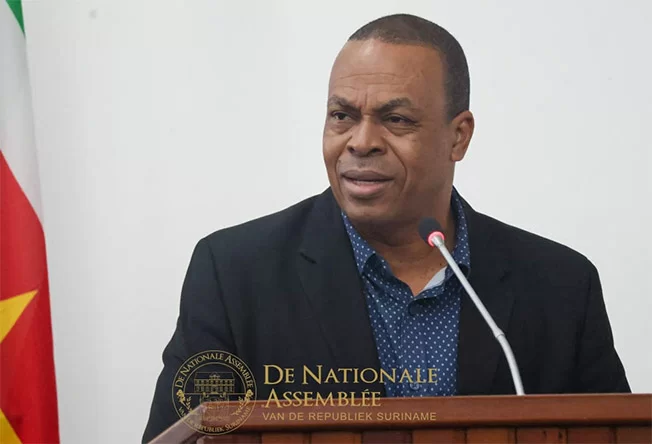
    During ongoing budget deliberations in Suriname’s National Assembly, parliamentarian Steven Reyme from the A20 party has put forward a bold proposal to reimagine national conscription as a developmental opportunity for young people, rather than the punitive mandate it has often been framed as in public discourse.

    Reyme’s call follows recent comments on conscription by fellow legislator Michael Marengo of the National Democratic Party (NDP), and comes amid a crippling wave of departures from Suriname’s National Army that has eroded the force’s personnel capacity over the past five years. Between 2020 and 2025, the country lost nearly 1,150 active service members, with more than 300 of those exits recorded in 2025 alone. “We have to figure out how to reignite enthusiasm for service and encourage people to return to the military, but this will not happen on its own,” Reyme told the assembly.

    At the core of his proposal is a push to shift widespread public perception of Suriname’s national defense sector. Reyme argues that policymakers must work to build a new mindset among young Surinamese: framing military service not as a punishment, but as a life-changing stepping stone. For disadvantaged youth who have faced systemic barriers to opportunity, he says, modernized conscription offers a structured environment to build critical life skills including discipline, personal accountability, and collaborative problem-solving. Beyond individual growth, Reyme frames the policy as a tool to strengthen national social cohesion and embed a culture of civic engagement among the country’s younger generation, positioning it as “an opportunity to boost societal involvement and rebuild shared social unity.”

    The lawmaker also tied his proposal to deeper structural and financial challenges facing Suriname’s defense sector. He noted that the vast majority of the current defense budget is allocated exclusively to personnel salaries, leaving only a tiny fraction of funding available for critical infrastructure upgrades, capability-building programs, and long-term institutional investments. He pointed to the border outpost at Albina as a stark example of the substandard conditions troops face across the country. “It’s embarrassing to visit that post. Troops are working in extremely poor conditions, and this is the first impression of Suriname that many cross-border visitors take away with them,” Reyme said.

    Reyme has issued an official call for Suriname’s Minister of Defense and the Minister of Transport, Communication and Tourism to develop targeted policy interventions to upgrade facilities at border posts and all military detachments across the country. He emphasized that improving working conditions is a critical first step to boosting retention and morale among current service members, addressing the root of the ongoing personnel exodus.

    At the same time, Reyme extended public praise to current Defense Minister Uraiqit Ramsaran for recent steps taken to address longstanding personnel backlogs, including the promotion of 151 service members and the authorization of new living and duty allowances that improve career prospects for active troops. Despite this positive note, he called on the minister to publicly clarify the criteria used for these promotions, noting that hundreds of additional service members remain waiting for career advancement. “A budget on paper is not enough,” Reyme reminded the sitting government. “The Surinamese public wants to see visible, tangible results that improve daily life for service members and the nation.”

    On the day of Reyme’s address, the government was scheduled to respond to the questions and proposals raised during the National Assembly debate.

  • Dominica-based Sickle Cell Cares Foundation launches Caribbean’s first digital health platform for Sickle Cell patients

    Dominica-based Sickle Cell Cares Foundation launches Caribbean’s first digital health platform for Sickle Cell patients

    To mark World Sickle Cell Day, the Dominica-founded Sickle Cell Cares Foundation Inc. (SCCF) has made history by launching the Caribbean region’s first dedicated digital health platform for people living with Sickle Cell Disease (SCD), filling a long-standing gap in specialized care access across the Eastern Caribbean. The new platform, named SickleConnect, is built to give SCD patients user-friendly, on-the-go access to condition management tools via any smartphone or internet-connected device, according to an official press release from SCCF.

    As defined by the U.S. National Institutes of Health (NIH) National Heart, Lung, and Blood Institute, Sickle Cell Disease is a group of inherited blood disorders that cause genetic mutations resulting in red blood cells taking on a rigid, sickle shape. Unlike flexible, round healthy red blood cells, these misshapen cells cannot move easily through blood vessels, often blocking blood flow and leading to debilitating health complications including recurring extreme pain crises and persistent chronic fatigue. This genetic trait is most common among populations of African descent; interestingly, carriers with one sickle cell gene and one normal gene do not develop the full disease, and the trait is linked to natural resistance against malaria.

    For SCCF Founder and CEO Kellyn George, the launch of SickleConnect is deeply personal: George lives with HbSS sickle cell disease, and shared in a statement that the platform is exactly what she needed when she was growing up managing her condition. Every feature of the platform was designed specifically around the unique daily challenges SCD patients face, rather than adapting general health tools to fit their needs.

    One of the platform’s core tools is a customizable pain monitoring system that lets users log every pain crisis, rate its severity on a standardized scale, and track potential environmental or lifestyle triggers that may precipitate episodes. For female patients, the tool adds the ability to map pain symptoms against menstrual cycles, helping identify consistent patterns and correlations that can inform long-term management.

    SickleConnect also includes comprehensive medication management functionality: users can build personalized medication schedules, track their adherence to treatment plans, receive automatic reminders for prescription refills, and access evidence-based warnings about dangerous drug interactions common to frequently prescribed SCD medications including Hydroxyurea and Penicillin. To address the well-documented role of consistent hydration in reducing SCD complication frequency, the platform also includes a visual hydration tracker that guides users to hit the recommended daily intake of three liters of fluid, with clear progress indicators to help build sustainable habits.

    A standout innovation is the platform’s AI-powered clinical reporting tool, which aggregates a user’s 30 days of self-tracked health data into a structured, clinician-friendly summary that can be directly shared with a patient’s haematologist. SCCF confirmed that this feature will remain completely free for all users during their first 30 days on the platform. Beyond self-management tools, SickleConnect also connects patients to direct care and support: users can book private one-on-one video consultations with SCD-specific counselors and advisors with lived experience of the condition. For emergency situations, the platform includes a one-tap Crisis SOS feature that sends an immediate alert with the user’s location to pre-designated contacts.

    To foster peer connection and shared learning, SickleConnect hosts six moderated community chat rooms, where patients from across the Caribbean and the global Caribbean diaspora can connect, share personal management tips and experiences, and access curated educational resources.

    SCCF emphasized the urgent public health need for this initiative: across populations of African and Caribbean descent, approximately one in every 500 people lives with Sickle Cell Disease, a condition that carries a high risk of severe pain crises, permanent organ damage, and drastically reduced life expectancy. Across Dominica and much of the Eastern Caribbean, access to specialized haematology care for SCD patients has long been extremely limited. Before SickleConnect’s launch, there was no regional digital health platform purpose-built to address the unique needs of this patient population.

    SCCF anticipates that the new platform will transform care across the region: it is expected to improve individual disease management outcomes, strengthen fragmented patient support networks, and close critical gaps in access to specialized care for underserved communities. SickleConnect is available immediately at no cost to users, accessible via any web browser at app.sicklecellcares.org. It can also be saved as a native-style app to both iPhone and Android devices without requiring a download from traditional app stores.

  • Antigua and Barbuda Cabinet Recommends Sir David Harrison to Lead UWI Five Islands Campus Council

    Antigua and Barbuda Cabinet Recommends Sir David Harrison to Lead UWI Five Islands Campus Council

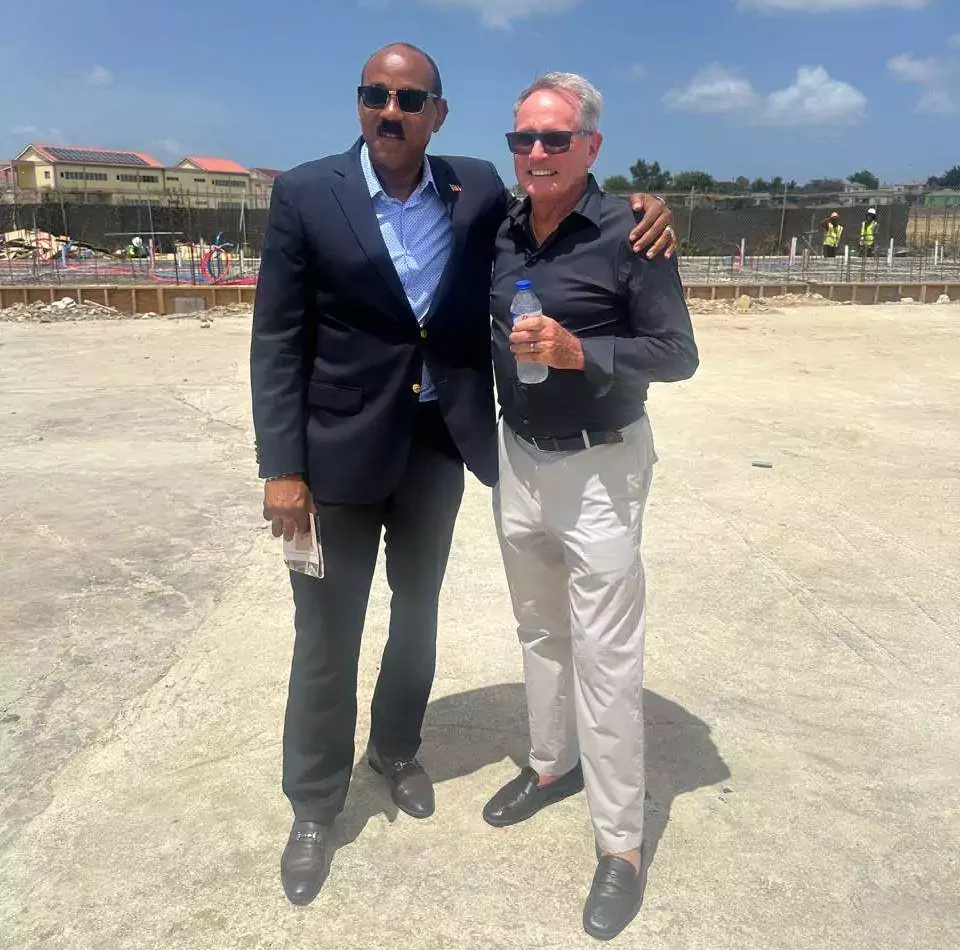
    The Cabinet of the twin-island nation of Antigua and Barbuda has formally approved a recommendation to appoint prominent British business leader Sir David Harrison to two key leadership positions at the University of the West Indies (UWI) Five Islands Campus. Under the proposal, Sir David will serve as both Chairman of the campus’s governing Council and Chairman of its dedicated Campus Endowment Fund.

    Sir David boasts a 40-plus year track record as one of the United Kingdom’s most accomplished entrepreneurs, building his reputation through transformative growth in the financial services and fintech sectors. He currently leads True Potential LLP, a Newcastle-based financial technology and services firm that ranks among the UK’s fastest-growing businesses in the industry. Before taking the helm at True Potential, Sir David founded and scaled Positive Solutions into the United Kingdom’s largest independent financial advisory network.

    Beyond his impressive corporate success, Sir David has long been recognized as a vocal champion for expanded educational access and improved social mobility, causes he has prioritized both through his advocacy and direct philanthropic giving. The Antigua and Barbuda Cabinet specifically highlighted Sir David’s ongoing extraordinary generosity to the country, noting his targeted support for local educational and youth empowerment programs, alongside millions of pounds in pledged investment to advance learning and opportunity for young Antiguans and Barbudans.

    In recognition of his decades of contributions to business, education, and social advancement in the country, Antigua and Barbuda awarded Sir David its highest civilian honor in 2022: Knight Grand Cross of The Most Distinguished Order of the Nation.

    Cabinet officials expressed unwavering confidence in Sir David’s ability to drive the Five Islands Campus forward, noting that his decades of leadership experience, forward-thinking strategic vision, and deeply rooted commitment to educational equity align perfectly with the institution’s growing mission. Launched in 2019 as the UWI system’s fifth permanent landed campus, the Five Islands location was established specifically to expand access to high-quality tertiary education across the Eastern Caribbean. It has since become a central pillar of the Antigua and Barbuda government’s long-term strategy to build national human capital and establish regional leadership in post-secondary learning, serving students across the entire Organisation of Eastern Caribbean States (OECS).

    According to the Cabinet’s statement, Sir David’s stewardship of both the governing council and endowment fund is expected to strengthen the campus’s institutional governance, boost large-scale fundraising capacity, and speed up progress toward the institution’s ambitious, transformative vision for higher education development across Antigua and Barbuda.

  • New Seed Bank and Sweet Potato Projects Aim to Strengthen Antigua and Barbuda’s Food Supply

    New Seed Bank and Sweet Potato Projects Aim to Strengthen Antigua and Barbuda’s Food Supply

    Antigua and Barbuda’s Minister for Agriculture has presented a progress update to the nation’s Cabinet on ongoing collaborative work between the Ministry of Agriculture and the Inter-American Institute for Cooperation on Agriculture (IICA), a longstanding key partner in the government’s strategic push to reframe agriculture as a foundational driver of economic expansion, national food security, and climate adaptive capacity across the twin-island nation.

    Per the Minister’s briefing, multiple development projects are moving forward under IICA’s 2025 Technical Cooperation Programme, with Antigua and Barbuda counted among the primary beneficiaries of region-wide initiatives focused on three core priorities: boosting agricultural output, reinforcing disaster preparedness frameworks, and advancing holistic food and nutrition security across the Caribbean.

    One of the highest-priority flagship initiatives is the Next Generation Sweet Potato Production in the Caribbean Project, delivered through a three-way partnership between IICA, Antigua and Barbuda’s Ministry of Agriculture, and the Caribbean Agricultural Research and Development Institute (CARDI). The project centers on increasing sweet crop yields, expanding the use of diverse sweet potato genetic resources, and directly contributing to stronger national food security.

    Key activities rolled out under the sweet potato initiative include the introduction of genetically improved planting stock, field testing of high-yield varieties bred to withstand extreme climate conditions, hands-on training for smallholder farmers on climate-smart good agricultural practices, and upgrades to regional pest management systems that cut post-planting crop losses.

    Beyond the sweet potato project, the Minister highlighted major advancements in the Mobile Seed Bank Project, another collaborative effort between IICA and CARDI built to strengthen regional disaster preparedness and speed post-disaster agricultural reconstruction across the Caribbean. Antigua and Barbuda, alongside Dominica, has been selected as a core pilot country for the initiative thanks to its existing robust seed production and storage infrastructure.

    The project will roll out a first-of-its-kind mobile seed banking system that enables rapid conservation and distribution of viable seeds during climate and weather emergencies, while also building long-term local technical capacity for seed and germplasm production and conservation. Additional components of the initiative include digitizing regional inventories of seeds and planting materials to improve supply chain traceability and quality control, and creating centralized reserve stocks of planting material to support immediate restart of crop production immediately after hurricanes, droughts, or other climate shocks.

    Already, CARDI has launched on-the-ground seed production activities in Antigua and Barbuda, focused on multiplying pumpkin and eggplant seeds that will be stored in reserve and distributed to local farmers to support recovery following future natural disasters.

    In addition to crop-focused initiatives, the Minister updated Cabinet on regional cooperation to strengthen monitoring and response capacity for African Swine Fever (ASF), a highly transmissible viral pathogen that threatens both commercial and wild pig populations. Through IICA and its network of regional partners, Antigua and Barbuda is taking part in cross-border programs to upgrade national ASF surveillance protocols, improve sample collection and laboratory testing capabilities, and develop coordinated cross-boundary response frameworks to protect both local and regional livestock industries from outbreak.

    Following the briefing, Cabinet members formally welcomed the measurable progress delivered through the ongoing partnership with IICA, and reaffirmed the Antigua and Barbuda government’s unwavering commitment to agricultural modernization, expanded climate resilience, and long-term achievement of full national food security and sustainable agricultural development.