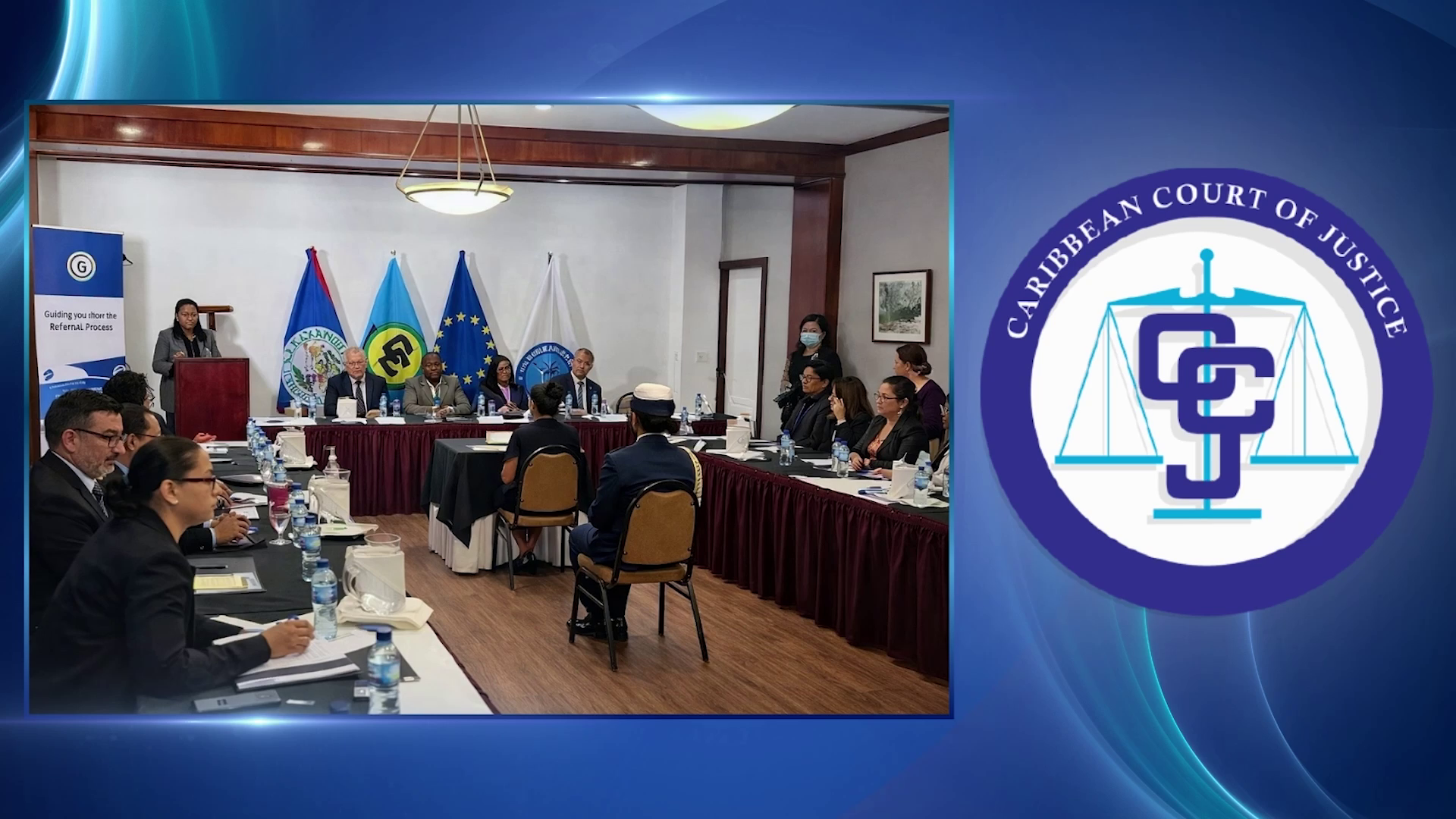
An explosive investigative report released by Trinidad’s *Sunday Express* has thrown the Caribbean Court of Justice (CCJ) into unprecedented turmoil, after unearthing serious internal accusations from five of the court’s six sitting judges against its president, Justice Winston Anderson.
The leak of internal judicial correspondence has pulled back the curtain on growing friction within the regional judicial body, which first began as a disagreement over a proposed new judicial dress code. What started as a narrow policy dispute quickly ballooned into a sweeping rebuke of Anderson’s leadership, with the sitting judges leveling three major claims against the CCJ president: that he employs an authoritarian management style, manipulates judicial panel assignments, and has attempted to interfere with the outcome of pending judicial decisions.
According to details from the published investigation, the judges’ complaints extend even to high-profile cases currently moving through the court. Multiple high-stakes matters originating from Belize were specifically cited in the internal communications between judges as examples of problematic oversight. Beyond the specific cases, judges warned of deepening institutional dysfunction: one judge described the court’s working atmosphere as increasingly “toxic”, while another labeled the top leadership’s decision-making processes as fundamentally anti-democratic.
In an official statement responding to the public revelations, the CCJ moved quickly to defend its institutional integrity and long-standing commitment to judicial independence. The court argued that the leaked allegations, released stripped of their full contextual background, are open to misinterpretation, and reaffirmed that the body continues to adhere to all core principles of ethical judicial conduct.
As news of the internal rift spreads across the Caribbean region, legal observers and regional governance analysts are now grappling with one pressing question: Is the CCJ, one of the Caribbean’s most important regional judicial institutions, facing its most severe internal crisis in its institutional history? The unfolding dispute has also raised broader questions about judicial governance and independence across the Caribbean’s regional legal framework, with stakeholders waiting for further transparency from the court to address the growing list of concerns.