博客

  • Only police allowed guns in park during carnival

    Only police allowed guns in park during carnival

    As St. Vincent and the Grenadines prepares to host its first national Vincymas carnival following the recent eruption of inter-gang conflict across the country, law enforcement officials have unveiled a strict new security measure: all licensed civilian firearm holders will be barred from bringing weapons into Independence Park during festival events.

    Acting Deputy Commissioner of Police Trevor “Buju” Bailey made the announcement official during a press briefing held by the Carnival Development Corporation (CDC) in Kingstown on Wednesday, June 17, 2026. Notably, Bailey referenced the venue by its former name, Victoria Park, which was officially renamed last October.

    To accommodate the new rule without unnecessary inconvenience to licensed gun owners attending shows, Bailey confirmed that police will operate a dedicated temporary storage booth just outside the park’s entrance. The facility will be staffed by uniformed police officers, who will manage a formal check-in and check-out process. Visitors with legally held firearms will be required to register their weapon in an official log, leave it in police custody for the duration of their time in the park, and complete a second sign-off when collecting their property at the end of their visit. Bailey also issued a clear recommendation that gun owners verify the serial number of their weapon upon collection to ensure they retrieve the correct firearm.

    Under the new restriction, only on-duty police officers assigned to security detail for Vincymas 2026 will be permitted to carry firearms within park grounds during festival events.

    The policy comes against a tense backdrop: this year’s Vincymas marks the first national carnival held after violent clashes between two rival gangs, 6ixx and 7even, spread across multiple communities in the country. Bailey stressed that law enforcement has already successfully overseen a series of smaller regional rural carnival events without any recorded incidents of violence, crediting close collaborative work between the police force and event organizers.

    Repeating CDC’s framing of the Royal St. Vincent and the Grenadines Police Force as the organization’s “number one partner” in delivering a safe celebration, Bailey emphasized that the longstanding working relationship between the two groups remains strong this year. From crowd management and public behavior monitoring to restrictions on glass containers and the new firearms rule, Bailey positioned layered security planning as the core foundation of this year’s festival.

    The senior officer also issued a direct public warning to any individuals seeking to bring gang-related violence into the capital Kingstown during Vincymas. “If you bring any 6ixx and 7even violence into Kingstown, you will come head on with number one,” Bailey said, referencing the police force. “We get serious when it comes to that.”


  • COMMENTARY: Closing survival gap equity in sickle cell disease

    COMMENTARY: Closing survival gap equity in sickle cell disease

    Sickle cell disease (SCD) is a lifelong inherited blood disorder passed down through parental genes, characterized by the production of abnormal hemoglobin. As the oxygen-carrying protein in red blood cells, dysfunctional hemoglobin leaves the body’s tissues and organs chronically starved of oxygen. Unlike healthy red blood cells, which are round, flexible, and able to travel smoothly through blood vessels, SCD produces red blood cells that are rigid, sticky, and shaped like a crescent or farm sickle. These misshapen cells easily clump together, blocking blood flow and causing widespread damage throughout the body.

    A key distinction is often drawn between sickle cell disease and sickle cell trait. People with sickle cell trait inherit just one abnormal hemoglobin S gene from one parent, paired with a normal gene from the other. While most carriers do not develop full symptoms of sickle cell disease, emerging research suggests some may experience mild symptoms, and all carriers are capable of passing the abnormal gene to their children. In Jamaica alone, approximately 10% of the population lives with sickle cell trait, a prevalence that has a direct impact on the number of children born with full sickle cell disease each year.

    Marked annually on June 19, World Sickle Cell Awareness Day was created to expand public knowledge and global attention to this often-overlooked blood disorder. This year’s campaign centers on the theme “Closing the Survival Gap: Equity in Sickle Cell Disease”, representing a critical global shift from general awareness-raising to demanding tangible, systemic healthcare equity. The theme is anchored in four core pillars that guide global action.

    The first pillar focuses explicitly on addressing the survival gap, targeting the stark global inequalities in life expectancy and health outcomes for SCD patients. The second pillar calls for equal access to high-quality care, demanding that consistent, high standards of diagnosis, pain management, and specialized treatment be available to all patients regardless of where they live. The third pillar shifts focus from awareness to action, challenging governments and healthcare systems to dismantle structural barriers to care rather than relying solely on educational outreach. The final pillar centers on empowering communities, calling for increased support for young patients and patient advocates to help them navigate care systems and confidently manage their condition.

    The core objectives of the annual observance extend beyond these pillars to drive long-term change. Key goals include increasing public understanding of SCD’s global burden, encouraging national governments to integrate SCD care into public health programs and establish specialized treatment centers, and highlighting the critical role of pre-marital genetic screening in reducing intergenerational transmission of the abnormal gene. The day also advocates for expanded investment in research to improve quality of life for all people affected by SCD.

    Symptoms of sickle cell anemia, the most common form of SCD, typically emerge around six months of age, varying between individuals and changing over time. One of the most debilitating symptoms is recurrent pain crises: when sickle-shaped cells block blood flow to the chest, abdomen, and joints, they cause extreme pain episodes that can last from a few hours to several days. While some patients experience only a few crises annually, others face a dozen or more, with severe crises requiring emergency hospital care. Many patients also live with chronic long-term pain caused by bone damage, joint damage, skin ulcers, and other SCD-related complications.

    Anemia is another hallmark symptom of SCD. Healthy red blood cells live approximately 120 days before being replaced, but sickle cells break down and die in just 10 to 20 days, creating a persistent shortage of red blood cells that leaves patients chronically fatigued. Additional common symptoms include swelling of the hands and feet caused by blocked circulation, delayed growth and puberty in children and teenagers due to insufficient oxygen and nutrients for development, and vision damage when sickle cells block blood vessels supplying the retina.

    The Caribbean region faces a disproportionate burden of SCD, a legacy of the Atlantic Slave Trade. Studies place the prevalence of sickle cell trait between 7% and 10% across the region, where most of the population of Caribbean islands traces their ancestry to West Africa. Outside of West Africa itself, the Caribbean has the highest incidence of sickle cell disease in the world, with the genetic variant linked to SCD originating predominantly from West African populations.

    Modern treatment for SCD includes medication, blood transfusions, stem cell (blood or marrow) transplantation, and emerging gene therapy. To date, stem cell transplantation remains the only curative option for SCD, requiring a genetically matched donor, most commonly a sibling. Ongoing research is working to expand access to curative transplants by optimizing protocols for partially matched donors, such as parents or half-siblings. While SCD is associated with reduced life expectancy, new targeted treatments have dramatically improved both life expectancy and quality of life in recent decades. With optimal, consistent disease management, many people with SCD now live into their 50s and beyond.

  • Miners Association appeals to authorities to fix badly damaged roads in mining district

    Miners Association appeals to authorities to fix badly damaged roads in mining district

    On Friday, June 19, 2026, the Guyana Gold and Diamond Miners Association (GGDMA) issued an urgent public appeal to the Guyanese government, calling for immediate repairs to heavily damaged interior access roads that serve the country’s key gold and diamond mining regions. The infrastructure damage is a direct consequence of ongoing extreme rainfall that has battered the mining heartland of the nation.

    In the GGDMA’s official statement, Managing Director Avalon Jagnandan emphasized the critical need for rapid intervention from relevant government ministries and regulatory bodies. “We need authorities to help rapidly repair the damaged road infrastructure that will allow miners to access mining areas more easily,” Jagnandan said, framing the repairs as a make-or-break issue for the sector’s ongoing operations.

    Shortly after the appeal was made public, Minister of Mining Vickram Bharrat responded, confirming that full repairs to the mining district road networks will commence once the severe rainfall subsides. Bharrat acknowledged the severity of the crisis, noting that the damaged infrastructure is already weighing heavily on miners and their output at a time when global gold prices are sitting at a historic all-time high. On the day of the appeal, the London Gold Fix opened with spot gold trading at $4,164.55 per ounce, creating a high-stakes window for domestic production that is currently being squandered by weather-related disruptions.

    When asked whether the association had contacted the government privately before launching its public appeal, Jagnandan clarified that the crisis is an ongoing, rapidly evolving situation that demands immediate public attention, adding that the group is actively engaging with authorities to resolve the issue. While the GGDMA has not yet released a formal statistical projection for lost gold output, Jagnandan warned that continued poor weather and delayed road repairs will almost certainly drag down production levels. “Miners would not be able to properly access their work grounds and get key supplies in their camps. These will certainly hinder production,” he explained.

    Beyond road damage, the unrelenting rainfall has triggered widespread flooding that has forced dozens of small and medium mining operators to shut down their camps entirely, as work sites have become completely unworkable. The situation is particularly acute along the Puruni River, where floodwaters have overtopped the river’s banks so extensively that the natural river channel is no longer distinguishable from surrounding low-lying lands. The combination of vastly expanded flood coverage and powerful fast-moving currents has forced operators to suspend all pontoon crossings in the region, cutting off access to large swathes of active mining territory and grinding operations to a halt.

    In addition to its appeal for government support, the GGDMA has issued urgent safety guidance for miners still operating in flood-impacted areas, urging extra vigilance as saturated soil has become far more prone to collapse. In recent weeks, multiple mining pit collapses have been recorded across affected districts, resulting in fatalities, injuries, and extensive damage to heavy mining equipment. The association has reminded all mining operators to adhere strictly to all established safety protocols set out by the Guyana Geology and Mines Commission, while also advising miners to continue selling gold to the Guyana Gold Board or licensed private buyers, and maintain full, accurate records of all transactions.

    The sector is facing additional strain beyond weather-related disruptions, the GGDMA confirmed: a recent spike in criminal activity across remote hinterland mining regions has eroded confidence among small, vulnerable independent miners. Over the past several months, multiple miners have been assaulted and robbed in isolated mining districts, creating further uncertainty for an industry already grappling with extreme weather challenges.

  • Mullings retains national discus throw title

    Mullings retains national discus throw title

    Kingston, Jamaica – In a tense, unpredictable final round of men’s senior discus competition at the JAAA National Championships held Saturday at Kingston’s National Stadium, top thrower Ralford Mullings delivered a winning performance that secured both his title defense and a spot on Jamaica’s roster for the 2022 Commonwealth Games in Birmingham this July.

    Mullings, the Jamaican national record holder in the event, entered the competition fresh off a historic milestone earlier this month: back-to-back NCAA Division I Outdoor Championships titles while competing for the University of Oklahoma. The standout athlete only recorded two valid, legal throws across the six-round competition, but his best effort of 64.31 meters was enough to outpace every other competitor and claim the top spot on the podium.

    Behind Mullings, 2018 Commonwealth Games gold medalist Fedrick Dacres finished as the runner-up with a top throw of 62.97 meters. Racquil Broderick, a standout from the University of Southern California who also finished second behind Mullings at the recent NCAA Outdoor Championships, rounded out the top three with a throw that matched his 2022 season best of 62.87 meters.

    The day ended in heartbreak for fourth-place finisher Chad Wright, who came into the national championships with high hopes of becoming a dual-sport Jamaican representative at the upcoming Commonwealth Games. Wright had thrown a personal best 67.92 meters earlier this April, putting him in strong contention for a top-three finish and a spot on the discus roster. But his best effort on Saturday only reached 60.55 meters, ending his dream of competing in both discus and a second sport at the global games this summer.

  • Moore, Taylor lead qualifiers for 200m final at national championships

    Moore, Taylor lead qualifiers for 200m final at national championships

    KINGSTON, Jamaica — The Jamaican Athletics Administrative Association (JAAA) National Championships delivered exciting semi-final action in the men’s and women’s 200-meter events on Saturday, with defending women’s champion Ashanti Moore and 2023 men’s runner-up Christopher Taylor emerging as the top athletes to advance to the upcoming final.

    Moore, who already secured a spot in the women’s 100-meter final a day earlier, delivered a dominant performance to win her semi-final heat, crossing the finish line in 22.88 seconds against a -1.2 meters per second headwind. Behind her in the same heat, Lavanya Williams clocked a new personal best of 23.06 seconds, while Jodean Williams notched a 23.05-second season’s best to also move on to the final.

    In the second women’s semi-final, contested into a much stronger -4.0 m/s headwind, Alana Reid finished second in 23.74 seconds, and Niesha Burgher took third in 23.82 seconds, both earning their places in the final round.

    On the men’s side, Taylor turned in a standout showing to win his semi-final, posting a new 2024 season’s best time of 20.49 seconds despite a challenging -2.9 m/s headwind. He outpaced Roshawn Clark, a former national 400-meter hurdles champion, who finished second in the heat with a solid 20.63-second run to claim his spot in the final.

    Other men’s athletes advancing to the 200m final include Jevaughn Powell, who topped the first round of qualifying earlier in the competition and notched a 20.73-second run in the semi-finals against a -4.5 m/s headwind, Adrian Kerr, who finished just behind Powell in 20.76 seconds in the same heat, and Kadrian Goldson, who sealed his spot with a 21.00-second run against a -4.0 m/s headwind. The 200m final is scheduled to take place in the coming days of the national championships, where athletes will compete for Jamaican national titles and qualifying spots for upcoming international competitions.

  • Lloydricia Cameron wins first shot put title after six runner-up finishes

    Lloydricia Cameron wins first shot put title after six runner-up finishes

    KINGSTON, Jamaica — In a story of persistence that culminated in long-awaited victory, Lloydricia Cameron secured her first-ever Jamaican national women’s shot put title Saturday at Kingston’s iconic National Stadium, breaking a six-year streak of second-place finishes at the country’s top track and field competition.

    Competing at the Jamaica Athletics Administrative Association (JAAA) National Championships, Cameron delivered a winning throw of 17.57 meters to claim the gold medal, outperforming a field of young, rising talent from top collegiate programs across the United States. The hard-fought win marks a career milestone for the thrower, who has finished as runner-up at every national championship dating back to 2019, each time falling short of the top spot behind national record holder Danniel Thomas-Dodd.

    Born in the United States and a former athlete for the University of Florida, Cameron now trains full-time in Kingston as she builds toward major international competitions later this year. Among her upcoming goals is improving on her fourth-place finish at the 2022 Birmingham Commonwealth Games, a result that already cemented her status as one of the region’s top shot put talents.

    In the final standings of Saturday’s competition, Kimeka Smith, a representative of Clemson University, took home the silver medal with a best throw of 16.03 meters. Rounding out the top three was Britannie Johnson of Purdue University, who claimed bronze with a throw of 15.55 meters.

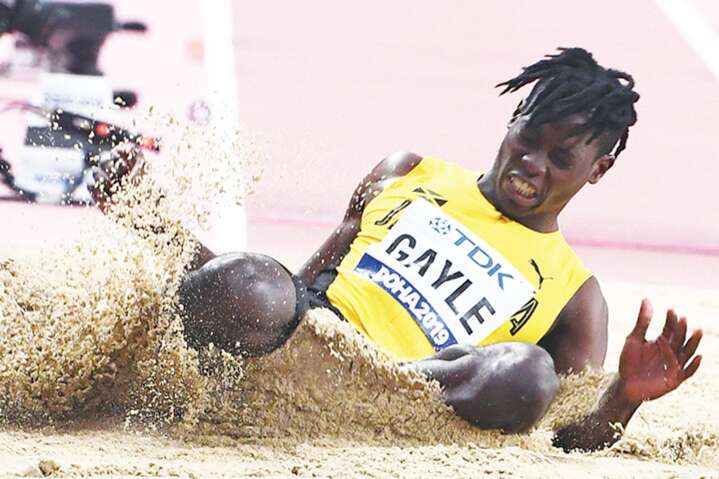
  • Tajay Gayle wins first long jump title in 5 years

    Tajay Gayle wins first long jump title in 5 years

    KINGSTON, Jamaica — On the third day of the Jamaica Athletics Administrative Association (JAAA) National Championships held at Kingston’s iconic National Stadium, former world long jump champion Tajay Gayle delivered a standout performance to secure his first national men’s long jump title in three years. Competing in Saturday’s final, the Jamaican star notched a season-best leap of 8.37 meters with a legal wind assistance of 1.6 meters per second, a result that has immediately lifted his standing in global long jump rankings. This winning mark catapults Gayle into a tie for seventh place in the world rankings, arriving at a critical juncture as athletes around the globe battle for limited qualifying spots at the sport’s highly anticipated inaugural World Athletics Ultimate Championships. Alongside his winning legal jump, Gayle also recorded an 8.31-meter effort that fell outside wind allowance rules, with a reading of 2.6 meters per second behind that attempt. He outpaced the rest of a competitive field to take the top spot on the podium, with Louisiana State University’s Jordan Turner claiming second place after hitting a wind-aided 8.22 meters (3.2 m/s). Rounding out the top three was Nikaoli Williams, who registered a wind-assisted 7.89-meter jump with a 2.3 m/s wind reading. The victory marks a key turning point for Gayle, who had not claimed a national title since 2021, and signals that he is finding top form at the right time ahead of the upcoming global championship event.

  • Smith wins jumps double at national championships

    Smith wins jumps double at national championships

    On the third day of Jamaica’s premier domestic track and field competition, the JAAA national championships held at Kingston’s National Stadium, Ackelia Smith etched her name into the event’s history books by securing a rare and impressive double victory. Fresh off securing her fourth senior national long jump title just two days prior on Thursday, the Jamaican jumper turned her attention to the triple jump on Saturday and delivered another standout performance to claim the top spot.

    Smith landed a best leap of 13.95 meters with a legal tailwind of 2.0 meters per second, which earned her the first senior national triple jump crown of her career. The victory also reinforced her position as one of Jamaica’s top jumpers heading into the upcoming 2022 Commonwealth Games, a qualification she locked in earlier in the week after posting a 6.81-meter winning jump in the long jump.

    While the women’s triple jump field only featured four registered competitors, a noticeably small size for a national championship final, the competition more than made up for low numbers with high quality performance across the board. Jade-Ann Dawkins, a former standout athlete from St Jago High School now competing for Kansas State University, took the second spot on the podium with a 13.67-meter jump, recorded with a 0.9m/s wind.

    Rounding out the top three was Shantae Foreman, the reigning NCAA champion representing Clemson University, who posted a wind-aided mark of 13.49 meters with a 5.0m/s tailwind that pushed the jump outside of the legal record range. The fourth and final spot went to Texas A&M University’s Machaeda Linton, who also recorded a wind-aided result of 13.11 meters with a 4.0m/s wind.

    Smith’s rare double win cements her status as one of Jamaica’s most consistent and versatile jumpers heading into the international championship circuit, with the Commonwealth Games set to be her next major test on the global stage.

  • Jamaica Customs to speed up release of new motor vehicles

    Jamaica Customs to speed up release of new motor vehicles

    KINGSTON, Jamaica — In a major push to modernize trade operations and boost economic productivity, the Jamaica Customs Agency (JCA) has unveiled a key update to its national Trade Facilitation Programme. Starting Monday, June 22, 2026, new motor vehicles imported by licensed authorized new car dealers will be eligible for immediate release from the country’s ports of entry, marking a significant departure from long-standing regulatory protocols.

    For decades, all imported new vehicles were required to complete a mandatory in-person physical verification check before they could be cleared for departure from port facilities. Under the new framework, this pre-clearance inspection will be replaced with post-clearance verification, shifting the compliance check to after the vehicle has been released to the dealer. The JCA announced the policy shift in an official public statement issued Friday, noting that the change came after a months-long ongoing risk assessment of imports from authorized new car dealers. That assessment ultimately classified this category of vehicle shipments as low-risk, justifying the regulatory adjustment.

    Fayval Williams, Jamaica’s Minister of Finance and the Public Service, emphasized that the policy update aligns directly with the Jamaican government’s core national productivity goals, which center on cutting red tape and increasing operational efficiency across all public sector trade functions. “This initiative reflects the Government’s commitment to improving efficiency, productivity and the ease of doing business in Jamaica,” Williams stated in the official announcement.

    Williams explained that the enhanced trade facilitation measure will cut down wait times for vehicle clearance and create a more stable, predictable operating environment for legitimate automotive sector businesses to scale and expand. She also framed the change as one incremental step in a far broader public sector modernization agenda that the administration is advancing across government agencies. “The Government will continue to review operating procedures and services, identifying opportunities to simplify processes with the aim of increasing efficiency,” Williams added.

    Kirk Benjamin, Acting CEO and Commissioner of Customs, echoed that perspective, pointing out that the previous pre-clearance inspection system imposed unnecessary delays and added avoidable costs for a category of imports that already carried minimal compliance risk. “For years, new motor vehicles imported by authorised dealers had to be physically verified before they could leave the port. This change will reduce time, cost and congestion at our ports of entry,” Benjamin said.

    Benjamin also clarified that the update is not an ad-hoc one-off change, but a deliberate expansion of the JCA’s ongoing Trade Facilitation Programme. “These vehicles come from a small group of authorised dealers, in high volumes, with a high level of compliance, and they present a very low risk profile. That combination makes them an ideal fit for post-clearance verification,” Benjamin explained. Beyond streamlining dealer operations, the policy shift will also allow the JCA to reallocate limited customs resources that were previously dedicated to pre-clearance physical inspections to other higher-priority, higher-risk trade areas, boosting overall agency efficiency.

  • French police raid house for drugs and find a Picasso

    French police raid house for drugs and find a Picasso

    A routine anti-narcotics police search in a quiet Parisian suburb has yielded an unexpected, high-stakes discovery: a lost authentic painting by legendary 20th century artist Pablo Picasso, French prosecutors confirmed over the weekend. The revelation has sent ripples through the European art law enforcement community, turning a standard drug trafficking probe into a cross-dimensional criminal investigation.

    The search operation targeting suspected illegal drug trade activity was executed on Monday in Champigny-sur-Marne, a residential commune located just east of the French capital, according to initial reporting from France’s Le Parisien newspaper, which was first to break the story to the public. Beyond the stolen masterpiece, law enforcement officials also recovered a haul of connected contraband during the raid: pressed cannabis resin, a collection of high-end designer clothing, and tens of thousands of euros in untraceable cash, the outlet reported.

    Officials from the public prosecutor’s office of Creteil, the regional jurisdiction that covers the area and is leading the probe, confirmed the surprising finding in an official statement released Saturday. “This discovery was made during a search carried out as part of an investigation into drug trafficking,” the office said, noting that authorities have already launched a parallel probe into the theft of the artwork and its illegal trafficking on the black market.

    Four individuals allegedly tied to both the drug operation and the stolen painting were taken into custody following the search and appeared before a local court for an urgent preliminary hearing on Friday, prosecutors confirmed. Art experts have formally authenticated the piece as an original work by Picasso, the iconic Spanish cubist painter whose works regularly sell for tens of millions of dollars at public auction. Authorities have not yet released additional details about the painting, including its title, date of creation, subject matter, or estimated market value, leaving art world observers waiting for further updates on the unprecedented find.

    Stolen fine art has long been linked to transnational organized criminal networks, including drug trafficking groups, who often launder illegal proceeds through the unregulated global art market and traffic stolen masterpieces as a form of untraceable alternative currency. This unusual cross-over discovery in the Paris suburbs highlights how investigations into street-level drug activity can occasionally uncover much older, high-profile crimes that have gone unsolved for years.