博客

  • Appeal for Help to Find Missing Teen from Otto’s New Town

    Appeal for Help to Find Missing Teen from Otto’s New Town

    Authorities and family members are conducting an urgent search operation for a 16-year-old teenager who disappeared from her hometown of Otto’s New Town, after she was reported missing by her loved ones.

    Brianna Lewis, the missing teen, was last spotted in public wearing a black cropped top and a pair of short denim jeans. For days, her relatives have attempted every possible avenue to reach her, but all attempts at contact have failed, leaving the family growing more anxious by the hour about her well-being and personal safety.

    In a desperate plea for community support, Brianna’s family has issued a public appeal for any information that could help lead to her safe return. They are urging every member of the public who may have spotted Brianna recently, or who holds any details about her current whereabouts, to step forward immediately with their tips.

    Local law enforcement has confirmed that they have opened an active investigation into Lewis’s disappearance. To date, however, police officials have declined to share additional details surrounding the conditions or timeline of her vanishing, leaving many questions unanswered for both the family and the local community.

    Authorities and the family have both outlined clear next steps for anyone who may have relevant information: any person with clues about Brianna’s location is asked to either contact their closest local law enforcement station directly, or reach out directly to members of Brianna Lewis’s family to share what they know.

  • Antiguan woman who killed 5-year-old girl sentenced to 12 years in prison

    Antiguan woman who killed 5-year-old girl sentenced to 12 years in prison

    Nearly 50 years after a five-year-old girl died from catastrophic scalding injuries sustained in a forced hot bath, her step-mother has been handed a 12-year prison sentence for the killing that was concealed as an accident for more than four decades.

    Janice Nix, now 67, was found guilty of manslaughter by jurors at Isleworth Crown Court, for the June 1978 death of Andrea Bernard in the family’s Thornton Heath home, located in south London. Friday’s sentencing closed a cold case that was only reactivated in 2022, when Andrea’s older brother Desmond Bernard, who survived years of abuse at Nix’s hands, approached police with a full, firsthand account of the tragedy he had been forced to hide from childhood.

    Alongside her manslaughter conviction, Nix was also sentenced for child cruelty offences committed against Desmond between 1975 and 1978, when he was just seven to nine years old.

    ### The 1978 Tragedy Unfolded
    Court testimony laid bare the sequence of events that led to Andrea’s death. On June 6, 1978, Nix, then in her late 20s and partnered with the children’s father, flew into a rage after Andrea defied her order to stay inside and help with cleaning. After screaming at the young girl and beating her, Nix ran a scalding hot bath.

    Desmond Bernard, who was a child witness to the abuse, told the court he could clearly hear the confrontation through the bathroom door. “I could hear Janice shouting: ‘Get in the bath’, and I could hear Andrea saying: ‘The bath is too hot, mummy,’” he testified. He went on to describe hearing repeated demands for Andrea to enter, followed by screaming, splashing, and then a sudden silence, before he heard Nix calling frantically for Andrea to wake up.

    When Desmond entered the bathroom, he saw Nix holding Andrea’s limp, burned body wrapped in a towel. “I could see skin falling off her,” he told the court. Immediately after the incident, Nix pressured the young boy to lie to authorities, instructing him to say the accident happened while he and Andrea were playing in the garden, and promising she would stop abusing him if he kept her secret.

    Andrea was hospitalized with burns covering 50 percent of her small body, and died almost six weeks after the attack.

    ### Judicial Evidence and Testimony
    In his sentencing remarks, Judge Nicholas Lavender made clear the overwhelming evidence pointing to Nix’s culpability. “I’m sure that you ran the bath, you knew how hot it was, you told Andrea to get in the bath, she said it was too hot, but you either put her in the bath or made her get into it,” the judge stated. “At the very least the risk ought to have been obvious to you.”

    Throughout the hearing, the silver-haired Nix, who wore a white shirt and black blazer to court, cried openly through most of proceedings, breaking down into loud sobs as the judge delivered his statement.

    Forensic medical testimony further undermined Nix’s claims of an accidental death. A specialist burns expert told the trial that a child exposed to water hot enough to cause Andrea’s life-threatening injuries would instinctively struggle to climb out of the tub, rather than remaining seated. Prosecutors relied on this evidence to argue that Nix must have forcibly held the young girl’s body underwater to inflict the harm.

    ### The Long-Term Harm of Abuse
    In a raw victim impact statement read to the court, Desmond Bernard detailed the lifelong trauma he has carried since the tragedy. He described years of abuse at Nix’s hands, including beatings with a belt and being forced to eat cat food, abuse that he said left him “broken” and stole his sister’s entire future.

    “The last memories I have of my sister’s life are piercing screams and lying about her death to survive,” he wrote. Directly addressing Nix, he added: “You took away her future and changed mine forever. Your contrived grief at Andrea’s funeral, the lies, the tears. You fooled my family because they couldn’t imagine the unimaginable. You took their kindness for weakness and you manipulated them so that you couldn’t be found out. The time has come for you to acknowledge what you have done to Andrea and myself.”

    Angela Bernard, the children’s biological mother, described Andrea as a gentle, loving little girl in her own statement, saying that her death completely destroyed her. “She deserved to have a life, not be lying around in a cemetery,” she wrote. “I think about her every single day.”

    ### How the Cold Case Was Reopened
    For 44 years, Andrea’s death was officially ruled an accident. During the 1978 inquest, Nix initially claimed Andrea had drawn the bath herself, before fainting after complaining of itchy legs. But during her trial, she admitted she had lied to the coroner, saying she panicked after failing to supervise the child. In a 2022 police interview, she offered a new version of events that differed drastically from her original statement, and falsely claimed the coroner had blamed a faulty boiler for the overheated water – a detail that never appeared in the original inquest report.

    In a striking twist, Nix had actually drawn attention to her past a year before the investigation was reopened, when she published an autobiography titled *Breaking Out*. The book detailed her dramatic life trajectory from a major drug dealer known on the streets as “Mama J” to an award-winning probation officer. Nix worked for the UK Probation Service between 2014 and 2019, and won the service’s diversity and engagement award in 2015, despite having previously served two substantial prison sentences for drugs offences.

    Under the terms of her latest sentence, Nix will be required to serve two-thirds of her 12-year term before becoming eligible for release on licence.


  • CXC disaster response model praised as blueprint for resilience following Hurricane Melissa

    CXC disaster response model praised as blueprint for resilience following Hurricane Melissa

    At the latest Jamaica Employers’ Federation (JEF) Convention, the Caribbean Examinations Council (CXC) took the spotlight to share its award-worthy approach to disaster contingency planning, presented by CXC Director of Corporate Services Sheree Deslandes. Delivering a talk titled “Hardwired to Recover: HR, Disruption, and the Architecture of a Modern Caribbean Workforce,” Deslandes walked attendees through how the organization’s pre-built Regional Disaster and Business Recovery Protocol allowed for a rapid, coordinated response when Hurricane Melissa made landfall in Jamaica in October 2025.

    The 2025 hurricane left a devastating trail of disruption across the country, damaging more than 800 educational facilities and disrupting the academic trajectories of over 250,000 students. What set CXC’s response apart, Deslandes emphasized, was that it was not an ad-hoc plan cobbled together in the middle of the crisis. Instead, the framework had been refined over years of real-world testing, forged during prior regional disruptions including the global COVID-19 pandemic, the 2021 eruption of La Soufrière volcano in St. Vincent and the Grenadines, and 2024’s Hurricane Beryl.

    Thanks to this pre-existing, tested protocol, CXC moved quickly to protect students’ access to the 2026 January and May-June sessions of the Caribbean Advanced Proficiency Examination (CAPE) and Caribbean Secondary Education Certificate (CSEC). Partnering closely with Jamaica’s Ministry of Education, Skills, Youth and Information, the organization rolled out a suite of flexible, student-centered adjustments: full fee refunds for candidates who did not feel prepared to sit their scheduled exams, penalty-free late registration for those affected by displacement, and revised requirements and extended deadlines for School-Based Assessments (SBAs).

    This practical, proactive approach struck a chord with convention attendees, who widely praised CXC’s framework as a gold standard for organizational resilience in the face of climate-driven disasters. Tishauna Mullings, a training consultant with NexxStep, called the CXC response a powerful blueprint for other regional institutions, noting “The agile resilience demonstrated by CXC for our children is inspiring.”

    During question-and-answer sessions, convention participants pressed for deeper insight into the structural choices that made CXC’s response so effective. Deslandes highlighted the often-overlooked strategic role of the Human Resources department, positioning it as the backbone of the organization’s preparedness and recovery capacity. She challenged attending employers and organizational leaders to reconsider their own HR frameworks, asking: “Is your HR function built for the storm you haven’t seen yet?”

    At CXC, Deslandes explained, resilience has been baked into HR strategy through intentional structural change: the organization has restructured roles and reporting lines, updated outdated HR systems and core workflows, and deliberately cultivated an organizational culture focused on results and rapid recovery. She argued that investments in HR transformation extend far beyond boosting internal operational efficiency, delivering tangible benefits to students, education ministries, and regional employers that rely on a steady, well-prepared pipeline of new workforce entrants.

    “By design, HR-led transformational work is unfinished. It is a process of purposeful building and rebuilding, and a continuous discipline, where the HR function must be treated as not just support services, but as a strategic edge for productivity and resilience in our multigenerational Caribbean workforces,” Deslandes told attendees.

    Deslandes’ presentation comes at a critical juncture for organizations across Jamaica and the broader Caribbean. In the wake of Hurricane Melissa, public and private institutions across the region are actively re-evaluating their own disaster preparedness strategies to mitigate risk from future climate and public health disruptions. For many JEF Convention attendees, CXC’s experience drove home a key lesson: meaningful, effective disaster recovery planning does not start when a crisis begins—it is built through consistent, intentional investment long before disaster strikes.

  • Bruce touts new export deals, higher prices for farmers after US visit

    Bruce touts new export deals, higher prices for farmers after US visit

    St. Vincent and the Grenadines (SVG) Agriculture Minister Israel Bruce has unveiled a suite of new export agreements, financing frameworks, and digital trade infrastructure designed to unlock higher incomes, expand market access, and strengthen the country’s agricultural sector following two weeks of diplomatic and trade missions to California and Barbados. The minister made the announcements during a press briefing held in Kingstown this Thursday, tying the new initiatives directly to campaign pledges made by the incoming New Democratic Party administration ahead of the 2025 elections.

    The centerpiece of Bruce’s announcement is a newly signed memorandum of understanding (MOU) between the SVG government, U.S.-based Happy Produce Global LLC and Quantum Inc. that establishes a formal framework for dasheen exports to the United States. Under the terms of the agreement, local dasheen producers will be guaranteed a minimum price of 100 Eastern Caribbean (EC) dollars per sack – a dramatic increase from the current average rate of just 40 EC dollars per sack.

    Bruce emphasized that the guaranteed minimum price addresses a longstanding unsustainable dynamic for local producers, who have long struggled to recoup basic production costs including planting materials, crop maintenance, harvesting, and transportation under the existing pricing structure. The minister clarified that the MOU lays the foundational market framework rather than serving as a final commercial contract. A local purchasing agent will next negotiate a formal commercial agreement with Happy Produce Global, and that agent will in turn sign individual supply commitments with participating dasheen farmers to ensure consistent inventory for U.S. retail partners, who require steady stock to avoid empty shelf gaps.

    When asked whether the new higher export pricing would negatively impact local consumers and regional agricultural traders, locally referred to as “traffickers,” Bruce acknowledged the concerns and noted that he has scheduled a meeting with these stakeholders for the coming week to work through ongoing challenges and reconcile conflicting needs.

    Alongside the dasheen agreement, Bruce announced a second MOU for hot pepper exports, signed with U.S.-based Seasons Farm Fresh and Quantum Inc. To address existing concerns that the new export deal would divert local pepper supply away from Vinci Fresh, a domestic producer of sauces and condiments that relies on local pepper crops, Bruce stressed that the initiative is structured to expand overall national pepper production rather than redirect existing supply. Farmers participating in the program, which includes support for seeds and land preparation, will be required to sign binding contracts to sell their entire output from supported plots to Seasons Farm Fresh, preventing poaching of contracted supply by third-party buyers offering slightly higher per-pound rates. Bruce linked this new pepper initiative to recent technical assistance work carried out by the Food and Agriculture Organization (FAO), which deployed a production consultant to SVG for 10 days of on-the-ground collaboration with local pepper growers just two months prior.

    A key supporting innovation accompanying both export MOUs is a new digital agricultural trade platform being developed by Quantum Inc. The platform is designed to connect SVG producers directly with international buyers, cutting out unnecessary middlemen and automating cross-border payment processes. Under the proposed escrow-based payment system, international buyers deposit agreed-upon funds into a secured escrow account before shipment. Once the SVG farmer delivers the produce for export, Quantum releases full payment directly to the producer, eliminating long payment delays and reducing the risk of non-payment. The platform will also streamline proceeds distribution for bulk shipments that combine produce from multiple smallholder farmers. Bruce noted that Quantum has already made significant progress adapting the platform to meet the specific needs of Vincentian producers, and hinted that the system will eventually integrate with a forthcoming National Agricultural Management Information System (NAMIS) and new national farmer identification program, with additional details to be released at a later date.

    Bruce closed the briefing by recognizing Kishorn Cupid, a SVG expatriate based in Los Angeles, who personally provided partial funding for the California trade mission, hailing Cupid as a goodwill ambassador for the country’s agricultural sector.

  • Grenada targets regional travellers with expanded tourism offering

    Grenada targets regional travellers with expanded tourism offering

    The Caribbean tri-island nation of Grenada is embarking on a strategic repositioning of its tourism sector, shifting away from overreliance on its classic sun-and-coast appeal to draw more regional travelers with a broad, curated lineup of cultural, adventure, culinary, wellness and event offerings. Tourism officials laid out this new growth strategy this week during a media and travel industry dinner held at Divi Southwinds Hotel, where leaders highlighted the one-of-a-kind experiences that set the three-island destination apart from other Caribbean getaways.

    Samantha Thomas, Marketing Executive at the Grenada Tourism Authority, told attendees that the country’s deep roots in history and culture form the foundation of its unique appeal, alongside its well-earned title as the “wreck dive capital of the Caribbean.” Comprising the main island of Grenada, plus the smaller neighboring islands of Carriacou and Petite Martinique, the destination delivers what Thomas calls “a vacation within a vacation” — a layered experience that caters to every type of traveler, from thrill-seeking divers to slow-paced wellness seekers.

    Thomas put particular emphasis on Grenada’s fast-growing reputation as a top culinary tourism destination, noting the country is home to seven operational chocolate factories that offer immersive, farm-to-bar experiences for visitors, alongside a wide range of food-focused activities that highlight its native spices and local culinary traditions. She also showcased the country’s robust eco-tourism portfolio, which includes scenic rainforest nature trails, holistic wellness retreats, and one-of-a-kind marine attractions. Most notable among these is the world’s first ever underwater sculpture park, a bucket-list attraction that many travelers previously associated with far-flung destinations like Bali.

    “You don’t have to fly 19 hours to Bali to check that iconic experience off your list,” Thomas explained. “Our underwater sculpture park is just a short trip for regional travelers — literally half an hour by boat from the main island, and a much shorter flight from most Caribbean neighboring countries. It’s exactly the kind of unique, must-see experience that draws visitors from across the region.”

    Beyond signature attractions, Thomas also outlined the destination’s rapidly expanding events calendar, which now extends far beyond Grenada’s world-famous annual Spice Mas carnival. This year marked the first ever staging of Carriacou’s Lobster and Lambi Festival, and the country already hosts a popular annual Dive and Conservation Festival that combines recreational diving with marine conservation outreach. Later in 2024, the country will launch its inaugural Grenada Flower Festival, a new event inspired by the nation’s unprecedented success at the UK’s iconic Chelsea Flower Show, where Grenadian horticulturalists have claimed 19 gold medals over the years.

    “We’ve decided to turn that award-winning floral legacy into a full public festival that visitors can enjoy,” Thomas said, adding that the new event will be especially appealing to travelers interested in floral design, destination weddings, and group getaways like girls’ trips. She also highlighted the Grenada Diaspora Homecoming event, an initiative modeled after Barbados’ successful We Gatherin’ program that aims to reconnect Grenadians living overseas with their home country and encourage them to visit with friends and family.

    Charmaine Gibbs, a representative of local tourism group Insights Grenada, urged visitors to the main island to make time to travel to Carriacou, the smaller “sister island” that remains largely untouched by mass tourism and offers a quiet, authentic Caribbean experience. “No visit to Grenada is truly complete without experiencing the natural beauty and warm hospitality of Carriacou,” Gibbs said.

    Gibbs also emphasized that regional cooperation in tourism has grown more critical than ever in the post-pandemic travel landscape, arguing that Caribbean residents should take advantage of the world-class, unique experiences available right on their own doorsteps, rather than traveling long distances for bucket-list trips. “Now is the time to open our doors to each other across the region,” Gibbs said. “We can give fellow Caribbean islanders the chance to experience those once-in-a-lifetime trips that people often spend a whole lifetime saving to do — and we have all of it right here, within a short flight or boat ride from home.”

  • Electrical inspection certificate required for carnival events

    Electrical inspection certificate required for carnival events

    Carnival event organizers in St. Vincent and the Grenadines are now facing a critical new requirement: all carnival-related gatherings must obtain a formal electrical inspection certificate from the country’s Electrical Inspectorate Division before they can proceed. The policy shift comes in response to a years-long trend of dangerous electrical oversights at private and public events, according to senior officials.

    Deputy Chief Electrical Inspector Lonzel Jones outlined the new regulatory framework during a press briefing hosted by the Carnival Development Corporation (CDC) on Wednesday, noting that the state of electrical installations documented by inspectors over the past three years was deeply concerning enough to force immediate regulatory change. Jones explained that as the number of independent, private carnival events has grown steadily, inspection teams have repeatedly encountered life-threatening hazards across event sites. These violations have included exposed electrical cables submerged in standing water, and widespread use of damaged, outdated electrical equipment that poses major shock and fire risks to attendees and event staff.

    Jones addressed common pushback from event organizers, many of whom have questioned why the new rules are being implemented now after decades of unregulated installations. “People keep saying that nothing happened over the years, so why are you guys popping up now? And that is exactly what we are trying to prevent — something from happening,” Jones stated. He emphasized that the division’s goal is not to disrupt or cancel celebrations, but to protect the general public: “we are not here to be party poopers; we are just here to make sure that the populace of St. Vincent and the Grenadines continues to be safe.”

    Officials point to common industry practices that create inherent safety gaps for event electrical work. Most event setups are completed overnight, under tight time pressure that pushes electricians and organizers to cut corners and skip critical safety checks. Additionally, it is common for extra electrical equipment and lighting to be added after initial setup is complete, creating unplanned loads and additional hazards that would go unnoticed without formal oversight.

    Under the new process, promoters must follow a clear, step-by-step approval pathway to receive their inspection certificate. First, organizers must submit a formal “Notification of Intent” application, which provides the Electrical Inspectorate Division with full details of the planned electrical installation, including the total number of lighting fixtures, equipment loads, and other key specifications. Once the application is reviewed, organizers receive a temporary pass that must be presented to local police to obtain formal event permission.

    A core requirement of the new rules mandates that all event electrical work must be completed by certified, licensed electricians. After installation is finished, a team of inspectors will visit the event site to conduct a thorough pre-event inspection, verifying that all work meets national safety standards. Inspectors will also remain on site throughout the duration of the event to conduct ongoing monitoring, checking for any last-minute additions of electrical equipment that do not comply with safety rules.

    If inspectors identify any defects or hazardous conditions during the pre-event inspection, organizers will be required to fix all issues before a final safety certificate is granted. Jones confirmed that no event will be allowed to proceed to opening until all safety corrections have been completed and verified, a measure designed to eliminate avoidable risk for all attendees.

  • Diocese of Roseau Launches Family Week 2026 with focus on strengthening the ‘domestic church’

    Diocese of Roseau Launches Family Week 2026 with focus on strengthening the ‘domestic church’

    Across the Caribbean island of Dominica, the Diocese of Roseau is making final preparations for its 2026 Family Week, a seven-day initiative blending spiritual practice, social connection and community engagement designed to reinforce family ties and deepen religious life within local households. Scheduled to run from June 21 through June 27, 2026, the annual gathering carries the guiding theme ‘Carrying the Graces of the Sacraments Home’, framing the entire week’s programming around the vision of families as foundational centers of faith. The event will kick off on June 21, which coincides with Father’s Day, opening with a deliberate focus on the role of fathers and male figures in family and spiritual life. Church leadership is calling on all fathers across the diocese to join Mass or worship services at their local parishes and chapels, where the day will honor what the diocese terms the ‘Ordinary Priesthood of Fathers’ — the unique calling of fathers to serve as spiritual leaders within their own homes. As part of the opening day ceremonies, every father in attendance will receive a special individual blessing, and communities across the island will recognize standout fathers who have made positive contributions to their families and neighborhoods. Local Family Life Units have also arranged a slate of casual social gatherings to celebrate fatherhood throughout the day. Unlike many generic family-focused events, this year’s Family Week is centered on the core theological concept of the ‘domestic church’ — the idea that every Christian household functions as a small, foundational community of faith. All programming throughout the week is designed to highlight different components of the Liturgy of the Domestic Church Life, a framework that helps families weave faith-centered rites, traditions and practices into their everyday home lives to nurture collective spiritual growth. Following the opening Father’s Day focus, each subsequent day of the week will carry a distinct theme to guide participation. Monday is dedicated to outreach and service, with organizers encouraging families to step outside their own homes to connect with neighbors, other families and community members facing hardship or isolation, offering practical and emotional support. Tuesday’s programming centers on celebrating loving Christian relationships, prompting families to intentionally set aside time to express affection, gratitude and appreciation for one another through thoughtful gestures and intentional acts of care. Wednesday is reserved for guided family discussions, where households can explore how to integrate the rites and practices of the domestic church liturgy into their daily routines. The goal of these conversations is to strengthen interpersonal bonds between family members while supporting ongoing spiritual growth for every household member. Beyond themed daily activities, the diocese has planned a range of additional faith-focused gatherings for the week, including inter-family prayer sessions, collective prayer walks, group pilgrimages, and participation in Holy Hours of adoration. All these events are intended to seek divine guidance and blessing for families across the entire diocese. Church leadership emphasizes that Family Week is more than just a one-off series of events; it is an opportunity for families to fully embrace their identity as domestic churches, nurturing shared faith, deeper unity and ongoing spiritual development within the home. The Diocese of Roseau’s Family Life Commission, working in partnership with local Family Life Units in every parish across Dominica, is urging all families across the island to take part in whatever activities fit their schedules and circumstances. Organizers ultimately hope the 2026 observance will mark the starting point of a renewed journey for participating families: building stronger, more loving bonds and transforming ordinary households into vibrant, faith-rooted domestic churches connected to the broader parish community.

  • Mining district roads will be fixed after rain eases- Natural Resources Minister

    Mining district roads will be fixed after rain eases- Natural Resources Minister

    As of Friday, June 19, 2026, Guyana’s government has formally committed to repairing severely damaged road infrastructure in key mining regions once the ongoing period of extreme heavy rainfall comes to an end, according to Natural Resources Minister Vickram Bharrat.

    In an interview with local outlet Demerara Waves Online News, Bharrat confirmed that President Irfaan Ali has already assembled a multi-agency assessment committee tasked with laying the groundwork for the upcoming repairs. The cross-ministerial working group includes representatives from the Ministry of Natural Resources, Ministry of Public Works, Ministry of Agriculture, Ministry of Amerindian Affairs, and the Ministry of Local Government and Regional Development, ensuring coordinated action across all relevant sectors.

    Bharrat emphasized that large-scale repair work is unfeasible while precipitation remains heavy, telling reporters, “It’s too much to do during the rainy season but it will be fixed after the rain.”

    The government’s announcement comes in direct response to an urgent public appeal from the Guyana Gold and Diamond Miners Association (GGDMA), which has raised alarms over the growing threat to national gold output at a time when global gold prices are at a high. The industry body reports that countless roads and navigable waterways across major gold mining zones have become completely impassable due to weeks of excessive rainfall.

    While the association has not yet released a concrete numerical projection for how the poor conditions will cut into production, GGDMA Managing Director Avalon Jagnandan warned that continued bad weather and delayed road repairs will almost certainly deliver a measurable blow to output. “Miners would not be able to properly access their work grounds and get key supplies in their camps. These will certainly hinder production,” Jagnandan explained.

    Beyond blocked roads, the extreme rainfall has forced numerous mining operators to shutter their camps entirely, as widespread flooding has rendered work sites completely unworkable. The GGDMA highlighted the particularly severe crisis along the Puruni River, where floodwaters have overtopped the river’s banks so extensively that the original river channel can no longer be distinguished from the surrounding floodplain. With the river expanding dramatically and carrying powerful, fast-moving currents, all pontoon crossing operations in the area have been suspended—creating even more barriers to access and bringing additional mining operations to a standstill.

  • PM pledges to tackle ‘substandard’ conditions for public servants

    PM pledges to tackle ‘substandard’ conditions for public servants

    In his inaugural address at the annual Public Service Week Thanksgiving Service held in Kingstown, St. Vincent and the Grenadines Prime Minister Godwin Friday has delivered a landmark dual-message speech that confronts longstanding systemic challenges in the country’s public sector. The newly sworn-in premier, whose administration took office on November 28, openly acknowledged that thousands of public servants across the nation are currently forced to carry out their duties in severely deficient, even life-endangering work environments — and called for shared accountability to drive progress.

    Friday opened by reframing the core identity of public service, pushing back against harmful cultural narratives rooted in the nation’s history of slavery that have tied service to the stigma of servitude. Speaking to the gathering of public officers under the event’s theme “Transforming Public Institutions: Advancing Innovation, Participation and Inclusion”, he emphasized that public service is fundamentally a calling to support fellow citizens. “We are called to serve, and it’s incumbent upon us to do our very best in whatever our roles are,” he told attendees. “Service means being a help to your neighbour, to your friend, to the people who have a right to expect us to do our best for them.”

    He lauded public servants as the backbone of the country’s economy, describing them as some of the “best educated, most talented, hardworking, dedicated people in St. Vincent and the Grenadines”. Friday noted that the consistent work of public employees lays the foundational framework that enables private sector growth and broader national economic activity.

    Tying the country’s ongoing economic challenges — including heavy national debt and persistent fiscal pressures — to public sector performance, the prime minister argued that boosting productivity within government agencies is a critical step to improving national financial health. “Productivity is what creates whatever the surplus is, the increase in wealth that helps to deal with all of those things. That can be done within the public service as well, because you set the context of what everybody else does out there,” he explained.

    Friday urged public officers to eliminate unnecessary delays that stall services for citizens and private businesses, warning that bureaucratic procrastination acts as a dead weight on the entire national economy. He acknowledged that frontline workers often face overwhelming frustration when tackling persistent, unresolved problems, but stressed that unprofessional or dismissive interactions with the public fail to meet the obligations of public service. Echoing a prior appeal from Deputy Prime Minister and Public Service Minister St. Clair Leacock, Friday called on all public employees to “lift your game”, saying, “Let us decide that we are going to do better. Imagine if all of us decide to lift our game.”

    He reinforced that citizens accessing public services are not asking for special favors, but exercising the rights they have earned as taxpayers, and are inherently entitled to high-quality, timely support. Framing the work of public service in both moral and spiritual terms, he added that each workday represents both a blessing and a core obligation to serve the public good.

    In some of his most sharply critical remarks, the prime minister turned to the dire physical working conditions he has personally observed across government facilities since taking office. “I’ve seen it. I’ve seen enough to know that we have to put our best foot forward, as well, as permanent secretaries, as ministers, as the people who are in charge of the various offices that you inhabit,” he said.

    He specifically called out the dilapidated housing at the decommissioned police training school in Old Montrose, where serving officers still reside. He described the conditions at the site as “terrible”, noting that plans to demolish and rehabilitate the complex were first drafted back in 2016, but have languished for years without progress. Quoting John Lennon’s famous line that “life is what happens when you’re making plans”, Friday criticized the prolonged delay: “Those plans have been under work since 2016 and people are still required to come to work and to give of their best when we tell them, by the conditions in which we ask them to work, that we don’t value you. That is not fair, it’s not right. And it bothered me.”

    The prime minister stressed that poor conditions are not isolated to the police service, adding that police facilities are simply the worst affected. Even the central administrative complex that houses the prime minister’s own offices, he noted, falls far short of acceptable standards. Friday went on to confirm that many workplaces across the public sector pose direct risks to employee health: “It’s a health hazard to have people working in mouldy buildings, and that’s happening all over the public service. It’s demeaning to tell somebody to work out of a closet rather than an office, to tell them to work in the corridors because we don’t have space for you.”

    Against this backdrop, Friday issued a formal public commitment to partner with public servants to improve their working environments, even amid the government’s tight fiscal constraints. “We are going to be a partner with you to ensure that we do our very best within the limited resources we have to provide better conditions to you, so that you can do your work and so that you can be productive,” he said, adding that “money isn’t everything” when it comes to meaningful reform.

    The prime minister announced his administration will pursue a wide range of creative solutions to upgrade public facilities, and signaled he is willing to face political criticism for the steps his government will take. “I don’t care what people say. I’m going to do it, because I know what we’re doing is … going to help you, it’s going to help the country, it’s going to help everybody,” he said.

    Addressing potential critics and naysayers, he closed by reaffirming the shared goal of progress: “For those who are naysayers and want to find fault and pick faults for everything, watch the result and you will see that we are going to deliver for you as public servants, and we ask you, lift your game. Let us deliver for the people of this country. They deserve nothing less.”

  • Police searching for missing St George man

    Police searching for missing St George man

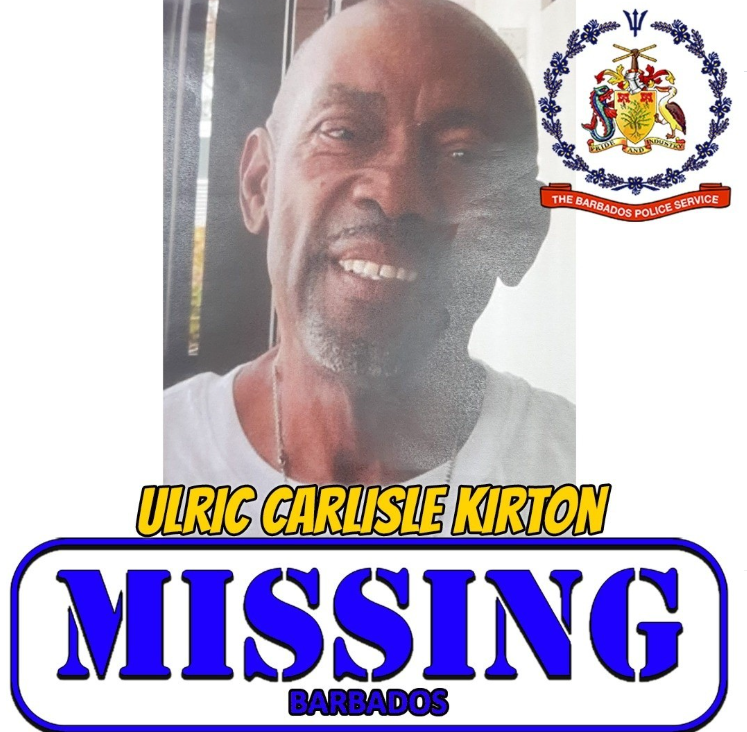
    Law enforcement officials in the country have issued an urgent public call for help in tracking down an elderly resident who has been missing for more than a week. 68-year-old Ulric Carlisle Kirton, a resident of Watts Village in St George, has not been seen or heard from by his family or local authorities since June 11, prompting police to open a missing person investigation and reach out to community members for tips.

    Authorities confirmed that Kirton lives with dementia, a cognitive condition that can impair a person’s ability to remember their location, navigate unfamiliar areas, or communicate personal information, putting him at heightened risk of harm while unaccounted for. To help community members identify him quickly, police have released a detailed physical description of the missing man.
    Kirton stands approximately 5 feet 4 inches tall, has a slim frame, brown skin, a completely bald head, and short gray hair on his face. When he was last observed by witnesses, he was wearing a black hat, a navy blue long-sleeve shirt, and a pair of black trousers.

    Police are urging anyone who has spotted a man matching this description anywhere in the country, whether recently or on the day Kirton went missing, to get in touch with authorities immediately. There are multiple channels for members of the public to submit information: contacts can be made directly to the District ‘B’ Police Station, the 24/7 police emergency line at 211, the anonymous Crime Stoppers tip line at 1-800-TIPS (8477), or any closest local police outpost to the caller’s location. Officials emphasize that even a small piece of information could be critical to bringing Kirton home safely.