博客

  • Balancing mass tourism volume with sustainability in SVG

    Balancing mass tourism volume with sustainability in SVG

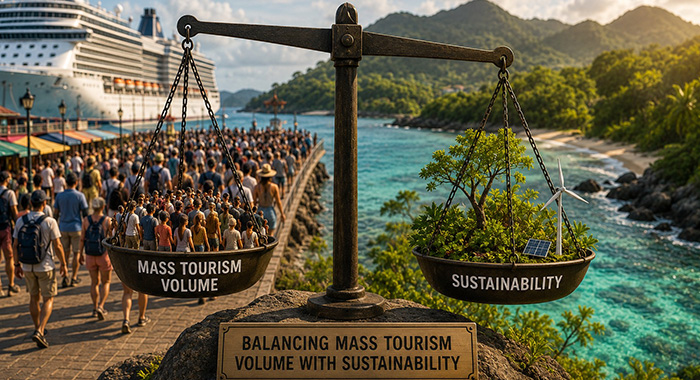
    Every year, hundreds of millions of travelers cross international borders, powering one of the world’s largest global economic sectors. The latest data from UN Tourism underscores just how completely the industry has rebounded from the COVID-19 pandemic: international arrivals have hit 1.52 billion, fully erasing the losses of the lockdown era. But as the sector pulls in record-breaking revenue, a urgent, defining question has emerged for small developing island states: how can nations reconcile the urgent economic need for growing visitor numbers with the finite environmental, infrastructure and social carrying capacity of local communities?

    For decades, St. Vincent and the Grenadines (SVG) stood out among Caribbean destinations as a quiet, unspoiled gem, often called the region’s best-kept secret. While many neighboring Caribbean nations built their tourism economies around sprawling concrete mega-resorts designed for mass visitor volumes, SVG maintained its identity rooted in the exclusive, secluded beauty of the Grenadines islands and the untamed rugged landscapes of its mainland.

    Today, however, the Caribbean nation finds itself at a pivotal developmental turning point. Driven by expanded international flight access through Argyle International Airport and new investments from major global resort chains, SVG recently hit a historic milestone: 120,000 stay-over tourist arrivals, a new all-time record for the country.

    The government’s landmark 30-year concession agreement with Global Ports Holding, which will invest up to EC$250 million to upgrade and expand the Kingstown Cruise Terminal, makes clear SVG’s strategic goal to scale its tourism capacity. The core challenge now is how the nation can adopt growth-focused changes without falling prey to the well-documented infrastructure and social pitfalls of mass tourism — a business model centered on moving huge numbers of visitors via mega-cruise ships, bulk charter flights and large multinational-owned resort chains. Getting this balance right is not just an environmental goal; it is critical to protecting SVG’s unique national identity.

    To assess SVG’s current growth trajectory, sustainable development planners use the framework of carrying capacity: a metric that defines the maximum number of visitors a destination can host at one time without triggering severe environmental damage, eroding local residents’ quality of life, or diminishing the quality of the visitor experience itself. This framework acts as a necessary counterbalance to the unrelenting push for growth that defines mass tourism’s economic logic.

    By design, mass tourism depends on rapid scaling and economies of scale: enormous cruise vessels, hundreds of hotel rooms, and bulk commercial air travel, all designed to generate large collective revenue through thin per-visitor margins and fixed head taxes. For a developing small island nation, the case for pursuing volume-driven growth is compelling on the surface. It delivers immediate, large-scale job creation in construction, hospitality and transport, while generating the foreign exchange needed to fund critical public services for local populations.

    Yet without a enforced carrying capacity framework in place, chasing pure visitor volume will always push a destination past a dangerous tipping point. When raw arrival numbers become the only metric of success, the infrastructure built to support those visitors begins to crack. This reality has shifted the entire regional conversation across the Caribbean: instead of asking how many tourists a country can attract, leaders and planners now focus on a far more precise question: how well can an island’s limited infrastructure absorb the physical and social strain of high-volume arrivals? When this question is ignored, destinations quickly face the same severe economic and social pressures that many Caribbean nations already grapple with today.

    The harmful outcomes of overshooting carrying capacity are not a distant example from other continents; the Caribbean itself offers a full spectrum of working models and their consequences.

    In high-volume destinations like The Bahamas and St. Maarten, economies built on dense tourist arrivals face constant structural strain. When multiple mega-cruise ships dock on a single day, thousands of tourists flood small local hubs in hours. While municipalities collect head tax revenue, the increased costs of road repairs, waste management and public safety create a permanent, heavy drain on local public budgets.

    In Jamaica, decades of prioritizing massive all-inclusive resorts with thousands of rooms has created deep social tensions around public access to coastlines. Data collected by the Jamaica Beach Birthright Environmental Movement (JaBBEM) shows that less than 1% of Jamaica’s shoreline remains fully free and open to the public, due to widespread private coastal development by resort operators.

    SVG has already faced early signs of these tensions within its own archipelago, most notably during past public discussions about community access corridors on the island of Canouan. As the SVG mainland expands its hotel room stock, policymakers face the delicate task of upholding Vincentians’ constitutional right to access their own coastlines, ensuring local residents never become second-class citizens in their own country.

    Beyond environmental and social strains, a second core issue in this debate is “economic leakage” — the share of tourist spending that leaves the destination country to line foreign corporate profits, pay for imported food from international supply chains, and cover salaries for foreign-owned management teams.

    Charles “Max” Fernandez, Antigua and Barbuda’s Minister of Tourism and Investment, estimates that tourism leakage across the Caribbean reaches a staggering 80% of all visitor expenditure. Because small island states typically lack the robust domestic manufacturing base or commercial agricultural capacity to feed thousands of daily transient visitors, a large share of every dollar spent by tourists flows back out to foreign economic hubs.

    This creates a structural policy challenge for SVG. If the nation transitions to a mass tourism model, it must simultaneously expand domestic linkages in agriculture, cultural production and fisheries. Without this parallel investment, SVG will bear 100% of the environmental damage from increased tourism while only retaining a small fraction of the generated wealth.

    When a new generation mega-cruise ship docks in Kingstown, the immediate economic boost for local taxi drivers, street vendors and tour operators is undeniably valuable. But managing the physical footprint of thousands of arrivals in a single afternoon requires careful, data-driven planning to protect SVG’s irreplaceable natural assets.

    As SVG works to rebuild its economy after the devastating impacts of the La Soufriere volcano eruption and Hurricane Beryl, the nation’s top priority must be building long-term structural resilience. As a climate-vulnerable archipelago, chasing high-volume mass tourism cannot only be about boosting short-term GDP growth; it is a high-risk development model that requires immediate domestic protections to absorb future shocks. If SVG invests in expanding tourism capacity, that growth must directly strengthen the nation’s ability to withstand the next inevitable ecological crisis.

    This reality leads to a clear conclusion: the core goal of managing SVG’s tourism sector must shift from tracking raw passenger numbers to a deliberate “value over volume” strategy. Neighboring Caribbean nations have already proven this model works: Dominica has built a lucrative niche around its “Nature Island” branding, while Bonaire draws high-spending visitors with its strictly protected marine parks. Both have intentionally restricted large-scale mass development, and have shown that modern travelers are willing to pay a premium to visit unspoiled, uncrowded, ecologically protected destinations.

    SVG holds a rare, golden opportunity to chart a unique middle path between the two extremes that define Caribbean tourism today. It does not need to choose between the crippling structural strain of high-density cruise hubs or the economic isolation of fully protected untouched eco-islands. Instead, by directing revenue from expanded flight access and modern transport hubs directly into supporting local agricultural cooperatives, protecting traditional cultural crafts, and enforcing strict marine conservation rules, SVG can build a uniquely resilient tourism model. The tourism sector SVG builds should lift all local residents, diversify the domestic economy, and never erode the island’s natural defenses that make it a desirable destination in the first place.


  • LISTEN: PM Open to Capping Number of Free CXC Subjects

    LISTEN: PM Open to Capping Number of Free CXC Subjects

    In a recent appearance on his weekly public radio broadcast, Antigua and Barbuda Prime Minister Gaston Browne has thrown his support behind two controversial policy proposals that would reshape public education funding across the country: placing a legal cap on the number of Caribbean Secondary Education Certificate (CSEC) subjects the government covers for secondary students, and requiring university students to pay out of pocket to repeat courses they fail.

    Browne’s comments came in direct response to a caller during the live program, who put forward the idea that government should only fund up to eight CSEC examinations per student, leaving parents responsible for any extra tests students choose to take beyond that limit. “I think that person is absolutely right,” Browne affirmed during the exchange. “There should be a cap, and that is something that we will consider, as I said eight, if not eight, maybe ten. If you want to do 20, 20-something subjects, I don’t know that the government should be undertaking that liability.”

    This stance marks a notable shift from just days earlier, when the administration announced a plan to cover the full cost of all CSEC subjects for students as part of a wider campaign to expand educational access and reduce barriers for low-income learners. The caller who proposed the cap acknowledged that the universal funding initiative was a well-intentioned step forward, but argued that responsible stewardship of public finances demands targeted spending, with students pursuing an unusually high course load covering their own additional costs.

    Beyond secondary education funding reform, Browne also backed a separate recommendation for the University of the West Indies Five Islands Campus: requiring students who fail a course and need to retake it to cover the full cost of the repeated class. “On the issue of failure, university classes and so on, I do accept that recommendation that they should pay for the resit themselves because they must have skin in the game,” the Prime Minister explained, emphasizing that personal financial investment would encourage greater academic accountability among tertiary learners.

    As of the broadcast, Browne did not share a specific timeline for when the government would bring the CSEC funding cap proposal to a vote or finalize a decision, confirming only that the cabinet would review the suggestion in coming months.

  • Health Ministry launches innovative blood donation platform

    Health Ministry launches innovative blood donation platform

    On World Blood Donor Day, the Ministry of Health of St. Vincent and the Grenadines (SVG) launched a groundbreaking, homegrown initiative to transform regional blood donation systems, positioning the nation as a trailblazer for voluntary blood supply strengthening across the Caribbean. As the first country in the region to adopt this targeted approach to addressing longstanding gaps in blood donation, SVG’s project marks a major step forward in solving a chronic public health challenge that has impacted most small island nations across the area.

    At the core of the new initiative is Blood Text, a pioneering digital donor engagement platform built specifically to address low repeat donation rates. The platform automates the delivery of timely, personalized communication to donors after they complete a donation, creating sustained connections that encourage donors to return for future giving. Blood Text is paired with an unprecedented 2-in-1 official national blood bank website, tailored to deliver age-appropriate information to two distinct demographic groups: donors under the age of 35, and donors aged 35 and older.

    This segmented design directly responds to a well-documented public health trend: a steady decline in blood donation among young adults. Ministry officials emphasized that failure to engage younger generations of donors early will create an impending regional blood supply crisis, as current older cohorts of regular voluntary donors retire from giving over time with no replacement group to step in.

    Across the English-speaking Caribbean, the status quo of blood donation has long been unstable. The vast majority of donations currently come in the form of “replacement donations” — one-off contributions from family members or friends given to support a specific patient in need, with almost no donors choosing to return for regular giving. This means consistent, voluntary donation, the foundational requirement for a sustainable, resilient national blood supply, remains severely limited across the region.

    Overreliance on replacement donations has left regional blood banks unable to maintain consistent stock levels of blood products for routine primary health care, leading to chronic, widespread shortages across the Caribbean. Chief Medical Officer Dr. Simone Keizer-Beache noted that a stable, dependable blood supply cannot be built on emergency reactive donations; it requires a consistent base of regular, voluntary givers. “By staying connected to the donors who have already given, we believe we can help build the dependable supply our hospitals need,” she explained.

    To celebrate the launch of the initiative and engage local young people, the Ministry of Health has opened a national logo design competition for young Vincentian creatives, with full details published on the new blood bank website, BloodBankVC.org. The public is invited to visit the site to learn more about the initiative and how to participate in blood donation.

    Developed as a locally-led solution, the program is designed to be scalable and cost-effective, with plans to roll the model out across all member states of the Organisation of Eastern Caribbean States (OECS) as an initial expansion step. The platform’s lightweight architecture makes it easy to integrate into the existing blood bank and health system infrastructure of small island states, aligning with broader regional goals to strengthen primary health care delivery and build overall health system resilience across the Eastern Caribbean.

  • PM Browne Backs Community Service Requirement for Students as Part of Education Reform

    PM Browne Backs Community Service Requirement for Students as Part of Education Reform

    Antigua and Barbuda’s Prime Minister Gaston Browne has publicly thrown his support behind a bold education proposal from University of the West Indies Five Islands Campus Principal Professor Justin Robinson, which would weave mandatory community service into the core academic experience for students benefiting from public education investment. The idea, framed as a two-way pact between students and the nation, argues that learners receiving government-subsidized education have a shared role in driving national development.

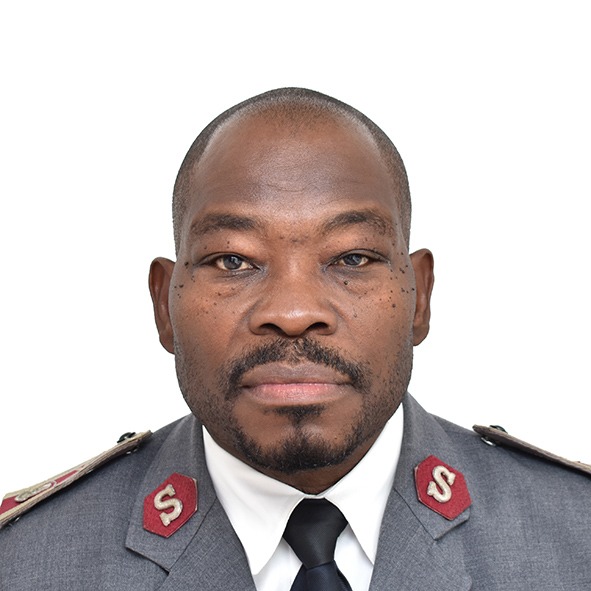
  • Major Jean Raymoncil Pierre Honoured for 25 Years of Dedicated Service to The Salvation Army

    Major Jean Raymoncil Pierre Honoured for 25 Years of Dedicated Service to The Salvation Army

    A landmark dual ceremony held in Jamaica has celebrated two defining moments for the Salvation Army’s Caribbean Territory: honoring a quarter-century of selfless, cross-regional service from one of its veteran leaders, and formally commissioning a new cohort of officers ready to carry the organization’s mission forward.

    Major Jean Raymoncil Pierre, the Salvation Army’s District Officer for Antigua and Barbuda, took center stage to receive a prestigious service award, recognizing his 25 years of unwavering dedication to the organization’s community-focused work. The event drew a diverse audience of Salvation Army officers, uniformed members, and long-time supporters from across the entire Caribbean region, gathered to pay tribute to Major Pierre’s decades of impact.

    Beyond his core leadership role in Antigua and Barbuda, Major Pierre holds additional regional oversight responsibilities for St. Kitts and Nevis and St. Maarten, making his contributions span multiple island nations across the Caribbean. Throughout his 25-year tenure, he has prioritized meeting the full spectrum of community needs, leading spiritual outreach programs, expanding social support services, and spearheading humanitarian initiatives to lift up vulnerable individuals and families. His steady, compassionate leadership has not only strengthened local Salvation Army ministries in every territory he oversees but also laid the groundwork for long-term growth of the organization’s work across the eastern Caribbean. The award given to him specifically highlights his consistent commitment to upholding the Salvation Army’s core mission and lifting up communities through empathetic, values-driven leadership.

    The Jamaica ceremony also marked a key milestone for the next generation of Salvation Army leadership: the graduation and official commissioning of the “Keepers of the Covenant” Session, a group of new officers who have completed all required training for full ministry and community service. The graduating cohort was recognized for their dedication to answering their vocational calling and their preparedness to serve communities across the Caribbean Territory and further afield.

    The session’s “Keepers of the Covenant” theme was chosen to reflect the foundational values that define Salvation Army officership: faithfulness, long-term commitment, and a lifelong dedication to service. For attendees, the commissioning ceremony served as a powerful reaffirmation of the Salvation Army’s enduring global mission: to share the Gospel of Jesus Christ and meet critical human needs without discrimination of any kind.

    In a formal statement released following the event, the Salvation Army Antigua and Barbuda branch extended warm congratulations to Major Pierre on his 25-year milestone of service, and also offered well wishes to every graduate of the Keepers of the Covenant Session as they embark on their new ministry journeys. Founded as an international Christian church and charitable organization, the Salvation Army remains focused on its dual mission of spiritual outreach and holistic community support, serving vulnerable populations across the globe.

  • Free Tertiary Education Is an Investment in People, Says Ambassador Marshall

    Free Tertiary Education Is an Investment in People, Says Ambassador Marshall

    A former government minister and attorney from Antigua and Barbuda is pushing back against critics of the administration’s landmark education policy, framing free first-degree tertiary education as a foundational long-term investment rather than a hollow political gesture. Samantha Marshall, who made the case for the policy in a recent detailed statement, has drawn a parallel between current pushback against the reform and historical opposition to the establishment of the University of the West Indies (UWI) Five Islands Campus at its current location.

    Marshall pointed out that despite loud objections to the campus’s site selection when it was founded in 2019, the institution has already delivered tangible, impactful results: it has produced nearly 500 local graduates to date, all of whom have strengthened the country’s human capital and advanced national development. “The site they deemed unsuitable has since produced nearly 500 graduands,” Marshall noted, highlighting that past naysayers have been proven wrong by measurable progress.

    The former minister emphasized that the new policy of eliminating tuition fees for first-degree programs, alongside cutting costs for the Bachelor of Laws program by 50%, should not be mischaracterized as charity or a superficial move to win political support. Instead, she argued, it is a deliberate strategy to cultivate the next generation of skilled professionals, entrepreneurs, and public servants that will drive sustainable economic and social growth across the islands. Removing financial barriers to higher education, Marshall contended, does not only benefit individual students — it empowers entire communities, strengthens domestic institutions, and lays the groundwork for decades of future prosperity.

    Marshall also called out opposition critics for failing to propose alternative policies to address the country’s education accessibility gaps, recalling a similar dynamic from last year when the government introduced fully state-funded CXC exam fees for public school students. On that occasion, members of the opposition United Progressive Party (UPP) admitted they had been personally covering fees for struggling families out of pocket, but never advanced a formal policy solution to the crisis, Marshall said. The current government, by contrast, listened to public concerns and implemented systemic change.

    She also highlighted a striking irony in the current debate: many of the most vocal opponents of free tertiary education have family members who will directly benefit from the policy, with their children, nieces, and nephews set to access tuition-free training at the UWI campus. Marshall argued that opportunistic opposition for opposition’s sake is an irresponsible luxury that a developing nation like Antigua and Barbuda cannot afford.

    Reaffirming the policy’s core purpose, Marshall emphasized that expanding access to the globally respected UWI system is a transformative step for the country. “When we remove the financial barrier to education, we do not simply put certificates and degrees in the hands of individuals — we place tools of transformation in the hands of an entire generation,” she explained. An educated population drives more robust civic participation, stronger economic output, and more effective implementation of national development agendas. Closing with a sharp rebuke to claims that the country cannot afford the reform, Marshall said the real question facing the nation is not whether the policy is affordable, but whether Antigua and Barbuda can afford to skip investing in its people’s future: “The question is not whether we can afford to do this. The question is whether Antigua and Barbuda can afford not to.”

  • UPDATE: Medical Tests Clear Tahjé Browne of Broken Bones Following Accident

    UPDATE: Medical Tests Clear Tahjé Browne of Broken Bones Following Accident

    Top national cyclist Tahjé Browne avoided life-altering or severe harm after an unexpected accident during a training session this past Saturday, the Antigua and Barbuda Cycling Federation confirmed in an official public update.

    Following comprehensive medical check-ups and advanced diagnostic testing, medical teams reached a reassuring conclusion: Browne suffered no broken bones, fractures, or damage to major arteries that would require urgent invasive intervention. While the incident left the athlete with multiple superficial cuts and widespread bruising across his body, including a deep laceration on one foot, he has already received all required urgent medical care. He is currently staying under medical observation as he starts the early stages of his recovery journey.

    The cycling federation emphasized that the medical outcomes are far more positive than initial fears suggested, framing the findings as encouraging for Browne, his family, and the local cycling community. In a written statement, the governing body extended sincere gratitude to the full network of first responders and medical staff that stepped in to assist immediately after the incident. “We are extremely grateful for the swift response and care provided by the medical team, emergency responders, and everyone who assisted throughout the day,” the statement read.

    Beyond thanking emergency and medical personnel, the federation also acknowledged the outpouring of public support that followed news of the accident. Members of the general public, local sporting organizations, and cycling fans across the country flooded Browne and his family with messages of prayer and encouragement, which the federation said made a meaningful difference during a stressful time. “Your support has meant a great deal to Tahjé, his family, and the cycling community,” the statement added.

    The accident has also reignited longstanding calls for stronger road safety regulations and greater awareness among all people who use Antigua and Barbuda’s roads, from private motorists to recreational and professional cyclists. The federation reminded the public that elite national cyclists regularly use public roads for daily training, and that safe infrastructure and considerate behavior are shared responsibilities. It urged every road user to practice patience, maintain constant vigilance for other travelers, and treat fellow road users with mutual respect to reduce the risk of future collisions.

    For the coming weeks, Browne’s primary focus will be resting and allowing his wounds to heal, with no scheduled training activities planned during his recovery. The federation closed its update by requesting that the public continue to hold Browne in their thoughts and prayers as he works to get back to full health.

  • Panama Should Be Gateway for Caribbean Trade, Browne Says

    Panama Should Be Gateway for Caribbean Trade, Browne Says

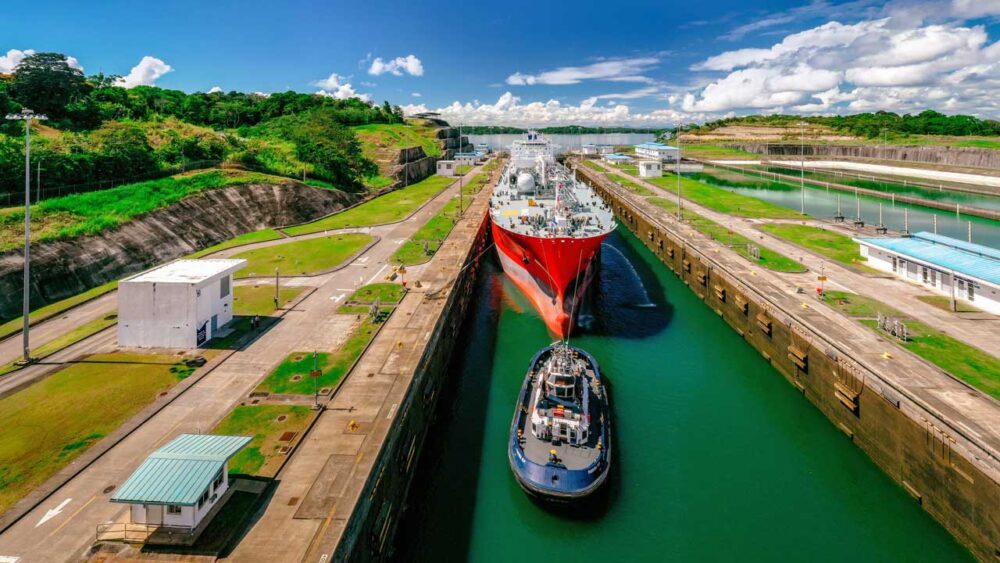
    In a recent address focused on expanding regional economic integration, a prominent figure identified as Browne has laid out a compelling vision for positioning Panama as the central logistical and commercial gateway for Caribbean trade. The proposal, which draws on Panama’s already established geographic advantage at the crossroads of major global shipping lanes, argues that leveraging the country’s existing port infrastructure and strategic location could reshape how goods move throughout the Caribbean basin and beyond.

    Browne notes that Panama’s role as the operator of the Panama Canal, one of the world’s most critical maritime chokepoints, already gives the country an unmatched foothold in interoceanic trade. By building on this existing foundation, Browne contends that the nation can become a hub not just for transit, but for value-added logistics, customs consolidation, and distribution services that benefit all Caribbean trading partners. The proposal also highlights the potential for reduced shipping costs, shortened transit times, and improved market access for small and medium-sized enterprises across the Caribbean region that currently face fragmented supply chain infrastructure.

    Advocates of the plan suggest that developing Panama as a centralized gateway would also attract increased foreign direct investment to the broader Caribbean, stimulating job growth and economic diversification across multiple island nations. Browne has called for collaborative dialogue between Panamanian authorities and Caribbean regional trade blocs to work out regulatory alignment, infrastructure investment partnerships, and trade facilitation agreements that would turn this vision into actionable policy. While some industry analysts have noted that the plan will require coordinated investment and stakeholder buy-in, the proposal marks a significant step forward in conversations about strengthening regional economic integration in the Caribbean.

  • COMMENTARY: The Conversations We Cannot Afford to Avoid

    COMMENTARY: The Conversations We Cannot Afford to Avoid

    The devastating passing of 19-year-old Zoe Tomlinson has left communities across the nation grappling with grief and urgent reflection. For community members and leaders alike, her premature death has forced a long-overdue reckoning with the quiet mental health crises that too often steal young lives before they have barely begun. In this heartfelt statement, community advocate Jermaine N. Edwards opens by extending unreserved condolences to Tomlinson’s family, friends and all who loved her, noting that no words can ever soften the agony of losing a young person standing at the very threshold of adulthood.

    What makes tragedies like this cut so deeply, Edwards argues, is that they force society to confront an uncomfortable truth we often choose to ignore: that even the people who seem happiest and most put-together can carry invisible, crippling emotional burdens. A radiant public smile can hide profound private pain, and a person surrounded by loved ones can still feel utterly isolated in their struggle.

    Today’s youth face unprecedented pressure that builds on this vulnerability, Edwards explains. Young people are constantly bombarded on social media and popular culture with curated depictions of perfect bodies, perfect relationships, perfect careers and perfect lives that do not reflect any real human experience. When they compare their own messy, ordinary lives to these false ideals, many feel inadequate, and for some the weight of that pressure becomes too much to bear alone.

    Despite meaningful progress in recent years to open up public conversations about mental health, stigma still silences far too many. Young people struggling with emotional distress still fear being judged, misunderstood or labeled as weak, leading them to suffer in silence rather than reach out for support. Edwards pushes back against this harmful narrative: reaching out for help is not a sign of weakness, he emphasizes, it is one of the bravest choices a person can make. And offering non-judgmental listening in return is one of the most meaningful gifts we can give another person.

    All too often, Edwards notes, communities only connect the dots of a young person’s struggle after a tragedy unfolds. We look back at old interactions, small changes in behavior, and offhand comments that only carry new meaning in hindsight, and we blame ourselves for missing warning signs. But the real lesson we should take away, he argues, is not to fix past oversights, but to choose greater awareness in the present.

    This means building a intentional habit of checking in on the people around us—from our children and friends to coworkers, neighbors, and even those who appear to have everything under control. More often than not, the people who present as the strongest are carrying unspoken burdens that they are too afraid to share. A short, casual conversation cannot erase a person’s struggles, but it can remind them they are seen and that they matter. A single kind word cannot take away pain, but it can make that pain easier to carry. Small acts of compassion often come at exactly the moment they are needed most.

    Edwards also stresses that the work of supporting mental health cannot be left only to clinicians and professional organizations. Local community support groups and mental health services rely on ordinary volunteers to fill critical gaps: whether that means making check-in calls, answering support lines, helping with outreach, or simply showing up to listen to someone who needs to be heard. Not everyone is trained to provide clinical counseling, but every person can help build a more connected, caring community. The greatest gift most people can offer is simply their time, their full attention, and the assurance that no one has to face their struggles alone.

    This is not a responsibility that falls to a small group of people or institutions—it belongs to all of us. Families, neighborhood communities, schools, workplaces, faith groups, nonprofits, and government agencies all have a part to play in building safe spaces where people can say “I am struggling” without fear of judgment, and know they will be met with care and support instead.

    As we grieve Zoe Tomlinson and honor the life and promise she leaves behind, Edwards calls on all people to turn this grief into action by becoming more compassionate, more attentive, and more willing to reach out to those around us. It is time to build a new culture where asking for help is encouraged, where kindness is extended freely, and where no young person feels they have to carry their burdens alone.

    The loss of any life is a tragedy, but the loss of a young life cuts especially deep, cut short before all the potential and promise they held can be realized. If there is any good that can come from this heartbreaking moment, Edwards says, let it be a renewed commitment to looking out for one another. It is a reminder that small acts of kindness matter, that showing up for people matters, and that a single simple conversation can change the course of a life in ways we may never know. No family should ever have to endure the devastating heartbreak of losing a child to untreated mental distress. No young person should ever feel that their story is over before so many unwritten chapters have even begun.

  • COMMENTARY: Driving Under the Influence of Indifference:

    COMMENTARY: Driving Under the Influence of Indifference:

    Road safety policy and legal accountability in Antigua and Barbuda have reached an inflection point, with a growing public and policy movement demanding sweeping reform of how the justice system treats fatal crashes caused by extreme driver misconduct. For decades, the nation’s legal framework has framed preventable vehicular deaths as unavoidable tragic accidents, rather than holding offenders accountable for the violent, intentional choices that lead to loss of life. When a driver chooses to operate a multi-ton vehicle while impaired by drugs or alcohol, engage in unauthorized street racing, or travel at speeds that turn a car into a lethal projectile, the outcome is not random chance—it is the direct consequence of a reckless decision.

    While recent legislative debates and draft bills have signaled rising recognition that existing penalties are inadequate to deter harm, an uncomfortable truth remains: current Antiguan and Barbudan law still shields extremely reckless drivers from facing full justice for their actions. Reform advocates argue it is past time to update the nation’s legal code to align with global best practices and basic moral standards, by introducing the ability to charge drivers who kill through depraved indifference to human life with murder.

    Under current law, the most severe charge available for fatal crashes caused by gross negligence is typically causing death by dangerous driving or manslaughter. Though these offenses carry criminal penalties, they fail to reflect the full moral blameworthiness of offenders who act with complete disregard for human safety. The central legal sticking point is the requirement of intent for murder convictions: traditional murder charges demand premeditation or explicit intent to kill. However, legal systems across the world have long recognized the concepts of implied malice and depraved heart murder, which apply when a person acts with callous disregard for human life, fully aware their actions are likely to cause death or serious harm.

    For context, if an individual fires a gun into a crowded public space with no specific intent to kill a particular person, and a bystander dies as a result, they are universally charged with murder. Reformers question why the legal standard is lowered when the weapon in question is a motor vehicle. A driver who travels at twice the posted speed limit through a busy urban street, ignoring traffic signals and crosswalks, creates the same level of arbitrary lethal risk as a shooter firing into a crowd. Treating the resulting death as a minor traffic offense or a lesser manslaughter charge implicitly devalues the lives lost to road violence.

    Antigua and Barbuda has already endured devastating, tangible harm from this gap in legislation. The 2018 death of national cyclist André Simon, who was struck by a vehicle on the Sir George Walter Highway and died after a prolonged fight for survival, remains a searing reminder of the human cost of lax legal standards. More recently, the 2024 death of 29-year-old Okeem Lightfoot, a National Solid Waste Management Authority worker killed while on the job, underscored that no one—whether commuting, working, or exercising on public roads—is safe from the consequences of extreme driver negligence. When the justice system labels these avoidable, reckless deaths as something less than murder, it inflicts secondary trauma on bereaved families and erodes public trust in the rule of law.

    The legal gap is equally damaging for victims who survive extremely reckless driving incidents but are left with permanent, life-altering disabilities. This reality was highlighted earlier this year when rising young cyclist Tahje Browne suffered catastrophic injuries during a training ride, after a reckless driver nearly killed him. Under current law, unless explicit intent to kill can be proven, offenders in these cases often face only minor traffic citations or mid-level assault charges that do not match the severity of the harm they caused.

    To correct this systemic imbalance, legislative reform must expand the scope of violent crime statutes to cover reckless vehicular harm. Advocates propose adding two key offenses to the nation’s penal code: vehicular attempted murder, for cases where a driver intentionally uses a vehicle to target a pedestrian or other road user, and aggravated vehicular assault, a felony-level offense specifically for drivers who cause permanent disability, disfigurement, or grievous bodily harm through impaired driving or extreme recklessness. Upgrading these charges would formally recognize that causing severe harm with a vehicle is a violent crime, not a routine traffic violation.

    Antigua and Barbuda would not be breaking new legal ground by adopting these reforms. A growing number of jurisdictions around the world have already updated their penal codes to close the gap between traffic law and violent crime statutes. Across the United States, for example, many state courts use the legal framework of “Watson Murder” and depraved heart murder to secure second-degree murder convictions for fatal impaired driving and extreme street racing cases where the driver showed conscious disregard for human life. In the United Kingdom, legislators have updated sentencing guidelines to set a maximum penalty of life imprisonment for causing death by dangerous driving, bringing sentencing for these offenses in line with homicide standards. Other Commonwealth nations have similarly reformed their manslaughter statutes, using the “reckless indifference to human life” standard to reclassify extreme vehicular fatalities as murder. These global reforms reflect a growing consensus that public education campaigns and small fines are no longer sufficient to deter reckless road behavior: harsher, more proportionate penalties are needed to deter drivers from treating public roads as private race tracks or drinking lounges.

    As Antigua and Barbuda’s Parliament begins deliberations on road safety reform, advocates are urging lawmakers to reject half-measures and watered-down amendments. The public has grown weary of watching offenders who destroy innocent lives walk away with minimal prison sentences or short driving bans that allow them to return to the road once their penalty expires.

    Crucially, reclassifying extreme lethal reckless driving as murder does not mean every accidental road fatality will be treated as a homicide. Prosecutors would still bear the high burden of proving that a driver operated their vehicle with a level of recklessness so severe it amounted to a complete disregard for human life and abandonment of basic social responsibility. Driving is an essential part of modern life, but it remains a regulated privilege, not an unconditional right. When that privilege is abused to the point of causing death, the vehicle becomes a weapon, and the driver must be treated as a violent offender. It is long past time for Antigua and Barbuda’s laws to reflect the inherent value of every citizen’s life, and Parliament must act now to give the nation’s justice system the tools it needs to hold lethal reckless drivers fully accountable.