博客

  • Suriname investeert fors minder in onderwijs dan regio; Currie wil wettelijke norm

    Suriname investeert fors minder in onderwijs dan regio; Currie wil wettelijke norm

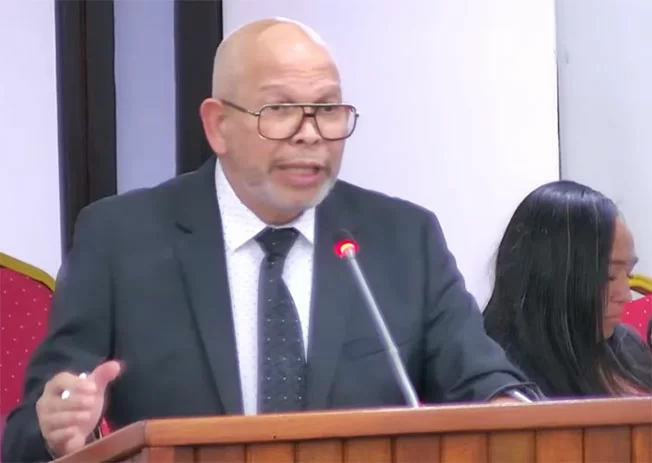
    Suriname’s Minister of Education, Science and Culture Dirk Currie is calling for sweeping increases in public investment in the education sector, pointing out that the South American-Caribbean nation already lags far behind regional peers in education spending, putting its long-term development at risk.

    As outlined in the country’s 2026 draft budget, just SRD 7.48 billion — equivalent to 9.7% of total government expenditure — is earmarked for education. That figure remains well below the Caribbean regional average of roughly 15% of public spending, and puts Suriname at the lower end of investment rankings across the region. When measured as a share of gross domestic product (GDP), the gap is equally stark: Suriname allocates approximately 3% of GDP to education, compared to a regional average of 4.9%. Neighboring and peer nations including Belize, Guyana and Dominica all invest more than 5% of their total GDP in the education sector, while Belize and Dominica devote 21% of total government outlays to the sector, and Jamaica allocates nearly 19%.

    To address this persistent underinvestment, Currie has proposed enshrining a mandatory spending target in national law, requiring that between 20% and 25% of annual state revenue be allocated to education, science and culture. Speaking during budget deliberations in the National Assembly, Currie emphasized that Suriname’s long-term growth will not be driven solely by projected new oil and gas revenues — it will depend above all on the quality of the nation’s human capital.

    “Education is not an expense line, it is an investment in our country’s future,” Currie told parliament. The minister argues that a legal mandate is critical to insulate education funding from shifting political priorities and economic volatility, creating the long-term certainty needed to invest in infrastructure upgrades, updated learning materials, teacher training, digital transformation and overall quality improvements across the education system.

    With Suriname preparing to enter a new economic era driven by expanding oil and gas production, Currie warned that the nation could squander this historic opportunity without a sufficiently skilled, educated workforce. “Natural resources alone do not make a nation prosperous. In the end, it is people that make the difference,” he said. Beyond securing stable funding, the minister hopes his proposal will spark a broad national conversation about the central role education should play in Suriname’s public financial priorities, framing sustained investment in the sector as a non-negotiable foundation for the country’s long-term development.

  • Haïti – Actualité : Zapping…

    Haïti – Actualité : Zapping…

    As Haiti’s national men’s football team prepares for its final 2026 FIFA World Cup group stage match against Morocco on June 24, long-serving starting goalkeeper Johny Placide has announced he will bring an end to his 15-year international career following the fixture. The 37-year-old shot-stopper earned 83 caps for the Grenadiers, Haiti’s national team, over the course of his international tenure.

    Beyond the pitch, multiple developing stories across Haiti and beyond have emerged in the latest 24-hour news cycle, dated June 22, 2026. On Sunday June 21, Haiti’s specialized anti-gang unit, the Force de Répression des Gangs (FRG), carried out a targeted security operation in the Tabarre district of the country’s capital region. During the operation, officers seized and destroyed hundreds of Molotov cocktails that had been stockpiled in the area. Several suspects were arrested and transferred to Haitian law enforcement authorities for processing.

    The operation came under gunfire from unknown assailants while it was underway, but FRG commanders confirmed the situation was brought under control in line with official rules of engagement. No officers or civilians were killed or injured in the incident. The targeted neighborhood has been fully secured, and will remain under ongoing patrol and surveillance in the coming days to prevent renewed gang activity.

    In the country’s southern department, a fatal multi-vehicle crash in the town of Cavaillon left four people dead on Sunday. The collision involved a heavy truck, a motorcycle taxi, and a light pickup van. The victims include both passengers of the motorcycle taxi, the truck’s driver, and a civilian passerby who was in the wrong place at the time of the incident. Investigators have not yet determined the root cause of the crash, and a formal investigation into the disaster is now open.

    As the Grenadiers prepare for their final World Cup group stage fixture, Haiti’s Tourism Minister Stéphanie Smith released a statement praising the team’s performance at the global tournament. “Every match you have played shows your commitment to the nation and your willingness to defend Haiti’s colors with honor,” Smith’s statement read. “Through your talent and perseverance, you have made an entire nation vibrate with pride and contributed to Haiti’s positive standing around the world.” She added that the Ministry of Tourism extends its full confidence and best wishes for success ahead of the Morocco match, saying “The entire nation stands behind you. Grenadye Alaso!”

    In an international update related to Haiti, Chile’s Investigation Police (PDI) confirmed that investigators have located 33 of the 64 Haitian children previously reported missing in a recent report from Chile’s Office of the Comptroller General, in a case linked to alleged child trafficking. “Of the 64 unaccounted for minors, we have already recovered 33 children who are living with their parents, siblings, or other family members,” PDI Director General Eduardo Cerna confirmed. The recovered children account for just over 50 percent of the total number of missing minors initially reported.

    For football fans following the 2026 FIFA World Cup, the tournament’s format for the knockout round has been confirmed: the top two teams from each of the 12 groups, totaling 24 sides, will advance to the round of 16. They will be joined by the eight highest-ranked third-place teams from across the group stage, bringing the total number of knockout stage competitors to 32 teams that will compete in a single-elimination bracket for the World Cup title.

  • Trump Admirer Wins Colombia Presidential Election

    Trump Admirer Wins Colombia Presidential Election

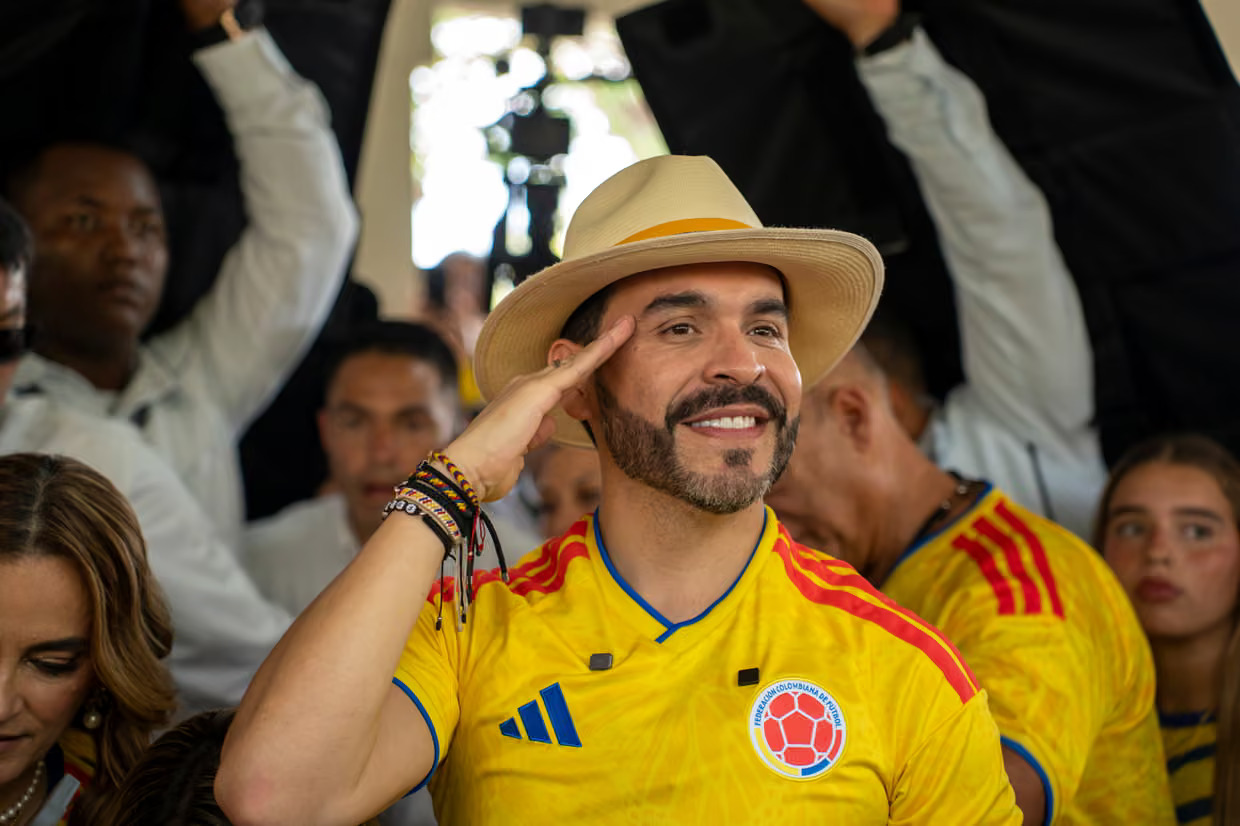
    Colombia has wrapped up one of the tightest presidential contests in its modern history, with right-wing lawyer and entrepreneur Abelardo de la Espriella edging out left-wing incumbent-aligned senator Iván Cepeda to claim the nation’s highest office.

    As electoral officials finished counting nearly all cast ballots, preliminary results show de la Espriella captured just under 50% of the total vote, holding a lead of roughly 250,000 votes over his left-wing challenger. The outcome marks a stark political reversal for Colombia, ending four years of progressive leadership under Gustavo Petro, the country’s first ever left-wing head of state, and clearing the way for a return to conservative governance.

    A prominent public supporter of former U.S. President Donald Trump, de la Espriella framed his win as a transformative turning point for Colombia during his victory speech. He told supporters he had spoken directly with Trump shortly after the preliminary results were confirmed, and reiterated his campaign pledge to deepen diplomatic and economic ties between Bogotá and Washington.

    Security policy dominated de la Espriella’s campaign, where he positioned himself as a hardline alternative to Petro’s approach to the country’s persistent insecurity. He has proposed sweeping harsher crackdowns on transnational criminal organizations, committed to large-scale expansion of the country’s prison infrastructure, and vowed to ramp up military operations against illicit drug trafficking networks. These policy priorities stand in direct opposition to Petro’s signature strategy of pursuing negotiated peace talks with armed factions to curb systemic violence.

    In the wake of the preliminary result, Petro and defeated candidate Cepeda have refused to formally concede the race. The pair have raised unsubstantiated concerns over potential voting irregularities in the preliminary count, and are demanding that the full official audit of all ballots be completed before they will recognize the final election outcome. No concrete evidence of widespread fraud has been presented to support their claims as of yet.

    This election unfolded against a backdrop of rising public anxiety over violence and insecurity across Colombia. More than eight years after the 2016 historic peace accord with the FARC guerrilla movement, non-state armed groups and drug trafficking cartels still retain substantial territorial and political influence across large swathes of the country.

    Notably, de la Espriella has never held public elected office before. He is set to be inaugurated on August 7, and will immediately inherit a nation deeply divided along political lines, as well as a Congress where his allied political bloc does not hold a governing majority.

    Political analysts across the region argue that de la Espriella’s win is not an isolated shift, but rather reflects a broader conservative and rightward movement gaining traction across much of Latin America. Voters across the region have increasingly cited rising security risks, persistent economic strain, and widespread dissatisfaction with sitting incumbent governments as key drivers pushing them to back alternative right-wing candidates.

  • Haïti – Concours de plaidoirie : Réouverture de la liste d’inscriptions complémentaires

    Haïti – Concours de plaidoirie : Réouverture de la liste d’inscriptions complémentaires

    Organizers of Haiti’s 9th annual National Human Rights Moot Court Competition have announced a late registration window for prospective participants, giving eligible law students and recent graduates an additional opportunity to join the July 2026 event set to take place in Port-au-Prince. The Bureau des Droits Humains en Haïti (BDHH), the organizing body behind the competition, confirmed that the supplementary preselection registration list will close at 8:00 p.m. local time on Friday, June 26, 2026. All new applications must be submitted via the official online form hosted at https://forms.gle/bWwBjBoP89SHBfUB9.

    This year’s competition is open to a defined pool of eligible candidates: law students who have completed a minimum of three years of study at any recognized Haitian university, including fourth-year enrollees and candidates currently working on their undergraduate thesis. Eligibility is also extended to law graduates who earned their license within the past three years. The competition bars participants who are already enrolled at the Haitian Bar School or have taken the oath as a trainee attorney. In addition, candidates who previously advanced to the final round (including semi-finalists, finalists, and past winners) of earlier editions of the competition are not eligible to compete again, though past participants who did not reach the final stage are welcome to reapply.

    Candidates who submitted their applications during earlier registration phases do not need to resubmit materials, but organizers ask that all previously registered candidates reach out to the competition coordination team to confirm their availability for the remainder of the selection process.

    The competition is structured in two distinct stages: a written preselection round, followed by the live oral argument competition scheduled for July 2026 in Port-au-Prince. Preselected candidates will receive further details about the rules and logistics for the oral stage ahead of the event.

    This year’s written preselection centers on the timely theme: “Climate Justice and Economic Development.” Submitted dissertations will be evaluated by a panel of judges based on four core criteria: thematic relevance, strength of argumentation, depth of legal knowledge, and demonstrated commitment to human rights principles.

    Organizers have outlined clear formatting requirements for all written submissions to ensure consistency. Dissertations must not exceed three pages, must be formatted in 12-point Times New Roman font with single line spacing. Exceeding the page limit will count against candidates during evaluation. All submissions must be saved as either a Word or PDF file, and named using the format “CONCOURS9_LASTNAME_FIRSTNAME”.

    All applications require supporting documentation to verify candidate eligibility, which may include a transcript or completion certificate for third-year studies, proof of enrollment in fourth-year law, a fourth-year transcript, a thesis defense record, or an official law degree license. Incomplete applications or submissions received after the June 26 deadline will not be considered for evaluation.

    After submitting an application, candidates will receive an automatic confirmation email to acknowledge receipt of their materials. Results of the written preselection round will be announced via both email and the BDHH official website (www.bdhhaiti.org) by the end of June 2026. For candidates with questions about eligibility, the application process, or competition logistics, the BDHH can be reached via email at concours@bdhhaiti.org or by phone at +509 3606-8645, and additional information is posted on the organization’s website.

  • New OECS Chairman Wants Leaner, Faster OECS Commission

    New OECS Chairman Wants Leaner, Faster OECS Commission

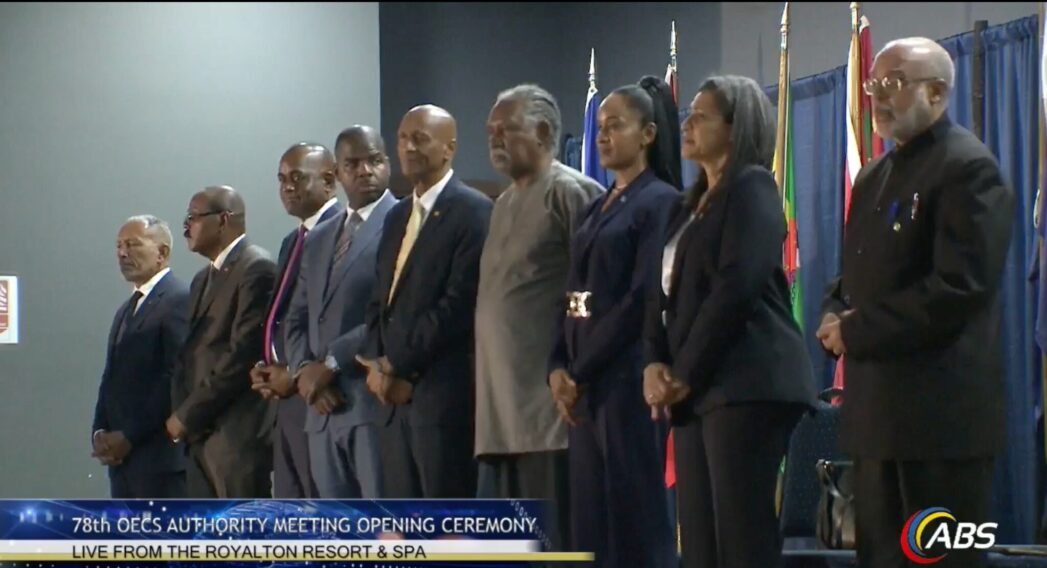
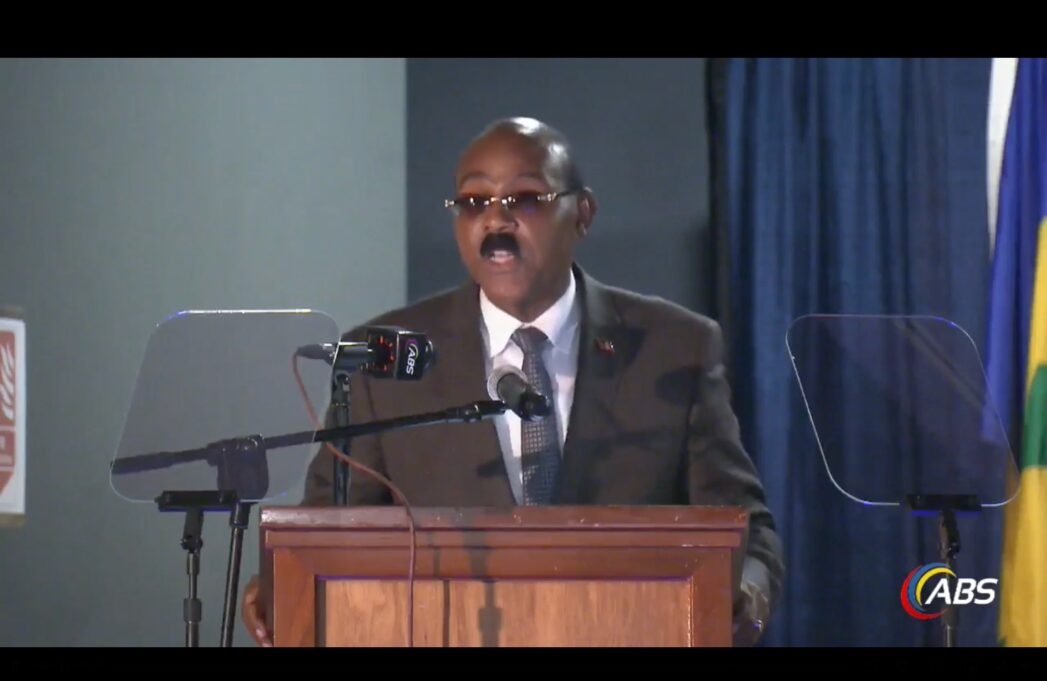
    In his inaugural address as the newly appointed chairman of the Organisation of Eastern Caribbean States (OECS) Authority on Sunday, Antigua and Barbuda Prime Minister Gaston Browne has tabled a bold demand for a sweeping restructuring of the OECS Commission, the 11-nation bloc’s central administrative body. Browne argues that the institution must trim bureaucratic bloat, speed up decision-making processes, and boost its overall performance to effectively tackle the growing array of challenges facing member states.

    Taking over the one-year rotating chairmanship from St. Vincent and the Grenadines Prime Minister Dr. Godwin Friday, Browne publicly directed OECS Director General Didacus Jules to draft a comprehensive reform blueprint focused on three core goals: sharpening operational efficiency, cutting unnecessary administrative costs, and elevating the quality of public services delivered across all member countries. The prime minister revealed that he had already held frank, private discussions with Jules on the reform agenda before bringing the proposal into the public domain, framing the changes as a necessary evolution for the decades-old regional body.

    Reflecting on the OECS’ 45-year history of regional integration, Browne praised the bloc as one of the most successful regional cooperation frameworks globally, highlighting landmark achievements delivered through its existing institutions. He pointed to the enduring stability of the Eastern Caribbean dollar, which has maintained a fixed peg of 2.70 Eastern Caribbean dollars to 1 U.S. dollar for decades, the significant cost savings unlocked by the joint regional pharmaceutical procurement program, and the consistent work of institutions like the Eastern Caribbean Central Bank and Eastern Caribbean Supreme Court as proof of the power of collective action.

    “What we cannot do alone, we can certainly accomplish together,” Browne said, noting that this founding principle has guided the bloc’s progress to date and must remain the cornerstone of its future work. He emphasized that current regional leaders carry a dual responsibility: to safeguard the institutions built by past generations of leaders, and to build new, adaptive structures equipped to address 21st-century challenges. “Many of us are better trained, and if we’re better trained and we have more resources, it means that we too can establish sustaining institutions for the benefit of the OECS people,” he added.

    Browne’s call for reform comes amid a shifting global landscape marked by rising geopolitical friction, widespread global supply chain disruptions, skyrocketing cost of living, and growing macroeconomic uncertainty that disproportionately impacts small island developing states. He warned that in today’s fractured global order, individual OECS member states operating in isolation face far greater exposure to external shocks and economic vulnerability, but unified collective action turns small individual economies into a stronger, more resilient regional entity.

    While Browne stopped short of laying out specific, granular reform measures for the commission, he confirmed that the reform plan will be developed over the coming months as part of a broader push to make the OECS more effective and responsive to the needs of its population. “We must re-engineer the OECS Commission into a leaner, faster and more effective institution that is fit for purpose,” Browne reiterated, framing the restructuring as a critical step to secure the bloc’s relevance and impact for decades to come.

  • De meerwaarde van yoga voor lichamelijke en geestelijke gezondheid

    De meerwaarde van yoga voor lichamelijke en geestelijke gezondheid

    Yoga has evolved far beyond its reputation as a simple physical workout across the globe in recent years. A growing body of academic and clinical research now confirms that consistent yoga practice delivers measurable benefits, from improved overall physical fitness to reduced chronic stress and stronger mental resilience. To mark the annual International Yoga Day, observed globally every June 21, communities in Suriname centered their celebrations on highlighting evidence-based health benefits of the ancient practice.

    Local organization Shri Sanatan Dharm Maha Sabha Suriname marked the international observance with a community yoga session held at its Paramaribo headquarters on Koningstraat on Saturday, the event focused entirely on promoting holistic health, mindfulness, stress relaxation, and inner emotional balance.

    Rafael Lutchman, the event’s session coordinator, emphasized that yoga is far more than just mastering a sequence of complex body poses. For people navigating the constant hustle and stress of modern daily life, regular practice builds the ability to cope with pressure, while also improving core physical strength, flexibility, focus, and personal self-discipline. Lutchman encouraged all attendees to carve out intentional time in their weekly routines to nurture both their physical and mental well-being, a priority that many people overlook amid busy schedules.

    Subhas Gupta, India’s Ambassador to Suriname, also spoke at the event to underline yoga’s underrecognized preventive health value. He reminded attendees that 12 years ago, following an initiative led by the Indian government, the United Nations formally designated June 21 as the annual International Day of Yoga to raise global awareness of the practice’s benefits. Today, Gupta noted, yoga is increasingly integrated into healthy lifestyle routines around the world, and it can help prevent a wide range of common chronic health issues by prioritizing intentional movement, controlled breathing, and regular relaxation.

    Organizers of the Suriname event explained that the true power of yoga extends far beyond its physical components. The term “yoga” derives from the Sanskrit word yuj, which translates directly to “to join” or “to unite” — a reference to the practice’s core goal of building harmony between the body, mind, and consciousness. The organization also stressed that yoga is accessible to nearly everyone, regardless of age or current physical fitness level. Mastering advanced poses is not the point of practice; instead, the goal is gradual progress toward better overall health and greater inner calm.

    To expand access to yoga outside of scheduled in-person classes, Shri Sanatan Dharm Maha Sabha has added a dedicated new section to its existing mobile platform, the “Mijn Sanatan Dharm” app. Titled “Yog aur Vyáyám,” the new section will deliver weekly content every Saturday: app users get step-by-step guidance for a new yoga pose and a full sequence of exercises that can be completed independently at home. Beyond the new yoga content, the app already hosts a range of features, including updates on religious community events, educational articles, direct contact tools for pandits, and other interactive resources for members.

    Through both the in-person community gathering and the new app expansion, the organization aims to encourage people to prioritize intentional care for both physical and mental health, even when balancing demanding daily schedules.

  • PM Browne Says Antigua and Barbuda Being ‘Coerced’ to Accept Deportees

    PM Browne Says Antigua and Barbuda Being ‘Coerced’ to Accept Deportees

    In a landmark address marking the start of his 12-month term as chairman of the Organisation of Eastern Caribbean States (OECS) Authority, Prime Minister Gaston Browne of Antigua and Barbuda has announced a firm rejection of a United States deportation proposal that would have sent 120 deportees annually to the small twin-island nation, countering with a binding self-imposed cap of no more than 10 deportees per year.

    Browne used his first public address in the new OECS leadership role to highlight the mounting geopolitical pressures that small island developing states face, and to underscore the critical need for coordinated regional cooperation to address these shared external challenges. The prime minister made clear that his administration has pushed back against coercive pressure from Washington to accept a dramatically higher volume of deportees, most notably individuals with prior criminal convictions that Browne argues pose a clear threat to Antigua and Barbuda’s domestic public safety.

    “We have been coerced to take these deportees, encouraged by the great United States, and if we don’t cooperate, they punish us,” Browne told attendees of the OECS gathering Sunday. “As the Prime Minister of Antigua and Barbuda, I cannot willingly cooperate with any other power, any country, to destroy our beautiful twin-island state. And we have insisted that we will not accept any criminal elements.”

    The prime minister framed the counterproposal as a balanced compromise that preserves willingness to cooperate while protecting the nation’s sovereign interests. “We want to be cooperative, so we are not being uncooperative here. But this idea that they could send us 120 individuals, we’ve said to them that is totally unacceptable,” he explained. “We have sent them a counterproposal. We said that we’ll accept 10 annually, no more than 10. So I hope that this will not result in any acrimony and further restrictions, but that they will respect our position and respect our sovereign right to determine how many of those individuals we accept.”

    Despite taking a firm stance on the deportation cap, Browne emphasized that Antigua and Barbuda remains fully committed to its long-standing mutually beneficial partnership with the United States, and acknowledges Washington’s sovereign authority to set its own immigration and border security policies.

    “We acknowledge the sovereign right of all states to determine their border security policies. We ask only that such rights be exercised with due regard for a historically close and mutually beneficial relationship,” he said.

    Browne also warned that punitive economic or travel restrictions imposed on Caribbean nations would backfire for the United States, pointing to the sizable US trade surplus with the region. “Our people purchase American goods, use American financial services, and send their children to American universities,” he noted. “We are beneficial partners for the American economy, not adversaries to be restricted.”

    The prime minister additionally raised concerns about the disproportionate harm that new travel restrictions would inflict on Caribbean diaspora communities, the largest of which is based in the United States, and separated family ties that span both regions. “We need to ensure that the diaspora here in the Caribbean and certainly our people in the United States can move freely,” he said.

    Reaffirming shared priorities between the two nations, Browne stressed that Antigua and Barbuda will continue collaborating with the US on issues of common interest, including countering transnational drug trafficking and organized crime. “We particularly stand with the U.S. in opposing drug trafficking and organized crime. That is our mutual interest. We too want to make sure that we have safe and secure societies,” he said.

    Browne’s assumption of the OECS Authority chairmanship comes as the bloc prioritizes deeper regional integration, strengthened economic resilience, and collective action to address the unique systemic challenges facing small island developing states across the Eastern Caribbean, from climate change to external geopolitical pressures.

  • Haïti – Politique : La Chancelière Forbin en Mission au Panama

    Haïti – Politique : La Chancelière Forbin en Mission au Panama

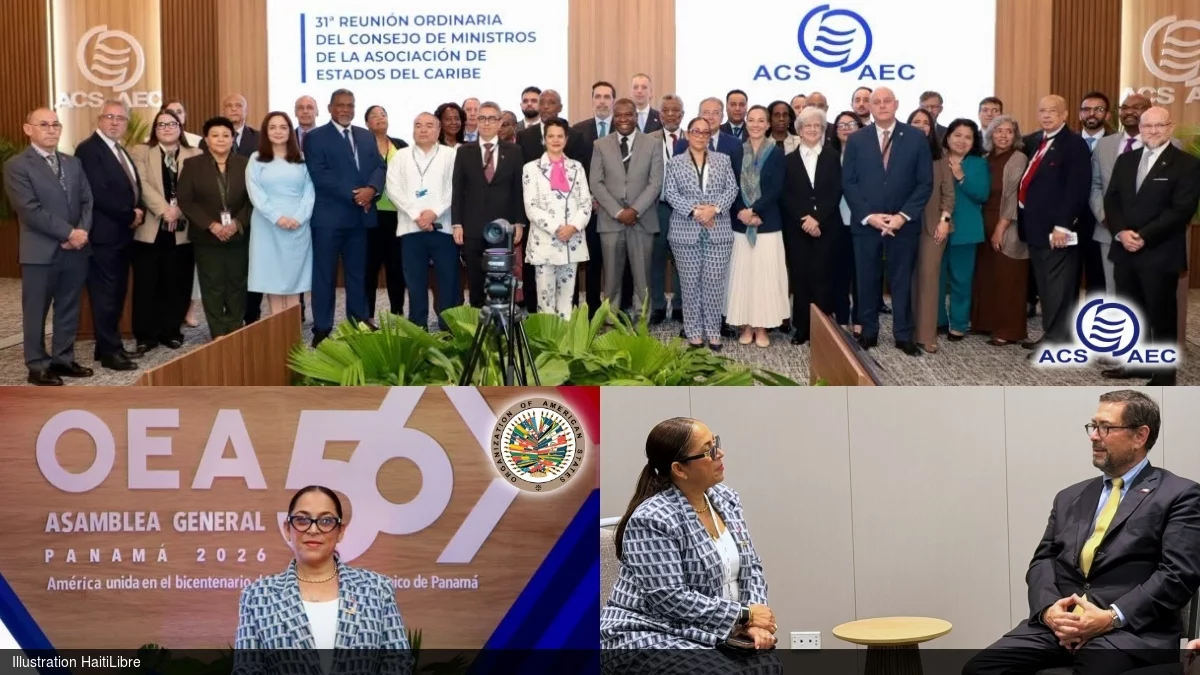
    On June 22, 2026, Haitian Foreign Minister Raina Forbin launched an official diplomatic mission to Panama, where she is set to participate in two major hemispheric and regional governance gatherings: the 31st ordinary meeting of the Council of Ministers of the Association of Caribbean States (AEC) and the 56th ordinary session of the General Assembly of the Organization of American States (OAS).

    Over the course of her mission, Forbin will take part in core ministerial deliberations, plenary sessions, and a series of bilateral meetings with both regional and international partners. These discussions are centered on advancing the Haitian government’s top national priorities, which include strengthening domestic security, laying the groundwork for upcoming national elections, driving post-crisis economic recovery, and expanding both regional and international cooperation partnerships.

    Alongside the official conference agenda, Forbin will hold dedicated consultations with Haiti’s international partners. The core goals of these talks are to reinforce existing cooperative frameworks and mobilize greater global support for Haitian authorities’ ongoing efforts to restore nationwide security, solidify democratic state institutions, and facilitate a return to full constitutional order.

    Already on June 21, ahead of the main conference proceedings, Forbin held a bilateral meeting with her Chilean counterpart, Francisco Pérez Mackenna. The two diplomats pledged to deepen collaborative work to address the unresolved situation of Haitian minor children currently residing in Chile, an issue that has gained public attention amid recent allegations of child trafficking originating from Haiti.

    During the meeting, Mackenna formally requested Haitian institutional cooperation to support monitoring and follow-up work for Haitian minors who have arrived in Chile. He also confirmed that Marco Aguayo, Chile’s special envoy, will travel to Port-au-Prince later this week. Aguayo’s mission will focus on gathering on-the-ground information to clarify the status of family reunification processes, formally document the legal status of each Haitian child in Chile, and update operational protocols to enable the reopening of Chile’s consular section in Port-au-Prince.

  • Derde helft WK 2026: Kaapverdië vecht zich naar 2-2 tegen Uruguay

    Derde helft WK 2026: Kaapverdië vecht zich naar 2-2 tegen Uruguay

    A high-stakes Group H World Cup encounter at Miami Stadium delivered 90-plus minutes of dramatic action, ending in a spectacular 2-2 draw between two-time world champions Uruguay and underdog Cape Verde on June 21. The result leaves both teams tied on two points after two matchdays, keeping knockout stage hopes alive for both sides ahead of their final group fixtures.

    Uruguay got off to a dominant start, controlling possession from the opening whistle against a Cape Verde side that entered the match off a credible draw against defending champions Spain. The first major booking came just five minutes in, when Cape Verde defender Sidny Lopes Cabral picked up a yellow card. Uruguay’s first clear chance arrived in the 15th minute through star midfielder Federico Valverde, but he failed to convert the opportunity to put his side ahead.

    The deadlock was broken in the 21st minute, when Cape Verde’s Kevin Pina curled a stunning 25-yard free kick beyond Uruguay goalkeeper Fernando Muslera to take a surprise 1-0 lead. The set piece opportunity came after Uruguay’s Rodrigo Bentancur was booked just four minutes earlier, giving Pina the match-defining chance. With his side trailing at the break, Uruguay manager Marcelo Bielsa faced a critical half-time adjustment task during the early tournament water break.

    Buoyed by their opening goal, Cape Verde played with growing confidence, limiting Uruguay’s attacking options for most of the first half. But just before half-time, Uruguay found an equalizer: Maxi Araujo reacted quickly to a headed effort that bounced off the goalpost, slotting home to level the score at 1-1 in the 44th minute. The South American side grabbed a second goal deep into first-half stoppage time, when Araujo delivered a low cross into the box that Agustin Canobbio tapped home to put Uruguay 2-1 up going into the break.

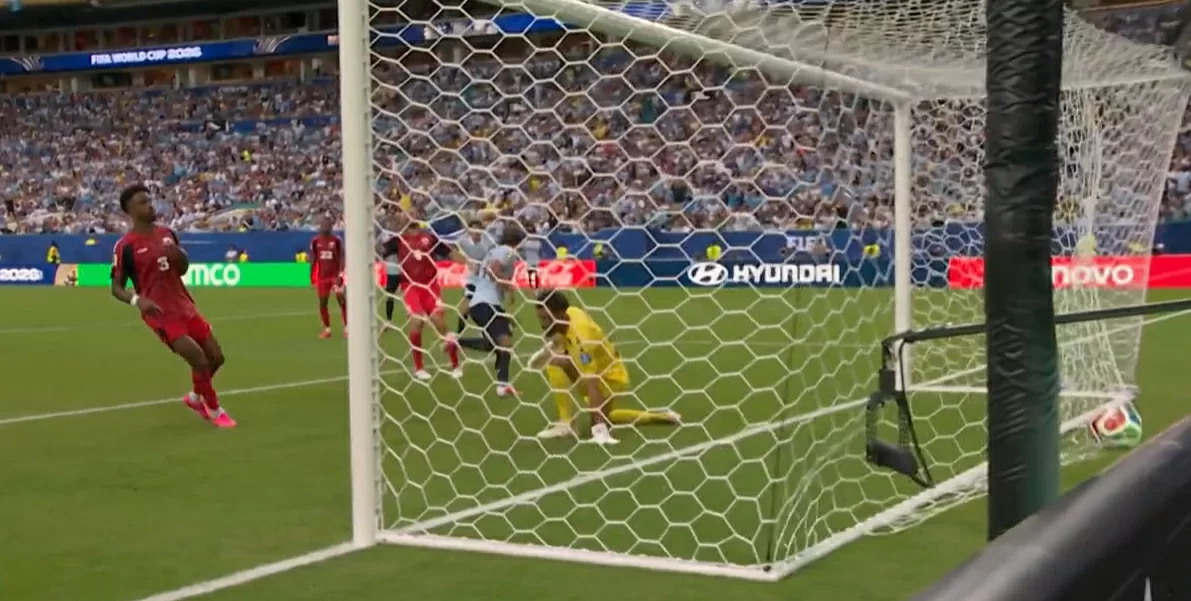
    The second half started at a slower pace, with Uruguay retaining most of the ball. Another yellow card was issued to Uruguay’s Mathias Olivera in the 57th minute, but the narrative of the match shifted dramatically just four minutes later. A communication mix-up between Olivera and Muslera let Cape Verde’s Hélio Varela capitalize, tapping into an empty net to make the score 2-2 in the 61st minute.

    Later in the half, VAR ruled out a late Maxi Araujo goal for offside, denying Uruguay what would have been a go-ahead score. Both managers made key substitutions to inject fresh energy into their sides, with star forward Darwin Núñez and midfielder Nicolás De La Cruz entering for Uruguay, while Laros Duarte came on for Cape Verde.

    In the final 10 minutes, Uruguay piled on pressure in search of a winner. Valverde curled a late free kick over the crossbar in the 89th minute, and a quick counterattack led by Núñez failed to produce a finishing touch. Cape Verde’s defense held firm, with a critical block from Ryan Mendes in the 86th minute keeping the scores level. The last chance of the match fell to Canobbio, who sent a last-ditch effort just over the bar in the fourth minute of stoppage time.

    When the final whistle blew, the 2-2 scoreline stood as a fair result for the hard-fought encounter. Cape Verde, the tournament’s underdog, now holds a strong position to advance to the knockout stage if they can secure three points against Saudi Arabia in their final group match. For Uruguay, the path forward is clear: a win against Spain will guarantee their spot in the next round, while a draw could also be enough to see them progress depending on other results.

  • Haïti – Préscolaire au Secondaire : Volume minimal de jours de classe et charge horaire annuelle.

    Haïti – Préscolaire au Secondaire : Volume minimal de jours de classe et charge horaire annuelle.

    On June 22, 2026, Haiti’s Minister of National Education, Vijonet Déméro, issued an official circular establishing binding national minimum academic time requirements for all education levels from preschool through secondary school, aimed at guaranteeing equitable, high-quality learning outcomes for students across the entire country.

    The new framework sets a consistent 36-week academic year and 180 required instructional days across all grade bands, with adjusted weekly and annual hourly targets tailored to each educational stage. For preschool programs, the rule mandates 24 hours of instruction per week, adding up to an 864-hour annual minimum. For the first and second cycles of fundamental education, the weekly requirement rises to 25 hours, resulting in a 900-hour annual total. Both the third cycle of fundamental education and all secondary education levels are required to deliver 30 hours of instruction weekly, reaching a 1,080-hour annual minimum.

    The circular clarifies that only days actively dedicated to teaching, learning activities, student assessments, and direct pedagogical support count toward the required 180-day total, excluding administrative or non-instructional days from the official count.

    To enforce compliance, the policy outlines clear implementation and accountability rules. All schools are required to align their annual academic calendars with the national calendar published yearly by Haiti’s Ministry of National Education and Professional Training (MENFP), which is structured around the new hourly quotas. In cases where unplanned, forced school interruptions occur—such as severe weather events, socio-political unrest, or other public emergencies—school leadership is legally required to implement immediate make-up instruction measures. All contingency recovery plans must receive formal approval from the relevant local Department of Education (DDE) to ensure the full annual hourly quota is met. Local DDE bodies are also tasked with conducting regular, rigorous compliance audits of both public and private educational institutions across their jurisdictions.

    Transitional provisions confirm that the new standards take effect immediately upon publication of the circular. The MENFP’s general directorate and relevant technical departments are responsible for widespread dissemination of the new rules and monitoring strict implementation. In closing the circular, the Ministry called on all stakeholders within Haiti’s education system to uphold their commitments to ensure all Haitian children access the guaranteed instructional time they are entitled to.