博客

  • Antigua and Barbuda and Honduras Establish Diplomatic Relations

    Antigua and Barbuda and Honduras Establish Diplomatic Relations

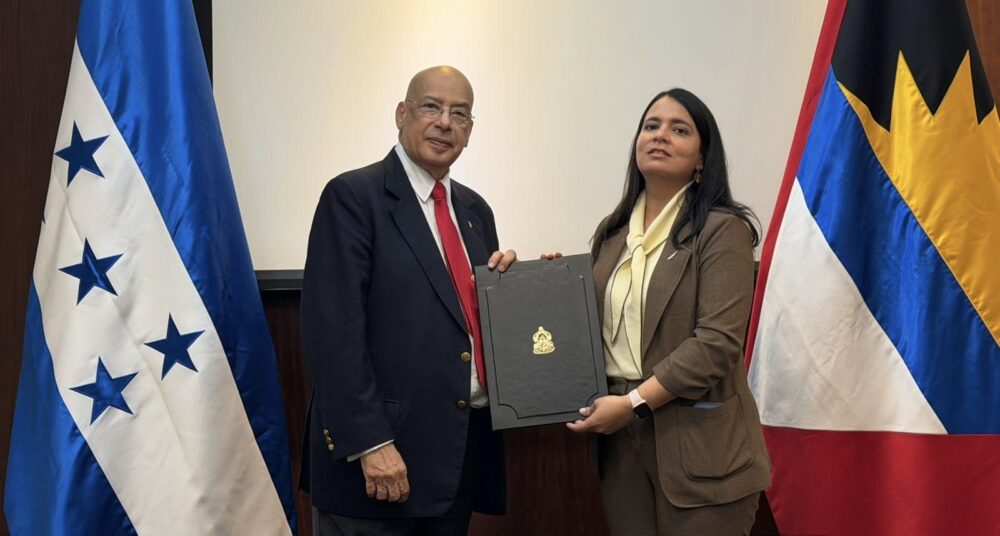
    In a landmark step for regional cooperation, Antigua and Barbuda and the Republic of Honduras have formally established full diplomatic relations, following the signing of a joint communiqué Wednesday at a ceremony in Panama City. The signing event took place on the sidelines of concurrent high-level meetings for the Association of Caribbean States (ACS) and the Organization of American States (OAS), bringing together two longstanding members of the Latin American and Caribbean intergovernmental community.

    The historic agreement was signed by Sir Ronald Sanders, Antigua and Barbuda’s permanent ambassador to the OAS, and Pamela Handal, Honduras’ Vice Minister of Foreign Affairs. In post-signing statements, both envoys framed the new diplomatic connection as a transformative milestone that deepens existing informal ties between the two nations and lays the official groundwork for targeted collaboration on issues that impact both populations.

    As members of the broader Latin American and Caribbean regional bloc, the two countries share a set of pressing common priorities rooted in shared geopolitical and economic realities. Both governments identified climate change’s disproportionate harmful impacts, systemic vulnerability to sudden external economic shifts, and the urgent need to expand access to low-cost development financing as core shared concerns that will guide their new cooperative partnership.

    Ambassador Sanders and Vice Minister Handal both expressed optimism that formal diplomatic relations will open new doors for coordinated action in regional and global multilateral forums. Beyond multilateral cooperation, the new ties are expected to boost people-to-people and economic exchanges across a range of high-potential sectors, including cross-border trade, foreign direct investment, international tourism, academic and educational exchange, cultural programming, and targeted technical cooperation projects.

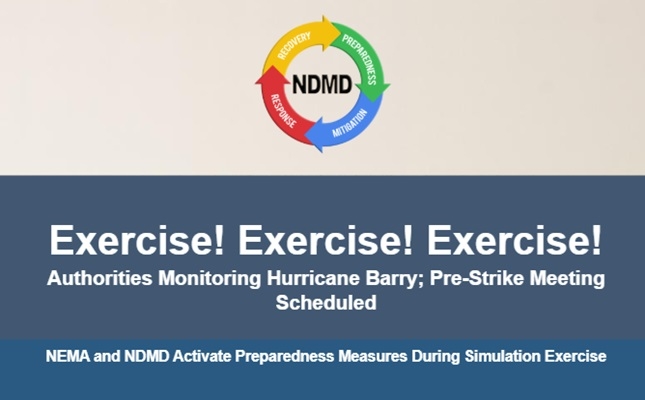
  • Exercise! Exercise! Exercise! SKN Authorities Monitoring Hurricane Barry; Pre-Strike Meeting Scheduled – June 22 @1:00 p.m

    Exercise! Exercise! Exercise! SKN Authorities Monitoring Hurricane Barry; Pre-Strike Meeting Scheduled – June 22 @1:00 p.m

    CHARLESTOWN, Nevis – June 22, 2026 – Disaster management authorities across St. Kitts and Nevis have activated early preparedness protocols and are maintaining constant surveillance of Hurricane Barry, as the storm system tracks toward the Caribbean island nation, according to an official press release from the Nevis Disaster Management Department (NDMD).

    As of 8:00 a.m. local time on Monday, the U.S. National Hurricane Center and the local St. Kitts and Nevis Meteorological Services placed Hurricane Barry at approximately 940 nautical miles east of the island chain, positioned at latitude 16.3° North and longitude 45.5° West. The storm is currently advancing west-northwest at a steady forward speed of 18 miles per hour.

    Up-to-date meteorological projections show that Hurricane Barry is on track to begin bringing adverse weather impacts to St. Kitts and Nevis within 48 to 72 hours. In response to the projected timeline, the joint team from the National Emergency Management Agency (NEMA) and NDMD launched preliminary preparedness steps hours ago, and have established continuous coordinated communication with meteorological officials and other critical response stakeholders across the country.

    To align all stakeholders ahead of the storm’s expected arrival, a formal pre-landfall coordination meeting has been called for 1:00 p.m. the same day at the NDMD’s Emergency Operations Centre (EOC) in Nevis. Attendees will use the session to audit existing preparedness arrangements, address gaps in pre-storm planning, and align inter-agency response protocols to ensure a rapid, organized reaction if the storm makes landfall.

    Officials are urging all residents across St. Kitts and Nevis to prioritize personal and family preparedness immediately. The public has been advised to stay alert for changing conditions, revisit and update their household emergency plans, stock up on necessary supplies including non-perishable food, water, medication, and emergency lighting, and rely only on official updates from NEMA, NDMD, and the national Meteorological Services for accurate information.

    Disaster management officials note that they will release additional public updates as new information on the storm’s track and intensity becomes available. The notification carries the repeated signal alert “Exercise! Exercise! Exercise!”, a standard designation for official pre-disaster preparedness mobilization in the region.

    This alert was distributed by SKNVibes.com as received via official press release, with no editorial alterations to content.

  • ONDCP Participates in ECCB-Led Cyber Crime Awareness Effort

    ONDCP Participates in ECCB-Led Cyber Crime Awareness Effort

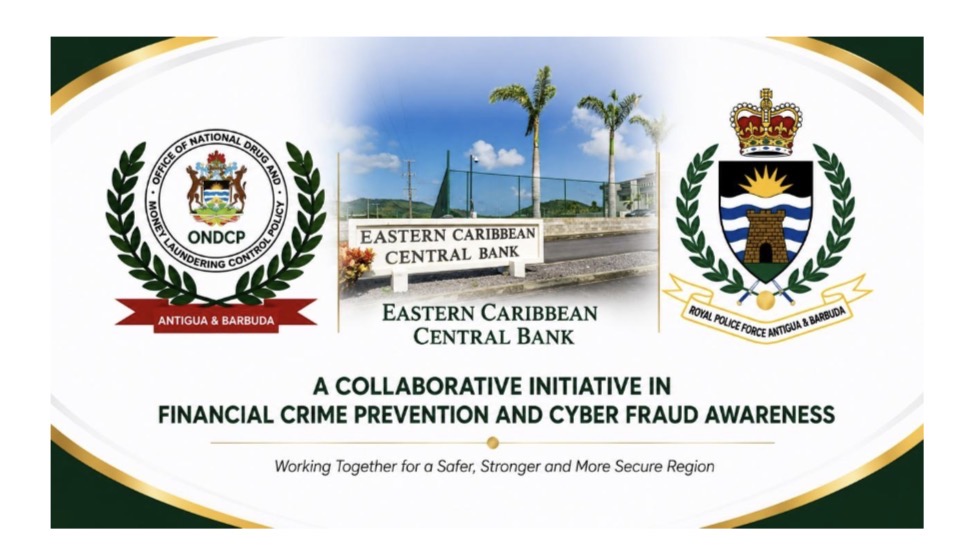
    Across the Eastern Caribbean, cross-agency and cross-border cooperation has taken center stage in the fight against evolving financial crime, as leading regional and national institutions joined forces for a groundbreaking anti-fraud initiative focused on cyber-enabled threats.

    The collaborative effort was anchored by a regional webinar hosted by the Eastern Caribbean Central Bank (ECCB), titled *“Click. Call. Drain – Disrupting Cyber Fraud Networks through Intelligence-Led Policing”*. The virtual event drew a diverse cohort of attendees, including compliance experts, leaders from regional financial institutions, financial regulators, and law enforcement officials from all member jurisdictions of the Eastern Caribbean Currency Union. Its core mission was to address the rapidly growing risk of cyber-facilitated financial crime and map out coordinated strategies to boost prevention, detection, incident reporting, and enforcement actions across the region.

    Antigua and Barbuda sent an official delegation featuring specialists from two of the country’s key anti-crime bodies: the Office of National Drug and Money Laundering Control Policy (ONDCP) and the Royal Police Force of Antigua and Barbuda. This participation underscores the island nation’s firm commitment to building a unified national framework to counter financial crime and cyber fraud. Representing ONDCP were senior specialists Lennique Quashie and Kebra Gardner, while the Royal Police Force was represented by ASP Wilkin Cuffy. Together, the delegation contributed actionable insights to panel and open discussions covering shifting emerging fraud patterns, practical defensive measures for financial institutions, and the critical role of cross-sector partnerships between banks, financial intelligence units, law enforcement, telecom providers, and other key stakeholders.

    Following the conclusion of the webinar, ECCB leadership publicly recognized the valuable contributions from all participating delegations. The central bank reaffirmed that sustained inter-agency and cross-border collaboration is non-negotiable for strengthening the region’s collective ability to counter not just cyber-enabled fraud, but also interconnected threats including money laundering, terrorist financing, proliferation financing, and other newly emerging financial crime risks.

    Lt. Col. Edward Croft, Director of Antigua and Barbuda’s ONDCP, praised the regional event as a critical step forward for collective security. He emphasized that ongoing, robust coordination between stakeholders at the national, regional, and international levels is essential to addressing evolving threats. “Cyber-enabled fraud continues to present significant challenges to our financial systems and our citizens. Effective prevention and disruption require cooperation, information sharing, public awareness, and a coordinated response among all relevant agencies,” Croft stated in remarks after the webinar. “Initiatives such as these demonstrate the value of collaboration in protecting the integrity of our financial systems and enhancing public confidence in the institutions responsible for safeguarding them.”

    In closing, ONDCP extended its formal gratitude to the ECCB for organizing and facilitating the landmark regional initiative. The office also reaffirmed its long-term commitment to working hand-in-hand with partners at all levels to build Antigua and Barbuda’s institutional capacity to prevent, detect, investigate, and disrupt both traditional financial crime and modern cyber-enabled fraud threats.

  • Ramdin: Suriname en Guyana kunnen uitgroeien tot op één na grootste oliegebied ter wereld

    Ramdin: Suriname en Guyana kunnen uitgroeien tot op één na grootste oliegebied ter wereld

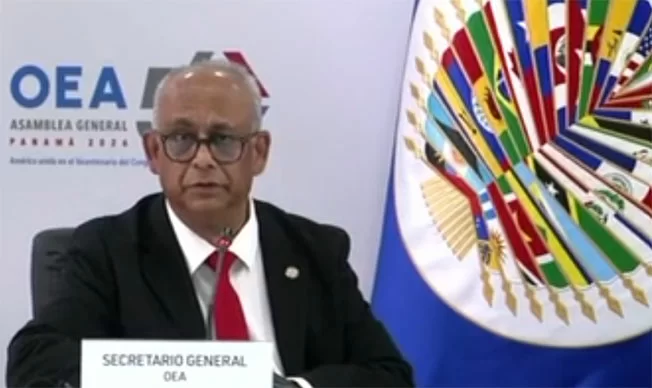
    Against the backdrop of the 2026 Organization of American States (OAS) General Assembly, Secretary-General Albert Ramdin has laid out a transformative economic vision for the Americas, highlighting that the combined oil and gas sectors of Suriname and Guyana could position the region as the world’s second-largest oil production hub, if paired with strategic investment and inclusive regional collaboration.

    Speaking at the High-Level Private Sector Dialogue held on the sidelines of the General Assembly in Panama, which brought together ministers, diplomats, and business leaders from nearly 40 countries across the hemisphere, Ramdin emphasized that the Western Hemisphere holds extraordinary untapped economic potential, driven by its abundant natural resources, strategic geographic positioning, unparalleled biodiversity, and dynamic entrepreneurial culture.

    Current production data underscores this potential: Guyana already pumps roughly 900,000 barrels of oil per day, with projections pointing to output climbing to 1.8 million barrels daily by 2030. When combined with Suriname’s projected upcoming oil production increases, Ramdin noted that the combined Guiana Shield region is on track to become one of the most consequential oil-producing centers globally. However, he cautioned that natural resource wealth alone is not enough to deliver long-term, shared prosperity.

    “Economic progress only emerges when governments and the private sector invest jointly in stability, good governance, and sustainable development,” Ramdin told attendees. He argued that durable growth requires strong public institutions, consistent rule of law, full transparency, and a predictable policy environment to retain and attract global investor confidence. Rather than focusing solely on exporting raw crude and gas, Ramdin urged regional leaders to leverage the energy boom to build local value chains, grow domestic industries, create high-quality local jobs, and fund long-term sustainable development projects across the region.

    To advance this collaborative economic agenda, Ramdin used the dialogue to formally launch the OAS Private Sector Initiative of the Americas, a new cross-sector platform designed to bridge gaps between national governments, global financial institutions, and private enterprises to unlock investment, drive inclusive economic growth, and strengthen regional integration. Argentine business leader Bettina Bulgheroni has been appointed to chair the new initiative, where she will lead the development of concrete projects across key high-growth sectors including energy, critical minerals, artificial intelligence, digital transformation, trade, and investment.

    Ramdin closed his remarks with a call for deeper collective action across North, Central, South America and the Caribbean. He noted that too much regional capital and economic activity currently flows outside the hemisphere, despite the Americas holding all the necessary assets – abundant natural resources, robust logistics connections, and skilled human talent – to play a far larger role in the global economy. He identified the global energy transition, digitalization, artificial intelligence innovation, and modernization of trade and logistics networks as the defining economic opportunities for the region over the coming decade.

    “The future of the Americas depends on how we connect economic growth to democratic governance, security, and sustainable development,” Ramdin emphasized, framing the new initiative and the region’s energy boom as once-in-a-generation opportunities to deliver shared prosperity across the hemisphere.

  • Column: Wapenstilstand? Terwijl het echte leed doorgaat

    Column: Wapenstilstand? Terwijl het echte leed doorgaat

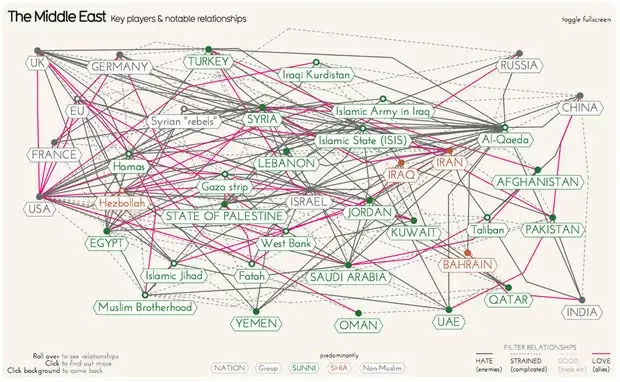
    As the United States and Iran work to hold together a tenuous, newly reached ceasefire, active bombardment has not ceased across the Middle East – and this time, the violence is unfolding not in Iran or the U.S., but in Lebanon. Despite international calls for de-escalation and emerging diplomatic frameworks, Israel has continued its air strikes across Lebanese territory, with the global community remaining largely passive in the face of continued violation of emerging peace commitments. Parallel to this, Iran has oscillated between opening and closing the Strait of Hormuz, the world’s most critical chokepoint for global oil trade, in a move that underscores the tense balancing act between diplomatic outreach and strategic escalation in the region. While much of the global discourse focuses on geopolitical red lines drawn in military manoeuvres and diplomatic agreements, the actual defining line of this crisis is the daily suffering of ordinary civilians trapped in the crossfire.

  • Derde helft WK 2026: Nieuw Zeeland strijdend ten onder tegen Egypte

    Derde helft WK 2026: Nieuw Zeeland strijdend ten onder tegen Egypte

    VANCOUVER, Canada – June 22, 2026 – A high-stakes Group G FIFA World Cup match at BC Place delivered a dramatic turnaround on Sunday night, as Egypt rallied from a first-half deficit to secure a critical 3-1 victory over an underdog New Zealand side, reigniting their knockout stage hopes.

    Refereed by Omar Al Ali of the United Arab Emirates, the encounter carried massive weight for both nations: heading into the match, each side had only earned one point from their opening two group games, meaning three points was a non-negotiable requirement to keep their dreams of advancing to the knockout round alive.

    Led by star forward Mohamed Salah, Egypt controlled possession and set the attacking tone from the opening whistle, but New Zealand’s compact defense held firm and nearly drew first blood against the run of play. In the 14th minute, Elijah Just carved out the first clear chance of the game, firing a low shot toward the far left corner, but Egyptian goalkeeper Mostafa Shobeir made a sharp save to keep the match scoreless.

    New Zealand capitalized on the resulting corner kick just moments later, as defender Finn Surman rose above a crowd of Egyptian defenders inside the six-yard box to power a header into the left netting, giving the Oceania side an unexpected 1-0 lead.

    After the hydration break, Egyptian winger Omar Marmoush had a golden chance to level the score, but New Zealand goalkeeper Max Crocombe read the attempt well and made a critical stop to preserve his side’s lead. Egypt pushed hard for an equalizer in the closing minutes of the first half, but wasteful finishing and resolute New Zealand defending kept the underdogs ahead heading into the halftime break.

    Egypt came out of the locker room firing on all cylinders immediately after the restart, raining wave after wave of pressure on New Zealand’s defense. New Zealand shifted to a more cautious, defensive-minded approach to protect their lead, which opened up space that the Egyptian attack quickly exploited. Though Salah and his attacking teammates continued to waste clear opportunities, their persistence finally paid off in the 58th minute, when Mostafa Ziko found the back of the net to draw Egypt level at 1-1.
    Nine minutes later, Salah delivered the moment Egypt had been waiting for: the Liverpool star broke into the penalty box and slotted a clinical finish past Crocombe to put his side ahead 2-1. With 15 minutes remaining in regular time, Mahmoud Hassan put the match out of reach for New Zealand, scoring Egypt’s third to seal a 3-1 comeback win.

    The result reshapes the Group G standings, leaving Egypt still in contention for a knockout spot heading into the final matchday, while New Zealand’s hopes of advancing are effectively ended after their third group stage match.

  • Vietnam and Cuba strengthen relations

    Vietnam and Cuba strengthen relations

    On a diplomatic visit to Cuba this Sunday, Vietnam’s Foreign Minister Le Hoasi Trung, who also serves as a member of the Political Bureau of the Central Committee of the Communist Party of Vietnam, has delivered a clear message of unwavering solidarity: Vietnam will stand with Cuba, regardless of the prolonged economic siege imposed by the United States government.

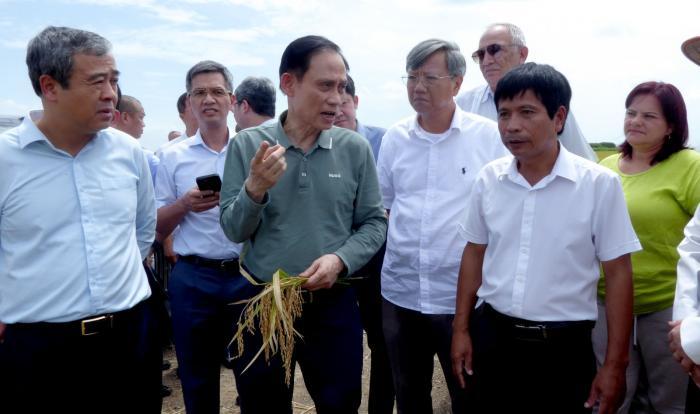
    Le’s trip to the Caribbean island included stops at two of the most prominent bilateral cooperation projects, the Mariel Special Development Zone (ZEDM) and a joint rice production initiative in Pinar del Río province, designed to assess ongoing progress and strengthen economic ties between the two longstanding partners.

    The Vietnamese delegation’s first stop was ViMariel S.A., a fully foreign-owned Vietnamese firm that has operated in Cuba since 2019 and holds the sole 50-year concession for ZEDM’s industrial park development. Ana Teresa Igarza Martínez, General Director of the special development zone, noted that Vietnam already holds the title of the country with the second-largest business footprint within the enclave.

    Le explained that the visit grew directly out of agreements reached by the party and state leaders of both nations in 2024, created to give officials a first-hand look at how Vietnamese enterprises are performing across multiple key sectors of Cuba’s economy. These sectors span from manufacturing, agri-food production, consumer goods including disposable diapers and detergents, and renewable energy development, to trade, finance and banking. With Cuba’s National Assembly having recently passed a suite of economic reforms aimed at revitalizing foreign investment and supporting existing businesses, Igarza emphasized that both sides must continue deepening collaborative work to capitalize on these new opportunities.

    Reaffirming the fraternal bond between the two peoples, Le made clear that Vietnam’s commitment to Cuba remains unshaken by external pressure. “The Vietnamese people are driven by brotherhood, and we will never abandon Cuba despite the siege imposed by the United States government,” he stated. He also reiterated Vietnam’s commitment to expanding investment where it is most needed, creating new opportunities for Vietnamese entrepreneurs while supporting Cuba through its current challenging economic context.

    Huona Nauyen, Office Head and Business Manager of ViMariel S.A., outlined the scope of the company’s work in ZEDM: the 50-year concession grants ViMariel the right to plan, invest in, construct, manage and operate industrial park infrastructure across nearly 300 hectares of land in the Artemisa province enclave, as the firm moves forward with its expansion plans.

    After concluding his visit to ZEDM, Le and his delegation traveled to Pinar del Río to inspect the bilateral rice production project that has become a model of successful agricultural cooperation between the two nations. As of 2026, more than 900 hectares of land have already been planted this growing season, with yields exceeding initial expectations and planting work continuing. Le praised the high quality of Pinar del Río’s soils, noting that Vietnamese technical partners already achieved strong yields in 2025 on far less fertile land.

    Yamilé Ramos Cordero, First Secretary of the Provincial Party Committee in Pinar del Río, told the visiting delegation that the province holds additional high-quality arable areas that could be incorporated into the joint project, saying local authorities are deeply interested in expanding the successful initiative. Alongside touring growing fields at multiple development stages, including plots already being harvested, Le visited the on-site industrial processing complex where the rice, destined for Cuban domestic consumption, is prepared. He commended the high quality of the finished grain produced through the partnership.

    Even as the U.S. economic blockade continues to exert severe pressure on Cuba’s economy and disrupt cross-border projects, the rice initiative has kept moving forward, with local and Vietnamese partners finding workarounds for every challenge that has arisen, according to Telce González Morera, Cuba’s Deputy Minister of Agriculture. González Morera added that a smaller-scale similar project is already operating in Cuba’s Granma province, but the Pinar del Río initiative remains the most advanced and well-established, having operated for a longer period. “They had a successful campaign last year, and the current one is progressing well, with planting and harvesting yields above the national average, becoming more efficient every day, and forging stronger relationships with producers,” he noted.

    The visit underscores the deep, longstanding historical and political ties between Vietnam and Cuba, and reaffirms both nations’ commitment to expanding mutually beneficial economic cooperation even amid external pressure.

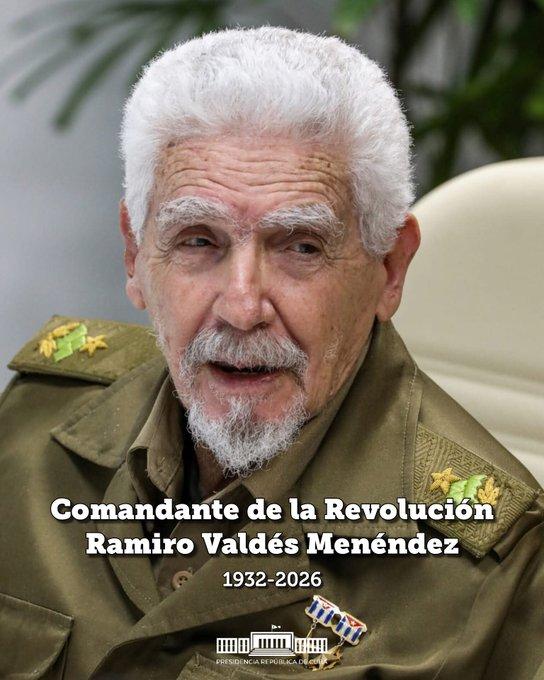
  • Díaz-Canel: “The passing of Commander of the Revolution, Ramiro Valdés Menéndez, is deeply painful, like the loss of a father”

    Díaz-Canel: “The passing of Commander of the Revolution, Ramiro Valdés Menéndez, is deeply painful, like the loss of a father”

    On Sunday, June 22, 2026, Cuban President Miguel Díaz-Canel Bermúdez, who also serves as First Secretary of the Communist Party Central Committee, publicly shared his deep grief over the passing of iconic revolutionary leader Ramiro Valdés Menéndez via his social media channels.

    In an emotional statement posted online, Díaz-Canel framed the loss of the veteran revolutionary as akin to losing a beloved father, a sentiment that captures the deep respect and affection he has long held for Valdés. “That’s how I always loved and respected him. This way I will remember his support and advice, his discreet collaboration and exemplary dedication to the service of the Homeland,” the president wrote.

    Díaz-Canel emphasized that every moment of Valdés’ life was defined by unwavering loyalty: to former revolutionary leaders Fidel Castro and Raúl Castro, to his fellow revolutionary fighters, and to the core principles of the Moncada Program. From the 1953 assault on the dictatorship’s Moncada Barracks — a pivotal moment that launched the Cuban revolution — to his final breath on this Father’s Day, Valdés never wavered in defending the just mission of the revolutionary movement, Díaz-Canel noted. The commander’s death has cast a shadow of sadness over the holiday for Cubans across the country.

    Closing his tribute, the Cuban president offered a final salute to the legendary revolutionary: “Always onward to victory, Commander!”

    The announcement was originally reported by Cuba’s state-run Granma news outlet, marking the passing of one of the last remaining founding figures of the Cuban Revolution.

  • Marrero Cruz: “These transformations do not constitute a deviation from the socialist project; on the contrary, they respond to the inherent logic of its development”

    Marrero Cruz: “These transformations do not constitute a deviation from the socialist project; on the contrary, they respond to the inherent logic of its development”

    In an address delivered to the Third Extraordinary Session of the National Assembly of People’s Power, Cuban Prime Minister Manuel Marrero Cruz outlined a landmark package of 176 strategic economic and social reforms, framed as a necessary adaptation to one of the most severe crises the island nation has faced since the 1990s Special Period.

    Prime Minister Marrero Cruz opened by attributing the current national hardship to the cumulative impact of intensifying United States coercive measures, which have cut off fuel supplies and almost completely dried up foreign currency revenue. These external pressures, he explained, have severely degraded the country’s energy infrastructure and eroded living standards for millions of Cubans, while also derailing the gradual implementation of economic reforms first approved by the Communist Party of Cuba in 2011. That framework delivered consistent positive results until 2019, when the US drastically escalated its sanctions regime, with further tightening implemented in January 2025.

    Against this backdrop, the Cuban government and Communist Party have developed the new reform package, which draws broad input from popular consultations, 133 expert consultations, and public debate that resulted in 66.7% of 390 public proposals being incorporated into the final draft. Marrero Cruz emphasized that the reforms do not represent an abandonment of core socialist principles or the revolution’s core social gains, but rather a pragmatic adaptation designed to preserve socialism under unprecedented external pressure.

    “These transformations find their foundation in the thinking of our revolutionary leaders, who have long argued that adapting to current conditions is not a renunciation of socialism, but a requirement for its survival,” Marrero Cruz stated, referencing Fidel Castro’s 1993 call for pragmatic action during the original Special Period. Echoing Raúl Castro’s previous guidance on updating Cuba’s economic model, the reforms reject dogmatism, decouple socialism from rigid egalitarianism, and formalize the role of market mechanisms as tools for resource allocation that must be incorporated and regulated by socialist planning.

    The sweeping package of reforms, grouped into 23 core pillars, touches nearly every aspect of Cuba’s economic and social life. Key changes for the state-owned enterprise sector include granting broad operational autonomy, decentralizing price approval for wholesale and retail goods, resizing upper management bodies to remove unnecessary state functions, allowing enterprises to set their own salary scales based on financial capacity, and gradually eliminating state subsidies that currently consume 92.5 billion pesos annually, half of which go to subsidizing electricity rates.

    Notably, the reforms open the door to transforming state-owned enterprises into share-based commercial companies, with the state retaining a majority stake only in strategic sectors, and allow both non-state entities and foreign investors to purchase shares in state firms. A national program will also be implemented to value and title state assets, allowing underutilized assets to be monetized through long-term leases to domestic and foreign investors.

    For the non-state sector, the reforms remove long-standing restrictions that have slowed growth. The cap of 100 employees for micro, small, and medium-sized enterprises (MSMEs) will be eliminated, individuals will be allowed to own more than one private business, and 70 of the 125 current prohibited activities for non-state actors will be opened up. Non-state entities will also be granted formal land rights to develop operations, removing the current ban that forces many small businesses to operate out of private homes, and will be allowed full access to foreign currency bank accounts. Artificial intelligence will be deployed to streamline approval processes for new economic actors, cutting red tape that has left thousands of applications pending.

    In the agricultural sector, the government will allow private companies to operate in agricultural production, open a national input market with foreign currency access, grant indefinite usufruct land rights to any domestic or foreign entity with a viable production project, and eliminate the requirement that land usufructuaries work the land personally, allowing investors to hire labor to operate productive farms. Agricultural pricing will be fully decentralized to producers, and cooperatives will be granted the right to directly import inputs and export products without going through central government intermediaries.

    Major changes are also being implemented to decentralize power to municipal governments, which will gain authority to approve local investments, manage local land use, directly conduct foreign trade, retain their own foreign currency earnings, and approve foreign direct investment within their borders without additional central government approval. Municipalities will also be allowed to hold shares in local companies, with dividends flowing into a local development fund to support community projects. A sweeping restructuring of agricultural administration will eliminate distorted provincial and municipal agricultural delegations, replacing them with streamlined national land and livestock management bodies and local food production promotion agencies.

    To address the ongoing national energy crisis, the reforms open fuel importation and retail marketing to private and foreign capital, require new service stations to integrate independent solar power systems to avoid adding strain to the national grid, and offer tax incentives for private investment in renewable energy projects in public facilities. A 1% tax on fuel imports will be dedicated to supporting social institutions, with investments in renewable energy allowing actors to deduct that investment from their tax obligation.

    The reform package also places core social protections at its center, including a 53% increase in the national minimum wage from 2,100 to 3,210 pesos that will take effect in July, covering all public sector workers and requiring private sector employers to also meet the new minimum wage. The government will annually adjust the minimum wage and pension benefits based on inflation and fiscal capacity. Social security reforms will eliminate contribution caps for the non-state sector, count up to 10 years of family caregiving toward the 30-year service requirement for pensions, and provide income support for out-of-work young people who enroll in job training programs.

    Banking and financial sector reforms open the sector to private domestic and foreign capital, eliminate prior authorization requirements for foreign currency accounts, implement a regulatory framework for virtual assets, remove all limits on bank transfers and withdrawals for individuals and legal entities, and introduce gradual national currency devaluation to close the gap between the official and market exchange rates. A new foreign exchange market will be created with private exchange houses and a real-time digital trading system.

    Tax reforms will introduce value-added tax (VAT) gradually to eliminate cascading taxation, reduce corporate income tax rates for most businesses, introduce a gross income tax for companies that report losses for more than two years, and adjust personal income tax brackets to reduce the burden on middle and low earners following recent inflation. Price setting will be almost fully decentralized to enterprises and local governments, ending central government price ceilings.

    Foreign investment reforms lift the current ban on foreign investment in Cuban private companies, extend surface rights for foreign investors to 99 years, allow foreign firms to hire workers directly without mandatory state employment agencies, and apply the principle of tacit approval to all investment permit processes, meaning applications are automatically approved if no response is issued within the required timeframe. Reforms to the tourism sector open all tourist destinations, including Old Havana and restricted island keys, to all business models including foreign investment, allow real estate development in tourist areas, and open car rental and travel agency operations to non-state and foreign operators.

    Digital transformation is a core pillar of the reforms, with plans to create a national technology hub for artificial intelligence, software and hardware development, establish a national interoperability framework for AI, allow private investment in data centers and telecommunications infrastructure, and formally recognize data as a factor of production alongside land, labor, capital and entrepreneurship.

    Prime Minister Marrero Cruz confirmed that the proposed transformations require changes to more than 140 existing legal provisions, including 15 repeals, 22 full overhauls, and 79 partial amendments, plus 32 new pieces of legislation. A legal review found that the reforms are consistent with nine articles of the Cuban constitution and do not require constitutional amendments.

    Closing the address, Marrero Cruz reiterated that the defense of the socialist homeland remains the country’s top priority, and that the reforms are aligned with the revolutionary project led by Fidel Castro and Raúl Castro. “These transformations do not constitute a deviation from the socialist project; on the contrary, they respond to the inherent logic of its development,” he said. “We are building socialism guided by the ideas of Fidel and Raúl, and these reforms have the essential purpose of improving the quality of life of our compatriots, so that every Cuban can contribute their best to building the prosperous and sustainable socialism that our people deserve.”

    The address concluded with the traditional revolutionary slogans: “Long live Free Cuba! Long live Fidel and Raúl! Homeland or Death! We will overcome!”
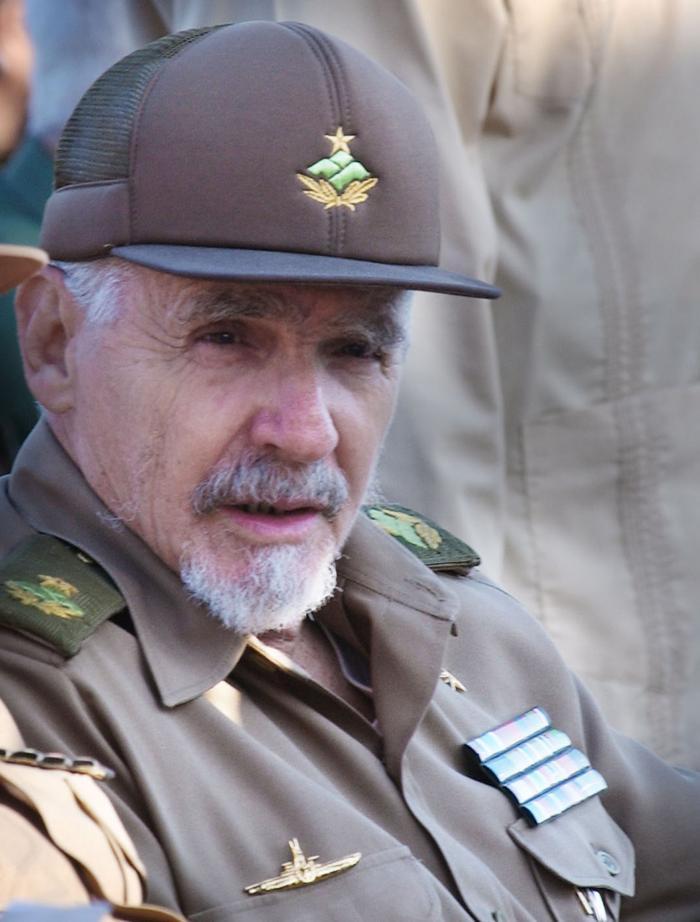
  • Historic Commander of the Revolution Ramiro Valdés Menéndez passes away

    Historic Commander of the Revolution Ramiro Valdés Menéndez passes away

    Cuba’s top Party, state and government leadership has announced with deep sadness that iconic Cuban Revolution Commander Ramiro Valdés Menéndez, a decorated Hero of the Republic of Cuba and Hero of Labor, passed away on the morning of Sunday, June 21, 2026.

    Born in Artemisa in April 1932, Valdés Menéndez grew up in a working-class household shaped by his mother’s deep commitment to the legacies of Cuban independence leaders Carlos Manuel de Céspedes and José Martí. Raised amid the inequalities of pre-revolutionary capitalist Cuba, he developed unshakable patriotic values from an early age. As a young adult working as a lineman’s apprentice, he first cut his political teeth organizing to fight unfair working conditions for electrical sector employees.

    When Fulgencio Batista launched his 1952 military coup, Valdés Menéndez was working in the sugar cane fields of a local mill. He did not hesitate to join the growing resistance movement against the Batista dictatorship, aligning himself with Fidel Castro and a cohort of fellow young revolutionaries from his home province of Artemisa. Just over a year later, he took part in the landmark July 26, 1953 attacks on the Moncada Barracks and the Carlos Manuel de Céspedes Barracks, a turning point that ignited the Cuban Revolution.

    From that moment forward, Valdés Menéndez stood on the front lines of every phase of the revolutionary struggle, alongside Fidel Castro Ruz and Raúl Castro Ruz, to whom he maintained lifelong, unwavering loyalty and admiration. He carried his revolutionary credentials through every chapter of the movement: as a surviving Moncada attacker, a political prisoner imprisoned on the Isle of Pines, an exiled organizer in Mexico, a member of the historic Granma expedition that relaunched the revolution in 1956, and second-in-command of Column No. 8 under the legendary Ernesto “Che” Guevara in the Sierra Maestra mountains.

    By the time the revolution claimed victory on January 1, 1959, Valdés Menéndez had already earned his rank of Commander through years of frontline combat. In the decades that followed, he went on to hold a long list of senior military and government positions that shaped modern Cuba. These included Second Chief of La Cabaña, Military Chief of Cuba’s central region, and head of state security organs during the pivotal 1961 Bay of Pigs mercenary invasion. He later served as Minister of the Interior, First Deputy Minister of the Revolutionary Armed Forces (FAR), Aide to the Commander-in-Chief, President of the SIME Electronics Industrial Group, Minister of Information Technology and Communications, Vice President of the Councils of State and Ministers, and Deputy Prime Minister — a post he held until his death.

    A founding member of the Central Committee of the Communist Party of Cuba and its Political Bureau, Valdés Menéndez also served for decades as a deputy to the National Assembly of People’s Power. Among his most notable high-stakes missions was leading the effort to search for, locate, exhume, and repatriate to Cuba the remains of Che Guevara and his fellow revolutionary fighters who died in Bolivia in 1967. Over his decades of service, his extraordinary contributions to the Cuban nation were recognized with dozens of state orders and highest decorations.

    In announcing his passing, Cuban leadership emphasized that Valdés Menéndez leaves behind a decades-long record of exceptional, selfless service to the Cuban people. His life and example will remain a lasting paradigm for future generations of Cubans, remembered as a steadfast revolutionary, fearless combatant, and unwavering patriot whose solid convictions and unlimited devotion to his country defined a lifetime of commitment to Cuba’s sovereignty and people.