博客

  • Hormuz Reopens, But What Did Iran Really Promise?

    Hormuz Reopens, But What Did Iran Really Promise?

    Nearly a week after the Strait of Hormuz reopened to global maritime traffic, a sharp public discrepancy between U.S. and Iranian officials has cast major uncertainty over the future of fragile peace talks aimed at ending their ongoing conflict. The standoff began when former President Donald Trump, who led the U.S. negotiating team, publicly claimed Tehran had made sweeping concessions to resolve the nuclear crisis, including full, unfettered access for international inspectors to all Iranian nuclear facilities. In exchange for this commitment, Trump said, the U.S. had agreed to lift its naval blockade of the strategic chokepoint, a move that has already calmed global energy markets in the short term.

    In a post to his social media platform Truth Social, Trump doubled down on his claims, insisting that without Iran’s acceptance of long-term nuclear inspection protocols, no further negotiations would have been possible. “If they did not agree to this, there would be no further negotiations,” he wrote.

    But Iranian leaders quickly pushed back against Trump’s characterization of the preliminary agreement, flatly denying that any commitment for unrestricted International Atomic Energy Agency (IAEA) inspections of sites damaged in last year’s U.S. airstrikes had been made. Foreign Ministry spokesperson Esmail Baghaei clarified that the only points Tehran had formally agreed to are a full end to offensive military operations, the immediate reopening of the Strait of Hormuz, and a 60-day window to continue negotiations toward a binding, final peace deal. Iranian President Masoud Pezeshkian echoed that pushback, warning that public statements misrepresenting the agreed text only undermine progress toward a lasting resolution.

    The conflicting accounts are playing out as technical negotiations continue behind closed doors in Switzerland, where negotiators are working through a complex set of sticking points: sweeping sanctions relief for Iran, permanent nuclear monitoring frameworks, post-conflict reconstruction for both sides, and long-term security guarantees for the Strait of Hormuz, which carries roughly 20% of the world’s daily oil supplies.

    Beyond the diplomatic gridlock, the Trump administration is facing growing pushback on Capitol Hill over its request for additional war funding. According to reporting from the Associated Press, the Pentagon has asked Congress for roughly $80 billion in supplemental funding to cover ongoing costs of the Iran conflict, a request that comes on top of the administration’s already proposed $1.5 trillion national defense budget. Lawmakers from both major U.S. political parties have already expressed skepticism over the massive new spending request, even as the administration frames it as critical to securing a stable peace.

    Adding to the already tense atmosphere, fresh violence has erupted in southern Lebanon despite a recently brokered ceasefire between regional armed groups. The resurgence of conflict in the neighboring country has stoked new fears that any agreement between Washington and Tehran could fail to deliver on its core promise of broader regional stability, leaving the Middle East once again teetering on the edge of a larger regional war.

  • Noersalim: meer dan 25 corruptiedossiers bij LVV

    Noersalim: meer dan 25 corruptiedossiers bij LVV

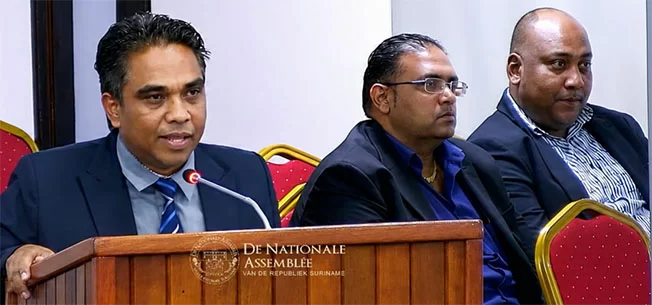
    In a parliamentary address delivered during budget deliberations on June 23, Suriname’s Minister of Agriculture, Livestock and Fisheries (LVV) Mike Noersalim has revealed shocking details of systemic mismanagement and widespread corruption within his ministry, announcing that over 25 potential corruption cases have already been documented for investigation.

    According to Minister Noersalim, when he took office, he inherited a government department grappling with not only deep organizational dysfunction, but also what he describes as deliberate policies that created fertile ground for corrupt activities. Corrupt practices have permeated every level of the ministry, from senior strategic leadership to frontline operational staff, with multiple officials found to have engaged in illicit activities, the minister confirmed.

    To date, formal reports have been filed with law enforcement authorities, relevant individuals have been questioned for investigation, and multiple suspects have been taken into custody, Noersalim said, adding that criminal legal proceedings are already underway against those implicated.

    Beyond the corruption scandal, the minister laid bare the severe operational decay that has crippled the ministry for years. Many core departments are critically understaffed, and basic working infrastructure ranging from temperature-controlled storage facilities and office computing equipment to functional work vehicles is severely lacking. In a striking example of the depth of disarray, Noersalim noted that ministry staff have in the past been forced to pool their own personal money to pay for vehicle fuel just to carry out required field inspections and site visits.

    Minister Noersalim emphasized that comprehensive internal reform is a non-negotiable first step before the LVV can deliver meaningful progress toward rebuilding and revitalizing Suriname’s critical agrarian sector. “You cannot build a functional, effective sector on a corrupted foundation,” he stated.

    The ministry has already launched a full organizational audit and overhaul process, with ongoing work including facility renovations for ministry buildings, upgrades to digital IT infrastructure, fleet and equipment modernization, streamlining of internal work processes, and targeted skills training for existing staff. To prevent future abuses of power and mismanagement, Noersalim highlighted that digital transformation and strengthened internal oversight mechanisms are core priorities of the ongoing reform effort.

  • Guatemala Says U.S. Won’t Be Fighting Gangs on Its Soil

    Guatemala Says U.S. Won’t Be Fighting Gangs on Its Soil

    In a firm rebuke of proposed U.S. military action within its borders, Guatemalan President Bernardo Arévalo has publicly ruled out allowing American troops to conduct anti-gang and counter-narcotics operations on Guatemalan territory.

    Arévalo made the clarification in an interview with Agence France-Presse on the sidelines of the Organization of American States summit held in Panama, confirming that while Guatemala actively seeks and welcomes international collaboration on security issues, its national constitution explicitly prohibits joint military operations with foreign armed forces.

    The president’s statement was issued in direct response to recent remarks by U.S. Defense Secretary Pete Hegseth, who told CBS News that the U.S. was considering launching targeted strikes against transnational criminal gangs and drug trafficking networks in both Guatemala and Ecuador.

    While Arévalo did not challenge the existence of existing bilateral security cooperation between the two nations, he emphasized clear legal and operational boundaries to that partnership. According to the Guatemalan leader, Washington’s involvement is restricted to three core areas: training for local security personnel, tactical planning support for anti-criminal raids, and cross-border intelligence sharing. All armed operations against domestic criminal organizations, he stressed, remain the exclusive responsibility of Guatemala’s own national security forces.

    The exchange comes amid a broader expansion of U.S. military activity across Central and South America under the Trump administration’s renewed anti-drug offensive. Earlier this month, U.S. forces carried out a cross-border raid in Venezuela that resulted in the death of Hector Rusthenford Guerrero Flores, leader of the violent transnational Tren de Aragua gang, who carried a $5 million U.S. bounty on his head. President Trump later publicly shared footage of the operation on his social media platforms.

    Beyond targeted raids on gang leaders, the U.S. has also launched a series of airstrikes against suspected drug smuggling vessels in the Caribbean Sea and Pacific Ocean. Official data from regional security sources indicates that more than 200 people have been killed in these air operations to date.

  • What Are “Synchronised Factories” and Could They Bring Jobs to Belize?

    What Are “Synchronised Factories” and Could They Bring Jobs to Belize?

    On a recent Friday in June 2026, high-level delegations from Belize and Mexico gathered at the Santa Elena border crossing to advance discussions on transformative cross-border economic cooperation, with a novel proposal of synchronized factories taking center stage. This ambitious framework would split manufacturing processes across the two nations’ border regions, pairing Belize with Mexico’s Quintana Roo state to leverage each side’s unique comparative advantages. Under the plan, complementary production and processing activities on both sides of the border would deliver finished goods to the CARICOM single market, creating a streamlined cross-border supply chain tailored to regional demand.

    Beyond the innovative factory model, the two delegations also explored infrastructure connectivity that could unlock broader economic growth. A key priority on the agenda is linking Belize’s transport network to Mexico’s flagship Tren Maya rail system, opening up new efficient routes for both cargo shipments and passenger travel between the two countries. During the talks, working groups also identified four high-potential sectors ripe for collaborative industrial development: agribusiness, agro-processing, manufacturing, and energy, all of which are seen as holding significant untapped opportunity for both nations.

    The Belizean delegation brought together senior leaders from across key government and economic development bodies, including Narda Garcia, CEO of the Prime Minister’s Office; Neri Ramirez, CEO of the Corozal Free Zone; Lincoln Blake, Director of Investment Policy and Compliance; plus senior representatives from the Economic Development Council, Ministry of Foreign Affairs, and the Belize Trade and Investment Development Service (BELTRAIDE). On the Mexican side, the negotiating team included senior officials from the federal Secretariat of Foreign Relations and the Quintana Roo state government, headed by Carlos Imanol, Director General for Central America and the Caribbean, and Paul Carillo, Quintana Roo’s Secretary of Economic Development. If advanced, the proposal could reshape regional manufacturing dynamics and bring new employment opportunities to Belize, addressing long-standing economic development goals for the small Central American nation.

  • Carib Newswire launches new platform to connect Caribbean organizations and media

    Carib Newswire launches new platform to connect Caribbean organizations and media

    The Caribbean media landscape gained a transformative new infrastructure on Wednesday, with the official launch of Carib Newswire, a specialized press distribution platform built to unify information sharing across the region and its global diaspora communities.

    Founded by veteran communications professional Keva D. Muller, the platform was developed to solve a long-standing, underaddressed challenge: the fragmentation that has long limited the visibility and accessibility of Caribbean-focused news for both regional and international audiences. Unlike generic newswire services that often sidelined small-island stories, Carib Newswire is built from the ground up as a centralized, Caribbean-centric hub tailored to the unique needs of the region.

    At its core, the platform operates a centralized digital newsroom that lets organizations submit press releases and announcements, which are then distributed to relevant media contacts filtered by specific island territories, sub-regions, and target demographic groups. This targeted approach stands in contrast to one-size-fits-all distribution models that often leave regional outlets missing localized stories, or organizations struggling to get their announcements in front of the right journalists.

    Muller emphasized the unmet need that prompted the platform’s creation in her remarks at the launch. ‘For too long, sharing timely, relevant news across the scattered islands of the Caribbean has been an inefficient, disconnected process,’ she explained. ‘This platform is intentionally designed to make that far more accessible and intentional for both the organizations that need to share information and the journalists who need to report it.’

    From its official launch, the platform has already built a network of working journalists and media professionals spanning more than 20 Caribbean territories, a footprint that gives participating organizations immediate access to a broad, regionally rooted audience for their announcements. The network is expected to grow in the coming months as more media professionals join the platform.

    The launch has already earned broad backing from established Caribbean media figures. Clint Chan Tack, a veteran journalist with 27 years of experience who previously held the role of Senior Journalist at Trinidad and Tobago Newsday, called the initiative a critical addition to the region’s media ecosystem.

    ‘Carib Newswire fills a gap that has existed in our regional media landscape for decades,’ Chan Tack noted. ‘By giving journalists across the region access to timely, verified information from every corner of the Caribbean, it directly improves our ability to deliver accurate, in-depth reporting to the public. A dedicated platform like this doesn’t just make journalists’ work easier—it supports stronger journalism and a more informed public across the region.’

    As part of its launch phase, Carib Newswire is currently accepting applications from regional organizations to join as Founding Content Partners, an early membership tier designed to help shape the platform’s growth while giving founding members expanded visibility for their content.

    Long-term, the platform’s mission is to nurture a more interconnected regional media ecosystem that amplifies Caribbean stories to broader audiences both within the region and among the large Caribbean diaspora communities across North America, Europe, and beyond. Organizations interested in submitting content or learning more about the Founding Content Partner program can visit Carib Newswire’s official website for additional details.

  • IICA-led study maps 2,656 AgTech startups across Latin America and the Caribbean

    IICA-led study maps 2,656 AgTech startups across Latin America and the Caribbean

    Agricultural technology innovation is rapidly taking shape across Latin America and the Caribbean, according to the first-ever comprehensive regional mapping of AgTech startups, which counted 2,656 active ventures across 23 of the region’s 33 countries. The groundbreaking survey, published by the Inter-American Institute for Cooperation on Agriculture (IICA), expands the Brazil-developed AgTech Radar initiative to cover the full LAC region, offering stakeholders an unprecedented baseline for understanding the fast-evolving agri-innovation ecosystem.

    The research was led by Brazil’s leading agricultural research body, the Brazilian Agricultural Research Corporation (Embrapa), in partnership with IICA, innovation consulting firm Homo Ludens, and venture capital fund SP Ventures. Additional backing for the project came from the Cooperative Program for the Technological Development of the Agri-Food and Agro-Industrial Sector of the Southern Cone (PROCISUR) and Mexico’s Instituto Tecnológico de Monterrey. The final report will be officially unveiled June 23 at the World Agri-Tech South America Summit in São Paulo, Brazil, during a panel discussion featuring representatives from all lead partner organizations, and will be available for free access in Portuguese, English, and Spanish following the launch.

    The report’s data reveals a stark but evolving concentration of AgTech activity across the region. Brazil leads by a wide margin, hosting 2,075 of the counted startups — 78% of the region’s total. Argentina ranks second with 158 ventures, followed by Mexico (110), Chile (91), Colombia (79) and Uruguay (74). Ten LAC countries recorded zero identified AgTech startups, which researchers link to factors including small national populations, limited territorial size, and underdeveloped domestic agricultural innovation sectors. The research team also notes that the final count is likely an underrepresentation, as gaps in local data tracking and a lack of partner institutions in some nations limited access to unregistered or emerging ventures.

    Despite this concentration, study co-author and Embrapa analyst Aurélio Favarin emphasized that the region’s AgTech ecosystem is steadily maturing. “The AgTech Radar LAC 2026 data show that Latin America and the Caribbean are undergoing a steady process of maturation of the agricultural innovation ecosystem. Although there is still a strong regional concentration, there is a growing capacity to generate technological solutions adapted to local production realities,” Favarin stated in IICA’s official press announcement. He added that this first mapping effort creates a critical benchmark that will allow for more comprehensive and accurate tracking of ecosystem growth in future annual surveys.

    Federico Bert, manager of IICA’s Digitalization of Agrifood Systems Program, highlighted the unique value of the cross-institutional collaboration that produced the report. By combining Embrapa’s deep technical expertise in agricultural research with IICA’s broad regional network across the LAC zone, the project was able to build a holistic picture of the ecosystem that would not be possible for a single organization to assemble. “Understanding how the ecosystem is integrated and evolves is the starting point for fostering its growth and development in both the public and private sectors,” Bert explained.

    A key methodological update in this first regional edition is the classification of startups based on the specific agricultural production chains they serve. Of the total ventures mapped, 1,480 offer solutions that work across multiple production sectors. For single-sector startups, 751 focus on broad-acre crop production, 136 on cattle production, 88 on horticulture and fruit growing, and 84 on forestry. Favarin noted that this spread of specialization reflects the vast heterogeneity of agricultural production across the LAC region, and demonstrates that local startups are already successfully developing tools tailored to unique local production conditions.

    The survey also breaks down the types of technology being developed by regional startups. Digital innovations lead by a large margin: 1,404 ventures offer tools such as artificial intelligence for farm management, environmental sensors, drone-based monitoring, farm management software, and digital market linkage platforms. Physical-chemical technologies, ranging from improved farming equipment to input delivery systems, are developed by 403 startups, while 374 ventures focus on biological solutions such as improved seed genetics and sustainable biological inputs. The majority of all surveyed startups target in-farm challenges, prioritizing solutions that boost operational efficiency, improve production management, expand on-site monitoring, and support farmer decision-making.

  • Ramdin opent OAS-vergadering: Samenwerking is geen keuze, maar noodzaak

    Ramdin opent OAS-vergadering: Samenwerking is geen keuze, maar noodzaak

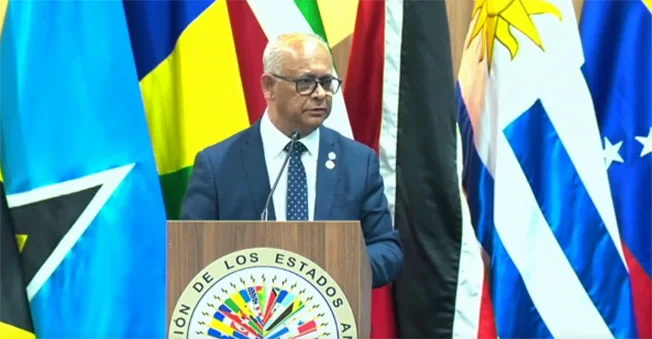
    On Tuesday, at the opening ceremony of the 56th General Assembly of the Organization of American States (OAS) held at Panama City’s Atlapa Convention Center, Secretary-General Albert Ramdin delivered a keynote address urging strengthened cross-regional collaboration to address a growing wave of interconnected challenges across the Western Hemisphere. The Surinamese diplomat emphasized that multilateralism and collective solidarity are not just ideological priorities, but fundamental prerequisites to sustain democracy, expand public security, and drive inclusive economic development across the bloc.

    Ramdin opened his remarks by grounding the gathering in regional history, linking the 2026 assembly to the 1826 Congress of Panama, a landmark event led by Latin American independence leader Simón Bolívar that laid the earliest foundational framework for inter-American cooperation. “What began as a bold vision 200 years ago remains an existential necessity today,” Ramdin stated. “Collaboration is no longer one of many policy options — it is a requirement for our shared survival.”

    The OAS chief outlined a sweeping set of pressing threats facing member nations, ranging from persistent economic uncertainty and widening income and social inequality to intensifying climate-driven natural disasters, rapid disruptive technological shifts, and the expanding reach of transnational organized crime.

    He also used the address to highlight sweeping internal reforms the OAS has implemented in recent years to boost its effectiveness. The organization has cut more than 360 active overlapping mandates down to just 77, all of which are now aligned with a new unified strategic agenda. Work is also ongoing to embed greater operational efficiency, public transparency, and long-term financial sustainability across all OAS bodies.

    On democracy promotion, Ramdin reported that over the past 12 months, the OAS has deployed 16 independent election observation missions across the region, mobilizing nearly 700 monitors to support free and fair electoral processes. At the same time, he reiterated the organization’s deep concern over shrinking democratic space in Cuba, Nicaragua, and Venezuela.

    Ramdin drew urgent attention to the ongoing humanitarian and political crisis in Haiti, where the OAS partners closely with the United Nations and the Caribbean Community (Caricom) to support stabilization efforts. In recent months, Ramdin noted, the OAS has helped distribute more than 600,000 national identity cards to Haitian citizens — a critical step to clear the way for planned democratic elections in the Caribbean nation.

    Public security was another core focus of the address. The OAS has partnered with regional development banks to launch a new observatory focused on tracking and countering transnational organized crime, and recently completed its first joint operational initiative with Interpol targeting the illegal arms trade across the Americas.

    Looking ahead, Ramdin announced the establishment of a new special OAS task force focused on artificial intelligence. The body will be tasked with developing clear regulatory guidelines for the responsible deployment of AI across the OAS secretariat and all its member states. Ramdin reaffirmed the organization’s enduring role as a neutral, trusted platform for inclusive political dialogue and collective action. “The OAS carries a core responsibility to defend democracy, protect the rule of law, and uphold human dignity for all people across the hemisphere,” he said. “But above all, it must bring nations together to collaborate at the moment when they need each other most.”

    The 56th OAS General Assembly will convene over multiple days, bringing together heads of state, foreign ministers, and official delegations from the bloc’s 35 member states to coordinate on shared priorities.

  • ‘Hundreds of Payments’: Formal Corruption Complaint Filed Against Mira

    ‘Hundreds of Payments’: Formal Corruption Complaint Filed Against Mira

    Political and legal pressure has mounted sharply on Oscar Mira, the Area Representative for Belmopan in Belize, after a formal corruption complaint was submitted to the country’s Integrity Commission on June 23, 2026, calling for a full probe into allegations that he misused his official authority to direct millions of public dollars to family members and their linked business ventures.

    The complaint was brought by Edward Broaster, caretaker for the United Democratic Party (UDP) in Belize Rural Central, filed under Section 34 of Belize’s Prevention of Corruption Act. Broaster’s filing outlines three core accusations against Mira: conflict of interest and unlawful personal gain, failure to disclose private interests tied to government contracts, and abuse of public office to deliver improper financial benefits to close relatives.

    In the complaint, Broaster wrote: “I have reasonable grounds to believe that Hon. Oscar Mira, a ‘person in public life’ under Section 2 of the Act, is in breach of the provisions of this Act.” He anchored his filing in Section 34(1) of the Prevention of Corruption Act, Chapter 105 of Belize’s Substantive Laws.

    At the heart of the allegations are two entities tied directly to Mira’s family: Jenny Mira, the lawmaker’s sister, and MP Farms, a business controlled by his brothers Stanley and Brian Mira. Internal government records pulled from the country’s Smart Stream procurement system include dozens of screenshots showing more than 100 individual payments made to the two vendors between 2020 and 2025, with the majority of funds originating from the Ministry of Defence, a portfolio Mira previously led.

    Documented in the records is a single-day transfer of nearly $400,000 in public funds to MP Farms, while Jenny Mira received thousands of dollars across hundreds of separate smaller payments. Additional funding came from other government agencies including the Ministry of Health, the National Emergency Management Organization (NEMO), and the Belize Coast Guard.

    A particularly troubling detail highlighted in the complaint is the consistent pattern of structuring payments to fall just below the $10,000 threshold that triggers heightened oversight from the national Treasury, a practice widely recognized as a method to avoid regulatory scrutiny. This pattern has already drawn significant criticism from the Belizean public.

    Broaster is calling on the Integrity Commission to launch a complete investigation, cross-reference the claims against Mira’s official sworn asset and income declarations, appoint an independent special investigator, and refer the case to the Director of Public Prosecutions for criminal charges if evidence of unlawful activity is uncovered.

    This latest development comes exactly one week after Opposition Leader Tracy Panton submitted a Freedom of Information (FOI) request seeking the full documentation trail for all contracts connected to Jenny Mira, MP Farms, and four other linked entities dating back to 2020.

    In her statement announcing the FOI request, Panton laid out a series of unanswered public questions: “We want to know to whom were these contracts issued, what was the value, what tenders were publicly advertised, who evaluated the bids, who approved the contracts, were procurement procedures followed, were conflicts of interest declared, were payments structured to avoid scrutiny, were the goods and services actually delivered, and did the Belizean people get value for money?”

    After weeks of public silence, Mira broke his silence on the allegations for the first time on June 17, one day after Panton submitted her FOI request. The lawmaker has denied any personal involvement in procurement decision-making, noting that tender oversight committees fall under the jurisdiction of the Ministry of Finance, and that he has never served on or attempted to influence any of these panels.

    Mira argued: “Tenders are published in the newspaper. Any interested person can apply. They go through a lengthy process. I had no say; I was not part of those committees.” When asked about the pattern of below-threshold structured payments, Mira acknowledged the public’s concern but stopped short of admitting any wrongdoing, stating: “I do not think that anyone wouldn’t be concerned. But was anything illegally done? I do not know. I believe that in every crisis, you learn from it, and I myself am trying to make sure that I learn from this.” Mira also denied having any knowledge of his relatives’ business transactions with the government.

    Last Friday, the Integrity Commission issued a preliminary statement confirming that any member of the public with evidence of corruption can file a formal complaint that will be processed in accordance with Belizean law. Broaster formally submitted the complaint in person at the Integrity Commission’s Belmopan office on June 23, but the filing process was marked by unusual friction. After leaving the commission’s offices, Broaster told local outlet News 5 that commission staff were visibly hesitant to accept the complaint.

    “I never seen jumpier people than that yet, everything they make calls, they didn’t even want to take the complaint,” Broaster said. He also criticized the recent decision to grant Mira a three-month leave of absence, noting that the current Prime Minister has publicly stated zero tolerance for corruption and called for corrupt officials to be imprisoned. “So, giving Oscar Mira a three-month leave, is far cry from what he has been advocating for. I just hope that he will uphold the standards and rhetoric that he has been pushing.”

    Broaster has pushed back against claims that the complaint is a partisan political maneuver, insisting he is acting on behalf of all Belizean residents to protect public funds: “this is not a political move on my part, but rather on behalf of the poor people of Belize, the public purse.”

  • Former monarchs, fresh talent advance to calypso semis

    Former monarchs, fresh talent advance to calypso semis

    One of Saint Lucia’s most cherished cultural competitions is gearing up for a thrilling next stage this weekend, with calypso enthusiasts across the island already counting down to a tense, talent-packed semifinal showdown. The 2025 National Calypso Monarch competition has drawn a remarkably varied field of competitors, blending rising young stars, past titleholders, and fan-favorite artists making their return to the national stage, all vying for a shot at the coveted crown.

    Last weekend, the quarterfinal rounds brought the preliminary competition to a close, culling the initial field down to 18 standout calypsonians who have earned their spot in the Sunday, June 28 eliminator. All semifinal performances will take place at the island’s iconic National Cultural Centre, where judges will narrow the group one step further ahead of the grand final.

    Hundreds of attendees from across Saint Lucia traveled to attend the quarterfinal events, which organizers say highlighted the incredible depth and diversity of calypso talent growing on the island. Throughout the preliminary rounds, performers won over crowds with sharp, thoughtful tracks covering a wide range of topics: from breaking current events and stirring odes to national pride, to incisive commentary on pressing social issues and quick-witted satire that showcased the genre’s signature creative wordplay and lyrical skill.

    This year’s competition draws participants from four of the island’s active calypso tents: South Calypso Tent, KPT, Fire One, and Soca Village/Take Of Tent (TOT). The 18 qualified semifinalists split across these groups are: three from South Calypso – Lushane, Menelle, and Gumption; four from KPT – Anwar, Blaze, Devine, and TC Brown; seven from Soca Village/TOT – Ashe, Carlton Roberts, Herb Black, John Gotti, Mica, Narcheal, and Ti Caro; and four from Fire One – Walleigh, Snow, Ready, and Educator.

    When the semifinal judging concludes this Sunday, nine of these 18 competitors will move forward to the national final. There, they will face off against the reigning National Calypso Monarch, defending champion Dezral, who automatically advances to the final round to protect his title. Industry observers and long-time fans alike are already predicting one of the tightest, most competitive finals in recent years, thanks to the wide range of experience and fresh perspective brought by this year’s qualified field.

  • Rotary Club of Dominica installs water fountains at two primary schools to support healthy living initiative

    Rotary Club of Dominica installs water fountains at two primary schools to support healthy living initiative

    A community-led public health initiative aimed at curbing rising childhood obesity rates has reached a major milestone in Dominica, with the Rotary Club of Dominica officially rolling out new drinking water infrastructure at two primary schools across the country.

    On June 15, 2026, the organization formally handed over custom-built water fountains to the administrations of Roseau Primary School and Trafalgar Primary School during two dedicated campus ceremonies. This installation is the latest addition to the Rotary Club of Dominica’s flagship Childhood Obesity Programme, a long-running project designed to embed healthy habits in children from an early age.

    The core goal of the new water fountain project is simple but impactful: to make clean, free drinking water easily accessible to students, encouraging them to reach for water instead of the sugary soft drinks and sweetened beverages that contribute to weight gain, metabolic issues, and long-term health risks. By expanding access to water on school grounds, the initiative aligns with national public health strategies that prioritize reducing childhood obesity prevalence and improving overall youth well-being across the island.

    During the handover events, Kerissa Shillingford, a nutritionist from Dominica’s Ministry of Health, Wellness and Social Services, addressed assembled students to talk through the critical benefits of consistent hydration and intentional, healthy food choices. Shillingford stressed that consistent water intake and balanced nutrition are foundational to lowering a child’s risk of developing obesity and other preventable non-communicable diseases later in life, urging students to prioritize water over sugary alternatives starting today.

    To amplify the impact of the new fountains, the Rotary Club also distributed reusable water bottles to every student at the two participating schools. The durable bottles are designed to let children refill their water throughout the school day, whether moving between classes, attending recess, or participating in after-school activities, making consistent hydration far more convenient for young learners on busy campuses.

    Dr. Jermaine Jewel Jean-Pierre, president of the Rotary Club of Dominica, opened the ceremonies by extending sincere gratitude to all partners that made the project possible. He specifically recognized the collaborative support from school administrators, teaching staff, participating students, and the Ministry of Health, which has aligned its public health outreach with the club’s Childhood Obesity Programme from its launch.

    Dr. Jean-Pierre also highlighted that the entire project was funded through proceeds from the Rotary Club’s Annual Carnival Sunday Souse and Punch Fundraiser, one of the organization’s most prominent annual community fundraising events. He further expressed the club’s appreciation for the sponsors, event patrons, and local community supporters whose generous donations turned the infrastructure project from a plan into a tangible, usable resource for local students.

    The Childhood Obesity Programme remains the Rotary Club of Dominica’s top community health priority. Beyond the installation of physical infrastructure, the program combines educational outreach, public awareness campaigns, and practical on-the-ground interventions to help children adopt better nutritional habits, increase daily physical activity, and maintain healthy lifestyles into adulthood.

    Moving forward, the Rotary Club of Dominica reaffirmed its long-term commitment to developing and implementing community-focused projects that deliver lasting, meaningful benefits to young people across every region of the island, while continuing to partner with national public health bodies to advance shared goals for population health and well-being.