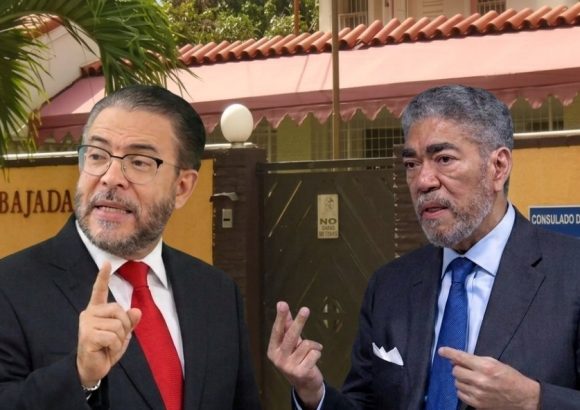
On Thursday, the Dominican government announced a controversial order requiring at least nine Cuban diplomatic representatives to leave the country, a move that has immediately drawn sharp condemnation from domestic opposition figures, who are calling for full public transparency around the unstated motivations behind the decision.\n\nLeading the criticism is Miguel Mejía, general secretary of the Dominican left-wing political organization United Left Movement (MIU). Mejía has forcefully denounced the expulsion order, arguing that the policy is rooted in external geopolitical interests that bear no connection to the Dominican Republic’s core national priorities. In his remarks, Mejía framed the decision as a direct outcome of long-standing United States influence across Latin America, noting that Washington’s regional allies often align their diplomatic actions with U.S. policy goals.\n\nMejía went so far as to label the expulsion measure inherently dictatorial, drawing an unfavorable parallel to the authoritarian rule of former Dominican dictator Rafael Trujillo. He highlighted the only key difference: unlike past actions that severed full diplomatic ties, the current government has opted to maintain formal relations with Havana even as it removes multiple Cuban diplomats. Mejía also challenged official framing, pressing for answers about whether the entire move is intentionally designed to undermine the Cuban government. Pointing to the shared border between the Dominican Republic and Haiti that spans the entire length of Hispaniola from Dajabón in the north to Pedernales in the south, he noted that the island’s geographic position makes it far closer to Cuba than to the United States, raising questions about why the country would choose to take a hostile diplomatic step against its Caribbean neighbor.\n\nA second prominent opposition leader, Guillermo Moreno, who serves as president of the center-left Broad Front party, has also joined in rejecting the government’s decision. Moreno drew attention to the decades-long economic blockade imposed on Cuba by the United States, describing the punitive policy as a criminal campaign that has taken on genocidal characteristics for the Cuban people.\n\nMoreno emphasized that the deep historical and cultural bonds connecting the Dominican and Cuban people should have pushed the Dominican government to show solidarity with Havana, rather than participating in diplomatic pressure against the island nation. He reminded the public of the shared revolutionary history between the two countries, citing iconic figures like Dominican independence leader Máximo Gómez and Cuban revolutionary icon José Martí, both of whom fought for liberation across the Caribbean. He also noted Cuba’s long-standing role as a leading voice for sovereignty across Latin America and the Caribbean.\n\nCalling the government’s choice a national embarrassment, Moreno questioned the government’s diplomatic autonomy, concluding, “One wonders if what we have is a Ministry of Foreign Affairs or a Ministry of Colonies.”
The expulsion of Cuban diplomats from the Dominican Republic has generated criticism and questions about the government.