A moment that should have been full of pride and celebration for graduating students and their loved ones turned into chaotic disorder over the weekend, when a large-scale physical altercation erupted among people attending the milestone event.
Witnesses recorded footage of the clash, which quickly spread across social media platforms, drawing thousands of comments and reactions from internet users around the country. As of the latest update, law enforcement and event organizers have not released any details about the root cause of the confrontation, leaving many unanswered questions for the public. Officials also have not confirmed whether any people involved sustained injuries during the brawl, nor have they shared updates on potential arrests or the launch of a formal investigation into how the violence unfolded.
For many communities, graduation ceremonies represent one of the most significant coming-of-age events, honoring years of hard work and academic achievement by students. The unnecessary outbreak of violence at this celebratory gathering has sparked significant disappointment and concern across online spaces, with many commentators noting that the ugly incident completely overshadowed the positive achievements of the graduates who had earned their moment in the spotlight.
博客
-

Massive Brawl Breaks Out At Graduation
-

Young Mother’s Life Cut Short Before Father’s Day
Belize is reeling from a brutal, senseless act of violence that has left the entire nation in mourning and demanding accountability, after a 23-year-old pregnant woman was shot and killed by motorbike-riding gunmen at a public bus stop just one day before Father’s Day 2026.
Jane Urbina, seven months pregnant with a baby boy she and her partner had eagerly anticipated, had just wrapped up a visit with her brother Lionel Urbina at Belize Central Prison in Hattieville when the attack unfolded. She was standing at the bus stop alongside her mother, who was forced to watch helplessly as the gunmen opened fire, killing both Jane and her unborn child instantly.
For Jane’s partner, who had been preparing to welcome his namesake son with the young mother, the sudden loss remains unthinkable. In an emotional phone interview with local outlet News Five, he described her joy in the final days before her death. “The last time I saw her was Friday morning before she left, because she spent the whole week here with me. She was just so happy,” he said, speaking in Belizean Kriol. “I just can’t believe this. I still can’t process this. I don’t know how to feel. To be real with you, I haven’t eaten anything since it happened. Everything we talked about was the baby. She couldn’t wait to meet him, we were so excited to see what he would look like, all the little things that new parents look forward to. We were just so happy.”
The trauma of the attack falls heaviest on Jane’s mother, who witnessed her daughter’s final moments. Close friend Whitney Hyde shared the devastating details the elder Urbina described to her after the attack. “When we spoke the morning Jane died, her mom told me Jane was begging her, ‘Mom, please, please help me. Please give me air, I can’t breathe,’” Hyde said in a phone interview. “When she said those words, I just burst into tears. I never expected anyone would want to kill Jane in such a brutal way.” The entire family is now left with raw, unprocessed grief, clinging only to memories of the young woman who was days away from starting a new chapter as a mother.
Investigators from the Belize Police Department are currently working to trace the motive for the targeted killing. A leading line of inquiry centers on the 2025 murder of Kevin DePaz, a case that resulted in Lionel Urbina being taken into custody and held on remand at Belize Central Prison. The visit Jane made to her brother just minutes before the attack has added to speculation that the killing is connected to the ongoing legal case, though no official conclusions have been released.
The tragedy has also sparked new questions about mental health support for incarcerated people who experience the sudden loss of a close family member. Lionel Urbina, who will never get to see his sister alive again after their final visit, is currently being monitored by prison authorities. George Gomez, CEO of the Kolbe Foundation which manages operations at Belize Central Prison, confirmed that the institution has already taken steps to support him.
“Mr. Urbina is held in Tango Ten, a restricted protocol cell unit where he is housed alone and monitored regularly, an arrangement that was in place before this incident,” Gomez explained. “After the attack, investigators came to the prison to speak with him, and he was able to place a call to his mother. He is scheduled to meet with our prison psychologist within the hour for an initial assessment.”
Gomez noted that Lionel has not shown outward signs of severe distress so far, but staff are conducting regular check-ins to monitor his mental state. In addition to on-site psychologists, inmates have access to pastoral care and referrals to external mental health specialists when needed. One major outstanding request, however, hinges on court approval: because Lionel is being held on remand, any request for him to leave custody to attend his sister’s funeral must be approved by the judiciary, and the petition will now be filed by his family.
As the manhunt for Jane Urbina’s killers continues, the Belizean public is demanding swift action and answers, grappling with how such a brutal act of violence could be carried out in broad daylight, in front of dozens of witnesses, against a young woman who had done nothing to deserve such a fate. What was supposed to be a weekend of celebration for new and expecting fathers has been turned into a period of national mourning for a life and future cut tragically short.
This report was compiled from original on-the-ground reporting by Britney Gordon for News Five.
-

Alberto August Claims Authorities Trying to Hack Seized Phones
Dated June 23, 2026, a high-profile political controversy has emerged in the wake of a search operation targeting a senior opposition figure, with former United Democratic Party (UDP) Deputy Chairman Alberto August accusing state authorities of attempting to hack into his two seized mobile phones.
The confrontation traces back to May 30, when law enforcement officers executed a search warrant at August’s private residence, removing only the two personal and business cellphones in his possession while leaving other property untouched. August confirms that the search was triggered by a Facebook post he published reacting to the murder of Dr. Nuan Bonilla, which referenced Home Affairs Minister Oscar Mira. The former opposition deputy leader has openly acknowledged authoring the post, and maintains that the content of the post carries no criminal liability based on legal advice he has received.
August emphasizes that even with his open admission of posting the content, law enforcement still proceeded to seize his devices, a move he calls unnecessary. In his statement, he argues that since he never denied making the post, there was no justifiable reason for authorities to take his phones to confirm the fact of publication.
Beyond his hacking allegation, August detailed the far-reaching disruption the seizure has caused to both his personal life and professional operations. Core business documents, including contract templates and digital payment receipt systems, are all stored on the seized devices, leaving him unable to fulfill outstanding client commitments and process routine transactions.
“There was no need for them to search for the phone because I am not denying that I made the post,” August said, echoing the position laid out by his representative Mr. Peyrefitte. “It has been a great inconvenience. Right now, I have a few persons who are waiting for contracts. Because all the formats are on the phone and persons who are making payments, you can’t give them the receipts because all of that system is on the phone. So in terms of my business operating systems it’s all on the phone.”
August stresses that he stands firmly behind his original social media commentary, while insisting that no incriminating evidence exists on either of the seized devices. The incident has added new friction to an already charged political climate surrounding the investigation into Dr. Nuan Bonilla’s murder.
-

Graduation Turns Controversial Over Autism Treatment Claims
What was meant to be a milestone celebration of early childhood growth has devolved into a heated controversy over disability inclusion at a Belize City preschool, drawing widespread public anger after allegations of purposeful segregation of autistic graduates went viral on social media.
The incident unfolded June 23 at the Anglican Diocesan Preschool’s annual graduation ceremony, where three young students on the autism spectrum — including 4-year-old Fern Foster’s niece — were intentionally seated far out of sight from most attending families, separated from their non-autistic classmates, according to family claims.
Foster, who spoke to local media in Belize Kriol, detailed the arrangement that sparked her outrage. Traditionally, all graduating students’ chairs are lined up along the front aisle, where family members can clearly see their children as they process and take their seats. But the three autistic children’s seating was moved: instead of being placed in the main aisle block, their chairs were positioned behind the last row of the front section, hidden from the view of nearly all attendees.
“If you were seated in the front of the venue, you would not even know there were graduates sitting behind you,” Foster explained. “If you were in the back, you had to stand just to catch a glimpse of them. When other parents stood in the aisle to take photos of their own children as they marched, the autistic graduates were completely blocked from view.”
For the families involved, the arrangement was far more than a minor seating mistake. It carries a clear, hurtful message about how autistic children are valued in local education, they say. Even for a preschool graduation, which some might dismiss as a small, informal event, the milestone holds enormous significance for caregivers who have worked tirelessly to support their children’s learning and development. Foster added that her niece, who did not create any disruption during the ceremony, accepted the unusual seating without complaint — a fact that makes the exclusion even more unjust.
Family members also allege that multiple prior requests for accessibility accommodations for the autistic students were ignored by school administration before the ceremony. After the event, a relative shared the incident on social media, where it quickly gained traction, igniting broader conversations about the lack of inclusive practices for neurodivergent children in Belizean schools and community spaces.
Multiple attempts by local media to reach administrators at Anglican Diocesan Preschool for comment on the allegations have not yielded a response as of the latest reporting.
This report is based on a transcript of an evening television news broadcast, with Kriol language testimony transcribed using a standardized spelling system for accessibility.
-

Protected Permit Fish Found Skinned Near San Pedro
Off the coastal waters of San Pedro, a grisly discovery has ignited urgent warnings about the future of Belize’s iconic marine protected areas and its billion-dollar recreational fishing economy. Earlier this week, the skinned carcass of a permit fish — a species strictly protected under Belizean conservation and fishing regulations — was found abandoned near an unregulated fish trap, prompting the Belize Flats Fishery Association (BFFA) to call for an immediate, full investigation into the incident.
Permit fish are far more than just a native marine species in Belize: they form the backbone of the country’s world-renowned catch-and-release flats sport fishing sector, a multi-million-dollar industry that supports thousands of livelihoods in coastal communities across the nation. Industry leaders warn that rising poaching of protected game fish like permit, tarpon, and bonefish threatens not only the fragile local marine ecosystem but also the economic stability of regions that rely on tourism and recreational fishing.
In a phone interview, BFFA President Eworth Garbutt emphasized that weak enforcement of existing protection rules is the primary driver of growing illegal harvesting of protected species. “This is our bread and butter — the industry we all depend on is being drained because we don’t have enough enforcement on the water,” Garbutt explained.
To address the gap in public awareness, the BFFA is currently rolling out new public education initiatives, including informational signage at key fishing spots around San Pedro. Garbutt noted that the problem is not limited to commercial poachers: even recreational guides and occasional anglers are increasingly violating catch-and-release rules, making widespread outreach a critical priority. “It’s an ongoing, really prevalent issue,” he added.
Financial data collected several years ago pegs the annual economic contribution of Belize’s catch-and-release sport fishing sector at more than $200 million, underscoring the stakes of failing to curb poaching. Under current regulations, all fishing for permit is required to follow strict catch-and-release standards: anglers are prohibited from keeping the fish out of water for longer than three seconds, just enough time for a photo before the animal is returned to the ocean to survive.
The BFFA is now calling on all Belizeans and visitors to report any suspicious activity involving the catching, killing, selling, or possession of protected marine species to relevant authorities. Industry leaders stress that protecting Belize’s coastal waters is not an optional conservation measure — it is a core requirement to safeguard both the country’s unique marine ecosystem and the economic future of coastal communities that depend on sustainable recreational fishing.
This report is based on a transcript from an evening television newscast published online.
-

DSB boekt recordwinst van bijna SRD 789 miljoen en keert dividend uit
Leading Surinamese financial institution De Surinaamsche Bank (DSB) has delivered robust financial results for the 2025 fiscal year, posting a net profit of 788.9 million Surinamese dollars (SRD), representing a 44% year-over-year increase that outpaces prior performance expectations. The strong bottom-line growth, announced Tuesday during the reconvened session of a previously adjourned Annual General Meeting of Shareholders, adds more than 242.6 million SRD to the bank’s 2024 net profit of 546.3 million SRD, cementing the lender’s solid position in Suriname’s evolving financial sector.
Following board approval tied to the 2025 results, DSB will distribute a total dividend payout of 161 million SRD to shareholders, equal to approximately 4.27 SRD per outstanding share. The majority of the annual profit, however, will be retained to boost the bank’s total equity, which now stands at 4.24 billion SRD. This capital buffer is intended to strengthen DSB’s overall financial standing and create flexible capacity for targeted strategic investments in coming years.
Bank leadership emphasized that the 2025 financial metrics reflect sustained, healthy organizational growth across all core business segments. DSB’s loan portfolio expanded by 40% compared to 2024, while total client deposits and entrusted funds grew 19% to reach 35.56 billion SRD. Operational efficiency also improved, with the bank’s efficiency ratio dropping from 53% to 49% — a shift that signals more streamlined, cost-effective operations. Additionally, DSB’s solvency ratio reached 20.9% for the fiscal year, far exceeding the 11.25% minimum regulatory requirement set by Suriname’s central banking supervisor.
Beyond financial performance, the annual general meeting focused heavily on DSB’s ongoing service modernization and digital transformation efforts. In 2025, the bank rolled out multiple key digital initiatives, including full automation of the personal loan application process, upgrades to its online banking platform, and the launch of DSB Buddy, a new virtual assistant to handle customer inquiries and digital service requests. DSB also collaborated with the Central Bank of Suriname and other domestic financial institutions to speed up interbank payment processing for consumers and businesses across the country.
The meeting also addressed updates to corporate governance and leadership. Shareholders approved the expansion of DSB’s executive management team with the appointment of Raveen Koelfat as the bank’s new Chief Commercial Officer (CCO). They also endorsed the nomination of Stanley Mathura to the bank’s Supervisory Board, a move that remains pending formal regulatory approval from the Central Bank of Suriname.
Looking ahead to 2026, DSB has outlined a clear strategic agenda centered on further digital service upgrades, enhanced customer experience, the development of innovative financing products, and strengthened information security frameworks. A key priority for the year is achieving the international ISO 27001 certification for information security management, a milestone that will align the bank’s data protection practices with global best practices. With its strong 2025 performance building a solid financial foundation, DSB says it is well-positioned to continue its growth trajectory and reinforce its leading role in Suriname’s banking sector.
-

Saint Lucia signs eye care partnership that could help 50,000 people
On June 18, 2026, Saint Lucia Prime Minister Philip J. Pierre formalized a new public health partnership by signing a Memorandum of Understanding (MoU) between the island’s national government and U.S.-based nonprofit organization RestoringVision. The agreement, which received formal cabinet approval on June 1 of the same year, aims to dramatically expand access to critical vision care services across Saint Lucia by integrating presbyopia screening and affordable corrective eyewear into the country’s existing public health infrastructure.
The core mission of the collaboration is to advance the goals of the Prime Ministerial Vision Initiative, a national project focused on closing gaps in unaddressed vision impairment across the island. Through the partnership, RestoringVision has committed to donating up to 50,000 near-vision eyeglasses to eligible Saint Lucian residents, alongside covering shipping logistics, providing specialized training for local healthcare workers, and delivering ongoing technical support for presbyopia screening protocols. The Government of Saint Lucia, for its part, will lead national rollout of the program, integrate new vision care services into public primary health platforms, coordinate local staff training, and oversee systematic data collection and progress reporting.
The initiative will launch with a 12-month pilot program, delivered through existing primary healthcare facilities and a network of community health workers to reach underserved populations in both urban and rural areas. Following the pilot phase, the two partners will conduct a joint monitoring and evaluation process to measure the program’s public health and social impact, identify operational gaps, and refine service delivery models for potential long-term expansion.
Presbyopia, an age-related degenerative condition that impairs close-up vision, affects millions of adults globally and is especially widespread among older populations in low- and middle-income countries. Without access to affordable corrective eyewear, the condition can severely limit individuals’ ability to work, complete daily tasks independently, and maintain overall quality of life. By addressing this unmet need, the partnership aims to remove a key barrier to economic participation and well-being for thousands of Saint Lucians.
In comments following the signing ceremony, Prime Minister Pierre framed the collaboration as a tangible, high-impact investment in the long-term well-being of all Saint Lucians. He noted that improved access to vision care directly boosts individual independence and workforce productivity, generating cascading benefits for households and communities across the island. With this agreement, Saint Lucia becomes the latest nation to partner with RestoringVision, joining a growing global network of countries implementing community-focused, sustainable models to expand access to affordable vision care.
The MoU will remain in effect for an initial 12-month term aligned with the pilot program. Public health officials from both sides emphasize that the initiative represents a shared commitment to building more inclusive, resilient public health systems in Saint Lucia, through locally rooted, sustainable solutions that address critical unmet health needs.
-
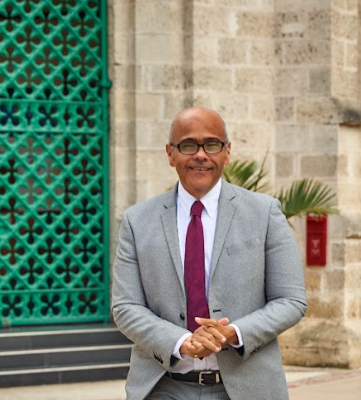
Lawmakers welcome new safeguards for credit union members
After decades of uneven financial protection for Barbados’ small-scale savers, the House of Assembly has passed a landmark piece of legislation that extends deposit insurance coverage to credit union members, ending a long-standing two-tier system that left hundreds of thousands of ordinary depositors unprotected. The Protection of Depositors Insurance Bill, which has drawn bipartisan support from veteran lawmakers and cabinet ministers, aligns regulatory protection for credit unions with that of commercial banks, cementing the sector’s place in the country’s formal financial ecosystem. For Christ Church West Member of Parliament Dr. William Duguid, a long-serving parliamentarian, the bill represents the finalization of a project launched 20 years ago, when deposit insurance was first rolled out for commercial bank customers. Until now, bank depositors enjoyed a government-backed safety net if their institution failed, while credit union members were left with no such guarantee—a disparity Duguid and other supporters have pushed to eliminate.
“This nullifies this two-tier system,” Duguid told the house. “We in Barbados don’t want a two-tier system, that only the banks got the coverage and the credit unions ain’t got none. We’re saying no.” To illustrate the real-world impact of the new law, Duguid shared the example of Dolores, a small-scale food vendor from Sargeant’s Village who saves small increments of her income. The bill, he explained, will give peace of mind to savers like her, guaranteeing that even if their credit union collapses, they will recover their savings up to a cap of $25,000.
“This legislation is to protect her,” he said. “Through this legislation, Dolores could say, you ain’t got to worry, your money insured, and after a period of time, you’re going to get back your money, and that’s what this legislation is about. That’s what this legislation is about, protecting the small man, the man that just got the $25 000, the $20 000, the $10 000, the $5 000, whatever it is up to $25 000.”
Beyond core deposit protection, Duguid highlighted two key structural provisions that make the legislation flexible and efficient. First, the law requires periodic reviews of the $25,000 coverage limit every three years, eliminating the need for full parliamentary amendments to adjust coverage amounts as economic conditions shift. Second, the bill establishes a dedicated public corporation that will also act as the official liquidation authority if a credit union fails, cutting through bureaucratic red tape to speed up compensation for eligible depositors. For Duguid, the entire framework aligns perfectly with the core credit union ethos of “people helping people,” a principle that has guided the movement since its founding in Barbados.
Minister of Labour Colin Jordan, the Member of Parliament for St Peter, echoed Duguid’s support, framing the bill as a historic recognition of credit unions as foundational institutions for working-class Barbadians. Jordan noted that the credit union movement grew directly out of grassroots community financial systems including the landship, susu, and meeting turn—traditional collective savings models created by ordinary people to overcome systemic financial exclusion. Today, he added, the sector boasts roughly 200,000 members, meaning a majority of Barbados’ population relies on credit unions for daily savings and financial services.
“Credit unions represent the people’s institutions,” Jordan said. “The bill represented another step in recognising the importance and legitimacy of credit unions within the financial system. Offering protection to depositors in these institutions is another step in saying to those depositors, those owners of these institutions, the state sees you. The state understands that these are credible institutions. And the state is prepared to put systems in place that will further protect your investments in your institutions.”
Jordan acknowledged that some smaller credit unions have raised concerns about the cost of participating in the new insurance scheme, but argued that protecting ordinary depositors must take priority over institutional cost concerns. He emphasized that the bill targets exactly the demographic that has the most to lose from a credit union collapse: working people with modest savings who built the movement from the ground up. To support the launch of the scheme, the government has committed a $1.7 million contribution to the initial insurance fund, a investment Jordan said demonstrates the administration’s commitment to standing with working Barbadians and the community institutions they built.
“This investment says to the people of this country that we understand the role of the credit union movement, we recognise its importance, and we are prepared to allocate resources to make sure that the people of this country are protected,” Jordan said. Closing his address to the house, Jordan commended the bill to lawmakers and the public, reaffirming the government’s commitment to supporting institutions built by and for ordinary people. “We stand with the people. We stand with their institutions,” he said. “I commend this protection of depositors bill to this house and to this country.”
-

Island economy Taiwan moves into global top four for competitiveness
Against a backdrop of rising geopolitical tension and accelerating global economic fragmentation, small open economies are redefining what it means to compete on the world stage. In a striking shift that underscores this new paradigm, Taiwan has secured its highest-ever position in the International Institute for Management Development (IMD)’s annual World Competitiveness Ranking, jumping two spots to claim fourth place among the 70 global economies evaluated for 2026.
Released by the Switzerland-based leading business and international management research body, the 2026 ranking places only three economies ahead of Taiwan: Singapore, which retains the top spot, followed by Hong Kong in second and Switzerland in third. Rounding out the 2026 top 10 are the United Arab Emirates, Denmark, Ireland, the Netherlands, Sweden, and the United States, which landed in 10th place — an outcome that highlights Taiwan’s outperformance of far larger, more populous advanced economies. When ranked by population size, Taiwan is one of the smallest economies to break into the top 10 bracket, a feat that aligns closely with the core findings of this year’s IMD report.
This year’s analysis upends long-held assumptions about what drives national competitiveness. The IMD concludes that in the current global economic climate, competitive advantage is no longer primarily determined by the total size of an economy or low production costs. Instead, it hinges far more heavily on less tangible, governance-focused factors: institutional credibility, clear and predictable regulatory frameworks, and robust capacity to absorb unforeseen economic shocks. As geopolitical rifts and supply chain disruptions continue to roil global markets, the report finds that economies with mature legal systems and trustworthy, stable institutions have consistently gained a competitive edge over their peers.
Taiwan’s climb from sixth place in the 2025 ranking was fueled by broad-based improvements across all four core competitiveness pillars that the IMD measures: economic performance, government efficiency, business efficiency, and infrastructure. Strong year-over-year GDP expansion and robust export growth served as key near-term drivers of the jump in ranking. Taiwan’s representative to Switzerland, Wang Szu-wei, attributed the sustained upgrade to a confluence of structural gains: the repatriation of Taiwanese businesses, skilled talent, and overseas capital back to the island, paired with rapid growth in high-value manufacturing, expanded investment in research and development, and breakout progress in the domestic artificial intelligence sector.
The report’s findings carry broader implications for small economies and island nations beyond Taiwan, including small developing states like Saint Lucia. For smaller economic entities seeking to carve out stable footholds in the increasingly fragmented global system, the 2026 ranking makes clear that prioritizing strong institutional foundations, pro-business regulatory environments, and adaptive capacity to respond to shifting global conditions has become far more critical than relying on traditional advantages tied to size or low labor costs. In an era of constant economic volatility, the report confirms that intentional investment in governance and resilience can help even the smallest economies outperform much larger global rivals.
-

Insurance gaps leave Barbados exposed to climate, economic shocks, minister warns
As a small island nation on the front lines of accelerating climate change, Barbados faces urgent pressure to expand insurance coverage across critical economic sectors including housing and agriculture to cut the crippling post-disaster financial burden that falls on public coffers, the country’s Minister of Economic Affairs Marsha Caddle has emphasized. Her comments came during Tuesday’s parliamentary debate on the newly introduced Protection of Depositors Bill, legislation designed to extend formal insurance protection to savings held by credit union members across the island.
While Caddle publicly affirmed that the new deposit insurance framework marks a meaningful and necessary step forward for Barbados’ financial system, she stressed that equivalent risk-mitigating protections remain sorely lacking across most other parts of the national economy. “That this bill strengthens and makes insurance accessible to credit union depositors is key,” Caddle told lawmakers during the debate. “But frankly, so are all the other kinds of insurance.”
Barbados, like many other small Caribbean island states, faces repeated and intensifying extreme weather events linked to the climate crisis, and consistently struggles to cover the massive costs of post-disaster recovery and reconstruction. Caddle identified low insurance penetration across high-risk sectors as one of the core structural drivers of this ongoing fiscal challenge. “Whether we’re talking about reinsurance in agriculture, whether we’re talking about home insurance in cases where there may be damage to homes as a result of severe weather events, penetration of insurance is critical,” she explained.
Drawing a comparison to higher-income economies such as the United States and the United Kingdom, Caddle noted that those nations’ more robust disaster response systems are rooted in far higher insurance uptake among individual households and private businesses. When more property and assets are covered by private insurance, the public sector is not forced to absorb the vast majority of recovery costs after a major weather event. “When you have a lower penetration of insurance, it means that the state now has to bear the cost of whatever that event is,” she said. For small developing island states like Barbados, that unplanned fiscal burden can set back national development goals for years, she added.
Beyond expanding access to coverage, Caddle also highlighted the need for broader public education to help Barbadians understand the core value of insurance as a long-term risk management tool, even when no immediate payout is received after paying premiums. “We understand that people often think, ‘Why am I putting money into this thing that I may never see a return from?’” she said. “But that is what you call managing your risk, and it is worth it, particularly when the risk is changing and increasing and coming closer to home every time.”
Caddle framed the debate over credit union deposit insurance as a jumping-off point for broader policy action to close persistent insurance gaps that leave homeowners, farmers and other climate-vulnerable groups exposed to crippling financial losses. Closing these gaps would not only protect individual households and businesses, she argued, but also speed up disaster recovery efforts that are often delayed by the enormous uncompensated costs governments are forced to cover. “Just like depositors need to be able to secure the money that they put in a credit union or a bank, homeowners need to be able to secure their investments, farmers need to be able to secure their investments,” Caddle said. “All of us need to be able to make sure that we are managing the risk in our lives every day.”