博客

  • Derde helft WK 2026: Kroatië wint nipt van Panama en zet koers naar knock-outfase in Groep L

    Derde helft WK 2026: Kroatië wint nipt van Panama en zet koers naar knock-outfase in Groep L

    At Toronto Stadium, Croatia secured their first three points of the 2026 FIFA World Cup on Tuesday with a hard-fought 1-0 victory over Panama, boosting their hopes of advancing to the knockout round. The only goal of the match came from striker Ante Budimir after halftime, leaving Panama winless and eliminated from knockout contention despite a spirited, attack-heavy performance.

    Both sides entered their second Group L fixture still searching for their first win of the tournament, and the night carried extra significance for Croatian legend Luka Modric, who made his 200th senior international appearance just days before his 41st birthday, in what is widely expected to be his fifth and final World Cup campaign.

    Panama set up to frustrate Croatia from the opening whistle, deploying a compact deep block and looking to hit the European side on rapid counterattacks, particularly down the right flank through full-back Amir Murillo. Croatia dominated possession from the first minute, with Modric pulling the strings in midfield as expected. Just two minutes in, the playmaker rose to meet a cross from Marco Pasalic, but his header drifted just over the crossbar. Modric received a rapturous welcome from the crowd, with hundreds of fans in the stands displaying his name on shirts and banners to honor his milestone.

    Murillo’s early deliveries tested Croatian goalkeeper Dominik Livakovic early on, with the keeper forced into a smart save to deny a Jose Luis Rodriguez header that clipped the top of the crossbar. The first half remained tightly contested, with Croatia holding the bulk of possession and territorial advantage but unable to break through a stubborn Panama defense marshaled by center-back Jose Cordoba. Panama held firm to keep the scoreline locked at 0-0 going into halftime, a result that left their defensive unit proud of their first-half work, while Croatia entered the break knowing they would need to increase their attacking edge after the restart.

    The match also highlighted a standout trend of this 2026 tournament: the ongoing influence of veteran “golden oldies” at the top of the game. Alongside the 40-year-old Modric, 41-year-old Cristiano Ronaldo (Portugal), 40-year-old Fernando Muslera (Uruguay), 40-year-old Manuel Neuer (Germany) and 40-year-old Edin Dzeko (Bosnia and Herzegovina) are all playing key roles for their national sides at this World Cup.

    Croatia manager Zlatko Dalic made aggressive attacking substitutions to open the second half, withdrawing Josko Gvardiol and Petar Musa to bring on Andrej Kramaric and Budimir, who made an instant impact. In the 54th minute, Budimir broke the deadlock, slotting home a clinical finish from a pinpoint right-wing cross provided by Josip Stanisic, sending the Croatian fanbase in the stadium into wild celebrations.

    Modric remained the heart of Croatian play throughout the second half, displaying his trademark vision and precision to control the tempo of the match, create attacking chances, and marshal his side’s midfield. When he was substituted in the 81st minute, he received a standing ovation from the entire stadium, and his teammates honored his milestone with special warm-up shirts emblazoned with the words “Infinite Legacy”.

    Panama threw everything forward in the closing stages of the match, winning multiple corner kicks and pressing hard for an equalizer that would keep their knockout hopes alive. Despite their relentless effort and fighting spirit, they lacked the final cutting edge to break through a resolute Croatian defense, with Livakovic turning away all their dangerous attempts on goal.

    When the final whistle blew, Croatia claimed a deserved three points that leaves them perfectly positioned in Group L. A win over Ghana in their final group fixture this coming Saturday will almost certainly secure their place in the round of 32. For Panama, the result confirms their elimination from knockout contention, but they can still turn their focus to their final group match against third-placed England, where they will look to end their campaign on a high note and pull off a surprise upset.
  • Payments Scandal Tightens Grip on Briceño Administration

    Payments Scandal Tightens Grip on Briceño Administration

    As of June 23, 2026, a widening public contracting scandal centered on improper public payments has thrown the Briceño administration into escalating political turmoil, with the nation’s top financial official confirming troubling irregularities that have triggered an official audit.

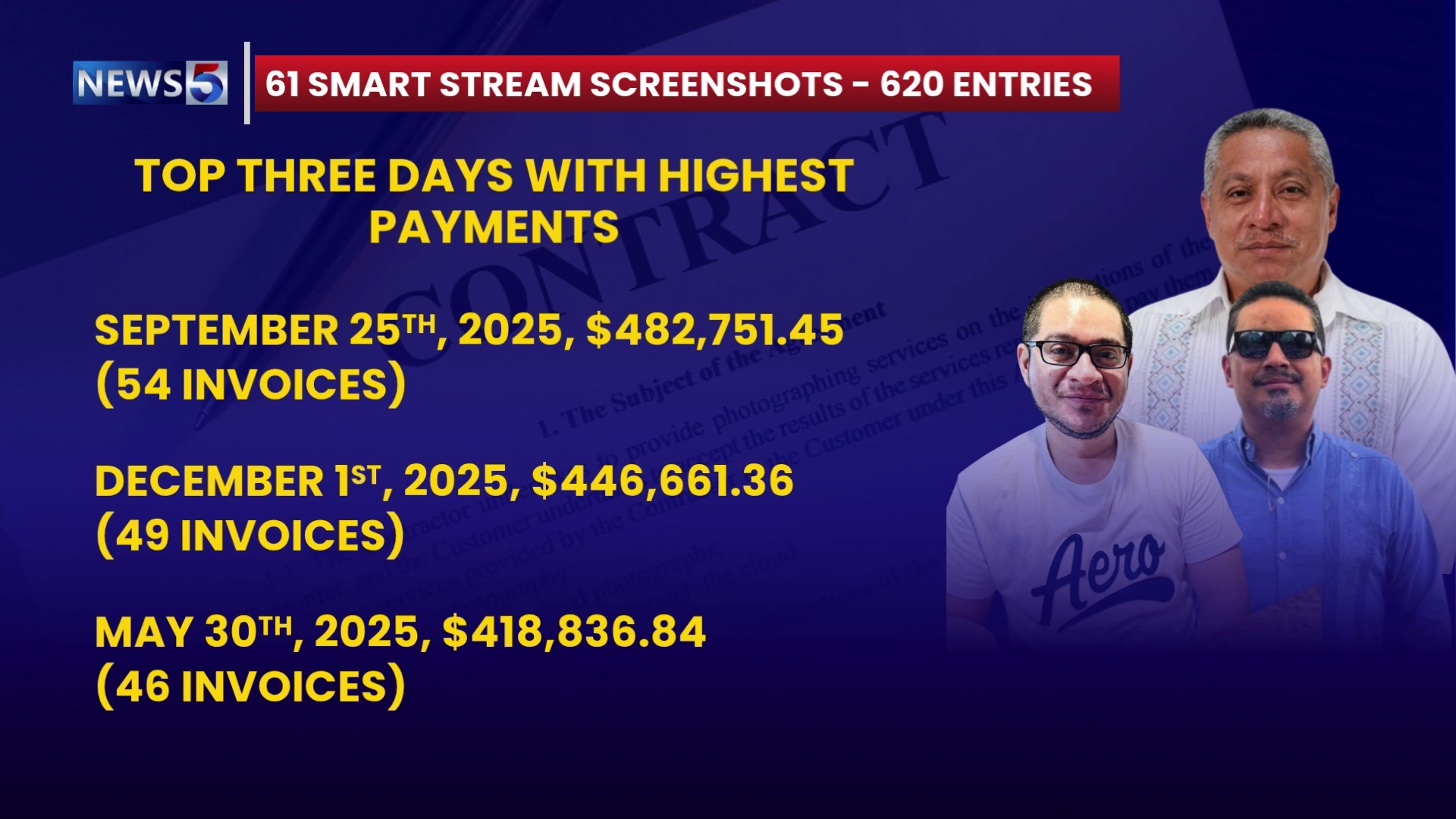
    The controversy revolves around millions of dollars in taxpayer funds disbursed through the Ministry of Defense to food supply companies owned by Cabinet Minister Oscar Mira and his close family members. Leaked internal financial records from the government’s Smart Stream payment system have sparked intense public and official scrutiny over the structuring and approval of these transactions, with growing allegations that the rules were intentionally manipulated to evade mandatory strict oversight.

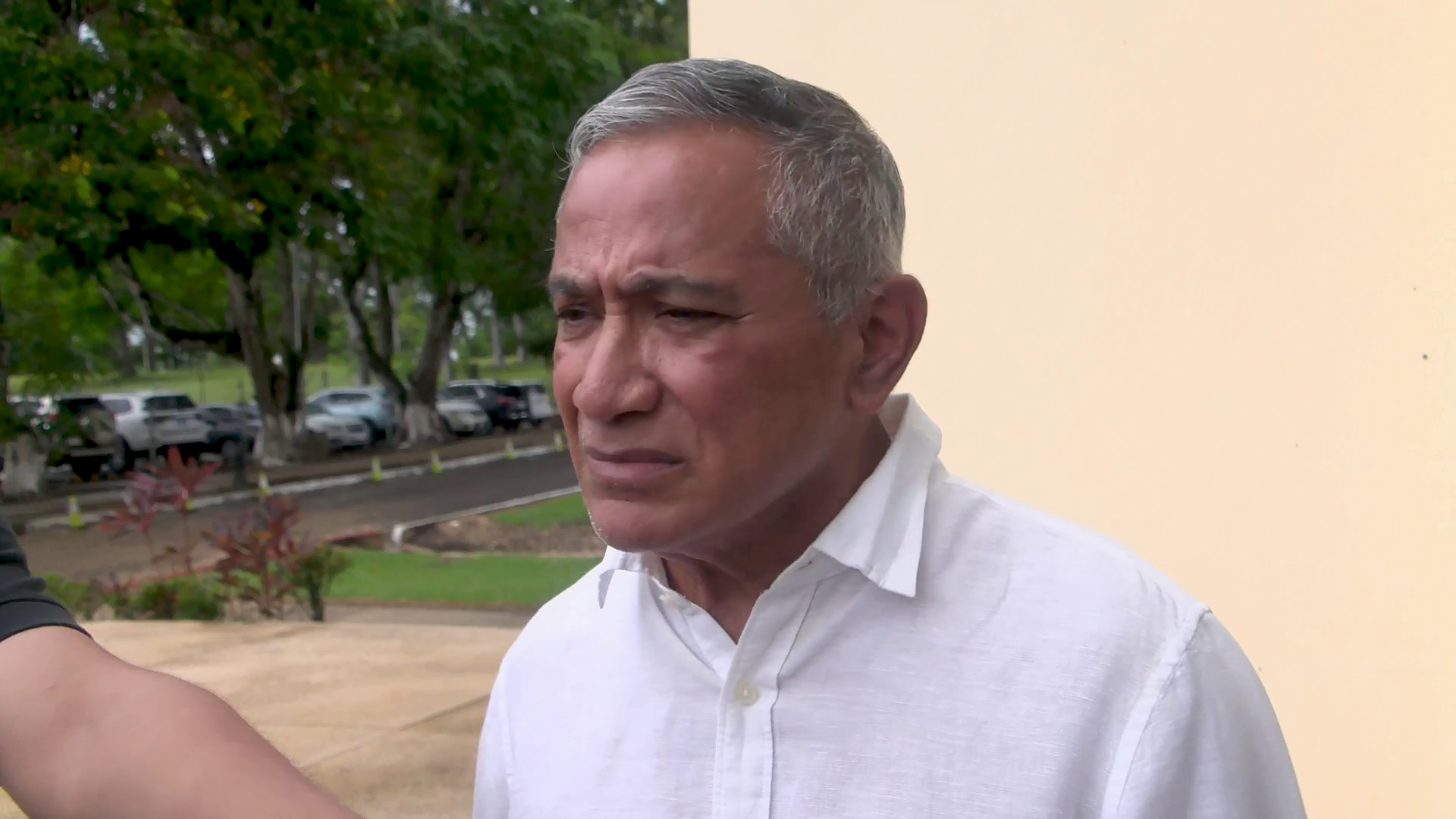
    In an on-the-record interview for a national evening newscast, Financial Secretary Joseph Waight acknowledged that the emerging details of the scandal “don’t look good”, noting that the pattern of transactions runs completely counter to how the public payment approval system was designed to operate.

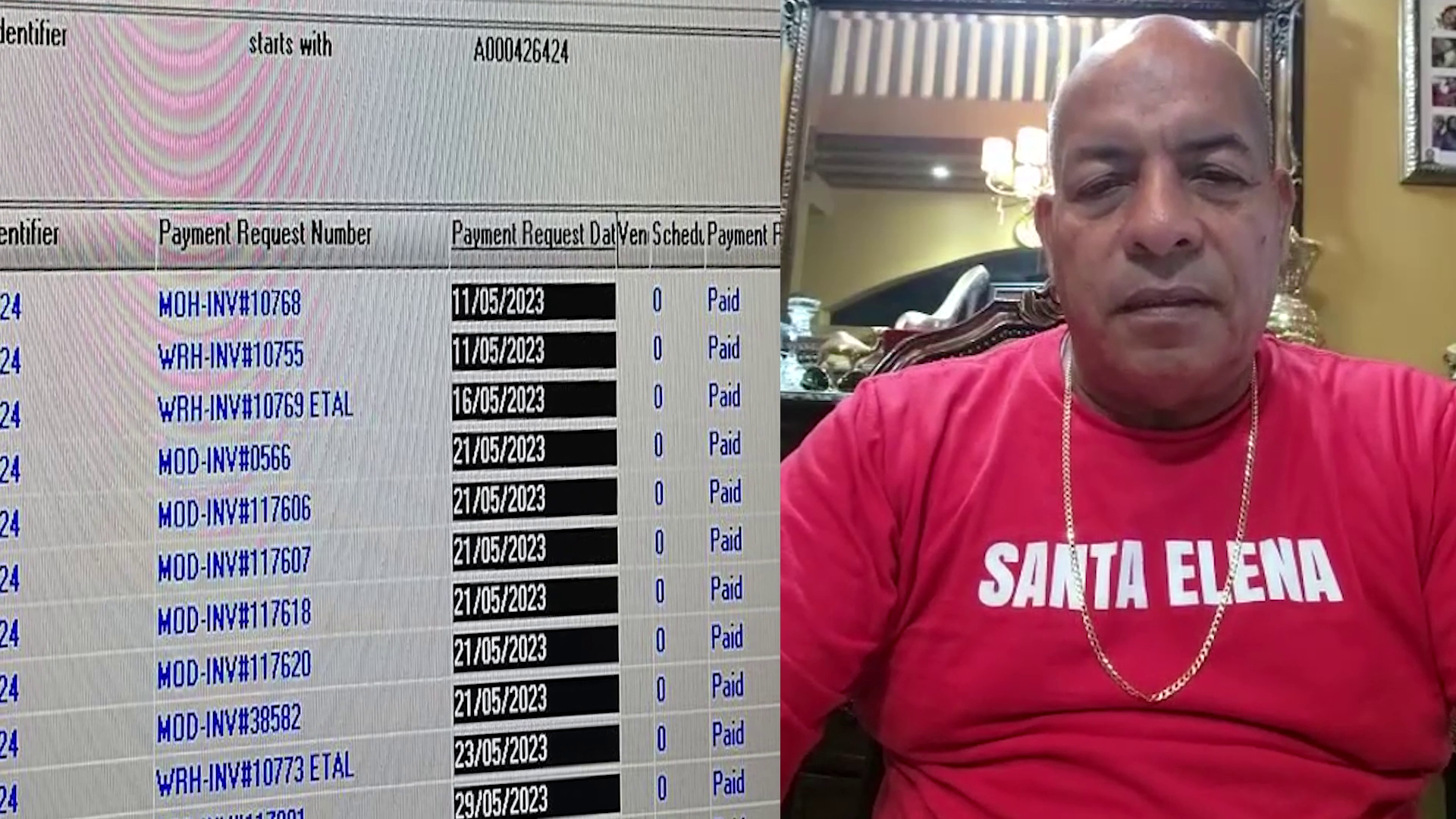
    Under Belize’s existing public finance rules, all government payments follow a tiered approval structure: smaller transactions require two levels of official sign-off, while any payment exceeding a $10,000 threshold must receive a third, independent review from the Treasury Department to prevent misuse of funds. Waight confirmed that early evidence indicates a deliberate pattern of splitting large total payments into dozens of smaller individual disbursements, each just under the $10,000 cap, to avoid triggering the extra layer of oversight. Records show dozens of these sub-threshold payments to MP Farms, one of Mira’s linked businesses, were processed and approved in a single day, with hundreds more cleared over the course of one month.

    Waight laid out two core possible explanations for the breakdown: either responsible officials failed to carry out their mandatory oversight duties, or there was coordinated collusion to bypass the rules. “Clearly there is a breakdown in the system. It was not intended to work this way,” he said, pushing back against claims that the batching of payments for administrative convenience was a sufficient explanation for the scale of irregularities observed.

    When asked if the pattern of transactions should have triggered internal alarms, Waight responded definitively: “If you see a whole lot of payments, it should have raised alarms and it should have raised an eyebrow. I think so.” He also noted that while splitting large invoices into installment payments is allowed under policy, that justification does not hold up in this case, because all of the fragmented payments were issued on the same day—an unusual arrangement that Waight described as suspicious.

    Waight stopped short of directly blaming Mira for the irregularities, noting that a full independent audit is already underway to determine individual responsibility. The audit is now focused on verifying whether mandatory individual approvals for each payment were actually completed by financial officers at the Ministry of Defense, or if the checks were skipped entirely to push the transactions through quickly. As the audit progresses, the scandal continues to tighten its hold on the Briceño administration, raising urgent questions about the integrity of the government’s public procurement and financial oversight systems.

  • UDP’s Alberto August Calls Out Alleged Misconduct in Defense Ministry

    UDP’s Alberto August Calls Out Alleged Misconduct in Defense Ministry

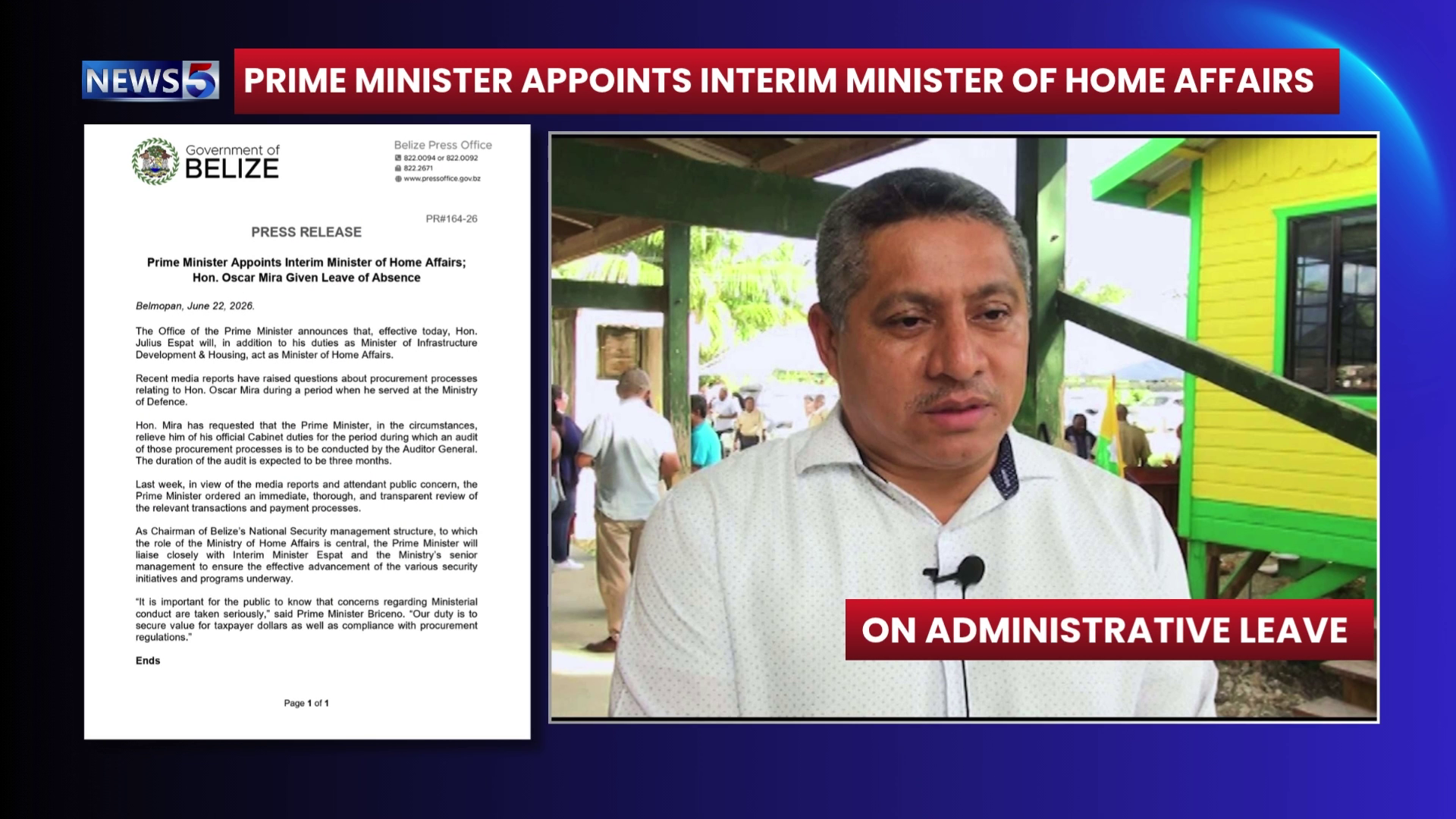
    BELIZE CITY – In a developing political controversy rocking the Briceño administration, ruling party officials have placed Home Affairs Minister Oscar Mira on administrative leave amid a sweeping independent audit into past procurement activities at Belize’s Ministry of Defense. The official order, issued Monday via a public statement from Prime Minister John Briceño’s office, came in response to growing public scrutiny and emerging media reports questioning irregular transactions carried out during Mira’s tenure as Junior Minister of Defense. Prime Minister Briceño has framed the step as a commitment to accountability, authorizing the Auditor General to conduct what he calls a “thorough and transparent review” of all relevant procurement records.

    Alberto August, a former deputy chairman of the opposition United Democratic Party (UDP), has publicly weighed in on the unfolding situation, offering a sharp framing of the controversy for Belizean citizens already grappling with economic strain. August argues that the emerging scandal is ultimately a “blessing in disguise” for the Belizean public, because it has pulled back the curtain on alleged government misconduct that would have otherwise remained hidden from taxpayers, who are already burdened by skyrocketing living costs and soaring fuel prices.

    In a public address, August emphasized a core principle of democratic governance: actions taken in secret by public officials will eventually come to light. “My Belizeans, as somewhat of a blessing in disguise, all of this was happening unknown to the Belizean people, unknown to the taxpayers of this country who are being saddled with increasing cost of living, increasing prices of fuel, and here we have these people engaging in this kind of activity,” August said. “That which is done in darkness will one day come to light.”

    With auditors already on-site at the Defense Ministry reviewing official documents, August issued a direct call for investigators and political leaders to prioritize public good over partisan protection. He warned that covering up irregularities would send a damaging message to future public officials, normalizing misconduct by creating an expectation that parties will shield their own to avoid political embarrassment. “This is not about a political party looking good or bad, this is about protecting the taxpayers’ money of this country,” August stressed. “Do what is right for the Belizean people, that’s all we’re asking.”

    The development marks the latest high-profile test of accountability for the Briceño administration, as citizens continue to navigate widespread economic pressure and demand greater transparency over public spending.

  • Smart Stream Leak Sparks Demand for Full Public Access

    Smart Stream Leak Sparks Demand for Full Public Access

    Scheduled publication date: June 23, 2026

    A leak of internal records from Smart Stream, the Belizean government’s core financial management platform, has ignited widespread public pressure for full, unredacted public access to the system, amid circulating screenshots that reveal potentially questionable payment practices. What began as an unauthorized data disclosure has quickly evolved into a fundamental clash of values: one side frames radical transparency as the only path to rebuilding public trust in government spending, while top financial officials warn that full disclosure would create unacceptable risks to personal and commercial privacy.

    At the center of the debate is Financial Secretary Joseph Waight, who is pushing back against growing demands to open the entire Smart Stream system to public scrutiny. In a televised interview, Waight acknowledged that the controversy warrants greater disclosure of government financial data than the current framework allows, but argued that blanket access ignores legitimate privacy interests. “There are two sides to every story here,” Waight explained during the exchange. “My salary is paid with taxpayer dollars, but I still have a right to keep that information confidential. The same logic applies to private suppliers that contract with the government – they are entitled to some level of privacy, not full exposure of every detail of their transactions.”

    Critics, however, say the leak itself exposes a critical failure of oversight that would have remained hidden without unauthorized disclosure. Questioning whether government financial officers have neglected their regulatory duties, opposition figure Paul Lopez pressed Waight on how the suspicious activity went undetected until the leak. “If this information hadn’t been leaked, how would the public ever have found out about it?” Lopez asked. “Is the entire financial oversight team asleep at the wheel? How did no one catch this before it ended up in the public domain?”

    Waight countered that the full nature of the activity captured in the leaked screenshots remains unconfirmed, stressing that no formal finding of fraud has been issued to date. “We won’t know what we’re dealing with until the official audit is complete,” he said. “Right now, it just looks suspicious.”

    Lopez countered with the core argument of transparency advocates: any individual or business that enters into a contractual agreement with the government automatically subjects its financial dealings to public oversight. Waight rejected that framing, noting that while heightened scrutiny is appropriate for government contractors, that does not equate to a public right to access every single record held in the government’s financial system. “There are real privacy considerations that can’t just be thrown out the window,” he said.

    The controversy has thrown into sharp relief a tension that faces democracies worldwide: when hundreds of millions in taxpayer money are at stake, does the public’s right to know outweigh the legal and ethical right to confidentiality for individual government employees and private sector partners? With an audit underway to investigate the suspicious payments revealed in the leak, the debate over Smart Stream transparency is only expected to intensify in the coming weeks.

  • Security : Canada announces $7.5 million CAD in support for the Haitian National Police

    Security : Canada announces $7.5 million CAD in support for the Haitian National Police

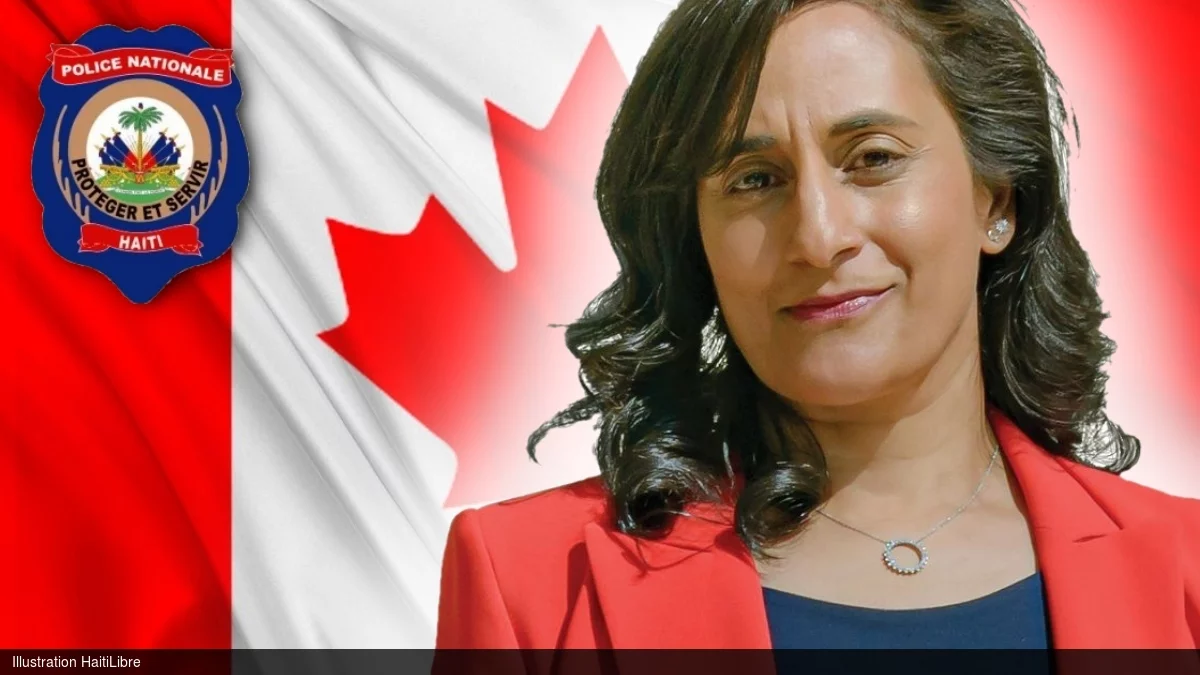
    Amid escalating gang-driven violence and political collapse in Haiti, Canada has unveiled a new $7.5 million CAD funding package dedicated exclusively to boosting the operational capacity of the Haitian National Police (PNH). The announcement, made by Canadian Foreign Minister Anita Anand on the sidelines of the Organization of American States (OAS) general meetings held in Panama, forms part of a broader $35 million CAD regional security initiative for the Caribbean.

    The core of the targeted $7.5 million contribution will go toward two critical police priorities: the full renovation and outfitting of a state-of-the-art training facility for PNH officers, and the rollout of specialized tactical training programs designed to sharpen the force’s ability to confront armed gangs and counter criminal activity linked to terror networks. By upgrading training infrastructure and skills, Canada aims to directly enhance the PNH’s on-the-ground effectiveness in rooting out gang control across Haitian communities.

    A portion of the funding has also been earmarked for community-focused infrastructure projects in Haiti’s highest-risk areas. These interventions are tailored to immediately reduce everyday violence in vulnerable neighborhoods, strengthen local social support systems, and prioritize outreach to women and young people – groups disproportionately targeted for recruitment by criminal gangs. This community-centered component is designed to address the root drivers of gang expansion beyond just military-style operations.

    Finally, remaining funds will be channeled into joint maritime security operations between regional partners and Haitian authorities. The primary objective of these operations is to disrupt gang supply lines by intercepting illegal shipments of firearms and narcotics that enter Haiti via coastal routes, cutting off the critical resources criminal networks rely on to sustain their power and violence across the country.

  • Briceño’s Audit Request Under Fire for Skipping Parliament

    Briceño’s Audit Request Under Fire for Skipping Parliament

    June 23, 2026 — A political controversy has erupted in Belize after Prime Minister John Briceño’s plan to launch an Auditor General probe into recently surfaced Mira-linked revelations was accused of sidestepping constitutional parliamentary procedure. Briceño has confirmed he directly contacted the Financial Secretary to initiate the independent investigation, but leading public sector critics say the process violates the institutional chain of command designed to guarantee transparency and public access to findings.

    Dean Flowers, president of Belize’s Public Service Union, has emerged as the most vocal opponent of the prime minister’s approach, arguing that any audit ordered by the Auditor General must be formally requested through the Clerk of the National Assembly, not the executive branch. Flowers emphasized that the Office of the Auditor General is constitutionally accountable to the nation’s elected legislative body, not the prime minister or his finance administration. If the proper legislative channel is ignored, he warned, Belizean citizens may never get a full, unfiltered look at what the investigation uncovers.

    In remarks originally delivered on national television, Flowers laid out the full scope of his criticism: “The Prime Minister ought to have been in touch with the clerk of the National Assembly, because the auditor general does not answer to the prime minister or the financial secretary. The Auditor General answers to the National Assembly and the clerk should have directed her to carry out the required work and submit the final report to the National Assembly, so that we can lay it on the public record. What the Belizean people will see unfolding is that the Auditor General Report will never be presented to the National Assembly. Officials will claim that under current law, the Prime Minister decides whether to release it to the public, and that will be the end of that.”

    Flowers also pushed back on Briceño’s public timeline that the audit will be completed within three months, arguing the prime minister has no standing to set such a deadline. “He is not an auditor. He does not know the scope of the audit,” Flowers noted. “Based on the revelations that have already come to light, the auditor should review 100 percent of the relevant sample population. For Briceño to arbitrarily set a three-month timeline suggests he expects the controversy to blow over like a light breeze, allowing those linked to the Mira affair to resume their activities unaffected.”

    Going beyond criticism of the audit process, Flowers claimed that the recently leaked Smart Stream documents are only the first expose of broader mismanagement across the national government. He is now calling for expanded audit examinations to be carried out across multiple federal ministries, rather than limiting the probe to only the Mira-related disclosures.

    This report is a transcribed excerpt from an evening national television newscast, with comments originally delivered in Kriol rendered in standard English spelling for publication.

  • PM Questioned Over Audit Process and Transparency

    PM Questioned Over Audit Process and Transparency

    On June 23, 2026, Belizean Prime Minister John Briceño has found himself at the center of growing political scrutiny over his decision to bypass established parliamentary protocol to launch an independent audit, drawing pushback from labor leaders and opposition figures alike.

    The core controversy centers on Briceño’s choice to route the audit request through the Financial Secretary to the Auditor General, rather than following the formal process defined by the Clerk of the National Assembly. Public Service Union President Tony Martinez (quoted through reporter Paul Lopez) has emphasized that by institutional design, the Auditor General is accountable exclusively to the National Assembly, not the executive branch led by the Prime Minister and Financial Secretary. This deviation from standard procedure has raised questions about potential executive overreach and the independence of the upcoming audit.

    During a direct on-camera question-and-answer session with reporter Paul Lopez, Briceño dismissed the concerns as a difference of opinion, offering a simple defense of his action: “All I did was called the financial secretary and said I think we need to call the Auditor General and request and audit, end of story.”

    When pressed to give a binding public commitment to release the full audit findings once the process concludes, Briceño stopped short of a full guarantee, only stating that it is his expectation the report will be made public. “That is as far as I will be able to commit,” he told reporters.

    Critics including the National Trade Union Congress of Belize (NTUCB) have gone further, calling for sweeping anti-corruption investigations across all government ministries, a demand Briceño deflected by highlighting the policy achievements of his administration. He pointed to the recent approval of a new trade agreement with El Salvador as a milestone that the previous United Democratic Party (UDP) government never managed to deliver during its tenure.

    Briceño further pushed back against opposition criticism by arguing that the UDP lacks moral standing to accuse his government of graft. He claimed that when the UDP held power, the former prime minister never moved with the same speed to address public corruption allegations that he has taken to launch this audit.

    This report is a transcribed version of an evening television broadcast from the outlet, with all Kriol-language remarks translated and transcribed per standard spelling conventions for the publication. A full recording of the broadcast is available on the outlet’s digital platform.

  • “Bad Precedent”, Flowers Hits Briceño Over Mira Case

    “Bad Precedent”, Flowers Hits Briceño Over Mira Case

    A growing political controversy is roiling Belize’s national government this week, as top labor leaders intensify criticism of Prime Minister John Briceño’s delayed response to allegations swirling around Defense Minister Oscar Mira. Amid an ongoing official audit into claims of misconduct including nepotism, corruption, and violations of public procurement protocols, Mira has been placed on three months of paid administrative leave – a move that Public Service Union President Dean Flowers argues is a deeply problematic failure of leadership from the Prime Minister.

    In comments delivered to local media, Flowers condemned Briceño’s approach, noting that the Prime Minister only approved the administrative leave after Mira submitted a formal request for the time off, rather than proactively launching a formal review when the first allegations emerged. Flowers emphasized that the union, which represents the country’s public service workers, views this as a clear abdication of accountability: Briceño, who campaigned on a platform of ethical governance, has failed to take decisive action even as credible claims of mismanagement have been leveled against a senior cabinet member.

    Flowers warned that the decision to grant Mira a three-month paid leave during the audit sets a dangerous precedent for public sector accountability across Belize. He argued the Prime Minister’s inaction sends a clear message to all public officials: if allegations of misconduct surface, senior leaders can avoid immediate scrutiny simply by asking for time off, rather than being required to step aside proactively to allow an impartial investigation. The union president added that Briceño’s track record on addressing suspected corruption has been underwhelming, and this latest incident fits a pattern of inaction that Belizean voters should not tolerate.

    “Briceño made promises to the Belizean people to clean up public sector governance,” Flowers said. “Yet when a senior minister faces serious allegations, he waits for the minister to ask for leave instead of taking action himself. What kind of message does that send to every public officer facing questions about misconduct? It says you don’t have to face accountability immediately – you can just get a paid vacation while the investigation drags on.”

    The audit into Mira’s conduct at the Ministry of Defense is expected to take a minimum of three months to complete, with the final report expected to outline whether any violations of procurement rules or corrupt practices occurred during Mira’s tenure.

  • Broaster Takes Allegations to Integrity Commission, Targets Minister Mira

    Broaster Takes Allegations to Integrity Commission, Targets Minister Mira

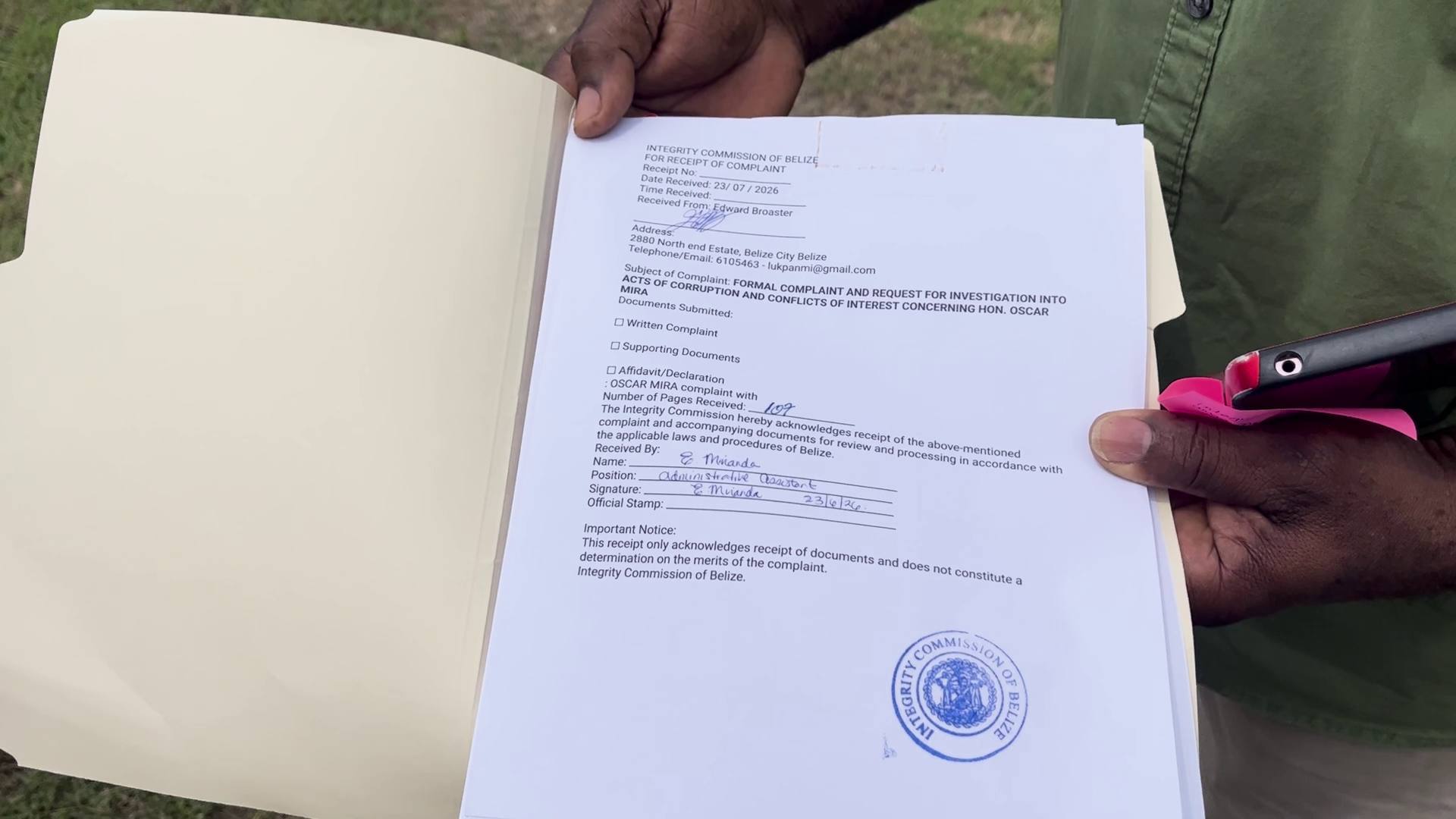
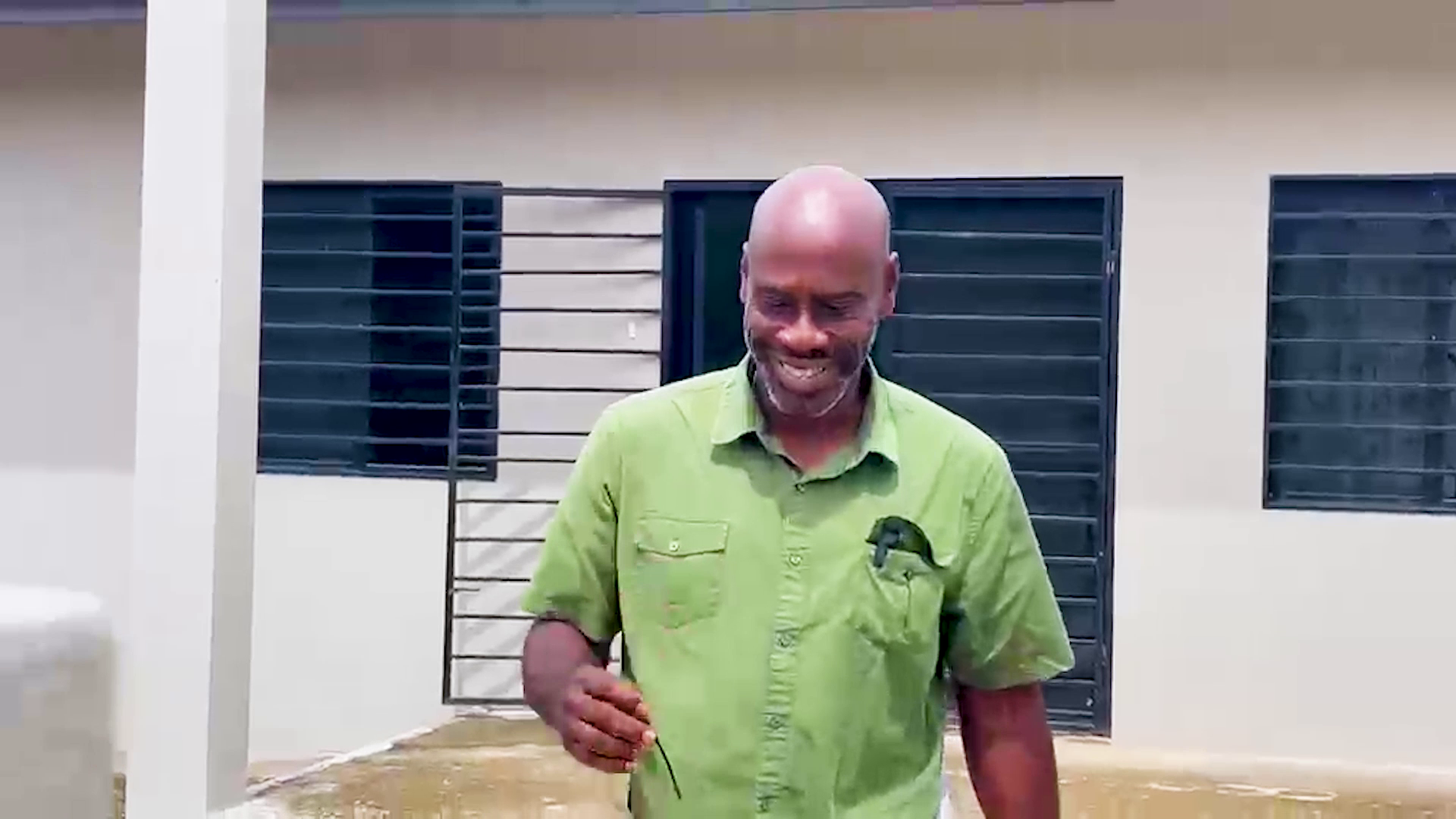
    On June 23, 2026, a high-stakes political confrontation over alleged public sector corruption has escalated in Belize, as United Democratic Party (UDP) caretaker Edward Broaster has submitted a formal corruption complaint to the country’s top anti-corruption watchdog, the Integrity Commission based in Belmopan, targeting incumbent Home Affairs Minister Oscar Mira.

    Broaster, who serves as UDP caretaker for the Belize Rural Central constituency, has not limited his criticism to public rhetoric. He brought what he describes as fully documented financial evidence to support three core allegations against Minister Mira: conflict of interest, abuse of public office, and mismanagement of state-awarded government contract funds. In total, Broaster submitted a three-page summary report alongside 104 pages of supporting documentation, split between records linked to MP Farms (56 pages) and materials connected to Jenny Mira (48 pages). Broaster confirmed that commission staff provided a formal signed receipt confirming delivery of all evidentiary materials.

    The complaint is filed under Section 34 (1) of the Prevention of Corruption Act, outlined in Chapter 105 of Belize’s Substantive Laws. Broaster emphasized that he has reasonable grounds to confirm that Mira, as a public official defined under the act, has violated its statutory provisions. He is calling on the Integrity Commission to launch a full, in-depth probe of the evidence to determine whether the allegations warrant criminal prosecution, opening the door to one of the most high-profile inquiries into ministerial misconduct in recent Belizean politics.

    Beyond the formal complaint, Broaster has publicly criticized the government’s handling of Mira’s current leave of absence, framing the three-month paid leave as little more than a “vacation” rather than meaningful accountability. He argues that the temporary leave falls far short of the anti-corruption commitments Prime Minister John Briceño has repeatedly made to the Belizean public. Broaster pointed to Briceño’s own public statements calling for zero tolerance for corruption and criminal prosecution of corrupt public officials, noting that granting Mira three months paid leave directly contradicts these pledges.

    “As an aspiring politician who fears no one, I am here to file this report on behalf of working-class Belizeans and to protect the public purse,” Broaster stated in comments to reporters following the submission. “Every citizen’s tax dollars are being squandered, and we owe it to the public to get a full, proper investigation to uncover the truth. If wrongdoing is confirmed, appropriate action must be taken.”

    While the Integrity Commission has not yet provided Broaster with a formal timeline for the investigation, he has publicly called for a swift, transparent process to get to the bottom of the allegations against Mira and his family. This complaint marks a significant escalation of tensions between the opposition UDP and the ruling administration, shining a new spotlight on the government’s commitment to addressing corruption allegations among senior officials.

  • Espat Backs Broaster’s Move to Integrity Commission

    Espat Backs Broaster’s Move to Integrity Commission

    As the high-profile Mira controversy continues to expand and draw public attention, a senior acting government minister has publicly thrown his support behind a rival politician’s choice to escalate the dispute through official institutional channels. On the evening of June 23, 2026, Acting Minister of Home Affairs Julius Espat delivered an official response to Edward Broaster’s recent announcement that he would submit his formal allegations connected to the Mira case to Belize’s Integrity Commission for independent review. Espat made clear that he holds no objection to Broaster’s decision to file the complaint, stressing that the nation’s oversight frameworks were specifically designed to handle exactly these kinds of disputed claims. In his remarks, Espat argued that if Broaster believes his allegations hold sufficient factual weight, the Integrity Commission must be granted full space to carry out its mandate, uncover the facts of the case, and deliver conclusions rooted in evidence rather than partisan political positioning. “This was a personal and political choice, and he has every right to make it,” Espat stated in his on-the-record comments. “He’s stepped into the ring to pursue this, and I give him credit for that. Democratic governance gives citizens and public figures the space to act on their convictions this way. If you’re confident enough and brave enough to believe this is the right path, and the system permits you to take it, you’re allowed to move forward. Broaster is a former police officer, so he understands better than most what the process can and cannot achieve. Personally, I have no issues with his decision. The system exists to be used when people have claims they want investigated. If he truly believes his allegations have merit, the process will reveal the truth, and that’s what matters most.” Local outlet News Five has confirmed it will continue providing ongoing coverage of the case, tracking whether the Integrity Commission chooses to launch a formal probe in response to Broaster’s submitted complaint. This report is based on a transcript of an evening television broadcast from the outlet.