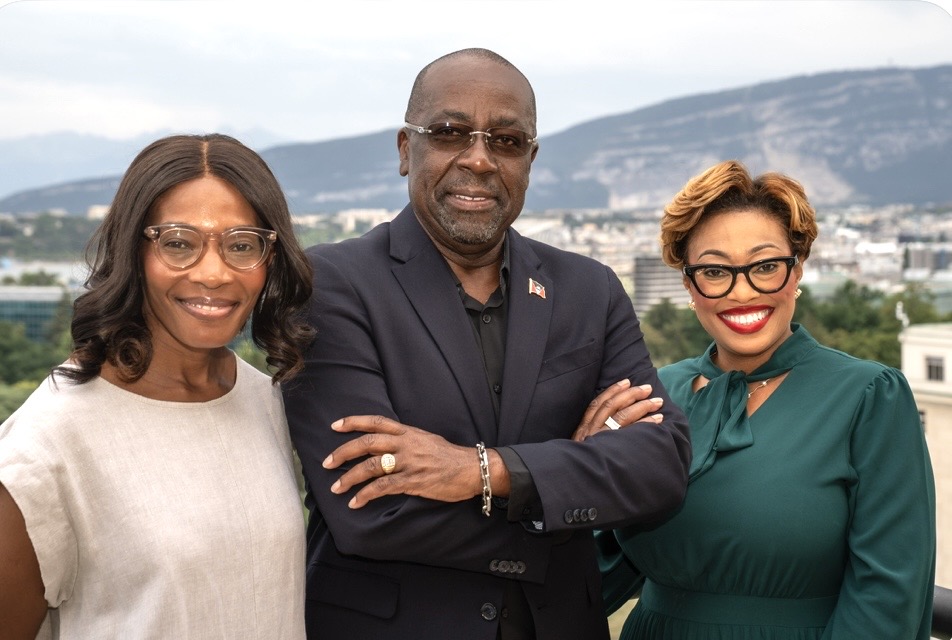
In a landmark gathering hosted at the United Nations Office in Geneva, Switzerland, Antigua and Barbuda partnered with the AI for Developing Countries Forum (AIFOD) to open its annual AI Summit on August 12, 2026. Centered on the transformative theme “The Future Belongs to the Many, Not the Few”, the summit brings together a diverse cross-section of stakeholders: national governments, multilateral bodies, policy shapers, leading AI researchers, and senior industry leaders. The core conversation revolves around how artificial intelligence is rewriting the rules of global engagement, and how small, developing nations can shift their long-held role as passive consumers of cutting-edge technology to active co-designers of the global AI ecosystem. Kicking off the summit, Foreign Affairs, Trade and Immigration Minister E. P. Chet Greene – who holds cabinet-level responsibility for AI policy – delivered the opening keynote address, titled “From Clients to Architects of Intelligence”. In his remarks, Minister Greene reinforced Antigua and Barbuda’s unwavering commitment to lifting up small states, positioning them to shape the AI systems that will define collective global progress for generations. He issued a clarion call for substantive digital equality and guaranteed, meaningful representation for developing nations at every table where global AI rules are debated. “Wherever the future of AI is being written, the Global South must be present,” Greene emphasized, rejecting the status quo that leaves low- and middle-income nations on the sidelines of technological governance. The minister framed collective coordinated action as the only sustainable path for small states to claim meaningful AI sovereignty. He told delegates that 50 Global South nations are not ready to simply sign onto a pre-written declaration; instead, they are committed to building a permanent, collective negotiating body to advance their shared interests. “Collective action is not merely strategy, it is solidarity,” Greene stated, underscoring the shared stakes for all developing nations. For Small Island Developing States (SIDS) like Antigua and Barbuda, Greene stressed that AI sovereignty is not just a matter of economic development – it is an issue of national survival. He urged the global community to prioritize AI tools that directly strengthen SIDS resilience, from climate disaster early-warning systems and emergency response coordination to coastal ecosystem monitoring and sustainable growth of the blue economy. These critical public-facing systems, Greene argued, “must be ours” – locally owned and regulated, aligned with national sovereign laws, functional even when international internet connectivity is disrupted, and sustained by trained local workforces. He reframed international support for SIDS AI capacity building not as an act of charity, but as a strategic investment in global collective resilience, noting that “a resilient SIDS is a resilient world.” Opening the summit’s second day of discussions, Joy-Marie King, Antigua and Barbuda’s Director of International Trade, expanded on the strategic steps small nations must take to secure a stronger foothold in the global AI ecosystem. King explained that for small states to participate effectively in global AI governance, they must prioritize coordinated collective action, invest in strengthening both domestic technical capacity and international negotiating power, and build targeted strategic partnerships with academic institutions, private sector AI leaders, and multilateral international organizations. She also highlighted the outsized role of regional integration and shared diplomatic platforms in helping small nations move from a reactive posture, simply adapting to changes driven by large technological powers, to a proactive strategic position where they can directly influence the technical standards, governance frameworks, and cross-border partnerships that will govern AI for decades to come. From its inception, the summit has been designed to fill a critical gap in global AI discourse, providing a structured, inclusive space for all stakeholders to confront the shifting global order created by AI and advance the agenda of small states’ growing role in tech governance. Antigua and Barbuda’s leadership of this summit, under the direction of Minister Greene, reflects the nation’s longstanding commitment to ensuring that the unique perspectives and pressing priorities of SIDS are not overlooked in global conversations about artificial intelligence, digital transformation, innovation, and emerging technology. The Antigua and Barbuda delegation is led by Minister Greene, joined by Director King and Andrea Jacobs, Crown Counsel and national AI focal point for the country. The three-day summit is scheduled to conclude its proceedings on August 14, 2026, with expected next steps for advancing the collective platform of Global South small states.
Antigua and Barbuda Co-hosts Artificial Intelligence Summit at the United Nations in Geneva.