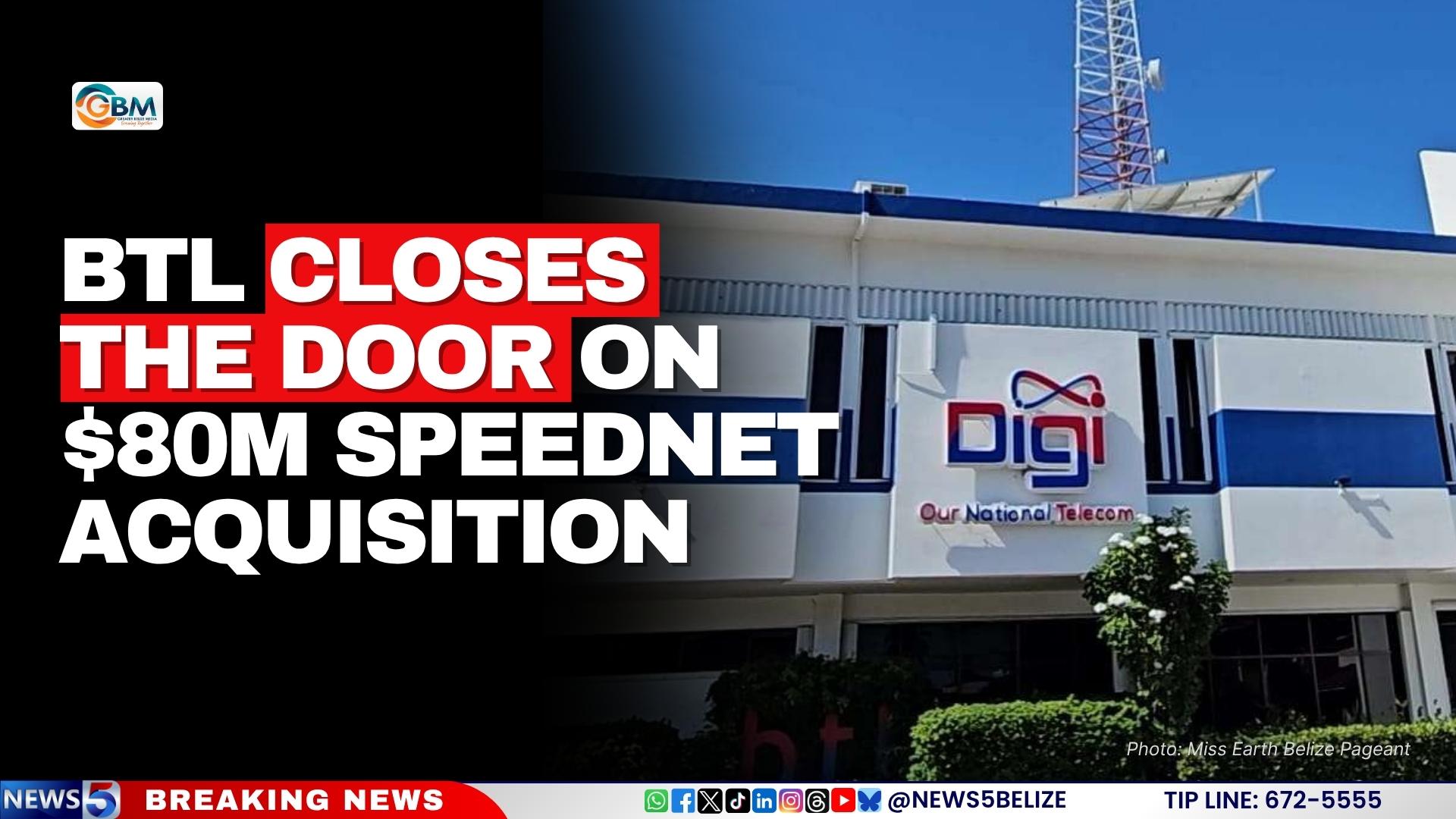
On August 14, 2026, Belize Telemedia Limited (BTL) formally announced it was ending its pursuit of the proposed $80 million acquisition of local telecommunications rival Speednet, which trades under the brand name SMART. The move came directly after Belize’s Cabinet declined to throw its support behind the merger, a decision BTL’s leadership has said it accepts fully.
In an internal bulletin sent to all BTL employees, BTL Chairman Markhelm Lizarraga confirmed the end of the acquisition process. “We respect Cabinet’s decision and the process through which it was reached,” Lizarraga stated. “The process of how we could have expanded our business through an acquisition is now behind us. We close that chapter and turn our full attention to how we will expand our business through other avenues in an ever-evolving competitive landscape.”
The termination of the deal arrives at a pivotal moment for Belize’s telecommunications sector, as BTL prepares for shifting regulatory conditions. The country’s Public Utilities Commission is widely expected to designate BTL as a dominant service provider in the market, a classification that will bring sweeping new requirements for the company. Lizarraga noted that the designation will impose additional regulatory obligations, greater government oversight, and new operational constraints that will force BTL to adopt more disciplined practices across every area of its business, from competition and capital investment to customer service.
This official announcement from BTL followed the first public statement from Speednet after Cabinet revealed its decision earlier the same week. According to Speednet, BTL first approached the company about a potential acquisition in 2022, and renewed the offer for a second time in mid-2025. In the months after the proposal became public, opposition to the merger grew steadily among stakeholders and the general public.
Going forward, new market rules will require all government telecommunications contracts to be opened to public tender, a change designed to level the playing field for smaller providers. For BTL, the dominant provider designation will include requirements explicitly aimed at boosting market competition, including mandated infrastructure sharing with competitors at cost-based rates and potential adjustments to the surcharges BTL currently charges rival providers to use its network.
Despite the setback of the collapsed acquisition, Lizarraga outlined a clear new path for BTL’s long-term growth. The company will accelerate its ongoing organizational transformation, shifting from a traditional telecommunications provider to a broader, diversified technology company (dubbed “TechCo” internally). This new strategic direction will see BTL direct capital investment toward high-growth digital services including cloud infrastructure, cybersecurity protections, outsourced managed IT services, and customized enterprise technology solutions for business clients.