博客

  • Santa Clara Sculpture Complex prepares for tribute to Commander of the Revolution, Ramiro Valdés Menéndez

    Santa Clara Sculpture Complex prepares for tribute to Commander of the Revolution, Ramiro Valdés Menéndez

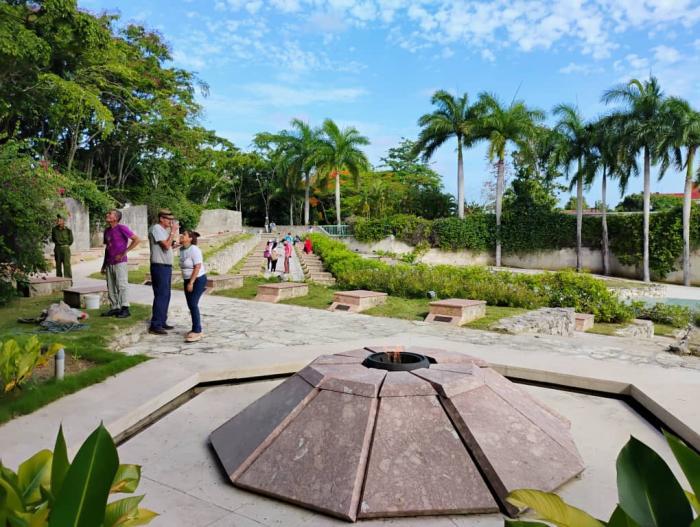
    In Santa Clara, Cuba, final touches are being put on extensive preparations at the iconic Ernesto Che Guevara Sculpture Complex, ahead of Thursday morning’s official burial ceremony for Ramiro Valdés Menéndez, one of the Cuban Revolution’s most revered leaders and a Hero of the Republic of Cuba.

    Reday René Armas Álvarez, director of the historic memorial site, confirmed that local businesses and regional organizations have partnered to complete a wide range of infrastructure upgrades and preparations ahead of the solemn event. Teams have carried out thorough site cleaning, refreshed landscaping, upgraded public lighting, and completed painting and structural repairs to worn floors and roofing across the complex.

    Planners have prioritized comprehensive rehabilitation of the Mausoleum to the Combatants of the Las Villas Front, which will serve as Menéndez’s final resting place alongside dozens of other revolutionary fighters. The mausoleum holds the remains of combatants from Column No. 8 Ciro Redondo, the 13 de Marzo Revolutionary Directorate, and the Popular Socialist Party — all revolutionaries who lost their lives during the independence struggle or died after the 1959 revolutionary triumph.

    Armas Álvarez detailed that every one of the site’s 220 ossuaries has undergone deep cleaning and polishing of its marble and granite finishes. The project also included outdated landscaping replacements, fresh painting, and structural upgrades to the trusses that provide public access to the mausoleum grounds.

    Beyond the mausoleum, work crews have addressed critical waterproofing issues in the complex’s on-site museum, where hundreds of historically significant artifacts related to Ernesto Che Guevara and his fellow revolutionary comrades are on public display. Upgrades to the museum’s roof, internal lighting, and access doors were also completed as part of the pre-burial renovation push.

    Additional work included full replacement of the vegetation at the memorial dedicated to the Heroic Guerrilla and fallen fighters of the Reinforcement Detachment — a landscape originally designed to replicate the dense terrain of the Bolivian jungle where Guevara was killed. All outdated wooden paneling in the complex’s Multipurpose Room has also been replaced with modern aluminum and glass finishes.

    The venue’s protocol and event hosting area has also received a full overhaul, with complete updates to plumbing, furniture, and all interior spaces, leaving the area fully refreshed for the formal ceremonial proceedings. This national event honors the enduring legacy of one of Cuba’s most important revolutionary figures, drawing the attention of the Cuban public and political observers across the region.
  • The Council of Ministers will analyze recently approved economic and social transformations

    The Council of Ministers will analyze recently approved economic and social transformations

    Havana, June 24, 2026 – Cuba’s highest governing bodies have advanced a landmark set of economic and social adjustments that will soon be made public in full, wrapping up a years-long process of refining the island nation’s development framework.

    The Council of Ministers is scheduled to hold a formal analysis of the proposed transformations this week, building on a multi-stage review process that already incorporated input from two key national bodies: the Political Bureau of Cuba’s Communist Party, and participants in the Extraordinary Plenum of the Party’s Central Committee. The reforms also received debate and endorsement during the 3rd Extraordinary Session of the 10th Legislature of the National Assembly of People’s Power, ensuring broad institutional input before finalization.

    These adjustments are framed as a deliberate, sovereign policy choice for Cuba, emerging from a decades-long initiative to update and optimize the Cuban Economic Model. That process was first launched in 2011, with major deepening of reform efforts kicking off in 2021 as the country addressed shifting global and domestic economic conditions. Once the Council of Ministers concludes its final analysis, the full text of all approved economic and social transformations will be released publicly to bring transparency to the country’s latest policy evolution.

  • Commander Ramiro, protagonist of the extraordinary work that is the Revolution

    Commander Ramiro, protagonist of the extraordinary work that is the Revolution

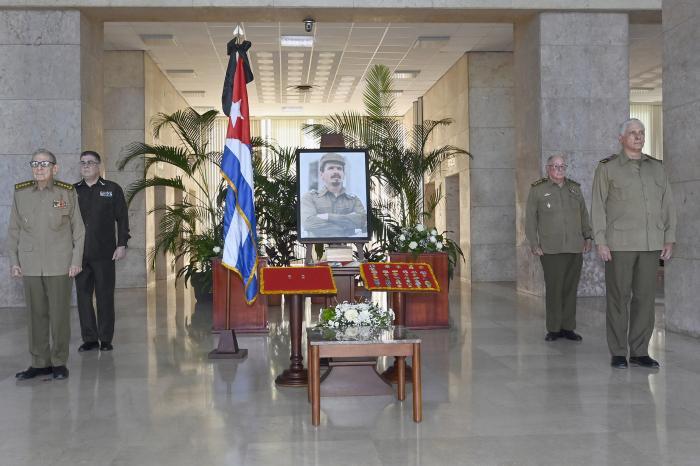
    On a Tuesday morning in June 2026, one of the last surviving core figures of Cuba’s revolutionary movement, Commander of the Revolution Ramiro Valdés Menéndez, received his first formal tribute from the country’s top political and military leadership at the headquarters of the Ministry of the Revolutionary Armed Forces. Leading the honor guard for the lifelong revolutionary was Army General Raúl Castro Ruz, leader of the Cuban Revolution and Valdés Menéndez’s comrade-in-arms spanning decades of struggle from the Moncada Barracks attack to the Granma expedition, the guerrilla campaign in the Sierra Maestra, and the decades of nation-building following the 1959 revolutionary triumph.

    Joining Raúl in the tribute were Miguel Díaz-Canel Bermúdez, First Secretary of the Central Committee of the Communist Party of Cuba and President of the Republic of Cuba; Army Corps General Álvaro López Miera, Minister of the Revolutionary Armed Forces; and Army Corps General Lázaro Alberto Álvarez Casas, Minister of the Interior, both of whom are members of the party’s Political Bureau.

    Before the honor guard began, the urn holding Valdés Menéndez’s ashes was placed at the center of the ceremony hall. A revolutionary renowned for unwavering loyalty to Fidel and Raúl Castro, and a man who often described himself as deeply devoted to the Cuban Revolution, Valdés Menéndez left behind a legacy of service recognized across the country. Flanking the urn were the two stars marking his status as Hero of the Republic of Cuba and Hero of Labor, alongside the dozens of distinctions and decorations he earned over a lifetime of exceptional service to the nation. Resting near the urn, folded into the traditional triangular shape, was the Cuban flag that Valdés Menéndez personally carried back from Bolivia alongside Che Guevara’s remains — a treasure he never parted with for the rest of his life.

    A second mourning flag, draped with a black ribbon, stood alongside five floral arrangements offered on behalf of Army General Raúl Castro, President Díaz-Canel, the Association of Combatants of the Cuban Revolution, the Cuban people, and Valdés Menéndez’s family. These offerings honored a revolutionary who famously avoided the spotlight, once saying that all the achievements of the revolution were collective work done naturally when duty called, not the triumph of any single individual.

    After the formal honor guard concluded, Raúl Castro and Díaz-Canel placed white roses at the urn to cap the tribute, followed by the two military ministers. The pair then offered heartfelt condolences to Valdés Menéndez’s family, including his lifelong partner Alicia, his children, and all attendees gathered to honor the humble guerrilla fighter who gave every part of his life to building the new Cuba born in 1959.

    Speaking of the comrade he has long considered a brother, who stood beside him in defense of shared revolutionary ideals and principles, Raúl recalled the words he shared when Valdés Menéndez was awarded the Honorary Title of Hero of Labor: he noted that Valdés held a unique distinction among the revolutionary cohort, serving as second-in-command of the column that Che Guevara led into Las Villas during the final offensive against the Batista regime.

    In keeping with Valdés Menéndez’s own final wishes, he will be laid to rest this Thursday alongside his former commander Che Guevara at the Mausoleum of the Las Villas Front, located within the Ernesto Che Guevara Sculpture Complex in the city of Santa Clara.

    Though Valdés Menéndez preferred to avoid public attention, his legacy demands recognition as Cuba honors his life. A figure who never sought the limelight, he was and will remain a central protagonist of the extraordinary collective project that is the Cuban Revolution. As Valdés Menéndez himself affirmed, the revolution “was not born to die, but to continue through time” — a legacy he helped build and safeguard for generations of Cubans.

  • Leisure : Did you know ? #35 (video)

    Leisure : Did you know ? #35 (video)

    In its latest installment of the popular twice-weekly general knowledge segment “Did You Know?”, Haiti-based online quiz platform Quiz.HaitiLibre has turned its spotlight to one of astronomy’s most intriguing cosmic objects: red dwarf stars. This 35th entry of the educational series shares lesser-known facts about these tiny, abundant stars that shape our understanding of the Milky Way and the search for life beyond Earth.

    Red dwarfs hold the title of the most widespread stellar bodies across the entire universe, accounting for roughly three-quarters of all stars within the Milky Way galaxy alone. Unlike the massive, blazing Sun that powers our solar system, red dwarfs are far smaller and cooler, a physical characteristic that gives them their distinctive dim, reddish hue. A particularly remarkable trait of these stars is their extraordinarily slow consumption of hydrogen fuel, which grants them a lifespan measured in hundreds of billions of years—far outstripping the current 13.8-billion-year age of the universe itself.

    For the global astronomy community, red dwarfs have emerged as a particularly fascinating area of study, largely because they frequently host systems of rocky planets similar in size to Earth. This has made them top candidates for searching for potentially habitable worlds beyond our own solar system, even as significant challenges remain. The habitable zone—the range of orbital distances where liquid water could theoretically exist on a planet’s surface—lies extremely close to a red dwarf’s dim surface. This proximity almost always leads to synchronous rotation, meaning one side of the planet is permanently exposed to stellar radiation while the other remains in perpetual darkness. Compounding this challenge, red dwarfs are prone to powerful, violent stellar flares that can strip away the atmosphere of any nearby orbiting planet, erasing any chance for life as we know it to evolve.

    Despite these formidable barriers to habitability, red dwarfs remain a primary target for astronomers hunting for extraterrestrial life, especially our closest cosmic neighbors. This educational fact feature is just one of hundreds of free quizzes available on Quiz.HaitiLibre, a digital platform that caters to knowledge seekers of all ages. As part of the platform’s June 2026 monthly update, 31 new quiz games were added on June 1, bringing the total number of available interactive quizzes to 150. The platform adds new content every month, covering a vast range of topics from local Haitian culture and current affairs to global general knowledge across science, history, and more.

    All quizzes on Quiz.HaitiLibre are exclusive to the platform, free to access, and require no user registration. Each topic includes three difficulty levels: easy, intermediate, and expert, to accommodate casual learners and experienced trivia buffs alike. The entire collection is available in both French and English, making it accessible to a broad audience of users.

  • News : Zapping…

    News : Zapping…

    On June 24, 2026, multiple interconnected and distinct developments unfolded across Haiti, spanning public safety, infrastructure progress, international economic cooperation, judicial proceedings, anti-corruption diplomacy, and consular services adjustments.

    The most urgent incident occurred on the morning of June 23, when ongoing violent clashes between rival armed gangs fighting for territorial control of Haiti’s critical industrial and port district left a parked vehicle destroyed by explosion. Around 9:10 a.m., an empty tanker truck parked along Boulevard de La Saline was hit by a projectile, whose origin remains unclear: authorities have not yet confirmed whether it was a stray bullet from crossfire or a deliberate targeted attack. Even though the truck had been declared empty of full fuel loads, residual flammable vapors trapped inside the tank ignited on impact, triggering a large explosion. The blast sent debris flying across the boulevard, damaging several other heavy goods vehicles parked in a line along the road, many of which also sustained direct bullet damage from the surrounding gang fighting.

    In a more positive development focused on long-term urban growth, Delmas Mayor Wilson Jeudy formally kicked off construction work on Chrétien Street, located in the Delmas 95 neighborhood at the intersection adjacent to the Jacquet Toto gas station. The project forms a core part of the municipal government’s broader initiative to modernize Haiti’s urban road network, a key investment expected to boost local economic activity and improve daily mobility for residents. Delmas City Hall has issued a public advisory alerting local commuters and residents to expect temporary traffic slowdowns and occasional disruptions to access along the route for the duration of construction work.

    On the international economic cooperation front, European Union officials wrapped up a working visit to Haiti’s CODEVI Industrial Park on June 23, where the bloc’s development model has drawn significant praise and interest from EU leadership. The European Union Ambassador to Haiti hosted senior TeamEurope representatives, including the French Ambassador to Haiti and the EU Ambassador to the Dominican Republic, for an on-site tour of the border-located industrial park. The delegation reviewed CODEVI’s successful development framework and explored the economic benefits of its strategic position near the Haiti-Dominican Republic border. The EU has already committed €9.5 million to fund an ambitious vocational and technical training project across Haiti, designed to upskill local workforces and align labor supply with the evolving needs of the country’s growing industrial sector, advancing the bloc’s goal of supporting inclusive economic recovery in Haiti.

    In a high-profile judicial development tied to one of Haiti’s most consequential political assassinations, former First Lady Martine Moïse has been formally summoned to appear at the Port-au-Prince Court of Appeal on June 30, 2026. Moïse will be questioned as part of expanded investigative proceedings ordered by the lead investigating judge overseeing the 2021 assassination of her husband, former Haitian President Jovenel Moïse, who was killed by attackers at his private residence overnight on July 6–7, 2021.

    Meanwhile, a senior Haitian anti-corruption delegation is currently in New York City for a week of strategic engagement at United Nations Headquarters, running from June 22 to June 26. Led by ULCC Director General Me Hans Jacques Ludwig Joseph, the delegation is holding talks with permanent missions to the UN from multiple countries, including Haiti itself, Canada, France, Latvia, and Panama. The discussions are focused on advancing long-term, sustainable capacity building for Haiti’s national anti-corruption efforts. The delegation is also scheduled to take part in a closed-door expert briefing for the UN Security Council, as well as a dedicated working session focused on reforming the UN system’s response to corruption challenges in Haiti.

    Finally, the Consulate General of Haiti in Paris has issued an advisory adjusting public opening hours for the week of June 22 to 26, 2026, due to severe weather conditions affecting the French capital. For this five-day period, the consulate will operate on an exceptional schedule, opening to the public from 9:30 a.m. to 3:30 p.m. daily. Regular consular operations and standard opening hours will resume on Monday, June 29, 2026.

  • SEOGS groeit uit tot breed zakelijk platform rond energieontwikkeling

    SEOGS groeit uit tot breed zakelijk platform rond energieontwikkeling

    The sixth iteration of the Suriname Energy, Oil & Gas Summit (SEOGS) officially launched on Tuesday at Roeli’s Event Venue in Wanica, marking another milestone for the country’s fast-growing energy sector. This year’s flagship international gathering has attracted an unprecedented scale of participation: 260 exhibiting organizations, 233 expert speakers, 1,200 international delegation members, and an expected total attendance of roughly 14,000 visitors over the four-day event.

    What began as a niche trade show focused exclusively on oil and gas has evolved into far more than a specialized industry exhibition. Across three large exhibition halls, companies and institutions from across the globe showcase their latest products, services, cutting-edge technologies and long-term development plans for the regional energy market. The summit has become a core hub for forging new business partnerships, exchanging innovative industry insights, and finalizing concrete commercial agreements.

    Beyond traditional oil and gas segments including extraction, transportation, storage, logistics and refining, the 2026 summit features a growing presence of companies from adjacent and supporting sectors, creating a far more diverse exhibition landscape than ever before. Attendees can explore offerings ranging from legal and banking services, hospitality, on-site medical support and emergency first aid, to helicopter transport services, physical and digital security solutions, communication infrastructure, data storage, advanced monitoring technology, industrial robotics and artificial intelligence. Local Surinamese producers of fresh food and beverages also have a prominent spot at the event, highlighting the growing local integration of the offshore energy sector.

    Anand Jagessar, CEO of Staatsolie, Suriname’s state-owned oil and gas company, told reporters on site that SEOGS has grown increasingly targeted as offshore oil and gas developments move from planning phases to concrete operational projects. “More discoveries and new offshore developments are coming online, such as the Gran Morgu project. And now Petronas has announced it will move forward with a major gas development here,” Jagessar explained.

    He noted that this accelerating project pipeline has drawn a growing number of contractors and supporting service providers to establish operations in and around Suriname’s energy sector. This growth has also spurred the development of concrete logistics hubs, including ports purpose-built to support offshore industry operations.

    According to Jagessar, the economic spillover from the expanding energy sector is now being felt across a much broader swath of Suriname’s domestic economy. “A large volume of locally produced food and beverages is already being supplied to offshore operations. As more developments move forward, the opportunities become clearer, and local businesses are stepping up to seize those chances,” he said.

    The Staatsolie chief emphasized that sector growth is creating opportunities not just for established businesses, but also for Suriname’s younger generation. Young people can now pursue targeted education and training to prepare for in-demand roles in the future oil, gas and energy industry, he added. “There are now real opportunities for young people to get involved and pursue focused studies. That makes for a very bright future ahead,” Jagessar said.

    Reflecting this focus on youth, one full day of the four-day summit is dedicated exclusively to young people, designed to build a connection between current economic growth and the country’s future workforce.

    During the opening ceremony, speakers from Suriname and across the globe highlighted the critical importance of building a robust regional oil and gas industry. Discussions covered not just investment and production targets, but also international collaboration, knowledge sharing, and the urgent need to ensure projected economic prosperity translates to tangible benefits for all of Suriname’s society.

    The event was officially opened by Suriname President Jennifer Simons, Vice President Gregory Rusland, Minister of Foreign Affairs, International Trade and Cooperation Melvin Bouva, and Minister of Oil, Gas and the Environment Patrick Brunings. With the expanded scale of this sixth edition, SEOGS has cemented its position as one of the most important business platforms in Suriname, centered on energy development, offshore activities, and the broad range of cross-sector economic opportunities these developments bring to the country.

  • Training : Start of the first week of the public policy program

    Training : Start of the first week of the public policy program

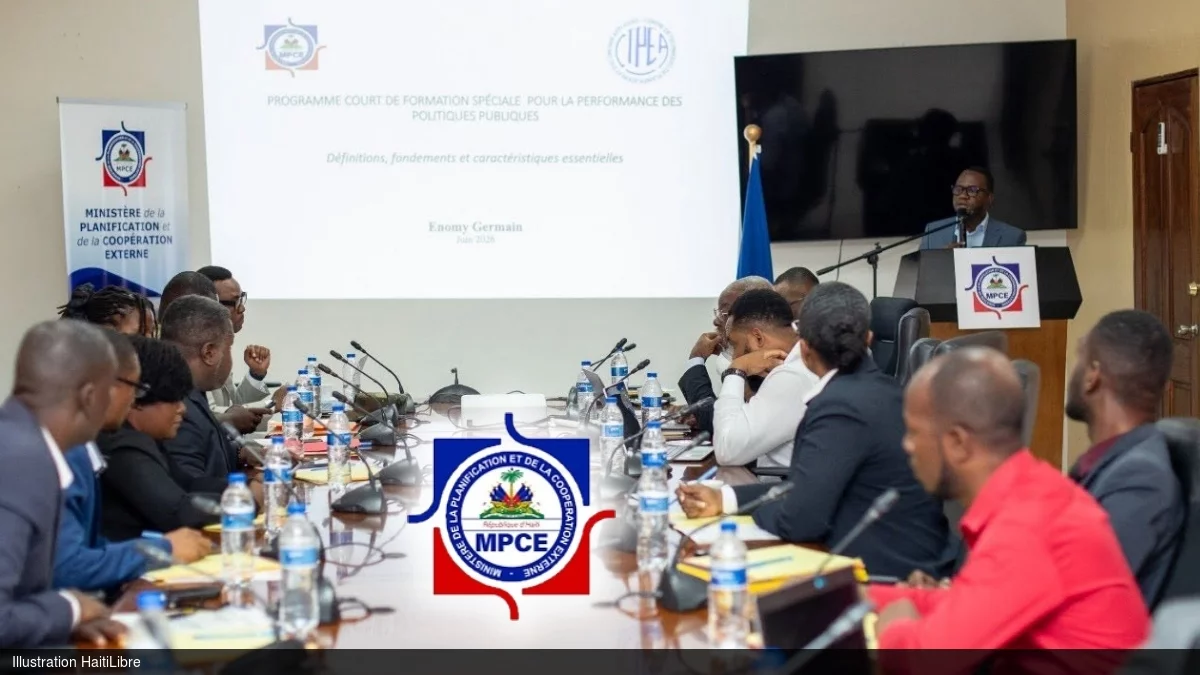
    In a key step to reform Haiti’s public administration and upgrade the technical capabilities of government personnel, two leading national institutions kicked off a week-long intensive public policy training program on Monday, June 22, 2026.

    Organized jointly by Haiti’s Ministry of Planning and External Cooperation (MPCE) and the Center for Planning Techniques and Applied Economics (CTPEA), the initiative is tailored specifically for staff from the country’s Study and Programming Units (UEP), the core government bodies tasked with policy design and development planning. The training curriculum blends theoretical instruction, real-world case studies, interactive simulations, and hands-on practical exercises to directly enhance participants’ on-the-job operational capabilities.

    The program’s curriculum focuses on the full lifecycle of public governance: from initial formulation and rollout to ongoing monitoring and final impact evaluation of public policies and public investment projects. Speaking on behalf of Minister Sandra Paulemon at the opening event, MPCE Director General Guy Roméro Latry shared his enthusiasm for the launch of the landmark initiative.

    Latry noted that developing an integrated curriculum covering everything from long-term strategic planning and public policy design to results-based management in such a condensed timeframe is an unprecedented achievement for Haiti. “Specific, actionable expertise is built not just through listening to lectures, but through applied, practical learning,” Latry said. He added, “No nation can advance without intentional planning, nor without strong, capable institutions that can articulate a clear long-term vision, map a sustainable development trajectory, and put effective implementation mechanisms in place.”

    The director general also underscored the outsized strategic importance of the Study and Programming Units across all government ministries and public agencies. Positioned as a critical connecting node in the process of designing, coordinating, and assessing public policies, these units are foundational to good governance. Strengthening their capacity, Latry emphasized, is a non-negotiable investment that will directly translate to better public service quality and more impactful government action that improves outcomes for the Haitian population.

    Throughout this first week of the broader program, participants will dive into core foundational concepts of public policy development and evaluation. Sessions will cover the defining characteristics of public policies, their core objectives and inherent limitations, and end-to-end frameworks for design, implementation, and impact measurement. Latry closed his opening remarks by encouraging all attendees to leverage the unique learning opportunity, bring full commitment and rigor to their training, and build collaborative networks for experience-sharing across the different participating government institutions.

  • Humanitarian Aid : New contribution of 900,000 euros from AECID

    Humanitarian Aid : New contribution of 900,000 euros from AECID

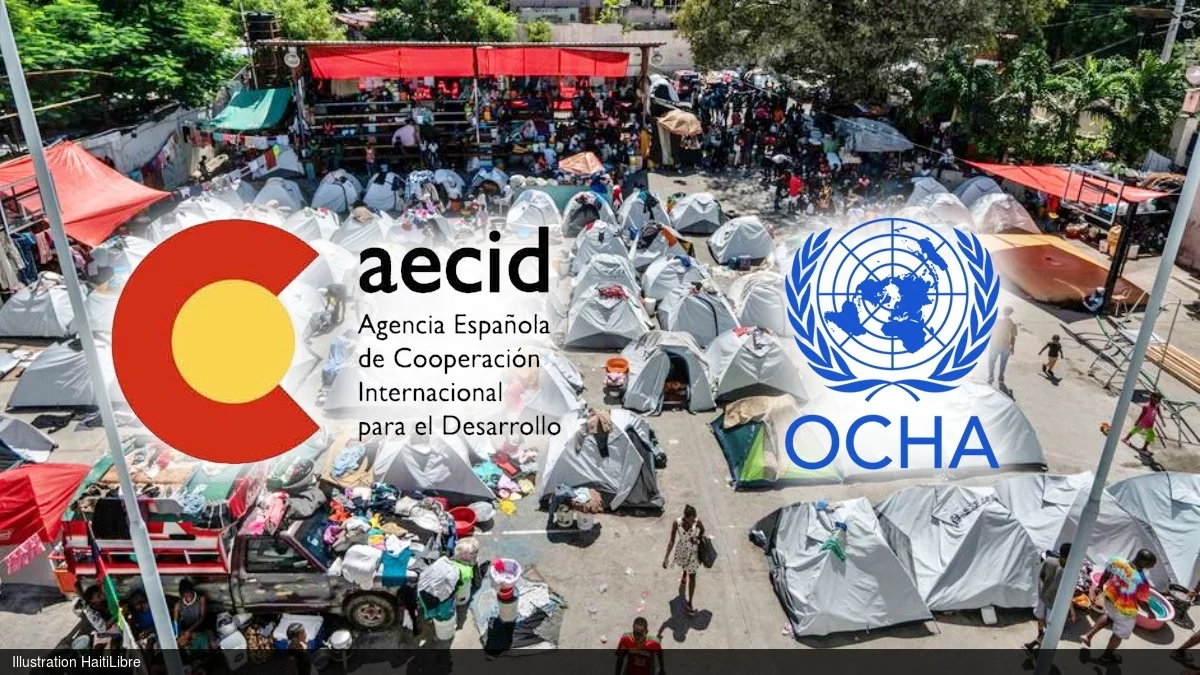
    Amid Haiti’s ongoing deepening humanitarian crisis, the Spanish Agency for International Development Cooperation (AECID) has announced a fresh €900,000 contribution to the Regional Joint Humanitarian Fund for Latin America and the Caribbean (RHPF LAC), a humanitarian financing mechanism overseen by the United Nations Office for the Coordination of Humanitarian Affairs (OCHA). Of the total new funding, €400,000 is co-financed through the collective contributions of Spain’s regional Autonomous Communities, reflecting broad domestic support for the international humanitarian response in Haiti.

    This new injection of funding marks a significant expansion of Spain’s long-standing commitment to Haiti’s vulnerable populations. Prior to this commitment, Madrid had already allocated a combined €1 million to the fund between 2024 and 2025, a prior investment that delivered tangible life-saving support to tens of thousands of Haitians last year. Official data from the humanitarian coordination framework shows that 32,390 at-risk Haitians, including 17,190 women and girls, accessed critical emergency assistance through Spain’s earlier contributions in 2025 alone.

    The latest funding will be directed to a broad range of high-priority humanitarian sectors that address the most urgent needs of Haitian communities impacted by persistent instability and displacement. These priority areas include camp coordination for the country’s growing population of internally displaced persons (IDPs), formal education for out-of-school children, emergency shelter provision, food security programming, public health services, civilian protection interventions, nutrition support for malnourished populations, and water, sanitation, and hygiene (WASH) infrastructure.

    Unlike top-down humanitarian aid models, the RHPF LAC centers local leadership, with all programming implemented by regional and local civil society organizations. The fund’s core mission is to drive sustainable, tangible improvement in Haitian communities by strengthening local response capacities, improving cross-stakeholder aid coordination, and boosting the overall effectiveness of interventions across Port-au-Prince and other hard-hit regions of the country. Key programming set to benefit from the new funding includes general food distribution, protection services for women and children who have survived gender-based violence, education access initiatives, and other life-sustaining humanitarian actions that address the most pressing gaps in the country’s crisis response.

  • Haiti’s Prime Minister pays tribute to public servants

    Haiti’s Prime Minister pays tribute to public servants

    June 24, 2026 – Haiti marked World Public Service Day this week with a series of official ceremonies recognizing the tireless work of civil servants across the country, as top government leaders praised the resilience and dedication of public employees operating amid widespread national challenges. The flagship celebration, held Tuesday at Port-au-Prince’s Montana Hotel and organized by the Office of Management and Human Resources (OMRH), brought together a cross-section of senior stakeholders: sitting cabinet members, diplomatic corps representatives, senior public administration officials, and other national dignitaries. The event was convened under the unifying theme “Proud to Serve : Let’s Build the Public Administration of Tomorrow Today.”

    In opening remarks, OMRH General Coordinator Madelain Fils-Aimé highlighted Prime Minister Alix Didier Fils-Aimé’s ongoing commitment to overhauling and modernizing Haiti’s public sector, before extending a formal tribute to civil servants who advance public welfare across the country every day. Taking the stage, Prime Minister Fils-Aimé echoed that recognition, telling attendees “There is no greater honor than serving your country.” He stressed that the foundational strength of the Haitian state depends entirely on the public workers who keep institutions running, even when facing significant security and operational obstacles. The prime minister also singled out for special commendation three key security institutions: the Haitian National Police (PNH), the Armed Forces of Haiti (FAd’H), and the Gang Suppression Force (GSF), noting their critical frontline work to curb widespread gang violence and improve national security.

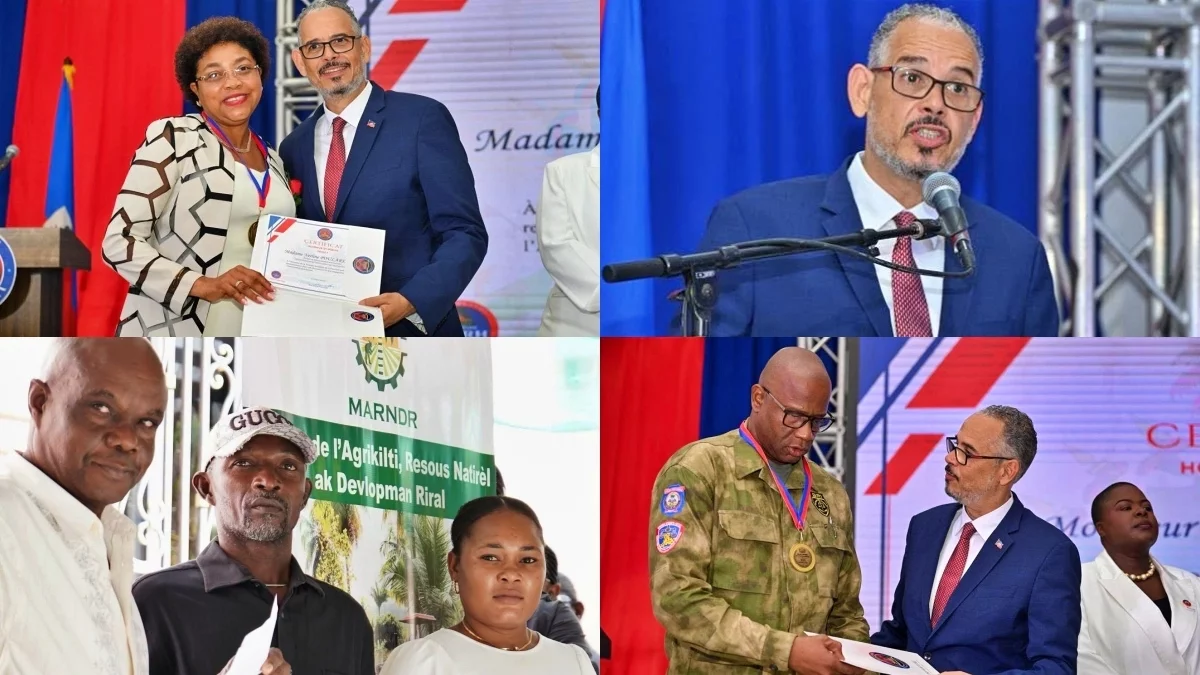
    The celebrations extended beyond the central OMRH event to individual government departments, with the Ministry of Agriculture hosting its own tribute one day earlier on Monday, June 22, to honor its staff and leadership. Ministry Director General Pierre-Richard René Officiel commended the professionalism, dedication, and resilience of his agency’s employees, who continue to fulfill their core duties with unwavering commitment and a strong sense of public duty even amid the country’s ongoing crises.

    Agronomist Marcelin Aubourg, Haiti’s Minister of Agriculture, delivered a heartfelt tribute to the women and men who keep the ministry operational, emphasizing their irreplaceable contribution to sustaining and expanding the Haitian agricultural sector – a backbone of the national economy and food security for millions of Haitians.

    The Ministry of Agriculture’s event included two key ceremonial milestones: the formal presentation of permanent civil service appointment letters to more than 300 employees. For many of the recipients, the official appointment capped decades of service in contracted roles, with some having worked 15, 18, or even 20 years on temporary contracts before securing permanent status. The ceremony also recognized two standout employees who earned distinction through their exceptional dedication, professional conduct, and high-quality work, awarding them plaques of honor to celebrate their contributions to the ministry’s institutional standing.

  • Who’s in Charge? Cabinet Reassigns Mira’s Portfolios Amid Scandal

    Who’s in Charge? Cabinet Reassigns Mira’s Portfolios Amid Scandal

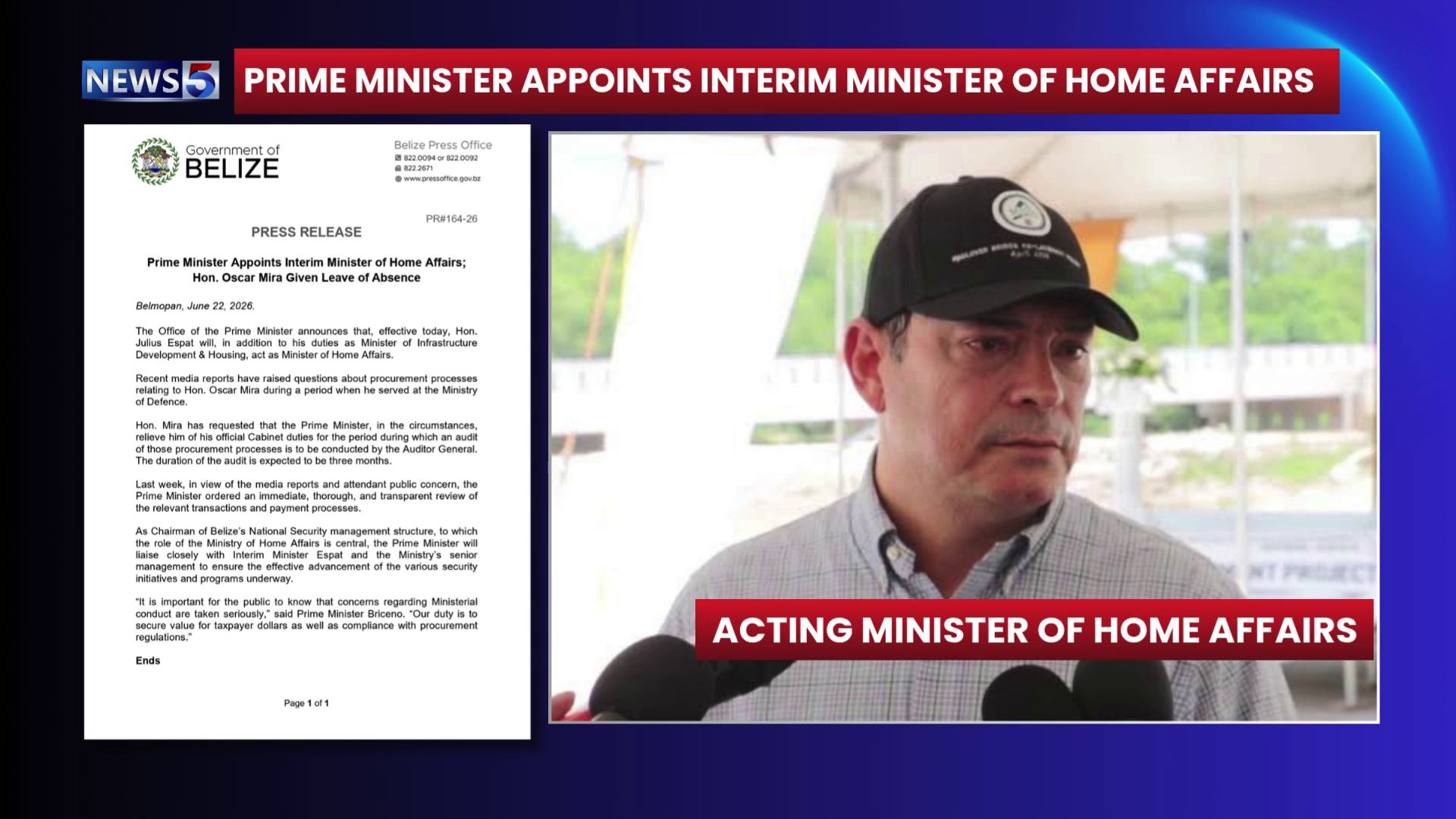
    On June 23, 2026, a Cabinet meeting held in Belmopan, Belize, centered on managing the political fallout of the ongoing Oscar Mira controversy, resulting in a temporary reshuffle of senior government portfolios. As Oscar Mira remains on administrative leave pending an investigation into irregular procurement practices, Prime Minister John Briceño confirmed the temporary reassignment of Mira’s duties: Minister Julius Espat will take over leadership of the Ministry of Home Affairs, while Minister Henry Charles Usher will assume temporary oversight of the Enterprise and Freezones portfolios.

    Beyond the portfolio reshuffle, the Prime Minister has faced growing public and press scrutiny over two additional controversial issues: a series of 11 payments totaling more than $130,000 from the Prime Minister’s own office to MP Farms for bulk grocery bag purchases, and a pending reset of the board for the RECONDEV development authority, currently chaired by Brian Mira, Oscar Mira’s relative.

    During the press question-and-answer session following the closed-door Cabinet meeting, Briceño pushed back against allegations of improper procedure, dismissing concerns over the MP Farms payments as unfounded “grasping at straws.” He emphasized that all financial transactions from his office followed established government protocols, noting that day-to-day payment processing is handled by his office staff and finance department personnel rather than directly by him. When asked why his office required such a large volume of grocery bags, Briceño deferred questions to the Cabinet Secretary, who oversees the government’s payment administration.

    The Prime Minister also addressed questions about irregular transaction patterns at the Ministry of Defense, where more than 1,000 individual transactions were processed for amounts just below the $10,000 threshold that triggers higher-level procurement review. Briceño confirmed that the pattern of split transactions had raised internal red flags, prompting him to order the Financial Secretary to commission an audit by the Auditor General’s office.

    When explaining Mira’s decision to step aside, Briceño clarified that the outgoing minister requested administrative leave voluntarily to avoid creating any public perception of bias during the ongoing audit. Briceño told reporters that there was no internal disagreement among Cabinet members over the decision, adding that while the body was “saddened by what has happened,” governing in the public interest remains the top priority. He also reaffirmed his confidence in Mira’s political future, stating that Mira had performed strong work as Home Affairs Minister and remains politically viable in Belmopan, expecting Espat to continue the policy work Mira initiated.

    Briceño also confirmed that the reconfigured RECONDEV Board will be sworn in within days, with full appointments finalized by early next week. The meeting marked a rare moment of public transparency for the Belizean Cabinet as it works to contain political damage from the unfolding scandal, even as opposition and press figures continue to press for more detailed answers about the controversial transactions.