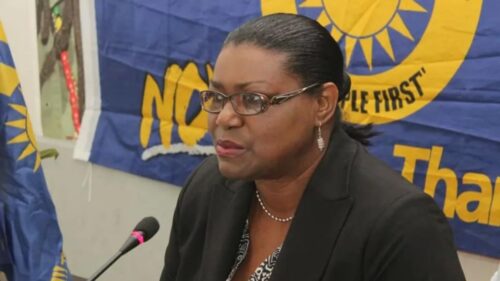
A growing political firestorm has erupted in Antigua and Barbuda over recent remarks by Prime Minister Gaston Browne targeting judicial sentencing practices, with the chair of the country’s main opposition party sounding a stark alarm about the risks of political interference in the judiciary. D. Gisele Isaac, head of the United Progressive Party (UPP), issued a blistering rebuke of Browne during an interview on Observer Radio’s *Voice of the People*, calling the prime minister “dead wrong” for publicly singling out a judicial officer over sentences he deemed excessively lenient.
Isaac emphasized that any legitimate concerns about sentencing guidelines should be resolved through established constitutional channels—formal legislative adjustments or internal judicial review processes—not through public intimidation or executive pressure on sitting judges. Rooting her argument in the foundational principle of separation of powers enshrined in the country’s constitution, she stressed that the executive branch has no authority to interfere with the work of the judiciary. “The prime minister has no jurisdiction over the judiciary,” Isaac stated. “You cannot fail to act through proper legislative channels, then lean on the power of the Cabinet to threaten a judge into changing their rulings.”
The controversy traces back to Browne’s recent public criticism of sentences handed down in firearms and other high-stakes criminal cases, paired with his call for a formal review of national sentencing practices. After the Antigua and Barbuda Bar Association called on Browne to issue a public apology for his remarks, Isaac also condemned the prime minister’s response to the legal body. She characterized that response as “in very, very poor taste” and “unbecoming of somebody holding the office of prime minister.”
Isaac pushed back against Browne’s critique of sentencing outcomes, noting that judges are explicitly granted statutory discretion to evaluate the unique facts and circumstances of each individual case before issuing a ruling. “That is the core work of a judge: to weigh all relevant context and render a decision aligned with the law,” she explained. Beyond the immediate debate over sentencing, she warned that political attempts to sway judicial decisions carry severe long-term consequences that undermine the entire structure of democratic governance.
“If a prime minister can dictate how a judge rules, or how they sentence, what line gets crossed next?” Isaac asked. “The judiciary exists specifically to protect ordinary citizens from overreach by the executive branch.” She also tied the local controversy to broader regional challenges across the Caribbean, where public trust in independent judicial institutions has come under growing scrutiny. Even though Caribbean judges are widely recognized as highly qualified to interpret and apply the law, Isaac noted that public perceptions of inappropriate ties between political leaders and judicial officials can erode public confidence. “For a large share of the public, perception becomes reality,” she added.
Isaac’s comments mark the most high-profile pushback against Browne’s remarks to date, intensifying debate over the balance of power between the executive and judicial branches in Antigua and Barbuda and highlighting growing regional concerns about the preservation of judicial independence.