博客

  • CPL eyes expansion

    CPL eyes expansion

    The Republic Bank Caribbean Premier League (CPL), one of the most prominent annual franchise T20 cricket tournaments in the Caribbean region, has left the door open to expanding its current lineup of teams to include an eighth franchise, according to the tournament’s head of Public Relations and Communications, Peter Miller. Speaking in an exclusive interview with veteran cricket commentator Joseph Reds Pereira on the sidelines of this year’s ongoing competition at the Daren Sammy Cricket Ground in St Lucia, Miller outlined that while expansion is a long-term goal for the league, any decision to add a new team will not be rushed, given the complex operational hurdles the tournament already faces hosting matches across multiple Caribbean nations.

    This 2024 edition of the CPL marks the first year to feature seven franchises, following the successful addition of the Jamaica-based Jamaica Kingsham earlier this year. Miller emphasized that bringing a franchise back to Jamaica had been a key strategic priority for the league for years, noting that Jamaica’s status as the most populous nation in the English-speaking Caribbean makes it an irreplaceable and high-value market for the tournament’s growth and fan engagement.

    Despite the success of adding the seventh team, Miller stressed that the CPL leadership has no interest in overextending the league through rushed expansion that would ultimately force future contraction of the competition. “What we don’t want to do with CPL is expand to the point where we then have to contract, so it’s all about moving at a pace that makes the most sense,” Miller explained. A core requirement for any future expansion, he added, is securing committed long-term franchise owners who have both the resources and dedication to sustain a team over decades, rather than pursuing short-term growth at the expense of league stability.

    A unique challenge sets the CPL apart from other major global T20 franchise tournaments, Miller noted: the massive logistical complexity of staging matches across multiple sovereign nation states in the Caribbean. Unlike most leagues that host all matches in a single country, the CPL must coordinate the cross-border movement of hundreds of people, including broadcast television crews, central league administrative staff, and 30 to 35 personnel per franchise. This requires meticulous planning around international luggage transport, specialized cricket equipment shipping, visa processing, border control clearance, and customs inspections – layers of coordination that most other T20 competitions never have to navigate.

    When pressed specifically on the timeline and feasibility of adding an eighth franchise, Miller reaffirmed that long-term league sustainability would be the non-negotiable guiding factor for any final decision. He outlined one potential structural adjustment that could accommodate an eighth team, drawing a parallel to England’s popular The Hundred tournament: reducing the total number of group stage matches to keep the tournament schedule compact. Under this model, the CPL would cut from 10 group games per team to eight, while still ensuring every team plays each other at least once throughout the group stage. Miller acknowledged that adjusting the tournament structure to add an eighth team would bring new complications, but added that there are clear pathways to make the expansion work successfully if all the preconditions are met.

    Miller also touched on the CPL’s current position in the global cricket calendar, noting that while the tournament has secured a permanent spot on the international cricket schedule, it has not yet reached the scale where it can command an exclusive window that pauses all other global cricket competitions, a status that would allow the CPL to attract every top men’s T20 player in the world. He pointed out that only the Indian Premier League (IPL) currently holds that unique status, thanks to its unmatched commercial scale that dwarfs every other T20 tournament on the planet. “I think you need to realize where you sit, there’s always going to be other international cricket tournament going on,” Miller concluded.
  • Barbados team treats 2 700 Venezuelans after earthquakes

    Barbados team treats 2 700 Venezuelans after earthquakes

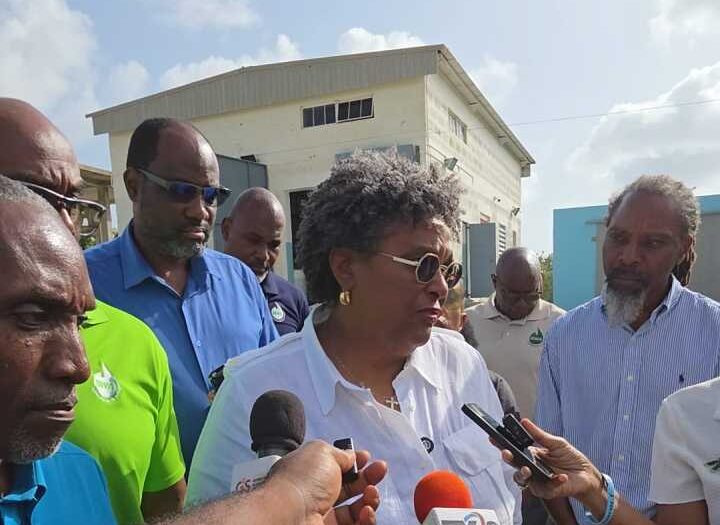
    In the aftermath of two devastating back-to-back earthquakes that claimed more than 6,500 lives in Venezuela, Barbados’ deployed emergency medical contingent has delivered critical care to over 2,700 affected people and completed 74 surgical procedures since launching operations in July, Barbadian Prime Minister Mia Mottley has confirmed. Speaking to reporters immediately after concluding an official visit to the disaster-hit South American nation, Mottley shared first-hand observations of the widespread destruction and the profound toll the catastrophe has inflicted on local communities. Mottley emphasized that the scale of human tragedy left by the earthquakes is almost impossible to fully grasp, as thousands of families were robbed of their homes, livelihoods, and sense of safety in a matter of moments. “It is tragic to see the scope of loss,” Mottley stated. “I do not think any of us can truly understand what it means to live with this uncertainty: not knowing exactly how many lives were lost, how many families have been impacted either by death or by losing everything — their shelter, all their possessions, and being forced to relocate to temporary camps.”

    This humanitarian deployment marks the latest in a series of regional disaster relief efforts led by Barbados, which previously sent emergency aid to Jamaica in the wake of Hurricane Melissa. The current mission integrates the logistical and operational capabilities of the Barbados Defence Force with clinical expertise from Queen Elizabeth Hospital staff and independent medical volunteers. To overcome on-the-ground challenges — most notably language barriers between the visiting medical team and local patients — the Barbadian contingent integrated Venezuelan local volunteers into their operations, who supported patient care and communication across affected zones.

    “I am proud that Barbados has been able to step up and contribute meaningfully to this relief effort,” Mottley said, as she broke down the structure of the deployment. “It is a collaborative effort between our defense force, our main public hospital, and medical volunteers from both the public and private sectors. In Venezuela’s case, given the context of the disaster, many local Venezuelan nationals also stepped forward to volunteer, largely to help bridge language gaps, and because they could see the tangible difference our team was making on the ground.”

    Operating out of a purpose-built field hospital starting from the third week of July, the medical team has managed a heavy caseload while working under challenging post-disaster conditions. Of the 74 completed surgeries, five were specialized oral procedures, with the remainder ranging from minor to major general surgeries. “Our team on the ground has seen more than 2,700 patients since becoming operational in July, and completed those 74 procedures,” Mottley noted. “It is incredible to see the tangible difference we have been able to make in the lives of people who have lost so much.”

    Mottley pushed back against common assumptions that large nations do not need outside support, noting that even the largest countries can see local response capacity overwhelmed when catastrophic disasters strike. “When we look at Venezuela, we see a large country, but we do not always see that even large countries face localized challenges and gaps after a disaster,” she explained. Beyond the immediate emergency work, Barbados’ field hospital will remain operational in Venezuela until early October, adding sustained capacity alongside broader recovery efforts led by the Regional Security System and the Caribbean Community (CARICOM).

    The prime minister also recognized key leaders and specialists who contributed to the mission, including Barbados Defence Force command, and a team of medical professionals led by Senior Minister Dr. William Duguid — a dentist who spent one week on the ground providing specialized dental care to local residents.

    Beyond emergency humanitarian relief, Mottley’s visit also marked a key milestone in strengthening bilateral relations between Bridgetown and Caracas. Building on preliminary discussions held in Barbados during late April with Venezuelan President Delcy Rodríguez, Mottley confirmed that in-person talks during her visit led to the signing of a new joint declaration outlining areas of future cooperation. A Venezuelan official delegation is scheduled to travel to Barbados by mid-September to formalize a series of regional cooperation agreements. The upcoming negotiations will focus on four core areas of mutual benefit: food security, tourism development, expanded international transport links, and joint energy initiatives designed to strengthen the economies of both nations.

    Closing out her briefing, Mottley reflected on the inherent fragility of human life when faced with extreme natural events, and issued a call for Barbadians to maintain ongoing empathy and support for Venezuelan communities still navigating the long aftermath of the earthquakes. “I feel truly proud of what our team has accomplished, but at the same time, I cannot help but reflect on just how fragile life is,” Mottley said. “No one could have predicted two massive back-to-back earthquakes that would take thousands of lives in an instant, and displace tens of thousands more, robbing them of their livelihoods, their homes, and all their possessions.”

  • Police intercept vessel carrying Opposition Leader

    Police intercept vessel carrying Opposition Leader

    A high-speed maritime incident involving Guyana’s top opposition figure has ignited public debate, after law enforcement intercepted a vessel carrying Opposition Leader Azruddin Mohamed late Tuesday amid conflicting narratives about what transpired. The confrontation unfolded just before 10 p.m. during a routine joint coastal patrol conducted by the Guyana Police Force (GPF) and the country’s Coast Guard. According to official police statements, patrol units spotted Mohamed’s unregistered “go-fast” craft entering the mouth of the Demerara River at an excessive speed. Law enforcement activated sirens to signal the vessel to halt, but the craft failed to respond, triggering a high-speed chase upriver that ended at a public wharf in Friendship, a small community located on the East Bank of the Demerara.

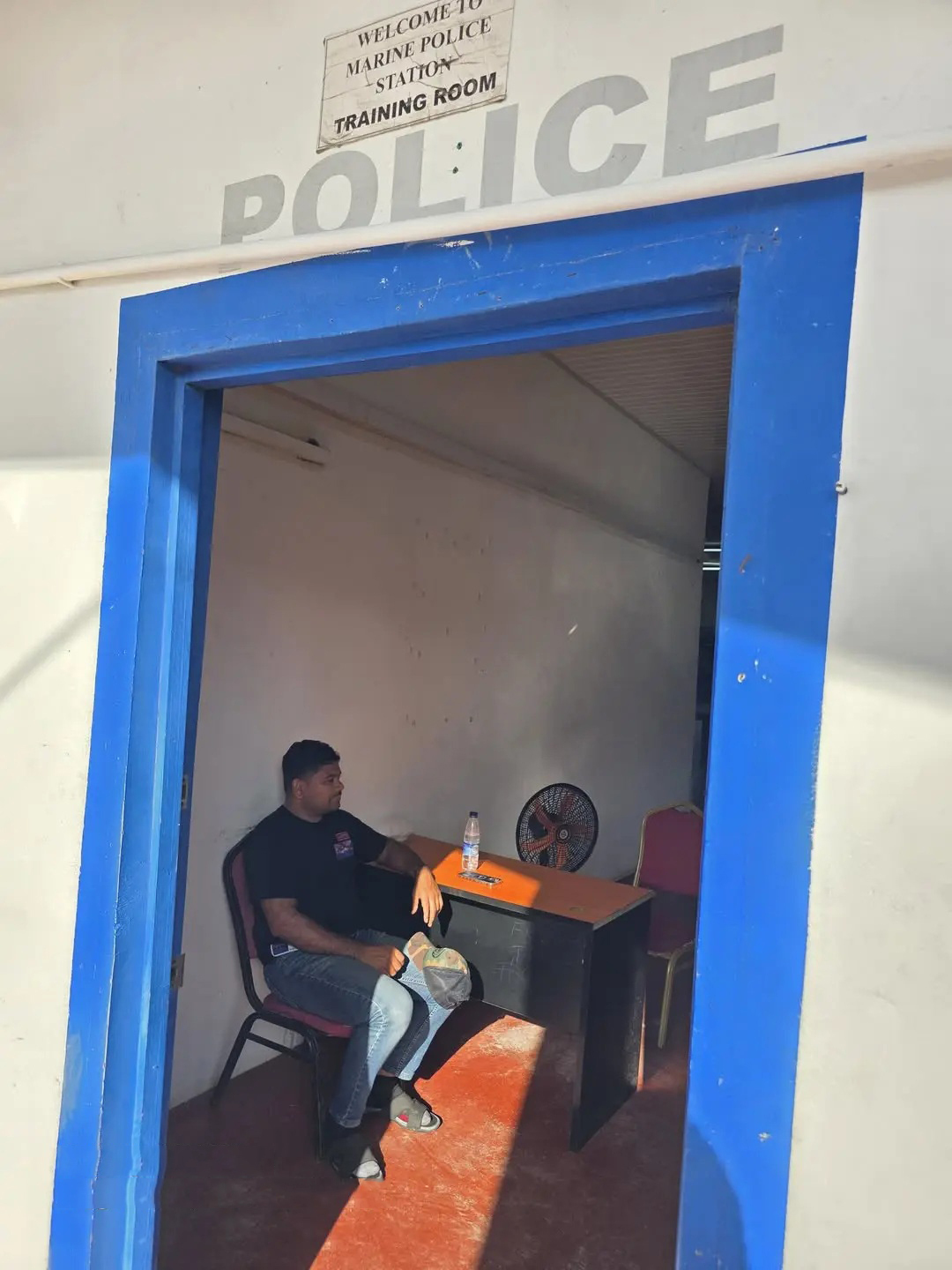
    Upon intercepting the vessel at the dock, police confirmed that three people, including Opposition Leader Mohamed, were still aboard the craft. Five additional people who had been traveling with the group were already on the wharf when officers arrived. During the chase, responding officers reported witnessing an unidentified person throw an unknown bag overboard into the murky waters of the Demerara River. To date, investigators have not been able to confirm the contents of the discarded bag, and joint teams from the GPF and Guyana Defence Force Coast Guard are currently conducting search operations to recover the item as part of an ongoing formal investigation into the incident.

    However, the opposition has pushed back aggressively against the official police narrative, offering a sharply different account of the stop. Odessa Primus, General Secretary of the Working People’s Alliance (WIN) and a member of the traveling party who was on the vessel during the incident, disputed key details of police’s version of events. Primus explained that officers initially approached the group only to request boat documentation from Mohamed, who informed responding units that the craft was already docked and he did not have the paperwork on his person at the time. She added that officers subsequently launched a full search of the vessel and all passengers on suspicion of trafficking illegal narcotics, but no contraband or unlawful items were uncovered during the search.

    Opposition representatives further confirmed that one opposition legislator, Natasha Singh, was taken into police custody after a bag holding a legally licensed firearm owned by another sitting legislator, Dawn Hastings, was discovered during the search. Hastings had already disembarked the vessel before the interception and accidentally left the bag aboard, the opposition said.

    Context around the incident adds political weight to the confrontation: Mohamed and his delegation were en route back to the capital city of Georgetown from Guyana’s Region One, where the group had traveled to meet with survivors and family members of victims of the devastating July 18 MV Barima ferry disaster. That maritime accident, one of the worst in Guyana’s recent history, claimed the lives of more than 100 people when the passenger ferry sank off the country’s northwest coast.

  • Tropical Atlantic System Now Has 90% Chance of Development

    Tropical Atlantic System Now Has 90% Chance of Development

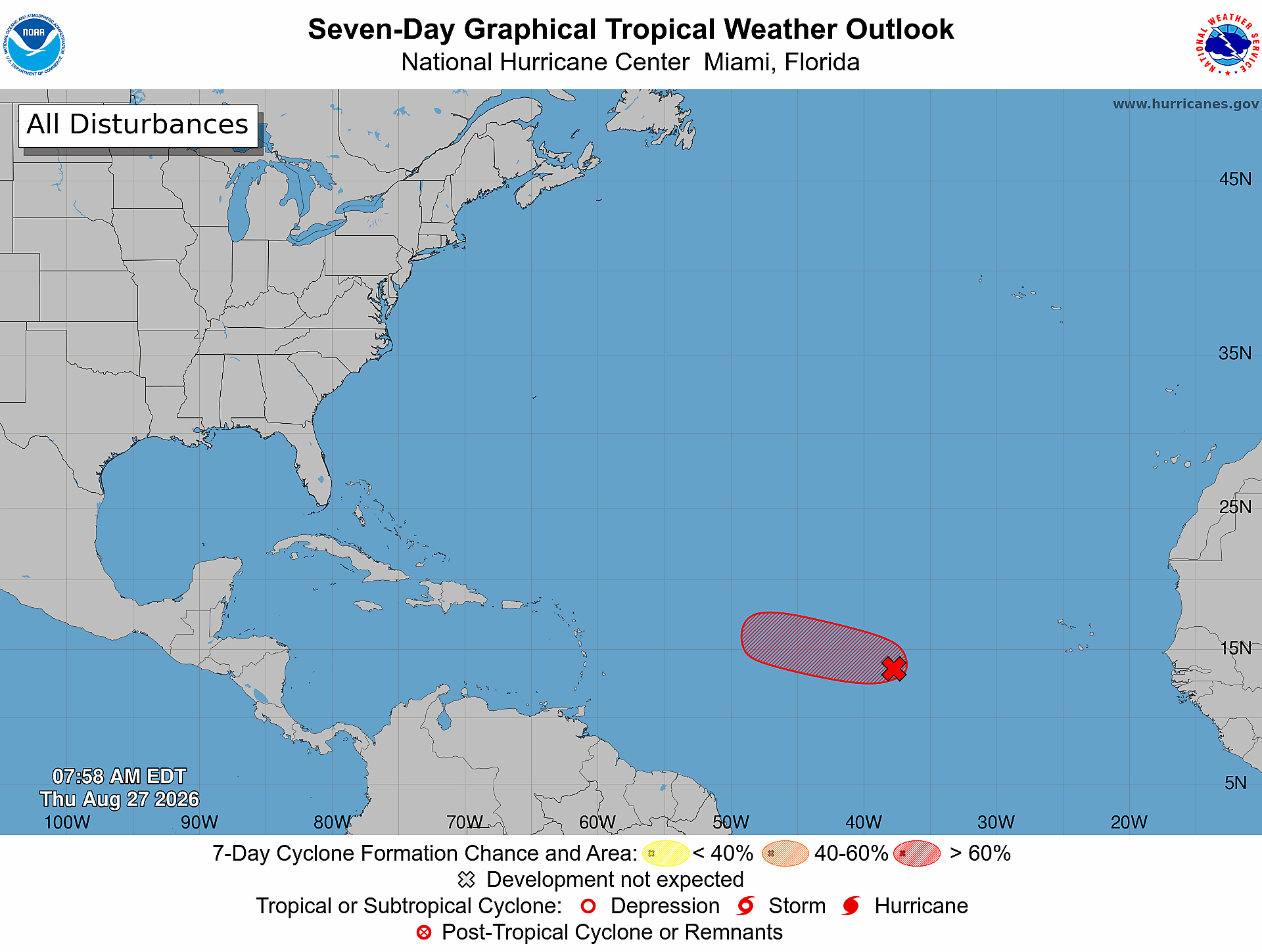
    The National Hurricane Center (NHC) has sharply upgraded its probability forecast for tropical cyclone development in a low-pressure zone spanning the central tropical Atlantic, now putting the likelihood of formation at 90% across both the 48-hour and seven-day forecasting windows.

    Designated as System AL96, the weather disturbance has shown clear signs of increasing organization through overnight hours, according to readings collected from satellite and microwave imaging. As of the latest update, the system is currently tracking roughly midway between the western African coastline and the Windward Islands.

    Forecasters at the NHC note that if the current trend of gradual strengthening continues, official storm advisories will likely be issued for what would become a short-lived tropical storm as early as later this Thursday. That said, the favorable conditions allowing the system to organize are not expected to persist. Starting Friday, atmospheric and oceanic environmental conditions are projected to turn increasingly hostile for cyclone development, a shift that is expected to halt any further strengthening of the system and likely end its development cycle entirely.

    In the wake of the upgraded forecast, local authorities and the NHC have issued a reminder to residents across Antigua and Barbuda, as well as communities across the broader Caribbean region, to remain alert and continue tracking official updates for any changes to the system’s track and intensity over the coming days.

  • New Policy Will Allow Customers to Connect Batteries to APUA Grid

    New Policy Will Allow Customers to Connect Batteries to APUA Grid

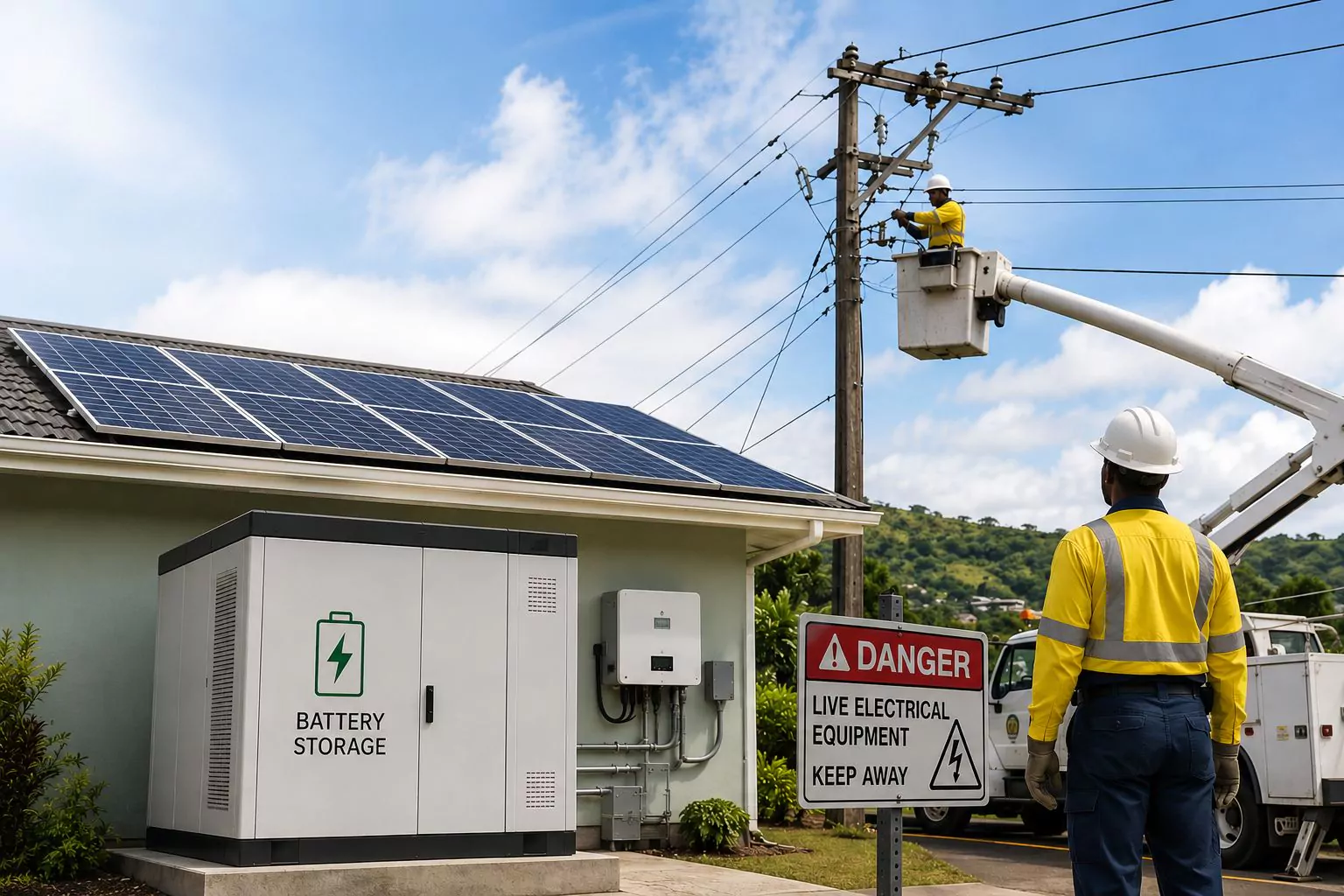
    As the Caribbean nation continues to expand its adoption of residential and commercial rooftop solar energy, the Antigua Public Utilities Authority (APUA) is moving quickly to finalize a groundbreaking regulatory framework for battery storage integration with the national power grid. Andre Matthias, the head of APUA’s Electricity Business Unit, confirmed that the new policy is on track to be wrapped up in the coming weeks, with a focus on establishing clear mandatory technical and safety protocols that govern how energy storage batteries connect to the existing distribution network.

    For months, solar-powered home and business owners across Antigua have pushed for regulatory changes that would classify battery storage systems the same as traditional standby generators. Under that proposed classification, battery owners would be able to use their stored energy to maintain power supply during widespread or local grid outages, a benefit many see as critical to increasing the value of their solar investments.

    However, APUA has highlighted a unique and underdiscussed safety hazard that comes with grid-connected battery storage, distinguishing it from conventional backup generator setups. Matthias explained that unlike fossil fuel-powered generators that produce audible noise when operating, battery systems run completely silently. This creates a dangerous risk for frontline utility maintenance workers: a connected battery could continue injecting electricity into a section of the grid that linesmen have been told is fully de-energized for repair work. In such scenarios, the invisible live power can cause severe electric shock, leading to serious injury or even fatal outcomes.

    The push for battery storage regulation comes more than a decade after APUA first opened the door to distributed solar generation. In 2011, the authority launched its first grid interconnection policy alongside a net-metering scheme, which let solar customers offset their overall electricity consumption by feeding excess power generated by their rooftop systems back into the grid. Years later, APUA transitioned from net-metering to a net billing model, a change that the agency justified by pointing to the hidden infrastructure costs associated with distributed energy, including ongoing grid maintenance, regular meter reading, and customer billing administration.

    According to APUA, the upcoming battery storage policy is designed to strike a careful balance between two competing priorities. On one hand, it aims to create a clear, structured pathway that supports continued growth of renewable energy adoption across Antigua, helping the country advance its climate and clean energy goals. On the other hand, the new rules will embed critical safety guardrails to protect utility workers from preventable workplace hazards and preserve the overall stability and reliability of the national electricity network.

  • Tridents suffer first CPL defeat of season

    Tridents suffer first CPL defeat of season

    The 2024 Republic Bank Caribbean Premier League (CPL) delivered a thrilling upset on Tuesday night at North Sound, Antigua, as the Antigua and Barbuda Falcons handed the previously unbeaten Barbados Tridents their first loss of the season by a 30-run margin. The dominant all-round performance from the Falcons pushed them back to the top of the tournament’s points table, with pace bowler Joshua James earning Player of the Match honors for his stellar spell of three wickets for just 18 runs, while all-rounder Moeen Ali anchored the Falcons’ batting innings with an unbeaten half-century.

    Barbados Tridents skipper Chris Green won the toss and elected to field first, a decision that put the Falcons under immediate pressure from the opening ball. Tridents fast bowler Daniel Sams clean-bowled star opener Rahkeem Cornwall with the very first delivery of the match, leaving the Falcons reeling early. By the end of the mandatory powerplay, the Falcons had only managed 40 runs for the loss of two wickets, putting their campaign on the back foot early.

    However, Moeen Ali stepped in to steady the innings with a clinical, power-packed knock. Playing 37 deliveries, Ali struck three boundaries and four towering sixes to finish not out on 56, dragging the Falcons to a competitive total of 155 runs for five wickets from their full 20-over allocation. Supporting contributions from opener Amir Jangoo (26 runs) and Karima Gore (27 runs) proved crucial in building the match-winning total after the rocky start. For the Tridents, Afghanistan spin star Mujeeb Ur Rahman was the most effective bowler, picking up two wickets for 32 runs, while Sams, Ramon Simmonds and Gudakesh Motie each claimed one wicket apiece.

    Chasing a target of 156, the Tridents got off to a promising start, reaching 45 runs for two wickets by the end of the powerplay. Replacement batter Shian Brathwaite, called into the squad to cover injured star Kadeem Alleyne, fell for seven runs, while top-order batter Zachary Carter contributed 17 runs to the early stand. The Tridents looked set at 54 for two in the eighth over, but a collapse changed the trajectory of the match. Wickets fell at consistent intervals, and the Tridents slumped to 95 for seven by the middle of the 14th over.

    The Falcons’ bowling attack delivered a clinical finish to wrap up the victory. The Tridents were bowled out for 125 runs in 18 overs, with Rivaldo Clarke top-scoring for the side with 27 runs off 26 balls, and Kevlon Anderson adding 22 runs to the total. Beyond James’ match-winning three-wicket haul, Alzarri Joseph took two wickets for just 12 runs, Shadab Khan claimed two for 23, and Sufiyan Muqeem picked up two for 36, capping a dominant all-round bowling performance from the Falcons.

    In his post-match remarks, Tridents captain Chris Green reflected that his side had played solid cricket for much of the contest before losing momentum. He highlighted the promising partnership between young batters Clarke and Anderson, which he said had given the Tridents a strong platform to chase the target. According to Green, a controversial caught dismissal proved to be the turning point that shifted momentum entirely to the Falcons. “For us it just felt like we panicked a little bit and that gave the game away,” Green said.

    The result ended the Tridents’ perfect start to the season, which had seen them claim back-to-back wins in their opening two matches. Green emphasized that the side would take the loss as a learning experience rather than letting the defeat derail their campaign. “In T20 cricket you’re going to play good games, you’re gonna play bad games. Sometimes you win those bad games, sometimes you lose those good games. It’s a matter of fine margins,” he noted.

    With three matches completed and seven remaining in the group stage, Green maintains his side remains in a strong position to advance. “We’re still in a really good position, but I think your key word there is learning, and we are a young side and we’ve got to keep learning,” he added.

  • Gajadien: Belastingheffing mag economische groei niet afremmen

    Gajadien: Belastingheffing mag economische groei niet afremmen

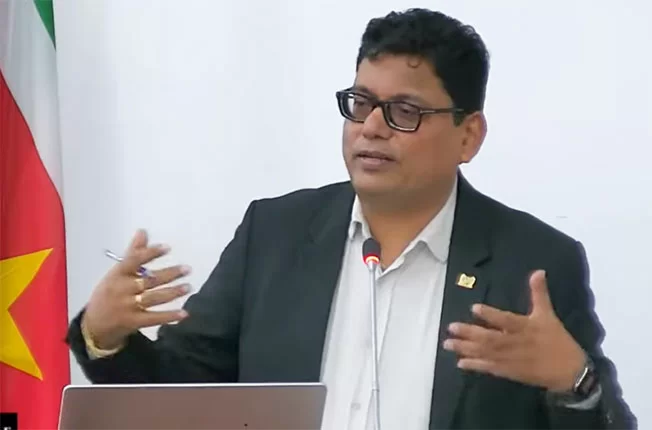
    As Suriname moves forward with plans to modernize its national tax system, the leader of the country’s ruling VHP party has laid out a clear set of principles to guide reform, warning against prioritizing short-term state revenue gains over long-term economic growth and private sector competitiveness. Asis Gajadien, who also serves on the parliamentary committee of rapporteurs for the proposed General Tax Law (Algemene Wet Belastingen, AWB), made the remarks during plenary debate on the bill in Suriname’s National Assembly, with the imminent expansion of the country’s nascent oil and gas sector forming the core backdrop for his arguments.

    Gajadien emphasized that while tax reform to update the country’s revenue framework is a necessary step for long-term governance, policymakers must strike a careful balance between meeting the state’s pressing revenue needs and preserving the private sector’s capacity to invest, grow and compete. He expressed full support for building a modern, effective tax authority capable of cracking down on tax evasion and improving compliance, but pushed back against the idea that tax policy should only be evaluated by how much revenue it delivers to the state in the near term.

    Tax revenue is the critical foundation for funding core public services from education and healthcare to infrastructure, public safety and social welfare, Gajadien noted. But all public revenue is ultimately drawn from the same economy that needs sustained growth to thrive. Any capital extracted from businesses through taxation cannot be used for expansion, inventory, workforce development or new growth-driving investments, he explained. When businesses are forced to borrow at high interest rates to cover operating costs after heavy tax burdens, this raises their overall costs and erodes their ability to compete in both domestic and international markets.

    For Gajadien, the central question guiding reform should not be how much revenue the state can collect in the short term, but rather how much tax can be levied sustainably without weakening the economic base that will generate future tax revenue. This framing is particularly urgent as Suriname prepares to scale up oil and gas production, he argued. Policymakers must look beyond the direct revenue the state will gain from the new sector and focus on how much economic activity from oil and gas development stays within Suriname, and what opportunities can be captured by local enterprises.

    Local Surinamese firms looking to secure contracts in the emerging offshore oil and gas sector face major upfront costs: they must invest heavily in new equipment, train workforces, obtain international certifications, and often pre-finance projects for months at a time. If local firms are forced to borrow at high interest rates while seeing their working capital eroded by heavy taxation, while foreign competitors have access to far cheaper financing, it creates an unfair playing field that undermines Suriname’s goals for increasing local content in the oil and gas sector, Gajadien explained. Tax policy must therefore be aligned with the country’s local content ambitions, he added.

    Gajadien also warned that upcoming oil and gas revenue should not become an excuse to neglect other key economic sectors, including agriculture, tourism, manufacturing, technology and services. Oil and gas are finite resources, he noted, so sustained long-term economic growth depends on building a diversified, resilient domestic economy.

    Turning to tax incentives designed to attract investment, Gajadien said he does not rule out policy tools such as investment deductions, accelerated depreciation or temporary tax breaks, but argued any incentives must be tied to verifiable, tangible public benefits. When the state forgoes tax revenue to attract investment, it must be clear how much actual capital will be invested, how many sustainable jobs will be created, how much local enterprises will benefit, and what new skills and knowledge will be transferred to the domestic economy. Policymakers must also assess whether any tax break is actually necessary to secure an investment, to avoid giving up public revenue to companies that would have invested in Suriname even without the incentive, he added.

    Beyond economic impacts, Gajadien also addressed the expanded powers the new tax system would grant to Suriname’s tax authority. He supports efforts to improve tax compliance, digitalization and data sharing, but said these expanded powers must be paired with clear safeguards for taxpayers. Key priorities include strong privacy and data protection, accessible avenues for appeal and objection, clear information requirements, and proportional penalty frameworks. Gajadien stressed that there must be a clear distinction between accidental administrative errors and deliberate fraud or tax evasion, and any heavy penalties must be clearly motivated by specific evidence and allegations. Any provisions allowing the tax authority to reach compromise agreements with taxpayers must also be bound by transparent criteria to prevent arbitrary treatment and unfair discrimination, he added.

    Gajadien also raised questions about the tax authority’s current implementation capacity. A modern tax law can only function effectively if the tax authority has enough qualified staff, specialized expertise and reliable digital ICT systems, he argued, a requirement that becomes even more critical as Suriname’s oil and gas sector expands. The tax authority will soon need to manage complex interactions with multinational corporations, cross-border transactions, sophisticated financing structures and related-party transactions, he noted. A lack of sufficient expertise not only risks the state losing out on rightful tax revenue, but can also lead to incorrect tax assessments for businesses, triggering lengthy and costly appeal processes that harm economic activity. Gajadien called on the government to provide clear information about the current state of staff expertise, training programs for tax officials, digital infrastructure, data security protocols and appeal processing capacity.

    The VHP leader also noted that the AWB cannot be implemented in isolation, and must be fully aligned with other related legislation including the collection law, introduction law and tax dispute regulation. Policymakers must avoid a scenario where the tax authority receives new expanded powers before key components of legal protection for taxpayers, implementation rules and digital infrastructure are fully in place, he said.

    To address this risk, Gajadien said he is open to a phased rollout or a transitional implementation period for the new tax framework. For him, modernizing the tax system is an urgent and necessary goal, but the final reform must achieve balance between effective revenue collection, sustainable economic growth and protection for taxpayers’ rights. He warned against rushing full implementation before all supporting systems are ready, framing a phased approach not as unnecessary delay, but as a responsible measure to avoid putting a law into effect that the government itself is not yet prepared to implement properly. Debate on the draft tax law is set to continue on the same day in the National Assembly.

  • APUA Pauses Disconnections While Disputed Bills Are Investigated

    APUA Pauses Disconnections While Disputed Bills Are Investigated

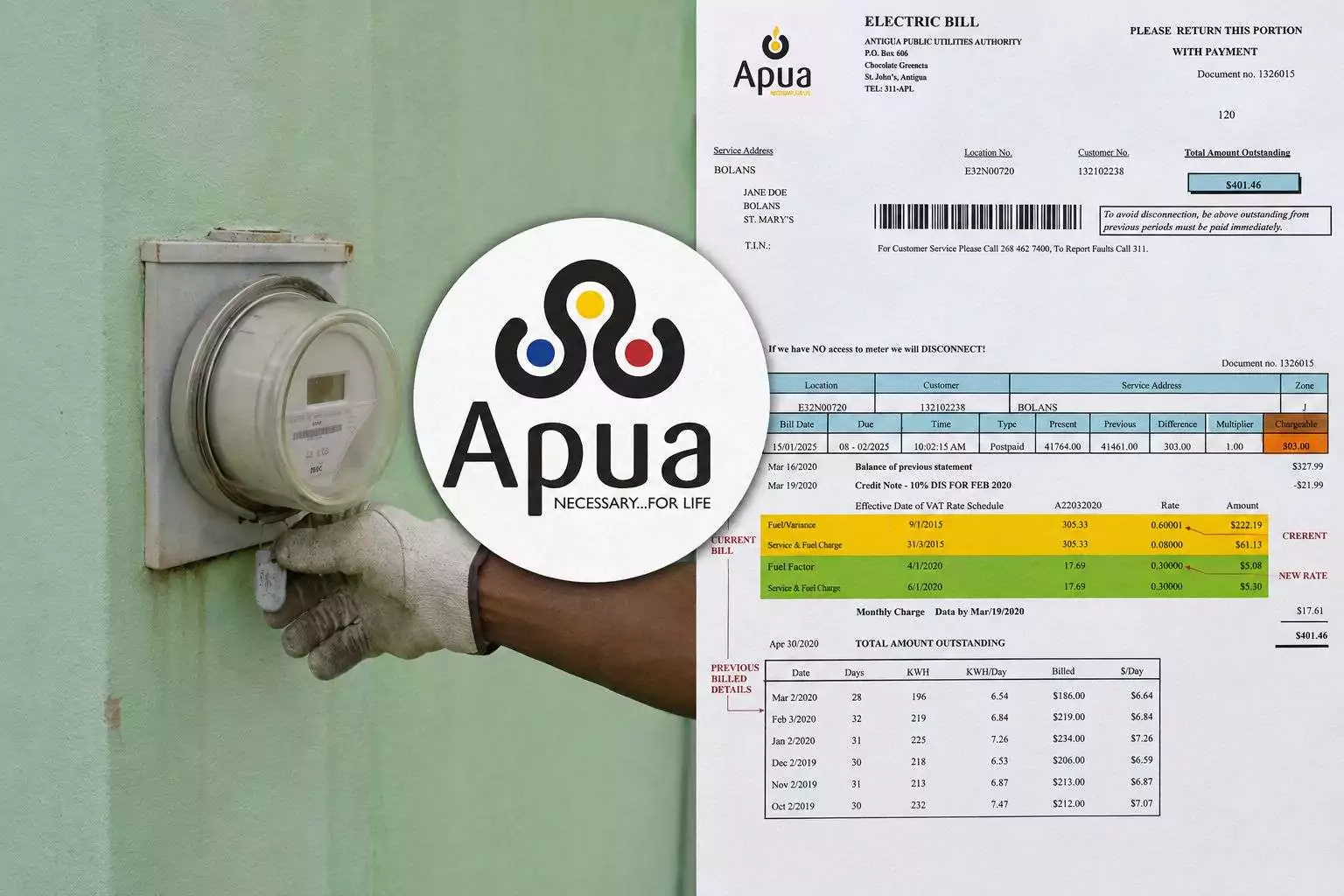
    The Antigua Public Utilities Authority (APUA) has implemented a new customer protection policy that pauses service disconnections for users disputing the accuracy of their utility bills, for the full duration of official investigations into the complaints.

    The regulatory body has outlined a clear process for customers who suspect errors in their monthly statements: users must first file an official complaint in person at any APUA customer service center. Once a complaint is registered, authority teams will conduct a full review that includes cross-checking recorded meter readings against actual usage data, analyzing historical consumption patterns to spot irregularities, and determining whether a billing adjustment is justified. Throughout this verification process, no disconnection action will be taken against the customer for the portion of the bill under dispute.

    Beyond protections for disputing customers, APUA has also issued a proactive appeal to residents facing financial hardship, urging them to reach out to the authority’s Credit Control Department early, before unpaid balances grow to unmanageable levels.

    Roger Tong, APUA’s Chief Operating Officer and Acting Chief Executive Officer, emphasized that the organization’s core mandate is centered on keeping essential services accessible to all Antiguan residents, rather than cutting off access for struggling households. “We don’t turn anybody away, and the intention is not to have anybody sleep without electricity or not have water,” Tong stated in an official comment.

    Tong added that any customized payment arrangements worked out between the authority and customers will be tailored to individual financial circumstances, requiring only realistic payment schedules that align with what each household can reasonably afford.

    While APUA confirmed that its standard disconnection program for overdue accounts has resumed following any prior suspension, officials stressed that customers who proactively communicate their circumstances with the authority will qualify for tailored assistance. The organization did issue a warning, however: failing to address outstanding bills and allowing arrears to accumulate over time will only make it far more difficult to negotiate a manageable payment solution that avoids disconnection.

  • APUA Plans US$25 Million Smart Metering System

    APUA Plans US$25 Million Smart Metering System

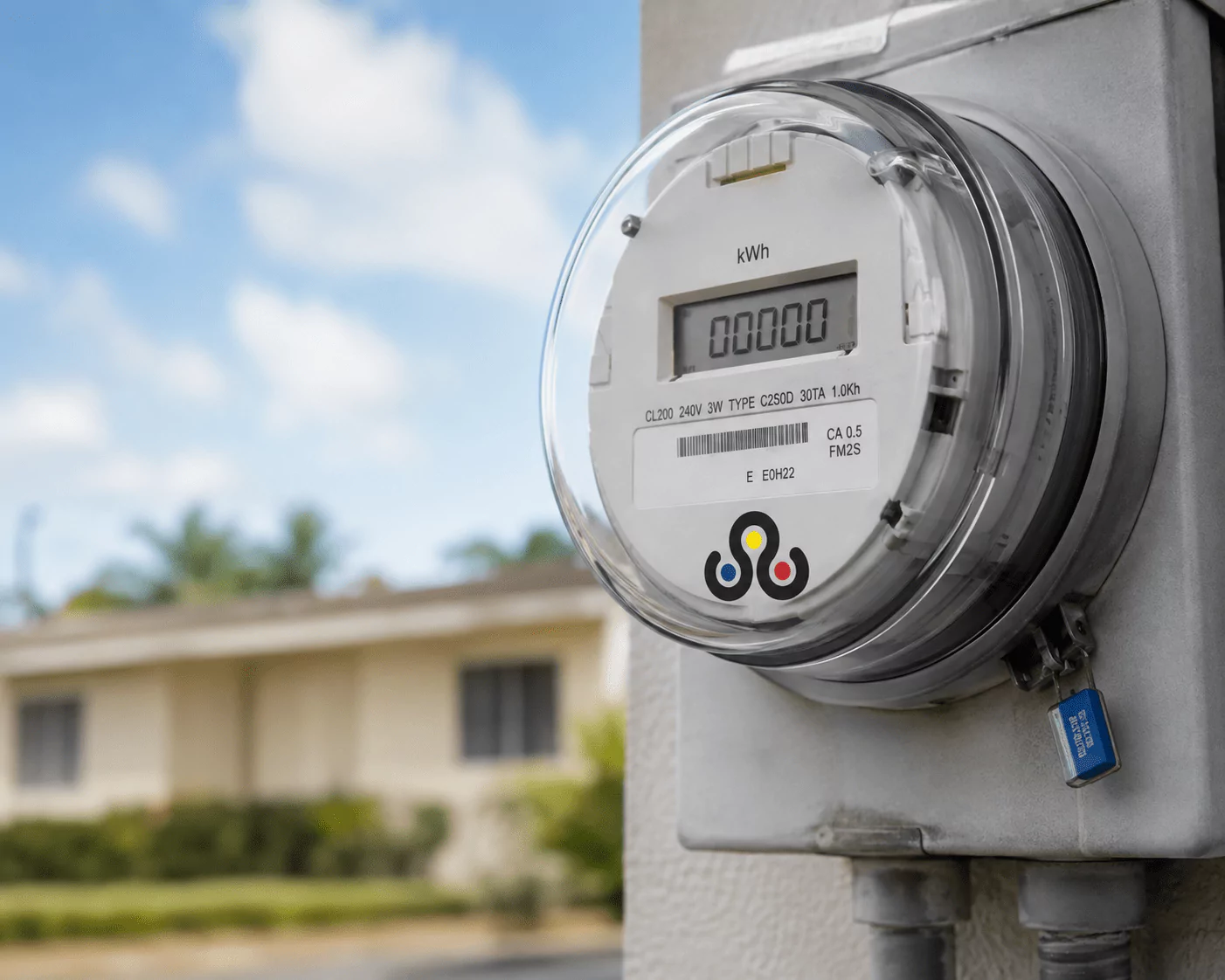
    Antigua’s primary public utilities provider is moving forward with a transformative $25 million investment in cutting-edge automated metering infrastructure (AMI), a upgrade designed to resolve longstanding billing inaccuracies, empower customers with real-time consumption data, and streamline on-site operations for staff. The Antigua Public Utilities Authority (APUA) has already initiated orders for automated water metering units, and is currently finalizing funding arrangements to roll out the same technology for electricity meters across the island, according to Acting Chief Executive Officer Roger Tong.

    Following successful small-scale pilot tests to validate the technology’s performance, APUA is preparing to scale up the deployment of the new system over the coming months. Unlike traditional manual metering that requires trained staff to visit residential and commercial properties to collect usage data, the AMI system automatically transmits real-time consumption readings directly to a centralized cloud server, which then generates accurate customer bills with no manual intervention.

    “Once the AMI network is fully operational, meter readers will no longer need to travel across the island to access individual properties to collect readings,” Tong explained in a recent press briefing. “Every usage reading is sent automatically to our central server, and bills are generated directly from that authenticated data.”

    Andre Mathias, APUA’s Electricity Business Unit Manager, hailed the modernization project as a transformative shift for both the authority and its 100,000+ residential and commercial customers across Antigua. For end users, the system unlocks unprecedented visibility into energy and water usage: electricity customers will be able to track their consumption on an hourly basis, allowing them to identify peak usage periods, adjust their habits to cut waste, and lower monthly utility costs. Water customers will also receive far more frequent, accurate usage updates than the current manual system allows.

    Beyond customer empowerment, the AMI system delivers major operational benefits for APUA. The technology enables the authority to continuously monitor grid voltage levels, detect unauthorized meter tampering in real time, and quickly pinpoint the exact locations of power outages to speed up restoration work. If any individual attempts to alter or interfere with a metering unit, APUA’s central operations team will receive an immediate alert, Mathias noted.

    The system also supports remote disconnection and reconnection of utility services, a change that eliminates the need for staff to travel to properties for these service changes. Mathias emphasized that the authority will never implement remote service changes without prior notification to affected customers, saying “We wouldn’t be so irresponsible to disconnect and reconnect without advising the customer.”

    Tong added that the automated system will eliminate a wide range of errors that have plagued the current manual setup, including inaccuracies from aging faulty mechanical meters, typos from manual data entry, and billing inconsistencies caused by delayed readings. The new system will also resolve recurring issues where meter readers cannot access properties due to locked gates, aggressive dogs, overgrown vegetation, or other access barriers.

    APUA has long acknowledged that delayed readings often lead to customers receiving bills that cover longer than the standard billing cycle, creating unexpected high monthly charges that strain household budgets. Currently, the authority addresses this issue by adjusting the next billing cycle to be shorter to balance out the total usage, but Tong says the AMI system will eliminate this inconvenience entirely. Moving forward, APUA also plans to proactively notify customers whenever readings are delayed during the transition period, and clearly explain the cause of any scheduling disruptions.

    Mathias said APUA targets to launch large-scale deployment of the new automated meters either in the latter half of 2024 or early 2025, depending on funding and supply chain timelines. Tong noted that the $25 million price tag reflects the massive scope of the full-network upgrade, calling it a serious, long-term investment that will improve utility services for all Antiguans for decades to come.

  • Tropical Depression or Storm Could Form Today as AL96 Becomes Better Organized

    Tropical Depression or Storm Could Form Today as AL96 Becomes Better Organized

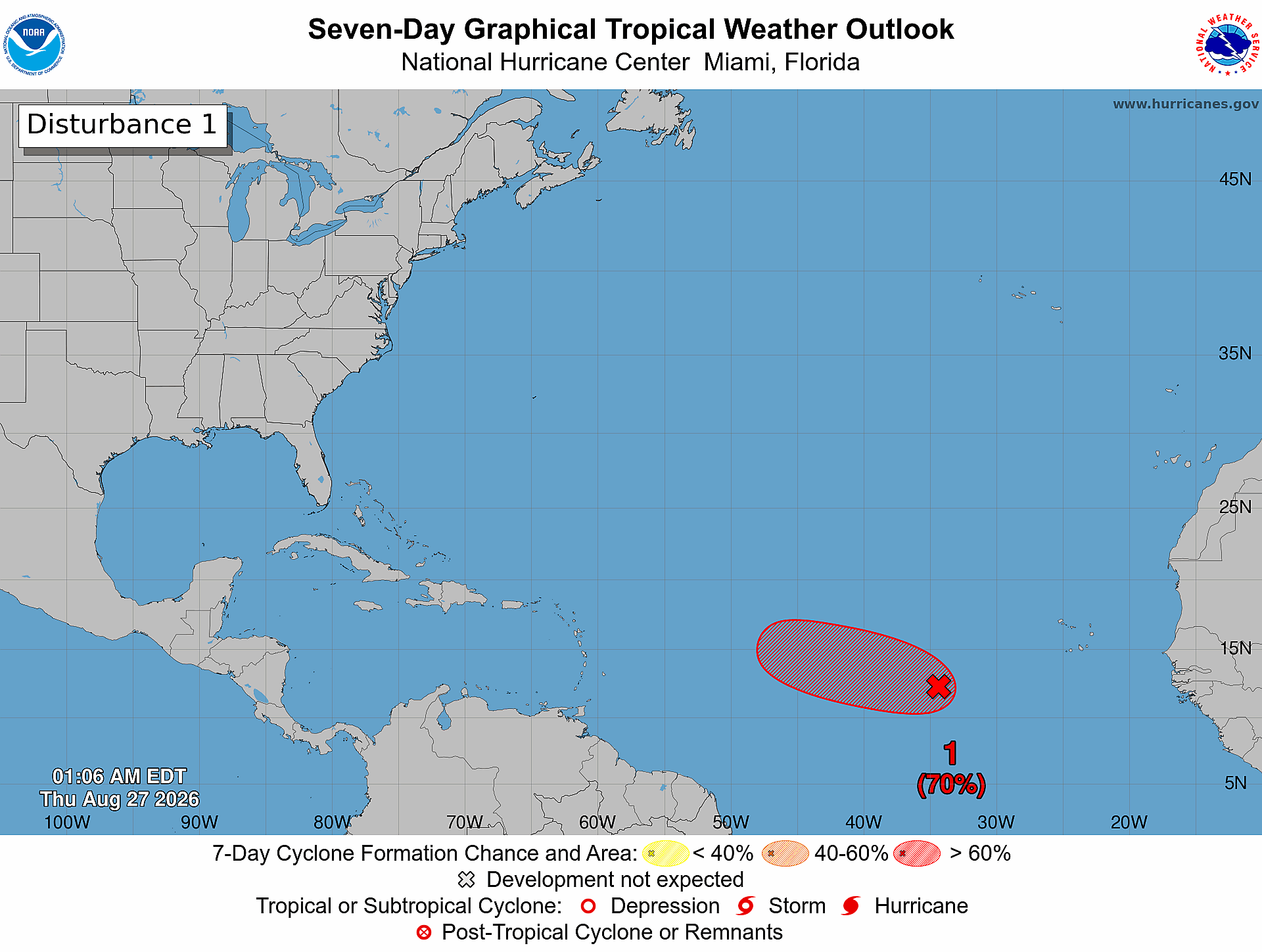
    A nascent low-pressure disturbance churning in the Atlantic Ocean, positioned west-southwest of the Cabo Verde Islands, is on track to potentially strengthen into a short-lived tropical depression or named tropical storm by the end of Thursday, U.S. weather forecasters have announced.

    As of 2 a.m. local time on August 27, latest satellite data reveals that the disorganized clusters of showers and thunderstorms tied to the system, officially labeled AL96 by meteorological authorities, have grown increasingly structured and consolidated over the course of the overnight period. This steady trend toward organization has put the system on track for potential tropical cyclone development in the coming hours.

    If the current pace of organization holds, official weather advisories for the developing system will be issued later Thursday to keep coastal interests and ocean users updated on its progress. Forecasters assign a 70% probability of cyclonic formation both within the next 48 hours and across the coming seven-day outlook window.

    Despite the high odds of short-term development, the long-term outlook for the system is limited by unfavorable atmospheric and oceanic conditions. Starting Friday, environmental factors including increasing wind shear and cooler sea surface temperatures are expected to turn hostile, halting any further strengthening and likely leading to the system’s quick dissipation. This means any tropical cyclone that forms will likely be short-lived, with little chance of prolonged intensification as it moves across the eastern Atlantic.