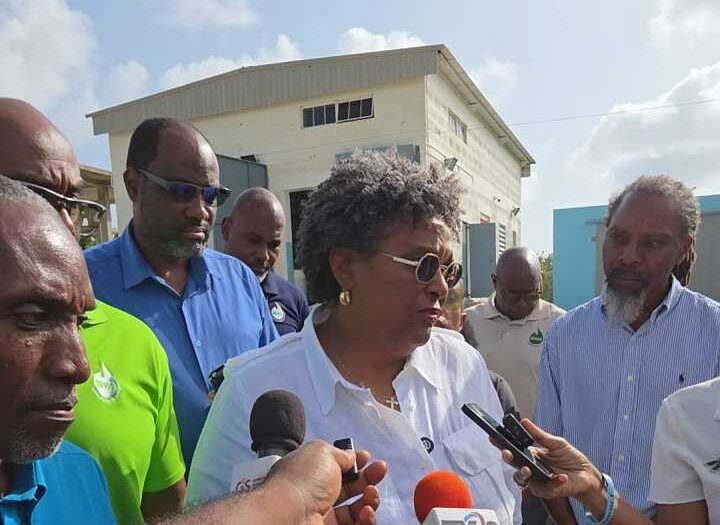
In the aftermath of two devastating back-to-back earthquakes that claimed more than 6,500 lives in Venezuela, Barbados’ deployed emergency medical contingent has delivered critical care to over 2,700 affected people and completed 74 surgical procedures since launching operations in July, Barbadian Prime Minister Mia Mottley has confirmed. Speaking to reporters immediately after concluding an official visit to the disaster-hit South American nation, Mottley shared first-hand observations of the widespread destruction and the profound toll the catastrophe has inflicted on local communities. Mottley emphasized that the scale of human tragedy left by the earthquakes is almost impossible to fully grasp, as thousands of families were robbed of their homes, livelihoods, and sense of safety in a matter of moments. “It is tragic to see the scope of loss,” Mottley stated. “I do not think any of us can truly understand what it means to live with this uncertainty: not knowing exactly how many lives were lost, how many families have been impacted either by death or by losing everything — their shelter, all their possessions, and being forced to relocate to temporary camps.”
This humanitarian deployment marks the latest in a series of regional disaster relief efforts led by Barbados, which previously sent emergency aid to Jamaica in the wake of Hurricane Melissa. The current mission integrates the logistical and operational capabilities of the Barbados Defence Force with clinical expertise from Queen Elizabeth Hospital staff and independent medical volunteers. To overcome on-the-ground challenges — most notably language barriers between the visiting medical team and local patients — the Barbadian contingent integrated Venezuelan local volunteers into their operations, who supported patient care and communication across affected zones.
“I am proud that Barbados has been able to step up and contribute meaningfully to this relief effort,” Mottley said, as she broke down the structure of the deployment. “It is a collaborative effort between our defense force, our main public hospital, and medical volunteers from both the public and private sectors. In Venezuela’s case, given the context of the disaster, many local Venezuelan nationals also stepped forward to volunteer, largely to help bridge language gaps, and because they could see the tangible difference our team was making on the ground.”
Operating out of a purpose-built field hospital starting from the third week of July, the medical team has managed a heavy caseload while working under challenging post-disaster conditions. Of the 74 completed surgeries, five were specialized oral procedures, with the remainder ranging from minor to major general surgeries. “Our team on the ground has seen more than 2,700 patients since becoming operational in July, and completed those 74 procedures,” Mottley noted. “It is incredible to see the tangible difference we have been able to make in the lives of people who have lost so much.”
Mottley pushed back against common assumptions that large nations do not need outside support, noting that even the largest countries can see local response capacity overwhelmed when catastrophic disasters strike. “When we look at Venezuela, we see a large country, but we do not always see that even large countries face localized challenges and gaps after a disaster,” she explained. Beyond the immediate emergency work, Barbados’ field hospital will remain operational in Venezuela until early October, adding sustained capacity alongside broader recovery efforts led by the Regional Security System and the Caribbean Community (CARICOM).
The prime minister also recognized key leaders and specialists who contributed to the mission, including Barbados Defence Force command, and a team of medical professionals led by Senior Minister Dr. William Duguid — a dentist who spent one week on the ground providing specialized dental care to local residents.
Beyond emergency humanitarian relief, Mottley’s visit also marked a key milestone in strengthening bilateral relations between Bridgetown and Caracas. Building on preliminary discussions held in Barbados during late April with Venezuelan President Delcy Rodríguez, Mottley confirmed that in-person talks during her visit led to the signing of a new joint declaration outlining areas of future cooperation. A Venezuelan official delegation is scheduled to travel to Barbados by mid-September to formalize a series of regional cooperation agreements. The upcoming negotiations will focus on four core areas of mutual benefit: food security, tourism development, expanded international transport links, and joint energy initiatives designed to strengthen the economies of both nations.
Closing out her briefing, Mottley reflected on the inherent fragility of human life when faced with extreme natural events, and issued a call for Barbadians to maintain ongoing empathy and support for Venezuelan communities still navigating the long aftermath of the earthquakes. “I feel truly proud of what our team has accomplished, but at the same time, I cannot help but reflect on just how fragile life is,” Mottley said. “No one could have predicted two massive back-to-back earthquakes that would take thousands of lives in an instant, and displace tens of thousands more, robbing them of their livelihoods, their homes, and all their possessions.”