博客

  • UPP’s Cabral Douglas calls on Dominicans to check in on family and friends following tragic death

    UPP’s Cabral Douglas calls on Dominicans to check in on family and friends following tragic death

    The small community of Dominica is grappling with an unexpected tragedy that has prompted a leading political party to issue a heartfelt reminder about the importance of mental and emotional support for those around us. On July 5, 2026, the lifeless body of 35-year-old Maradona Melvon Bruno, a resident of Savanne Paille, was found inside his home located in the Lagoon neighborhood of Portsmouth.

    In the wake of this devastating loss, the United Progressive Party (UPP) has publicly extended its deepest condolences to Bruno’s family, friends and loved ones. Speaking in an official statement on the party’s behalf, UPP International Secretary Cabral Douglas shared his sympathy for all those impacted by the passing, while urging Dominican communities across the country to turn this tragedy into a catalyst for greater care and connection.

    In a moving address, Douglas emphasized, “I would like to extend a special gesture of solidarity to his family, his daughters, and his parents. We want you to know that you carry the full support of this community and the Dominican people. This moment should also be a chance for all of us to reflect on what it means to show up for the people around us.”

    Douglas went on to note that small acts of kindness can carry enormous weight for people fighting internal battles. “Sometimes somebody needs a hug, sometimes somebody needs a quick phone call, and sometimes all they need is just a simple acknowledgement that they exist to feel loved, a sense of belonging, and respect,” he explained.

    Remembering Bruno, Douglas described him as a young, ambitious and talented individual who still had his entire life ahead of him. He added that the tragedy has exposed a quiet truth many people overlook: even as Bruno interacted with his community daily, he was quietly struggling with deep loneliness.

    “You can look at a man’s face, but you can never see what lives in his heart,” Douglas said of the painful loss. He framed the incident as a critical “wake-up call” for people across the country to prioritize checking in with the people in their lives, rather than assuming everything is fine based on outward appearances.

    “Sometimes all it takes is reaching out and asking: Is everything alright? How are you really doing today? Can I help you with anything?” he said. “Deep feelings of negativity, insecurity and inner pain can fade when people have a strong support network to lean on. What many people don’t realize is that those struggling don’t always cry out for help — it can be anyone, even the person who seems fine on the surface.”

    Douglas closed his statement by reinforcing that this tragedy serves as a universal reminder: anyone can be fighting inner battles, even when there are no obvious outward signs of struggle. He encouraged all members of the public to carve out time to check in on family members, friends, and neighbors in their local communities.

  • President Ali announces diaspora initiative at Saint Lucia town hall meeting

    President Ali announces diaspora initiative at Saint Lucia town hall meeting

    Against the backdrop of the 51st CARICOM Heads of Government Meeting concluding in Saint Lucia on Wednesday, Guyanese President Irfaan Ali has announced a groundbreaking initiative to bring critical government services directly to the country’s large global diaspora population. Speaking at a diaspora-focused town hall hosted by the Guyana/Saint Lucia Association at Castries’ Financial Administrative Centre on Tuesday, President Ali outlined plans for mobile government service centres that will travel to nations with significant Guyanese expatriate communities.

    Under the proposed framework, the mobile service units will conduct annual visits to each priority country in the initial phase of the rollout, streamlining access to a full suite of essential public documents and services. From National Insurance Scheme (NIS) processing to birth certificate issuance and replacement of lost official documentation, all core administrative needs will be handled on-site by a single integrated government team.

    President Ali emphasized that the new outreach program will work in tandem with Guyana’s ongoing national digital transformation push, which has already overhauled domestic public service delivery. By bringing agency representatives directly to where overseas Guyanese reside, the initiative eliminates long-standing barriers that have forced many expatriates to navigate complex, distant administrative processes.

    In a key expansion of the plan, President Ali also confirmed that specialized mobile teams will soon begin offering biometric passport services to Guyanese living abroad. This addition will drastically cut the need for citizens to make costly, time-consuming trips back to Guyana solely to complete mandatory passport processing requirements.

    The President was joined at the town hall by a full senior delegation, including Foreign Affairs and International Cooperation Minister Hugh Todd, Public Service, Government Efficiency and Implementation Minister Zulfikar Ally, and National Security Advisor Gerry Gouveia. Beyond the new mobile service announcement, the team used the gathering to outline the government’s ongoing work across key domestic sectors including infrastructure, public healthcare, education, affordable housing, technology and digital modernization.

    Attendees were given the opportunity to share their priorities, submit contact details and flag specific concerns requiring government attention. All submitted information will be added to a centralized database to allow officials to begin processing requests promptly, ensuring no diaspora voice goes unaddressed.

    President Ali used his address to issue an open invitation to Guyanese expatriates: he encouraged those interested to return to their home country, invest with confidence in Guyana’s growing economy, and take an active role in advancing the nation’s ongoing development agenda.

    The event concluded with an interactive open question-and-answer session, which gave diaspora members direct access to the President and his delegation to raise personal and community-specific issues. Richard Cheong, Guyana’s Honorary Consul to Saint Lucia, opened the gathering by welcoming all attendees, while David Christopher, Public Relations Officer of the Guyana/Saint Lucia Association, closed formal proceedings by thanking the presidential delegation for prioritizing engagement with the local Guyanese community. Christopher reaffirmed the association’s long-standing commitment to deepening bonds between the diaspora and Guyana through expanded investment, trade, educational collaboration and cultural exchange programs.

  • Trinidad to provide ferry to temporarily move goods between countries

    Trinidad to provide ferry to temporarily move goods between countries

    Against a backdrop of growing regional efforts to cut trade costs and deepen economic integration, the 15-nation Caribbean Community (Caricom) has secured a temporary solution to advance its long-planned affordable intra-regional ferry service, with Trinidad and Tobago agreeing to deploy one of its existing vessels for cargo transport across member states. The agreement emerged from the 51st Caricom summit, a four-day gathering that wrapped up this week where regional leaders prioritized boosting connectivity, strengthening food security, and advancing the goals of the Caricom Single Market and Economy (CSME), the bloc’s framework for free movement of goods, labor, skills and services across the region.

    St. Lucia Prime Minister Phillip J Pierre, who currently holds the Caricom grouping’s chairmanship, outlined key takeaways from the summit at a post-meeting press conference Wednesday. He confirmed that leaders had agreed to accelerate work on the permanent ferry initiative, noting that a reliable, low-cost intra-regional ferry connection would not only ease cross-border travel for residents but also streamline trade flows and shore up regional food security by making it easier to move agricultural and essential goods between islands. Pierre added that the summit also delivered further progress on expanding the free movement of Caricom nationals across the bloc, with more member states moving toward full participation in the policy.

    Barbados Prime Minister Mia Mottley, who leads CSME coordination in Caricom’s quasi-cabinet structure, explained that the temporary ferry arrangement comes as the region grapples with volatile global oil prices driven largely by ongoing Middle East conflicts, a key factor pushing up regional cost of living. Lower-cost intra-regional transport is seen as a critical lever to bring down prices of essential goods across Caribbean island nations. Mottley shared that Trinidad and Tobago Prime Minister Kamla Persad-Bissessar has offered one of the country’s five active ferries for the temporary pilot, which will run while the regional private sector works to acquire a permanent purpose-built vessel, a process expected to take roughly 12 months.

    The pilot program, which will serve as a proof of concept for the full permanent service, will initially focus on ports across the southern and eastern Caribbean. Mottley noted that the program first requires assessments of existing port infrastructure, including whether existing ramps can accommodate the ferry or if upgrades are needed. In the coming weeks, Mottley plans to hold tripartite talks with Persad-Bissessar and St. Vincent and the Grenadines Prime Minister Dr. Godwin Friday to work out logistics for utilizing the Trinidadian ferry during the pilot phase.

    Beyond vessel logistics, Mottley is leading work to put in place the required regulatory framework for cross-border cargo movement. She is coordinating with fellow regional leaders to draft cross-border agreements for mutual recognition of vehicle operating licenses and insurance coverage, which will allow cargo trucks to travel seamlessly off the ferry and into destination member states. Mottley has set an ambitious target to finalize and put these regulations into effect within three months.

    Private sector stakeholders have been deeply involved in advancing the initiative, and expressed confidence that the project will deliver tangible results in the near term. Dr. Patrick Antoine, chief executive and technical director of the Caricom Private Sector Organisation (CPSO) Secretariat, told Caribbean Media Corporation (CMC) earlier this week that Mottley and Friday have already held two working sessions with private sector partners on the ferry plan in the past two weeks. Antoine pushed back against any suggestion that the project is an unrealistic proposal, emphasizing that the work is already well underway.

    Antoine explained that the initiative has hit delays in past years in part due to shifting election cycles across member states that disrupted planned ministerial-led working meetings, but he noted that momentum has now firmly shifted toward implementation. Three private firms have already completed preparatory work for the permanent service, he added, with two of the companies already securing preliminary financing contingent on the completion of the required cross-border regulatory protocols. Over the next three months, Antoine said, Barbados and Jamaica will take leading roles in advancing the operational details of the initiative, with the CPSO providing data, analysis and coordination between the regional government and the three private sector entities that will ultimately operate the full service.

    The temporary ferry pilot marks a key milestone for Caricom’s decades-long push toward deeper economic integration, with leaders and private sector stakeholders aligned on the need to deliver a functional low-cost service that addresses longstanding barriers to intra-regional trade and movement.

  • ‘We Will Survive’: Pierre responds to EU’s visa-free travel warning

    ‘We Will Survive’: Pierre responds to EU’s visa-free travel warning

    The 51st Heads of Government Meeting of the Caribbean Community (CARICOM) concluded without any formal discussion of regional Citizenship by Investment (CBI) programs, despite escalating tensions over a recent ultimatum from the European Commission targeting one of the bloc’s member states. The European Union’s executive arm recently issued a mandatory order to Antigua and Barbuda, demanding the Caribbean nation terminate its CBI initiative by June 2028. The Commission made clear that even if the program meets all proposed governance and security standards, the country will still face the consequence of losing visa-free access to the entire Schengen Area if it fails to comply.

    When pressed by journalists to address the EU’s stance on the sidelines of the summit, CARICOM Chairman and Prime Minister of Saint Lucia Philip J. Pierre confirmed that CBI never appeared on the official meeting agenda. He explained that the decision to exclude the issue from plenary discussions stemmed from the fact that CBI programs are not operated by every CARICOM member state. Only five Caribbean nations currently run CBI schemes: Antigua and Barbuda, Dominica, Grenada, Saint Lucia, and St Kitts and Nevis. Instead of bringing the topic to a full regional debate, these five countries have already formed a working group to coordinate their response to the concerns raised by the European Commission, Pierre said.

    As part of that coordinated effort, the CBI-operating states have worked diligently to align their programs with international best practices, and have fulfilled every compliance requirement requested by the EU to date, Pierre emphasized. However, he also offered a pragmatic assessment of the region’s position, acknowledging that Caribbean nations have limited leverage if the EU chooses to revise its immigration and visa policies unilaterally. “Regardless of what we do, if Europe does not want us to have a CIP programme, that’s what is going to happen. Each country has its own domestic policies,” he told reporters.

    Despite the uncertain outlook, Pierre struck a resolute tone, highlighting the Caribbean region’s long history of overcoming external economic and political shocks. He drew a parallel between the current CBI dispute and earlier challenges, when the Caribbean lost decades of preferential trade treatment for its banana and sugar exports on the European market. “We’ve been there before. We took all the steps as far as our bananas were concerned, and we still lost [preferential] treatment for our bananas… We’ve gone there before, and we’ve always survived. I’m sure we will continue to survive,” Pierre said. His remarks frame the current standoff as just the latest test of regional resilience, rather than an insurmountable crisis for the Caribbean’s CBI industry.

  • Education Ministry Launches 2026 School Uniform Grant Programme

    Education Ministry Launches 2026 School Uniform Grant Programme

    A new initiative aimed at removing financial barriers to equitable education access has been officially announced by Antigua’s Ministry of Education, Science and Technology. Set to roll out for the 2026 academic year, the 2026 School Uniform Grant Programme will deliver targeted financial support to qualifying households struggling to cover the cost of mandatory school uniforms for their children.

    The application window for the grant program is scheduled to open on July 13, 2026, and will remain open through a seven-week period ending on August 28 of the same year. All interested eligible applicants must submit their completed applications in person at the Antigua Multipurpose Center before the final deadline passes, with no late submissions expected to be accepted.

    In a formal statement accompanying the program announcement, ministry officials outlined the dual core goals driving the initiative. First, the program is designed to guarantee that every student across the nation can step into the new academic year with the required basic materials and proper attire. Second, it seeks to ease the growing financial strain that uniform costs place on low- and middle-income households ahead of each back-to-school season.

    “Every child deserves the opportunity to begin the school year with confidence,” the ministry’s statement read. “This initiative reflects our continued commitment to supporting families while investing in the education and future of our nation’s children.”

    Program administrators have reiterated that all eligible applicants should prioritize submitting their applications well in advance of the August 28 closing date to avoid any last-minute processing delays. For additional questions about eligibility requirements, required documentation, or application procedures, community members can contact program staff directly at 727-2427.

  • Haiti sends major medical mission to Venezuela

    Haiti sends major medical mission to Venezuela

    In an extraordinary display of cross-regional solidarity amid widespread global disaster response, Haiti — a small French-speaking Caribbean nation grappling with its own deep-seated economic and security challenges — has launched a dedicated humanitarian medical mission to support Venezuela in the wake of devastating twin earthquakes that struck the South American country on June 24.

    Led by Haiti’s Minister of Public Health and Population Dr. Sinal Bertrand, the 29-member team of specialized medical professionals touched down in Venezuela on Tuesday, accompanied by 5.5 metric tons of critically needed medical supplies to boost the country’s ongoing disaster relief and recovery operations. The June earthquakes have already left Venezuela reeling from an unprecedented humanitarian crisis: official government data confirms the disaster has claimed at least 3,685 lives, injured more than 16,700 people, and left thousands more unaccounted for across affected regions.

    The Haitian medical delegation brings specialized expertise across high-priority disciplines for disaster response, including orthopedics, general surgery, anesthesiology, gynecology, and internal medicine. The team will integrate directly with local Venezuelan health systems to deliver direct care to thousands of displaced and injured earthquake survivors. Beyond clinical personnel, the donated medical shipment includes critical care equipment ranging from ultrasound machines and oxygen concentrators to specialized pediatric care tools, all prioritized for emergency response needs.

    Speaking at the delegation’s arrival in the country, Dr. Bertrand emphasized that this gesture was rooted in shared fraternity rather than token support. “We did not come here to deliver leftovers, but to share what little we have with the Bolivarian people of Venezuela as a sign of solidarity and fraternity,” he stated. “We did not send a consultative delegation; we came with specialists ready to make themselves available to the Venezuelan government for 15, 20 or 30 days, or even as long as necessary.”

    The Haitian team was formally welcomed at Simón Bolívar International Airport by senior Venezuelan health officials, led by Vice Minister of Outpatient Care Networks Dr. Noly Fernández. Fernández expressed profound gratitude for the unexpected support from Haiti, framing the mission as a landmark demonstration of regional solidarity at one of Venezuela’s darkest moments in recent history. She confirmed that Venezuelan health authorities are already coordinating to deploy the Haitian medical team to the most hard-hit disaster zones, primarily the capital Caracas and the coastal state of La Guaira.

    “Venezuela welcomes them with great love, solidarity and respect for Bolivarian ideals. We share a common history that will allow us to move forward together,” Fernández added.

    For the Haitian government, the mission reflects a long-standing commitment to multilateral humanitarian cooperation and Latin American and Caribbean regional solidarity. Officials extended formal condolences to all families who lost loved ones in the disaster, and expressed full confidence in Venezuela’s capacity to rebuild and recover from the tragedy. The medical team will remain deployed in the country for as long as Venezuelan authorities require their support, to fill gaps in emergency healthcare services and sustain ongoing recovery operations across affected regions.

  • Independent lawmaker urges wider insurers’ investment portfolio

    Independent lawmaker urges wider insurers’ investment portfolio

    As Caribbean nations enter another Atlantic hurricane season, an independent Barbadian senator is pushing the island’s government to expand ongoing financial sector reforms to address unaddressed risk concentration in the domestic insurance industry. Independent Senator Andrew Mallalieu, a seasoned real estate executive, made the case for liberalizing foreign investment rules for local insurance carriers during Wednesday’s parliamentary debate on the Protection of Depositors Bill, arguing that current restrictions leave the entire country vulnerable to systemic climate-related financial shocks.

    Mallalieu stressed that the core principle of risk diversification, which is explicitly embedded in the new depositor protection legislation, should be extended to the insurance sector to strengthen the country’s overall financial stability. While he voiced appreciation for the Senate’s collective prayers for Barbados to avoid devastating hurricane impacts this year, he emphasized that spiritual preparedness must be paired with pragmatic policy changes to reinforce the island’s economic resilience against extreme weather.

    The senator highlighted a critical, overlooked mismatch in the current regulatory framework: Barbadian insurance companies that underwrite hurricane coverage for local properties are currently restricted from diversifying their investment holdings outside the island. This means their investment portfolios are concentrated entirely in domestic assets that would lose value in the same catastrophic hurricane event they are contracted to cover. If a major storm devastates the island, insurers would face simultaneous collapse in asset values and a surge in payout claims, creating a systemic risk that could destabilize the entire financial sector.

    Mallalieu pointed out that domestic insurers already follow a risk-spreading model for underwriting, ceding roughly 90 percent of their coverage risk to overseas reinsurance companies to avoid overexposure to local disasters. He argued that the same logic should apply to investment portfolios, calling on regulators to give insurance carriers far greater flexibility to invest premium dollars in offshore assets that are not correlated to local climate or economic shocks.

    Drawing a direct parallel to the Protection of Depositors Bill, Mallalieu noted the legislation is designed to separate insured deposits from avoidable institutional risk, a consumer protection principle that equally applies to insurance policyholders. He illustrated the risk of inaction with a simple example: an insurer that underwrites a home in the parish of St George cannot reliably back that policy with another domestic property asset in St Philip, because a single major hurricane would damage all local real estate assets across the island at once.

    Closing his remarks, Mallalieu urged policymakers to frame the Protection of Depositors Bill as an opening for broader, system-wide financial reform rather than a standalone piece of legislation. “I’m encouraging us to look broadly, see the greatness of this bill and extend it to insurance companies and all forms of insurance,” he said, framing the reform as a critical step to protect both consumers and the broader Barbadian economy from avoidable climate-related financial risk.

  • Police Officers Stage Sit-In Demanding Emergency Medical Evacuation for Injured Colleague

    Police Officers Stage Sit-In Demanding Emergency Medical Evacuation for Injured Colleague

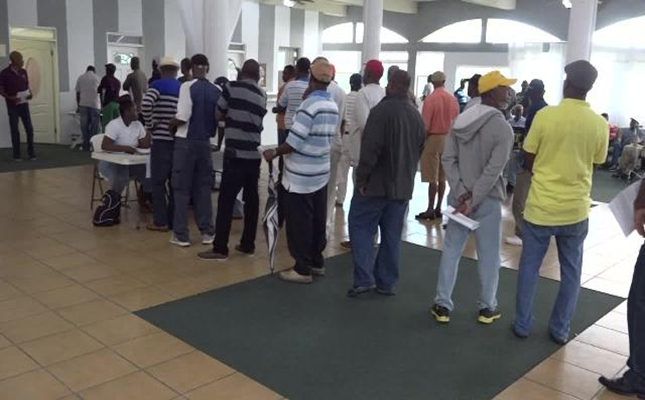
    Hundreds of uniformed and plainclothes police officers assembled at the main Police Headquarters on Thursday to demonstrate unified support for one of their own, Senior Sergeant Benjamin, who faces the potential loss of a leg after a devastating on-duty injury. The gathering quickly evolved into a peaceful sit-in after officers confirmed that Benjamin has yet to be approved for transfer to an overseas medical facility for specialized care, weeks after he was struck by a truck while working along Valley Road in the Golden Grove district.

    Speaking on behalf of the assembled rank-and-file officers, George Wenner told reporters that the law enforcement community is deeply frustrated by the government’s slow response to what they characterize as a life-altering medical emergency. “These officers are standing shoulder to shoulder with their injured colleague, and they will not back down until he is flown out for the treatment he needs,” Wenner stated, emphasizing that every day of delay raises the risk that Benjamin will require amputation of his injured leg.

    Wenner drew a sharp comparison between the government’s handling of Benjamin’s case and a separate high-profile medical incident involving a former senior government official. In that earlier case, Wenner claimed, authorities moved rapidly to organize multiple medical evacuation flights to get the former official access to overseas specialist care. No such urgency has been extended to the injured serving officer, he argued.

    He went on to note that police officers across the country regularly put their own lives in jeopardy to protect public safety, from carrying out national security operations to stepping up security preparations for the upcoming Commonwealth Heads of Government Meeting (CHOGM), a major international summit set to be hosted in the region in the coming months. When officers are injured in the line of this vital public service, Wenner argued, they are entitled to the same rapid, high-priority support that the government extends to political leaders and former officials.

    The officers directly targeted Health Minister Michael Joseph in their appeal, issuing an urgent call for the minister to cut through bureaucratic red tape and authorize an emergency medical evacuation immediately. “We are calling on Minister Joseph to act immediately, post haste, to arrange a medivac to fly Senior Sergeant Benjamin out to access the specialized medical care he cannot get here,” Wenner said.

    Protesting officers made clear that their demonstration will not end until the government confirms arrangements for Benjamin’s transfer for urgent overseas treatment. As of Thursday evening, no official response from the Health Ministry or the government had been issued to the officers’ demands.

  • Mother Alleges Repeated Hospital Visits Before Infant Died as Investigation Continues

    Mother Alleges Repeated Hospital Visits Before Infant Died as Investigation Continues

    A devastating case of infant mortality has ignited widespread public concern across Antigua, after a grieving mother shared shocking allegations of missed medical opportunities that she says contributed to her baby’s death. In a widely circulated video that drew rapid national attention, Jessi Julian has detailed the repeated trips she made to the Sir Lester Bird Medical Centre (SLBMC) as her young son’s condition deteriorated, before the infant ultimately passed away from a confirmed case of bacterial meningitis.

    Julian’s account traces the start of her son’s illness to an initial high fever that prompted her to seek care at SLBMC early one Friday morning. At that first visit, she claims medical providers dismissed the fever as a symptom of the common seasonal flu circulating through the community, sending her home with only over-the-counter fever reducers paracetamol and ibuprofen, alongside a course of antibiotics. When her son’s fever did not break, and instead spiked to a dangerous 103 degrees that persisted for days, Julian returned to the public hospital for further care. According to her claims, medical staff again sent her home, instructing her only to continue the existing medication regimen.

    Desperate as her son’s condition worsened, Julian turned to a private physician, who immediately referred the infant back to SLBMC for urgent, emergency intervention. Julian says it was not until her son suffered full-on seizures that the hospital ordered the diagnostic testing that finally revealed the root cause of his illness: bacterial meningitis, complicated by an abnormally low white blood cell count. Despite subsequent intervention, the infant did not survive. Julian’s claims have not yet been independently verified by local outlet Antigua.news, and the hospital has not addressed the specific clinical details of her account.

    In an interview following her son’s death, an emotional Julian expressed overwhelming grief over what she says was a preventable loss. “There is no amount of money in this world you can give me to tell me it’s okay,” she said. “If they had attended to him Friday… they kept giving him pain medication and telling me it was just flu.” Julian confirmed she has been officially notified that an investigation into the incident is active, with preliminary timelines indicating the process will take between three and four weeks to reach a conclusion.

    In an official statement released this Wednesday, SLBMC acknowledged the viral video and the public concern it has generated, and extended formal condolences to Julian and her family. “We recognize that this is an incredibly difficult time for the child’s family, and we extend our deepest sympathies to them as they grieve this heartbreaking loss,” the hospital’s statement read.

    The medical centre confirmed it has launched an internal probe into the full circumstances surrounding the infant’s care and death, but declined to share any specific clinical details of the case. Officials cited two core reasons for the silence: legal requirements for patient confidentiality, and the need to protect the objectivity and integrity of the ongoing investigation. To date, hospital leadership has not confirmed a firm timeline for the investigation’s completion, nor has it committed to releasing the full findings of the probe to the public once it concludes.

  • Improving the Digital Competencies of Literacy Educators

    Improving the Digital Competencies of Literacy Educators

    Literacy educators form the foundational backbone of global efforts to deliver inclusive, quality education for all, but a widespread gap in support leaves countless practitioners facing systemic barriers to success. From limited access to up-to-date professional development opportunities to unstable working conditions and a persistent lack of access to modern digital teaching resources, these challenges directly undermine the ability of educators to serve diverse learner communities. As education systems around the world undergo rapid digital transformation, the urgency to address these gaps has grown exponentially: literacy educators now require robust digital competencies to deliver accessible, effective instruction that meets the changing needs of 21st-century learners.

    To respond to this unmet critical need, the UNESCO Institute for Lifelong Learning (UIL), in partnership with Huawei – an associate member of the Global Alliance for Literacy (GAL) – has launched a groundbreaking, free multilingual online course titled *Improving Digital Competencies for Literacy Educators*. Hosted on the UIL Learning Hub, the self-paced program is currently available in four widely spoken languages: English, French, Arabic, and Spanish, making it accessible to literacy educators across diverse regional and linguistic contexts.

    The course curriculum is carefully aligned with established global education frameworks, including the UNESCO Recommendation on Adult Learning and Education (RALE) and the DELTA digital competency framework, to ensure it meets international quality standards. Its core mission is to equip literacy educators with the practical digital skills needed to confidently integrate technology into their teaching practices, leverage digital tools to enhance learning outcomes, and advance the professionalization of adult literacy education globally. This initiative represents a targeted step toward ensuring educators can adapt to evolving learner needs and advance progress toward United Nations Sustainable Development Goal 4 (SDG 4), the global commitment to inclusive and equitable quality education for all.

    As an open-source, completely free resource, the course removes common financial and access barriers that prevent many educators from accessing professional development. Key benefits of the program include: practical, step-by-step instruction tailored specifically to the unique needs of literacy educators, immediately adaptable teaching resources that can be integrated into diverse educational contexts from rural community programs to urban adult learning centers, and an official certificate of completion co-issued by UIL and Huawei for participants who successfully finish all requirements.

    The course is structured into 11 self-guided learning units, totaling 2.5 hours of instruction that educators can complete on their own schedule to fit around existing work commitments. Core learning objectives include exploring innovative approaches to embedding digital tools into literacy instruction, building capacity to design engaging, inclusive learning materials and accessible learning environments powered by technology, and supporting ongoing professional growth through evidence-based educational technology practices.

    Direct access links for each language version of the course are publicly available: English at https://learninghub.uil.unesco.org/course/view.php?id=78, French at https://learninghub.uil.unesco.org/course/view.php?id=84, Spanish at https://learninghub.uil.unesco.org/enrol/index.php?id=83, and Arabic at https://learninghub.uil.unesco.org/course/view.php?id=81&notifyeditingon=1. Educators with questions about enrollment or course content can reach the program administration at [email protected].