博客

  • Galen Training Prepares Elections Officers for Upcoming Votes

    Galen Training Prepares Elections Officers for Upcoming Votes

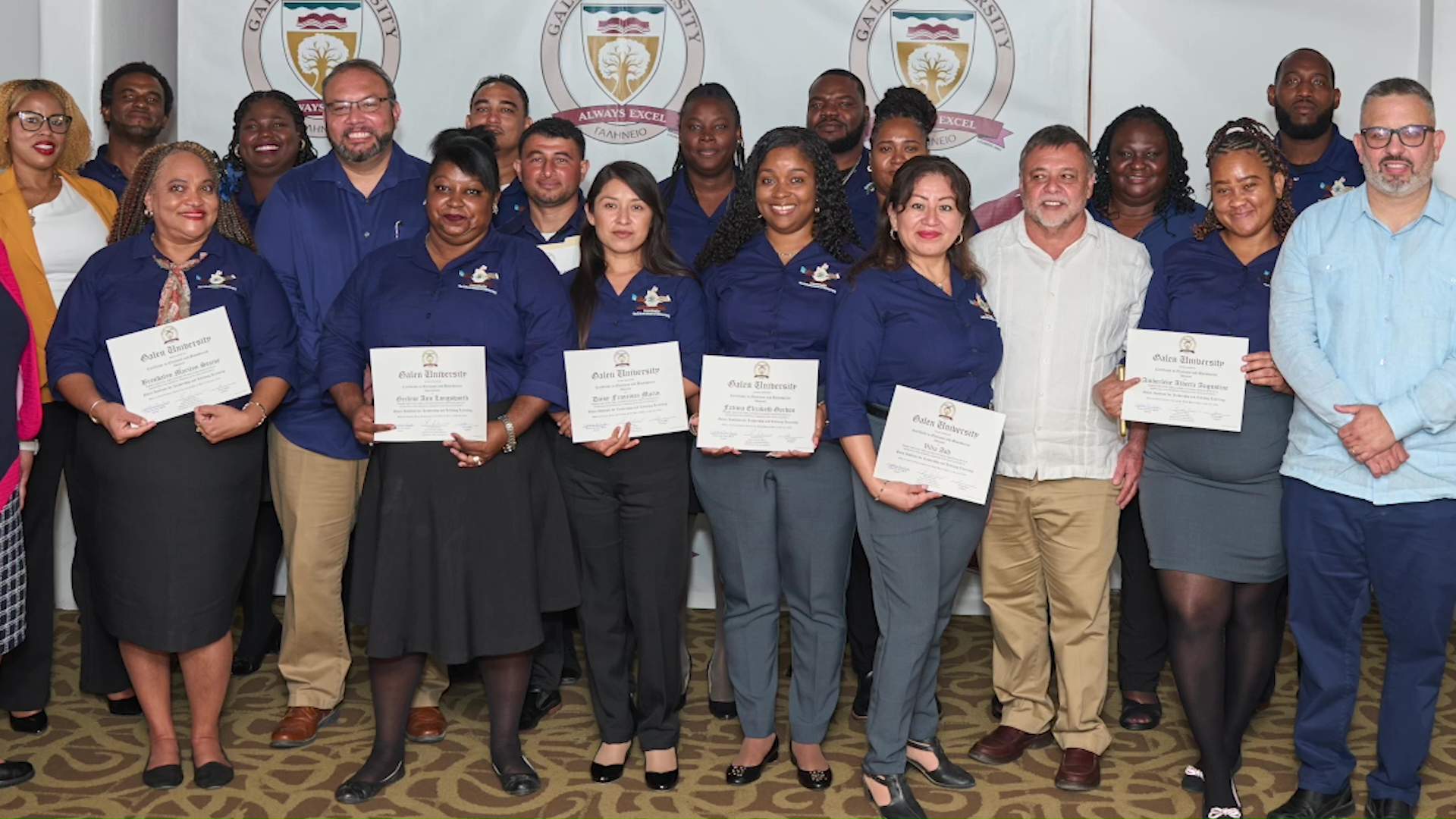
    As Belize gears up for its upcoming critical local elections, a key step has been taken to reinforce the country’s democratic framework: 16 dedicated Elections and Boundaries Department officers have graduated from an intensive, university-led professional certification program designed to strengthen the integrity and efficiency of the voting process.

    The collaborative initiative between Galen University and Belize’s government focused on building core competencies in three critical areas for electoral management: up-to-date interpretation of national electoral law, upholding ethical and procedural integrity, and practical on-the-ground logistics of running a smooth, transparent election.

    In remarks following the certification ceremony, Dr. Eve Aird, Provost of Galen University, emphasized the program’s core mission: to equip participating officers with the specialized skills and institutional knowledge needed to protect democratic processes and sustain public confidence in Belize’s electoral system. “The certificates awarded today confirm that these successful candidates have the professionalism, expertise and core attributes required to oversee all stages of election administration, maintain the accuracy of electoral boundaries, and deliver consistent, high-quality service to the voting public,” Aird stated.

    Kareem Musa, Belize’s Minister of Immigration, Governance & Labor, also praised the officers for their commitment to professional development. Musa noted that participants completed the rigorous coursework while balancing their full-time existing responsibilities across the country. “Your ability to follow through on this training while continuing to serve communities nationwide reflects the same discipline and focus that makes your work for the Elections and Boundaries Department so vital,” Musa said.

    For Noe Bonilla, one of the participating officers, the training offered more than just procedural skills—it reinforced the importance of ongoing growth for public servants. “This experience has reminded us of the value of continuous learning and self-improvement,” Bonilla shared. “It challenged us to think critically, adapt to evolving electoral standards, and strive for excellence in every part of our work.”

    With local election dates drawing near, government and university leaders alike confirm that the newly certified cohort is now far better prepared to deliver transparent, accessible voting services to the public, while guarding against procedural irregularities and protecting the fundamental integrity of Belize’s democratic process.

    This report is adapted from a transcript of an evening television news broadcast from Belize.

  • Caye Caulker Preparing to Protest Rumored Sale of Police Station Land

    Caye Caulker Preparing to Protest Rumored Sale of Police Station Land

    On the small Caribbean island of Caye Caulker, a growing local conflict over public land ownership has emerged, with the village’s governing body prepared to mobilize residents and pursue formal action to block a rumored sale of key public property. As of April 10, 2026, the Caye Caulker Village Council has issued a firm public statement rejecting any proposal to sell, lease, or transfer ownership of Parcel 815, a plot of land currently officially designated for police department use.

    In its strongly worded release, the council describes the parcel as irreplaceable communal land that underpins the island’s public safety framework. The land is located adjacent to a community basketball court and a popular shared public recreational space, and the council argues that any shift to private ownership or non-public use would cause widespread disruption to local life. Beyond the direct threat to public safety, officials warn that losing public control of the site would undermine youth engagement programs that rely on access to the surrounding community space, slow emergency response times across the island, and erode the quality of life for all local residents.

    A major point of contention for the village council is the total lack of community engagement surrounding the rumored plans. According to the council’s statement, neither elected local leaders nor ordinary residents have been included in any discussions about the future of the parcel, a omission that has amplified local frustration over the potential deal. The council has laid out three clear demands for national authorities: an immediate halt to any ongoing processes related to the transfer of the land, full public disclosure of all government plans for the property from Belize’s central government, and inclusive, meaningful consultation with local stakeholders before any final decisions are made.

    Despite widespread rumors of an impending sale, a public search of Belize’s national land registry confirms that as of the publication date, Parcel 815 remains formally owned by the Belize Police Department. Even so, local officials are moving forward with plans to push back against any potential future transfer. Reliable local sources confirm that the village council has already submitted the required paperwork to secure official permission for a public protest to demonstrate widespread community opposition to the sale.

    Council leaders have emphasized that they are open to all available avenues to keep the land in public hands, including pursuing formal legal and administrative challenges to any unauthorized transfer attempt. To align on next steps and gather input from local residents, the council has scheduled an open community meeting for 6:30 p.m. the following day, where all island residents will have the opportunity to share concerns and weigh in on the planned actions.

  • Growing Gathering Spreads Message of Peace at Jalsa Salana

    Growing Gathering Spreads Message of Peace at Jalsa Salana

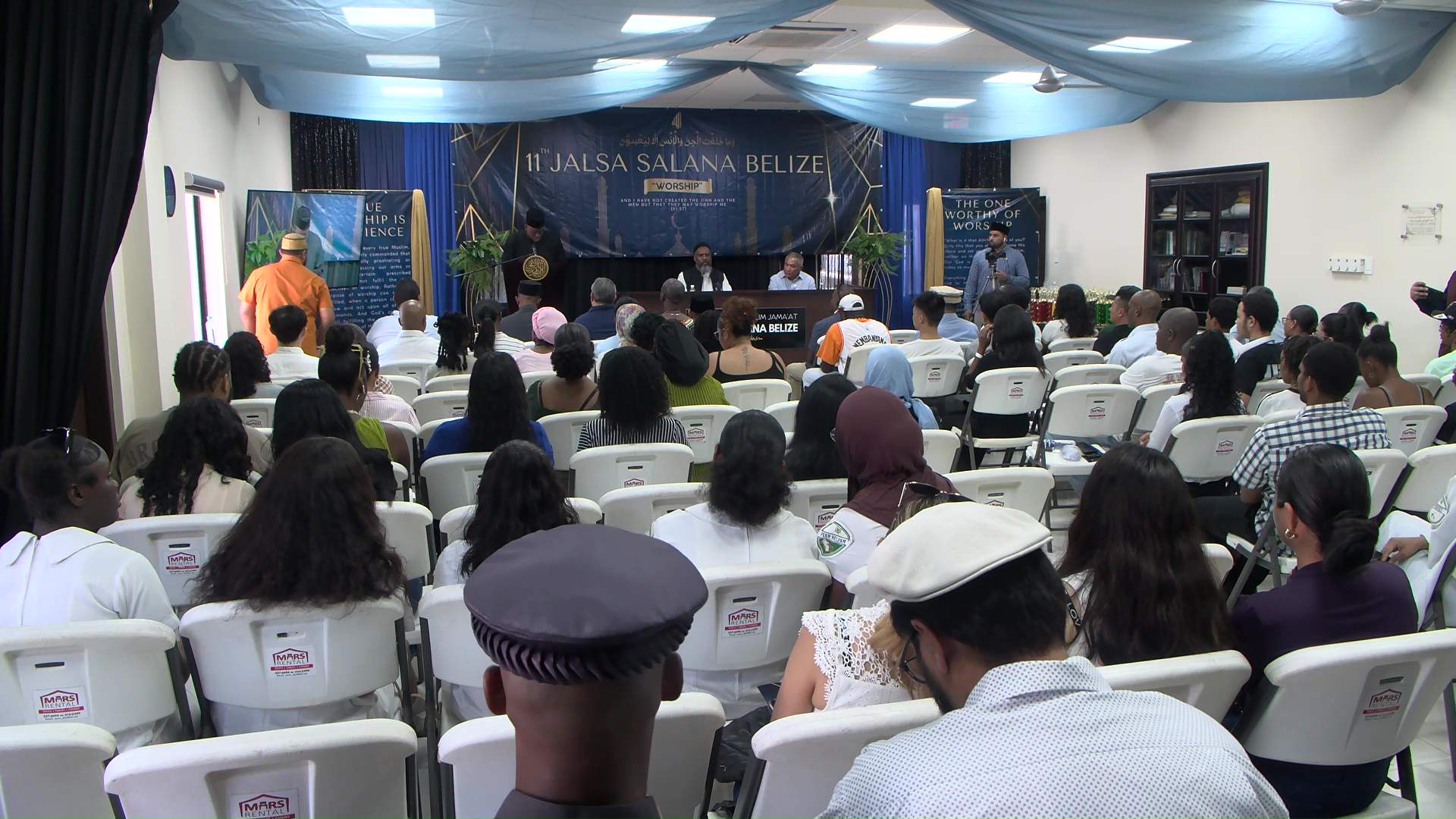
    Scheduled for this weekend in Belize, the 11th annual Jalsa Salana, hosted by the Ahmadiyya Muslim Jama’at community, has grown from a small local gathering into the nation’s largest Islamic conference, opening its doors to Belizeans of all religious and cultural backgrounds to advance a shared message of peace and intergroup unity.

    First launched in Belize back in 2015, the convention has expanded steadily over the past 11 years. What began with just a few dozen community participants now draws hundreds of attendees from every sector of Belizean society. Unlike typical public events centered on entertainment or material exchange, this spiritual gathering is designed to nurture personal moral growth and create a reflective, uplifting atmosphere for people of all beliefs.

    Arslan Warraich, National President of Ahmadiyya Muslim Jama’at Belize, emphasized that the core mission of Jalsa Salana is not focused on worldly gain or recreational activity. Instead, the gathering provides a dedicated space for attendees to purify their perspectives, reset their values, and strengthen both their spiritual grounding and personal moral character. Warraich echoed the foundational teachings of the Ahmadiyya community, noting that the convention was built on a commitment to advancing truth and peaceful Islamic outreach, rooted in divine guidance.

    Beyond its role as an internal religious observance, Jalsa Salana serves as a deliberate public outreach effort to counter common misconceptions about Islam and model the Ahmadiyya community’s core principle of inclusive service. For years, attendance at the annual gathering has been a priority for Belize’s top political and civic leaders, and 2026’s convention was no exception.

    Prime Minister John Briceño praised the Ahmadiyya community for its consistent positive impact across Belize. Beyond its religious mission, Briceño highlighted the group’s ongoing outreach to vulnerable youth and communities in need, noting that the organization sets a powerful example for all civic and religious groups across the country. Unlike groups that push their beliefs aggressively, Briceño explained, the Ahmadiyya community leads by example, reaching out to marginalized groups to demonstrate that peaceful, compassionate action is always a viable alternative to division.

    Belize City Mayor Bernard Wagner also commended the group for its youth-focused community initiatives, specifically calling out its popular annual basketball tournaments, which have become a beloved staple of local youth activity. Wagner, whose own team has claimed three tournament titles, extended his public recognition for the consistent, life-changing work the Ahmadiyya community carries out across the country.

    The multi-day convention features a full schedule of accessible programming for attendees of all ages and backgrounds, including educational lectures on Islamic teachings, structured interfaith dialogue sessions, curated exhibitions on Islamic history, and family-friendly activities. Programming includes dedicated sessions designed specifically for women and young people, to ensure all groups can participate fully in the gathering. Organizers noted that this year’s event builds on the success of the 10th anniversary convention held in 2025, which centered the theme of Islam as a faith rooted in peace and service to all humanity, regardless of religious identity.

    Eleven years after its small debut, Jalsa Salana remains anchored to its founding mission: fostering unity through mutual understanding, and building lasting peace through cross-group respect. This report was filed by Paul Lopez for News Five, from Belize City.

  • Man on 2 attempted murder charges among 2 killed in Kingtown

    Man on 2 attempted murder charges among 2 killed in Kingtown

    Two residents of Layou, a town in St. Vincent and the Grenadines’ Central Leeward region, were shot and killed in an afternoon attack in the Kingstown neighborhood of Stony Ground on Friday, April 10, 2026. Among the deceased was 29-year-old Enrique John, widely known by the alias Shoubu, who had walked free from a court hearing just three days prior despite violating his bail conditions.

    John’s criminal history stretches back nearly a decade, with multiple high-profile charges making local headlines over the years. In 2017, he was arrested alongside two other Layou men on rape charges involving a minor between the ages of 13 and 15; as of press time, iWitness News has not obtained information on the final outcome or current status of that case.

    Most recently, John was granted bail in February 2026 on an attempted murder charge stemming from a November 2, 2025 shootout in Layou. That incident left both John and the alleged target, 27-year-old Tilon Patterson, wounded by gunfire from unknown attackers, according to initial police source reports. John’s bail carried strict conditions: he was required to check in at the Layou Police Station three days a week, avoid all contact with Patterson, and adhere to a nightly curfew from 8:30 p.m. to 6 a.m. set at EC$50,000 bail with one required surety.

    Last Sunday, just days before his fatal shooting, John violated that curfew by attending a public entertainment event after the 8:30 p.m. curfew deadline. He was summoned to the Serious Offences Court on Tuesday, where prosecutors formally moved to revoke his bail and remand him into custody. However, a witness testified that the delay that left John at the event past curfew was caused by local police stopping the witness en route to pick him up. Citing this explanation, the court ruled to release John on his original bail conditions — a decision that came only 72 hours before he was killed.

    John was also one of six defendants awaiting trial on multiple charges linked to a July 17, 2024 armed robbery of the GECCU credit union branch in South Rivers. His co-defendants in that case include 25-year-old unemployed Lemar Isaacs (alias Chak) of McKies Hill, 30-year-old painter Esroy Jeffers (alias Pirate) of Layou, Sharome Dopwell of Paul’s Avenue, 35-year-old bartender Erasto DaSilva of Canouan, and 28-year-old unemployed Rakiesha Joseph (alias Bim Bim) of Layou.

    The second victim killed in Friday’s attack has been identified as 22-year-old Raheem Guy, who local sources confirm was a close associate of John.

    The double killing has stoked widespread community fear that a wave of violent gang-related unrest that shook Layou beginning in 2023 is continuing unabated. Between 2023, the small town recorded four homicides in just six weeks, along with multiple non-fatal shootings — a sharp break from the five-year period that ended with zero homicides in Layou before the outbreak of violence.

  • Over 100 Youths Turn Out for Annual Rose Classic

    Over 100 Youths Turn Out for Annual Rose Classic

    For young athletes across Belize, the annual Easter break has become synonymous with more than just holiday relaxation—it is an opportunity to chase basketball dreams on the court at the long-running Rose Classic Youth Basketball Camp. Now marking its 18th consecutive year, the program, founded and led by Belizean-American sports organizer Cleon Hyde, has evolved far beyond its humble origins to become a cornerstone of youth athletic development across the country.

    What began as a small community initiative designed to keep local young people engaged in positive activity and away from unsafe street environments has grown into a national development program centered on three core values: discipline, collaborative teamwork, and intentional mentorship for the next generation of Belizean athletes. With generous corporate support from global sportswear brand Nike, every registered participant receives full team gear including matching tops and bottoms, along with access to structured, skill-building training sessions that prioritize both athletic growth and character development. Additional incentives for top performers include custom t-shirts, branded caps, and commemorative medals for members of the winning tournament team.

    In an interview with local outlet News Five, Hyde reflected on the milestone year and the strong turnout for 2026, which saw more than 100 high school-aged boys and girls from across Belize register to take part. “I’m celebrating my eighteenth year in Belize and what we’re doing is a showcase of high school boys and girls,” Hyde explained. “And we had a nice turnout of over a hundred kids. And so far today we’re closing out our session. And so far it’s been going pretty good, I must say. Happy to see the results of what’s going on with so many kids.”

    When asked what drives him to return to Belize year after year to run the program without financial compensation, Hyde pointed to his personal passion for the work and the long-term impact the camp has had on former participants who have gone on to build successful lives. “I started out, like I said, as a test run, and the first one was successful. So it became easy because it’s a passion. It’s not something I’m doing for like money or nothing like that,” he said. “Have a good relationship with all the kids. And I’m talking about from 2007, the likes of Devin Daly, he was one of my main players. Coope Lopez. Sherwin Garcia, all these guys that are now doing great things for themselves, so it gives me that pleasure to know that I made an impact in their life for so many years doing basketball.”

    As one of the longest-running annual youth sports initiatives in Belize, the Rose Classic continues to serve as a critical pipeline for emerging basketball talent while fostering life skills that extend far beyond the court for participating young people.

  • Govt turns to faith groups with $5m youth action fund

    Govt turns to faith groups with $5m youth action fund

    Against a backdrop of rising youth disengagement and growing public concern over antisocial behavior among young people, the government of Barbados has launched a transformative annual BBD 5 million fund to empower faith-based organizations to lead targeted interventions addressing youth deviance, while supporting skills building, employment inclusion, and the reinforcement of positive community values.

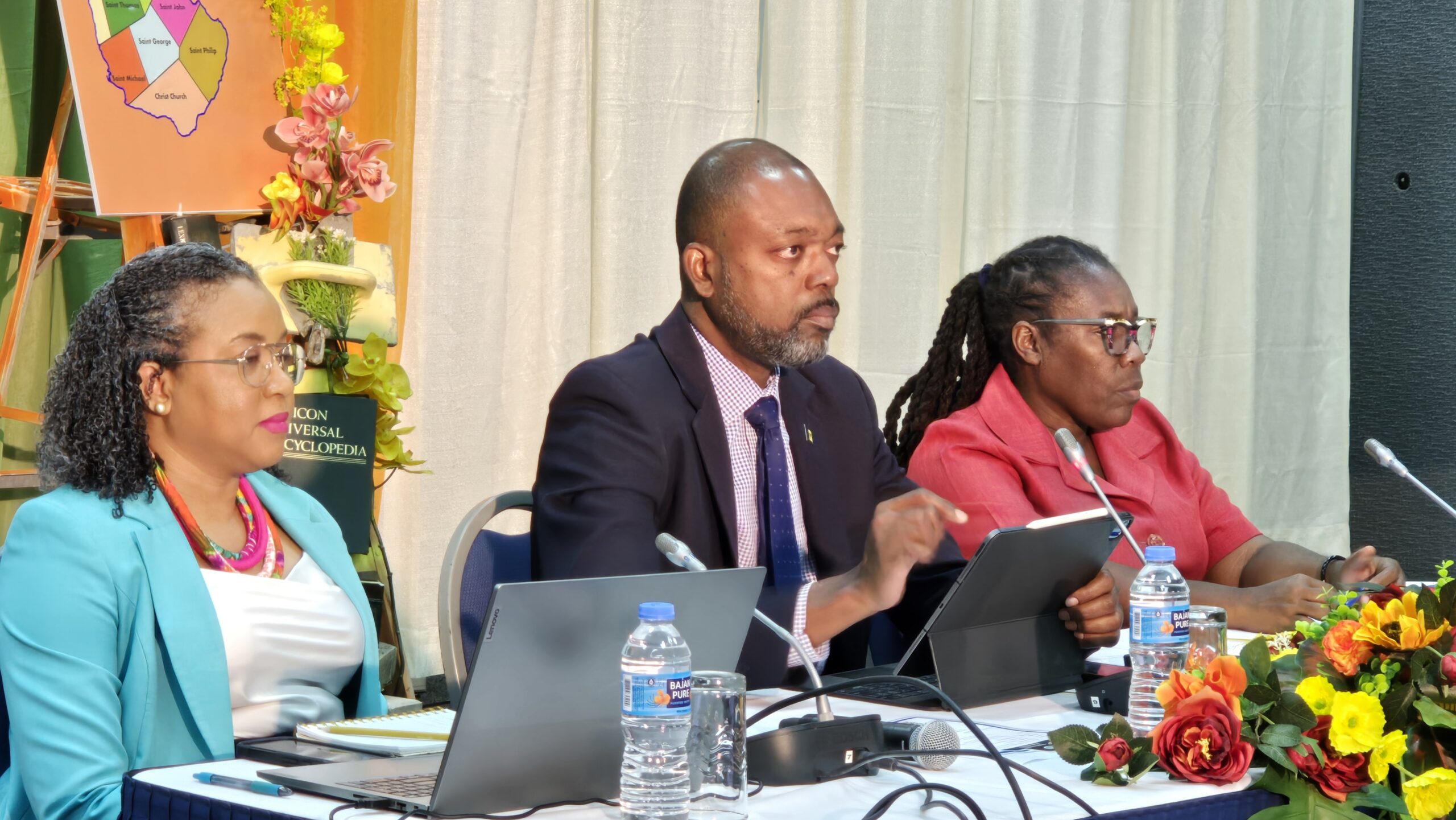
    Third Sector Minister Colin Jordan made the formal announcement during the annual Faith-based Symposium hosted Friday at the Lloyd Erskine Sandiford Centre, which convened religious leaders and community organizers under the central theme “Building Our Young People, Our Future, Our Legacy”. In his keynote address, Jordan emphasized that funding is not the end goal of the initiative, but merely a strategic tool to deliver meaningful, long-term change.

    “Funding is not the goal. Funding is merely an instrument. Impact is the goal: changing lives, changing perspectives, changing outlooks. That is the goal of the fund that government has set up. Transformation is the goal,” Jordan told attendees. He explained that the dedicated annual fund was established specifically to address the persistent resource gaps many faith-based organizations have faced in the wake of the COVID-19 pandemic, which stretched community organizational budgets and limited their ability to expand youth programming.

    The funding is open to both expanding existing successful programs and launching new, innovative interventions aligned with the initiative’s core objectives. For established projects, the support will strengthen programming that keeps young people engaged in constructive activities, equips them with market-relevant practical skills, and opens clear pathways to formal employment and small business entrepreneurship. For emerging ideas, the fund is designed to back new guidance and development projects that faith leaders believe can deliver meaningful impact for local youth populations.

    As the initiative moves toward final implementation, government has shared a draft framework with symposium attendees and is actively soliciting feedback to refine the proposal before it receives final Cabinet approval. Jordan noted that the draft has already been submitted for Cabinet review, but policymakers intentionally paused formal approval to center input from the faith organizations that will lead the work on the ground. “We use this opportunity in the ministry to hear perspectives and to see if there are any tweaks, any adjustments that we have to make, or if you feel it is so badly put together that we have to toss it out and start fresh,” Jordan said, underscoring the government’s commitment to collaborative, community-led design.

    Jordan stressed that the initiative’s success will be measured by tangible, quantifiable outcomes rather than good intentions alone. Key performance indicators will include increased youth participation in structured positive programming, expanded access to certified skills training and employment pathways, measurable reductions in youth involvement in crime and antisocial behavior, stronger family and community connections, and the broader embedding of positive moral and social values among young program participants. The overarching vision, he explained, is to nurture a generation of young Barbadians that are both employable and socially responsible, ambitious but rooted in community, skilled and guided by strong ethical principles.

    Accountability for public fund expenditure is also a core requirement of the initiative. “Good intentions must be translated into well-designed programmes where vision is supported by planning and passion, met with measurable targets. We must be able to look back and see whether or not our expenditure has been met with the results we expected,” Jordan said.

    Beyond direct project funding, the symposium also focused on building long-term organizational capacity for faith-based groups, ensuring they have the spiritual, administrative, and strategic resources needed to deliver sustainable impact. To help organizations develop competitive, high-quality funding proposals, the government has partnered with Karen Phillips, founder of Kainos Caribbean, to deliver targeted training in grant writing and proposal development. Jordan noted that many community groups have strong, impactful ideas but lack the technical skills to present those ideas clearly to funders, and the training is designed to remove that barrier.

    Outlining the broader social and economic benefits of the initiative, Jordan framed the investment in youth development as a catalyst for whole-community transformation. “When young people are trained, certified and supported, they transition more effectively into the labour market, they become contributors rather than dependents, and they become innovators rather than bystanders,” he said. “When communities rally around their young people, something powerful happens. Hope replaces despair, purpose replaces idleness, and peace replaces disorder.”

  • Saint Lucia PM urges UWI to remain ‘cutting-edge’ at Cave Hill Law Gala

    Saint Lucia PM urges UWI to remain ‘cutting-edge’ at Cave Hill Law Gala

    The weeks-long build-up to the annual University of the West Indies Cave Hill Law Week reached its glamorous conclusion Thursday evening, as the legal community gathered at Barbados’ Savannah Beach Hotel for the coveted Law Society Legal Regal Gala. Framed around the creative theme of “Masquerade Night”, the event brought a refined, celebratory atmosphere to one of the law faculty’s most anticipated annual traditions.

    Organized jointly by the student-run Law Society executive committee and the UWI Cave Hill Faculty of Law, the Legal Regal Gala has grown into a signature gathering that bridges classroom learning and professional connection, bringing students, faculty and established legal professionals together for an evening of dinner, networking and recognition. This year’s gathering drew a roster of distinguished guests, led by guest of honor Philip J. Pierre, Prime Minister of Saint Lucia. In attendance alongside Pierre were Dr. Antonius R. Hippolyte, Dean of the Faculty of Law; Dr. Ronnie Yearwood, Deputy Dean of Academic and Student Affairs; and faculty members Carla Ali and Jaydene Thomas.

    In opening remarks, outgoing Law Society President Darrion Poyotte-Lionel reflected on the event’s core purpose, noting that it gives aspiring legal professionals space to celebrate their progress through the notoriously rigorous curriculum of legal education. “Legal Regal has always stood as a hallmark event within the faculty—one that brings together students, faculty, and members of the wider legal community in a space that is both professional and celebratory,” Poyotte-Lionel told attendees. “It is a reminder that while the study of law is rigorous, it is also deeply human—built on relationships, shared experiences, and a collective pursuit of growth.”

    As a UWI alumnus himself, Pierre brought a personal perspective to his keynote address, opening by highlighting the institution’s long legacy of shaping influential leaders who have gone on to make transformative impacts across global academia and professional industries. Beyond celebrating that legacy, the Prime Minister—who also holds cabinet portfolios for finance, constituency development, people empowerment, justice and national security—laid out a series of urgent priorities UWI must address to retain its position as the Caribbean’s leading academic institution.

    Pierre emphasized that academic programs and administrative processes must evolve continuously to meet modern demands, identifying intentional technology integration as a critical investment to keep UWI the top higher education choice for students across the region. He also called for the development of a sustainable, ideally self-financing operating model with full buy-in from regional governments, warning that a lack of coordinated support risks increasing fragmentation of the cross-national institution.

    A core point of Pierre’s address centered on expanding access for economically marginalized students, outlining a new initiative his own government has launched to open higher education to more Saint Lucians. His administration’s “one university per household” project, partially funded by the state, offers full-tuition first-generation scholarships to students with no prior family history of university attendance. “These policies seek to create some level of equity and the basis for wealth creation, and an end to intergenerational poverty,” Pierre explained.

    The Prime Minister went on to touch on other pressing regional and global challenges, including climate change, economic diversification, technological innovation, and public security, framing each as a priority for emerging leaders graduating from UWI. He urged the student audience to develop context-specific solutions for the challenges within their reach, stressing that the university plays an irreplaceable role in navigating an increasingly shifting global geopolitical landscape.

    “The UWI must never lose its place as a leader in the world of intellectual, social and economical activism. A place where critical thinking prevails, but it must also be able to provide solutions for problems of decision makers,” Pierre added.

    Following the keynote, the evening continued with structured networking opportunities for students to connect with faculty and legal practitioners, alongside special awards recognizing outstanding academic achievement from first, second and third-year law students. Attendees were also treated to live entertainment performed by fellow Faculty of Law students, before the event closed with the official public announcement of the 2026–2027 Law Society Executive leadership team.

  • Delegation of Chinese investors in Cap

    Delegation of Chinese investors in Cap

    In a development that highlights growing cross-continental investment interest in underserved regional markets, a delegation of business investors from mainland China held a landmark meeting with the Cap-Haïtien Municipal Commission on Thursday, April 9. This exploratory visit was coordinated with logistical and diplomatic support from the Haitian Embassy based in the Dominican Republic, marking a unique channel for direct engagement between local municipal leaders and international business groups.

    Headlined by Caleli Decorative Materials Co. S.R.I. Group, the investment mission has a clear core objective: to map out and evaluate viable commercial and infrastructure investment openings across northern Haiti. The scope of the delegation’s assessment covers both private sector commercial projects and large-scale public infrastructure developments, many of which fall under the broad framework of the Belt and Road Initiative, a global infrastructure and economic cooperation program launched by China. Notably, the delegation opted to hold direct talks with the Cap-Haïtien Municipal Commission instead of engaging with Haiti’s national government, which maintains official diplomatic relations with Taiwan.

    During the closed-door discussions, participants focused heavily on the practical feasibility of two major proposed developments: a dedicated regional industrial park and a large-scale integrated commercial complex. Beyond these flagship projects, talks also centered on designing investment activities that would deliver long-term tangible benefits to the local population, specifically through the creation of sustainable local employment opportunities and increased economic value added for the northern Haitian region.

    For the Cap-Haïtien Municipal government, this exploratory visit aligns with its long-term strategic push to rebrand the coastal city as a dynamic, competitive investment destination that can attract international capital. If the proposed projects move forward to implementation, they are projected to generate more than 1,000 new local jobs. What’s more, the initiative plans to integrate innovative environmental solutions, with a key focus on developing plastic waste recovery systems that address local pollution challenges while supporting circular economic goals.

  • Folks cry foul over hazardous dumping of dead animals, waste

    Folks cry foul over hazardous dumping of dead animals, waste

    In the quiet rural community of Bayleys Plantation Road in St Philip, Barbados, a decades-long public health crisis has finally been brought to light by frustrated local residents, who say repeated illegal dumping of waste — including decaying animal carcasses and discarded household appliances — has upended their daily lives and damaged local livelihoods.

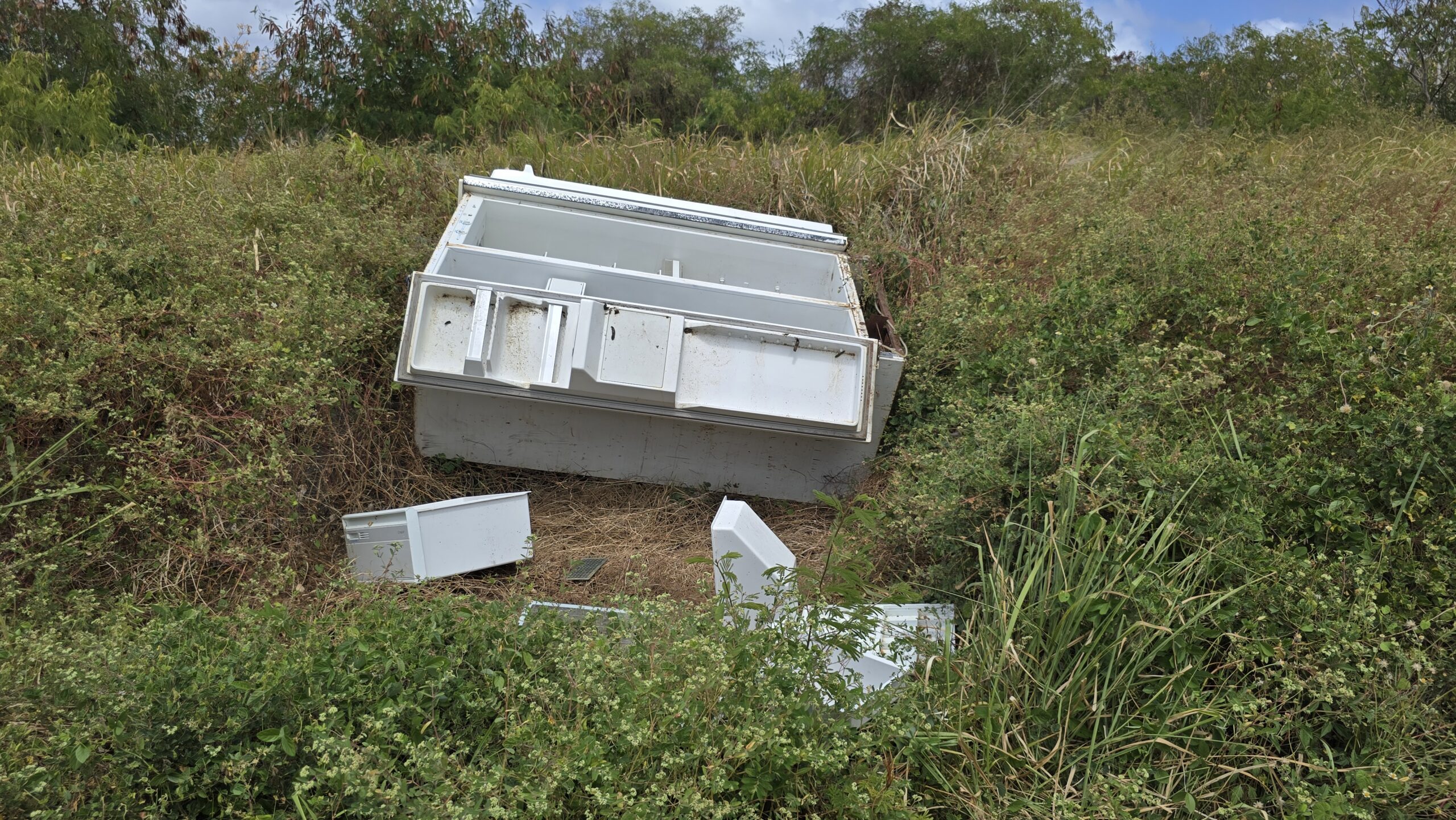
    Local farmer Alvin Wilson, one of the most vocal critics of the ongoing problem, recently spoke out against those responsible for the reckless dumping, describing the toll the unregulated waste has taken on the area’s residents and farms. When a reporter from Barbados TODAY visited the community this Friday, Wilson led a tour of multiple dumping sites along the main highway, where discarded old refrigerators, stoves and other large appliances sit abandoned alongside piles of general household rubbish.

    The most alarming find, however, lies on the only access road leading to Wilson’s home, his farm, and the properties of his neighbors: a large flour bag stuffed full of dead chickens, swarming with flies and emitting a putrid stench that hangs in the air along the entire stretch of road. Wilson explained that this type of dumping is far from an isolated incident. For years, the area has been a regular dumping ground for unwanted waste, ranging from dead farm animals to broken home appliances.

    “Mostly it’s dead animals we find here — chickens, sometimes pigs, sometimes sheep,” he said. “And it’s not just animals. You also get old fridges, old stoves, all kinds of rubbish. This has been going on for years now.” The stench from decomposing animal carcasses is so strong that it has immediate health impacts for anyone passing by. Wilson told reporters he already had a splitting headache on the day of the visit, brought on by direct exposure to the foul odor coming from the latest dump site.

    This most recent batch of dead chickens was dumped earlier this week, Wilson said — and brazenly, in the middle of the day, not under cover of darkness that dumpers usually rely on. “I’d say it was Tuesday afternoon this was dumped here, not even at night. It was broad daylight when they left that batch of dead chickens right here,” he explained, gesturing to the fly-blown bag behind him.

    What makes the situation particularly untenable for local residents is that this dumping is happening on the only road connecting their homes and farms to the rest of the island. Every single person who lives or works in the area has to pass the dumping sites multiple times a day, no exceptions. “You have to pass there to get home, and you have to pass there to get to the farmlands — this entire area is surrounded by agricultural land,” Wilson said.

    The stretch of road from Mapps to Golden Grove has become the preferred dumping ground for perpetrators, he explained, because it is poorly lit at night, making it easy for truck drivers and even local homeowners to drop off unwanted waste unseen. But what worries Wilson most is that dumpers have become so emboldened by the lack of enforcement that they are now willing to dump in broad daylight, a sign the problem is growing worse rather than improving. “Something needs to be done about these culprits,” he emphasized.

    Longtime resident Wilbert Gollop, who has lived in the area for 16 years, confirmed that the illegal dumping has been a persistent problem throughout his time in the community. He recalled one Sunday after returning home from worship at the Kingdom Hall, he found a large, dead ram sheep bloated and stinking right on the roadside just a short distance from where he stood speaking to reporters.

    Gollop also had his own run-in with the bag of dead chickens, discovering it shortly after dumpers left it on the road. He said that in addition to dumping dead animals, some irresponsible actors have even released live chickens onto the roadside, where the animals are left to starve to death before becoming part of the waste problem. “I’ve never seen anything like it. They release dozens of live chickens here, and with no one to feed them, they all die along the road,” Gollop said. “It’s pigs, it’s dogs, mainly chickens — they just come dump whenever they feel like it, no regard for anyone who lives here. It’s ridiculous. You wouldn’t want this dumped outside your door, so why do it to us?”

    Unlike waste handled by official authorities, residents are forced to clean up the mess dumpers leave behind, Gollop explained. When the dead ram was dumped near his home, it was so close that flies from the carcass began moving into his house, leaving him no choice but to handle the disposal himself. “I had to drag it out to the pasture, get wood and tires, and burn it myself. That should never have been my job,” he said. “If you’re raising chickens and making money from it, why should local residents be stuck with the cost and work of disposing your waste? Why do you get to dump it next to people’s homes and on our road?”

    For Wilson, the problem is not just a public health nuisance — it is an active threat to his livelihood. His farm, which grows pumpkins, butternut squash, watermelon, okra and cucumbers, relies on customers being able to access his property to buy produce. Now, many customers refuse to travel through the foul-smelling, partially blocked road, and Wilson is losing critical revenue as a result.

    “This year, customers aren’t coming back through here because it stinks, and the road is blocked,” he said. “I’m losing revenue right now. I’ve had to start delivering all my produce to customers myself, which takes time I don’t have — and I don’t get compensated for that extra time and cost. What’s worse, some customers tell me they just won’t come at all anymore, so I end up stuck with produce I can’t sell. Sometimes sales get delayed for days just because we can’t get products out easily.”

    Wilson said he has already reached out to the Sanitation Service Authority and the Ministry of Health to report the ongoing problem, and during Barbados TODAY’s visit to the area, reporters observed health inspectors conducting an on-site assessment of the dumping sites.

    In closing, Wilson issued a direct plea to those responsible for the dumping to change their behavior immediately. “Stop the dumping,” he urged. “If you have dead animals to dispose of, call the relevant authorities and let them handle the waste properly. At the end of the day, this is affecting real people’s lives. Don’t put us through something you would never want to deal with yourself.”
  • Global partners rally behind RSS to confront threats

    Global partners rally behind RSS to confront threats

    Against a backdrop of growing transnational security challenges across the Caribbean, international partners have announced new commitments of funding, resources and strategic backing to the Barbados-headquartered Regional Security System (RSS), multiple official sources confirmed to Barbados TODAY following the bloc’s recent Council of Ministers’ Meeting in Saint Lucia.

    The gathering, which Attorney General Wilfred Abrahams characterized as highly productive, brought together regional leaders and global stakeholders to align on priorities for countering the rising tide of cross-border criminal activity. Attendees hammered out a series of binding agreements and strategic initiatives designed to shore up the region’s collective security capacity.

    At the top of the meeting’s agenda was a mandate for coordinated, collective action across all RSS member states, centered on enhanced cross-border collaboration, aligned operational strategies, and real-time intelligence sharing to disrupt transnational criminal networks. A second key priority formalized standards for the third-country Refugee/Deportee Relocation Protocol, which operates under bilateral agreements between the United States and individual Caribbean member states. The framework requires full, unredacted information exchange between all parties, and the U.S. Chargé d’Affaires presented a complete briefing on outstanding questions and protocol details to the ministerial council, according to the official meeting outcome document obtained by Barbados TODAY.

    Ministers also approved a comprehensive review of national legislative frameworks across all member states, with the goal of updating and standardizing anti-gang legislation and strengthening legal tools to counter transnational organized crime. Separately, the CARICOM Implementation Agency for Crime and Security (IMPACS) updated attendees on a new centralized gang database being developed by the Civil Gang Injunctions Unit (CGIU), and issued a formal call for member states to contribute local data to complete the initiative.

    During open discussion, representatives from St. Vincent and the Grenadines raised awareness of significant unintended negative consequences stemming from kinetic strikes on commercial and civilian vessels operating in the region’s shared maritime domain, prompting further deliberation on alternative counter-maritime crime strategies.

    In his executive report to the council, the RSS Executive Director confirmed that the ratification process for the Treaty of San José has been fully completed at RSS headquarters. He also outlined ongoing infrastructure upgrades: modernization work for Maritime Operations Centres across all member states will move forward as planned, funded through a development project administered by Global Affairs Canada. Additionally, a new policy provision has been approved to reallocate funds seized from criminal operations to directly support frontline crime-fighting initiatives across the region.

    The meeting also advanced the RSS’s 2026 strategic action plan, which lays out a clear roadmap for expanding security cooperation. Key priorities outlined in the plan include: strengthening regional data collection and intelligence sharing frameworks; formalizing a strategic partnership with the Caribbean Electric Utility Services Corporation (CARILEC) via a memorandum of understanding set for signing in May 2025; establishing formal partnership agreements with Belize and the British Virgin Islands to boost regional capacity for financial crime investigations and illicit asset recovery; deepening collaboration with European Union member states on cross-border criminal investigations through alignment with the European Judicial Network. The RSS also announced plans to submit an application for observer status on the Budapest Cybercrime Convention Committee, as the region works to address rising digital criminal threats.

    In a final decision addressing shifting regional drug policy trends — as more Caribbean jurisdictions move to legalize cannabis for medical or recreational use — the Council of Ministers enacted a strict zero-tolerance policy for illicit drug use among all active law enforcement officers across member states. A formal policy paper outlining implementation guidelines will be reviewed and approved by senior police and military leadership in the coming months.