博客

  • Zon, bewolking en verspreide buien

    Zon, bewolking en verspreide buien

    On April 11, the latest national weather forecast for the Netherlands confirms that the overall weather pattern will remain changeable through the day, with a repeating cycle of sunny intervals, cloud cover, and scattered rain showers across different regions of the country.

    The day will kick off across most locations with partly cloudy skies in the early morning hours, with a chance of isolated light rain showers, particularly concentrated in the coastal lowlands and inland regions. As the morning progresses, short stretches of sunshine will break through the cloud cover, though cloud coverage will gradually build across the country through this period.

    Heading into the afternoon, the probability of rain showers and thunderstorms will rise, most notably across inland areas and the southern parts of the Netherlands. Some local regions could see these storms bring heavier downpours and sudden gusts of wind. In contrast, coastal areas will generally experience shorter, less intense precipitation events.

    Winds across the country will be light to moderate, blowing from an easterly to northeasterly direction. Daytime high temperatures will settle between 30 and 32 degrees Celsius, while overnight low temperatures in the early morning will range from 23 to 25 degrees Celsius.

    Through the evening and overnight hours, skies will remain partly to mostly cloudy, with continued chances of scattered isolated showers, primarily across inland sections of the country.

  • Spanning en scepsis rond vredesbesprekingen VS-Iran terwijl geweld in Libanon voortduurt

    Spanning en scepsis rond vredesbesprekingen VS-Iran terwijl geweld in Libanon voortduurt

    On Friday, a high-level United States delegation headed by Vice President JD Vance touched down in Islamabad for long-awaited peace negotiations with Iran, but the diplomatic effort was immediately overshadowed by mutual accusations of ceasefire violations and rising violence in neighboring Lebanon that has cast deep uncertainty over prospects for a lasting regional peace deal.

    The US delegation, which also includes special envoy Steve Witkoff and former White House advisor Jared Kushner, arrived in the Pakistani capital under strict security lockdown measures. Pakistan has positioned itself as a neutral mediator for the talks, seeking to cement its role as a stabilizing force in a region that has been torn apart by months of open conflict.

    However, Iran has laid out strict preconditions that have already thrown the launch of formal negotiations into question. Senior Iranian officials, including Parliament Speaker Mohammad Baqer Qalibaf and Foreign Minister Abbas Araqchi, have made two non-negotiable demands before talks can proceed: any temporary ceasefire must explicitly extend to Israeli strikes on Hezbollah in Lebanon, and all Iranian assets frozen under international sanctions must be unblocked immediately.

    The US administration has already expressed open skepticism about the possibility of quickly reopening the strategically critical Strait of Hormuz, which is controlled by Iran. A months-long Iranian blockade of the key waterway has already caused massive disruptions to global energy supplies. Ahead of the negotiations, former President Trump stated that the US is extending an “open hand” to Tehran, but warned that the delegation would not tolerate bad-faith negotiating tactics.

    While diplomats gather in Pakistan, deadly violence continues to escalate in Lebanon. Israeli airstrikes targeting positions in southern Lebanon and the capital Beirut have killed hundreds of people and forced mass civilian displacement across the country. In response, Hezbollah has launched sustained rocket attacks against northern Israeli cities, amplifying tensions in a country already grappling with a weak central government, deep sectarian divisions, and a collapsing national economy.

    Though Israel recently agreed to enter separate peace talks with Lebanese government representatives, regional analysts remain deeply pessimistic about any breakthrough, as the Lebanese government lacks meaningful leverage over Hezbollah. The militant group has refused to participate in direct negotiations, creating a major barrier to any permanent ceasefire agreement.

    The gap between core US and Iranian demands remains wide, creating a major obstacle to any successful diplomatic outcome. Iran’s key demands include a full end to economic sanctions that have gutted its national economy, formal international recognition of its sovereignty over the Strait of Hormuz, and a complete withdrawal of US military forces from the Middle East region. On the other side, the US is demanding that Iran end all uranium enrichment activities, abandon its ballistic missile arsenal, cut off all support to regional armed proxy groups, and release at least six detained American citizens, including journalist Reza Valizadeh.

    Leading regional analysts warn that the wide gap between the two sides’ positions means the risk of a full resumption of open conflict remains very high. Barbara Leaf, a former senior US diplomat focused on the Middle East, emphasized there is a “very large risk” that tensions will reignite, particularly given the already severe damage the conflict has inflicted on global energy markets and global inflation levels.

    The ongoing crisis has already triggered the largest disruption to global oil supplies in modern history, stoking widespread inflationary pressures, worsening global food insecurity, and pushing the global economy closer to the edge of recession. While the temporary ceasefire has reduced direct hostilities between major parties, Iran has maintained partial blockades on the Strait of Hormuz, restricting access for non-Iranian shipping and extending economic disruptions across global markets.

    The economic fallout of the crisis is already being felt in the United States. March inflation data released recently showed consumer prices rising by 0.9% month-over-month, the fastest single-month increase since the major inflation shock of mid-2022. This has amplified economic pressure on the Trump administration just months ahead of upcoming midterm elections.

  • Why is it raining so much in April in the Dominican Republic: climatic causes explained

    Why is it raining so much in April in the Dominican Republic: climatic causes explained

    The Dominican Republic is facing an extraordinary and alarming weather anomaly this April: far outside the country’s typical seasonal rainfall patterns, days of extreme, high-volume downpours have shattered historical averages, leaving residents and experts grappling with a shift that is already upending thousands of lives. Meteorologists with the nation’s leading weather agency have traced the abnormal precipitation directly to human-driven climate change, sounding a clear alarm about shifting seasonal patterns across the Caribbean.

    Cristopher Florian, a veteran meteorologist at the Dominican Institute of Meteorology (Indomet), told local outlet HOY that rising global ocean temperatures are the primary driver of this extreme weather. As seas warm, they evaporate at a faster rate, pumping far more water vapor into the atmosphere than historical baseline conditions. This extra moisture creates the ideal conditions for far more intense, concentrated bursts of rainfall that far exceed what is normally expected for this time of year.

    Florian noted that this deviation from historic patterns is not an isolated event: for the past three consecutive years, April rainfall totals in the Dominican Republic have consistently outpaced long-term averages, driven by persistent anomalies in large-scale atmospheric circulation. Under normal seasonal cycles, the country’s wet convective season does not begin until mid-to-late April, when typical seasonal rainfall ramps up. In recent years, however, this active rainy period has been starting earlier and bringing more intense precipitation than ever recorded – a clear marker of broader climate disruption, according to Florian.

    The scale of the recent downpours is unprecedented in modern records for the month. On April 8, a low-pressure trough swept across multiple regions of the country, dumping extreme rainfall across populated areas. In the Ensanche Julieta neighborhood of the National District, the storm dropped 314 millimeters of rain in just a matter of hours – a volume that would be extreme even in the heart of the wettest months of the year.

    The impacts of this extreme weather extend far beyond disrupted climate patterns, causing widespread harm to local communities. The Dominican Republic’s Emergency Operations Center (COE) released an updated damage assessment Thursday that paints a stark picture of the human cost: more than 1,000 residential properties have been damaged by floodwaters and associated hazards, with dozens completely leveled by flash flooding and mudslides. In total, officials confirmed 1,024 homes sustained damage, 23 of which were partially destroyed and 32 fully reduced to uninhabitable ruins. More than 5,100 residents have been displaced from their homes and relocated to government-designated emergency safe shelters across the hardest-hit regions.

  • Bee wil ambtenarenapparaat opschonen: Wie niet werkt, wordt geschrapt

    Bee wil ambtenarenapparaat opschonen: Wie niet werkt, wordt geschrapt

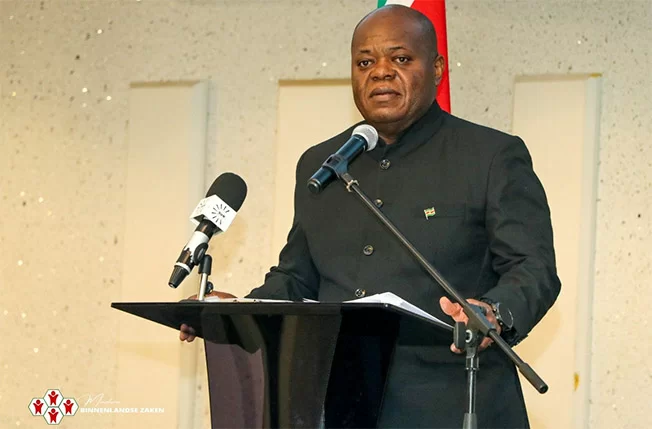
    In a major push to overhaul Suriname’s public sector bureaucracy, Interior Minister Marinus Bee has outlined a comprehensive reform agenda for the country’s civil service, centered on strict performance accountability, updated work model trials, and targeted restructuring to eliminate underperforming roles. The minister made the announcement during an official oath-taking ceremony held at Ballroom Prince on April 11, where more than 750 newly appointed civil servants affirmed their commitment to public service in front of top government officials.

    Bee emphasized that the transformation of the civil service corps remains the government’s top priority, with core goals centered on boosting operational efficiency, embedding innovation across public agencies, and raising overall service delivery standards. While the administration is still exploring the adoption of new flexible work arrangements—including adjusted working hours and rotational shift systems—immediate action is already underway to clean up outdated civil service rosters by removing non-functioning employees.

    “Civil service transformation will proceed without delay,” Bee stated firmly during the event. “Every person on the public payroll must contribute to their role. Those who fail to perform will be removed from service.” The minister explained that this streamlining step is critical to free up budget space that can be redirected to higher compensation for civil servants who consistently deliver strong results, rewarding performance and motivating the broader workforce.

    Among the flexible work proposals currently under consideration are adjustments to the standard 7 a.m. to 3 p.m. work schedule, shifting it to an 8 a.m. to 4 p.m. timetable, as well as a rotational shift system that would spread work across teams from Monday through Saturday. Bee clarified that these plans are still in the early conceptual phase, but they signal the clear direction the Surinamese government is moving to modernize the public sector work environment.

    During the ceremony, the minister also stressed that the civil servant oath of office is far more than a symbolic procedural formality. He framed it as a binding legal commitment that must carry tangible meaning in daily public service work. “You only truly become a civil servant once you have made this promise,” Bee said. “Starting today, all work will be held accountable to that promise.”

    Top government leadership used the gathering to reaffirm the administration’s unwavering commitment to seeing the entire reform process through to completion. The clear message from the Ministry of Interior is that the government expects active engagement, full transparency, and measurable results from all public servants, as the civil service overhauls continue moving forward on schedule.

  • Korpschef Melvin Pinas: focus op vertrouwen en modernisering

    Korpschef Melvin Pinas: focus op vertrouwen en modernisering

    On a formal ceremony held Friday at the Police Academy in Zorg en Hoop, Suriname, Melvin Pinas has been officially inaugurated as the new Korpschef, or chief, of the Korps Politie Suriname (Suriname Police Corps), marking the start of a new leadership era for the country’s primary law enforcement agency.

    Pinas, who has served as interim chief for eight months following the departure of former chief Bryan Isaacs, was promoted to the rank of Police Commissioner during the event. The official transfer of authority was completed when President Jennifer Simons oversaw the passing of the corps’ ceremonial flag from Isaacs to Pinas, formalizing the handover of command. Now the 51st person to hold the position of national police chief, Pinas faces high expectations from across government, law enforcement leadership and the Surinamese public.

    In his maiden address as chief, Pinas struck a measured, pragmatic tone, rejecting promises of quick fixes to the country’s public safety challenges. “I will not promise miracles, because building public safety is not a sprint – it is a process built on consistent, thoughtful, professional effort that brings together innovation, good governance and integrity,” he told attendees. “What I do promise is a clear direction, accountability, and a forward-looking approach to policing.”

    Pinas framed his appointment not just as a personal career milestone, but as a public calling. “This moment is not only a personal high point for me, but above all a vocation: a vocation to serve and lead an organization that stands guard every day over safety, order, peace and legal protection for all Surinamese,” he said.

    The core expectation shared by all senior stakeholders – including police union chair Revelino Eijk, Minister of Justice and Police Harish Monorath, and President Simons – is for Pinas to transform the Suriname Police Corps into an efficient, modern, and ethical security institution that rebuilds public trust through transparent, timely communication. All speakers emphasized that rebuilding trust, both within the police force and with the broader Surinamese community, remains one of the most pressing challenges facing the new leadership.

    Responding to these expectations, Pinas laid out a clear policy roadmap for his tenure. His priority areas include restoring institutional integrity and public trust, tackling widespread criminal activity, strengthening organizational and workforce capacity, advancing ongoing professionalization of the force, improving crisis response capabilities, expanding data-driven policing, cracking down on cybercrime and upgrading digital security, and deepening collaborative partnerships with other government agencies.

    The Suriname Police Union did note one reservation: it was not included in the consultation process for Pinas’ appointment. Despite this procedural concern, both the union and the national government have publicly pledged their full support to the new chief. All parties have underscored that cross-stakeholder collaboration is non-negotiable to achieve the ambitious policing and public safety goals laid out Friday.

  • Women’s Health: Contraceptive Access Caught in Policy Crossfire

    Women’s Health: Contraceptive Access Caught in Policy Crossfire

    In a development that has ignited fierce national debate across Belize, a new regulatory shift from the country’s Ministry of Health and Wellness has placed reproductive health and women’s access to basic medication at the center of public discourse. Implemented in early April 2026, the policy reclassifies a range of formerly over-the-counter medications, including common contraceptives, as prescription-only drugs. Government officials frame the change as a necessary public safety measure to curb improper medication use, but reproductive health advocates, opposition politicians, and even some senior government figures have pushed back hard against the new rule, warning it threatens to undo 40 years of hard-won progress in expanding reproductive autonomy.

    For the Belize Family Life Association (BFLA), the nation’s leading family planning organization, the new mandate evokes the challenges the group was founded to address back in 1985, when it launched to tackle sky-high rates of adolescent pregnancy. Forty years on, BFLA Executive Director Joan Burke warns the policy could push vulnerable women back into that same crisis, and potentially create even worse outcomes.

    “Easy access to contraception is core to women’s empowerment,” Burke explained in an interview with local outlet News Five. “It gives people, especially young women and girls, the ability to make their own choices and retain full autonomy over their own bodies.”

    Critics point to the unique demographic context of Belize, where more than half the population resides in rural areas with severely limited access to primary care physicians. Earth Lopez, the United Democratic Party’s Shadow Minister for Human Development and Gender Affairs, argues the policy fails to account for these on-the-ground realities, creating vastly different barriers for women across different socioeconomic and geographic groups.

    “All women deserve the right to choose, the freedom to make decisions about our own bodies,” Lopez said. “For a woman in Belize City with a standing annual doctor’s appointment and reliable transportation, this new policy is just an inconvenience. But for a rural woman, an unemployed woman, or a woman trapped in an abusive domestic relationship, this policy will completely block her from accessing contraception – a resource critical to her personal safety.”

    Remarkably, even Prime Minister John Briceño has broken with the Ministry of Health to express public concern over the one-size-fits-all approach, noting that Belize cannot blindly adopt policies designed for developed nations without adjusting to local needs. Briceño shared that his own wife raised immediate red flags about the rule when it was announced, and he has committed to convening talks with health officials to revise the framework.

    “I agree that contraception access needs to stay easy for women to avoid unwanted pregnancies,” Briceño said. “We need to sit down with the Ministry of Health to work through this and find a solution that meets our country’s needs.”

    Burke, however, warns that delaying adjustments to the policy will carry severe, life-altering consequences for women across the country. Beyond the inconvenience of a doctor’s visit, the new requirement adds significant unplanned costs: a doctor’s consultation to get a contraceptive prescription can cost up to $75, on top of the $10 cost of the contraception itself – a prohibitive expense for many low-income women.

    Burke outlined the grim outcomes she projects if the policy stands as written: “I expect to see a rise in adolescent and teenage pregnancy, a rise in maternal deaths, and a rise in deaths from unsafe, unregulated abortions. I’ve had sleepless nights since this announcement because I can see so many women and girls being harmed by this decision. Women in rural communities could lose access entirely.”

    As of April 10, the Ministry of Health has not confirmed whether it will consider exemptions for contraceptives or other chronic care medications that were previously available over the counter. The ministry has announced plans to hold a public press conference to clarify details of the new regulation, but calls for broad consultation and a full reconsideration of the policy continue to grow louder across the country.

  • From Stake Bank to Olo Caye; Big Promises, Big Plans

    From Stake Bank to Olo Caye; Big Promises, Big Plans

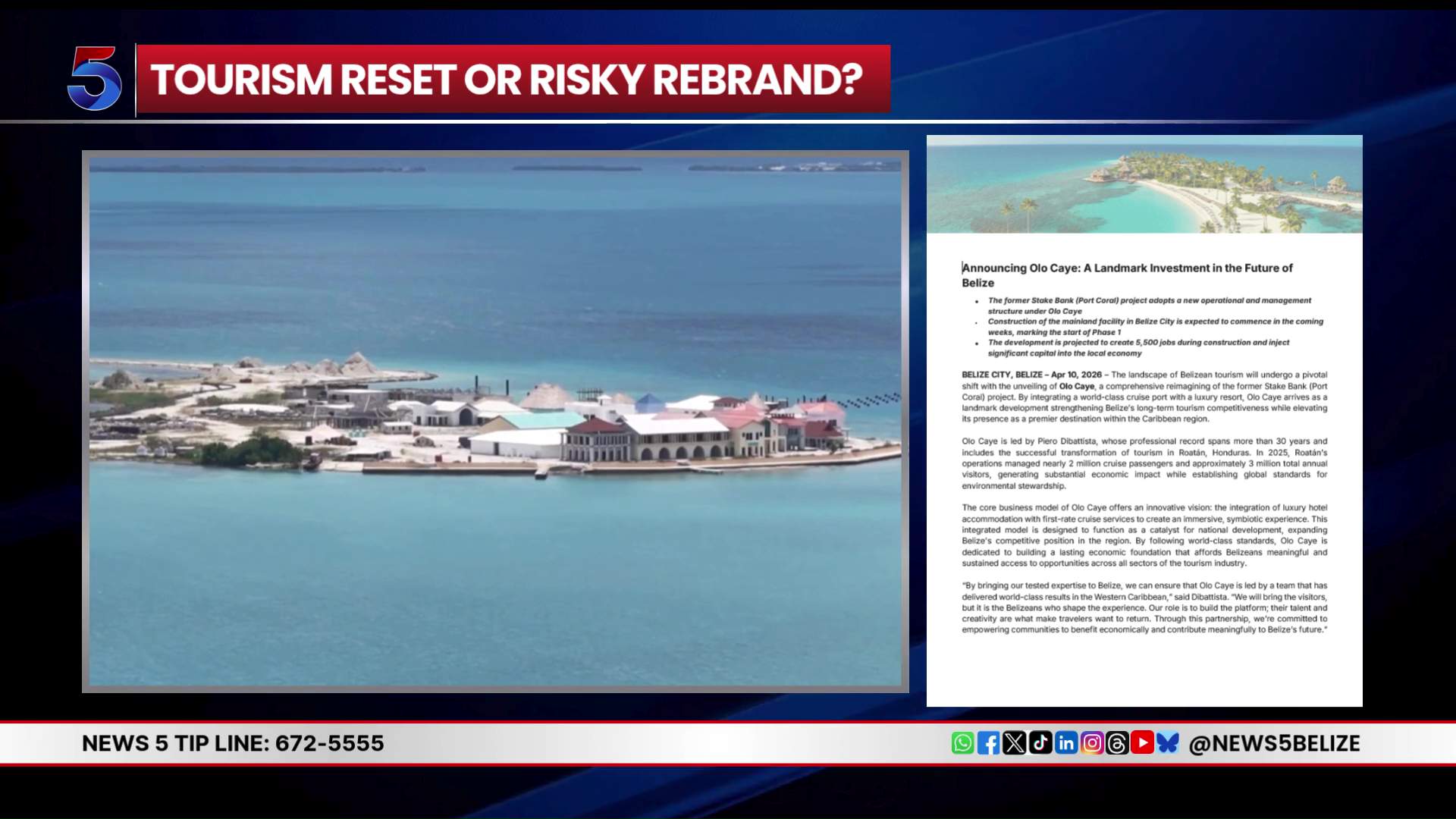
    For years, the abandoned Stake Bank development project left Belize’s tourism sector grappling with uncertainty about the coastal site’s future. Today, that uncertainty is giving way to optimism, as a revitalized, rebranded initiative called Olo Caye steps forward to reshape Belize’s position as a top Caribbean travel destination.

    Unlike the previous stalled effort, Olo Caye is built around a core promise of long-term, inclusive growth that centers local communities rather than external returns alone. The mixed-use development combines a purpose-built deep-water cruise port with a high-end luxury resort experience, a strategic design crafted to help Belize hold its own alongside competing Caribbean hotspots while opening new doors for local small businesses and workers.

    Leading the project is Piero Dibattista, a veteran tourism industry executive with a proven track record of transforming regional travel landscapes. Dibattista previously played a key role in turning Roatán, Honduras, from a little-known coastal spot into one of the Caribbean’s most popular cruise and leisure hubs. Project backers highlight that decades of on-the-ground experience as a guarantee that the Olo Caye team understands both the complexities of managing large-scale cruise operations and the non-negotiable need for strict environmental protection standards.

    According to project leaders, the mission of Olo Caye extends far beyond just increasing visitor numbers. The development’s core goal is to grow tourism responsibly, ensuring that local communities are direct beneficiaries of the sector’s expansion rather than bystanders. That forward-looking vision is already moving from planning to action: developers confirmed that preliminary work on a staging and operations hub along the George Price Highway is set to kick off within the coming weeks. That initial construction will clear the way for full island development, which is on track to be completed by 2028.

    The full buildout includes a range of purpose-built infrastructure: new cruise and ferry piers, open-air retail and dining spaces curated to showcase authentic Belizean art, food, and culture, dedicated affordable commercial space for local entrepreneurs, and modern facilities capable of hosting large international events. Beyond these physical assets, the project’s most transformative impact is expected to be on Belize’s workforce. Olo Caye is projected to create thousands of construction jobs during the build phase, followed by hundreds of stable permanent positions once the development opens. That scale makes it one of the most ambitious private tourism investments in Belize’s recent history.

    For supporters of the initiative, Olo Caye is more than just a new development—it is an opportunity to rewrite the story of the site and reimagine what sustainable, inclusive tourism can look like for Belize’s economy and its people.

  • Despair continues in the wake of floods caused by heavy rains

    Despair continues in the wake of floods caused by heavy rains

    On the early morning of April 7, after hours of intense sustained rainfall, catastrophic flash flooding swept through neighborhoods across the National District and West Santo Domingo, leaving thousands of residents displaced, their homes and livelihoods destroyed in a matter of hours.

    For many families, the disaster unfolded in the dead of night, forcing them to flee their rising properties with only their children clutched in their arms and no prearranged safe shelter to turn to. Many still struggle to process the sudden loss of everything they spent years building.

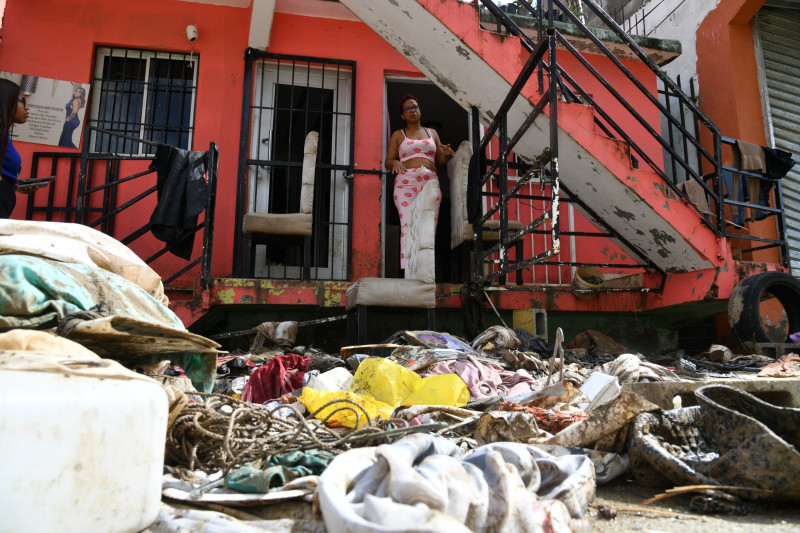
    In the La Yuca neighborhood’s Las 800 zone, named for the local ravine that breached its banks, dozens of households lost nearly all their possessions. Electrical appliances including refrigerators, televisions and radios were completely ruined, while beds, sofas, dining sets, stored food and entire wardrobes were left waterlogged and caked in thick mud. Even days after the floodwaters receded, affected residents recount the experience with raw anguish, recalling crying frightened children and the total disorientation of having no emergency plan in place.

    As residents work to clear meters of mud and standing water from their homes and wash the few belongings they managed to salvage, many have described overwhelming feelings of helplessness over the limited official support they have received. For days after the flood, the only government intervention was municipal street cleaning, with a single truck of prepared meals arriving later for distributed pickup. Local community groups and educational institutions have stepped in to fill the gap in aid.

    The Republic of Costa Rica School, which is supporting 112 displaced families from the area, has launched a donation drive targeting state agencies and local residents. Already, community members have donated clothing and shoes for school-aged children from affected households. School principal Regina Rodríguez explained that the campus has been converted into an official donation collection center. “Once we have gathered most of the donations, families will be able to come to our school auditorium to pick up canned goods, shoes, sheets and other essential supplies that they need right now,” she said.

    During an on-site visit to affected zones, observers documented dozens of submerged vehicles abandoned along flooded streets, alongside municipal crews from the National District City Council and technicians from the Santo Domingo Water and Sewer Corporation (CAASD) working to clear mud that was blocking pedestrian access to local thoroughfares.

    Many local residents linked the extreme flooding to poorly planned drainage infrastructure work in the area. “I have lived here for more than 30 years, and my home has never flooded anywhere near this bad,” said Mary, a local resident whose entire home inventory was damaged by the floodwaters. “This all happened after they started construction on the local drainage ditch.” Community representatives have formally requested that the mayor’s office provide replacement mattresses for the hundreds of residents who lost theirs in the flood.

    In the Las Plantitas area of the Los Girasoles Segundo neighborhood, piles of waterlogged personal belongings stacked outside front gates and mud-caked clothing dragged out to air are the new normal for residents after the nearby ravine overflowed. Affected families report that while a single supply truck carrying beds and food did arrive, only a small number of households received assistance, leaving those living closest to the ravine with no support at all. Residents have also issued urgent calls for water trucks, noting that running water has been cut off in the area for 15 days, leaving them unable to even wash mud out of their flood-soaked clothing.

    “I’m hanging everything out to dry unwashed because there’s not a drop of water to be had, and no one is bringing us any,” explained Ana Ramona Sánchez, a Los Girasoles Segundo resident whose entire home was flooded overnight. “Last night, I stayed trapped on my bed behind a locked door holding back floodwater until the waters receded at dawn.”

    At the local Colegio Profesora Margarita Báez, the flood damaged critical student academic records, with many that could be recovered laid out in school yards to dry out. The school lost all of its computers, speakers and other electronic equipment. Principal Alejandrina Severino also linked the disaster to unregulated construction. “Water flooded the main office and all downstairs classrooms because construction is being done directly in the ravine, and loose construction debris trapped floating trash, which blocked the water from draining,” she said.

    In the Hato Nuevo and San Miguel neighborhoods of Manoguayabo, flooded streets left residents with total loss of household belongings. Many long-term residents described this rainfall as the most severe they have ever witnessed, noting that even in past storm events, flooding was never severe enough to force families to flee into the night with small children. “We kept moving from house to house trying to stay dry, until every one filled up with water,” recounted Elaina Martínez, who fled with three young children including a newborn. “The Emergency Operations Center (COE) sent a boat to evacuate us to the main avenue, where we could go stay with relatives. It was absolutely horrifying.”

    Today, beds, furniture and waterlogged clothing line the curbs outside Manoguayabo homes, discarded after being destroyed by mud and floodwater. Many residents are openly grieving as they clean up the few possessions they can salvage.

    In Los Alcarrizos, the heavy rains caused the Lebrón Creek to burst its banks, triggering catastrophic flooding that swept several people away in fast-moving currents. Local community members managed to pull the trapped residents to safety before emergency crews arrived. “It was an absolute disaster,” recalled Carolina Rojas, who was injured when a nail pierced her foot as she fled. “Around 2 a.m., the creek rose in seconds, flooding every house in the area. Two elderly people were swept away by the current, and we managed to pull them out with a rope. They’re still in the hospital now. Nothing like this has ever happened here before, but these rains destroyed everything, and you just saw people running, clutching their children to get out.”

    In the wake of the disaster, displaced families have been staying with neighbors and extended relatives out of fear of further flooding, only beginning to return to their properties after the COE removed the province of Santo Domingo from its official flood alert list.


  • PM Briceño Hails Port Expansion as Economic Milestone

    PM Briceño Hails Port Expansion as Economic Milestone

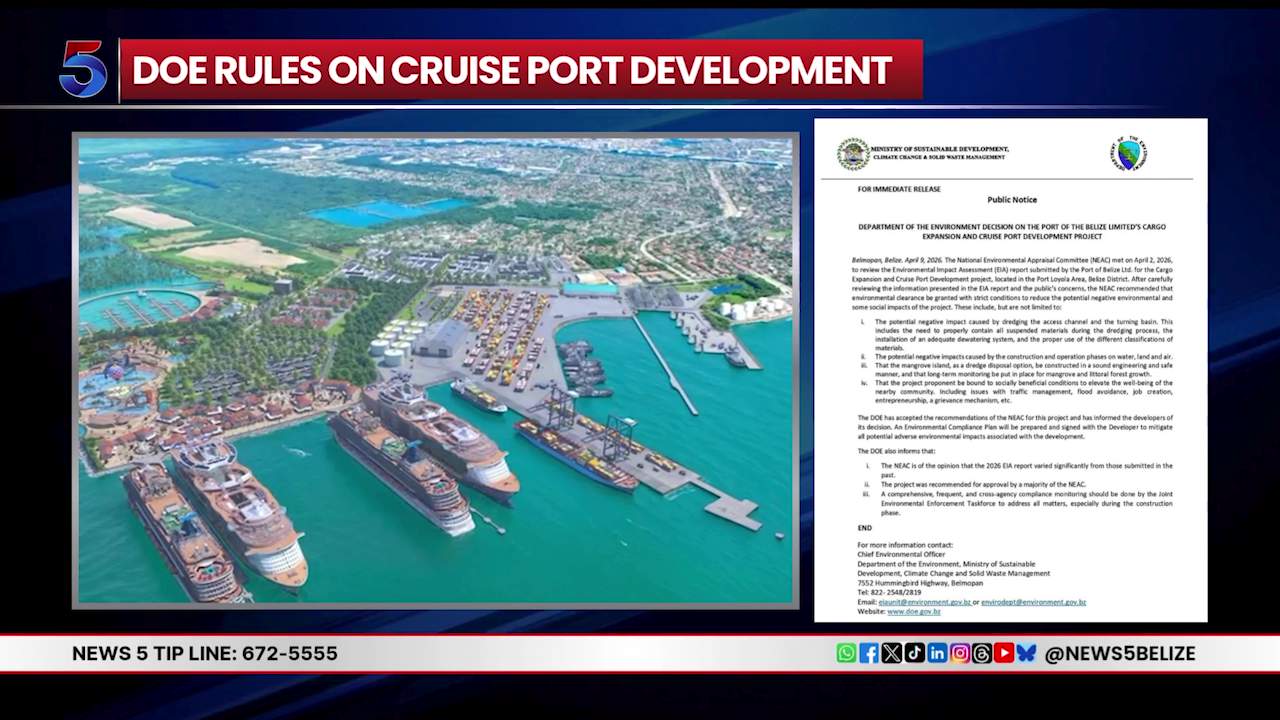
    In a landmark decision that paves the way for decades of stalled infrastructure development, Belize’s National Environmental Appraisal Committee (NEAC) has granted conditional approval for the long-awaited expansion of the Port of Belize, a project Prime Minister John Briceño has hailed as a transformative turning point for the small Caribbean nation’s economic future.

    The project, which will add expanded cruise ship berthing and modern container handling facilities to the country’s primary maritime gateway, has been more than 20 years in the making. Early attempts to develop a new cruise and container port at the site dating back to the early 2000s fell through for a range of regulatory, financial and political reasons. Under the current administration, the government moved to purchase the port assets from previous owner Waterloo Group, launching a new formal review process that has now reached its key approval milestone.

    Briceño pushed back firmly against circulating claims of political interference in NEAC’s approval decision, calling the entire regulatory process transparent, professional, and led by independent qualified experts. “It is nonsense,” Briceño said of allegations that the government pressured the committee to approve the project. “These people are highly qualified professionals and they did what they believe is right. They addressed most of the issues. That is why when they gave the approval, they gave the approval with certain conditions they want to add.” He clarified that the decision is a formal approval with binding environmental and community safeguards, not a conditional approval that leaves the project in regulatory limbo.

    Addressing questions about potential future legal challenges from competing developers or previous stakeholders, Briceño noted that the government already purchased the port from Waterloo Group, and followed all formal regulatory procedures to reach the current decision, leaving no clear basis for legal pushback. He also thanked his cabinet for their early support in taking on the high-stakes project, crediting the administration’s deliberate, methodical approach for putting the project on track for success.

    “We took our time and made sure we had a good board of directors. We put a public execution unit, headed by Doctor Gilly Canton, people that know what they are doing, made sure that we prepared a proper environmental plan,” Briceño explained. “We had the advantage of seeing what went wrong with the previous one and made sure we take those corrective measures to ensure we get the support.” Now that regulatory approval is secured, the government will move forward to partner with private firms for the dredging and construction phases of the project.

    Regulators confirmed that the approval process reflects the project’s large scale and complexity. Chief Environmental Officer Anthony Mai told reporters that the review launched in May 2025, with regulators immediately flagging the need for a full Environmental Impact Assessment (EIA) to identify potential risks. Following a screening process and months of deliberation, NEAC delivered a final recommendation to approve the project, which the Department of the Environment (DOE) has formally accepted.

    The approval does not mean construction can begin immediately, however. Developers are now required to finalize a comprehensive Environmental Compliance Plan that will lock in legally binding measures to avoid, prevent and mitigate potential negative environmental impacts. The plan also must address key socioeconomic concerns raised by communities and stakeholders, including improved traffic management, flood mitigation and drainage infrastructure, local job generation, support for small local entrepreneurship, and the establishment of a formal public grievance mechanism to address community concerns throughout the project’s development and operation.

    “The process is still not ended because we are in the process of preparing the Environmental Compliance Plan,” Mai explained, noting that the rigorous multi-month review ensures that all potential risks are addressed before construction breaks ground.

    Briceño also moved quickly to address ongoing environmental concerns and clarify confusion surrounding potential private investors for the project. He acknowledged that non-governmental environmental organizations will likely never offer full support for the development, but emphasized that the government is committed to responsibly minimizing environmental harm. “If you build a house, you change your environment. So obviously there are going to be some effects, but what we need to do is mitigate them and try to minimize them as best as we can, and that is my commitment and the commitment of our government,” Briceño said. “We are going to do our best to mitigate the environmental issues, but to ensure we can build a world-class port for the people of this country.”

    On the topic of investment, Briceño clarified that the government intentionally delayed negotiations with potential private partners until environmental approval was secured, to avoid uncertainty for all parties. Multiple major international port development groups have already expressed interest in partnering on the project, including global industry leader SSA Marine, whose parent company is investment firm Black Rock, Turkey’s Global Port Holdings, and a Mexican development group. The government will now hire consulting firm Nicols and Mofat, which developed the project’s original master plan, to set negotiation terms and select the partner that delivers the best outcome for Belize.

    The expanded port is projected to act as a game-changer for Belize’s economy, boosting the country’s regional trade capacity, drawing increased cruise tourism traffic, and driving long-term inclusive national development. Briceño framed the approval as a long-awaited breakthrough that unlocks critical new investment in Belize’s maritime sector, positioning the country for stronger economic growth in the coming decades.

  • Strengthening peanut production in Durcis, Haiti

    Strengthening peanut production in Durcis, Haiti

    Haiti’s Ministry of Agriculture is launching a targeted initiative to boost peanut production in the agricultural commune of Durcis, part of a broader national push to strengthen food security and lift rural farming communities. Led by Agriculture Minister Marcelin Aubourg, the program kicked off with the distribution of premium, high-yield peanut seeds to local farmers, delivered under the umbrella of the Resilient Agriculture for Food Security Project (PARSA), a initiative supported by World Bank funding.

    During his working visit to Durcis, a region long recognized for its untapped agricultural potential, Minister Aubourg held direct consultations with members of local farmers’ associations. These conversations allowed the ministry to center farmer needs in its programming, hearing firsthand the core challenges facing small-scale producers and ensuring future interventions align with on-the-ground realities.

    The peanut seed distribution in Durcis is just one component of a far larger sector-wide support effort across Haiti. By the end of the program’s current phase, PARSA will deliver a total of 130 tons of improved peanut seeds to revitalize the crop, a strategic agricultural commodity, across four key departments: South, Nippes, Central, and Grand’Anse. This distribution follows earlier support distributed during the 2026 spring planting campaign, which included 200 tons of bean seeds, 3.5 million cassava cuttings, 1.3 million banana seedlings, and 2.6 million yam transplants. All of these inputs are designed to ramp up overall agricultural output across intervention zones and reduce the financial burden on smallholder farmers working to improve their harvests.

    Beyond distributing critical planting materials, Minister Aubourg outlined a long-term vision for modernizing Haiti’s agricultural sector that centers on expanding reliable water access. He emphasized that functional irrigation infrastructure is a non-negotiable foundation for consistent, stable agricultural production. Moving forward, the ministry plans to upgrade and expand national hydraulic infrastructure to meet the growing water needs of farming communities, ensure year-round access to this critical resource, and reduce output volatility caused by drought and inconsistent rainfall, directly advancing national food security goals.

    As part of the broader push to increase domestic agricultural output across all subsectors, Minister Aubourg also announced plans to open a new bovine artificial insemination center in the South Department in the coming months. The facility will deliver modern reproductive technologies to local cattle farmers, with the goal of boosting both national milk and meat production by improving livestock genetics and overall sector productivity. The minister highlighted the key technical and financial support provided by the Food and Agriculture Organization of the United Nations (FAO) for this new initiative, underscoring how targeted international cooperation remains central to growing Haiti’s agricultural sector and delivering long-term food security for the Haitian people.