博客

  • Dominican Republic promotes UNESCO World Heritage nomination for La Isabela

    Dominican Republic promotes UNESCO World Heritage nomination for La Isabela

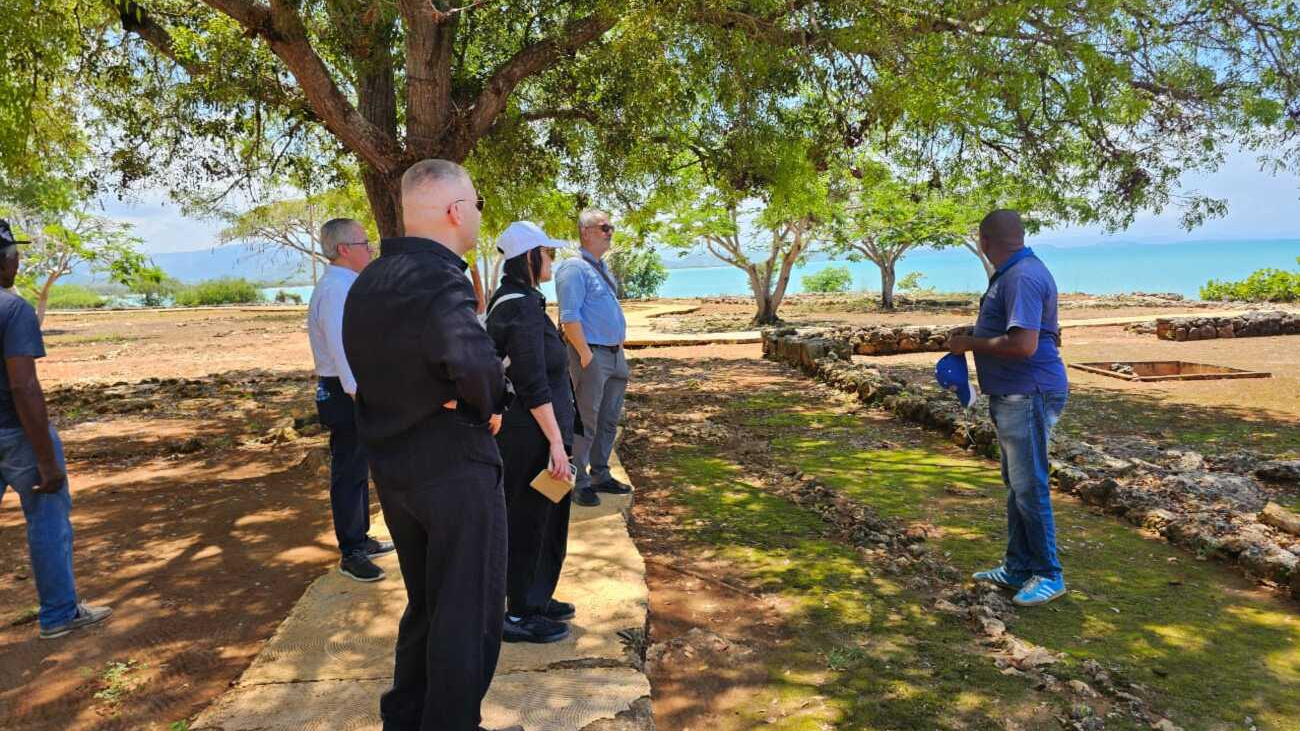
    In a step forward for cultural preservation and international collaboration, the Dominican Republic is actively moving closer to its goal of securing UNESCO World Heritage designation for La Isabela, a landmark colonial-era site on the nation’s northern coast. To strengthen the site’s nomination dossier and tap into global specialized expertise, the country has welcomed a delegation of Turkish cultural heritage professionals, led by veteran underwater archaeologist Harun Özdaş, for an in-depth technical assessment of the historic location.

    The Turkish delegation also included senior diplomatic representatives, headed by Ambassador Emriye Bağdagül Ormancı of Turkey’s diplomatic mission to the Dominican Republic, alongside senior cultural heritage officials from the Dominican Republic’s Ministry of Culture. During the visit, participating authorities repeatedly highlighted the critical role that the site’s submerged archaeological remains play in establishing its global cultural significance. Underwater cultural artifacts and structural remnants, they noted, are not just secondary additions to the site’s history—they are a core component that will help prove La Isabela’s ‘outstanding universal value,’ the key requirement for UNESCO World Heritage inscription.

    La Isabela holds a unique place in modern global history: founded in 1493 by Christopher Columbus during his second voyage to the Americas, it was the first permanent European settlement established across the entire Western Hemisphere. Today, the site preserves irreplaceable archaeological evidence from the earliest days of transatlantic colonization, including foundational urban planning traces, intact structural foundations, and a vast collection of period artifacts that offer unparalleled insight into the earliest interactions between European colonizers and Indigenous populations of the Caribbean. For years, La Isabela has held a spot on the Dominican Republic’s tentative UNESCO nomination list, a preliminary step toward formal consideration for the coveted global designation.

    The technical partnership with Turkish archaeologists is part of a broader strategy by the Dominican Ministry of Culture to expand global collaboration in heritage conservation. Beyond advancing the UNESCO bid, the cooperation facilitates cross-border knowledge sharing, builds capacity for specialized underwater heritage preservation, and allows both nations to exchange evidence-based best practices for protecting vulnerable submerged cultural assets. Dominican cultural officials noted that this international collaboration strengthens not only La Isabela’s nomination prospects but also the country’s broader national efforts to preserve and promote its unique historic and cultural legacy to the world.

  • TTPS to take control of  municipal  police weapons

    TTPS to take control of municipal police weapons

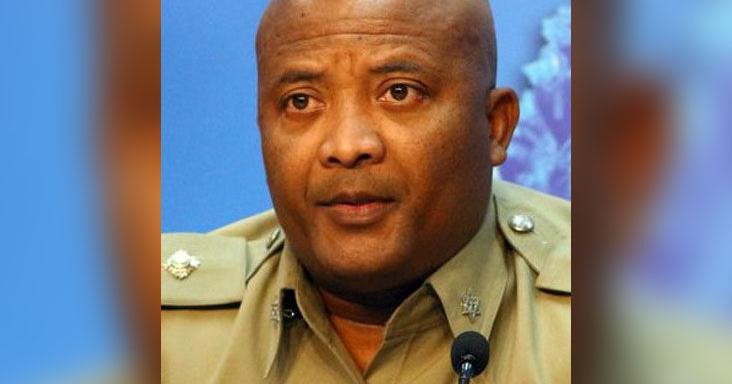
    A sweeping security overhaul is underway in Trinidad and Tobago after a shocking incident of law enforcement-linked gun trafficking left an acting municipal police corporal dead and exposed months of illegal weapons diversion to criminal networks. All firearms held at local government municipal stations across the country are being moved to the custody of the Trinidad and Tobago Police Service (TTPS), following a formal recommendation from Police Commissioner Allister Guevarro that has been immediately approved by senior government officials.

    The urgent policy shift was triggered by the murder of Acting Corporal Anuska Eversley at the San Fernando Municipal Police Station, which occurred last Sunday alongside the theft of a large cache of firearms and ammunition from the facility. What initially appeared to be an isolated violent robbery quickly unraveled into a far-reaching scandal, revealing that guns had been systematically stolen from the municipal station for months and sold on the black market to underworld criminal groups. Investigators have also uncovered evidence that municipal police officers falsified official station records to cover up the missing weapons, and Eversley herself is reported to be a key figure in the illegal racket, with investigators eyeing a fellow municipal officer as the primary suspect in her killing.

    In a formal letter dated April 22, 2026, addressed to Minister of Rural and Local Government Khadijah Ameen, Guevarro outlined that preliminary reviews had uncovered widespread administrative irregularities in the Firearm User’s Licences issued to municipal corporations under the Ministry of Local Government. To address these gaps and bring all weapons holdings into compliance with national firearms legislation, Guevarro proposed the immediate transfer of all licensed municipal firearms to secure storage at designated police stations within their respective jurisdictions, following coordination with local division senior superintendents.

    Under the new temporary arrangement, municipal officers will still be able to access assigned firearms for official duty directly from the police stations where they are stored. This structure preserves full operational capacity for municipal policing while implementing strict, accountable custody controls that were missing under the previous system. The transfer order will remain in effect until a full national audit and verification of all municipal firearms and ammunition is completed, and all relevant Firearm User’s Licences are brought into full regulatory compliance. Guevarro requested Ameen’s intervention to disseminate the order through her permanent secretary to all department heads with oversight of municipal weapons holdings.

    Ameen, who also serves as Member of Parliament for St Augustine, confirmed in an interview with the Express that she accepted the recommendation immediately, issuing a direct directive to all chief executive officers of city, borough and regional corporations to comply with the transfer order without delay. She noted that the TTPS will partner with local government bodies to ensure full compliance across all jurisdictions. The existing allocation process for municipal firearms already requires the assistant commissioner overseeing municipal policing to submit formal requisitions for weapons and ammunition to the Police Commissioner, who then authorizes purchases — a process that will now be reviewed alongside broader regulatory reforms.

    Speaking at a press conference on Monday, Guevarro announced that a full audit of firearms holdings at the San Fernando Municipal Corporation would be the first step, with permanent policy changes to follow once the scope of the irregularities is fully mapped. On Wednesday, Prime Minister Kamla Persad-Bissessar publicly addressed the scandal, confirming that the illegal gun racket had been operating undetected for roughly eight months before Eversley’s murder exposed the network. The investigation into Eversley’s killing and the broader gun trafficking ring remains ongoing, with law enforcement continuing to interview suspects and review municipal records to identify all involved parties.

  • 3 out of 10

    3 out of 10

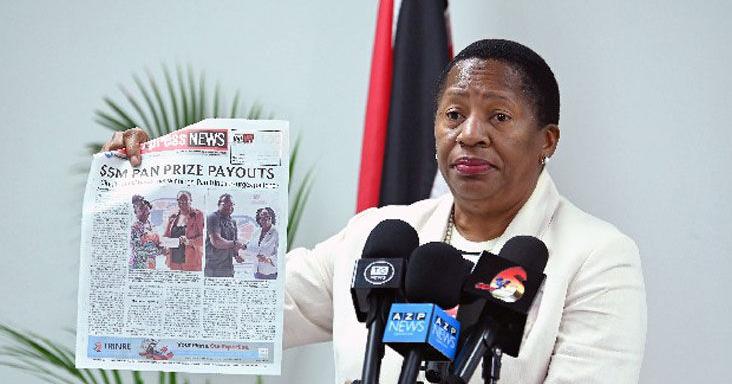
    As the United National Congress (UNC) administration prepares to mark its first full year in power following the April 2025 general election, Trinidad and Tobago’s Opposition Leader Pennelope Beckles has delivered a scathing assessment of the government’s tenure, awarding it a failing 3-out-of-10 performance score. Speaking at a press briefing hosted Tuesday at the Opposition Leader’s Office in Port of Spain, Beckles outlined a litany of unmet promises and policy failures that she said have left ordinary citizens worse off.

    At the top of Beckles’ list of criticisms is the government’s ongoing failure to curb rising violent crime and homicide rates across the country. She noted that the current state of emergency implemented to tackle public safety has yielded no measurable improvements, leaving communities still vulnerable to violent offending. She added that Prime Minister Kamla Persad-Bissessar has refused to engage transparently and honestly with the public on the most pressing issues affecting daily life.

    On economic and employment fronts, Beckles argued that the UNC has betrayed core campaign pledges to create new jobs and expand access to affordable housing. Instead of delivering on promises of growth, Beckles said the administration has overseen mass layoffs of workers from two major public job programs — the Community-based Environmental Protection and Enhancement Programme (CEPEP) and the Unemployment Relief Programmes (URP). To date, she claimed, the government has not completed construction of a single new affordable housing unit, and no meaningful expansion of employment opportunities has materialized.

    Beckles also pointed to widespread economic strain hitting local communities. During recent visits to public markets, she said, vendors reported that perishable goods are regularly going unsold and rotting, as cash-strapped consumers cut back on discretionary spending. She added that small and medium-sized businesses, the backbone of the local economy, are closing at alarming rates amid shrinking consumer demand.

    A further point of contention is the government’s reversal on the Dragon natural gas deal negotiated with Venezuela by the previous administration. Beckles recalled that Persad-Bissessar had heavily criticized the agreement ahead of the election, even labeling Venezuela’s acting president Delcy Rodriguez a narcotrafficker, and ultimately allowed the deal to collapse. Now, she said, the government claims it wants to secure its fair share of revenue from the deal, an incoherent shift that underscores the administration’s incoherent foreign and energy policy.

    Turning to the government’s planned anniversary celebration — a public fete scheduled to take place Wednesday in Couva — Beckles warned Trinidad and Tobago residents not to accept the administration’s rosy narrative of progress. She said officials will likely attempt to claim crime is falling, the construction sector is growing, and the energy industry is attracting new investment, but none of these claims match on-the-ground reality.

    In a fact check of the government’s construction claims, Beckles noted that domestic cement sales have dropped by 41% — a clear indicator that construction activity has not revived, contrary to official claims. She also pointed to rising unemployment in Tobago as further evidence of economic decline, and questioned what the administration has done with the property tax revenue collected by the previous government, breaking a campaign promise to reimburse those funds to eligible citizens.

    Beckles also called out new tax measures implemented by the UNC, saying what citizens were promised would be a welcome “Christmas present” from the new administration turned out to be a slate of new and increased taxes: higher road traffic fines, a new landlord tax, and increased duties on alcohol, among other levies.

    Beyond economic and public safety failures, Beckles highlighted crises in other key policy areas. She criticized the government’s push for full digitalization of the education system, noting that similar policies have failed to deliver improvements in other countries, and warned the shift is leaving disadvantaged students behind. She also confirmed the public health system is facing a severe ongoing crisis under the current administration, with reduced access to care for ordinary patients.

    Concluding her assessment, Beckles said she could identify almost no policy areas where the one-year-old UNC administration has delivered meaningful success. She called on all Trinidad and Tobago residents to hold the government accountable for its broken promises and rejected the administration’s attempts to frame its first year in power as a success, labeling the government “heartless and wicked” for its treatment of unemployed and working-class citizens.

  • Mystar tipped for top municipal police post

    Mystar tipped for top municipal police post

    A major leadership transition is unfolding at the top of the Trinidad and Tobago Municipal Police Service (TTMPS), coming on the heels of a shocking on-duty murder and unfolding allegations of widespread illegal weapons diversion linked to serving officers. Senior police and government sources confirm that current Assistant Commissioner of Police Wayne Mystar has been tapped to replace outgoing TTMPS head Surrendra Sagramsingh, who was placed on immediate administrative leave earlier this week to facilitate the ongoing investigation.

    As of Thursday evening, however, Mystar had not yet received formal written documentation of his appointment, multiple sources close to the process confirmed to local media. Discussions to finalize the leadership change have already been concluded at the highest levels of both the Trinidad and Tobago Police Service and the Ministry of Local Government and Rural Development, with Mystar the unanimous pick to take over the troubled municipal force.

    Sagramsingh, who has led the TTMPS for the past six years, publicly confirmed this week that he had been placed on leave. In a phone interview with the Express, he acknowledged the administrative action, noting that the decision was framed as a necessary step to preserve the impartiality and transparency of the ongoing probe into the murder of 33-year-old corporal Anuska Eversley and the theft of government firearms and ammunition from the San Fernando Municipal Police Station.

    “Because of the investigation ongoing; and they wouldn’t want you to be around performing duty; and to ensure transparency in case they see a connection,” Sagramsingh explained of the official rationale. The long-serving officer added that while he would have preferred to remain on active duty, he has fully complied with the government’s directive. “The fact is I am in my career as a police officer (and) have been bent on service. So, definitely you would have preferred to have served. But if the authorities feel that is the best thing to do at the time, I am compliant,” he said.

    The formal administrative order placing Sagramsingh on leave is laid out in an April 21, 2026 letter from acting permanent secretary Peter Mitchell. The letter clarifies that the leave is a precautionary procedural measure, not a finding of wrongdoing or liability on Sagramsingh’s part. He has been ordered not to report for duty or exercise any of his former official powers until further notice, but is required to remain accessible to investigators and fully cooperate with all inquiries.

    The crisis rocking the TTMPS began early Sunday morning, when Eversley — a mother of three — was found dead inside the San Fernando Municipal Police Station at approximately 4:40 a.m. A post-mortem examination conducted this week confirmed the 33-year-old officer suffered blunt force trauma before being strangled and stabbed to death. To date, police have taken 10 people into custody for questioning in connection with Eversley’s killing.

    Preliminary findings from the ongoing investigation have uncovered disturbing ties between the murder and a wider alleged criminal ring operating within the municipal police force. Senior investigative sources told the Express that early probes point to a group of serving municipal officers who have allegedly been stealing police firearms and ammunition and selling the weapons to criminal gangs and underworld networks. Sources say the illegal trafficking operation is believed to have been active for between six and eight months, raising urgent questions about systemic oversight failures within the TTMPS that allowed the alleged scheme to continue undetected for months.

  • THA passes Marine Parks Bill

    THA passes Marine Parks Bill

    On April 23, the Tobago House of Assembly (THA) approved the landmark Tobago Marine Parks Bill 2026 during a special sitting held at the Assembly Chamber in Scarborough. The date of the vote carried profound symbolic weight: it marked the eighth birthday that Angelica Saydee Jogie, a young child killed in a high-profile jet ski collision off Tobago’s Pigeon Point beach in April, would have celebrated.

    Angelica lost her life on April 8 when an out-of-bounds jet ski collided with her and her family during what was meant to be a pre-birthday getaway. Speaking ahead of the vote, THA Chief Secretary Farley Augustine, who sponsored the bill, reflected on the tragedy that pushed forward this long-stalled legislation. The family had traveled to Tobago specifically because the island represented joy, peace and natural beauty to their children, Augustine noted. What should have been a celebratory trip turned into an unthinkable nightmare for the Jogie family, he added, joining their call for urgent regulation of unregulated recreational watercraft after the incident. Angelica’s mother Salisha Jogie has repeatedly called for a full ban on jet skis across Tobago’s public swimming beaches in the wake of her daughter’s death.

    The core purpose of the new bill is to establish a formal, enforceable legislative framework for the protection, adaptive management and sustainable use of all of Tobago’s marine protected areas. It aims to preserve fragile coastal biodiversity, secure marine ecosystems for future generations, and clarify enforcement powers to crack down on unsafe or illegal watercraft activity in designated swimming zones. Key enforcement provisions outline steep penalties for anyone who interferes with authorized inspectors – including police officers and Coast Guard personnel – carrying out their official duties under the law. Individuals convicted of obstructing enforcement face a maximum fine of $100,000 and up to 12 months of imprisonment, sending a clear signal about the seriousness of regulatory compliance.

    Augustine confirmed that following the THA’s approval, the bill will move to Trinidad and Tobago’s national Parliament for final consideration within the next two to three weeks. He noted that while the legislation shares core foundations with a 2020 bill drafted when the People’s National Movement (PNM) controlled the THA, the previous PNM-led national government allowed the proposal to languish for years without action. He criticized former PNM Prime Minister Keith Rowley for publicly calling for a jet ski ban after leaving office, pointing out that Rowley’s own administration failed to advance the necessary legislation when it had the power to do so. Augustine emphasized that the THA can only set policy; enforceable national law is required to put that policy into practice, a point Rowley omitted in his post-office commentary.

    The Chief Secretary also raised pointed concerns about ongoing enforcement gaps at the popular Buccoo Reef Marine Park, noting that just one week after Angelica’s death, jet ski operators were still found operating illegally in zones marked exclusively for swimmers. He accused the Trinidad and Tobago Police Service (TTPS) of failing to intervene against these trespassing operators, warning that if any future incident leads to legal action against the THA, his administration will direct its legal team to shift responsibility to the Attorney General and the national central government. Augustine argued that the THA has fulfilled its duty by creating policy, running public education campaigns and marking restricted zones, but it cannot enforce rules without the full backing of national law and active cooperation from national law enforcement agencies, which have left the THA unable to act effectively to date.

  • Gonsalves shows ‘stunning lack of imagination’ on dev’t bank (+video)

    Gonsalves shows ‘stunning lack of imagination’ on dev’t bank (+video)

    A sharp political clash has erupted in St. Vincent and the Grenadines over plans for a new national development bank, with Prime Minister Godwin Friday launching a blistering rebuke of Opposition Leader Ralph Gonsalves, framing the former prime minister’s criticism as evidence of the outdated governance that led to his Unity Labour Party (ULP)’s landslide defeat in November 2024’s general election.

    The debate unfolded in Parliament on Tuesday, April 21, 2025, during discussion of a motion tabled by government senator Chelsea Alexander, advancing the New Democratic Party (NDP)’s campaign pledge to reestablish a national development bank. The incoming NDP government revived the proposal after the ULP shut down the country’s original development institution shortly after taking power in 2001.

    Under the NDP’s plan, Alexander explained, the new national development bank will expand affordable access to development capital for small and medium-sized enterprises, small-scale producers, fisher folk, and other underserved vulnerable sectors that have long struggled to secure funding from existing fragmented financing frameworks.

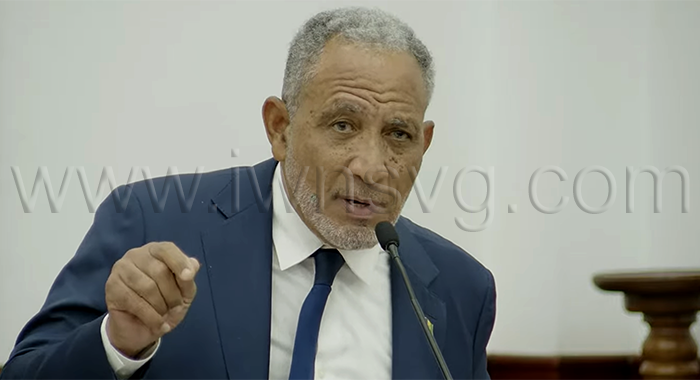
    Gonsalves, whose ULP held power for 25 years before the NDP’s decisive 14-1 election victory, pushed back forcefully against the proposal. He argued that the country already maintains a network of specialized, fit-for-purpose public institutions and programs that already deliver the core services the new bank is intended to provide. These include the 1960s-founded development corporation that was later restructured into the development bank his administration closed, the Bank of St. Vincent and the Grenadines, the Student Loan Company, the Farmer Support Company, and targeted initiatives including the PRYME program and zero-down-payment mortgages for public servants, all introduced under his leadership.

    Beyond questioning the need for a new standalone bank, Gonsalves raised serious concerns about the institution’s long-term viability. He challenged the NDP to identify a source of cheap, sustainable funding to support the bank’s preferential lending mission, warning that high borrowing costs, steep administrative overhead, and risks of rising non-performing loans could leave the project insolvent. “You may well end up with your national development bank where the funding is just not available at rates of interest and on terms to make it viable,” he told the chamber.

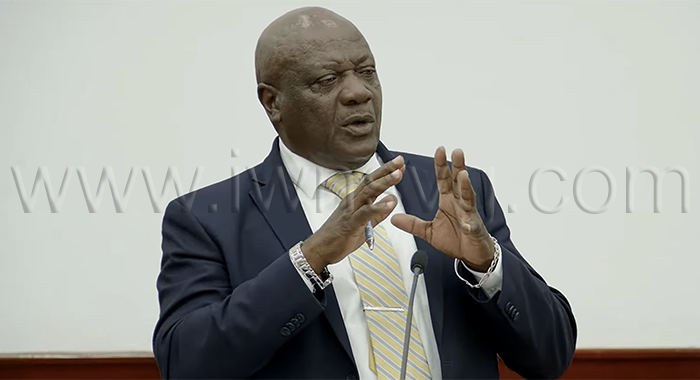
    Friday rejected every element of Gonsalves’ argument, dismissing the opposition leader’s stance as proof of a “stunning lack of imagination” and a stubborn attachment to outdated governance models. The prime minister tied the opposition’s criticism directly to the ULP’s historic election defeat, arguing that the result was not just a routine electoral loss, but a full repudiation of the ULP’s backwards-looking approach to governing.

    “You can’t govern based on simply everything that you saw in the past. You have to plan for the future,” Friday said. “And that is what we bring to the table… a fresh approach, a new way of looking at things, more creativity, more diligence, hard work and putting the people of this country first.”

    The prime minister also pushed back against Gonsalves’ claim that consolidating multiple functions into one new bank would be inefficient, pointing to major flaws in the existing fragmented system that the NDP is seeking to fix. He noted that 75% of loans issued by the ULP-established Farmer Support Company currently go unrepaid, arguing that the new structure will deliver far better outcomes for public finances and beneficiaries alike. Contrary to claims that the bank would add unnecessary bureaucracy, Friday stressed that the proposal is a deliberate effort to rationalize the current patchwork of support programs, creating a single, more coherent and accountable institution to deliver development financing, rather than adding an extra layer of government.

    Friday also framed the opposition’s opposition as a rejection of support for ordinary Vincentians, telling constituents: “Let the people of St. Vincent and the Grenadines register this: the opposition opposes the national development bank, an institution that is there to give small business people, ordinary people, fisher folk, access to capital, to guidance so that they could build themselves up. They are against that.”

    When the allocated time for private members’ motions expired at 5 p.m. Tuesday, the debate on the motion was adjourned to a future sitting of Parliament.

  • Housing payments moved to Treasury following corruption scandal

    Housing payments moved to Treasury following corruption scandal

    In a sweeping overhaul of accountability measures for a national post-disaster housing repair and reconstruction initiative, the new government has ordered all program payments to be routed exclusively through the national Treasury, eliminating direct disbursements by the Ministry of Housing. The policy shift comes in the wake of shocking discoveries of widespread mismanagement and corruption that left contractors fully paid for unbuilt homes and construction materials distributed with no transparent oversight.

    Housing Minister Andrew John outlined the reforms in a parliamentary address Tuesday, responding to questions from opposition Senator Carlos James about the 2026 housing recovery program for properties damaged or destroyed by two successive major natural disasters: the April 2021 eruption of the La Soufriere volcano and Hurricane Beryl, which made landfall on July 1, 2024.

    John explained that the new administration, which took office after winning November’s general election, inherited a deeply troubled program from the Unity Labour Party, which held power for 25 consecutive years before being voted out. The scope of the financial and operational mismanagement is so severe, he told lawmakers, that housing ministry officials are now completely barred from processing direct payments to contractors or suppliers.

    “Everything now must go through the Treasury system so that we have proper accountability. No longer will we have cases where 10 or 15 homes are marked as built in a constituency, but no one can find them,” John told parliament.

    The minister confirmed that unfulfilled legacy contracts from the previous administration represent one of the largest barriers to delivering the 2026 housing program. “We have discovered that what consumes a large portion of the budget allocated for 2026 is contracts issued by the prior government where contractors received full payment but never built the scheduled homes,” he said.

    The ongoing mismanagement has been formally referred for investigation to Minister of National Security St. Clair Leacock, who also serves as Member of Parliament for Central Kingstown. John has already briefed Prime Minister Godwin Friday on irregularities found in Friday’s Northern Grenadines constituency, and is preparing a similar briefing for Leacock on issues in Central Kingstown. “These are serious issues, and they will impact the outcome of our performance,” John acknowledged.

    A second major unresolved challenge is a massive backlog of unpaid debts owed to both local and international building material suppliers and service providers, carried over from the previous administration. John framed the shift to centralized Treasury payments as a core step in a broader effort to rebuild financial discipline, transparency, and resilience to the troubled housing recovery effort.

    “This government is a government with a vision, is a government of action, and so we will overcome these problems,” John said. Going forward, stricter contractual enforcement will be paired with the new payment system to hold contractors accountable. The minister confirmed he has referred multiple problematic legacy contracts to the Attorney General to enforce contractual obligations, noting the sheer scale of the prior mismanagement is deeply troubling. “I don’t know how people could get full payment under a contract and walk away without delivering the work. It’s really, really troubling,” he said.

    Despite the challenges, John confirmed that critical roof repair and rehabilitation work is continuing, with a renewed focus on “rebuilding better” ahead of the Atlantic hurricane season, which officially begins June 1. For the remainder of this year, the majority of housing activity will focus on retrofitting and rehabilitating damaged properties to improve disaster resilience.

    The government is also hiring and training new assessors in every parliamentary constituency to ensure allocations of construction materials match actual on-the-ground needs, with mandatory follow-up inspections to confirm materials are used appropriately for disaster-resilient repairs. “We are encouraging all homeowners not just to rebuild, but to rebuild better, and prepare for the possibility of another major disaster,” John said.

    With the new centralized payment system and enhanced oversight now in place, John reaffirmed that the housing recovery program is back on track for 2026. “I’m pleased to announce that we are on track once again to rebuild people’s homes,” he said. “We are on track — and not only are we on track now, but we are on track in a more responsible manner.”

  • URGENT : Yellow alert for 3 departments, reinforcements expected

    URGENT : Yellow alert for 3 departments, reinforcements expected

    On April 24, 2026, Haitian national disaster authorities issued a yellow-level heavy rain alert for three of the country’s northern departments, as a lingering cold front brings forecasts of intense precipitation that could trigger life-threatening flash floods and mudslides across large swathes of the nation.

    While the segment of the cold front currently impacting Haiti has begun to weaken, its residual effects continue to disrupt local atmospheric conditions, leaving unstable weather patterns across the system’s entire path. Forecasters note that lingering frontal instability, paired with the inflow of mildly moist air masses pushing into Haiti’s southern regions, has already sparked scattered rainfall across the Upper Artibonite, Lower Northwest, and multiple southern localities.

    These ongoing showers, which carry a high chance of turning into severe thunderstorms, are projected to grow in intensity through Friday afternoon, evening, and into overnight hours, eventually expanding to cover nearly the entire Haitian archipelago. The most extreme precipitation is expected to concentrate in Haiti’s far northern region, where dangerous conditions are forecast to persist longest. While gradual weather improvement is set to begin in the far north by overnight Friday, many low-lying areas in the far south can expect a soggy start to Saturday, April 25, with scattered wet conditions continuing through the morning.

    Meteorological projections estimate total 24-hour rainfall accumulations ranging from 100 millimeters to 200 millimeters across the far north, with steep, mountainous zones potentially recording totals in excess of 250 millimeters. Periodic wind gusts reaching 20 to 40 kilometers per hour will accompany the storm system, adding additional risk to already hazardous conditions.

    Haiti’s Hydrometeorological Unit (UHM), operating under the country’s Ministry of Agriculture, Natural Resources and Rural Development (MARNDR), partnered with the General Directorate of Civil Protection (DGPC) to issue the alert. In coordination with the National Disaster Risk Management Plan (SPGRD), the DGPC kept the yellow heavy rain alert active Friday for the Northwest, North, and Northeast departments. Officials have indicated emergency reinforcements are on standby to respond to potential disasters, as pre-existing saturated soil across the region creates high susceptibility to rapid flash flooding and landslides if the predicted heavy, intermittent rainfall materializes.

  • Efforts to restore thermal power generation capacity continue unabated

    Efforts to restore thermal power generation capacity continue unabated

    Cuba’s national energy expansion and restoration initiative is making steady progress, with the full reconstruction of the Felton Thermoelectric Plant’s Unit 2 moving forward entirely through local, homegrown solutions, according to official statements from the country’s energy leadership. Once completed, the strategic unit will add 250 megawatts of stable generation capacity to Cuba’s National Electric System. This project sits at the core of the nation’s 2026 plan to restore national generation capacity relying exclusively on domestic resources and local innovation, as outlined by Minister of Energy and Mines Vicente de la O Levy during an appearance on the national television program Mesa Redonda.

    Levy explained that rather than relying on imported original factory components, the restoration initiative leverages locally developed solutions forged through domestic innovation, adaptive engineering, and targeted technological substitution. The 2026 roadmap sets a target of restoring 570 megawatts of total thermal generation capacity across the country by the end of the year. Official data shows that Cuba has already outpaced its first-quarter interim goal: while the target called for adding 365 MW by the end of March, the country successfully brought 370 MW of restored thermal capacity online in the first three months of the year.

    Levy credited key completed projects for this early overachievement, including the successful reactivation of Unit 2 at the Santa Cruz del Norte thermoelectric plant following comprehensive maintenance, and the integration of Céspedes 4 into the national grid. He noted that Céspedes 4 faced unplanned delays after a critical malfunction was detected during its synchronization process with the National Electric System, but the project still moved forward enough to contribute to the first-quarter results.

    Edier Guzmán Pacheco, Director of Thermal Generation at Unión Eléctrica, Cuba’s national electric utility, detailed the background and current progress of the Felton Unit 2 reconstruction project. The Lidio Ramón Pérez thermoelectric plant in Felton holds unique strategic importance for Cuba because it is designed to run on domestically produced crude oil, a feature that directly supports the country’s energy sovereignty efforts.

    Guzmán recalled that the unit was knocked offline after a fire broke out in its boiler several months ago. The blaze damaged a core structural component of the boiler, which in turn caused cascading damage to the rest of the facility that left the original structure unrepairable, eliminating any possibility of reusing the original boiler framework. The 250 MW unit had been a key contributor to national generation before the incident, so its outage created a significant gap in Cuba’s power supply.

    Given the extensive scope of the damage, Cuban energy officials made the decision to launch a full, complex reconstruction of the unit rather than scrapping the project. All structural components for the new boiler are being manufactured locally in Las Tunas province, even though the full restoration requires working with highly complex internal engineering parts. Guzmán emphasized that work on the reconstruction has proceeded without interruption since the project launched. Officials prioritized continuous progress to get the unit back online as quickly as possible, given its outsized role in boosting Cuba’s energy independence and sovereignty by running on local crude oil supplies.

  • Like a rifle, the pen at the ready for the Fatherland

    Like a rifle, the pen at the ready for the Fatherland

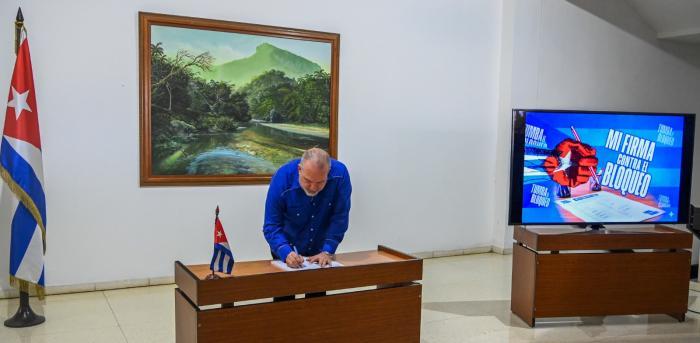
    On a Thursday held at the Council of Ministers headquarters in Cuba’s Palace of the Revolution, Prime Minister Manuel Marrero Cruz headlined a formal gathering to join the nationwide “My Signature for the Fatherland” movement, a grassroots initiative galvanizing national unity amid escalating external pressure on the island nation.

    Marrero Cruz was joined at the event by José Amado Ricardo Guerra, Major General and Secretary of the Council of Ministers — both of whom hold seats on the Political Bureau — alongside deputy prime ministers and other senior government officials. Palace of the Revolution workers also added their signatures to the movement, aligning with the core goals that have driven the initiative since it launched across the country on April 19.

    Far more than a simple exercise in public participation, the movement stands as a deliberate, collective reaffirmation of Cuba’s revolutionary values, a public condemnation of the U.S. trade embargo that has crippled the country’s economy for decades, and a defense of Cuban national sovereignty that organizers say is non-negotiable. Every signature collected through the campaign represents a individual commitment to protecting the nation’s right to self-determination, free from external interference, economic coercion, or military aggression against the Caribbean nation.

    The gathering at the Palace of the Revolution comes against a backdrop of intensifying external sanctions, marked most acutely by a worsening energy blockade and coordinated international disinformation campaigns targeting Cuba’s government. In this context, participants used the event to send a clear message: the Cuban people reject all destabilizing external measures and remain steadfast in their defense of the foundational principles of the Cuban revolution.

    Thursday’s signatures also formalized support for a call issued by Miguel Díaz-Canel Bermúdez, First Secretary of the Party’s Central Committee and President of the Republic. During a ceremony marking the 65th anniversary of the proclamation of the socialist character of the Cuban Revolution, Díaz-Canel called on Cubans to spread the unfiltered truth about Cuba’s reality and struggle to every corner of the globe.

    Organizers and participants alike reaffirmed that the movement’s collective voice stands for a nation committed to upholding global peace, advancing cross-border dialogue, upholding international solidarity, and safeguarding hard-won independence at any cost. As the campaign continues to spread across every region of Cuba, the gathering at the seat of national government served as a high-profile demonstration of the commitment of the country’s leadership and public sector workers to the movement’s core mission.