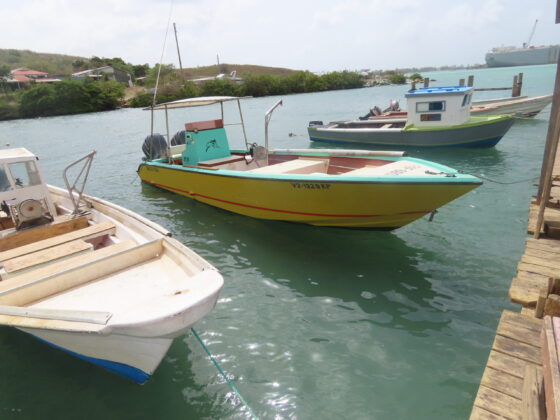
In a major restructuring of the nation’s fisheries management framework, the government of Antigua and Barbuda has given final approval to hand over operational and administrative control of all its public fisheries complexes to Antigua Fisheries Limited, a move set to reshape how the sector serves local fishing communities and industry stakeholders.
The transfer agreement covers four key facilities spread across both islands of the nation: three complexes located in Point, Parham and Urlings on the main island of Antigua, alongside the single fisheries facility on the sister island of Barbuda. Prior to this decision, all four complexes were directly managed by the Fisheries Division, a department operating under the country’s Ministry of Agriculture.
Cabinet members formalized the handover during their scheduled weekly meeting held Thursday. Before voting to approve the management shift, officials conducted a comprehensive review of the existing conditions of each complex and evaluated multiple possible management models, ultimately settling on the transfer to Antigua Fisheries Limited. According to an official post-meeting briefing, the company was chosen over alternative candidates due to its proven track record in fisheries infrastructure management and robust institutional capacity to carry out much-needed upgrades and day-to-day oversight.
Alongside approving the transfer, the Cabinet has also signed off on a new board of directors to lead Antigua Fisheries Limited through the transition period and beyond. Retired public administrator and industry veteran Hassett Julian has been appointed as the board’s new chair, tasked with guiding strategic planning, ensuring transparent governance and holding the organization accountable for meeting performance targets.
Government officials emphasize that the restructuring is not a privatization play, but a targeted reform designed to address longstanding gaps in public management. The core goals of the shift are to streamline daily operations, cut through bureaucratic red tape that has slowed improvements, strengthen clear lines of accountability, and expand the quality of services available to small-scale fishers, seafood vendors, and other local groups that rely on these complexes for their livelihoods.
In the long term, policymakers project that the new governance arrangement will accelerate much-needed modernization of the country’s fisheries infrastructure, cement the long-term environmental and economic sustainability of the local fisheries sector, and ensure that the complexes receive consistent, high-quality maintenance while remaining responsive to the evolving needs of coastal fishing communities across the nation.