博客

  • Public Urged to Get Moving as MBS Launches ‘Sneakers on the Move 2026’ Wellness Campaign

    Public Urged to Get Moving as MBS Launches ‘Sneakers on the Move 2026’ Wellness Campaign

    Public health officials in Antigua and Barbuda have launched a new community-focused wellness initiative designed to get more people moving, boost mental well-being, and spread knowledge of healthy stress-coping practices. Organized by the island nation’s Medical Benefits Scheme (MBS), the ‘Sneakers on the Move 2026’ campaign centers on accessible, engaging activities that welcome people of all ages to prioritize their physical and emotional health.

    The campaign features three interconnected flagship events spread across April and May to cater to different segments of the population. First, the Move for Mental Wellness School Tour will visit educational institutions across the country across three windows: April 21 to 28, and an additional stop on May 11. The tour is designed to connect directly with students and school staff, introducing actionable habits that support long-term well-being in academic and daily life.

    Following the school tour, the nationwide Wear Your Sneakers Week will run from May 5 to 8, encouraging all members of the public to tie up their athletic shoes and incorporate extra movement into their daily routines, whether that means walking to work, taking a midday hike, or playing recreational sports with friends and family. The campaign will cap off its lineup with the Sweat to the Beat Street Jam on May 7, a community-centered open event that combines physical activity with live music to make exercise a fun, social experience for attendees.

    In a public statement announcing the initiative, MBS emphasized that the campaign was intentionally designed to engage students, education workers, and the broader Antigua and Barbuda public through visible, hands-on activities that make adopting healthier lifestyles feel approachable rather than intimidating. The scheme framed the initiative as a key part of its ongoing work to support population-wide physical and mental health outcomes, noting that regular physical activity is one of the most accessible tools for improving overall quality of life.

    Organizers are encouraging community members to share their participation in the campaign on social media using the official hashtags #SneakersOnTheMove and #MedicalBenefitsScheme to help spread the word about the initiative’s goals across Antigua and Barbuda.

  • Raad van Toezicht VKI wijst op ernstige tekortkomingen bij vertrek directeur

    Raad van Toezicht VKI wijst op ernstige tekortkomingen bij vertrek directeur

    The newly installed Supervisory Council (Raad van Toezicht) of Suriname’s Fish Inspection Institute (Viskeuringsinstituut, VKI) has publicly outlined a series of serious governance and financial shortcomings that preceded the departure of former director Juliette Colli-Wongsoredjo, triggering an independent external investigation into the state-run agency. The revelations, made public on April 24, 2026, follow weeks of internal scrutiny of the institute’s operations, after the new council took office in late January 2026. The council notes that all document and information requests issued over the preceding months were strictly aligned with its legal regulatory mandate, and the review uncovered multiple layers of dysfunction within the agency. Among the most serious issues identified are a total lack of transparency in financial management, and the absence of formally approved annual financial statements covering every year from 2021 to the present. Additional problems flagged include irregularities in the institute’s internal control systems, consistent non-compliance with required governance standards, and evidence pointing to potential conflicts of interest involving senior leadership. The council also confirmed that Colli-Wongsoredjo repeatedly failed to implement binding decisions issued by the supervisory body. Most notably, the council reported that Colli-Wongsoredjo returned large sums of money to VKI’s bank account, but has failed to provide a sufficient explanation for these transactions despite multiple formal requests. The investigation also uncovered long-term structural dysfunction at the agency: the previous Supervisory Council failed to operate in accordance with the institute’s statutory requirements for multiple years, creating a vacuum of oversight that allowed the issues to persist. Addressing claims about unapproved public disclosures, the council confirmed that its secretary has never shared information outside formal, procedurally compliant meetings with the president, in line with all governing rules. All findings collected to date have been documented in formal reports, which have served as the basis for launching an independent probe led by the Quick Scan Team and an external accounting firm. Ahead of the conclusion of the investigation, the council placed Colli-Wongsoredjo on paid mandatory administrative leave on April 23, 2026. The council emphasizes that this move was a temporary precautionary measure, designed solely to protect the continuity and institutional integrity of VKI’s operations, and to ensure the investigation can proceed without obstruction. Following the placement on leave, Colli-Wongsoredjo chose to resign from her position as director, a decision the council characterizes as a personal choice. The council reaffirmed its unwavering commitment to advancing transparency, strong governance, and protection of the interests of VKI and Suriname’s entire fishing sector. The current Supervisory Council, installed on January 26, 2026, is led by chair Emanuel Enjoem, with members Udo Karg, Mark Lall, Ajey Ramkisor, Farida Mentowidjojo, Sanduela Belong, and Rashly Resida (who serves as secretary). Local outlet Starnieuws confirms that only five of the seven council members attended the key meeting held at the Ministry of Agriculture, Animal Husbandry and Fisheries. The decision to place Colli-Wongsoredjo on mandatory leave was passed by three members: Enjoem, Resida, and Ramkisor, while the two other attending members, Karg and Lall, publicly dissented from the ruling.

  • PANCAP congratulates The Bahamas on achievement of elimination of mother-to-child transmission of HIV

    PANCAP congratulates The Bahamas on achievement of elimination of mother-to-child transmission of HIV

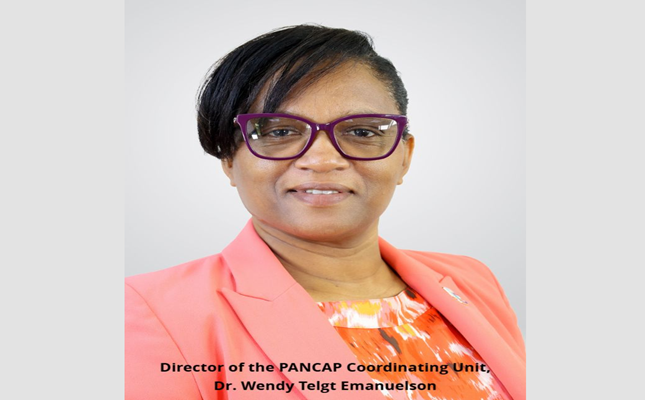
    In a landmark win for Caribbean public health, the Pan Caribbean Partnership against HIV and AIDS (PANCAP) has officially congratulated The Bahamas on securing formal certification from the Pan American Health Organization/World Health Organization (PAHO/WHO) for eliminating mother-to-child transmission (EMTCT) of HIV. The certification was presented during a formal ceremony held on April 22, 2026, marking a major step forward in the global fight to end AIDS by 2030.

    Dr. Wendy Telgt Emanuelson, director of the PANCAP Coordinating Unit, framed the achievement as the outcome of coordinated, long-term investment and shared commitment across The Bahamas’ public health ecosystem. Speaking at the certification event, she emphasized that the milestone reflects strong national leadership, tireless work from frontline healthcare workers, collaborative partnerships with global and regional health bodies, and widespread trust between families and the national health system.

    “What this achievement proves is that with intentional coordination, strategic wisdom and sustained effort, even the most ambitious public health goals are within reach,” Telgt Emanuelson said. She added that The Bahamas’ success reinforces the Caribbean’s longstanding reputation as a global leader in HIV elimination efforts, demonstrating that small island states can deliver world-class public health outcomes through collaboration and determination. This win, she noted, sends a message of hope to countries across the region still working toward the same milestone.

    Globally, EMTCT certification is recognized as one of the most critical public health milestones in the fight against HIV/AIDS, and a core component of United Nations Sustainable Development Goal 3. SDG 3 aims to ensure universal healthy lives and well-being, with Target 3.3 specifically calling for ending AIDS as a public health threat by 2030. The elimination framework works by ensuring all HIV-positive pregnant people receive timely testing, continuous antiretroviral treatment, and targeted care that drastically reduces the risk of transmitting the virus to their children during pregnancy or childbirth, resulting in HIV-free infants.

    With this latest certification, The Bahamas becomes the 11th member state of the Caribbean Community (CARICOM) to reach the EMTCT milestone, joining a regional cohort that includes Anguilla, Antigua and Barbuda, Belize, Bermuda, the Cayman Islands, Dominica, Jamaica, Montserrat, Saint Kitts and Nevis, and Saint Vincent and the Grenadines. It also becomes only the third PAHO member country in the Americas to earn the distinction, following Cuba — the first country in the world to receive global EMTCT certification — and Brazil.

    Bahamas Minister of Health & Wellness Dr. Michael R. Darville called the certification a testament to the strength and equity of the country’s national health system. He attributed the success to a deliberate, disciplined, and well-executed public health strategy that prioritized maternal and child health across every level of care.

    “From our local antenatal clinics to hospital delivery wards, from community health centers to national reference laboratories, this outcome is a reflection of the consistency, discipline and professionalism of our entire healthcare workforce,” Darville said. “It is a national achievement that speaks both to the strength of our health system and to the vulnerable lives it protects every day.”

    According to PAHO/WHO assessments, The Bahamas reached the milestone by pioneering a comprehensive, inclusive public health model centered on universal access to antenatal care for all pregnant people. Key components of the strategy include a robust integrated laboratory network, a rigorous two-step testing protocol that screens patients at their first antenatal visit and again in the third trimester, and close coordination between the country’s national Maternal and Child Health programme and the National Infectious Disease Programme, which oversees HIV and sexually transmitted infection prevention and treatment.

    Telgt Emanuelson highlighted the outsized leadership of two key figures in the achievement: Dr. Nikkiah Forbes, director of The Bahamas’ National HIV/AIDS and Infectious Disease Programme and chair of PANCAP’s Advisory Coordinating Committee, who led both national and regional efforts to advance EMTCT, and Sandra Jones, technical advisor at the PAHO/WHO Caribbean Office, whose years of dedicated on-the-ground support to countries across the region was called “invaluable” to this progress. She also reiterated PANCAP’s gratitude for PAHO/WHO’s sustained leadership and cross-border partnership in supporting Caribbean countries to reach and maintain these critical public health gains.

    Even as stakeholders celebrated the landmark achievement, leaders emphasized that the work of ending AIDS is far from over. Telgt Emanuelson noted that continued, consistent investment in maternal and child health services, routine testing, accessible treatment, and prevention programming remains essential to protect current gains and ensure no mother or child is left behind in the elimination agenda.

    “While we celebrate today, we know the work must continue,” she said. PANCAP, she confirmed, remains fully committed to partnering with The Bahamas and all its member states to advance the shared global goal of ending AIDS as a public health threat by the 2030 target date.

  • Cricket West Indies Congratulates Christopher Taylor on ICC Umpire Panel Appointment

    Cricket West Indies Congratulates Christopher Taylor on ICC Umpire Panel Appointment

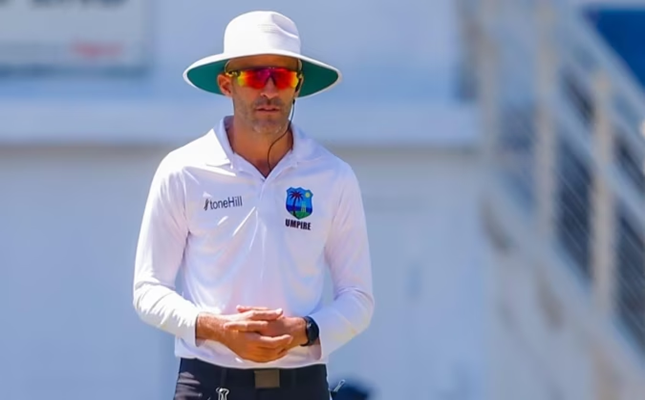
    After 20 years of consistent dedication to cricket officiating, Jamaican referee Christopher Mark Taylor has secured a coveted spot on the International Cricket Council’s International Panel of Umpires, with the appointment officially taking effect on April 1, 2026. Cricket West Indies (CWI), the governing body for cricket across the Caribbean region, announced the news in a formal press release from St. John’s, Antigua, issuing a warm public congratulations to Taylor for this career milestone.

    Taylor earned the promotion by becoming the latest CWI official to successfully complete the ICC’s rigorous umpire accreditation process. Earlier this year, he gained critical international match experience through the ICC Umpire Exchange Programme, where he officiated matches in Pakistan’s top-tier President’s Trophy Grade 1 competition. Match officials and observers rated his performance during the assignment as outstanding, reinforcing his readiness for international duties.

    In comments following the announcement, the 45-year-old umpire shared his reflections on a two-decade journey that began unexpectedly back in 2006. That year, he took his initial local umpiring certification exam alongside Jacqueline Williams, who has since gone on to become one of international cricket’s most respected female umpires. At the time of starting, Taylor was still working in the corporate sector, introduced to officiating by former first-class umpire Maurice Chung. What began as a side interest quickly grew into a lifelong passion.

    Recalling the path to his new role, Taylor noted that the achievement required years of patience, persistence and intentional sacrifice. He served on CWI’s regional second-tier umpiring panel starting in 2011, making the climb to the international panel a 15-year process of incremental growth. “It’s been a long and tough journey, but those tough times prepare you for what’s to come. So, I’m excited about it and looking forward to experiencing new things and putting all the work into practice,” he said.

    Taylor also used the moment to shine a light on a less celebrated but critical side of professional cricket, urging young athletes across the Caribbean to consider officiating as a viable full-time career. “Umpiring might not be seen as a glorious position because when persons are exposed to a sport it’s usually in the capacity of a player and not an official. In any sport officiating is always tough… but that builds character,” he explained. “There is opportunity in umpiring. It’s now a full career that you can dedicate yourself to, and I’d love to see younger persons getting into it, not only when they get into their 30s and 40s but even thinking of it as an option when they’re 18 or 20 years old or coming out of university.”

    CWI Chief Executive Officer Chris Dehring echoed the regional pride in Taylor’s achievement, noting that his appointment reflects well on both the umpire’s personal grit and the strength of CWI’s training pathway for emerging officials. “Chris’ appointment reflects not only his personal commitment and professionalism, but also the strength of our officiating pathway. His recent international exposure and consistent performances have prepared him well for this step, and we are confident he will represent West Indies cricket with distinction,” Dehring said.

    Taylor will kick off his tenure as an international panel umpire during West Indies’ upcoming home international cricket season, where he will make his first official appearance in the new role.

  • Four Points by Sheraton hotel commissioned

    Four Points by Sheraton hotel commissioned

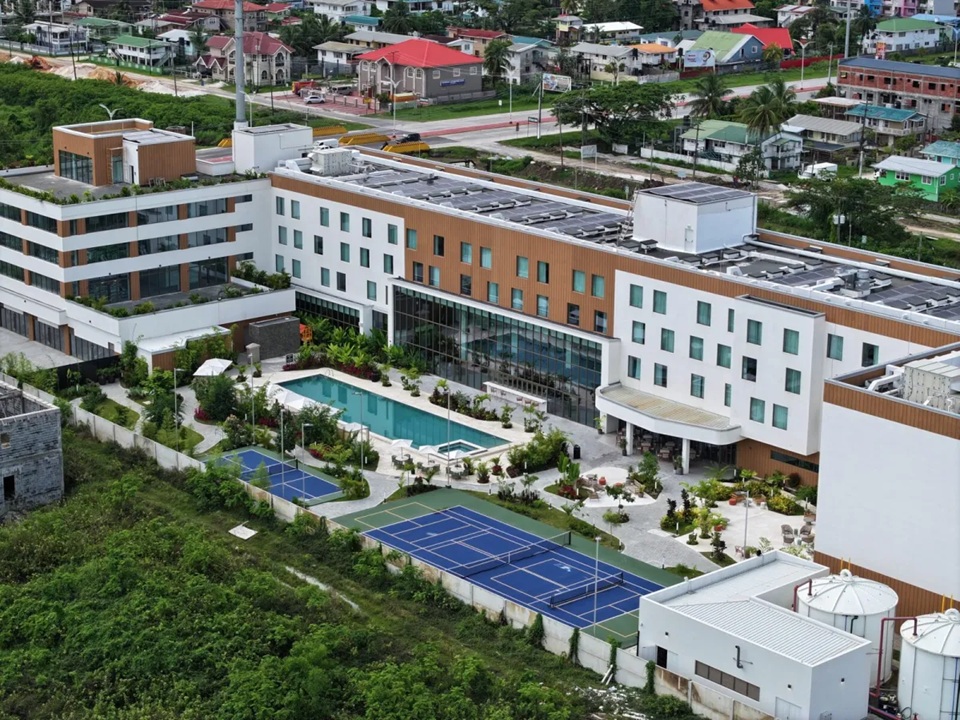
    On Thursday evening, Guyanese President Irfaan Ali officially opened the newly constructed Four Points by Sheraton Georgetown, located at Houston Yards along Heroes Highway, marking a major milestone for the South American nation’s rapidly growing tourism and hospitality industry, according to official reports from Guyana’s Department of Public Information.

    Developed with a total investment exceeding $30 million US dollars, the 172-room property takes a unique approach to luxury hospitality: it blends the global service and operational standards of the Marriott International brand with intentional, immersive incorporation of Guyanese cultural heritage across every area of the property.

    Indigenous Amerindian craftwork is a core design feature throughout the hotel, appearing in everything from guest room bedside lampshades and lobby furniture to custom wall art for every floor and the striking backdrop of the main reception area. The on-site restaurant draws inspiration from traditional Guyanese culinary traditions and native spices, while all interior finishing and architectural selections were chosen specifically to highlight the country’s people, cultural customs, and abundant natural ecosystems.

    In his inauguration address, President Ali explained that Guyanese identity is woven into even the smallest details of the property. “When you go in the rooms, you will see black shades that represent Guyana, represent nature, forest, represent sustainability, resilience,” he said. “You will find in every section of the hotel… pieces of Guyana that inspires you and make you …feel a sense of pride as a Guyanese.”

    The president extended public gratitude to the project’s international and domestic investors, noting that their decision to commit capital to Guyana has earned them goodwill among the Guyanese public. He emphasized that the new hotel could not have come at a more critical moment, as the country is seeing a sharp surge in regional and local interest for major events, with bookings already confirmed for a series of high-profile gatherings in the coming weeks—headlined by the annual GT Challenge.

    Across 2026 alone, Guyana is scheduled to host 11 national and international conferences alongside six major sporting events. “We are now positioning Guyana to be a premier hosting destination because we now have greater capacity and capability,” President Ali stated. “And the confidence of the private sector is igniting greater confidence at the policy level to the extent that we are going after larger opportunities.”

    Beyond expanding the country’s hospitality capacity to draw more visitors and events, the Four Points by Sheraton project has already delivered widespread economic benefits to local Guyanese workers and businesses, the president noted. Long before the hotel welcomed its first guest, the construction phase created hundreds of local jobs across a wide range of trades, including engineers, masons, carpenters, welders, electricians, plumbers, painters, heavy machinery operators, truck drivers, security staff, landscapers, cleaners, and site supervisors. Local domestic suppliers also saw major gains from the project, with contracts for cement, steel, furniture, building fixtures, fuel, and on-site construction catering all going to Guyanese businesses.

    Now that the hotel is fully operational, it will continue to generate long-term employment and economic spin-offs for local communities, supporting the government’s broader goal of building a diversified, visitor-focused tourism economy as one pillar of the country’s ongoing growth.

  • Column: Canawaima te veel vragen, te weinig antwoorden

    Column: Canawaima te veel vragen, te weinig antwoorden

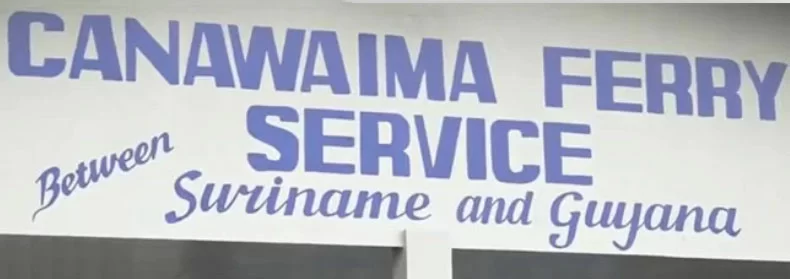
    For investigative journalists, there are moments when observation gives way to deep unease — a gut feeling that something is fundamentally off in the narrative unfolding before them. In recent days, that uncomfortable sensation has grown stronger and stronger amid the cascade of revelations surrounding Suriname’s Canawaima Management Company, the state-owned operator of the key ferry link between Suriname and Guyana. Loose ends outnumber confirmed facts, questions pile up far faster than answers, and the entire affair leaves the public with more uncertainty than clarity.

    The chaos began when politician Newara took to Facebook Live, waving a set of documents he claimed were invoices from local repair firm Sardha. These invoices, Newara alleged, were for massive sums of work carried out on the ferry’s faulty engine — work that had left the vessel relying on a pushboat to stay operational for months. Newara directly tied the invoices and the alleged contract to two members of Canawaima’s supervisory board (Raad van Commissarissen): president-commissioner Richenel Vrieze and board member Edgar van Genderen.

    The accused board members have pushed back with a consistent account: they confirm the documents were taken from their possession during an official work visit, but stress the invoices in question had never even been submitted to Canawaima’s management for processing. For its part, Sardha has issued a blanket denial of any connection to the invoices. The firm says it never drafted or submitted the documents, has never received any payment for the work described, and flatly rejects all suggestions of familial or business ties to the Canawaima supervisory board. Sardha does confirm it carried out repair work on the ferry’s engine, but has explicitly distanced itself from the invoices now circulating publicly.

    Even with these denials on the record, gaping holes remain in the official narrative. If the invoices did not come from Sardha, who created them? How did they end up in Vrieze’s possession in the first place? If they were never submitted to management, how did they leak into the public sphere? Compounding these questions is the long-running crisis of the ferry itself, which has operated with a broken main engine for months, relying on auxiliary support to stay in service.

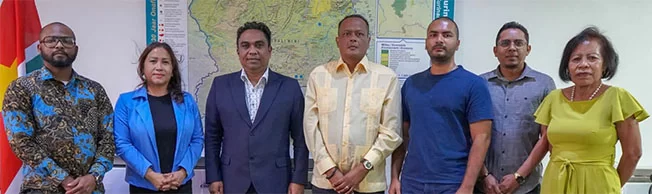
    Once the allegations became public, the situation escalated rapidly. Canawaima’s trade union withdrew its confidence in the supervisory board and threatened to launch a full strike. Transport, Communication and Tourism Minister Raymond Landveld moved quickly to reassure staff that intervention would come, and delivered on that promise within 48 hours: the entire supervisory board was dismissed and replaced. The shake-up came after the terminal manager, who had repeatedly clashed with the outgoing board, filed a complaint with the minister alleging the board was overstepping its mandate and carrying out duties reserved for executive management.

    But the rapid dismissal has spawned a new, uncomfortable set of questions. Was this a justified administrative correction of failing governance, or a naked political intervention? The outgoing board had deep ties to the ruling coalition, with key internal connections to the National Democratic Party. The newly appointed board also draws its membership from coalition ranks. That has left many asking whether this was a genuine fix for mismanagement, or simply an internal power shift within the ruling political faction. This question is not just academic: it goes to the heart of whether state-owned enterprises are being run for public benefit, or are becoming pawns in internal political power plays. If the question is left unanswered, that risk will only grow.

    One of the most striking coincidences of the entire affair has drawn additional scrutiny: on the exact same day the supervisory board was replaced, the long-delayed engine repairs were suddenly declared complete, and the ferry was able to resume independent operation. Coincidence? It is possible, but it is not a question that can be ignored. The truth of what happened must be brought to light, and replacing the board — where wrongdoing may well have occurred — is not enough on its own to resolve the crisis of public trust.

    Minister Landveld has announced an official inquiry into the affair, a step that is welcome. But for that inquiry to mean anything, it must be independent, thorough, and fully transparent. It must answer a set of fundamental questions that go to the core of the controversy: was there ever any conflict of interest involved in the affair? Who actually created the disputed invoices if Sardha did not? How did the documents end up in Vrieze’s possession and how did they leak to the public? Is there any personal, familial, or business relationship between Sardha and Vrieze? Why did Canawaima operate the way it did through the months of the ferry crisis? And ultimately, who bears responsibility for the chaos, and where did governance fail?

    Without clear answers to these questions, the entire affair will remain stuck between unproven insinuations and categorical denials — a state of affairs that is fatal to public trust in state institutions. Sardha has already filed a criminal complaint against Newara for defamation, and the resulting police investigation will be critical to determining the origin of the disputed invoices.

    In the end, the Canawaima controversy is about far more than just one state-owned company. It touches the very core of good governance, especially for public sector enterprises. Transparency, accountability, and integrity are all on the line. That is why this affair cannot be wrapped up with a quick, cosmetic change of leadership. The public is owed clear, definitive answers from an independent, unbiased investigation.

  • Regional Franchise Coaches Applaud CWI’s Plans for High-Performance Campus at Coolidge in Antigua

    Regional Franchise Coaches Applaud CWI’s Plans for High-Performance Campus at Coolidge in Antigua

    For more than half a century, the Caribbean region has stood as one of cricket’s most storied talent hubs, producing generational icons who redefined the global game. From Sir Vivian Richards’ swashbuckling batting aggression to Michael Holding’s devastating fast bowling and Brian Lara’s unmatched run-scoring brilliance, the region’s cricketing legacy is unmatched in its impact and cultural resonance.

    Yet as the 21st-century game has evolved rapidly, that historic advantage has eroded. Cricketing nations around the world have poured billions into modern high-performance development systems, cutting-edge sports science infrastructure, and data-driven training technologies, raising the bar for competitive preparation at every level of the sport. Today, the harsh reality facing Caribbean cricket is clear: raw natural talent alone is no longer enough to deliver consistent, dominant performances against the world’s top sides. To match the progress of leading cricketing nations, the region must make a deliberate, urgent shift toward structured development, purpose-built facilities, and fully integrated athlete support systems.

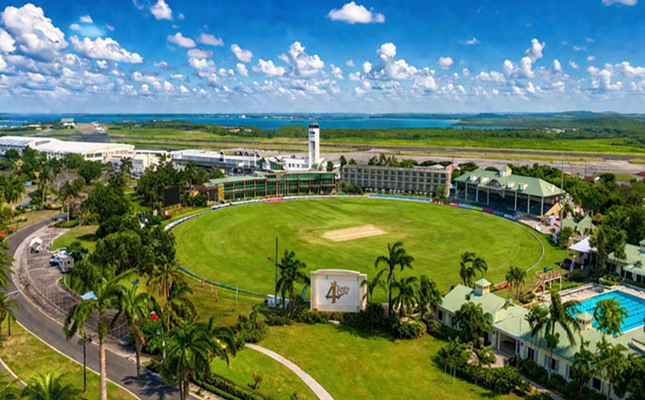
    In a landmark step to address this gap, Cricket West Indies (CWI), backed by full government support from Antigua & Barbuda, has formally unveiled plans to build a state-of-the-art High-Performance Campus at the Coolidge Cricket Ground site in Antigua. The project is designed to create a self-sustaining ecosystem that merges elite athletic training, player education, and commercial activity to nurture the next generation of Caribbean cricket stars.

    The announcement has already earned widespread praise from regional franchise coaches leading teams in the ongoing West Indies Championship, who universally frame the initiative as a make-or-break investment for the future of the region’s cricket.

    Robert Haynes, head coach of the Jamaica Scorpions and a former national selector, called the planned facility a long-overdue solution to the growing development gap between the Caribbean and its global competitors. “I think it’s a magnificent idea. When I was a selector, it was always spoken about in terms of having something dedicated for the youngsters. I think it’s a magnificent effort by the Antiguan government and Cricket West Indies to get this going because we desperately need it,” Haynes said. He added that with the limited number of first-class fixtures available to developing regional players, a consistent, reliable high-performance system is critical to keep young talents match-ready, noting that every other top international cricketing nation already operates a dedicated high-performance center.

    Keon Peters, head coach of the Windward Volcanoes, echoed Haynes’ support, emphasizing that the Caribbean’s greatest challenge is not a lack of innate talent, but a lack of the structured systems needed to nurture that talent to its full potential. “With the amount of talent that we have, for us to compete against the other international teams we must have this in place. We know resources have been difficult for us, and I think it’s a good initiative by Cricket West Indies. It’s never too late to start,” Peters said.

    Rayad Emrit, head coach of the Trinidad and Tobago franchise, highlighted a second critical issue the campus will address: talent retention. Emrit noted that while the Caribbean produces no shortage of standout young talents at the Under-19 level, a large number of these players fade away from competitive cricket after age-group competition, failing to progress into the senior international pipeline. “I honestly think there’s a lot of talent in the Caribbean coming through from Under-19, but after Under-19 a lot of them fade away and we don’t get those core players coming through the system,” he said. “I think we have enough players who have natural talent, and one of the main factors for us not producing the players that we thought we would have is the lack of adequate facilities.”

    The proposed High-Performance Campus is designed to tackle exactly these gaps by embedding professionalism into every pillar of player development, from technical skill refinement and sports science-backed physical preparation to media training and personal growth for young athletes.

    Steve Liburd, head coach of the Leeward Islands team, said consistent access to this type of professional environment will be transformative for emerging Caribbean players. “Across the world, there are lots of high-performance centres all around and they reap benefits for younger players over time. Having such a centre will be beneficial for West Indies cricket on a whole with players being exposed to modern technology, having a place where they can go and do media work and develop all of their off-field skills,” Liburd explained.

    Guyana head coach Ryan Hercules shares the widespread optimism, framing the initiative as a long-awaited turning point that will bring Caribbean cricket in line with global best practices. “This is something overdue, but whenever it’s here, it’s here. When that starts, we will probably start seeing a change in West Indies cricket,” Hercules said.

    Vasbert Drakes, a former West Indies international fast bowler and current head coach of the Barbados Pride, called the campus a major step forward, but added that the long-term goal must be to expand high-performance infrastructure across every Caribbean territory. “I think it would be great if all the franchises in the Caribbean would be in a position where they can have a high-performance system, because we have tremendous talent and we want a better pathway system for them,” Drakes said. “It is good to see that the West Indies is going in that direction, but I would also like to encourage all of the territorial boards to find a way through government and local sponsors to make it work across the region.”

    For decades, the Caribbean’s natural cricketing flair has carried the region to global success. But in the modern, increasingly professionalized game, sustained success only comes to teams that pair raw talent with rigorous preparation, cutting-edge technology, and world-class development systems. The planned High-Performance Campus at Coolidge represents a clear, focused strategy to ensure West Indies cricket not only retains its historic legacy of talent, but also builds the infrastructure needed to compete with the best teams in the world for generations to come.

  • Bartica boathouse commissioned

    Bartica boathouse commissioned

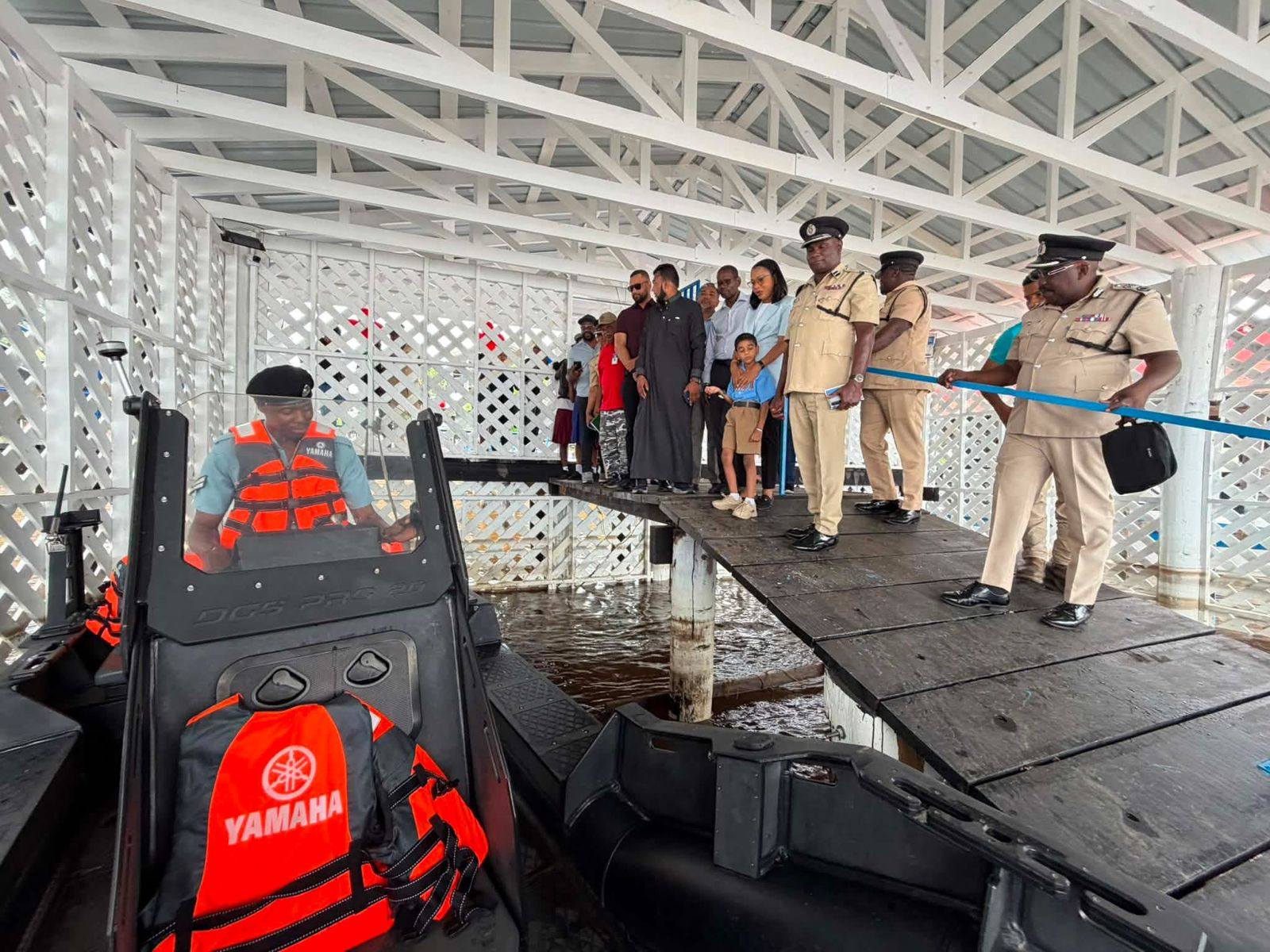
    On Wednesday, April 22, 2026, the Guyana Police Force formally opened its purpose-built Bartica Police Boat House in Region 7, a major infrastructure investment designed to upgrade law enforcement reach and responsiveness across the country’s water-accessed riverine and remote hinterland communities.

    The official commissioning ceremony, held between 10 a.m. and 12:30 p.m. in Bartica, drew roughly 350 attendees and concluded without any disruptions, kicking off official operations at the strategically located facility. The event opened with multi-faith prayers and a recitation of Guyana’s National Pledge, chaired by Superintendent D. Handy, Deputy Commander of Regional Division 7.

    In his opening welcome, Assistant Commissioner Dion Moore, Commander of Regional Division 7, greeted Home Affairs Minister Oneidge Walrond and her delegation. He extended public gratitude to the minister and the Guyanese government for consistent support to the division, highlighting not only the new boat house but also the recently completed Ekereku Police Station, and the provision of new patrol vehicles and all-terrain vehicles for frontline work.

    Speaking on behalf of Commissioner of Police Clifton Hicken, Deputy Commissioner of Police (Operations) Errol Watts also addressed attendees, thanking the government for its sustained, substantial investment in the Guyana Police Force. Watts emphasized that this targeted resourcing allows law enforcement to carry out public safety duties in a more proactive, effective manner, closing gaps in coverage for remote communities.

    The ceremony included cultural programming highlighting local community engagement with policing, featuring a vocal performance from Celena Pollydore of the Mora Camp High Flyers Police Youth Group and a spoken word poem from the Agatash United Police Youth Group.

    Permanent Secretary of the Ministry of Home Affairs Andre Ally shared details of the project’s financing, revealing the boat house was completed at an estimated total cost of 33 million Guyanese dollars. Ally urged police leadership to prioritize regular maintenance and careful stewardship of the new public infrastructure to extend its service life for the community.

    In her keynote address, Minister Walrond highlighted a key recent win for Guyanese law enforcement: a 25% nationwide reduction in serious crimes. She framed the new boat house as a critical continuation of government investment in public safety infrastructure, noting that the facility will cut response times for emergency calls and crime reports across vast riverine areas that were previously hard for officers to access quickly.

    Bartica’s unique position as the primary gateway to Guyana’s hinterland makes the boat house a strategically vital asset, the minister added. She called on officers to use the facility with discipline and integrity, and reaffirmed the Guyanese government’s long-term commitment to providing the police force with all necessary resources to reduce crime and raise public safety standards across every region of the country.

    Following the formal program, Chief Inspector K. Gordon, Officer in Charge of the Bartica Police Station and Sub-Division 1, delivered the vote of thanks. Attendees then moved to the boat house for a ribbon-cutting ceremony led by Zahir Rahaman, after which Minister Walrond led an official walkthrough and inspection of the completed facility.

    The commissioning of the Bartica Police Boat House stands as a landmark milestone in the ongoing expansion and modernization of the Guyana Police Force. The project directly advances government efforts to improve police mobility, service delivery, and operational efficiency for remote communities that rely on water transport, bringing enhanced public safety coverage to long underserved regions of the country.

  • Vakbondsleider Dwarka reageert op betaling van US$ 5000 bij Canawaima

    Vakbondsleider Dwarka reageert op betaling van US$ 5000 bij Canawaima

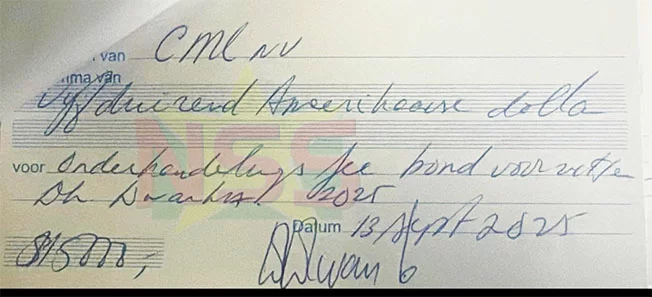
    Fresh controversy has emerged at Suriname’s Canawaima Management Company (CMC), a state-owned enterprise, after a whistleblower leaked a receipt to local outlet Starnieuws confirming that union chair Dayanand Dwarka received a $5,000 payment labeled as a negotiation fee.

    When contacted for comment on the undisclosed payment, Dwarka did not deny receiving the funds. Instead, he defended the transaction, arguing that such reimbursements are a standard practice during collective labor agreement negotiations.

    The union leader explained that the specific negotiations required repeated trips from his home base in Paramaribo to Nieuw-Nickerie, all of which he completed using his personal vehicle and covered travel expenses out of his own pocket upfront. “I used my private car and paid all travel costs out of my own pocket to carry out these negotiations,” Dwarka stated in his response.

    He further noted that the International Labour Organization (ILO)’s regulations explicitly allow for this type of cost contribution. Drawing a comparison, he pointed out that travel costs would be even higher if CMC board members based in Nickerie had traveled to Paramaribo via taxi for negotiations, making a cost contribution from the employer a reasonable request.

    Dwarka also emphasized his long-standing commitment to the labor movement, noting he has worked voluntarily in the sector for more than 40 years. This case was an exception, he argued, because travel expenses were unusually high: the negotiations were for the first-ever collective labor agreement in the history of the state-owned company, requiring more frequent travel than typical negotiations.

    In his closing defense, Dwarka rejected claims that accepting the negotiation fee or potential signing bonus constitutes unethical behavior, framing the payment as a legitimate reimbursement for significant out-of-pocket costs incurred during the negotiation process.

  • Liberty Caribbean Champions Women and Girls in Building Caribbean’s AI Future

    Liberty Caribbean Champions Women and Girls in Building Caribbean’s AI Future

    As the Caribbean region marks International Telecommunication Union’s (ITU) 2024 International Girls in ICT Day, which carries the theme “AI for Development: Girls Shaping the Digital Future”, leading regional telecommunications provider Liberty Caribbean has issued a urgent call for collective, accelerated action to address widespread gaps in artificial intelligence access, adoption and technical capacity across Caribbean communities.

    Organized annually by the ITU, this year’s global observance sets out a clear mandate: to inspire and equip more women and girls to build careers in information and communication technology (ICT), with a specific focus on fast-growing AI-powered emerging fields. The push for greater female representation in these sectors is rooted in a broader goal of building truly inclusive, sustainable socio-economic development across the globe, and small island regions like the Caribbean are no exception.

    In her remarks for the observance, Liberty Caribbean Chief Executive Officer Inge Smidts stressed that closing the Caribbean’s AI gap must move from a long-term planning goal to an immediate regional development priority. “AI must become a regional development priority to unlock new possibilities across our economies. This cannot be something we observe from the sidelines,” Smidts said.

    She emphasized that meaningful progress does not happen through passive interest: it demands intentional, cross-border collaborative action to move the region from casual curiosity about AI to large-scale, practical deployment across industries. “Countries that apply AI responsibly and ensure inclusive participation in their transformation efforts will be best positioned to grow and create opportunity,” she added.

    Smidts went on to note that as digital technology increasingly becomes the backbone of global economic decision-making, future prosperity for Caribbean nations will hinge on how effectively regional stakeholders turn widespread digital access into measurable productivity gains. “We must build this future intentionally, with full representation of our societies at the centre, ensuring that women, girls, and underserved communities are not only included, but empowered to lead, innovate, and shape the direction of that growth,” she said.

    As a leading regional connectivity provider, Liberty Caribbean — which operates consumer brands Flow and BTC, along with B2B service provider Liberty Business — has already laid groundwork for this regional shift through consistent, long-term investment in resilient, future-proof digital networks and cloud-based platforms. Beyond infrastructure, the company is rolling out targeted initiatives to upskill regional workforces, promote ethical, responsible AI innovation, and ensure that broader AI adoption delivers tangible, measurable benefits for residential customers, local communities, and national economies across the region.

    Internally, the company has already begun integrating AI-powered automation into its core operations, a move designed to boost back-office efficiency and deliver a more seamless, responsive experience for its customer base across more than 20 Caribbean markets.

    Sashagay Middleton, a B2B Sales Account Executive based in Antigua and Barbuda, framed the shift as a deeply local issue, noting that digital technology is no longer a distant future concept but an integral part of daily life across the Caribbean. “Technology is no longer something that belongs to a distant future, it’s part of how we live, work and connect every day in Antigua and Barbuda,” Middleton said. “As we mark International Girls in ICT Day, we are reminded of how important it is to encourage girls to see themselves as creators of technology, including AI, not just consumers. When girls are empowered digitally, the entire country benefits.”

    Through ongoing investments in universal connectivity, accessible digital skills training, and inclusive talent development pathways, Liberty Caribbean is working to ensure that future Caribbean innovation is led by homegrown talent — including the women and girls who will shape the sector’s next chapter.

    A 150-year-old regional institution, Liberty Caribbean (formerly C&W Communications, now operated by Liberty Latin America) provides broadband, mobile, video and voice services to residential customers across more than 20 Caribbean markets via its Flow and BTC brands, while its Liberty Business division delivers enterprise-grade connectivity, cloud infrastructure, cybersecurity and data center services to private businesses and government agencies across the region, supporting long-term digital economic growth.