博客

  • Twee aardbevingen treffen Peru: minstens vijf doden in Junin-regio

    Twee aardbevingen treffen Peru: minstens vijf doden in Junin-regio

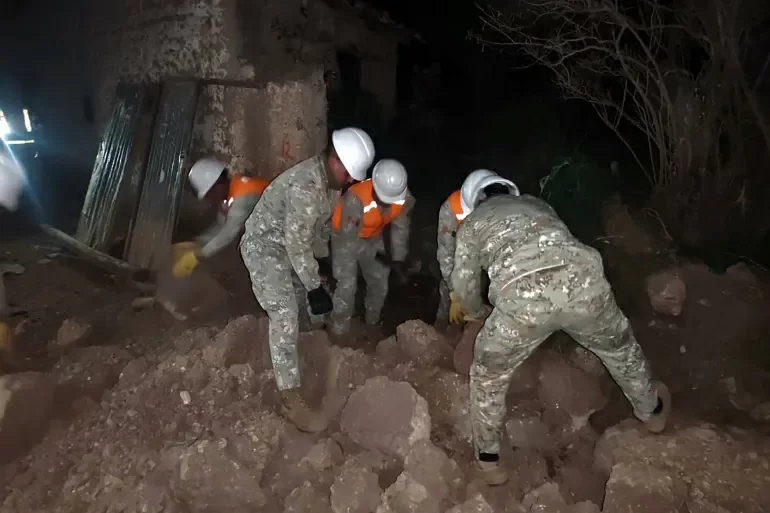
    On the evening of July 18, 2026, back-to-back earthquakes with magnitudes of 5.1 and 3.7 shook the mountainous Junin region, located east of Peru’s capital Lima, leaving at least five people dead and 21 others injured, Peruvian emergency authorities confirmed.

    The seismic activity triggered widespread structural collapse across the region, with at least 48 residential buildings completely destroyed and another 18 damaged beyond habitation. The destruction has forced roughly 300 local residents to flee their homes for emergency shelter. Rural communities including Chupaca and Chongos Bajo bore the brunt of the damage, as many of the region’s older homes are constructed from adobe, a fragile mud-brick material that offers little resistance to earthquake shaking. Rescue teams have been deployed across the disaster zone, working around the clock to search for any people who may be trapped beneath rubble.

    Peru’s incoming president Keiko Fujimori released a statement of condolence via social media following the disaster, writing: “I deeply regret the devastating impact of the earthquake in Junin. My deepest condolences go out to the families of those who lost their lives, and I stand in full solidarity with all those affected by this tragedy.”

    According to Peru’s National Seismological Center, the first earthquake struck at a depth of 24 kilometers, while the second followed at a shallower depth of 18 kilometers. Initial magnitude readings from the European-Mediterranean Seismological Centre had estimated the first quake at 5.6 magnitude, before the figure was revised downward.

    Geographically, Peru sits along the Pacific Ring of Fire, a horseshoe-shaped zone of high tectonic activity that accounts for roughly 85 percent of all earthquakes recorded worldwide. The region is notorious for frequent intense seismic and volcanic activity, making major earthquake events relatively common across Andean South America.

    Emergency response teams have already been deployed to the Junin disaster zone to deliver temporary shelter, medical care, and basic supplies to displaced residents. Local authorities have issued public warnings about the elevated risk of aftershocks in the coming days and urged local residents to follow official safety protocols to avoid secondary hazards.

    The Peru disaster comes just weeks after a pair of far more powerful earthquakes, registering magnitudes 7.2 and 7.5, hit Venezuela, killing thousands. Official updates from Venezuelan authorities have now pushed the confirmed death toll from that disaster to 5,069, with another 16,740 people injured.

    The powerful February tremors caused catastrophic infrastructure damage across northern Venezuela: 856 buildings sustained structural damage, including 190 that collapsed completely. Critical transportation links including bridges and highways also suffered severe destruction, complicating initial rescue efforts. The coastal state of La Guaira remains the hardest-hit area, accounting for the vast majority of fatalities and the bulk of total property damage.

    International aid teams, including an urban search and rescue unit dispatched from the Netherlands, have been on the ground in Venezuela supporting recovery operations. With search efforts now shifting, officials say the chance of finding any additional surviving trapped people is effectively zero, so teams are now focused on recovering the remains of missing victims.

  • Column: Tussen glorie en realiteit

    Column: Tussen glorie en realiteit

    The 2026 FIFA World Cup has drawn to a close, closing out weeks where football gripped the entire globe’s collective attention. Across the world, streets emptied as fans crowded into cafes, roaring with celebration or weeping in disappointment, millions of hearts beating in unison with every pass, shot, and goal. At the center of it all stood Lionel Messi, the legendary Argentine maestro, taking the field for what was billed as his final major appearance on the world’s biggest football stage.

    As he stood alone on the pitch after the tournament’s final match, the stadium around him erupted into a cacophony of conflicting emotions. The thunderous roar of fans chanting his name mixed with the soft, almost tangible grief of those who knew this moment marked the end of an era. In that quiet, charged instant, Messi absorbed every feeling: the unwavering love of supporters from every corner of the globe, the admiration of peers and critics alike, the decades-long weight of a record-breaking career, and the quiet ache of an approaching goodbye. Even with his mythic status as one of the greatest players to ever step onto a football pitch, Messi remains human at his core: full of feeling, marked by doubt, carrying a lifetime of memories, and unafraid to show his vulnerability and emotion, a mirror for every person who has ever dared to chase a dream.

    Alongside him stood Lamine Yamal, the young Spanish prodigy brimming with raw talent and unquenchable hope, who offered Messi a warm, respectful embrace at the end of their semi-final matchup. That simple, heartfelt moment was far more than a display of sportsmanship: it was a symbolic passing of the torch, a meeting of past and future, of hard-won experience and fearless youthful ambition. The old master and the game’s next great promise stood side by side, a visual promise that the next generation will carry football’s legacy forward, and keep the dreams of the sport alive for decades to come.

    Yet even as the world lingered on the magic and emotion of the tournament, reality waits just outside the stadium gates. While millions of fans lost themselves in the drama and spectacle of 30 days of world-class football, everyday life is still defined by soaring costs, the constant struggle to earn a fair living, and the fight to build a stable future amid widespread uncertainty and global upheaval.

    Most stark of all is the sharp contrast between the celebration of global unity that football offers and the persistent conflict that divides our world. When former U.S. President Donald Trump took the stage to present the World Cup trophy to the winning side, U.S. military airstrikes were hitting targets in Iran — a nation whose own national team had fought their way through the tournament with remarkable grit, pride, and resilience. This jarring juxtaposition puts the split reality of our modern world on full display: on one side, a global celebration of sport and connection, and on the other, unending violence and human suffering. Joy and war, hope and destruction, sport and politics, exist side by side, impossible to separate.

    Conflicts around the world continue unabated even as global audiences celebrate football’s biggest stars. Families are torn apart, and dreams are crushed under the rubble of ongoing war, while millions around the world sit transfixed watching their favorite heroes shine on the world stage. It is exactly this stark contrast that makes Messi’s final World Cup moment feel so powerful and so painfully poignant all at once. Football has a unique ability to bring people across every border and division together, but it also forces us to confront the harsh realities we too often choose to ignore.

    Perhaps that is the true meaning of Messi’s final dance on the World Cup stage. It is a celebration of all that makes us human: our capacity for hope, our drive to chase our dreams, but also a recognition of our shared vulnerability and the messy, complex world we all inhabit. When Messi stood on that pitch, surrounded by the moment and the people who love him, audiences did not just see a champion lifting a trophy. We saw a human being who connects us all. And in that connection, there is power to keep moving forward, to keep dreaming, and to keep fighting, long after we leave the stadium.

    His tears are not just tears of goodbye. They are tears for everything that football represents: connection across division, unending passion, the fight to be the best, and the hope that binds us all together. For football is far more than just a game. It is a mirror held up to our global society, full of sharp contrasts, raw emotion, and the indestructible hope that drives every one of us forward.

  • We will watch over our children, even in the most difficult times

    We will watch over our children, even in the most difficult times

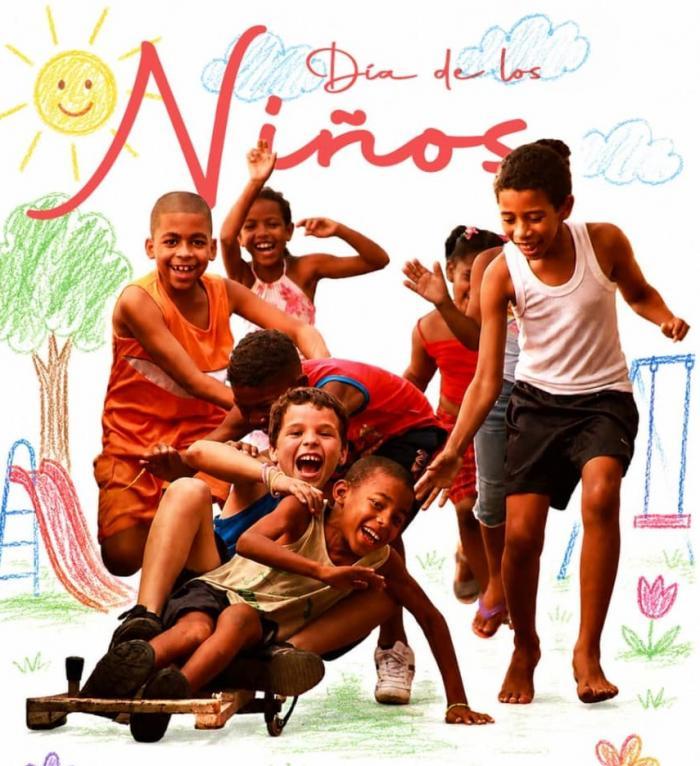
    On Cuba’s annual Children’s Day, the island nation’s top leader has issued a warm public tribute to the country’s younger generation, framing children as the foundational guardians of Cuba’s future prosperity and sovereignty.

    In a series of posts shared across his official social media channels on July 20, 2026, Miguel Díaz-Canel Bermúdez — who serves simultaneously as First Secretary of the Central Committee of the Communist Party of Cuba and President of the Republic of Cuba — opened with a heartfelt greeting: “Congratulations to the little giants, guardians of the future of the Homeland, on this special day.”

    Beyond his initial congratulations, the Cuban president reinforced the government’s long-standing commitment to protecting the nation’s youth, emphasizing that this commitment holds firm even amid the complex economic and geopolitical challenges Cuba has faced in recent years. “We will always watch over our children, even in the most difficult times,” he affirmed.

    Díaz-Canel also used the national observance to pay homage to Cuba’s revolutionary legacy tied to the celebration of children. He recalled that the very establishment of Children’s Day in Cuba traces back to one of the country’s most iconic revolutionary figures, whom he described as “a giant of a pioneer.” He shared a vivid memory of this leader: that the iconic figure repeatedly welcomed young pioneers to tie the signature pioneer neckerchief around his neck during casual conversations with the country’s youth groups.

    The presidential press office shared accompanying photos from the presidency via the messaging platform WhatsApp to accompany Díaz-Canel’s Children’s Day message to the Cuban public.

  • The sailboat Astral, part of the solidarity project

    The sailboat Astral, part of the solidarity project

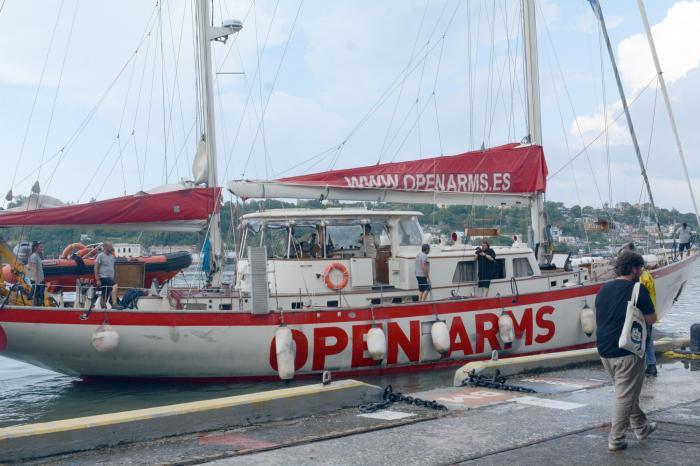
    A landmark transatlantic solidarity voyage has concluded with the arrival of the sailboat *Astral* in Cuban waters this Sunday, bringing critical humanitarian aid to the Caribbean island that has endured decades of increasingly harsh U.S. economic sanctions. Operated by the Spanish non-governmental humanitarian organization Open Arms, this maiden Atlantic crossing is the centerpiece of the “Rumbo a Cuba” (Heading to Cuba) initiative, a grassroots project organized by Spanish activists and political leaders to deliver targeted support to Cuban communities facing systemic resource shortages.

    The flagship donation of the mission is a fully integrated photovoltaic energy kit designed to make Havana’s Juan Manuel Márquez Pediatric Hospital fully energy independent, solving a persistent challenge of unreliable power access that has put vulnerable young patients at risk. According to Cuba’s Institute of Friendship with the Peoples (ICAP), which confirmed the arrival via its social media channels, the mission marks the first time the 10-year-old Open Arms rescue and aid network has extended its operations to Cuba, bringing direct solidarity at a time when U.S. sanctions have tightened access to essential medical and infrastructure resources.

    The project was built from grassroots public support: more than 4,000 individual donors contributed more than €170,000 to turn the idea of supporting Cuban children receiving care at the leading pediatric hospital into a tangible reality. The initiative is co-led by two prominent figures: Miguel Urbán, a veteran Spanish activist and politician who co-founded the Podemos movement, leads Anticapitalistas, and served as a Member of the European Parliament from 2015 to 2024; and Óscar Camps, the founder of Open Arms, an organization that has spent years rescuing migrant lives in the Mediterranean and supporting solidarity initiatives for the Palestinian people of Gaza through the Global Sumud flotilla.

    Official welcome ceremonies for the vessel and its delegation were led by Fernando González Llort, Hero of the Republic of Cuba and President of ICAP, alongside Reinol García Moreiro, Vice Governor of Havana. Joining the arriving activists are multiple current and former elected officials from European institutions and Spanish regional governments, as well as civil society representatives, who have already begun a scheduled program of engagements across the island. Notable members of the delegation include European Parliament member Ana Miranda (from the Galician Nationalist Bloc), Barcelona provincial deputy Aïda Llauradó Álvarez (linked to Catalunya en Comú), Candidatura d’Unitat Popular representative Susana Moreno, and Catalan activist and politician Ana Gabriel I Sabaté.

    Ahead of the sailboat’s arrival in Havana, the delegation was formally received at Havana’s iconic Casa de las Américas by institution president and prominent Cuban intellectual Abel Prieto Jiménez. The gathering, which also drew attendees from Cuban cultural and civil society circles as well as foreign diplomats, served to reaffirm deep ties of friendship between the Cuban and Spanish peoples. Prieto emphasized during the event that even amid ongoing aggression from the U.S. government, Cuba does not stand alone in the international community.

    A core stated goal of the *Astral* mission is to draw global attention to and denounce the long-running economic and energy blockade imposed on Cuba by the United States. Speaking to reporters during a stopover in Isla Blanca, Mexico, Open Arms founder Camps acknowledged that the volume of aid delivered is smaller than the organizing team had hoped to bring to the island. Even so, he noted, the donation is meaningful because every contribution came from ordinary citizens who chose to support the solidarity campaign.

    Camps harshly criticized U.S. policy toward Cuba, describing the sanctions regime as a “medieval siege” that deliberately targets civilian infrastructure. By cutting off access to energy resources, he explained, the blockade leaves hospitals without reliable power, forcing incubators, dialysis machines, and medical refrigeration units out of service — a situation that directly leads to preventable deaths. Camps told Mexico’s *La Jornada* that his team launched the mission specifically to address the documented rise in Cuban infant mortality linked to widespread energy shortages, saying that the group hopes their small contribution will help, and that their work will spark a broader wave of international awareness about the human cost of the blockade.

  • Tropical Depression Two forms over Gulf, heavy rains may impact Florida

    Tropical Depression Two forms over Gulf, heavy rains may impact Florida

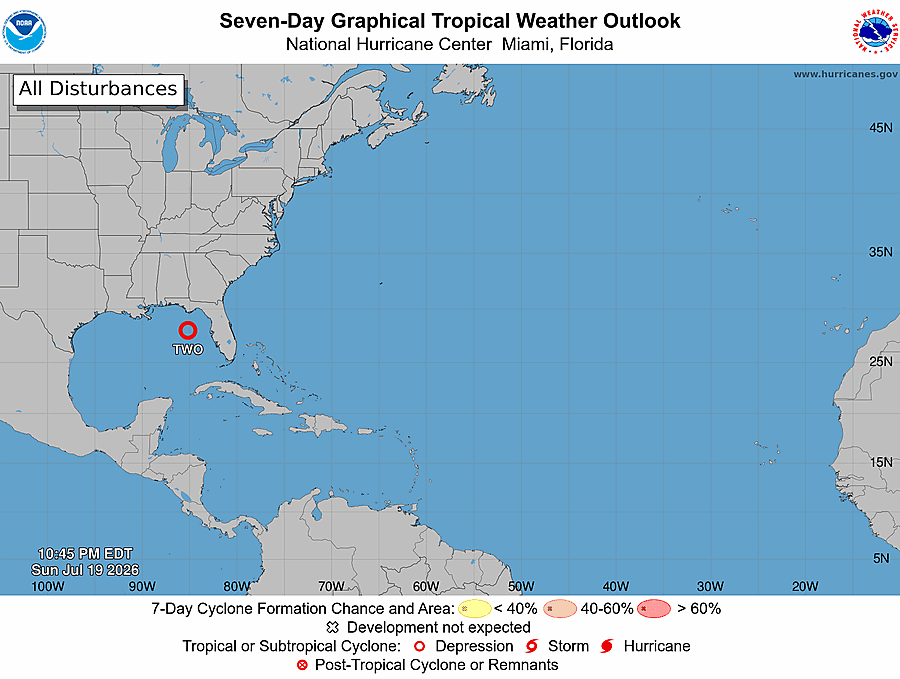
    Overnight on July 19, a low-pressure system known as Invest 91L that had been lingering in the Gulf of Mexico off Florida’s coastline strengthened into the first tropical depression of the 2026 Atlantic hurricane season’s early cycle, officially designated Tropical Depression Two, according to updated forecasts from the U.S. National Hurricane Center (NHC).

    As of 8 p.m. Eastern Time on Sunday, the storm’s center was positioned roughly 180 miles south-southeast of Panama City, Florida, at coordinates 27.5 degrees North latitude and 85.0 degrees West longitude. Right now, the system is stationary, but forecasters project it will begin a slow drift toward the northwest or north-northwest over the next 48 hours, before shifting westward and tracking near or along the northern Gulf Coast over the coming several days.

    Currently, the cyclone carries maximum sustained winds of 30 mph with higher gusts, and a minimal central barometric pressure of 1008 mb. Meteorologists say unfavorable atmospheric conditions, including dry Saharan dust and strong upper-level wind shear, will prevent the system from strengthening into a hurricane, but gradual intensification is still expected. The NHC’s latest official advisory projects Tropical Depression Two will strengthen to reach tropical storm status on Monday. If it reaches that threshold, it will be named Bertha, the second named storm of the 2026 Atlantic hurricane season.

    In response to the developing system, officials have issued a Tropical Storm Watch for the Florida coastline from the Ochlockonee River eastward to the Alabama border. The NHC warned that tropical storm-force conditions could reach parts of the Florida Panhandle by late Monday, and urged residents and emergency managers across Alabama, Mississippi, Louisiana, and Texas to closely monitor updates, as additional watches could be issued for parts of those states in the next 24 to 48 hours.

    While wind impacts are expected to be minor, meteorologists emphasize that heavy rainfall and resulting flash flooding will be the primary hazard posed by the system. Forecasts call for total rainfall accumulation of 2 to 4 inches across the Gulf Coast and adjacent inland areas from western Florida to the Middle Texas Coast through Friday, with isolated locations seeing as much as 8 inches of rain.

    AccuWeather meteorologist Alex Duffus noted that the flooding threat remains high even if the system does not fully organize into a tropical storm. “Flash flooding from slow-moving or repeated downpours looks to be the biggest threat from this tropical rainstorm, regardless of its official strength,” Duffus explained.

    Notably, the incoming rain brings a mixed picture for the Florida Panhandle, which has been struggling with an extended drought. Meteorologist DaSilva explained that while the precipitation will be beneficial for drought-stricken areas, the prolonged dry conditions actually increase flood risk. “Dry, hard-packed soil cannot absorb water quickly when it hits, so more water will run off the surface instead of soaking in, raising the chance of flash flooding even with moderate rainfall totals,” DaSilva said.

    Local emergency management agencies across the region are urging residents to prepare emergency supply kits, clear storm drains of debris, and monitor official forecast updates closely over the coming days as the system evolves.

  • Russian Strike Disables Antigua and Barbuda-Flagged Cargo Ship off Ukraine

    Russian Strike Disables Antigua and Barbuda-Flagged Cargo Ship off Ukraine

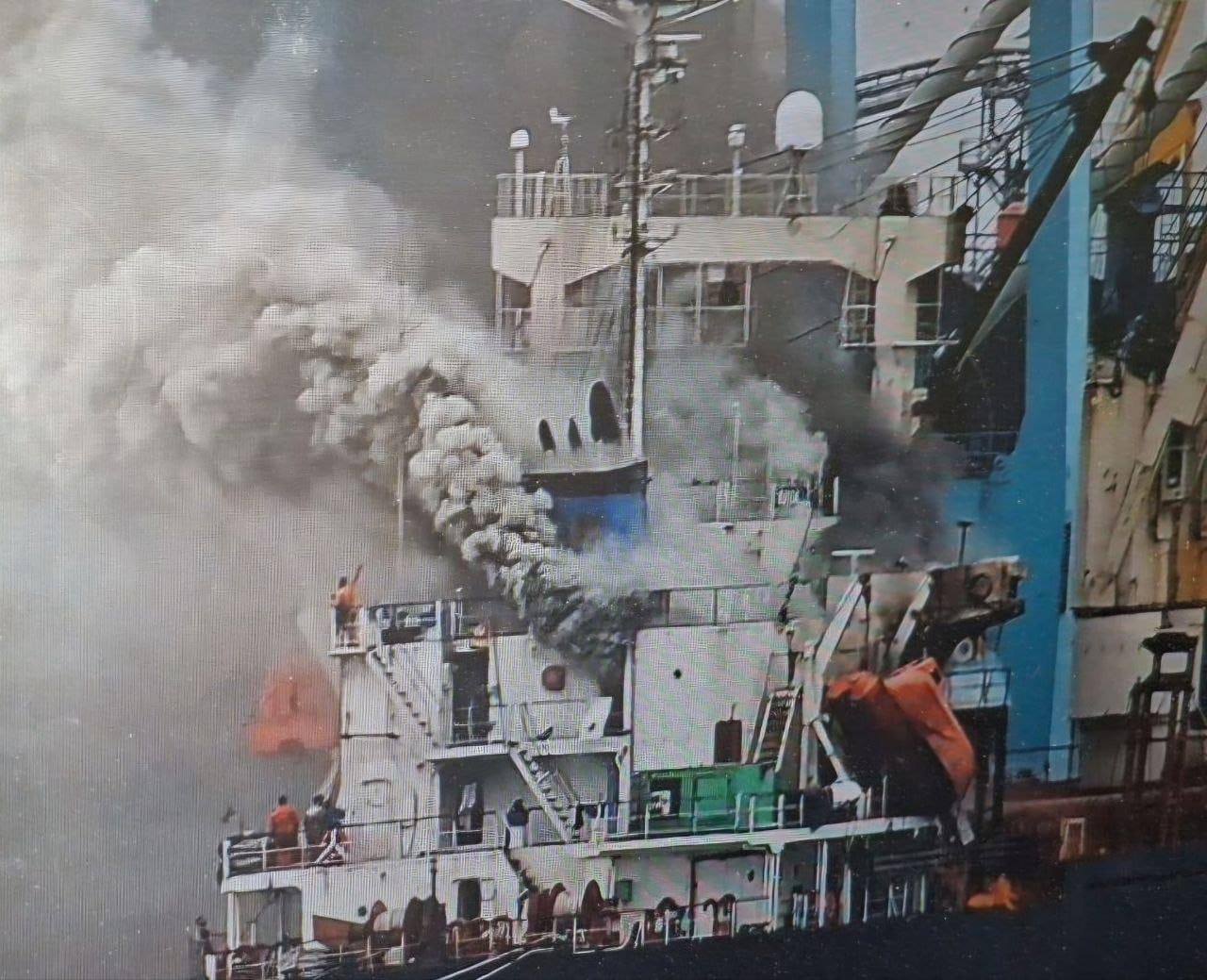
    A recent Russian military strike has left a commercial cargo ship flying the flag of Antigua and Barbuda incapacitated in waters off Ukraine, escalating maritime security risks in the key Black Sea trading zone that has been a flashpoint throughout the ongoing conflict. According to regional defense and maritime authorities, the attack targeted the vessel while it was navigating through contested waters near Ukraine’s southern coastline, causing critical structural damage that left the ship unable to continue its voyage. No immediate public update has been released on the status of the crew, though early unconfirmed reports suggest multiple personnel may have been injured in the incident. This event marks the latest in a string of attacks on civilian cargo vessels operating in the Black Sea, a region that has seen sustained disruption to global grain and commodity shipping since Russia withdrew from the UN-brokered Black Sea Grain Initiative in July 2023. Prior to the withdrawal, the agreement had allowed for the safe export of Ukrainian grain and other essential goods to global markets, helping to stabilize international food prices. Since the initiative collapsed, Russian forces have repeatedly targeted maritime infrastructure and civilian shipping near Ukraine, prompting warnings from global shipping insurers that have pushed up operational costs for vessels transiting the area. Government officials from Antigua and Barbuda have confirmed the vessel’s flag registration and stated they are working through diplomatic channels to gather more information on the incident and secure the safety of any crew members on board. International maritime safety organizations have called for an immediate de-escalation of hostilities in the region, noting that attacks on civilian shipping threaten not only the lives of crew members but also global food security, as Ukraine remains one of the world’s top exporters of wheat, corn and sunflower products. The strike has also sparked renewed diplomatic pushback from Western governments, which have condemned Russia’s actions as a violation of international maritime law that puts innocent civilian lives at risk. Russian officials have not yet issued an official comment on the specific strike, though the country has previously argued that any vessel operating in Ukrainian waters is considered a legitimate military target due to the potential for carrying weapons and military supplies to Ukrainian forces.

  • News : Zapping…

    News : Zapping…

    On July 20, 2026, multiple interconnected developments are unfolding across Haiti, spanning international diplomacy, sports, economic policy, and humanitarian response, reflecting the multifaceted challenges and milestones the Caribbean nation is currently navigating.

  • Phoenix Branker Crowned 2026 Optimist Petite Winner

    Phoenix Branker Crowned 2026 Optimist Petite Winner

    The 2026 Optimist Petite Pageant has concluded its recent competition, with 12-year-old contestant Phoenix Branker emerging as the standout star of this year’s event. Branker not only claimed the coveted title of 2026 Optimist Petite Pageant Winner but also achieved a remarkable sweep of three individual performance awards, taking home honors for Best Speech, Best Talent, and Best Interview.

    Following Branker in the overall rankings, Serenity Joyce secured the position of first runner-up, while Syriah Martin took home the title of second runner-up. Malya Peltier rounded out the top overall placements as third runner-up.

    Pageant organizers extended warm congratulations to all competitors who took part in this year’s event, noting that every participant displayed exceptional poise, dedication, and skill throughout the competition process. The annual Optimist Petite Pageant, designed to celebrate young talent and build public speaking confidence among youth competitors, drew a record number of entrants from across the region this year, with organizers praising the high overall level of competition. Organizers also emphasized that the event focuses on fostering personal growth and community connection for all young participants, regardless of their final placement.

  • Tottenham Teen Blake Philogene-Bidace Called Up to Represent Antigua and Barbuda

    Tottenham Teen Blake Philogene-Bidace Called Up to Represent Antigua and Barbuda

    A promising young talent from Tottenham Hotspur’s youth development system has earned a prestigious international opportunity, as 16-year-old forward Blake Philogene-Bidace has received a national team call-up to represent Antigua and Barbuda at the upcoming CONCACAF Under-20 Championship hosted in Mexico.

    The teenage attacker will link up with his national side fresh off a standout individual performance for Tottenham’s Under-18 squad, where he netted two goals in a lopsided 5-0 preseason friendly win against Watford held at Tottenham’s state-of-the-art Hotspur Way training complex. The strong showing comes as no surprise to those who have followed Philogene-Bidace’s progression through the North London club’s ranks.

    Though born in England, Philogene-Bidace has been integrated into Tottenham’s academy setup since he joined the Under-15 age group, working his way up through the development pipeline to catch the eye of first-team coaching staff. Most notably, he earned inclusion in the first-team squad for the club’s high-profile preseason tour of Japan in 2024, a milestone that marked him as one of the academy’s most exciting emerging prospects. He also comes from a family with deep roots in top-flight football: his older brother, Jaden Philogene-Bidace, currently competes in the English Premier League, carrying on the family’s athletic legacy.

    For Philogene-Bidace, this call-up represents far more than a single tournament appearance. It gives the young striker a chance to showcase his skills on a respected regional international stage, against some of the top young talent from across North America, Central America, and the Caribbean. Beyond that, the CONCACAF Under-20 Championship itself serves as a critical qualifying pathway for the FIFA U-20 World Cup, meaning a strong run with Antigua and Barbuda could open even more doors for the young prospect’s burgeoning career.

  • Official launch of the binational project «Blue Hispaniola»

    Official launch of the binational project «Blue Hispaniola»

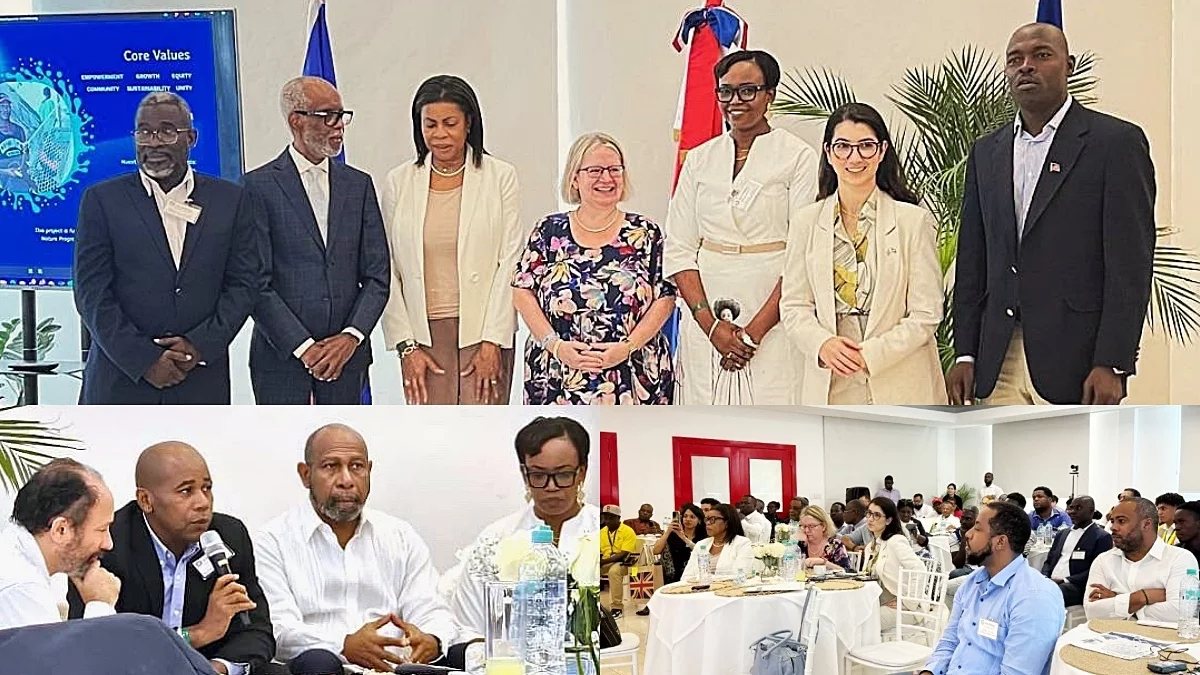
    Last week marked a landmark step in cross-border environmental cooperation between Haiti and the Dominican Republic, as the Pan American Development Foundation (PADF) formally launched the three-year binational initiative *Blue Hispaniola*. The official launch ceremony, hosted at the CODEVI free zone in the Haitian border town of Ouanaminthe, drew a broad coalition of stakeholders spanning both nations, including government representatives, senior PADF officials, delegates from the British government, local political leaders, private sector actors, academic experts, artisanal fishing association representatives, civil society partners, community organizers, and prominent Haitian and Dominican figures focused on marine conservation.

    Funded entirely through a $4 million UK International Development grant via the Ocean Community Empowerment and Nature (OCEAN) program, the initiative is set to run through March 2029, with work concentrated on the ecologically critical shared north coast of Hispaniola. Designed to address the interconnected challenges of overexploited marine resources and vulnerable coastal livelihoods across the island, the project’s core goals are threefold: advance science-backed sustainable management of shared marine assets, bolster economic stability for communities that rely on coastal and ocean resources, and deepen long-term collaborative ties between the neighboring countries around the blue economy.

    A key strength of *Blue Hispaniola* lies in its cross-border, locally led approach: the project has partnered with six community-focused organizations from both countries to build out a transboundary blue economy corridor. This corridor will support sustainable fishing practices, protect threatened coastal habitats, expand market access for small-scale producers, and scale inclusive income-generating activities that benefit local communities rather than external actors.

    Four Haitian organizations anchor the project’s work on the Haitian side: Haiti Efficace, the Essence-Elle Foundation, the Peasant Movement for the Development of Paulette, and the Revolted Feminist Group of Haiti. On the Dominican side, the work is led by two respected civil society groups: the NGO AgroFrontera and Fundación Reddom. Together, the partner organizations will deliver targeted capacity-building for local fishing associations, hands-on conservation training for coastal communities, improved connections to fair local and regional markets, and targeted support to amplify women’s leadership across the entire fisheries value chain.

    The initiative targets tangible, measurable impact across the island: it is projected to directly support more than 8,350 coastal residents, with at least 50 percent of those beneficiaries being women. It will also improve sustainable management practices across 92,250 hectares of vulnerable marine and coastal ecosystems, a region that supports critical biodiversity and sustains tens of thousands of livelihoods. Project leaders have stated that the initiative is designed to serve as a replicable regional model for cross-border blue economy cooperation, centered on the principles of local governance, sustainable natural resource stewardship, and inclusive economic development that lifts up marginalized coastal communities.

    Speaking at the launch, PADF Executive Director Katie Taylor framed the project as a proof of concept for balancing conservation and economic progress. “Blue Hispaniola aims to transform shared waters into shared opportunities,” Taylor said. “When two countries share the same coastline, the wisest investment is one that benefits the communities that depend on it. This project demonstrates that ocean protection and economic development can go hand in hand.”

    For Haiti’s Ministry of the Environment, the launch of the initiative reaffirms the government’s commitment to positioning regional cooperation as a core lever for advancing marine biodiversity protection, growing the blue economy, and boosting climate and economic resilience for coastal communities. The ministry issued a call for all relevant stakeholders to join the effort to sustainably protect the shared marine heritage of Hispaniola, emphasizing that collective action today is critical to securing benefits for both current and future generations across the island.