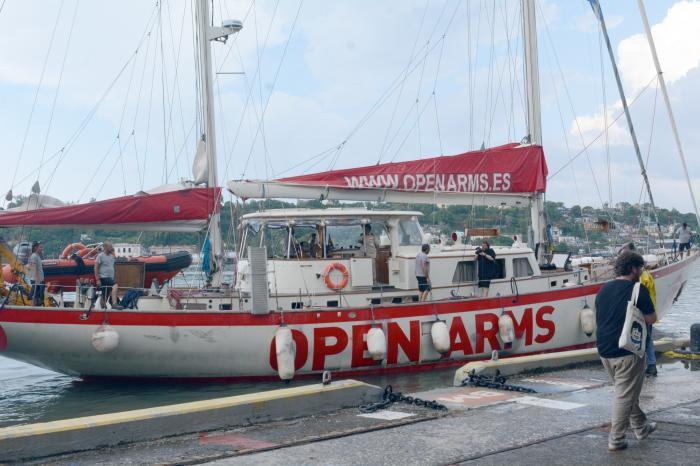
A landmark transatlantic solidarity voyage has concluded with the arrival of the sailboat *Astral* in Cuban waters this Sunday, bringing critical humanitarian aid to the Caribbean island that has endured decades of increasingly harsh U.S. economic sanctions. Operated by the Spanish non-governmental humanitarian organization Open Arms, this maiden Atlantic crossing is the centerpiece of the “Rumbo a Cuba” (Heading to Cuba) initiative, a grassroots project organized by Spanish activists and political leaders to deliver targeted support to Cuban communities facing systemic resource shortages.
The flagship donation of the mission is a fully integrated photovoltaic energy kit designed to make Havana’s Juan Manuel Márquez Pediatric Hospital fully energy independent, solving a persistent challenge of unreliable power access that has put vulnerable young patients at risk. According to Cuba’s Institute of Friendship with the Peoples (ICAP), which confirmed the arrival via its social media channels, the mission marks the first time the 10-year-old Open Arms rescue and aid network has extended its operations to Cuba, bringing direct solidarity at a time when U.S. sanctions have tightened access to essential medical and infrastructure resources.
The project was built from grassroots public support: more than 4,000 individual donors contributed more than €170,000 to turn the idea of supporting Cuban children receiving care at the leading pediatric hospital into a tangible reality. The initiative is co-led by two prominent figures: Miguel Urbán, a veteran Spanish activist and politician who co-founded the Podemos movement, leads Anticapitalistas, and served as a Member of the European Parliament from 2015 to 2024; and Óscar Camps, the founder of Open Arms, an organization that has spent years rescuing migrant lives in the Mediterranean and supporting solidarity initiatives for the Palestinian people of Gaza through the Global Sumud flotilla.
Official welcome ceremonies for the vessel and its delegation were led by Fernando González Llort, Hero of the Republic of Cuba and President of ICAP, alongside Reinol García Moreiro, Vice Governor of Havana. Joining the arriving activists are multiple current and former elected officials from European institutions and Spanish regional governments, as well as civil society representatives, who have already begun a scheduled program of engagements across the island. Notable members of the delegation include European Parliament member Ana Miranda (from the Galician Nationalist Bloc), Barcelona provincial deputy Aïda Llauradó Álvarez (linked to Catalunya en Comú), Candidatura d’Unitat Popular representative Susana Moreno, and Catalan activist and politician Ana Gabriel I Sabaté.
Ahead of the sailboat’s arrival in Havana, the delegation was formally received at Havana’s iconic Casa de las Américas by institution president and prominent Cuban intellectual Abel Prieto Jiménez. The gathering, which also drew attendees from Cuban cultural and civil society circles as well as foreign diplomats, served to reaffirm deep ties of friendship between the Cuban and Spanish peoples. Prieto emphasized during the event that even amid ongoing aggression from the U.S. government, Cuba does not stand alone in the international community.
A core stated goal of the *Astral* mission is to draw global attention to and denounce the long-running economic and energy blockade imposed on Cuba by the United States. Speaking to reporters during a stopover in Isla Blanca, Mexico, Open Arms founder Camps acknowledged that the volume of aid delivered is smaller than the organizing team had hoped to bring to the island. Even so, he noted, the donation is meaningful because every contribution came from ordinary citizens who chose to support the solidarity campaign.
Camps harshly criticized U.S. policy toward Cuba, describing the sanctions regime as a “medieval siege” that deliberately targets civilian infrastructure. By cutting off access to energy resources, he explained, the blockade leaves hospitals without reliable power, forcing incubators, dialysis machines, and medical refrigeration units out of service — a situation that directly leads to preventable deaths. Camps told Mexico’s *La Jornada* that his team launched the mission specifically to address the documented rise in Cuban infant mortality linked to widespread energy shortages, saying that the group hopes their small contribution will help, and that their work will spark a broader wave of international awareness about the human cost of the blockade.