博客

  • Simons wil Suriname beter voorbereiden op milieurampen na vervuiling Saramaccarivier

    Simons wil Suriname beter voorbereiden op milieurampen na vervuiling Saramaccarivier

    A major pollution event along Suriname’s Saramacca River has exposed critical gaps in the South American nation’s capacity to respond to environmental emergencies, according to President Jennifer Simons. During an official visit Thursday to Pikin Saron, one of the rural riverfront communities hardest hit by the contamination, Simons outlined urgent reforms to address the crisis and prevent future disasters.

    Pikin Saron residents have already received emergency food assistance from the president’s cabinet in recent days, as ongoing pollution has killed off large populations of fish and left the river’s water unsafe for drinking or domestic use. Simons emphasized that this event serves as a serious wake-up call for Suriname, laying bare a painful structural weakness the country can no longer ignore: the nation currently lacks the domestic laboratory capacity to identify the source of a pollution emergency quickly.

    With no in-country analytical capabilities, water samples collected from the contaminated river have had to be shipped abroad for testing, with results not expected for roughly two weeks. “We have regulations on the books, but if we lack a laboratory to pinpoint the cause of an emergency when it strikes, we are simply not taking this issue seriously,” Simons told residents during her address. To fix this gap, she called for targeted investments in domestic environmental testing laboratories, alongside tighter regulatory oversight of harmful chemical use and expanded protections for the upper watersheds of Suriname’s river systems.

    Simons also stressed that both large and small enterprises working with chemical substances carry significant responsibility for preventing contamination. She ordered an investigation into whether the parties responsible for the Saramacca River pollution held valid operating concessions and complied with existing environmental regulations. “If a company holds a concession to operate, it also has a binding responsibility to protect the communities and environment around it,” she stated. The president added that the National Environmental Authority (NMA) must enforce strict requirements for chemical storage and handling, to prevent harmful substances from leaching into the environment during floods or other unforeseen events. Most importantly, she confirmed that any party found responsible for the pollution will be held fully liable for the damage caused, while the government explores mechanisms to compensate affected residents for their losses.

    The president also drew a clear connection between the current disaster and the country’s small-scale gold mining sector, an industry that has long been linked to widespread river contamination in Suriname. According to communications from the Suriname Communications Service, Simons noted that the nation currently captures too little revenue from small-scale gold mining, while the harmful chemicals used in unregulated operations degrade ecosystems, damage community water supplies, and even result in avoidable gold waste that cuts into miners’ own profits.

    To address these overlapping issues, the Surinamese government plans to support a gradual transition to safer, more sustainable mining methods across the sector. Simons noted that the shift will ultimately deliver higher profits for artisanal miners, ensure fair tax contributions to the national budget, and cut down on avoidable environmental damage. In addition, the Ministry of Land Policy and Forest Management is working to protect vulnerable forest ecosystems in river upper watersheds, a measure designed to stop pollution from spreading across entire river systems and devastating entire rural communities, as seen in the Saramacca event.

    Simons concluded by calling on the NMA to assess what additional safety measures are needed to prevent similar environmental disasters from occurring again, and to rebuild affected communities’ trust in the safety and quality of local river water. The investigation into the exact cause of the Saramacca River pollution remains ongoing as of the president’s visit.

  • Could Fish Skin Become Belize’s Next Big Business?

    Could Fish Skin Become Belize’s Next Big Business?

    In the coastal Belizean town of Hopkins, a groundbreaking regional workshop last week is opening doors to an unexpected new economic opportunity: turning discarded fish waste into high-value, sustainable handcrafted goods. The initiative, which targeted local women, young entrepreneurs, and small-scale fishing community members, trains participants to convert fish skin that would otherwise be thrown away into durable, natural leather for products ranging from handbags and wallets to footwear and apparel.

    This upskilling program is a core component of the SICA Azul Project, an initiative focused on unlocking additional revenue streams from Central America’s fishing industry by leveraging underutilized byproducts. Leading the hands-on training was Pili Luna, a Honduran innovator who traveled to Belize through the Consejo Agropecuario Centroamericano. Luna holds a international patent for her unique fish skin-to-leather conversion method, which stands out for its low-barrier, eco-friendly design.

    Unlike industrial leather production that relies on heavy machinery, toxic chemicals and high energy inputs, Luna’s process is 100% natural, fully artisanal, and requires no electricity or specialized industrial equipment. The entire workflow takes just three hours of labor per week per batch, with finished, usable leather ready for production within two weeks — all starting from material that once ended up in landfills or discarded as waste after fish processing.

    For participating local entrepreneurs, the training has already sparked new business plans. Ashanti Martinez, founder of Belizean brand Ashanti’s Crochet Design, intends to integrate the sustainable fish skin leather into her existing line of handmade bags to create unique, locally sourced products. Another participant, Leshawn Woodye, noted the versatility of the material, pointing out that it can be used to manufacture everything from clothing to high-quality footwear.

    Hally Faux, a local fisher based in Hopkins, described the workshop as a transformative shift in how fishing communities view industry waste. “All that skin goes to waste after a while because of the fillet and whatever they do with it, and as a fisher myself, I learned to turn the fish skin into leather, and now I have a short business idea,” Faux explained.

    Belize’s Agriculture Minister Rodwell Ferguson has already pledged government support to help participants turn their new skills into a viable, scalable industry. Ferguson announced plans to assist the participating women in forming a collective cooperative, as well as helping the group access startup funding to launch their businesses. “This is our income for them as a mother, as a wife, so I’m going to work with them for it to be accomplished,” Ferguson said.

    If successful, the new fish leather industry could deliver dual benefits for Belize: it would cut down on organic waste from the country’s large fishing sector while creating stable, locally controlled income streams for marginalized groups including women, youth and small-scale fishing families that rely on the ocean for their livelihoods.

  • Seven students receive Chinese scholarships

    Seven students receive Chinese scholarships

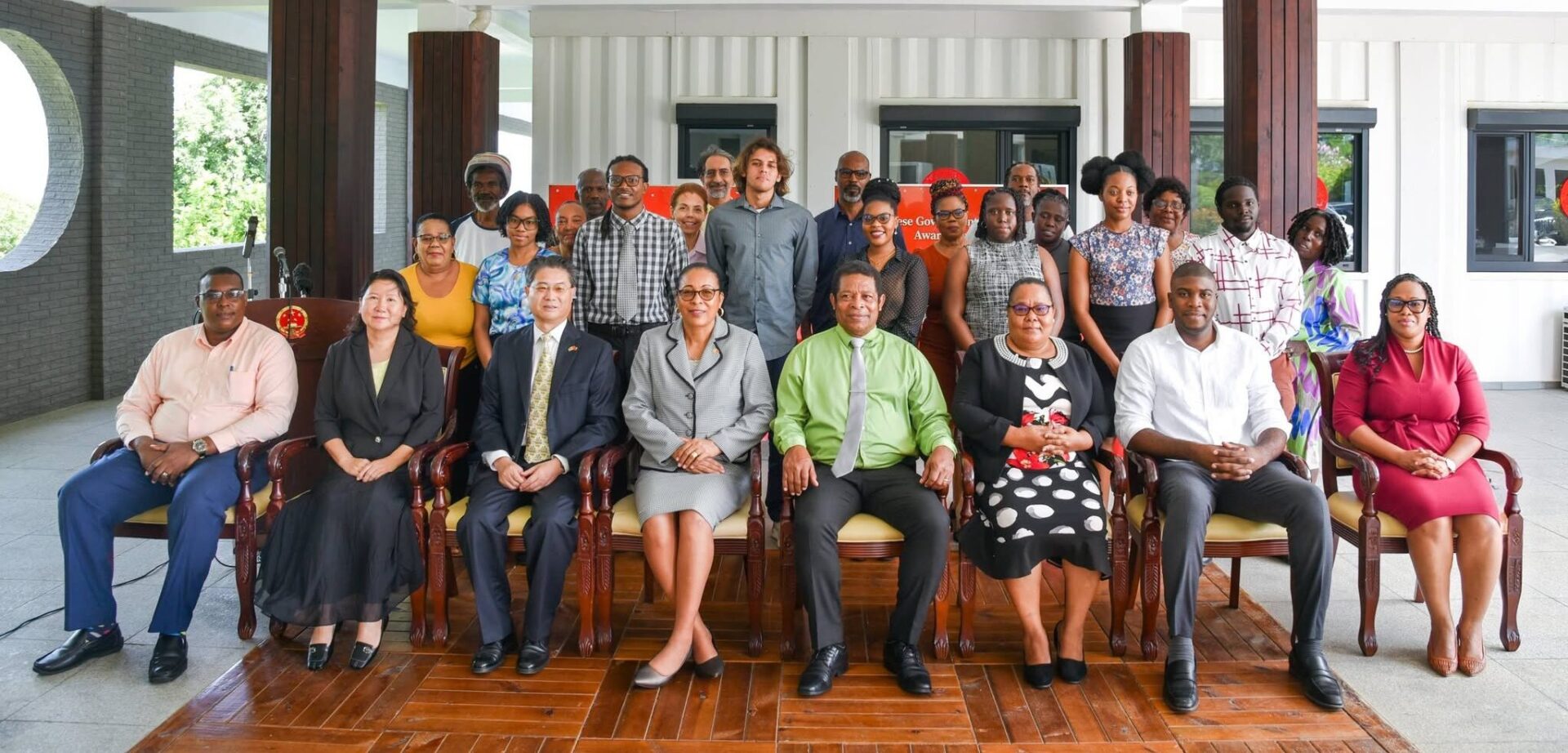
    In a formal ceremony hosted Wednesday at the Chinese Embassy in Morne Daniel, seven young Dominican scholars formally received full scholarships funded by the Chinese government to pursue higher education at top universities across China.

    The seven recipients, selected through the bilateral Chinese Government Scholarship Program, are Tiago Alishaw, Clint Iverson Lecointe, Michaela Warrington, Ayana Nakita Jordanne Augustine, Abigail Hannah Daniel, Nicquan Kern Richards and Jeriah Makeya Ovesen, comprising three male and four female students from the Caribbean island nation.

    Speaking on behalf of the government and people of the Commonwealth of Dominica, Octavia Alfred, the country’s Minister for Education, described the moment as a landmark occasion filled with national pride and profound gratitude. She emphasized that this opportunity marks a transformative turning point not only for the seven individual students, but also for the long-term future of Dominica as a whole.

    Alfred reinforced the widely held principle that education stands as the most impactful long-term investment a nation can make in its own development. With this scholarship initiative, she noted, that critical investment is being directed straight to Dominica’s most valuable national asset: its young people.

    Beyond framing the support as traditional development assistance, Alfred underlined the deeper meaning behind the gesture. The scholarship program, she explained, is far more than an act of generosity or a routine component of bilateral cooperation – it is a tangible demonstration of mutual trust. This trust extends to the potential of Dominican youth, the growth trajectory of the country, and the enduring bilateral friendship between Dominica and China that has consistently deepened year after year. Alfred closed her remarks by extending formal thanks to the government and people of the People’s Republic of China for their unwavering partnership and investment in Dominican education. The official photograph of the scholarship recipients alongside diplomatic and government officials was provided courtesy of the Chinese Embassy in Dominica.

  • Beneficial ownership registry ‘set for June launch’

    Beneficial ownership registry ‘set for June launch’

    After years of anticipation from the local business community, Barbados’ landmark beneficial ownership registry legislation has cleared its final legislative hurdle, with the government confirming the system will be fully operational by June next year. This sweeping reform is poised to reshape the country’s business landscape, boosting transparency, cutting red tape, and positioning the nation as a more competitive destination for both domestic and international investment.

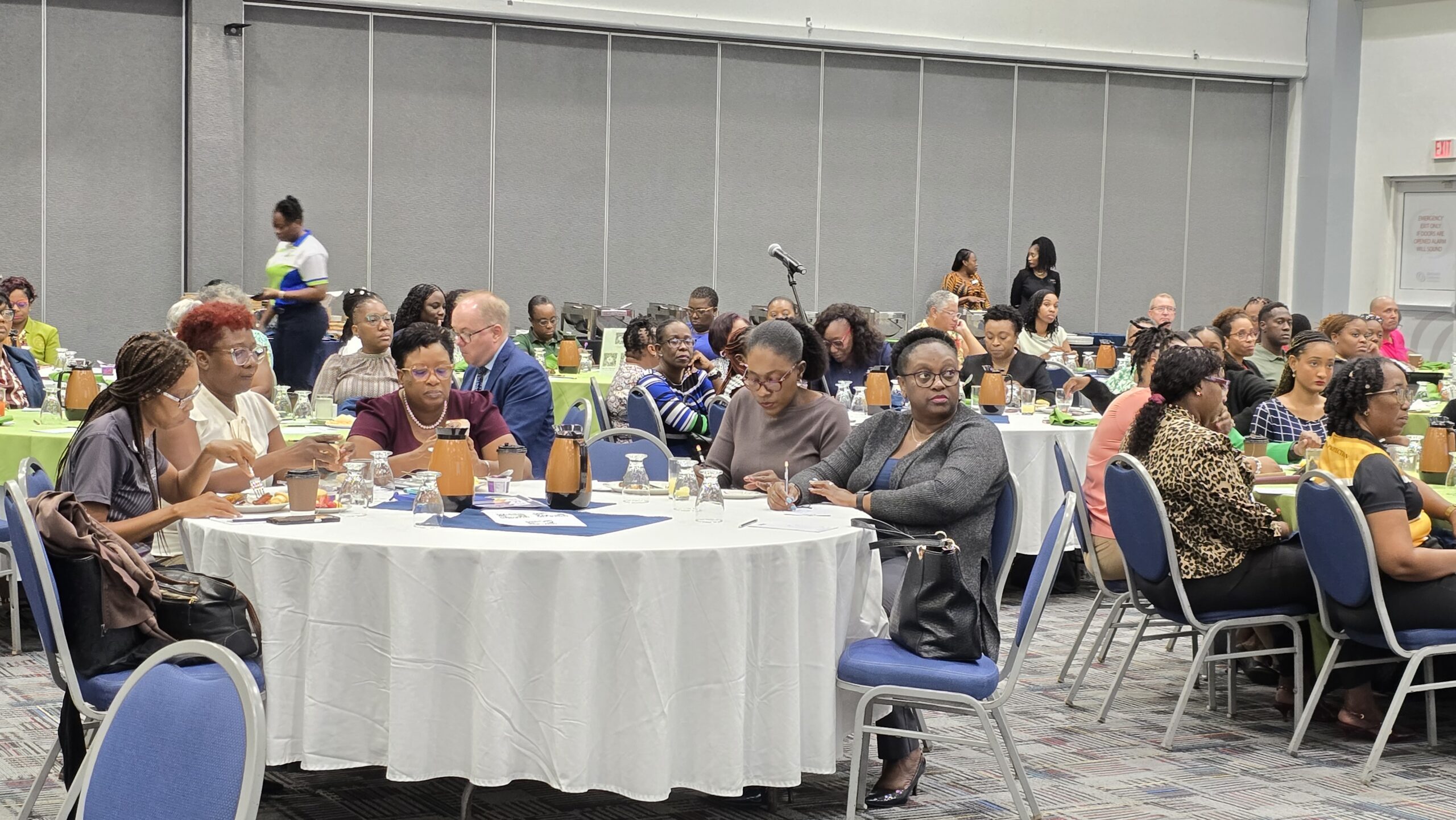
    The bill, which overhauls the country’s corporate information collection framework, was passed by the House of Assembly on Tuesday, kicking off the implementation phase of a project policymakers have framed as a cornerstone of national economic modernization. On Thursday, Minister of Energy, Business Development and Commerce Kerrie Symmonds laid out the government’s rollout strategy during a stakeholder breakfast meeting at the Radisson Hotel, where he spoke directly to business leaders, entrepreneurs, and top regulatory officials.

    Symmonds emphasized that the new registry is far more than a minor update to existing rules; it represents a fundamental reworking of how commercial activity is regulated in Barbados. The reform targets long-standing systemic inefficiencies that have hampered growth, creating a more open, streamlined regulatory climate designed to draw much-needed domestic capital and foreign direct investment.

    “This legislation lays the structural foundation our business community has needed for decades to compete effectively in an increasingly digital and globalized marketplace,” Symmonds told attendees. “By setting a clear, definitive operational target of June next year, we are giving businesses of all sizes a transparent timeline to adjust their operations, upgrade internal data systems, and bring their practices in line with global best practices.”

    The new regulatory framework addresses long-recognized bottlenecks across administrative processes, digital compliance reporting, and corporate governance protocols. Under the updated system, businesses will benefit from drastically simplified licensing workflows, unified digital reporting channels, and far less bureaucratic delay when completing routine commercial transactions. To match these private sector changes, government agencies will also undergo their own operational upgrades, ensuring public sector trade facilitation keeps pace with private sector speed and demand.

    Addressing concerns about transition disruptions, Symmonds moved to reassure stakeholders that the government will roll out dedicated guidance and ongoing technical support from now through the June launch date. He explained that the extended lead time was a deliberate policy choice, intended to give small and medium-sized enterprises (SMEs) as well as large corporate entities space to adjust seamlessly, without interrupting ongoing day-to-day business.

    “We understand that any regulatory transition requires careful planning and dedicated resources, which is why we are not forcing immediate compliance overnight,” Symmonds said. “The timeline stretching to next June was intentionally structured to allow for comprehensive training workshops, targeted outreach, and direct one-on-one support mechanisms. Our goal is not to burden the private sector with unnecessary, arbitrary mandates, but to empower every enterprise to boost its operational efficiency and build long-term resilience.”

    Symmonds further tied the new framework to Barbados’ broader national economic objectives, including deeper regional and global trade integration and long-term sustainable growth. By modernizing regulatory compliance and digital infrastructure, the government aims to cement the country’s reputation as a low-friction, highly attractive hub for international commerce.

    “When June next year arrives, we will not simply be tweaking a few administrative rules; we will be launching a robust, future-proof framework built to drive sustained economic expansion,” Symmonds concluded. “This reform is about creating a commercial ecosystem where innovation can flourish, administrative barriers are kept to an absolute minimum, and businesses of every size – from micro-enterprises to global corporations – have the tools they need to prosper in a modern, interconnected global economy.”

    With the legislative process now complete, government ministries and private sector representative bodies will begin collaborative implementation planning meetings in the coming weeks to finalize technical guidelines and support resources ahead of the June 2025 deadline.

  • Employers fear losses from unpaid staff advances

    Employers fear losses from unpaid staff advances

    As a landmark update to a 72-year-old labor law moves toward final approval in Barbados’ legislature, major private sector organizations are calling attention to unaddressed imbalances that they say leave employers unfairly exposed to financial loss. The Protection of Wages Bill, which has already cleared the House of Assembly, is poised for a Senate vote in the coming weeks, and would replace the original Protection of Wages Act enacted back in 1951. While business leaders publicly support many of the bill’s key reforms, they are pressing legislators to adjust key provisions before the legislation is signed into law.

    Speaking at an educational briefing for members of the Barbados Employers’ Confederation (BEC), executive director Sheena Mayers-Granville outlined both the benefits of the proposed law and its most pressing flaws. For context, the 1951 original legislation was a landmark post-war reform passed by the labor government of Sir Grantley Adams in response to the 1937 social disturbances, designed to break the exploitative grip that plantation owners and merchants held over working-class Barbadians. It has been amended three times over the decades, most recently in 1975, when it added a requirement that all wages be paid in official legal tender. The new bill aims to modernize this decades-old framework to align with contemporary labor market needs.

    Mayers-Granville emphasized that the BEC backs many of the new law’s core provisions, particularly its clarification of longstanding ambiguities around payroll deduction rules. The original 1950s law already capped total wage deductions at one-third of a worker’s earnings, but for years employers have faced confusion over whether the cap applies to gross or net income, and how it should be implemented for voluntary deductions like mortgage payments or car loan installments that workers request be routed through their employer. The new bill resolves these questions, bringing much-needed clarity that will simplify payroll administration for businesses across the island.

    But despite these improvements, the BEC leader said there are critical gaps that create an unfair imbalance between workers’ and employers’ protections. Most notably, the legislation fails to create a simple, accessible mechanism for employers to recoup upfront wage advances or emergency loans extended to employees who leave the company before paying back the funds. Many employers voluntarily offer this financial support to workers facing unexpected personal hardship, Mayers-Granville noted, but currently the only path to recovery is filing a formal lawsuit against the former employee.

    “A lot of employers don’t wish to pursue legal action against former employees, and then they suffer the loss, and that is the imbalance that I see,” she explained. “Where I see the imbalance is employers who have extended a helping hand to employees and then there is no route to recovery.” The proposed legislation does not recognize this common scenario or provide any alternative outside of the courts, leaving employers with no other recourse if they choose not to take former staff to court.

    A second major concern centers on new interest rate restrictions that apply to employers who offer financial products or assistance to their workers. Mayers-Granville warned that the current wording of the bill could accidentally create barriers that prevent employers from offering these beneficial financial services to their staff at all. “What we would not want unintentionally is to create a situation where my employees can’t access financial products from me because of the way the legislation was written,” she said.

    Leaders of the broader Barbados Private Sector Association (BPSA) echoed the call for a balanced, practical framework that works for both businesses and workers. BPSA chairman James Clarke noted that the private sector’s core priority is ensuring the final legislation is fair to all parties, easy to implement for companies of all sizes, and does not impose excessive administrative burdens while still upholding strong protections for workers. “Making sure that the bill is fair to all parties, and is balanced and also is something that can be applied reasonably well within a company without being excessively burdensome while remaining fair to everyone,” Clarke stated.

    As the bill moves through the Senate, the BEC says it is continuing ongoing discussions with government officials to address these concerns before the legislation is finalized and enacted. Business leaders remain hopeful that legislators will adopt amendments to resolve the highlighted gaps, creating a modern wage protection framework that serves the needs of both Barbadian workers and employers.

  • BEC renews push for single Labour Code

    BEC renews push for single Labour Code

    After the Barbados House of Assembly passed the landmark Protection of Wages Bill, the Barbados Employers Confederation (BEC) has reactivated a years-long campaign to consolidate the country’s scattered labour regulations into a single, comprehensive Labour Code.

    This renewed appeal comes as employer groups across the island conduct a line-by-line review of the newly passed wage protection legislation, with the BEC arguing that a unified code would streamline the island’s entire labour governance framework by removing the burden of cross-referencing dozens of disconnected laws.

    BEC Executive Director Sheena Mayers-Granville shared details of the organization’s ongoing push in an interview with Barbados TODAY, confirming that the confederation has advocated for a consolidated Labour Code for no less than five years.

    “What we are calling for is one overarching, comprehensive Labour Code that eliminates the need to jump between multiple separate pieces of legislation every time we address a labour issue,” Mayers-Granville explained. “Right now, no such unified code exists. We have been actively collaborating with government stakeholders on this proposal, and we are eager to see tangible progress on this initiative in the near term.”

    Mayers-Granville added that the confederation has already completed a full, detailed feasibility study mapping out exactly how the unified Labour Code would operate, and has formally submitted its finalized recommendations to both national government leaders and private sector industry representatives.

    The proposed single code would replace more than a dozen existing standalone labour laws, covering everything from paid holiday entitlements and minimum wage standards to wage protection regulations, the Shops Act, labour contracting rules, employment anti-discrimination policies, and workplace sexual harassment prevention guidelines, according to Mayers-Granville.

    She emphasized that consolidating all these separate regulatory measures into one cohesive document would make it far simpler for both employers and workers to understand their legal rights and responsibilities, removing the confusion that comes from navigating dozens of overlapping and disconnected acts.

    “Currently, we have to reference between 15 and 20 different pieces of legislation to cover all labour-related matters. Our proposal would do away with that fragmentation. Instead of dozens of disconnected laws, we would have 11 structured subsections within one single piece of legislation that covers the full scope of national labour law,” Mayers-Granville noted. “Every issue, from wage payment protocols to employment separation procedures to anti-discrimination protections, would be fully encompassed in this one document.”

    Crucially, the push for a unified code has broad, cross-stakeholder support: trade unions across Barbados also back the proposal, Mayers-Granville confirmed. The confederation remains optimistic that the government will move forward with the proposal in the coming months, after years of collaborative advocacy.

  • “It’s Not Just a Dirty Job”: Reshaping How Kids See Farming

    “It’s Not Just a Dirty Job”: Reshaping How Kids See Farming

    In the heart of Stann Creek District, a transformative summer agriculture camp is challenging long-held stereotypes about farming, giving nearly 70 young people aged 7 to 17 a firsthand look at the diverse, critical work that underpins global food security. Running through this week at Georgetown Technical High School, the camp is the second of two week-long immersive programs organized by Belize’s Ministry of Agriculture, Food Security and New Growth Industries this summer, following an opening session held earlier at the Agriculture and Natural Resource Institute. The initiative is proudly sponsored by RF&G Insurance Ltd., whose guiding brand slogan “It Pays to Get it Right” aligns with the camp’s mission to build accurate, informed understanding of modern agriculture among the next generation.

    Each day of the camp introduces participants to a new specialized area of agricultural work, building a comprehensive foundation over the week. The curriculum kicks off with core lessons in horticulture and livestock care, before moving to hands-on workshops in beekeeping, agro-processing, and concluding this Friday with deep dives into aquaculture. Unlike traditional classroom learning that frames farming as manual, unskilled labor, the camp prioritizes experiential activities that let young participants engage directly with modern agricultural practices, from planting greenhouse tomato seedlings to examining the inner workings of a functioning beehive.

    Bernadette Cob, an Agriculture Field Officer leading the program, explains that the core goal of the initiative goes far beyond teaching basic farming skills: it aims to completely reshape young people’s relationship with and perception of agriculture as an industry. “We work hard to make every participant feel included, and to help them understand just how central agriculture is to our daily lives and national stability,” Cob shared in an interview during the camp. “Too often, young people grow up thinking farming is just a dirty, low-value job. We want to change that narrative. We need a new generation engaged in agriculture to protect our food security, and to build sustainable food systems for the future.”

    Cob noted that one of the most encouraging outcomes of the camp so far has been the high level of engagement from young female participants, who have not only taken the lead on many hands-on activities but have also encouraged their male peers to dive into the practical work. “It’s incredibly inspiring to see how they’ve embraced the work, and how they’re breaking gender stereotypes around agricultural labor right here in the camp,” she added.

    For 12-year-old participant Zemvirson Juarez, the week has already been packed with new discoveries that have changed his own view of farming. On his first day, he planted his own tomato seedling in the camp’s greenhouse and brought it home to continue growing it – but it was the beekeeping session that left the biggest impression. “I learned so many things I never knew before,” Juarez said. “I had no idea a single beehive can hold up to 80,000 bees. I also learned that honey comes in different colors depending on what flowers the bees collect nectar from, and got to see beeswax, royal jelly, bee venom, and even all the different products people make from beehive byproducts, like soaps.”

    As the camp prepares to wrap up its final day with aquaculture training, organizers say the program is already laying the groundwork for a more engaged, diverse next generation of agricultural leaders, proving that changing public perceptions of farming starts with giving young people the chance to experience the industry for themselves.

  • BEC begins employer education drive ahead of wage bill rollout

    BEC begins employer education drive ahead of wage bill rollout

    As Barbados moves closer to approving the long-awaited Protection of Wages Bill, the Barbados Employers Confederation (BEC) has launched a large-scale outreach campaign to prepare local business owners for the upcoming regulatory changes to wage management practices.

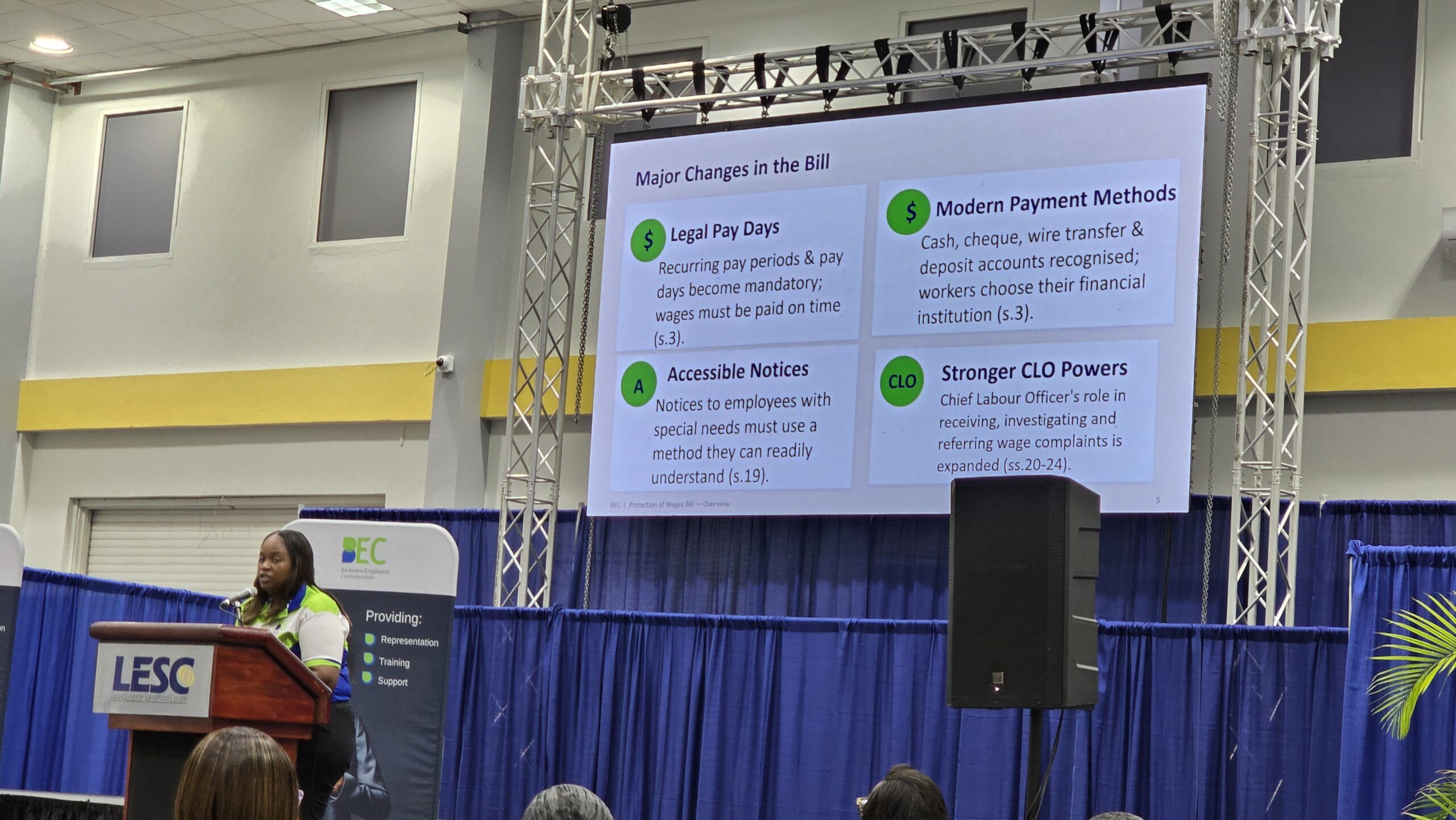
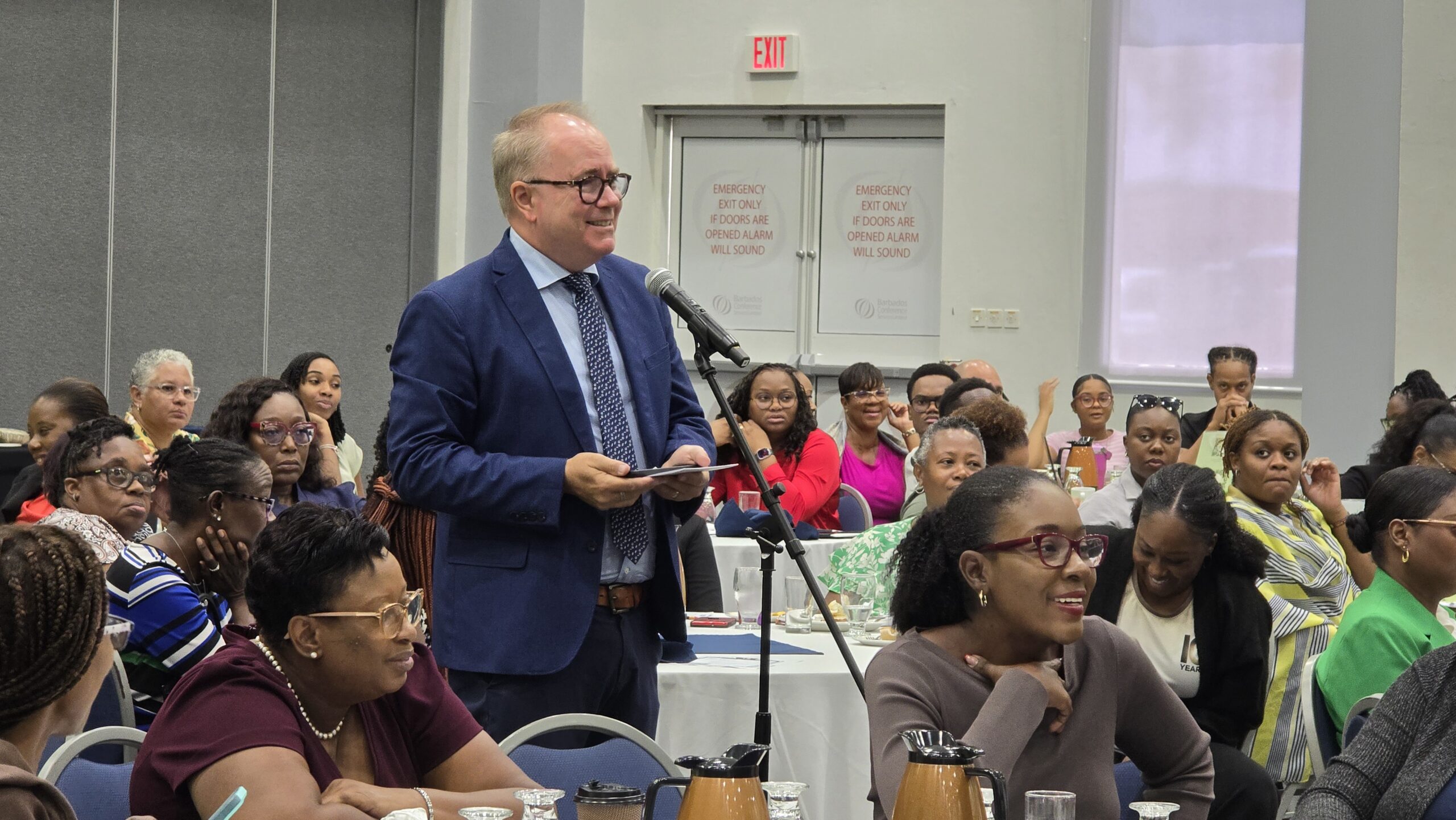
    The first of BEC’s public education events was held Thursday at the Lloyd Erskine Sandiford Centre, designed to walk employers through the fine print of the new legislation and help them align existing payroll operations with the upcoming legal requirements. Speaking to attendees at the session, BEC Executive Director Sheena Mayers-Granville explained that the event was structured to give employers an open forum to clarify uncertainties and map out their new obligations under the law.

    With parliamentary debate on the bill wrapping up earlier this month, this information session marks the organization’s first public effort to sensitize the business community to the Bill’s provisions. “This is our chance to help employers start reviewing the terms of the legislation now, so they can implement any necessary changes to their operations long before the law goes into effect to stay compliant,” Mayers-Granville noted.

    The Protection of Wages Bill introduces sweeping new regulatory standards for wage payments, authorized deductions, and pay cycles – three core areas of payroll management that BEC emphasizes will require close attention from employers once the law is enacted. Previously, most of these processes were governed exclusively by individual employment contracts negotiated between employers and workers, but the new framework will bring standardized, government-mandated regulation to these areas for the first time.

    “Before, there was no formal regulation of pay cycles; those terms were left entirely to the employment contract. Now, the new legislation will set clear rules for pay cycles, and we’ve also been walking employers through what the new rules mean for wage deductions,” Mayers-Granville explained.

    One of the most common points of confusion for participating employers has been the one-third cap on wage deductions, a provision that already exists under the outdated 1950s-era wage legislation but has long been plagued by inconsistent application. Mayers-Granville pointed out that for decades, employers and financial institutions alike have debated whether the cap applies to gross or net earnings, and how the rule should be implemented for court-ordered or worker-requested deductions for major financial commitments like mortgages and car loans.

    Unlike the vague existing rules, the new Protection of Wages Bill includes explicit, detailed guidance on how to apply the one-third deduction cap, eliminating the ambiguity that has created compliance risks for employers for generations. Moving forward, BEC will maintain its ongoing support for local businesses through the transition period.

    Mayers-Granville confirmed that BEC will continue rolling out educational resources, detailed guidance, and personalized advice for member businesses over the coming months, with regular updates to help employers prepare before the law comes into force. The organization acknowledges that the shift to the new regulatory framework will require a period of adjustment for local businesses, and BEC has committed to standing by employers throughout the transition to answer questions, resolve uncertainties, and ensure all businesses can adapt smoothly to the new compliance requirements.

  • Guyanese Man Deported After Completing 18-Year Sentence for Rape in Antigua

    Guyanese Man Deported After Completing 18-Year Sentence for Rape in Antigua

    In a routine operation following the completion of a major custodial sentence, a 54-year-old Guyanese citizen convicted of rape has been deported back to his home country after serving 18 years behind bars in Antigua and Barbuda.

    Eustace Barry, the offender, walked out of His Majesty’s Prison on Wednesday, marking the end of the sentence handed down years prior by the country’s High Court. Immediately after his release, local immigration officials took custody of Barry in accordance with the nation’s established immigration protocols for non-citizen offenders, and arranged for his prompt removal to Guyana.

    Under Antigua and Barbuda’s immigration regulations, foreign nationals who have completed felony prison sentences are not eligible to remain within the country’s borders, making deportation a mandatory step in this case.

    Local crime advocacy platform True Crimes Antigua has announced that Barry will be added to its specially created “Predator Awareness” list. This public-facing initiative was launched specifically to increase community awareness of individuals who have been convicted of sexual offenses, giving the public access to information to help them make informed safety decisions.

    The organization says it will continue adding details of other convicted sex offenders to the list as part of its ongoing public education campaign. In a public post addressing Barry’s departure, True Crimes Antigua underscored a critical reality of sexual violence: even after an offender completes their sentence and leaves the jurisdiction, the harm inflicted on survivors persists for years, often decades. The advocacy group emphasized that sexual violence leaves enduring emotional, psychological, and physical scars that impact survivors long after the legal process concludes. It also renewed its call for sustained, expanded support services for victims of sexual abuse, increased public education on prevention, and collective action to reduce incidents of sexual violence across the region.

  • Belize’s Imports Jump 21.3% in June, Exports Decline

    Belize’s Imports Jump 21.3% in June, Exports Decline

    Newly released official trade data from Belize’s Statistical Institute paints a sharply divided picture of the country’s external commerce for June 2026, with total merchandise imports jumping by more than a fifth year-over-year even as domestic exports contracted by nearly 8%.

    According to the institute’s latest External Trade bulletin, overall imports hit $275.8 million in June 2026, marking a 21.3% increase compared to the same month in 2025. The growth was widespread across nearly all major commodity groups, with just one category – Other Manufactures – posting a monthly decline.

    The single largest contributor to the import expansion was the Mineral Fuels and Lubricants sector, which saw a $15.2 million jump to reach $48.2 million for the month. Two key factors drove this rise: elevated global crude and refined fuel prices, plus the resumption of large-scale premium fuel purchases that had been paused for a full 12 months. Following fuel, the Food and Live Animals category recorded a $12.1 million increase, fueled by rising imports of coffee and general grocery goods. Chemical Products also saw substantial growth, adding $9.8 million in import value as fertilizer costs climbed for local buyers.

    When looking at cumulative trade activity for the first half of 2026, the import growth trend holds even stronger: total inbound goods reached $1.651 billion, a 19.1% increase compared to the first six months of 2025. Fuel imports again led the way, growing by $92.8 million, while machinery and transport equipment – which included one large aircraft purchase – added another $60.7 million in import value over the half-year period.

    On the export side of the ledger, however, the performance told a far different story. Domestic exports from Belize fell 7.9% year-over-year in June 2026, dropping to just $26.0 million. The steepest declines were concentrated in key agricultural export sectors that form the backbone of Belize’s outbound trade: citrus export earnings plummeted by $10.1 million, sugar exports fell by $8 million, and cattle shipments dropped by $4.2 million. Banana and red kidney bean exports also posted lower earnings for the month, extending the downward trend across most agricultural categories.

    That said, not all export segments faced headwinds in June. Marine product exports bucked the trend, posting a $3.2 million increase in earnings, supported by both stronger global pricing and higher shipment volumes.

    For the full first half of 2026, the export contraction aligns with the monthly trend: total outbound domestic goods hit $166.6 million, representing a 12.7% drop compared to the same six-month period in 2025.