博客

  • Burger King Clapham Bulls complete historic three-peat

    Burger King Clapham Bulls complete historic three-peat

    In a night of high drama at the Barbados Community College Gymnasium, Burger King Clapham Bulls pulled off one of the most memorable comebacks in Barbados amateur basketball history, rallying from a 20-point first-half deficit to secure a 102-98 victory over C.A.M Smart Assurance City United Celtics in Wednesday’s decisive Game 5. The win gives the Bulls a 3-2 series victory in the best-of-five finals, and wraps up a rare three consecutive Premier League titles for the franchise — a feat that hasn’t been achieved in the league in roughly 20 years.

    The Celtics, reigning holders of the President’s Cup, dominated the opening frames of the matchup. They jumped out to an early 28-16 lead by the end of the first quarter, and extended their advantage to 13 points at halftime, sitting comfortably at 53-40. At one point in the second quarter, the Bulls trailed by a full 20 points, leaving the championship on the brink of a Celtics upset.

    But the Bulls found their rhythm in the third quarter, tightening their defensive pressure and chipping away at the deficit. By the end of the third period, they had cut the Celtics’ lead to just six points, with the scoreboard reading 74-68. What followed was a frenetic back-and-forth final quarter, capped by a game-changing three-pointer from guard Rasheed Maynard in the final minutes that locked in the comeback victory for the Bulls.

    Offensively, the Bulls were led by a standout performance from Kyrone Alexander, who put up a game-high 34 points and pulled down eight rebounds. Akeem Marsh added a double-double of 18 points and 10 rebounds, while Maynard and Rahiim Gibbons contributed 15 points apiece to the winning effort. For the Celtics, the game was nearly carried by Kiserian Adams and Deroni Hurley, who both dropped 24 points, with Theo Greendidge adding 22 points of his own in a losing effort.

    Following the historic win, an elated head coach Kelan Phillips credited his team’s mental toughness and unselfish play for the comeback. Phillips noted that slow starts had become a pattern for his squad throughout the finals series, but the team never lost their composure when falling behind early.

    “We fell behind early, then in the middle of the second quarter we were down 20 at one point, but then we cut into the lead and our defence got a little better,” Phillips explained post-game. “During the third quarter we really started to get a little rhythm, with our defence improving even more, and then in the fourth quarter we took the lead and it was back and forth, before we just executed down the stretch.”

    Phillips highlighted two key adjustments his team made to turn the game around: cutting down on unforced turnovers and improving clock management down the stretch. He also praised Maynard, who struggled through a quiet first half, for responding to halftime encouragement to hit the game-deciding shot.

    “Rasheed had a bit of a rough first half and I was just telling him just stay confident — you’re not going to win this game if you don’t stay confident and if you don’t execute in the second half,” Phillips said. “Thankfully that’s what he did. He had a big shot coming out late and basically put the game on ice.”

    When asked about the historic three-peat — a milestone not reached in the Barbados Amateur Basketball Association Premier League for roughly 20 years — Phillips pointed to team culture and collective sacrifice as the core of the franchise’s three-year run of success. The team navigated roster changes between seasons, losing several key players and integrating both new recruits and returning veterans from their first championship run, but never fractured under the change.

    “Everybody’s willing to buy in and we have a bunch of national players and players who were called to national trials. Despite this, everybody was willing to sacrifice some of their stats, some of their minutes or whatever to get the job done,” Phillips said. “Coming towards the end, there were no egos to get hurt, everybody on the team was still rallying.”

    In a show of good sportsmanship, Phillips also praised the Celtics, who have faced the Bulls in three straight finals, as worthy competitors who pushed his squad to their limit throughout the series and the entire season. “Kudos to them, it did not end the way that they would have wanted, but it was still a very good season overall for them,” he noted. “This is the third straight year in a row that we faced them in the final, so they are very good rivals and hats off to them for a good season.”


  • LIVE: Our Lady of Fair Haven Emancipation Celebration History Night

    LIVE: Our Lady of Fair Haven Emancipation Celebration History Night

    A community-focused educational event is inviting members of the public to gather for a thought-provoking evening centered on unpacking the complex history of Emancipation and examining its ongoing social impacts on contemporary communities. Scheduled to be led by experienced facilitator and presenter Ms. Whitney White, the gathering will combine guided reflection with open, inclusive discussion to help attendees connect the historic milestones of emancipation to current social realities. Organizers have framed the event as a rare opportunity for meaningful dialogue, encouraging participants from all backgrounds to engage with the legacy of emancipation and explore how its effects continue to shape lived experiences for marginalized communities today. The interactive format is designed to foster mutual understanding, deepen public knowledge of this critical chapter of history, and spark thoughtful conversation about its enduring relevance in 21st-century society.

  • Inquiry ‘pending’ after ‘Bounty’ crawls into Magistrates’

    Inquiry ‘pending’ after ‘Bounty’ crawls into Magistrates’

    A shocking incident at Barbados’ Oistins Magistrates’ Court has sparked an official internal investigation by the country’s prison service, after high-profile murder defendant Nigel “Bounty” Pinder was filmed dragging himself across the ground from a prison transport vehicle into the courthouse last week, Barbados TODAY can exclusively confirm.

    Pinder’s attorney, Senior Counsel Angella Mitchell-Gittens, revealed that her client had been involved in a traffic accident earlier this month while traveling from prison to a court hearing. Following the crash, a medical professional ordered Pinder to remain confined to a wheelchair for mobility. Mitchell-Gittens told reporters that she initially dismissed noise outside the courtroom as routine activity common around judicial buildings, until she noticed Pinder seated on the ground inside the dock. The accused indicated to his lawyer that prison staff had denied him access to a wheelchair for the journey and refused to assist him into the courthouse, forcing him to drag himself across the pavement to attend his hearing.

    “This treatment is unacceptable. No person should be subjected to this kind of treatment, no matter what charges they face,” Mitchell-Gittens said in court after the incident. She added that she had already sent formal letters to Prison Superintendent DeCarlo Payne and Home Affairs Minister Gregory Nicholls, calling for a full explanation and accountability for the incident. As of Thursday, Payne confirmed he had not yet received the correspondence.

    In an official statement to Barbados TODAY, Payne confirmed that the matter had been formally brought to his attention by the Ministry of Home Affairs, and he has ordered a full, comprehensive report from all personnel involved in the incident and Pinder’s transport. Payne explained that the finalized report must be submitted to his office for review, and he declined to comment further on the details of the incident until the inquiry is completed. “Any comment I make before the report is finalized would be premature and not rooted in confirmed facts,” he said.

    When asked about existing protocols for transporting inmates with limited mobility, Payne noted that under standard operational procedures in recent years, inmates who are unable to move independently are not transported to court appearances without proper accessibility arrangements. “If an individual requires a wheelchair, we make all necessary arrangements to ensure that person can attend court safely and with dignity,” he stated.

    The incident has reignited public discussion in Barbados over prisoner welfare standards and correctional service transport protocols, with advocacy groups calling for the probe to result in tangible policy changes to prevent similar mistreatment going forward.

  • International media here for Crop Over push

    International media here for Crop Over push

    As Barbados enters the final celebratory stretch of its iconic 2026 Crop Over Festival, more than 50 international journalists, digital content creators and social media influencers have gathered on the island as part of an aggressive new push by local tourism authorities to elevate the festival’s global profile and drive a surge in post-event visitor arrivals. This targeted invitation forms a core component of the Barbados Tourism Marketing Inc. (BTMI)’s wider national strategy: to build widespread international awareness of Barbados as a top cultural travel destination by giving global media voices first-hand access to the island’s one-of-a-kind cultural traditions ahead of the festival’s grand closing, allowing them to share their unfiltered experiences with audiences across the world.

  • Simons wil Suriname beter voorbereiden op milieurampen na vervuiling Saramaccarivier

    Simons wil Suriname beter voorbereiden op milieurampen na vervuiling Saramaccarivier

    A major pollution event along Suriname’s Saramacca River has exposed critical gaps in the South American nation’s capacity to respond to environmental emergencies, according to President Jennifer Simons. During an official visit Thursday to Pikin Saron, one of the rural riverfront communities hardest hit by the contamination, Simons outlined urgent reforms to address the crisis and prevent future disasters.

    Pikin Saron residents have already received emergency food assistance from the president’s cabinet in recent days, as ongoing pollution has killed off large populations of fish and left the river’s water unsafe for drinking or domestic use. Simons emphasized that this event serves as a serious wake-up call for Suriname, laying bare a painful structural weakness the country can no longer ignore: the nation currently lacks the domestic laboratory capacity to identify the source of a pollution emergency quickly.

    With no in-country analytical capabilities, water samples collected from the contaminated river have had to be shipped abroad for testing, with results not expected for roughly two weeks. “We have regulations on the books, but if we lack a laboratory to pinpoint the cause of an emergency when it strikes, we are simply not taking this issue seriously,” Simons told residents during her address. To fix this gap, she called for targeted investments in domestic environmental testing laboratories, alongside tighter regulatory oversight of harmful chemical use and expanded protections for the upper watersheds of Suriname’s river systems.

    Simons also stressed that both large and small enterprises working with chemical substances carry significant responsibility for preventing contamination. She ordered an investigation into whether the parties responsible for the Saramacca River pollution held valid operating concessions and complied with existing environmental regulations. “If a company holds a concession to operate, it also has a binding responsibility to protect the communities and environment around it,” she stated. The president added that the National Environmental Authority (NMA) must enforce strict requirements for chemical storage and handling, to prevent harmful substances from leaching into the environment during floods or other unforeseen events. Most importantly, she confirmed that any party found responsible for the pollution will be held fully liable for the damage caused, while the government explores mechanisms to compensate affected residents for their losses.

    The president also drew a clear connection between the current disaster and the country’s small-scale gold mining sector, an industry that has long been linked to widespread river contamination in Suriname. According to communications from the Suriname Communications Service, Simons noted that the nation currently captures too little revenue from small-scale gold mining, while the harmful chemicals used in unregulated operations degrade ecosystems, damage community water supplies, and even result in avoidable gold waste that cuts into miners’ own profits.

    To address these overlapping issues, the Surinamese government plans to support a gradual transition to safer, more sustainable mining methods across the sector. Simons noted that the shift will ultimately deliver higher profits for artisanal miners, ensure fair tax contributions to the national budget, and cut down on avoidable environmental damage. In addition, the Ministry of Land Policy and Forest Management is working to protect vulnerable forest ecosystems in river upper watersheds, a measure designed to stop pollution from spreading across entire river systems and devastating entire rural communities, as seen in the Saramacca event.

    Simons concluded by calling on the NMA to assess what additional safety measures are needed to prevent similar environmental disasters from occurring again, and to rebuild affected communities’ trust in the safety and quality of local river water. The investigation into the exact cause of the Saramacca River pollution remains ongoing as of the president’s visit.

  • Could Fish Skin Become Belize’s Next Big Business?

    Could Fish Skin Become Belize’s Next Big Business?

    In the coastal Belizean town of Hopkins, a groundbreaking regional workshop last week is opening doors to an unexpected new economic opportunity: turning discarded fish waste into high-value, sustainable handcrafted goods. The initiative, which targeted local women, young entrepreneurs, and small-scale fishing community members, trains participants to convert fish skin that would otherwise be thrown away into durable, natural leather for products ranging from handbags and wallets to footwear and apparel.

    This upskilling program is a core component of the SICA Azul Project, an initiative focused on unlocking additional revenue streams from Central America’s fishing industry by leveraging underutilized byproducts. Leading the hands-on training was Pili Luna, a Honduran innovator who traveled to Belize through the Consejo Agropecuario Centroamericano. Luna holds a international patent for her unique fish skin-to-leather conversion method, which stands out for its low-barrier, eco-friendly design.

    Unlike industrial leather production that relies on heavy machinery, toxic chemicals and high energy inputs, Luna’s process is 100% natural, fully artisanal, and requires no electricity or specialized industrial equipment. The entire workflow takes just three hours of labor per week per batch, with finished, usable leather ready for production within two weeks — all starting from material that once ended up in landfills or discarded as waste after fish processing.

    For participating local entrepreneurs, the training has already sparked new business plans. Ashanti Martinez, founder of Belizean brand Ashanti’s Crochet Design, intends to integrate the sustainable fish skin leather into her existing line of handmade bags to create unique, locally sourced products. Another participant, Leshawn Woodye, noted the versatility of the material, pointing out that it can be used to manufacture everything from clothing to high-quality footwear.

    Hally Faux, a local fisher based in Hopkins, described the workshop as a transformative shift in how fishing communities view industry waste. “All that skin goes to waste after a while because of the fillet and whatever they do with it, and as a fisher myself, I learned to turn the fish skin into leather, and now I have a short business idea,” Faux explained.

    Belize’s Agriculture Minister Rodwell Ferguson has already pledged government support to help participants turn their new skills into a viable, scalable industry. Ferguson announced plans to assist the participating women in forming a collective cooperative, as well as helping the group access startup funding to launch their businesses. “This is our income for them as a mother, as a wife, so I’m going to work with them for it to be accomplished,” Ferguson said.

    If successful, the new fish leather industry could deliver dual benefits for Belize: it would cut down on organic waste from the country’s large fishing sector while creating stable, locally controlled income streams for marginalized groups including women, youth and small-scale fishing families that rely on the ocean for their livelihoods.

  • Seven students receive Chinese scholarships

    Seven students receive Chinese scholarships

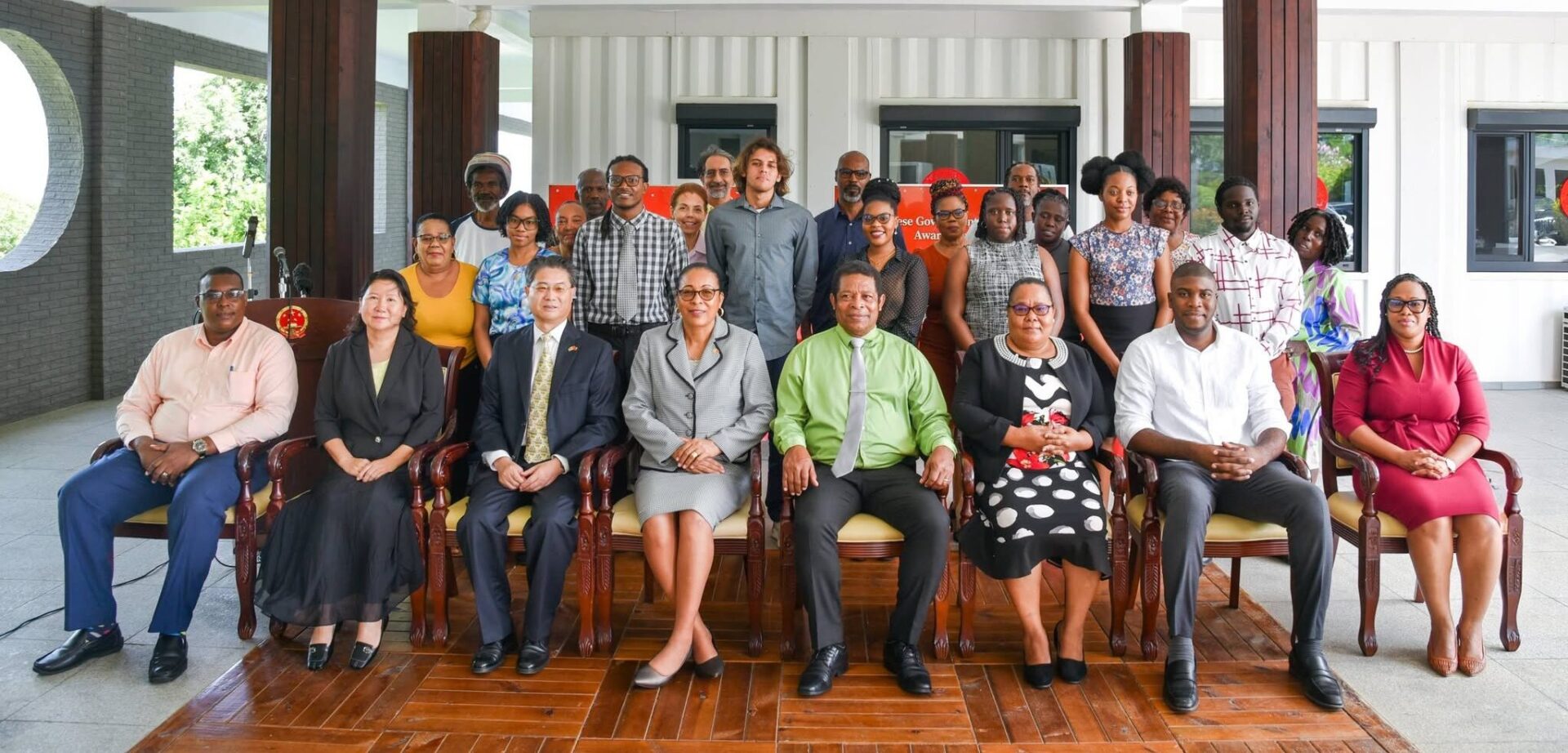
    In a formal ceremony hosted Wednesday at the Chinese Embassy in Morne Daniel, seven young Dominican scholars formally received full scholarships funded by the Chinese government to pursue higher education at top universities across China.

    The seven recipients, selected through the bilateral Chinese Government Scholarship Program, are Tiago Alishaw, Clint Iverson Lecointe, Michaela Warrington, Ayana Nakita Jordanne Augustine, Abigail Hannah Daniel, Nicquan Kern Richards and Jeriah Makeya Ovesen, comprising three male and four female students from the Caribbean island nation.

    Speaking on behalf of the government and people of the Commonwealth of Dominica, Octavia Alfred, the country’s Minister for Education, described the moment as a landmark occasion filled with national pride and profound gratitude. She emphasized that this opportunity marks a transformative turning point not only for the seven individual students, but also for the long-term future of Dominica as a whole.

    Alfred reinforced the widely held principle that education stands as the most impactful long-term investment a nation can make in its own development. With this scholarship initiative, she noted, that critical investment is being directed straight to Dominica’s most valuable national asset: its young people.

    Beyond framing the support as traditional development assistance, Alfred underlined the deeper meaning behind the gesture. The scholarship program, she explained, is far more than an act of generosity or a routine component of bilateral cooperation – it is a tangible demonstration of mutual trust. This trust extends to the potential of Dominican youth, the growth trajectory of the country, and the enduring bilateral friendship between Dominica and China that has consistently deepened year after year. Alfred closed her remarks by extending formal thanks to the government and people of the People’s Republic of China for their unwavering partnership and investment in Dominican education. The official photograph of the scholarship recipients alongside diplomatic and government officials was provided courtesy of the Chinese Embassy in Dominica.

  • Beneficial ownership registry ‘set for June launch’

    Beneficial ownership registry ‘set for June launch’

    After years of anticipation from the local business community, Barbados’ landmark beneficial ownership registry legislation has cleared its final legislative hurdle, with the government confirming the system will be fully operational by June next year. This sweeping reform is poised to reshape the country’s business landscape, boosting transparency, cutting red tape, and positioning the nation as a more competitive destination for both domestic and international investment.

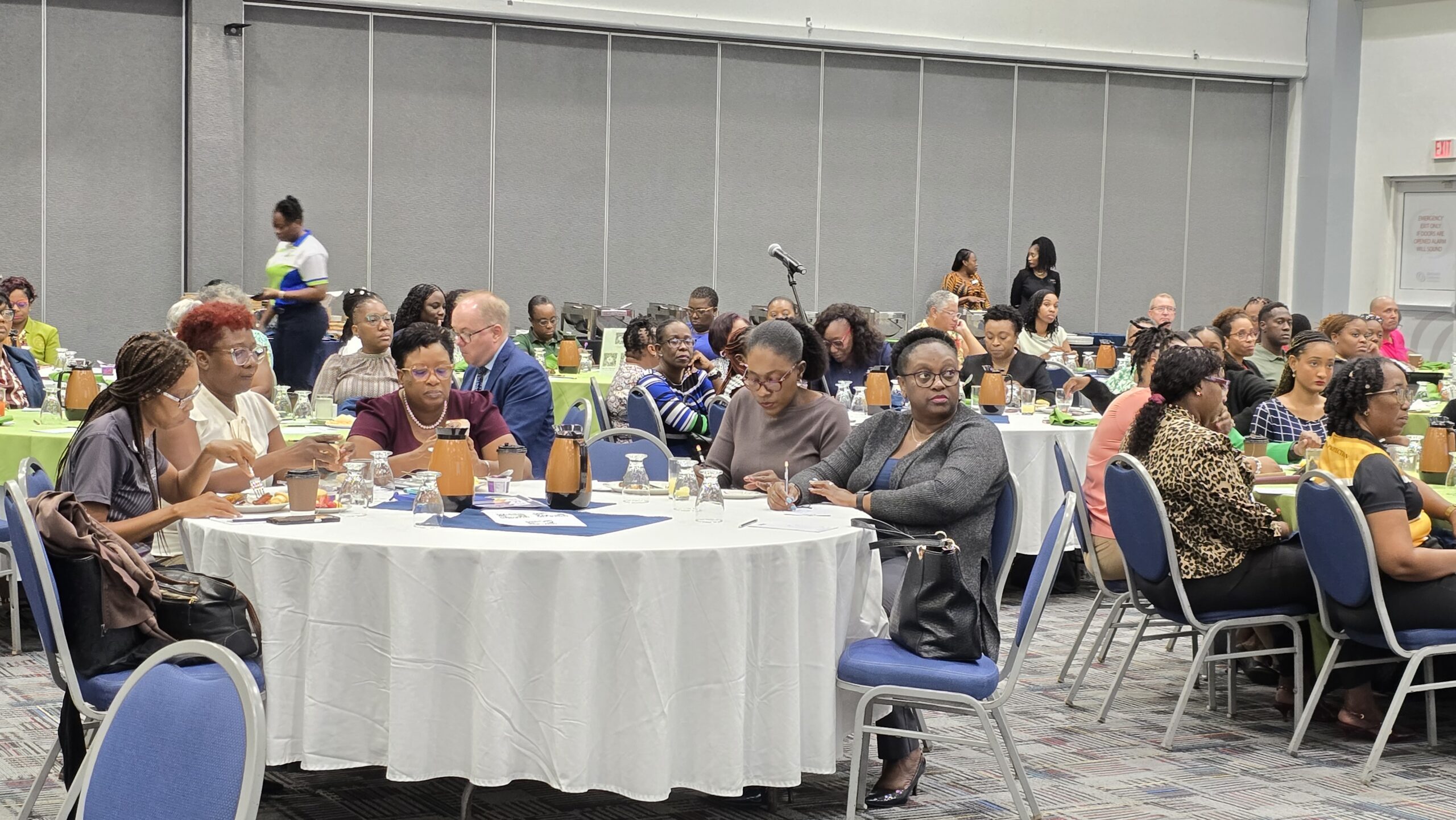
    The bill, which overhauls the country’s corporate information collection framework, was passed by the House of Assembly on Tuesday, kicking off the implementation phase of a project policymakers have framed as a cornerstone of national economic modernization. On Thursday, Minister of Energy, Business Development and Commerce Kerrie Symmonds laid out the government’s rollout strategy during a stakeholder breakfast meeting at the Radisson Hotel, where he spoke directly to business leaders, entrepreneurs, and top regulatory officials.

    Symmonds emphasized that the new registry is far more than a minor update to existing rules; it represents a fundamental reworking of how commercial activity is regulated in Barbados. The reform targets long-standing systemic inefficiencies that have hampered growth, creating a more open, streamlined regulatory climate designed to draw much-needed domestic capital and foreign direct investment.

    “This legislation lays the structural foundation our business community has needed for decades to compete effectively in an increasingly digital and globalized marketplace,” Symmonds told attendees. “By setting a clear, definitive operational target of June next year, we are giving businesses of all sizes a transparent timeline to adjust their operations, upgrade internal data systems, and bring their practices in line with global best practices.”

    The new regulatory framework addresses long-recognized bottlenecks across administrative processes, digital compliance reporting, and corporate governance protocols. Under the updated system, businesses will benefit from drastically simplified licensing workflows, unified digital reporting channels, and far less bureaucratic delay when completing routine commercial transactions. To match these private sector changes, government agencies will also undergo their own operational upgrades, ensuring public sector trade facilitation keeps pace with private sector speed and demand.

    Addressing concerns about transition disruptions, Symmonds moved to reassure stakeholders that the government will roll out dedicated guidance and ongoing technical support from now through the June launch date. He explained that the extended lead time was a deliberate policy choice, intended to give small and medium-sized enterprises (SMEs) as well as large corporate entities space to adjust seamlessly, without interrupting ongoing day-to-day business.

    “We understand that any regulatory transition requires careful planning and dedicated resources, which is why we are not forcing immediate compliance overnight,” Symmonds said. “The timeline stretching to next June was intentionally structured to allow for comprehensive training workshops, targeted outreach, and direct one-on-one support mechanisms. Our goal is not to burden the private sector with unnecessary, arbitrary mandates, but to empower every enterprise to boost its operational efficiency and build long-term resilience.”

    Symmonds further tied the new framework to Barbados’ broader national economic objectives, including deeper regional and global trade integration and long-term sustainable growth. By modernizing regulatory compliance and digital infrastructure, the government aims to cement the country’s reputation as a low-friction, highly attractive hub for international commerce.

    “When June next year arrives, we will not simply be tweaking a few administrative rules; we will be launching a robust, future-proof framework built to drive sustained economic expansion,” Symmonds concluded. “This reform is about creating a commercial ecosystem where innovation can flourish, administrative barriers are kept to an absolute minimum, and businesses of every size – from micro-enterprises to global corporations – have the tools they need to prosper in a modern, interconnected global economy.”

    With the legislative process now complete, government ministries and private sector representative bodies will begin collaborative implementation planning meetings in the coming weeks to finalize technical guidelines and support resources ahead of the June 2025 deadline.

  • Employers fear losses from unpaid staff advances

    Employers fear losses from unpaid staff advances

    As a landmark update to a 72-year-old labor law moves toward final approval in Barbados’ legislature, major private sector organizations are calling attention to unaddressed imbalances that they say leave employers unfairly exposed to financial loss. The Protection of Wages Bill, which has already cleared the House of Assembly, is poised for a Senate vote in the coming weeks, and would replace the original Protection of Wages Act enacted back in 1951. While business leaders publicly support many of the bill’s key reforms, they are pressing legislators to adjust key provisions before the legislation is signed into law.

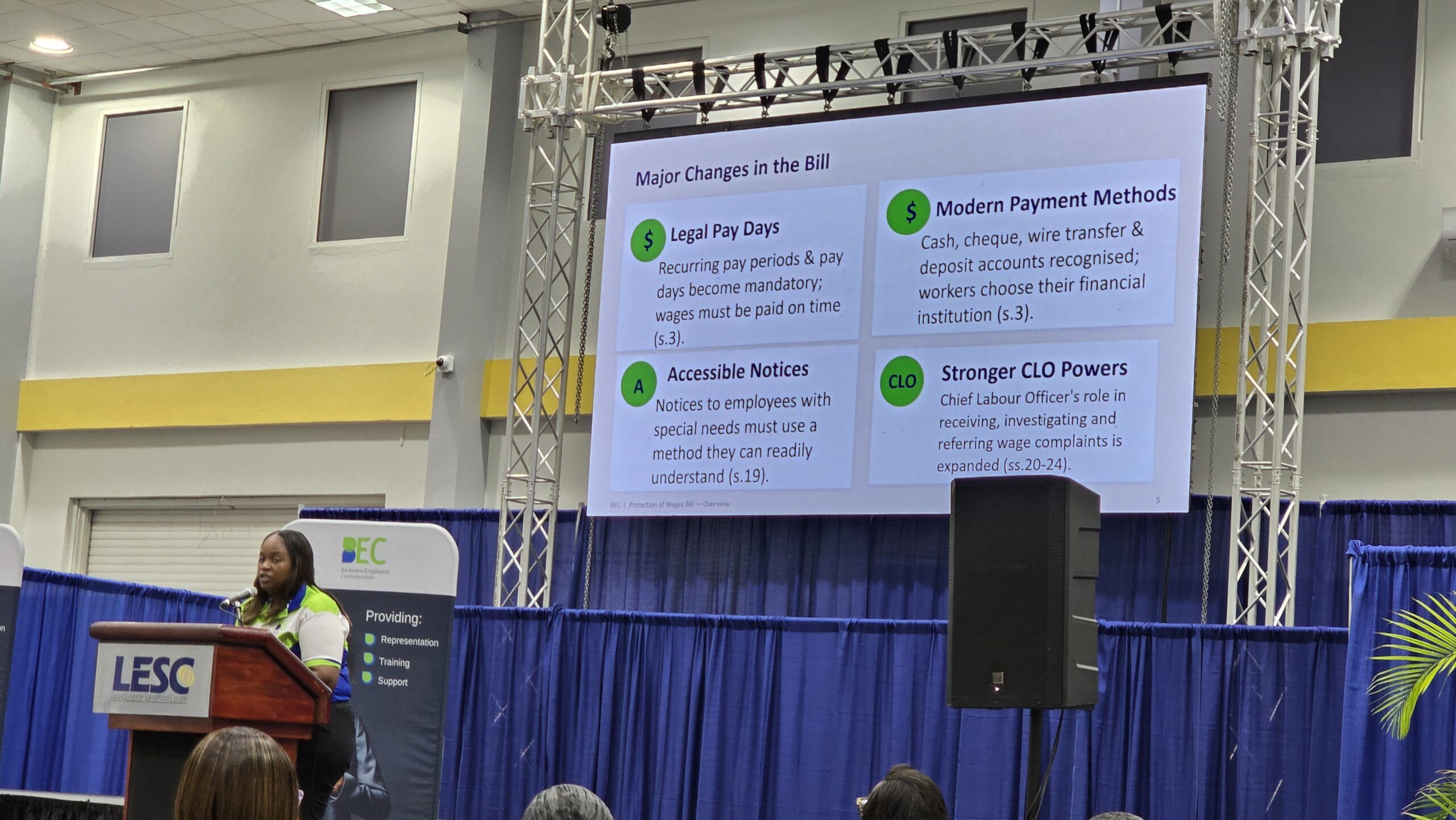
    Speaking at an educational briefing for members of the Barbados Employers’ Confederation (BEC), executive director Sheena Mayers-Granville outlined both the benefits of the proposed law and its most pressing flaws. For context, the 1951 original legislation was a landmark post-war reform passed by the labor government of Sir Grantley Adams in response to the 1937 social disturbances, designed to break the exploitative grip that plantation owners and merchants held over working-class Barbadians. It has been amended three times over the decades, most recently in 1975, when it added a requirement that all wages be paid in official legal tender. The new bill aims to modernize this decades-old framework to align with contemporary labor market needs.

    Mayers-Granville emphasized that the BEC backs many of the new law’s core provisions, particularly its clarification of longstanding ambiguities around payroll deduction rules. The original 1950s law already capped total wage deductions at one-third of a worker’s earnings, but for years employers have faced confusion over whether the cap applies to gross or net income, and how it should be implemented for voluntary deductions like mortgage payments or car loan installments that workers request be routed through their employer. The new bill resolves these questions, bringing much-needed clarity that will simplify payroll administration for businesses across the island.

    But despite these improvements, the BEC leader said there are critical gaps that create an unfair imbalance between workers’ and employers’ protections. Most notably, the legislation fails to create a simple, accessible mechanism for employers to recoup upfront wage advances or emergency loans extended to employees who leave the company before paying back the funds. Many employers voluntarily offer this financial support to workers facing unexpected personal hardship, Mayers-Granville noted, but currently the only path to recovery is filing a formal lawsuit against the former employee.

    “A lot of employers don’t wish to pursue legal action against former employees, and then they suffer the loss, and that is the imbalance that I see,” she explained. “Where I see the imbalance is employers who have extended a helping hand to employees and then there is no route to recovery.” The proposed legislation does not recognize this common scenario or provide any alternative outside of the courts, leaving employers with no other recourse if they choose not to take former staff to court.

    A second major concern centers on new interest rate restrictions that apply to employers who offer financial products or assistance to their workers. Mayers-Granville warned that the current wording of the bill could accidentally create barriers that prevent employers from offering these beneficial financial services to their staff at all. “What we would not want unintentionally is to create a situation where my employees can’t access financial products from me because of the way the legislation was written,” she said.

    Leaders of the broader Barbados Private Sector Association (BPSA) echoed the call for a balanced, practical framework that works for both businesses and workers. BPSA chairman James Clarke noted that the private sector’s core priority is ensuring the final legislation is fair to all parties, easy to implement for companies of all sizes, and does not impose excessive administrative burdens while still upholding strong protections for workers. “Making sure that the bill is fair to all parties, and is balanced and also is something that can be applied reasonably well within a company without being excessively burdensome while remaining fair to everyone,” Clarke stated.

    As the bill moves through the Senate, the BEC says it is continuing ongoing discussions with government officials to address these concerns before the legislation is finalized and enacted. Business leaders remain hopeful that legislators will adopt amendments to resolve the highlighted gaps, creating a modern wage protection framework that serves the needs of both Barbadian workers and employers.

  • BEC renews push for single Labour Code

    BEC renews push for single Labour Code

    After the Barbados House of Assembly passed the landmark Protection of Wages Bill, the Barbados Employers Confederation (BEC) has reactivated a years-long campaign to consolidate the country’s scattered labour regulations into a single, comprehensive Labour Code.

    This renewed appeal comes as employer groups across the island conduct a line-by-line review of the newly passed wage protection legislation, with the BEC arguing that a unified code would streamline the island’s entire labour governance framework by removing the burden of cross-referencing dozens of disconnected laws.

    BEC Executive Director Sheena Mayers-Granville shared details of the organization’s ongoing push in an interview with Barbados TODAY, confirming that the confederation has advocated for a consolidated Labour Code for no less than five years.

    “What we are calling for is one overarching, comprehensive Labour Code that eliminates the need to jump between multiple separate pieces of legislation every time we address a labour issue,” Mayers-Granville explained. “Right now, no such unified code exists. We have been actively collaborating with government stakeholders on this proposal, and we are eager to see tangible progress on this initiative in the near term.”

    Mayers-Granville added that the confederation has already completed a full, detailed feasibility study mapping out exactly how the unified Labour Code would operate, and has formally submitted its finalized recommendations to both national government leaders and private sector industry representatives.

    The proposed single code would replace more than a dozen existing standalone labour laws, covering everything from paid holiday entitlements and minimum wage standards to wage protection regulations, the Shops Act, labour contracting rules, employment anti-discrimination policies, and workplace sexual harassment prevention guidelines, according to Mayers-Granville.

    She emphasized that consolidating all these separate regulatory measures into one cohesive document would make it far simpler for both employers and workers to understand their legal rights and responsibilities, removing the confusion that comes from navigating dozens of overlapping and disconnected acts.

    “Currently, we have to reference between 15 and 20 different pieces of legislation to cover all labour-related matters. Our proposal would do away with that fragmentation. Instead of dozens of disconnected laws, we would have 11 structured subsections within one single piece of legislation that covers the full scope of national labour law,” Mayers-Granville noted. “Every issue, from wage payment protocols to employment separation procedures to anti-discrimination protections, would be fully encompassed in this one document.”

    Crucially, the push for a unified code has broad, cross-stakeholder support: trade unions across Barbados also back the proposal, Mayers-Granville confirmed. The confederation remains optimistic that the government will move forward with the proposal in the coming months, after years of collaborative advocacy.