
博客

  • SAMBA TIME!

    SAMBA TIME!

    MORRISTOWN, U.S. — As Brazil counts down to its opening 2026 FIFA World Cup Group C clash with Morocco, five-time champion goalkeeper Alisson Becker argues that the widespread skepticism surrounding the Selecao’s title chances could actually be a secret weapon for the side when the tournament gets underway in North America.

    Speaking to reporters Thursday at Brazil’s training base in Morristown, New Jersey, the Liverpool first-choice goalkeeper drew on Brazil’s historic underdog success to frame current low expectations as an advantage. “It is a good thing that there are some doubts about the team, because that has been the case on other occasions in the past,” Alisson explained, referencing past Brazil squads that entered tournaments not tipped as favorites but still claimed the World Cup trophy.

    Brazil’s last world title came 24 years ago, a drought that has left the nation’s passionate fanbase eagerly anticipating a return to the top of global football. Most notably, the 2002 World Cup co-hosted by Japan and South Korea saw Brazil enter the tournament not as the leading contender, yet the side went on to lift the trophy — a parallel that lines up directly with 2026, where Brazil has also been omitted from most conversations about the tournament’s top contenders.

    Heading into the 48-team 2026 tournament, pre-match analysis has overwhelmingly centered defending champions Argentina, European title holders Spain and 2022 runners-up France, with England and Portugal also regularly cited as more likely winners than Brazil. This underdog status is nothing new for the current squad, which has navigated a rocky lead-up to the tournament.

    Alisson acknowledged that the group’s path to the 2026 World Cup has been far from smooth. “The current team has different characteristics compared to past sides. That last period was very difficult for all the players, for various reasons,” he said. After a chaotic South American qualifying campaign that saw Brazil sack two head coaches before Carlo Ancelotti took charge one year ago, the side only secured qualification by finishing fifth in the 10-team CONMEBOL group. But recent form has turned a corner: Brazil has claimed wins in its last three friendly matches, including a 6-2 rout of Panama and a 2-1 victory over Egypt just last week.

    The matchup between Brazil (ranked 6th in the current FIFA rankings) and Morocco (ranked 7th) at MetLife Stadium on Saturday stands out as one of the most highly anticipated group stage fixtures of this expanded World Cup. Following their opening game, Brazil will face Group C underdog Haiti before wrapping up its round-robin play against Scotland, with both sides targeting a strong opening result to build momentum for the knockout stage.

    Brazil has historic success on U.S. soil, having won the 1994 World Cup hosted by the country. But recent tournament performances have left fans disappointed: Brazil has been eliminated in the quarter-finals in four of the last five World Cups, including a devastating 7-1 semi-final defeat to Germany on home soil in 2014. Most recently, the 2018 Russia World Cup ended in a quarter-final loss to Belgium, while the 2022 Qatar tournament saw Brazil knocked out by Croatia in a penalty shootout.

    For 33-year-old Alisson, who is set to play his third World Cup having featured in every game for Brazil in 2018 and all but one match in 2022, dwelling on past disappointment is not an option. “On what happened in the past, I think in football you can’t afford to spend time wallowing,” he said. The goalkeeper also highlighted the positive shift brought by Ancelotti’s appointment: “Since Ancelotti came in, the atmosphere has been transformed. He has such a strong presence and doesn’t focus on controversial issues.”

    Alisson and his teammates took to the Columbia Park Training Facility pitch in Morristown for their final training session on Friday, one day ahead of the opening kickoff against Morocco, alongside star forward Vinicius Junior and backup goalkeeper Ederson.

    Alongside Saturday’s marquee Brazil-Morocco clash, three other group stage matches are scheduled: Group B play sees Qatar face Switzerland at 2:00 pm ET, Group C action continues with Haiti vs Scotland at 8:00 pm ET, and Group D wraps up the day’s play with Australia taking on Türkiye at 11:00 pm ET.

  • Six months and $84 million to get Bogue lands ready for sale

    Six months and $84 million to get Bogue lands ready for sale

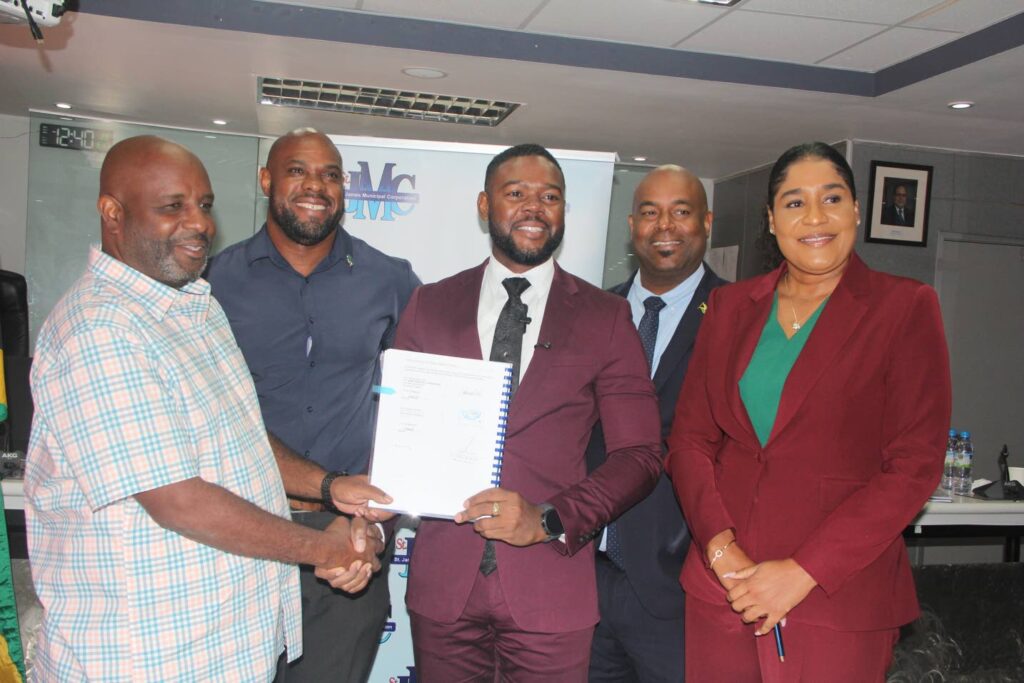
    MONTEGO BAY, St James — After nearly two decades of tangled negotiations and political tension over land tenure, a major step forward has been reached to resolve the long-running standoff at Bogue Industrial Estate, one of Montego Bay’s most hotly contested commercial parcels. On Thursday, the St James Municipal Corporation formalized an $84-million construction agreement with local firm Odelallen Construction, clearing the way for long-awaited infrastructure upgrades that will pave the path to regularizing land ownership for the site’s current occupants.

    Scheduled to kick off on July 2, the six-month construction project will lay critical public utilities across the 5-hectare property, which has been occupied by 26 separate commercial operators since roughly 2003. Speaking at the official contract signing ceremony, Montego Bay Mayor Richard Vernon laid out the full scope of the upcoming works, noting that the upgrades align with all regulatory standards for a formal commercial subdivision.

    “We have to deliver all the required core infrastructure, including potable water, electrical service, fire hydrants and other basic utilities, before the development can earn a compliance certificate and move forward,” Vernon explained. He recounted that years of preliminary discussions with the current land occupants had already laid the groundwork for this milestone: when local officials first proposed an amicable settlement for the property claims almost a decade ago, the operators made a clear demand that infrastructure be installed before they would sign any formal sale agreement.

    The site, commonly referred to locally as Bogue Lands, has been a source of political friction spanning multiple Jamaican national administrations. Unlike informal squatters, the current commercial operators have long maintained legitimate claims to the land, arguing that they have poured substantial private investment into developing their businesses on the site over the past 20 years. The St James Municipal Corporation has worked for years to regularize the operators’ status, granting them the first right of refusal to purchase the lots they currently occupy once the site is formally subdivided.

    For Mayor Vernon, Thursday’s contract signing marks an unprecedented turning point for the community. “Today I’m glad that we have not only secured the funding, but also selected a qualified contractor to deliver the full infrastructural upgrade for the entire Bogue Industrial Estate,” he said. “As soon as the upgrades are complete, we will begin finalizing the sale agreements with the current occupiers.” He called the moment a historic milestone for Montego Bay, closing a chapter of uncertainty that has held back development of the site for years.

    Once the upgrade work wraps up, municipal authorities will conduct a new market valuation of the individual lots ahead of sale. Proceeds from the land sales will boost the St James Municipal Corporation’s capital budget, supporting a range of critical local infrastructure projects including the long-planned repairs to the Old Shoe Arcade, a popular local commercial hub in need of renovation.

    Officials have already secured sign-off from Jamaica’s Integrity Commission, the successor body to the former Contractor General’s office, approving the sale of the land at fair market value. While Vernon and municipal leaders do not expect major pushback to the formal sale process, they have emphasized that every step has been carried out in full compliance with Jamaican law to guard against potential legal challenges.

    “We don’t anticipate significant opposition, but we acknowledge it remains a possibility,” Vernon noted. “Our priority has been to follow every legal requirement to the letter, so that if any challenge does arise, we are fully prepared to defend our process in a court of law.”

  • AFJ hits US$10-m mark in Hurricane Melissa relief and rebuilding support

    AFJ hits US$10-m mark in Hurricane Melissa relief and rebuilding support

    Eight months after Hurricane Melissa tore through large swathes of western Jamaica in October last year, the American Friends of Jamaica (AFJ), a decades-old transnational charitable organization focused on supporting Jamaican communities, has announced that donations from its global network of supporters have pushed total recovery and reconstruction funding past the $10 million mark. The milestone was revealed Saturday, June 6, during AFJ’s flagship annual event, the 2026 Jamaica Charity Gala, held in Miami, one of the most high-profile Jamaican-focused charitable gatherings in the United States each year. The event not only raised additional funds for ongoing relief efforts but also gave attending stakeholders a detailed progress update on reconstruction work across the five parishes hardest hit by the storm.

    AFJ’s recovery work is currently concentrated in five western Jamaican parishes: St Elizabeth, Westmoreland, Hanover, Trelawny, and St James. To date, the organization has allocated nearly $2 million toward immediate emergency response efforts. Beyond initial relief, it has funded critical post-storm recovery projects including home re-roofing, school and outdoor learning space repairs, and a targeted farming gift card program designed to help small agricultural producers restore lost income and shore up local food security. Even amid ongoing emergency response operations in April, AFJ awarded 65 new grants totaling nearly $952,000 to support long-term programming across education, healthcare, and economic development sectors across the island.

    Along with announcing the funding milestone, the 2026 gala included an awards segment honoring individuals and organizations that stepped up immediately in the wake of the hurricane. Three business and humanitarian leaders were recognized for their rapid and impactful disaster response. The International Achievement Award was presented to Norman Horne, executive chairman of ARC Manufacturing and a native of St Elizabeth. Within two weeks of Hurricane Melissa making landfall, Horne’s firm sourced and shipped critical alloy coils for roofing materials to Kingston, enabling widespread re-roofing work to begin quickly across storm-damaged communities. Two International Humanitarian Awards were also granted: one to Michael Capponi, founder and president of Global Empowerment Mission, whose response team was on the first plane into the affected region after the storm, while mobilizing 3,000 volunteers in Miami and pushing roughly $16 million in emergency aid to Jamaican communities in the first two months post-disaster. The second International Humanitarian Award went to Edward Raine, president and CEO of Food for the Poor. During the event, Raine accepted the award from former U.S. Ambassador to Jamaica Nick Perry, with AFJ executive director Caron Chung and Jamaica’s Minister of Tourism Edmund Bartlett in attendance. Food for the Poor moved 250 containers of relief supplies into Jamaica through local channels, partnered with 70 regional organizations to deliver aid, and completed critical work to repair and return 22 damaged fishing vessels at Galleon Beach to active service.

    Minister Bartlett used the occasion to thank AFJ for more than 40 years of partnership with Jamaica, framing the ongoing hurricane recovery work within the island’s broader national development goals. He outlined the government’s new governance structure for long-term reconstruction, the National Reconstruction and Resilience Authority (NaRRA), which will lead planning for the revitalization of four major hard-hit coastal towns: Black River, Lucea, Montego Bay, and Falmouth. Bartlett emphasized that Jamaica’s national goal is to transition rapidly from post-disaster recovery to achieving full developed nation status within the next 10 years. Addressing gala attendees, he reflected on the storm’s impact: “It bent us as a people, but it didn’t break us.”

    AFJ President Wendy Hart attributed the organization’s ability to deliver a rapid, coordinated response to the 43 years of on-the-ground relationship-building it has completed across Jamaica. “That is not a miracle. It is 43 years of relationship building coming due,” Hart told attendees, highlighting the value of longstanding local ties that enable rapid action when disaster strikes. Beyond the program and awards, the event featured a curated silent auction with a broad roster of exclusive items and experiences donated by AFJ’s supporters, including luxury travel packages, fine dining reservations, sports and entertainment access, original artwork, and one-of-a-kind curated experiences. The diverse selection of auction lots reflected the widespread generosity of AFJ’s corporate partners, individual donors, and global network of supporters, with all proceeds going toward the organization’s charitable mission in Jamaica.

    Founded more than four decades ago, AFJ operates as a bridge between international donors seeking to support Jamaican communities and local nonprofits, community groups, and policymakers that have on-the-ground knowledge of local needs and effective implementation strategies. In addition to coordinating rapid disaster response when extreme weather events strike, the organization funds ongoing programming across education, healthcare, and economic development, reviewing roughly 100 grant applications from Jamaican nongovernmental organizations each year to fund impactful local projects.

  • Florida politicians with Jamaican, Caribbean roots bask in FIFA World Cup atmosphere

    Florida politicians with Jamaican, Caribbean roots bask in FIFA World Cup atmosphere

    As the 2026 FIFA World Cup unfolds across the United States, Canada, and Mexico, Caribbean-descended political leaders in South Florida are brimming with excitement over the event’s far-reaching economic and cultural benefits for their region. While all Florida-based World Cup matches will be hosted in Miami, Broward County – home to a large, tight-knit Jamaican and Caribbean diaspora community – is stepping into the global spotlight, carving out its own meaningful role in the historic tournament.

    Denise Grant, the Jamaican-born mayor of Lauderhill, a small Broward County city of roughly 75,000 residents, has spearheaded a local initiative branded “World Cup Comes to Broward County” to ensure the region leverages the tournament’s momentum. Even without hosting any official matches, Grant emphasized that Lauderhill and the broader county are positioned to capture significant spillover benefits, from increased bookings at local hotels and restaurants to one-of-a-kind cultural experiences for visitors and residents alike.

    In an interview with the Jamaica Observer, Grant expressed enthusiasm about opening South Florida’s unique Caribbean-centric community to global visitors. “We’re extremely engaged as a city, and we’re so proud to be part of this global moment,” she said. “There’s so much excitement across our community, especially among young people. We want them to get to experience this event firsthand, to carry this memory with them for years to come. We’re grateful for the chance to participate even without being an official host city.”

    Grant, a self-described “soccer mom” whose son Joshua serves as goalkeeper and captain of Jamaica’s Under-20 men’s national team, noted that even though Jamaica failed to qualify for the 2026 tournament, she is still eager to cheer on Caribbean representation. “I don’t have one specific team I’m rooting for, though I expect Argentina will put on an incredible show with Lionel Messi,” she said. “Jamaica didn’t qualify this time around, but we’re still proud of how our team performed. Haiti is here representing the entire Caribbean, and that’s something the whole region can get behind. This is going to be an unforgettable experience.”

    Lauderhill’s Jamaican-born vice mayor, Richard Campbell, has worked to turn that excitement into tangible community action. More than 20 years ago, Campbell founded the Caribbean Americas Soccer Association (CASA), a nonprofit that promotes football development across Caribbean diaspora communities. In the lead-up to the World Cup’s opening kickoff, CASA partnered with local sponsors to host two days of pre-tournament youth football matches across Broward County venues.

    The action kicked off on June 6 at the Lauderhill Sports Complex, where three matches were held, including a lopsided 9-0 win for Jamaica’s Under-20 team over Haiti’s youth side. The following day, tournament action moved to Broward County Stadium, where Jamaica’s Under-20s fell to Miami United’s youth team in a penalty shootout.

    Campbell argued that even a non-host community like Lauderhill deserves a spot in the World Cup’s historic moment. “We were lucky enough to get this opportunity to engage, so it was our job to make the most of it – not just for our local businesses, but for our young people,” he explained. “This exposure will inspire them for the rest of their lives. These kids could be our next big football stars, and it’s our responsibility as leaders to give them every chance to experience world-class football. We want to put Broward’s 31 cities on the global map, and this is the perfect moment to do that.”

    Looking at economic projections, Campbell noted that an estimated $1.3 billion in total visitor spending is expected to flow through South Florida over the course of the month-long tournament. “We just want our fair share of that economic activity,” he said. “We’ve been working to mobilize local businesses to get ready, to position themselves to welcome visitors from all over the world, and make sure Broward County is fully prepared.”

    Broward County Commissioner Hazelle Rogers, another Jamaican-born leader, echoed that call, extending a formal welcome to global visitors to explore her region during the World Cup. “Broward County welcomes the whole world,” Rogers said. “Our schools are home to 191 different languages, and we have residents from more than 204 countries represented here. We know how to host the world, so we’re inviting everyone to come experience South Florida with us during this incredible tournament.”

  • Squatter culture hurting Jamaica, says PM

    Squatter culture hurting Jamaica, says PM

    On a crisp Friday in St Catherine, Jamaica, Prime Minister Dr Andrew Holness stood at the construction site of the new Wick Hall Estate housing development and issued a urgent, collaborative call to action: solving the country’s growing squatting crisis requires more than just strict enforcement—it demands a massive expansion of accessible, affordable housing built in partnership with private developers.

    Holness framed the spread of unplanned informal settlements as a multifaceted challenge that erodes national productivity, drains public tax resources, and leaves vulnerable residents trapped in inadequate living conditions. While he acknowledged that most people who turn to squatting do so out of genuine unmet housing need, he detailed how these unregulated communities gradually emerge, often through incremental land occupation that is sometimes framed as adverse possession. What starts as a single small zinc or block structure quickly grows into an entire neighborhood built without basic public infrastructure: no paved roads, no formal water distribution, no functional drainage, no scheduled public transit routes, and no regular garbage collection.

    These gaps do more than just create headaches for local governments, the prime minister argued—they directly undercut the productivity of Jamaican workers. Residents of unplanned settlements face daily battles just to access basic needs and get to their jobs: waking up before dawn to collect water, trekking down muddy unmarked hills to reach main roads, waiting for sporadic, unplanned transit that never runs on schedule. By the time they arrive at work, they are already exhausted, frustrated, and unable to perform at their best. This cumulative drag on workforce productivity holds back broader national economic growth, Holness explained.

    To reverse this trend, Holness laid out a market-oriented strategy that targets the root of the problem: lack of affordable formal housing options. The core of the approach is to make legal, planned housing a more accessible and economically viable option than illegal squatting. Right now, Jamaica faces a national housing deficit of roughly 150,000 units. The government has already stepped up its own commitments, promising to deliver around 70,000 new housing solutions through state agencies including the National Housing Trust (NHT) and the Housing Agency of Jamaica. But closing the full gap will require private developers to shift more of their investment away from exclusive high-end projects and toward middle- and working-class affordable housing, the prime minister emphasized.

    Holness specifically challenged developers to take advantage of existing government mortgage support programs to build housing that fits the budgets of ordinary Jamaicans. Many working Jamaicans cannot afford $20 million luxury homes, he noted, but can afford $10 million properties with government-backed mortgage assistance.

    The Wick Hall Estate development, which broke ground Friday in Spanish Town’s Featherbed Lane, held up as a blueprint for the kind of projects the government wants to see scaled across the island. Led by Altruhomes, a subsidiary of the ARC Group, the development will transform 36 acres of land into 221 new planned homes, complete with dedicated green public spaces, recreational facilities, and modern energy-efficient features including solar-ready construction and pre-installed solar water heaters. The project is intentionally located near existing economic hubs and infrastructure, aligning with the government’s goal of connecting housing to economic opportunity.

    Ultimately, Holness said, the goal of Jamaica’s national housing strategy is to rebalance the market so that the formal regulated housing sector outpaces the informal squatting market, removing the economic incentive for illegal land occupation. Organized, infrastructure-supported planned communities do more than just improve individual quality of life—they lay the foundation for stronger long-term economic growth and higher national productivity. “The more communities are organised, the greater will be the productivity of the people,” Holness told attendees at the ground-breaking ceremony.

  • Rooting for resilience

    Rooting for resilience

    To mark World Environment Day 2024 on June 5, a cross-sector community gathering converged on Whitehouse, a coastal town in Jamaica’s Westmoreland parish, to advance local reforestation and food security goals. Bringing together nearly 30 elementary school students from New Hope Primary School and Kings Primary School, local smallholder farmers, Forestry Department officials, trained environmental wardens, and team members from the Sandals Foundation, the event centered on planting native fruit trees as part of a larger national environmental initiative.

    This on-the-ground planting activity is a core component of the Sandals Foundation’s ongoing support for Jamaica’s national Reforestation, Ecological Enhancement and Landscape Framework, widely known by its acronym RE-LEAF. As a leading Caribbean philanthropic organization focused on community resilience, the Sandals Foundation has followed through on its RE-LEAF commitment by distributing 360 fruit tree seedlings across six local educational institutions and one regional farming association.

    The institutions that received seedlings include Culloden Early Childhood Institution, Whitehouse Basic School, New Hope Primary School, Kings Primary School, Petersville Primary School, and Petersville Early Childhood Institution. Members of the Westmoreland Organic Farmers Association also took delivery of trees. The selection of species prioritized nutrient-dense, locally adapted food crops: breadfruit, ackee, jackfruit, mango, avocado, soursop, and Otaheite apple. The distribution and planting aim to expand access to affordable, fresh, locally grown produce for Westmoreland communities, while restoring degraded green landscapes.

    During the World Environment Day event, participating students worked side-by-side with conservation and agricultural leaders to plant 20 new fruit trees. This hands-on collaboration was designed to foster early environmental literacy and a culture of stewardship among young people, connecting classroom learning to tangible on-the-ground action. For example, Jada Myers of New Hope Primary School partnered with Sanctuary Warden Diego Salmon to plant a tree, while Elijah Bowman of Kings Primary School prepped a seedling for planting, gaining first-hand experience in ecological restoration.

    Heidi Clarke, executive director of the Sandals Foundation, explained that the organization’s choice to focus on fruit trees was a deliberate, community-centered decision. “We chose fruit trees because in addition to helping to restore green spaces and biodiversity — they sustain a community’s food security,” Clarke noted. The strategic selection ties environmental restoration directly to local livelihoods and food system resilience, a critical priority for Caribbean small island developing states grappling with the impacts of climate change.

    Georgia Scarlett, environmental manager at the Sandals Foundation, expanded on the broader mission of the project beyond tree planting itself. “Reforestation is about much more than planting trees,” Scarlett said. “It is also about ensuring future generations understand their role in protecting the natural resources that sustain our communities. By placing fruit trees in schools and farming communities we are creating opportunities for learning, nourishment, and long-term environmental stewardship.”

    For Caribbean communities already facing mounting pressure from climate change, which strains local food systems, erodes green spaces, and depletes natural resources, the RE-LEAF collaborative model offers a replicable, practical framework for local climate action. By embedding fruit trees in schools and farming hubs, the initiative does more than distribute seedlings: it empowers local residents to take ownership of their food production, cool overheated landscapes through restored tree cover, and protect the natural environment that future generations will inherit.

  • Gov’t moving swiftly to relocate 9 Trelawny residents still in shelter

    Gov’t moving swiftly to relocate 9 Trelawny residents still in shelter

    FALMOUTH, Trelawny — Almost a year after Hurricane Melissa swept across Trelawny, leaving a trail of destroyed property in its wake, nine local residents still remain trapped in emergency accommodation at the Bunkers Hill Community Centre — and Jamaican government agencies are in a urgent race against the clock to deliver permanent, safe housing for them before the Atlantic hurricane season peaks.

    The urgent timeline and ongoing efforts were laid out by C Junior Gager, Mayor of Falmouth and chairman of the Trelawny Municipal Corporation (TMC), during the body’s regular monthly public sitting on Thursday.

    Gager told attendees that all nine displaced people lost their homes to catastrophic damage when Melissa made landfall last October, leaving them with no alternative but to seek refuge in the community-run emergency shelter. “Their houses were badly damaged and they had nowhere else to go,” he explained to the corporation.

    To move the project forward, two national government ministries — the Ministry of Local Government and Community Development, and the Ministry of Economic Growth and Job Creation — have partnered with local municipal authorities to develop a coordinated housing solution for the group. Under the current plan, the nine residents will move into eight newly constructed units, with two brothers who currently live together in the shelter set to share one home.

    With the 2024 Atlantic hurricane season already underway, Gager confirmed that the TMC has already completed all required pre-construction groundwork to avoid costly delays once funding is secured. That work includes scouting, vetting, and securing appropriately zoned, safe plots of land that meet all building requirements for the new housing units.

    “Our team from the local authority went through and checked to ensure that the land was available and everything was in place so that the houses could be built,” Gager said. Detailed cost estimates for the construction project have already been finalized and submitted to the Ministry of Local Government for review, and municipal leaders are now awaiting final approval of the budget allocation to break ground.

    The project is currently in the public procurement phase, Gager confirmed, with relocation efforts progressing steadily even as formal funding approval is pending. “The estimate was done and we are now awaiting funding so that we can kick off the action of building their homes,” he added. Once funding is greenlit, the construction contract will be put out to competitive public tender to award the build to a qualified contractor.

    Seeking to reassure both the displaced residents and the broader community that their plight remains a top government priority, Gager stressed that the nine people stuck in the emergency shelter have not been forgotten by authorities. “It is not that they are there and no attention is being placed. The attention is on track. The work is being carried out. The land has been identified and soon they will be able to have their own private homes,” he promised.

  • Witness sinks Munga murder trial

    Witness sinks Munga murder trial

    After nearly a decade of legal uncertainty that upended the lives of two accused individuals, the high-profile murder trial against Jamaican dancehall performer Munga Honorable — born Damian Rhoden — and his co-defendant Sheridan “Mad Rhymes” Gordon ended abruptly this Friday in the Gun Court Division of the Supreme Court in downtown Kingston. The prosecution’s case fell apart entirely after Crown prosecutors ultimately aligned with the defense’s core argument: the prosecution’s only eyewitness was too unreliable to sustain a conviction.

    The case dates back to 2017, when Cleveland Campbell was fatally shot in Ackee Walk, St Andrew. The sole prosecution witness claimed she had witnessed Rhoden and Gordon open fire on Campbell, but extensive cross-examination by the defense exposed crippling inconsistencies across every key detail of her account. These pervasive contradictions ultimately led the prosecution to decline to present any further evidence against the two men, resulting in their immediate release from legal jeopardy.

    The case had already been delayed multiple times over the nine years it moved through the justice system, often due to witness unavailability. Rhoden was represented by attorneys Christopher Townsend and Chadwick Berry, while Gordon was defended by King’s Counsel Peter Champagnie and Sayeed Bernard. Both defendants expressed profound relief at the ruling, after spending nine years fighting the murder charges that hung over their heads.

    In an interview with the Jamaica Observer following the decision, Champagnie shared that Gordon told his legal team, “I can finally continue my life, and I am eternally grateful to you and Mr Bernard. Thank you very much.” Echoing that sentiment, Rhoden told his attorney Townsend that he felt an overwhelming sense of “free” after the ruling was handed down.

    Townsend emphasized the scope of the defense’s work in dismantling the prosecution’s case, telling reporters: “I am glad to announce that we were successful in the defence of Munga and Mad Rhymes. It has been nine long years but Mr Champagnie and myself were able to cross-examine the only witness for the Crown to the point where her credibility fell down significantly and the prosecution threw in the towel because of the evidence in the state it was in. We were able to demonstrate that the evidence concerning identification was extremely poor.”

    Champagnie detailed the critical contradictions that arose during cross-examination, noting that the witness’s account did not hold up to scrutiny when tested against official court records. For example, the witness initially denied that she had previously testified she hid behind two barrels to watch the shooting. When confronted with the official transcript of her earlier testimony, she claimed she had been tricked into giving that statement and did not understand the question when she originally answered. She also admitted under questioning that key portions of her original statement to police were untrue.

    The witness’s original account to law enforcement claimed she had been attending a local party, drank multiple Heineken beers, and stepped away to urinate when she witnessed the shooting. When questioned, however, she could not give a consistent answer about how many beers she had consumed: her court testimony claimed she only had one, conflicting with her original statement that she had “a lot” of Heinekens that night.

    Additional inconsistencies emerged around the timeline of her statement to police: she admitted she never mentioned the shooting to any of the friends she was with that night, and waited a full 14 days after the killing to give law enforcement a formal statement. She only came forward after encountering a grieving relative of Gordon a week after the shooting, she told the court.

    Her account of the shooting itself was also riddled with contradictions that differed from her original police statement. She told the court that while relieving herself, she saw Campbell ride by on a bicycle, before Gordon grabbed him by the back of the neck. She claimed Rhoden then approached Campbell holding an object she later identified as a handgun, struck Campbell in the head with it, and fired the first shots. She alleged Rhoden then passed the weapon to Gordon, who fired additional shots that killed Campbell.

    When questioned about how she could see the attack, which took place in a dark passage, she claimed street light from nearby Molynes Road reflected into the walkway, giving her enough visibility to identify both men. She said she saw Rhoden’s back, which she was able to identify because she already knew him, and that he was wearing all black. She claimed she saw the right side of Gordon’s body, which was wearing a blue merino shirt and light blue jeans. After the shooting, she told the court she panicked, pulled up her clothing, ran to her car and drove straight home, staying inside her house out of shock before coming forward weeks later.

    The dramatic collapse of the case after nine years of legal process brings an end to a high-profile prosecution that highlighted persistent issues with witness reliability in Jamaican criminal courts, and the heavy toll that prolonged legal proceedings take on accused individuals who have not been convicted.

  • Ministry of Transportation updates on public transport support initiatives

    Ministry of Transportation updates on public transport support initiatives

    As a backbone of daily life for nearly all residents of the Caribbean island nation, Grenada’s public transportation sector is receiving a major multi-pronged boost from the country’s government, which is moving forward with targeted investments, regulatory reforms, and innovative modernization efforts to keep services reliable, affordable, and sustainable for both commuters and operators. For Grenadians, public transit is far more than a convenience: it delivers schoolchildren to classes, gets workers to their workplaces, and connects families to essential services across the island chain. Recognizing this central role, the administration has prioritized sector-wide support, and is now detailing completed actions and upcoming plans to increase transparency for the public. At the core of the government’s new commitments is more than EC$1.7 million in direct investment allocated for 2025–2026, administered through the Grenada Transport Commission to benefit bus operators across the country. This funding pursues two equally critical goals: easing the burden of soaring fuel, maintenance, and operational costs for service providers, and preventing those cost increases from being passed on to commuters in the form of higher fares. The investment is being distributed through two established programs. The first, the Fuel Tax Rebate Programme, has already disbursed roughly EC$1.45 million directly to operators to offset volatile global fuel prices. The second, the Western Bus Passenger Relief Initiative, has received an allocation of more than EC$250,000 to keep fares accessible for daily riders in that region. Additional support is already in the pipeline following formal approval from Grenada’s Cabinet. Officials have greenlit a 50% concession on all approved tyres, bus parts, and routine consumables, a measure designed to cut long-term maintenance costs and ensure all public buses remain safe and roadworthy. Working in close partnership with the National Bus Association (NBA), the government has already finalized the official list of eligible items for the concession program. To guarantee inclusive access to all new support measures, the government is prioritizing outreach to Grenada’s roughly 1,500 registered bus operators across the entire country, including the smaller islands of Carriacou and Petite Martinique. To ensure no eligible operator is left out, the Grenada Transport Commission has launched a national registration drive running from June 6 to July 6. This initiative serves four key purposes: expanding access to government subsidies and concessions, building the first complete, accurate national database of public transport operators, strengthening lines of communication between regulators and service providers, and laying data-driven groundwork for smarter, more equitable future policy development. One of the most transformative innovations on the sector’s modernization agenda is the SpiceBus programme, Grenada’s first technology-integrated student transportation system, rolled out in partnership with the Ministry of Education. While the pilot program encountered some initial implementation challenges, it delivered promising early results across test sites in St David and St George. During the trial, 437 students registered for the service, the system logged more than 4,000 individual transport sessions, completed over 2,600 routes, and covered nearly 26,000 kilometres of travel across the test regions. Every participating student received a personalized SpiceBus ID card, and all participating buses were fitted with on-board digital validation systems that enable real-time tracking and confirmation of student pickups and drop-offs. This technology brings tangible improvements to student safety, increases accountability for service delivery, and generates granular operational data to improve long-term route planning. Building on the pilot’s successful outcomes, the government plans to address remaining implementation gaps and roll out the SpiceBus system in phases across the entire country, including Carriacou and Petite Martinique, while taking steps to keep the service affordable for working families. The government is also currently engaged in ongoing negotiations with the National Bus Association regarding the association’s proposed fare increase of between EC$0.50 and EC$1.00. Officials emphasize that existing support programs are specifically designed to absorb financial pressures on both operators and commuters, reducing the immediate need for fare hikes. The government’s negotiation framework is anchored to two core principles: fares must remain as affordable as possible for daily commuters, and operators must receive fair compensation that fully covers their current operational costs. To support a fair, transparent outcome, the government has commissioned independent research to analyze fare structures across all transport zones in the country. All research findings will be shared with the NBA and other relevant stakeholders by June 30, 2026, marking a commitment to an evidence-based process that delivers balanced, sustainable outcomes for all parties. Looking ahead to the coming months, the government will continue expanding existing initiatives while rolling out new measures to transform the sector. Key upcoming actions include extending the Fuel Tax Rebate Programme, expanding existing passenger relief initiatives to additional transport corridors, fully rolling out the 50% concession on bus parts and consumables, implementing policy improvements informed by data collected through the national operator registration drive, and maintaining ongoing open dialogue with all stakeholders. Under the leadership of Grenada’s Prime Minister, the government, through the Ministry of Transportation and the Grenada Transport Commission, reaffirms its commitment to open, consistent engagement with operators, stakeholders, and the general public. The administration’s overarching goal remains the development of a high-functioning public transportation sector that delivers tangible benefits to every operator and every Grenadian.

  • Derde helft WK 2026: Toernooi opent met rode kaarten, VAR-discussies en drinkpauzes

    Derde helft WK 2026: Toernooi opent met rode kaarten, VAR-discussies en drinkpauzes

    The opening matchday of the 2026 FIFA World Cup delivered non-stop drama across two Mexican host cities on Thursday, serving up five goals, three red cards, four scheduled water breaks and all the high-stakes intensity fans expect from football’s biggest global tournament. From an early sending-off to a last-gasp comeback win, the first day of the 48-team, 39-day competition set an early tone for what is shaping up to be a historic edition of the World Cup.

    One of the most talked-about outcomes of the opening day was the historic number of red cards issued during Mexico’s 2-0 victory over South Africa at the iconic Estadio Azteca. Referee Wilton Sampaio sent off three players across the match: South Africa’s Yaya Sithole and Themba Zwane, plus Mexico’s César Montes. To put that number in context, the entire 2018 and 2022 World Cups combined only saw four total red cards across 128 matches – meaning the opening fixture of 2026 nearly matched that full-tournament total in 90 minutes. It also falls just one short of the single-match World Cup record of four dismissals, set during the infamous 2006 “Battle of Nuremberg” between Portugal and the Netherlands. That 2006 tournament also holds the all-time record for most red cards in a single World Cup, with 28, leading observers to wonder if the 2026 edition could break that mark, given the early trend of strict officiating.

    The issuing of Zwane’s red card immediately reignited long-running controversy around the Video Assistant Referee (VAR) system. Sampaio initially opted not to show a red card after Zwane made contact with Mexico winger Roberto Alvarado’s face, but changed his decision after reviewing the pitchside monitor. While slow-motion replays were inconclusive, they suggested Zwane was attempting to navigate past Alvarado and made accidental contact, rather than swinging intentionally. Despite the unclear footage, Sampaio ultimately ruled the contact constituted violent conduct, a decision that drew sharp criticism from the South Africa camp. Head coach Hugo Broos argued the call was excessively harsh, noting Alvarado had blocked Zwane’s path and the contact did not merit a dismissal. “We have to accept the referee’s decision, but I do not think that was a red card,” Broos said after the match. “The contact was too soft to send him off.”

    Another new protocol making its World Cup debut on opening day also drew mixed reactions: mandatory scheduled water breaks, one in each half of play, regardless of matchday weather conditions. Introduced by FIFA to prioritize player welfare, the three-minute breaks immediately disrupted viewing experiences for fans, with multiple broadcasters cutting to full commercial breaks during the pauses. In the United States, Fox Sports drew widespread frustration from viewers when it cut away from live action to run ads during the second half water break of the Mexico-South Africa match, leaving fans unable to watch the end of the first half in real time.

    Coaches were also split on the new rule. United States head coach Mauricio Pochettino noted that while the breaks offer a welcome opportunity for staff to adjust tactics and address player issues, they are unnecessary when weather conditions are not extreme. “I don’t love it. I only think it’s needed when conditions are extreme,” Pochettino said. “For me it’s 50-50. It’s part of the tournament now, we accept it, it’s not a big problem that will change matches a lot.”

    While all the attention focused on the red card drama in the opening match, the second fixture of the day delivered its own memorable narrative, as South Korea pulled off a dramatic late 2-1 comeback win over Czech Republic. Son Heung-min, South Korea’s star talisman and tournament leader, was at the center of most of his side’s attacking chances, combining effectively with Lee Kang-in and Lee Jae-sung to carve out multiple opportunities in the first half. However, Son and his attacking teammates were unable to convert their chances, leaving the match deadlocked for much of the game.

    The two sides featured contrasting tactical approaches despite lining up in identical 3-4-3 formations: South Korea adopted a fluid, possession-focused style built around quick combination play, while Czech Republic relied on physical, direct football and set-piece chances to create danger. Even as Czech Republic applied early physical pressure, South Korea fought back to dominate possession, backed by a pro-South Korean crowd of neutral Mexican fans in Zapopan. Two second-half goals from Oh Hyeon-gyu and Hwang In-beom secured the comeback three points, despite Son’s missed chances.

    On Friday, the World Cup action continues with two more group stage fixtures: Canada faces Bosnia and Herzegovina in Group B at 16:00 local time, before the United States takes on Paraguay in Group D in the day’s late kickoff at 22:00 local time.