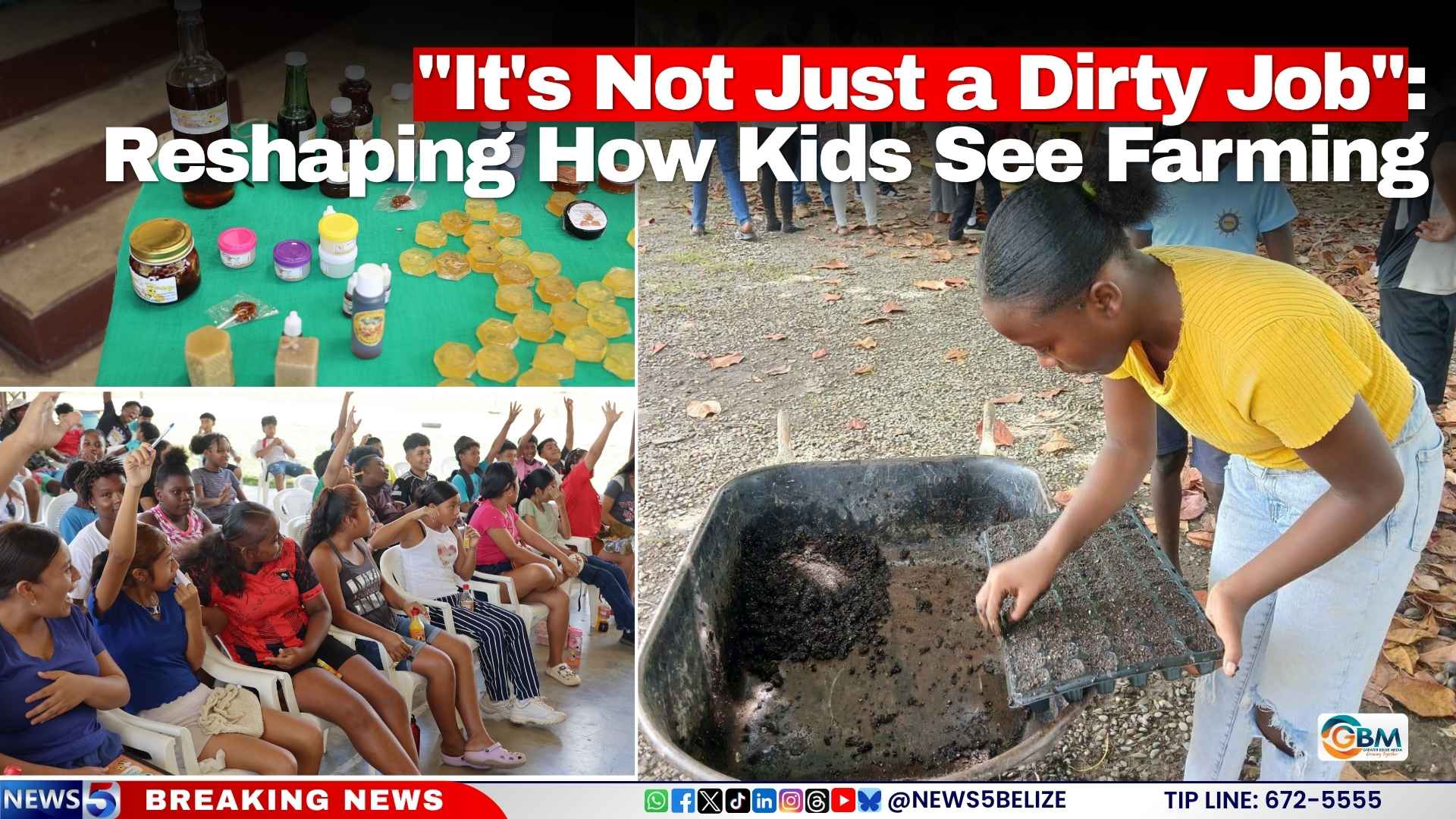
In the heart of Stann Creek District, a transformative summer agriculture camp is challenging long-held stereotypes about farming, giving nearly 70 young people aged 7 to 17 a firsthand look at the diverse, critical work that underpins global food security. Running through this week at Georgetown Technical High School, the camp is the second of two week-long immersive programs organized by Belize’s Ministry of Agriculture, Food Security and New Growth Industries this summer, following an opening session held earlier at the Agriculture and Natural Resource Institute. The initiative is proudly sponsored by RF&G Insurance Ltd., whose guiding brand slogan “It Pays to Get it Right” aligns with the camp’s mission to build accurate, informed understanding of modern agriculture among the next generation.
Each day of the camp introduces participants to a new specialized area of agricultural work, building a comprehensive foundation over the week. The curriculum kicks off with core lessons in horticulture and livestock care, before moving to hands-on workshops in beekeeping, agro-processing, and concluding this Friday with deep dives into aquaculture. Unlike traditional classroom learning that frames farming as manual, unskilled labor, the camp prioritizes experiential activities that let young participants engage directly with modern agricultural practices, from planting greenhouse tomato seedlings to examining the inner workings of a functioning beehive.
Bernadette Cob, an Agriculture Field Officer leading the program, explains that the core goal of the initiative goes far beyond teaching basic farming skills: it aims to completely reshape young people’s relationship with and perception of agriculture as an industry. “We work hard to make every participant feel included, and to help them understand just how central agriculture is to our daily lives and national stability,” Cob shared in an interview during the camp. “Too often, young people grow up thinking farming is just a dirty, low-value job. We want to change that narrative. We need a new generation engaged in agriculture to protect our food security, and to build sustainable food systems for the future.”
Cob noted that one of the most encouraging outcomes of the camp so far has been the high level of engagement from young female participants, who have not only taken the lead on many hands-on activities but have also encouraged their male peers to dive into the practical work. “It’s incredibly inspiring to see how they’ve embraced the work, and how they’re breaking gender stereotypes around agricultural labor right here in the camp,” she added.
For 12-year-old participant Zemvirson Juarez, the week has already been packed with new discoveries that have changed his own view of farming. On his first day, he planted his own tomato seedling in the camp’s greenhouse and brought it home to continue growing it – but it was the beekeeping session that left the biggest impression. “I learned so many things I never knew before,” Juarez said. “I had no idea a single beehive can hold up to 80,000 bees. I also learned that honey comes in different colors depending on what flowers the bees collect nectar from, and got to see beeswax, royal jelly, bee venom, and even all the different products people make from beehive byproducts, like soaps.”
As the camp prepares to wrap up its final day with aquaculture training, organizers say the program is already laying the groundwork for a more engaged, diverse next generation of agricultural leaders, proving that changing public perceptions of farming starts with giving young people the chance to experience the industry for themselves.