分类: world

  • The Pope, The President, and Peter Tosh

    The Pope, The President, and Peter Tosh

    Fifty years after Peter Tosh’s iconic 1977 track *Equal Rights* laid bare the hollow promise of peace without justice, his warning remains more urgent than ever for a world grappling with spreading conflict and systemic inequality. Tosh’s lyric — that all cry out for peace, but few dare demand the justice that makes it lasting — frames a searing intervention from C. Justin Robinson, Pro Vice-Chancellor and Campus Principal at The University of the West Indies Five Islands Campus, that challenges global powers and calls on the Caribbean to claim its moral voice in today’s fractured international order.

    Robinson anchors his argument in a long-running clash of principles: when Pope Leo XIV warned that nations that prioritize armament over negotiation are paving the way for a larger, deadlier war, Washington dismissed his words as disgraceful. Where Washington has leaned on military strength and dominance to impose quiet, the Pope, like Tosh, has insisted that peace without justice is nothing more than a temporary ceasefire, a paused conflict waiting to reignite when the next generation inherits the unpaid cost of old compromises. For the Caribbean, which has lived through both imposed dominance and coerced surrender, the choice between these two visions is not an abstract global debate — it is a matter of survival.

    Nowhere is that survival more at stake than in the ongoing standoff between the US-Israel bloc and Iran, now in its seventh week with diplomatic talks at a deadlock. The crisis centers in part on the Strait of Hormuz, a 33-kilometer waterway that carries 20% of the world’s traded oil. A full closure of the strait would send global energy prices soaring, and the damage would hit the most vulnerable economies first — including the Caribbean. Almost all of the region’s fuel is imported, and its core economic pillars — tourism, aviation, and integrated food supply chains — are uniquely sensitive to energy price shocks. As the late Caribbean intellectual Lloyd Best argued, this vulnerability is not an accident of geography: it is the enduring architecture of the adapted plantation economy, a system structured from its origins to serve the interests of foreign powers, not local communities. A crisis 10,000 kilometers away threatens to collapse Caribbean livelihoods, a direct inheritance of a global economic order the region never designed.

    This means the Iran-US standoff, and the string of concurrent conflicts across Gaza, Sudan, and Ukraine, is not distant spectator sport for Caribbean people. We are already inside this crisis, Robinson argues. Economic vulnerability does not grant automatic moral authority, but silence in the face of that preordained risk is not neutrality — it is consent to a system that puts Caribbean lives at risk for the gain of foreign powers. These conflicts are not separate, disconnected tragedies: they are the same pattern of injustice repeating, enabled by a global order that mistakes the silence of exhaustion or surrender for peace.

    Robinson outlines how the world repeatedly falls into this trap. Two false versions of peace are peddled again and again: the first is the peace of dominance, where a stronger power crushes resistance to the point that opposition becomes impossible. The bombed, displaced and subjugated are not at peace — they are merely too exhausted to fight. The second is the peace of surrender, where a weaker side is forced to accept unjust terms because it can no longer afford to continue resistance. Both are branded as peace, but neither delivers lasting stability.

    History is littered with the consequences of this mistake. The Treaty of Versailles punished Germany after World War I without addressing the root causes of conflict, and just 20 years later, the world was consumed by an even deadlier global war. The Oslo Accords, long criticized by activists and analysts, sought to create a Palestinian state on paper while leaving the Israeli occupation of Palestinian territories fully intact — today, Gaza lies in ruins as a result. The Taif Agreement that ended Lebanon’s civil war only redistributed power among the same factions that sparked the conflict, leaving the country to lurch from one systemic crisis to total collapse for decades. This pattern is no coincidence: injustice deferred is war that accumulates interest, compounding across generations until the bill comes due. Peace is the universal stated goal, but justice is the price almost every power refuses to pay. And almost always, the bill is paid not by the leaders who made the compromise, but by ordinary people in future generations.

    For the Caribbean, this is not abstract academic theory — it is lived history. The plantation system was called “peaceful” by colonial powers. Colonial order was framed as stability. The silence of dispossessed Indigenous and enslaved people was repeatedly mislabeled as peace across the region, and Caribbean communities know better than any other how heavy that false peace costs. No other region has greater reason to see the lie of calling managed injustice peace.

    Yet Tosh’s most cutting insight, Robinson argues, goes deeper: everyone wants to reach heaven, but no one wants to die to get there. Societies want the end result of peace without enduring the difficult, disruptive, costly work of building justice that makes it last. People want the celebration of Easter Sunday without the sacrifice and suffering of Good Friday. Most people genuinely desire peace, but they flinch from the discomfort of upending the existing arrangements that quietly benefit them, even as they harm others. Time and again, societies settle for the cheap short-term false peace of dominance or surrender, rather than pay the price of justice. The result is always the same: another conflict, another bill, another generation forced to pay.

    Robinson poses a sharp question that cuts through the vague global calls for peace: Do we demand peace because we believe in justice for all, or do we just want peace because war is inconvenient? Do we condemn the suffering in Gaza because our conscience demands it, or do we only recoil because higher oil prices hurt our local tourism industry? Do we cry out for peace, or do we just cry out for the return of our comfortable daily lives?

    The positions of the major global players are already clear. Washington has pushed for ceasefire resolutions rooted in surrender and dominance, paired with massive military buildups that perpetuate the cycle of conflict. The Pope has been dismissed as disgraceful for insisting that justice must come before any lasting ceasefire, a position aligned with Tosh’s core argument. Tosh’s vision goes further: equal rights and justice for every person, not only for those whose suffering is politically convenient for global powers to acknowledge.

    It is time, Robinson argues, for the Caribbean to speak out — not just through formal diplomatic communiqués, but through the collective voice of its people. To speak as the Caribbean does not mean pretending the region is uniformly united in all views; it means recognizing that shared systemic vulnerability demands a shared collective voice, even when full unity is difficult to achieve. The region has already done this work before: on the frontlines of the climate justice movement, Caribbean nations refused to accept the unfair terms set by the major global polluters, named the injustice of climate harm before demanding a just remedy. That same moral clarity is needed now, applied to war, military occupation, and the selective enforcement of international law that lets powerful actors violate rules with impunity.

    Robinson outlines three non-negotiable demands the Caribbean must raise: First, any ceasefire must be judged not by how quickly it restores surface-level quiet, but by whether binding accountability is enforced equally for all parties — not suspended when the violating power is an ally of influential global states. Second, post-conflict reconstruction must never be used as leverage to force silence from wronged parties: there can be no rebuilding without full recognition of fundamental rights. Third, amnesty for perpetrators of harm must never come before full truth and accountability. Any justice delayed is simply the next conflict scheduled for the future.

    Speaking out with this clear voice will come at a cost. It will require spending diplomatic capital, and giving up the comfortable neutrality that many prefer to maintain at this dangerous moment. It will mean risking the approval of great powers that many Caribbean states have learned to court, even when that cultivation runs against the region’s own interests. But the alternative — crying out for peace while endorsing the very systemic structures that guarantee peace will fail — is exactly what created the current crises in Gaza, Sudan, and the threat of closure for the Strait of Hormuz.

    That alternative has never worked, it cannot work now, and it was never designed to. Military might does not equal moral right, and any peace built on dominance is always temporary, and when it collapses, the burden always falls on the most vulnerable. If the Strait of Hormuz closes, oil prices spike, and air travel becomes unaffordable for Caribbean businesses, no great power will airlift the region to safety. Caribbean communities will bear that cost, just as they have born so many costs created by a system they did not build. So there is no better time to stand for something that outlasts the suffering.

    Fifty years ago, Peter Tosh sang plainly: “I don’t want no peace. I need equal rights and justice.” Today, Washington has dismissed the Pope’s call for justice as disgraceful, but Tosh, from his legacy, calls both global powers and quieted communities to account. The Caribbean people have always known which voice echoes through the marrow of their shared history of exploitation and resistance. The only question that remains is whether the region will sing that voice again, loud enough, in time, not as petitioners begging for crumbs from global powers, but as free people naming justice on their own terms.

  • CHOGM 2026 Social Media Correspondents Announced

    CHOGM 2026 Social Media Correspondents Announced

    The countdown to the 2026 Commonwealth Heads of Government Meeting (CHOGM) has hit a new milestone, with four young emerging journalists from Antigua and Barbuda announced as official youth correspondents for the landmark gathering. The selected reporters – Janet Simon, Gabrielle Hamlet, Lutrell John, and Joshua Edwards – beat dozens of other applicants to earn the role, chosen after a rigorous, multi-stage adjudication process overseen by a joint panel from the Commonwealth Secretariat and the CHOGM 2026 Taskforce.

    To make the shortlist, candidates had to meet a strict set of eligibility and skill requirements. All applicants were required to be active members or alumni of recognized youth leadership organizations across Antigua and Barbuda, such as the Antigua and Barbuda National Youth Ambassador Programme, the CARICOM Youth Ambassador Programme, or the National Youth Parliament. Candidates who had held senior student leadership roles, including Head Boy, Head Girl, or school prefect, were also eligible to apply. Beyond institutional affiliation, applicants had to demonstrate advanced proficiency in both written and spoken English, a solid grasp of narrative news storytelling, and end-to-end digital content creation skills. This included having access to professional HD recording equipment, editing capabilities, and a working understanding of core production elements like lighting, audio design, and shot framing. The selection panel also prioritized candidates who already had a demonstrated, active interest in the core thematic priorities that anchor CHOGM’s 2026 agenda, including climate change action, gender equity, civil society empowerment, broad social issues, youth development, and sports.

    Following final deliberations, the four selected correspondents stood out for the exceptional range of strengths they bring to the role. Selection panel co-lead Sharifa George highlighted that the group impressed adjudicators with their sharp critical thinking, consistent professionalism, and genuine, deep-rooted passion for their coverage focus areas. “We are proud to have put forward these young individuals to the panel for selection,” George said in an official statement after the announcement. “They demonstrated intelligence, professionalism, and a passion for their areas of interest, and impressed the panel with their individual talents.”

    As official youth correspondents, the four journalists will be tasked with capturing unfolding key developments across the 2026 CHOGM meeting. Their core mandate will be to elevate underrepresented youth perspectives, highlight the event’s core priority themes, and deliver a fresh, authentic narrative of the CHOGM experience that resonates with younger, digital-first audiences. The CHOGM 2026 Secretariat has formally congratulated all four selected correspondents, noting that the organization is eager to see their work shape a dynamic, accessible digital story for this major global gathering.

  • St. Kitts and Nevis Club Lebanon Distributes Humanitarian Food Boxes to Families Displaced by the Conflict in Lebanon

    St. Kitts and Nevis Club Lebanon Distributes Humanitarian Food Boxes to Families Displaced by the Conflict in Lebanon

    BEIRUT, Lebanon – May 7, 2026 – As ongoing conflict continues to uproot thousands of families across Lebanon and push vulnerable communities deeper into crisis, a community organization with ties to the Caribbean nation of St. Kitts and Nevis has stepped up to deliver critical relief to those most in need. The St. Kitts and Nevis Club Lebanon (SKN Club Lebanon), a group uniting citizens and friends of the twin-island nation based in Lebanon, has launched an expanded humanitarian initiative distributing pre-packed food boxes filled with essential goods to households displaced by the country’s prolonged instability.

    For months, thousands of Lebanese families have endured the upheaval of forced displacement, with countless people fleeing their homes to escape active conflict zones. Cut off from regular access to basic supplies and facing growing economic uncertainty, many displaced households struggle to put enough food on the table each day, placing immense strain on local humanitarian response networks. It is against this backdrop of unmet need that SKN Club Lebanon launched its latest relief effort, organized entirely by the group’s volunteer members to target the most vulnerable communities across affected regions.

    Each food box distributed through the initiative contains approximately 30 carefully selected staple food and household items, chosen to meet the daily needs of an entire family for multiple weeks. The aid packages include core staples such as rice, lentils, whole grains, pasta, canned goods, cooking oil, dried soup mixes, cheese, bread and other basic necessities, designed to ease at least a portion of the daily burden facing displaced and low-income households.

    Families that received the food assistance have expressed deep gratitude for the support, describing the donation as a meaningful lifeline at a time marked by pervasive hardship, uncertainty and displacement. Many recipients noted that the aid arrived at a moment when their financial resources had been exhausted by the conflict, making the gesture particularly impactful.

    In a statement accompanying the launch of the initiative, Ibrahim Serhan, President of SKN Club Lebanon, outlined the core humanitarian values driving the group’s work. “Every food box we distribute serves a family that is navigating displacement, uncertainty and emotional strain brought on by the conditions so many Lebanese people are enduring today,” Serhan said. “This effort reflects our deep, unwavering commitment to families displaced by the ongoing conflict and to vulnerable communities caught in this humanitarian crisis.”

    Serhan emphasized that the initiative aligns with both the universal humanitarian values enshrined in the United Nations Universal Declaration of Human Rights and the long-held national values of St. Kitts and Nevis, a nation widely recognized for its commitment to international solidarity, compassion, respect for human dignity, peaceful coexistence and support for communities facing crisis. “While no single humanitarian initiative can resolve the deep, systemic challenges that conflict has brought to Lebanon, every act of solidarity matters. These small acts of support help preserve hope for families that have lost so much,” Serhan added.

    He extended sincere thanks to the volunteers, individual donors and partner organizations that made the initiative possible, noting that their collective participation highlights the critical power of community cooperation during periods of widespread crisis. “We continue to hold out hope that the current conflict affecting Lebanon and the wider region will be resolved through peaceful dialogue, that delivers lasting stability, security, dignity and well-being for all communities across the country,” Serhan said.

    The food distribution effort marks the latest in a series of humanitarian engagements by SKN Club Lebanon, which has consistently prioritized support for vulnerable populations during Lebanon’s ongoing crisis. The initiative also underscores the vital role that grassroots, community-led humanitarian action plays in filling gaps in formal relief efforts, helping vulnerable families cope with the overlapping humanitarian and economic fallout of the country’s prolonged conflict.

    Founded to unite citizens of St. Kitts and Nevis and their friends residing in Lebanon, SKN Club Lebanon works to foster cultural connection, community unity and collective humanitarian action, guided by core values of compassion, solidarity and respect for human dignity. Through targeted charitable initiatives and community programs, the group works to deliver tangible support to vulnerable populations across Lebanon during periods of crisis.

  • Venezuela alleges to ICJ that 1899 boundary was awarded based on “threats”

    Venezuela alleges to ICJ that 1899 boundary was awarded based on “threats”

    A decades-long territorial dispute over the resource-rich Essequibo Region returned to the International Court of Justice (ICJ) this week, as Venezuela’s legal team laid out substantial new evidence arguing the 1899 boundary award that granted control of the territory to Britain (the predecessor of modern Guyana) was obtained through improper coercion and political collusion, not legal reasoning.

    The controversy stretches back more than 125 years, rooted in an 1897 treaty between Venezuela and Britain that established an arbitral tribunal to settle their long-running border conflict. The 1899 final award from that tribunal awarded 90 percent of the disputed Essequibo territory to Britain, a ruling Venezuela has contested for decades. The debate gained new momentum after a posthumous 1944 memorandum by Mallet Prevost, an American lawyer who served as counsel for Venezuela at the 1899 tribunal, alleged that the tribunal’s outcome was shaped by outside pressure.

    On Wednesday, Venezuela’s legal team told the ICJ that far more evidence beyond Prevost’s posthumous document corroborates claims the arbitrators were coerced into a ruling that stripped Venezuela of Essequibo. The lawyers also emphasized that the 1899 tribunal never provided any formal legal reasoning to justify its final boundary decision, a failure that alone undermines the award’s legal validity.

    Venezuela’s arguments directly contradict the position Guyana laid out before the court just days earlier. Guyana’s legal team contended that Spain, Venezuela’s colonial predecessor, never held sovereign control over Essequibo, that Venezuela formally ratified the 1897 treaty creating the tribunal, and that Venezuela publicly recognized the 1899 award for more than 60 years through official maps, government statements, and participation in boundary demarcation. Guyana also dismissed Prevost’s memorandum as a collection of unreliable, unsubstantiated claims made decades after the ruling.

    But Professor Christian Tams, lead counsel for Venezuela, told the court that contemporary accounts from multiple key 1899 tribunal participants—including arbitrators and legal counsel, documented in their personal diaries and private correspondence—all align to confirm that the final boundary line was proposed by tribunal president Friedrich Martens, a Russian jurist, with no legal basis whatsoever. Tams explained that Martens leveraged coercive threats to force the British and American arbitrators to accept his compromise line during closed, off-the-record meetings separate from the tribunal’s formal deliberations. Tams noted that Martens explicitly threatened to side fully with the opposing camp in any split vote unless arbitrators accepted his proposed line.

    Tams added that this new body of documentary evidence directly undermines Guyana’s attempt to dismiss Venezuela’s claims as the invention of an older man writing decades after the event. “These are authoritative, contemporary accounts that converge on the same core conclusion,” Tams told the court. He further confirmed that the core claims in Prevost’s posthumous memorandum match a private letter Prevost wrote just three weeks after the 1899 award was issued, a letter uncovered by Venezuelan researchers after the memorandum was published. In that 1899 letter, Prevost explicitly stated the final decision was forced on the American arbitrators.

    Tams shared details of firsthand accounts from U.S. arbitrator David Brewer, who recorded that Martens manipulated divisions between British and American arbitrators to force through his preferred outcome. If the American arbitrators refused Martens’ compromise line, Martens threatened to side with Britain’s claim to the full Schomburgk Line, resulting in a 3-2 split that would give Britain complete control of the entire disputed territory. If the American arbitrators accepted the compromise, Martens guaranteed he would secure British consent, resulting in a unanimous ruling that granted 90 percent of the territory to Britain, with only a small sliver left to Venezuela. “Legal considerations played no role in this deal,” Tams said. “There is no trace of any legal reasoning that could explain why Martens drew his compromise line where he did. Arbitrators did not yield to a stronger legal argument—they yielded to clear, specific threats.”

    Venezuela’s legal team also expanded on the context of coercion surrounding the tribunal’s creation, arguing that Britain—then the world’s dominant superpower—used military pressure to force Venezuela into agreeing to the 1897 treaty. Professor Danae Azaria told the court that Britain issued multiple explicit threats of military aggression between August and December 1899 to compel Venezuela to negotiate. Just one month before talks on the Washington Treaty (the formal name for the 1897 agreement) began, the *New York Herald* reported that Britain had deployed advanced Maxim machine guns to the Venezuela border, a clear show of force. Azaria explained that Venezuela, facing British expansionism, relied entirely on U.S. support to avoid further territorial loss, and had no viable alternative to accepting the treaty terms.

    Azaria added that even after the 1899 award was issued, Britain continued to act unilaterally, beginning its own boundary demarcation in 1900. At the time, Venezuela was in the middle of a civil war and too vulnerable to resist, so it had no choice but to send a demarcation commission to avoid losing even more territory. She also noted that Venezuela only obtained solid evidence proving the award was procured through coercion in the second half of the 20th century, explaining why formal challenges to the ruling took so long to emerge.

    Professor Paolo Palchetti, another member of Venezuela’s legal team, further pushed back against Guyana’s dismissal of Prevost’s memorandum, noting that multiple independent contemporary documents corroborate Prevost’s claim that the award resulted from collusion between Britain and Russia, with improper pressure from Martens.

    Tams also added that the 1899 tribunal failed to complete its core legal mandate: it never conducted a formal investigation to confirm which territories were originally held by the Netherlands (Guyana’s colonial predecessor) and which by Spain, a foundational step for any legitimate boundary ruling. Addressing the tribunal’s complete failure to publish any legal reasoning for its decision, Tams noted that the absence of any documented legal rationale is itself a ground for invalidating the award, and further confirms the outcome was not rooted in law.

    The framework for the modern dispute is shaped by the 1966 Geneva Agreement, which established bilateral negotiations as the official mechanism to resolve the dispute after new evidence of coercion emerged. While Venezuela is participating in the current ICJ proceedings, the country has repeatedly stated it does not recognize the court’s jurisdiction over this long-standing territorial dispute.

  • Trump’s Open-Ended Iran Talks Leave 1,600 Ships and the World Waiting

    Trump’s Open-Ended Iran Talks Leave 1,600 Ships and the World Waiting

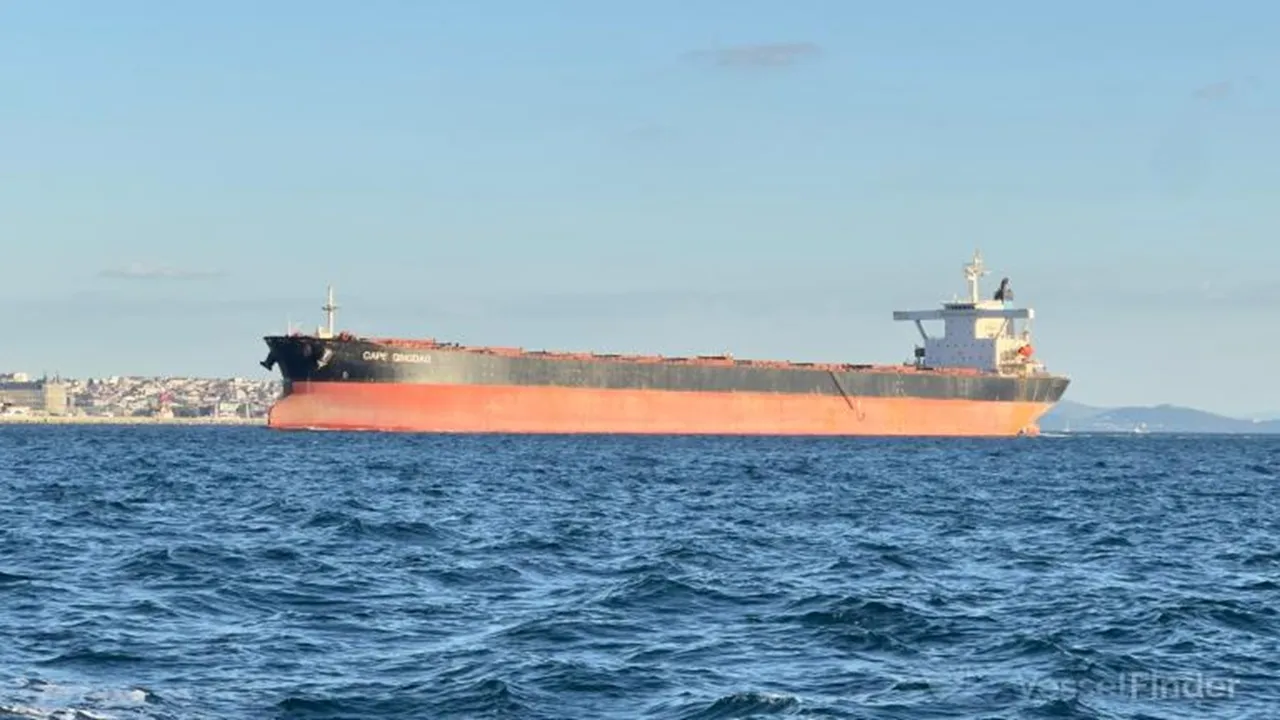
    Two months after the outbreak of open hostilities between the United States and Iran that began in late February, the world is stuck in limbo as open-ended negotiations between the two powers leave global energy security and hundreds of vessels in peril at one of the world’s most critical chokepoints. As of May 6, 2026, 1,600 commercial ships remain trapped in the Strait of Hormuz, the narrow waterway that carries roughly a fifth of the world’s daily oil supplies, and global fuel prices have continued a steady upward climb with no clear end to the crisis in sight.

    In remarks released Tuesday, former US President Donald Trump announced that Washington had held “very good talks” with Iranian officials over the preceding 24 hours, striking an optimistic tone about the prospects of a negotiated settlement. “We’re in good shape… They want to make a deal. It’s very possible that we’ll make a deal,” Trump told reporters. But despite this upbeat assessment, the White House has declined to set any formal deadline for a response from Tehran, leaving the timeline for a breakthrough completely undefined.

    Trump also made an unconfirmed claim that Iran has already agreed to his administration’s core nonproliferation demand: that the country permanently abandon any pursuit of nuclear weapons. “Iran cannot have a nuclear weapon, and they won’t, and they’ve agreed to that,” he stated. To date, however, there has been no independent verification of this agreement, nor any official confirmation from Iranian authorities confirming that they have accepted this term.

    While diplomats haggle with no set timeline, the human and economic cost of the standoff continues to mount. Since hostilities began on February 28, 32 commercial vessels transiting near or through the strait have been hit by missile attacks. These attacks have already killed 10 seafarers and left at least a dozen more injured, according to data compiled by CNN.

    Still, there are faint signs of potential progress toward de-escalation. A regional source familiar with the negotiations told CNN that both sides are moving closer to agreeing to a short, one-page framework agreement that would lay the groundwork for ending the current conflict. For the tens of thousands of seafarers trapped aboard stranded vessels and consumers facing rising energy costs around the globe, that tentative progress offers little immediate relief, as the standoff stretches into its third month with no resolution in sight.

  • OP-ED: The Pope, the president, and Peter Tosh why the Caribbean must choose justice over false peace

    OP-ED: The Pope, the president, and Peter Tosh why the Caribbean must choose justice over false peace

    The words of legendary Jamaican musician Peter Tosh, written in his 1977 track *Equal Rights*, ring as sharply across the global geopolitical landscape today as they did 50 years ago: “Everyone is crying out for peace, yes, None is crying out for justice. Everybody want to go to heaven, But nobody want to die.” This unflinching observation frames every modern conflict, and every hollow global discussion of ceasefire that avoids the hard work of addressing the injustices that spawn violence.

    Decades before the current standoff between the U.S.-Israel alliance and Iran, Pope Leo XIV drew fierce condemnation from Washington when he warned that nations that prioritize military buildup over negotiation are simply laying the groundwork for a larger, deadlier future conflict. Where the Pope centered the need for justice as the foundation of any lasting calm, Washington has insisted on strength as the prerequisite for peace. Standing between these two opposing positions is the enduring legacy of Peter Tosh, who grasped long before either leader spoke that military dominance is not peace, and forced surrender is not peace. Both are nothing more than paused war, waiting for the next generation to inherit the bloody and costly debt.

    Today, Washington offers global order rooted in domination: a silence enforced by military and economic power, imposed by the strongest party on the weakest. Like Tosh, the Pope demands that nations confront the truth that peace can only grow from justice – a messy, costly, disruptive project that few global powers are willing to undertake, without which no ceasefire will ever hold. For small island nations across the Caribbean, which have lived under both systems of forced silence and marginalization, the choice between these two paths could not be more consequential.

    Take the ongoing standoff in the Strait of Hormuz, a 33-kilometer waterway that carries 20% of the world’s traded oil. Any prolonged closure would send energy prices skyrocketing, hitting the world’s most vulnerable economies first. For the Caribbean, which imports nearly all of its fuel, every sector from tourism to aviation to national food supply chains is acutely sensitive to energy price shocks, leaving the region structurally exposed to a conflict 10,000 kilometers away.

    Trinidadian political economist Lloyd Best taught that this vulnerability is not a random accident – it is built into the very architecture of the Caribbean economy, a legacy of the plantation system that never truly ended, only adapted to new global power structures. The Caribbean’s exposure to far-off conflict is the direct inheritance of an economy built from its origins to serve the interests of foreign powers, not local people.

    This means the seven-week-long U.S.-Israel Iran confrontation, with diplomatic talks currently stalled, is not some distant distant drama playing out on the other side of the world. The Caribbean is not an observer to this crisis – it is already a participant. This inherent economic exposure does not grant the region automatic moral authority, but choosing silence in the face of a structurally created vulnerability is not neutrality: it is consent to a system that puts the Caribbean at perpetual risk. As Best made clear, this vulnerability is no coincidence; it is the intentional design of an economic order the Caribbean never created.

    The conflicts playing out in Gaza, Sudan, and Ukraine are not isolated tragedies. They are the same tragedy repeating, and that repetition follows a clear pattern. Time and again, the world is offered not peace, but two varieties of false silence. The first is the silence of domination, where the stronger party seizes so much that resistance becomes impossible. The occupied and bombed are not at peace – they are simply too exhausted to fight. The second is the silence of surrender, where the weaker party is forced to accept unjust terms because it can no longer afford to continue resisting. Both are marketed to the world as peace, but neither delivers anything lasting.

    History is littered with the proof of this pattern. The Treaty of Versailles punished Germany after World War I without addressing the underlying economic and political causes of the conflict, and just 20 years later the world descended into an even deadlier global war. The Oslo Accords, long criticized by activists and scholars, promised a Palestinian state on paper while leaving the Israeli occupation fully intact; today, Gaza lies in ruins. The Taif Agreement that ended Lebanon’s civil war only redistributed power between the same factions that started the conflict, leaving the country to lurch from one catastrophic crisis to the next for decades.

    This pattern is not a coincidence – it is a simple mathematical truth. Injustice that is deferred becomes war with compound interest, growing larger and more costly with every passing generation. The world repeatedly claims it wants peace, but consistently refuses to pay the price that justice demands. And when the bill finally comes due, it is almost always paid by people who had no hand in creating the original injustice.

    For the Caribbean, this is not abstract academic theory – it is lived collective memory. The plantation system was called “peaceful” by colonial powers. Colonial order was framed as peace by the empires that ruled the region. The silence of dispossessed Caribbean people has been mislabeled as peace countless times across our history, and we know exactly what that false peace cost. No other region has less excuse for mistaking managed, unequal injustice for lasting peace.

    But Tosh understood an even harder truth, captured in that same iconic verse: “Everybody want to go to heaven, but nobody want to die.” People want the outcome of peace without enduring the difficult process of justice; they want the celebration of Easter Sunday without the sacrifice of Good Friday. Most people genuinely say they want peace, but they flinch away from the hard, disruptive, costly work of uprooting injustice that any lasting peace requires. Justice demands discomfort, sacrifice, and a willingness to challenge the very arrangements that many people quietly benefit from. So again and again, societies settle for the cheap short-term false peace of domination or surrender, choosing just an interval between wars, and ending up inheriting the next conflict.

    This brings us to the core question Tosh’s song poses to the world today: Do we demand peace because we believe in justice, or just because war is inconvenient for our daily lives? Do we recoil from the violence in Gaza because our consciences are troubled by injustice, or because rising oil prices hurt our local tourism industry? Are we crying out for justice, or just for the return of our comfortable pre-conflict routines?

    Washington’s answer is already clear: it has pushed for ceasefire resolutions rooted in the old model of surrender and domination, paired with massive military buildups that reinforce unequal power dynamics. The Pope, by contrast, has been dismissed as disgraceful for his unflinching insistence that justice must come before any permanent ceasefire, and his position is equally clear: lasting peace is only possible as the product of justice. But Tosh’s framing remains the most complete: equal rights and justice for all people, not only for those whose suffering is convenient for global powers to acknowledge.

    It is time for the Caribbean to raise its collective voice on this issue – not just through formal government communiqués, but through the voice of the Caribbean people. Saying “the Caribbean” does not mean pretending all people across the region share one identical view. It means insisting that our shared structural vulnerability demands a shared public voice, even when full unity is difficult to achieve. The Caribbean has already done this work successfully before: on the issue of climate justice, the region refused to accept the unfair terms set by the major fossil fuel emitting powers, named the injustice of the crisis, and demanded meaningful redress. That same moral framework is needed now, applied to war, military occupation, and the selective enforcement of international law.

    The Caribbean people should clearly demand three core principles. First, any ceasefire should be judged not by how quickly it restores silence, but by whether binding accountability is required of all parties equally, not suspended the moment the violating party is a powerful global ally. Second, post-conflict reconstruction must never be used as leverage to force silence: there can be no rebuilding without full respect for human and political rights. Third, amnesty for perpetrators can never come before full truth and accountability for crimes committed. Justice deferred is simply the next war, scheduled for a future generation.

    Raising this clear voice will come at a cost. It will cost diplomatic capital, and it will force the region to give up the comfortable neutrality that many actors seek at this cruel and dangerous moment. It will mean losing the quiet approval of global powers whose favor many Caribbean states have learned to cultivate, even when it runs against the region’s own core interests. But the alternative – crying out for peace while endorsing the very structural inequalities that guarantee peace will fail – is exactly what led us to the current crises in Gaza, Sudan, and the Strait of Hormuz.

    This old model of false peace has never worked, it cannot work now, and it was never designed to work. Military might does not equal moral right, and any peace built on dominance is always temporary, and always falls as someone else’s burden when it finally collapses.

    If the Strait of Hormuz remains closed, oil prices will spike even further, making air travel unaffordable for much of the region and crippling tourism. No global power will airlift the Caribbean out of this crisis. The Caribbean people will be forced to bear the cost, just as we have borne countless other costs that we did nothing to create. So let us at least stand for a principle that will outlast this current crisis, something that future generations can build on.

    Tosh sang it clearly, a demand that still echoes: “I don’t want no peace, I need equal rights and justice.” Washington has called the Pope’s call for justice disgraceful. From his grave, Peter Tosh calls both global power and empty statements of peace to account. The Caribbean people have always known which voice aligns with the deepest lessons of our shared history. The only question left is whether we will sing that voice again, loud enough, in time, not as petitioners begging for crumbs from global powers, but as free people naming justice on our own terms.

  • OPINION: The Pope, The President, and Peter Tosh

    OPINION: The Pope, The President, and Peter Tosh

    Fifty years ago, legendary Jamaican musician Peter Tosh penned a searing line in his iconic track *Equal Rights* that cuts through the empty rhetoric of global politics even today: “Everyone is crying out for peace, yes, None is crying out for justice.” That unflinching warning, which laid bare the hollow nature of peace without equity, serves as the foundation for a urgent argument put forward by Professor C. Justin Robinson, Pro Vice-Chancellor and Principal of The UWI Five Islands Campus, that the Caribbean must reject manufactured calm and choose lasting justice over short-sighted, false peace.

  • No sideshows

    No sideshows

    In a candid address at the Jamaica Observer Press Club this Wednesday, Dr Ralph Gonsalves, former Prime Minister of St Vincent and the Grenadines and current senior advisor to the global Repair Campaign, issued a sharp rebuke of diversionary arguments meant to undermine the Caribbean’s decades-long push for reparatory justice for the atrocities of transatlantic slavery and colonial rule.

    Gonsalves centerd his remarks on pushing back against growing attempts by critics to shift the narrative of the reparation movement toward African involvement in the slave trade, framing these talking points as deliberate sideshows designed to draw focus away from the systematic role European governments played in building, expanding and profiting from centuries of human trafficking and exploitation. “One of the amazing things that persons who don’t want to confront reparation do is try to keep our minds from the central focus, and take us to sideshows, to distractions,” Gonsalves told attendees. “We have to be careful that we do not fall prey to distractions and sideshows. We have to keep our minds on the main event.”

    The veteran Caribbean politician outlined the core structural reality that underpins the reparation campaign, detailing how European state institutions actively orchestrated every stage of the transatlantic slave trade: from encouraging African groups to capture enslaved people, to building coastal forts to detain captives, to transporting them across the Atlantic on European ships, and finally selling them to work on exploitative colonial plantations across the Caribbean. This state-backed system of exploitation generated unprecedented wealth for European powers, while leaving lasting damage to Caribbean societies that persists to this day.

    Gonsalves also pushed back against a second common counterargument: that post-colonial development aid and trade concessions from former colonial powers like Britain amount to sufficient compensation for the harms of slavery. He rejected this claim outright, noting that any support the Caribbean has received is minuscule when measured against the trillions in wealth extracted from the region over centuries of colonial rule.

    To illustrate his point, Gonsalves cited the post-World War II preferential trade deal for Caribbean banana exports to Britain. Far from an act of altruism, he explained, the arrangement was rooted entirely in Britain’s own economic self-interest: after the war, Britain lacked enough US dollars to purchase bananas from Latin American producers, so it turned to its former Caribbean colonies to meet domestic demand. When Britain joined the European single market decades later, the preferential terms were revoked, leaving Caribbean producers to bear the economic costs. “It’s true we benefited, but they benefited too,” Gonsalves said, emphasizing that even these limited gains cannot offset the centuries of uncompensated exploitation.

    Beyond refuting counterarguments, Gonsalves redefined the framing of the reparation movement itself, rejecting attempts to dismiss it as a purely historical debate. Instead, he positioned the quest for reparation as a pressing modern human rights issue, aligned with a United Nations General Assembly resolution passed this past March that formally designated slavery as “the gravest of crimes against humanity.”

    “Secondly, the quest for reparation, in a practical sense, is meant to repair the many-sided legacies of underdevelopment, which can be sourced directly to native genocide and the enslavement of African bodies,” he added. Gonsalves drew a direct line between historical exploitation and modern Caribbean development gaps, noting that formerly enslaved people were granted freedom but no access to land, capital, education or generational wealth — a stark contrast to the generous compensation the British government paid to enslavers when it abolished slavery in the 1830s.

    The Repair Campaign, the initiative Gonsalves advises, was launched in 2022 by Irish businessman Denis O’Brien. It works in formal partnership with the Caricom Reparations Commission to coordinate advocacy, build public support, and develop actionable reparatory justice plans across all 15 Caribbean Community member states. The collective campaign continues to push European former colonial powers to acknowledge the scale of their historical role in slavery and provide tangible compensation to address the intergenerational harms that shape the Caribbean today.

  • What IShowSpeed Showed the World About Antigua By Ambassador Theon Ali

    What IShowSpeed Showed the World About Antigua By Ambassador Theon Ali

    When global streaming star IShowSpeed embarked on a visit to the twin-island Caribbean nation of Antigua and Barbuda, few anticipated the outsized cultural and diplomatic impact his trip would generate. In a perspective piece penned by Antigua and Barbuda’s Ambassador Theon Ali, the streaming personality’s high-energy journey through the country revealed far more to a global audience of millions than just sun-soaked beaches and turquoise waters.

    Ali argues that IShowSpeed’s unfiltered, authentic content captured the warm hospitality, vibrant local culture, and untapped potential that define Antigua and Barbuda in a way that traditional tourism campaigns rarely match. The streamer’s live broadcasts from local street food stalls, his interactions with ordinary Antiguans, and his explorations of lesser-known coastal communities racked up hundreds of millions of views across TikTok, YouTube, and other social platforms, turning the small Caribbean nation into a viral talking point for young audiences around the world.

    Beyond boosting tourism interest, Ali highlights that IShowSpeed’s visit opened new conversations about the country’s appeal as a destination for digital creators, foreign investment, and youth-focused cultural exchange. Unlike scripted official content, the streamer’s off-the-cuff adventures showcased the relatable, energetic character of Antigua and Barbuda, breaking through the noise of crowded international media to leave a lasting positive impression.

    Ali also notes that the viral attention generated by the trip has already translated into tangible outcomes, including a surge in social media followers for Antigua and Barbuda’s tourism boards, increased inquiries from young travelers planning future visits, and growing interest from digital content companies eyeing the Caribbean as a creative hub. For a small nation working to expand its global footprint beyond traditional tourism, Ali frames IShowSpeed’s unplanned cultural contribution as a powerful case study in how modern digital influence can create unexpected opportunities for small states around the world.

  • Escazú in the Caribbean: Turning commitments into action

    Escazú in the Caribbean: Turning commitments into action

    By Michelle Brathwaite, Regional Representative of the UN Human Rights Office for the Caribbean Community

    In April 2024, The Bahamas etched its name into regional environmental governance history as it welcomed delegates and stakeholders from across Latin America and the Caribbean for the fourth Conference of the Parties (COP4) to the Escazú Agreement. This gathering marked the very first time the landmark treaty’s official conference has been hosted in the Caribbean, a timing that could not be more critical for a small island region that finds itself on the unenviable front lines of three converging crises: accelerating climate change, catastrophic biodiversity decline, and rapidly growing unsustainable development pressures.

    The Escazú Agreement stands as a defining regional pact that enshrines three core environmental rights: guaranteed access to environmental information, meaningful public participation in environmental decision-making, and fair access to justice for communities harmed by environmental harm. At its foundation, the treaty addresses critical questions: how are environmental and development decisions made, which communities get a seat at the table, and how are human rights protected when economic development and ecological protection intersect. For small island and coastal Caribbean states, where natural ecosystems are uniquely fragile and local communities rely directly on marine, coastal and terrestrial resources for their livelihoods and survival, these foundational principles are non-negotiable for long-term sustainable development.

    Of the 19 nations across the Americas that have fully ratified the agreement to date, half are Caribbean countries: Antigua and Barbuda, The Bahamas, Belize, Dominica, Grenada, Guyana, St Kitts and Nevis, St Lucia, St Vincent and the Grenadines, and Trinidad and Tobago. This broad regional participation reflects a growing, shared commitment across the Caribbean to upholding transparency, inclusive participation, institutional accountability, and targeted protection for environmental human rights defenders. Brathwaite called on the remaining Caribbean nations that have not yet ratified or joined the agreement to follow the lead of these 10 states and commit to its binding principles.

    The urgency of full regional adoption and implementation of the Escazú Agreement is impossible to ignore. Climate change is supercharging the intensity of tropical storms, expanding the reach of coastal flooding, and driving steady, irreversible sea-level rise that threatens to displace entire coastal communities across the region. Ongoing biodiversity collapse undermines the Caribbean’s most critical economic sectors — tourism and fisheries — eroding food security and pushing thousands of vulnerable livelihoods to the brink. At the same time, demand for large-scale development projects continues to grow, and the policy choices made today will shape whether the region’s development trajectory builds community resilience and inclusive growth, or deepens systemic inequality and irreversible ecological damage.

    These pressing challenges took center stage at an official side event hosted by the UN Human Rights Office for the Caribbean alongside the main COP4 negotiations. Speakers from civil society, the private sector, government, and Indigenous and local community groups held open discussions about the binding human rights obligations of national governments and the shared environmental responsibilities of private companies operating in the region. A single clear consensus emerged from these talks: any community that will be affected by an environmental or development decision must receive early, full information about the project and have the opportunity to contribute meaningfully to the final decision.

    This requirement is not only a binding international human rights obligation — it is also proven sound policy. When frontline communities are excluded from decision-making, infrastructure and development projects often face widespread public resistance, costly delays, and permanent erosion of public trust in government and industry. When inclusive participation is genuine and occurs early in the planning process, final policy and project decisions are stronger, environmental and social risks are better anticipated and managed, and long-term outcomes are far more economically and ecologically sustainable. Even with this clear consensus, significant implementation barriers remain: broader public education and awareness are still needed across the region to inform communities, governments, and businesses of the protections and opportunities the Escazú Agreement provides.

    One of the treaty’s most groundbreaking provisions is Article 9, which establishes binding protections for environmental human rights defenders. Across the Caribbean, individual activists and local community groups work tirelessly to protect critical ecosystems and defend the rights of frontline communities, often operating with very limited financial and institutional support and facing significant personal risk. Intimidation, harassment and reprisals against activists who raise legitimate environmental concerns directly violate international human rights law, run counter to the binding commitments Caribbean governments have made under the Escazú Agreement, and erode the core principles of inclusive participation and public trust that COP4 participants reaffirmed during the conference.

    Brathwaite emphasized that regional governments must take immediate action to ensure environmental and human rights defenders can carry out their critical work safely, free from intimidation and violence. Similarly, private companies operating across the Caribbean have a responsibility to ensure that their operations — whether directly or through suppliers and partners in their global value chains — do not contribute to threats, criminalization, or retaliation against activists who raise environmental concerns.

    The UN Human Rights Office for the Caribbean remains fully committed to supporting regional governments as they implement the agreement, offering targeted capacity-building programming and expert technical assistance on upholding access to environmental information, expanding meaningful public participation, guaranteeing access to environmental justice, and integrating human rights-centered approaches into all national environmental action.

    Hosting COP4 in The Bahamas served as a powerful reminder to the global community that the Caribbean is far more than a region defined by climate vulnerability: it is a leading voice in global environmental governance and human rights-centered climate action. With sustained cross-regional cooperation and unwavering political will, the Escazú Agreement can help the Caribbean deliver on its vision of inclusive, participatory development that protects the fundamental human right to a healthy environment for current and future generations.

    *Disclaimer: NOW Grenada is not responsible for the opinions, statements or media content presented by contributors. In case of abuse, click here to report.*