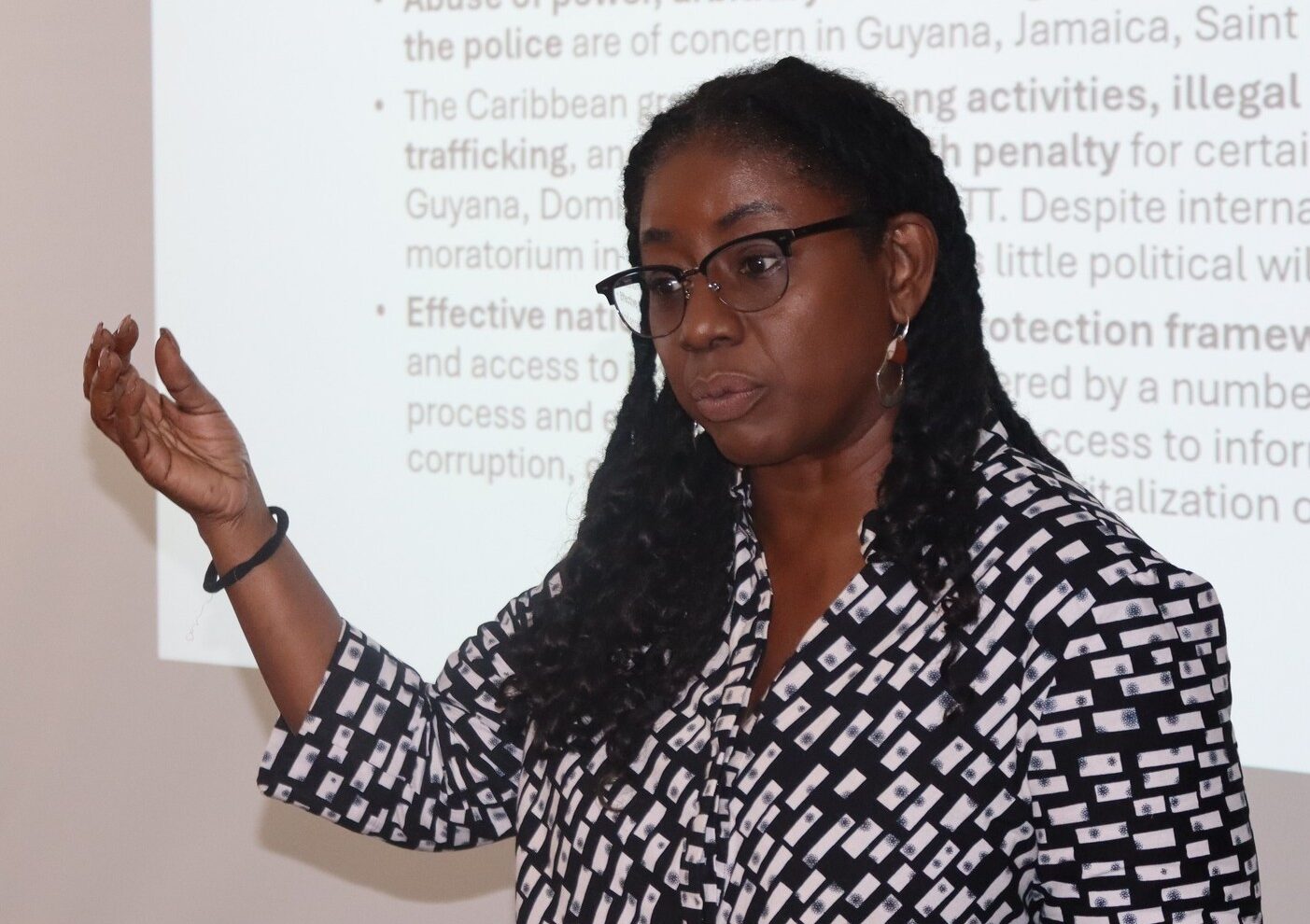
By Michelle Brathwaite, Regional Representative of the UN Human Rights Office for the Caribbean Community
In April 2024, The Bahamas etched its name into regional environmental governance history as it welcomed delegates and stakeholders from across Latin America and the Caribbean for the fourth Conference of the Parties (COP4) to the Escazú Agreement. This gathering marked the very first time the landmark treaty’s official conference has been hosted in the Caribbean, a timing that could not be more critical for a small island region that finds itself on the unenviable front lines of three converging crises: accelerating climate change, catastrophic biodiversity decline, and rapidly growing unsustainable development pressures.
The Escazú Agreement stands as a defining regional pact that enshrines three core environmental rights: guaranteed access to environmental information, meaningful public participation in environmental decision-making, and fair access to justice for communities harmed by environmental harm. At its foundation, the treaty addresses critical questions: how are environmental and development decisions made, which communities get a seat at the table, and how are human rights protected when economic development and ecological protection intersect. For small island and coastal Caribbean states, where natural ecosystems are uniquely fragile and local communities rely directly on marine, coastal and terrestrial resources for their livelihoods and survival, these foundational principles are non-negotiable for long-term sustainable development.
Of the 19 nations across the Americas that have fully ratified the agreement to date, half are Caribbean countries: Antigua and Barbuda, The Bahamas, Belize, Dominica, Grenada, Guyana, St Kitts and Nevis, St Lucia, St Vincent and the Grenadines, and Trinidad and Tobago. This broad regional participation reflects a growing, shared commitment across the Caribbean to upholding transparency, inclusive participation, institutional accountability, and targeted protection for environmental human rights defenders. Brathwaite called on the remaining Caribbean nations that have not yet ratified or joined the agreement to follow the lead of these 10 states and commit to its binding principles.
The urgency of full regional adoption and implementation of the Escazú Agreement is impossible to ignore. Climate change is supercharging the intensity of tropical storms, expanding the reach of coastal flooding, and driving steady, irreversible sea-level rise that threatens to displace entire coastal communities across the region. Ongoing biodiversity collapse undermines the Caribbean’s most critical economic sectors — tourism and fisheries — eroding food security and pushing thousands of vulnerable livelihoods to the brink. At the same time, demand for large-scale development projects continues to grow, and the policy choices made today will shape whether the region’s development trajectory builds community resilience and inclusive growth, or deepens systemic inequality and irreversible ecological damage.
These pressing challenges took center stage at an official side event hosted by the UN Human Rights Office for the Caribbean alongside the main COP4 negotiations. Speakers from civil society, the private sector, government, and Indigenous and local community groups held open discussions about the binding human rights obligations of national governments and the shared environmental responsibilities of private companies operating in the region. A single clear consensus emerged from these talks: any community that will be affected by an environmental or development decision must receive early, full information about the project and have the opportunity to contribute meaningfully to the final decision.
This requirement is not only a binding international human rights obligation — it is also proven sound policy. When frontline communities are excluded from decision-making, infrastructure and development projects often face widespread public resistance, costly delays, and permanent erosion of public trust in government and industry. When inclusive participation is genuine and occurs early in the planning process, final policy and project decisions are stronger, environmental and social risks are better anticipated and managed, and long-term outcomes are far more economically and ecologically sustainable. Even with this clear consensus, significant implementation barriers remain: broader public education and awareness are still needed across the region to inform communities, governments, and businesses of the protections and opportunities the Escazú Agreement provides.
One of the treaty’s most groundbreaking provisions is Article 9, which establishes binding protections for environmental human rights defenders. Across the Caribbean, individual activists and local community groups work tirelessly to protect critical ecosystems and defend the rights of frontline communities, often operating with very limited financial and institutional support and facing significant personal risk. Intimidation, harassment and reprisals against activists who raise legitimate environmental concerns directly violate international human rights law, run counter to the binding commitments Caribbean governments have made under the Escazú Agreement, and erode the core principles of inclusive participation and public trust that COP4 participants reaffirmed during the conference.
Brathwaite emphasized that regional governments must take immediate action to ensure environmental and human rights defenders can carry out their critical work safely, free from intimidation and violence. Similarly, private companies operating across the Caribbean have a responsibility to ensure that their operations — whether directly or through suppliers and partners in their global value chains — do not contribute to threats, criminalization, or retaliation against activists who raise environmental concerns.
The UN Human Rights Office for the Caribbean remains fully committed to supporting regional governments as they implement the agreement, offering targeted capacity-building programming and expert technical assistance on upholding access to environmental information, expanding meaningful public participation, guaranteeing access to environmental justice, and integrating human rights-centered approaches into all national environmental action.
Hosting COP4 in The Bahamas served as a powerful reminder to the global community that the Caribbean is far more than a region defined by climate vulnerability: it is a leading voice in global environmental governance and human rights-centered climate action. With sustained cross-regional cooperation and unwavering political will, the Escazú Agreement can help the Caribbean deliver on its vision of inclusive, participatory development that protects the fundamental human right to a healthy environment for current and future generations.
*Disclaimer: NOW Grenada is not responsible for the opinions, statements or media content presented by contributors. In case of abuse, click here to report.*